Month: June 2022

We’re hopeful that ASUU strike will end soon —Ngige

By Muhammadu Sabiu

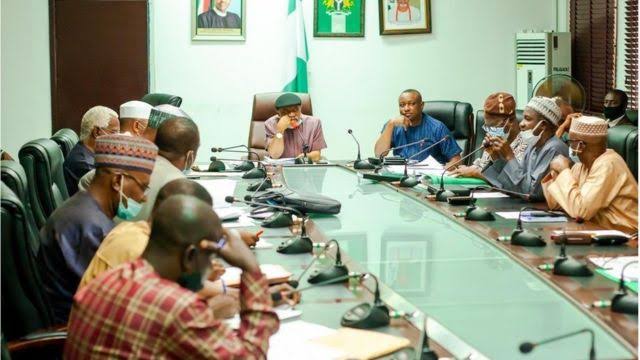
The Academic Staff Union of Universities (ASUU), which has been on strike for four months, will call off the industrial action soon, the Federal Government assures through Minister of Labour Chris Ngige.

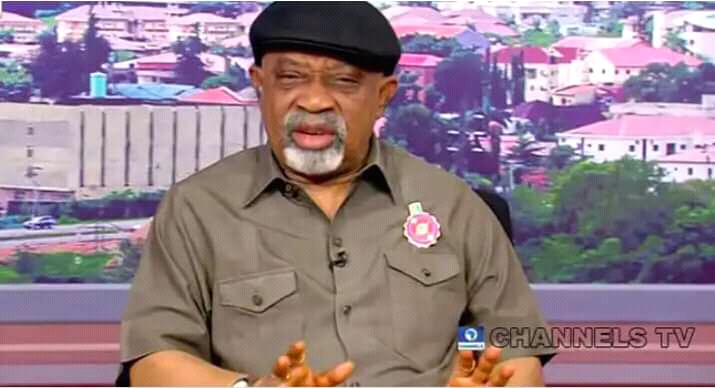
Dr Chris Ngige revealed this to reporters after the Federal Executive Council, FEC, met for its weekly meeting on Wednesday.

Ngige claimed that efforts were being made to settle the ongoing conflict, which was primarily brought on by payment platforms.

However, he confirmed that the Federal Government has no plans to set up an alternative funding model for institutions.

Dr Ngige was quoted to have said, “Federal Government was indeed engaging with ASUU, despite notions that it has been snubbing the union.”

The university teachers have been insisting on the use of a payment system called University Transparency and Accountability Solution, which the Federal Government opposes, showing no sign of shifting ground on the use of the initial payment platform it came up with, called Integrated Payroll and Personnel Information System (IPPIS).

Nigerian Law School student reportedly queried for drinking water from bottle

By Ahmad Deedat Zakari

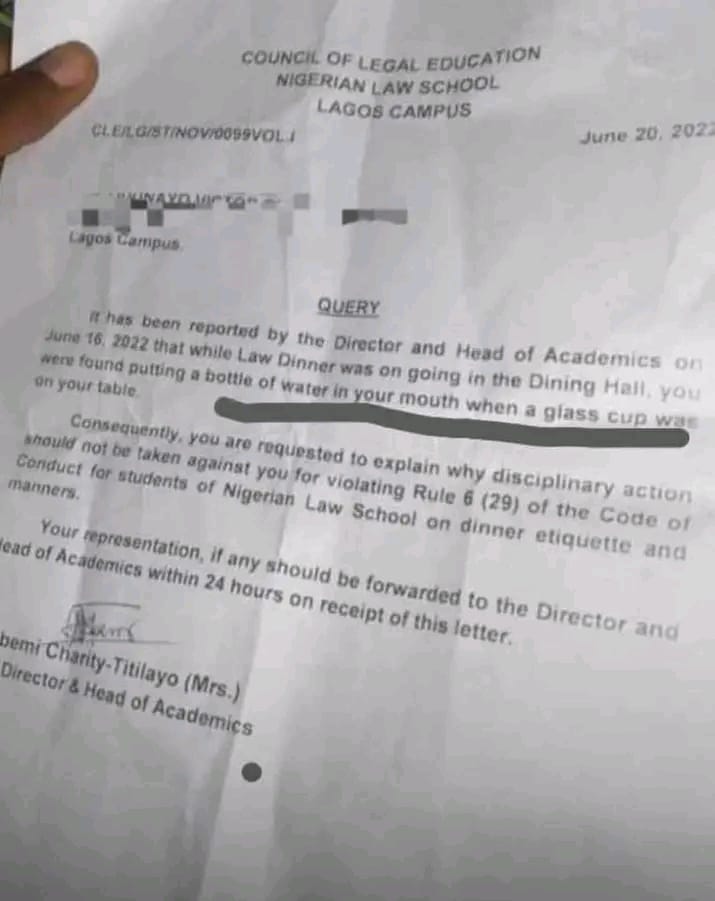
The Lagos Campus of the Nigerian Law School is set to discipline a student for drinking water from a bottle instead of a cup provided at the Law School Dinner table. 

A query letter making round on social media, dated June 20, 2022, and signed by one Mrs Fagbemi Charity Titilayo on behalf of the Lagos Campus’ Director & Head of Academics, disclosed the development. 

“It has been reported by the Director and head of Academics on June 16 2022, that while the Law Dinner was ongoing in the Dining Hall, you were found putting a bottle of water in your mouth when a glass cup was on your table ” Part of the query letter reads. 

The query letter

The query letter further demanded that the student explain that disciplinary actions should not be taken regarding the unprofessional behaviour. 

“Consequently, you are requested to explain why disciplinary action should not be taken against you for violating Rule 6 (29) of the Code of Conduct of Students of Nigerian Law School on dinner etiquette and manners”, The letter reads. 

Although, at the time of fielding this report, the Nigerian Law School has yet to confirm or denounce the development. However, the Nigerian Law School is known for their strict adherence to written basic rules and etiquette. It is universally believed that good character and an uncompromising sense of decorum make a lawyer.

Ruling APC loses 3 senators to PDP, NNPP

By Muhammadu Sabiu

Three All Progressives Congress (APC) senators have resigned from the ruling party.

Senators Ahmad Babba Kaita (Katsina North), Lawal Yahaya Gumau (Bauchi South), and Francis Alimikhena (Edo North) are the defecting lawmakers.

Gumau defected to the New Nigeria Peoples Party, while Babba Kaita and Alimikhena joined the opposition Peoples Democratic Party.

The Senate President, Ahmad Lawan, read three different letters in Tuesday’s plenary in which they announced their defections.

Senator Alimikhena’s decision to leave the APC was motivated by the “ongoing and complex crises that have plagued the APC,” particularly in his Senatorial District, “that has formed parallel executives that have weakened internal discipline, coherence, and commitment.”

Explaining the reason for his detection, Babba Kaita was quoted as saying, “As Senator representing Katsina North Senatorial District, I write to formally notify you of my resignation from the All Progressives Congress (APC), and registration declaration for the Peoples Democratic Party.

“My resignation from the APC was born out of the marginalisation of critical stakeholders by the State Government and Leadership of the Party in Katsina State, where small people like me do not have a chance.

“I have since been joyful and graciously accepted into the fold of the Peoples Democratic Party in Katsina State.”

Professor J.B Adeyanju: An Iroko has fallen

By Zakariyya Shu’aib Adam

It was the first Monday of the first semester in 500 level in the Faculty of Veterinary Medicine, Usmanu Danfodiyo University, Sokoto [U.D.U.S]. As usual, all students who successfully passed 400 level were happy because they have now acquired “stay apparatus.” By stay apparatus, I am referring to the mechanism that enables horses to rest for a long time and have a nap while standing. In this context, it means 500 and 600 level students will no longer be withdrawn from the faculty regardless of the number of courses they failed. In other classes, once a student fails seven courses in a session, he will be asked to withdraw to another faculty.

The first lecture we had in 500 level was on Anaesthesiology. We were expecting a familiar lecturer from the Department of Surgery and Radiology when an agile old man dressed in a knee-length kaftan with a lab coat entered the class. He was averagely tall but wasn’t familiar to anyone of us. Morning lectures usually begin at 8:00 am but this old man was in the class before the time. When latecomers came, he allowed them entry to the class but spent some minutes grumbling as usual of an old person. He disallowed us to jot, yet emphasised on listening to what he was saying. We noticed his name on the chest pocket of his lab coat. Wow! He was the famous professor John Bayo Adeyanju, the great veterinary surgeon talked about by our lecturers.

When he was done with the lecture, the Head of Department of Surgery and Radiology, professor A.S Yakubu came to the class and gave us a brief highlight of Adeyanju’s academic life. He told us that Adeyanju was his supervisor at P.G level and that he taught virtually all professors and doctors in the faculty including the highly cerebral professors A.I Daneji, U.M Chafe and L.B Tekdek. He was one of the early graduates of D.V.M from Ahmadu Bello University, Zaria. He acquired his MSc and PhD in the United States and was a fellow, College of Veterinary Surgeons of Nigeria. Adeyanju was one of the founding fathers of the Faculty of Veterinary Medicine in U.D.U.S. He was one time the Head, Department of Surgery and Radiology and the Director, Veterinary Teaching Hospital. He was a professor for more than three decades.

He taught in many Veterinary Colleges and Universities in Nigeria. He had practiced surgery in Nigeria, Zimbabwe and the United States. He outclassed many professors in both academics and practice. He was arguably the best veterinary surgeon in Nigeria. We were told that whenever he was to perform a surgical procedure, he would not administer any postoperative antibiotic as it is routinely done because he was sure of the sterility of the surgical site and the surgical environment. However, he advised us to give aggressive postoperative antibiotic because in Nigeria, due to the sorry state of our universities and health care systems, it is difficult to evade postsurgical wound infection without antibiotics.

Before his return to U.D.U.S on contract, we heard many tales about him. It was said that he was forcefully retired from the academia by the late Gen. Sani Abatcha as a result of a dissension they had. Although Adeyanju was old (almost 80 years old at the time of his death), he was always punctual to the class. He never missed class. Whenever he noticed that there was no lecturer in the class, he will enter and teach. In his class, every student must dress formally. Lab coats must be fully buttoned and must carry nametags. Clinical students (500 and 600 level) must carry along their thermometers and stethoscopes at all time for emergency purposes.

Professor J.B Adeyanju was a man of wisdom. His method of teaching was unique. He gave little notes and spent much time explaining. He made sure we understand a topic before he moved to another. As an elderly person with an ocean of experience, his teaching hours were full of admonishment. He spoke in parable with an authoritative voice and will often repeat his sentences. That was why many of us memorized most of his favourite quotations. At the beginning, many of us were not at home with the way he did things because we felt that his complaints were much, although it was typical of old people. As time goes on, he became the students’ favourite lecturer.

The great Adeyanju was a conscientious old timer. He always wanted to see things right. One evening after clinical posting, I pulled off my shoes and wore slippers. I equally unbuttoned my lab coat and loosened my necktie. Unfortunately, I met Adeyanju on my way to the hostel. I greeted him but he kept mute as if he did not heard me. When a classmate who was in a formal wears greeted him, he answered, smiled at him and said: “Good boy, you look smart.” A classmate told me that he met Adeyanju with an unbuttoned lab coat. Adeyanju called him and said: “My friend, button up your lab coat. You do not have a broad chest.”

Although Adeyanju may be seen as a strict person, he was equally simple with a good sense of humour. He was used to saying that surgeons speak with their hands. During a surgery practical, he caught a student talking. He came to the student and said: “You talk more than an average woman.” We bursted out laughing. After some time, he came back and saw the student quiet. He sighed and said: “I have sedated him.” He once saw me yawning in the class and thought I was sleeping. He asked me to come out to the stage and spell my name while doing waist twisting. As I began, Adeyanju giggled and the class laughed hysterically.

When we were in Small Animal Clinic, a cat was presented with a complaint of laceration on its right hind limb after it got attacked by hoodlums. I took the history of the case from the client. When Adeyanju came, he summoned us to his office. He asked me to brief him on the history of the case. When I began, I noticed that he was staring at me. I got confused and forgot the correct word to qualify the wound. I said “the hind limb was chopped off by hoodlums”. He furiously shouted at me saying: “Can’t you speek English? Oya! Say it in your native language.”

Adeyanju was a caring teacher. When our teacher M.S Abubakar became professor, he was extremely happy because Abubakar was his former student. He hugged him and asked students to snap them together. He was very close to professors A.S Yakubu and Salisu Buhari. When they completed their fellowship, they were unable to attend the ceremony in Abuja. Adeyanju graced the occasion and brought their certificates to Sokoto. He handed over the certificates to them on a ceremonious day.

Few weeks later, he fell sick and was hospitalised at Usmanu Danfodiyo University Teaching Hospital [U.D.U.T.H]. It was said that he drove himself to the hospital. Professor A.S Yakubu took us to the hospital to see how he was doing. We were frightened when we discovered that the agile and energetic old man could not talk but waved his hands. We prayed for his quick recovery and left the hospital pitifully.

Baba Adeyanju (as we fondly call him) passed away in the evening of Thursday 23rd December 2021. His body was laid to rest but the knowledge he imparted will remain with us and shall be passed to the next generation.

Adieu to the best veterinary surgeon in Nigeria.

Zakariyya Shu’aib Adam is a final year veterinary medical student and writes from City Campus, Usmanu Danfodiyo University, Sokoto. He can be reached through zakariyyashuaib2020@gmail.com

ASUU Strike: Negotiations end, ASUU awaits FG’s position

By Uzair Adam Imam

Reports from different sources have indicated that negotiations between the federal government of Nigeria and the Academic Staff Union of Universities (ASUU) have been completed.

Meanwhile, ASUU awaits reports from the federal government to decide the fate of many promising students in the country.

However, demands of the union were made through a committee set up by the government to negotiate with it. The committee was reportedly headed by Prof. Nimi Briggs.

Speaking, the ASUU President, Prof. Emmanuel Osodeke, stated that the union had done its best in the circumstance.

He added, “we have made our presentations to the committee, and there is nothing more to add.”

Buhari appoints new ministers

By Ahmad Deedat Zakari

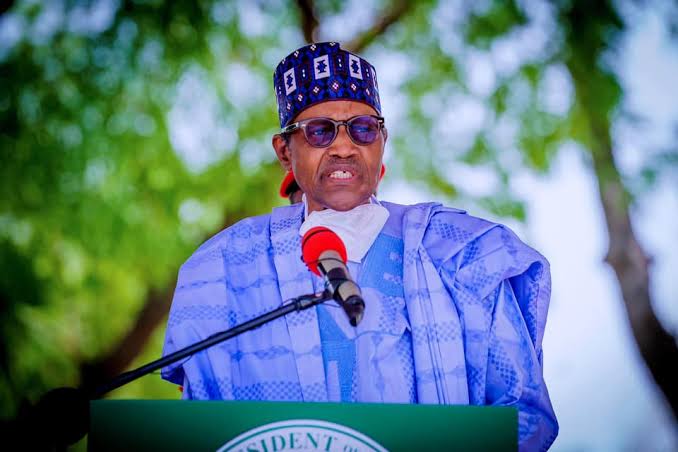
President Muhammadu Buhari has submitted names of seven ministers-designate to be screened and confirmed by the National Assembly.

The Senate President, Ahmad Lawan disclosed this during the plenary on Tuesday, June 21, 2022.

The names and states of the ministers – designate, read out at the floor of the Red Chamber include: Henry Ikechukwu – Abia State, Umana Umana -Akwa Ibom State, Ekuma Joseph – Ebonyi State and Goodluck Obia – Imo State.

Others are Umar Yakub – Kano state, Ademola Adegorioye – Ondo State and Odo Udi – Rivers State.

The nominees are to replace the ministers that left the administration to contest for different elective positions.

As at the time of fielding this report, the National Assembly is yet to schedule the date for the screening of the nominated ministers.

Students bemoan lingering FG/ASUU disagreements

By Uzair Adam Imam

The unending disagreement between the members of the Academic Staff Union of Universities (ASUU), and the Federal Government is increasingly generating reactions from students and eminent stakeholders across the country on the fate of Nigeria’s university education. In this special report, The Daily Reality gathered different and shocking responses of the students, concerning the lingering issue.

The incessant strike by the Academic Staff Union of Universities (ASUU) has been denounced as a farce that has negatively weakened the students’ morale to further their education in Nigeria.

The menace was also described as one of the most lingering issues that has been paralysing Nigerian universities, leading to the delay in students’ graduation and the deterioration of the education system in the country.

Some students that took to their social media to decry about the menace and how it slowly spirited their confidence away argued that the strike has destroyed the future of many promising youths in the country.

The Daily Reality recalls that ASUU has been on strike since February 14th, 2022, over the demands that include funding and the revitalization of public universities, Earned Academic Allowances, University Transparency Accountability Solution (UTAS) and promotion arrears.

In 2020, the union reportedly suspended its nine-month-long strike after reaching an agreement with the Federal Government.

However, the union bitterly complained that still after a year the federal government is yet to fulfil its promises.

Students are disappointed!

The ASUU strike has disappointed many students and led to the delay in their graduation, the development the students complained had spirited away the remaining confidence they had for studies.

A final year student, Abdurrashid Adamu, decried that, “I have less than six months to graduate from the university. Had I knew of this hitch to my studies, I would have embraced my diploma certificate and that would have been enough for me.”

Another student, Usman Idris Zakariyya, disclosed how ASUU strike has affected him and his friends saying, “many of my friends confided in me that they would not resume if not because they were in 400 level.”

Zulyadaini Auwal, a student who said he had already lost hope, stated that his business will experience a hitch if ASUU calls off their strike.

Khadijatu Abdullahi stated that she has no interest in studies anymore, adding that “had it been I was in 100 or 200 level I would have switched to college of education.”

People are mocking us – students

Some students also lamented the way some people derived very much pleasure in mocking them as the strike seems to have no end in a near future.

A student, Taufiq Musa, bemoaned at the way some people mock them because the ASUU’s strike lingers to about five months.

He stated, “nowadays, people used to mock anyone who determines and concentrates more on studies rather than something else.”

Yusuf Hassan, who seemed to be frustrated, said, “had it been I knew of this hitch in my studies, I would have not enrolled to school, let alone acquiring a diploma certificate.”

Saleh Ibrahim opined that he would have not resume to school if he was in 100 or 200 level, adding that, “and I’m sure many students will not resume.”

Parents raise alarm!

As the strike looks perpetual, some parents lamented that the advancing crisis between the government and ASUU jeopardizes their children’s future.

A parent, Malam Adamu Kolo, who looked disturbed by the unending strike, said that his son would have graduated if not for ASUU incessant strike.

Malam Adamu Kolo said, “My son would have graduated this year if not because of ASUU incessant strike. You can see that I am poor. I am hopeless. Our hope is on this boy.”

Another parent, Malam Musa Mukhtar, said, “our children live with almost no or gloom future. They neither go to school nor do they have anything to do for a living.”

ASUU members amidst hunger, heavy debt

As the strike persists to about four months, ASUU members decried leaving amidst hunger and heavy debt.

The lingering strike led to the imposition of No-Work-No-Pay by the Federal Government. The Minister of Labour and Employment, Dr Chris Ngige, stated that the directive was in compliance with Section 43 of the Labour Law.

A Senior Lecturer with the Department of Nigerian Languages, Dr. Muhammad Sulaiman Abdullahi, lamented how some of the members live without water and light due to heavy bills accrued.

He stated, “I remember how during the whole month of Ramadan, with the scorching sun and harsh temperature, lecturers languished with dry pockets and no salaries. Many lecturers didn’t have a chance to sew new Sallah (Eid) dresses for their kids, not even for themselves. Yet, another Sallah is approaching without any remorse or sense from this lousy government and its handlers.”

“The Maikantis (petty traders) selling raw rice, beans and other groceries no longer want to see us by their doors. Some of us have already forgotten toothpaste and have opted for chewing sticks now to remain clean.

“Our children have been sent out of schools due to non-payment of school fees. Landlords have knocked and banged on the doors of many; we pacified them, and some of them reason with us,” Sulaiman adeed in a piece he wrote.

No date for resumption

In a recent interview with journalists, the ASUU President, Prof. Emmanuel Osodeke, said there was no date for resumption, adding that hunger will not force the union to suspend their strike.

He added that the ASUU members are not beggars and the stoppage of their salaries by the government will not force them to call off their strike.

He further commended the members for keeping faith with the union expressing optimism that the union was on the threshold of victory.

However, some news of positive progress concerning ASUU and FG have started to fill social media and there is hope now that the strike may end soon. An ASUU member confirmed to TDR that talks between the FG and ASUU seem positive and now ASUU has already concluded its own part of the agreement, they are now patiently waiting for FG’s response.
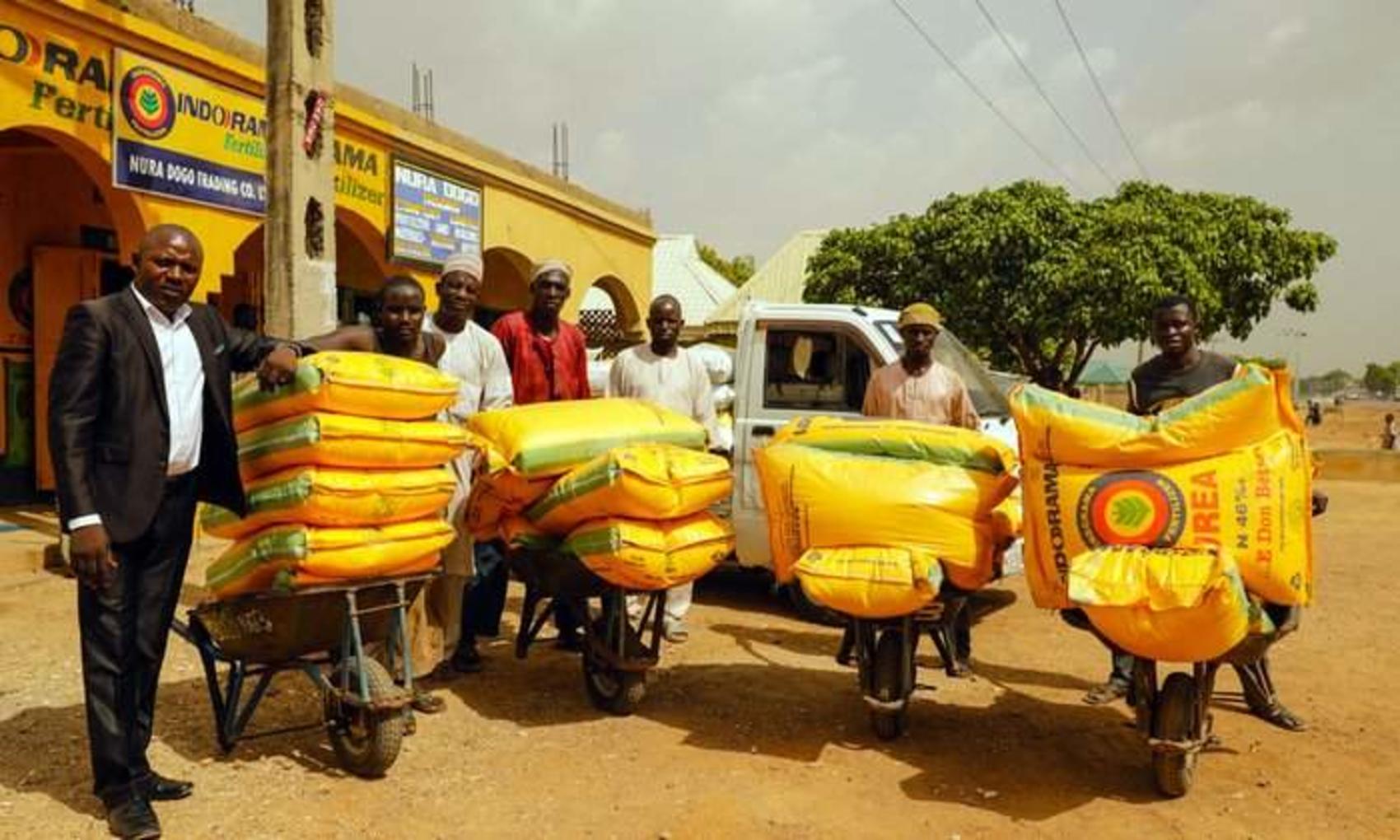
Fertiliser, herbicide’s prices soar in Kano as rainy season starts

By Muhammad Aminu

Subsistent farmers in Kano have decried the soaring prices of agro-inputs particularly fertiliser and herbicides as the farmers commence this year’s rainy season farming activities.

In an interview with The Daily Reality, some farmers said that prices of fertiliser and herbicides have skyrocketed to over 100% increase in some cases which would consequently affect their financial strength to afford the products necessary for better agricultural production.

The farmers lament that the inflationary nature of the prices would have adverse effects on their farming capacity amid tough economic situation in Nigeria.

A survey of Bata Market where fertiliser and other agro-allied products are sold in Kano by The Daily Reality revealed that Urea and NPK brands of fertiliser have recorded above 100% increase compared to their prices the previous season.

A 50kg of Urea and NPK fertiliser that sold at between N9, 000. 00 – N13, 000.00 in the previous rainy season now cost between N19, 000.00 – N 25, 000.00. To be precise, a 50kg of Indorama Urea fertiliser costs N22, 000. 00 against N11, 000. 00 last year; Dangote Urea sells at N19, 000.00 more than twofold of previous year’s value of N9, 000.00; Waraka Urea was sold N16, 000.00 in 2021 and now stands at N25,000.00 per 50kg bag.

For the NPK fertiliser, 15:15:15 Nagari and Golden Penny brands currently cost N25, 000. 00 each unlike last season’s N12, 000.00 and N13, 000.00 respectively while Kasco 20: 10: 10 brand now sells N15, 000.00 against N10, 000.00 last year.

The story remains the same for herbicides especially popular brands such as Vinash, Glycil, Paraforce, Dragon, and Bushfire among others. In 2021, their prices did not exceed N1, 800.00 at the extreme against current range of N2, 500.00 –N3, 000.00 per litre.

A marketer, Alh. Mustapha Zakari, said the price rise becomes inevitable because they also supply the products at exorbitant prices. “It is not our fault. We get the product at very expensive price and we have to get some profits for our effort. We are only middlemen. When we get it cheap, we sell cheap but when we get it expensive, we sell at high price too.”

Like most Nigerian states, Kano has significant number of rural folks whose primary means of production and earning a living is agricultural. Thus, both the rural and urban people are directly or indirectly connected to agriculture.

With the sharp changes in prices of agricultural inputs in 2022, many farming communities are finding it extremely difficult to afford fertiliser and herbicide which are very crucial in their agricultural activities that are being threatened by desert encroachment, deforestation and climate change.

Consequently, many farmers are now seeking for alternates to fertiliser in organic manure through use of refuse, human excrement, cow pats, chicken droppings, goat and sheep dungs in their farms.

According to Malam Musa Adamu, a subsistent farmer in Gano, Dawakin Kudu Local Government Area, “even the organic manure is now difficult to obtain.” He told The Star that “last year by this time, I purchased 15 bags of both NPK and urea fertiliser. But this year, when I went to the market with similar amount of money, I returned home with only six bags.” He wanted to have respite in organic manure but it also seems hard to collect in large quantity and convey it to the farm.

For Bala Sani, farming is becoming disenchanted to him despite his enthusiasm for agriculture. “I bought a litre of herbicide between N1, 500.00 to 1,800.00 last year. It now costs between N2, 500.00 to N3, 000.00. In fact, I reduce the size of my farm this year because everything costs more. It is better I farm small area that I can take care of it very well,” he said.

Nasir Ali whose farm in Kura village did not get adequate fertiliser last year, he said Allah’s rain would be sufficient both as water and fertiliser to grow his farm plants. He rhetorically asked “I am battling with how to survive with my family where can I get money for fertiliser?”

Although he did not dismiss the efficacy of fertiliser in farming, his position seems that of a hopeless and hapless farmer that only leans on his faith to the Supreme Being for bumper harvest “Our land isn’t as fertile as it used to be but there is nothing I can do. I would just accept whatever God gives me during the harvest. Even our refuse and animal waste aren’t available; and you have to buy and pay for transporting it to your farm,” he complained.

There are many stories of subsistent farmers whose lives and their entire communities depend on age-old agricultural methods to produce food for the state’s fast exploding population. With virtually absence of support from all the tiers of governments to bona fide farmers who are mostly rural based, food sufficiency or food security would continue to be a tall dream.

According to the Federal Ministry of Agriculture and the Food and Agriculture Organisation (FAO), Nigeria requires around 7 million metric tons of fertiliser to adequately cater for the needs of its farmers. Currently, Nigeria does not produce the required quantity and the Russian-Ukraine war has affected importation of both finished fertiliser and some raw materials for domestic plants which ultimately affect the price.

Pundits contend that Russia-Ukraine war portends adverse consequences on Nigeria’s and Africa’s agriculture because they heavily rely on Russia for nitrogen, phosphorus and potassium in their fertiliser plants which Euro-American sanctions make it inaccessible.

Although Africa’s richest billionaire Aliko Dangote’s 2.5$ billion fertiliser plant is estimated to produce 3million metric tons when completed which, alongside other producers, can serve the entire West African region, price of the product will still be a daunting challenge for rural dwelling farmers living below poverty line to afford the important product necessary for modern agriculture.

Hence, due to population explosion and diminished soil fertility, there is a need for a modernised, mechanised and improved agriculture to expand frontiers of food production to feed the fast expanding Kano population which subsistent farmers are already partners.

Relevant authorities, especially the state government needs to genuinely invest in agriculture; to modernise it and empower its poverty-stricken far bymers for a food-sufficient, job-creating and agro-exporting Kano.

Is this inflation a global problem?

By Salisu Yusuf

I was discussing with a friend who’s an auto broker and an arbitrage specialising in buying and selling goods from Benin Republic, Niger Republic and Nigeria. Our topic of discourse was the so-called global inflation put forward recently by the pro-government campaigners to defend our economic limbo.

From around 2000 to date, he argued cogently, the prices of goods and services were stable and fixed in Niger, Benin and Saudi Arabia – the economic reference points and benchmarks of our so-called economic analysts. They depend blindly on the economic malfeasance that befalls our country. The only change, he argued, is the exchange rate of our Naira to any foreign monetary denominator as our Naira plunges daily in value due mainly to our poor economic managers.

For example, around 2000, the tokunbo golf car was sold at 800,000 CFA Francs. Each 1000 CFA francs was exchanged then at ₦600. So, around that time, you could buy the car brand at around ₦768,000. Today, the same car is sold at the same 800,000 CFA francs. What only changes is the rate of exchange due to the Naira depreciation. Each 1000 CFA francs is exchanged at ₦960 instead of ₦600. So, the same car sold at ₦768,000 is now sold at ₦1.7m in the Benin Republic. 

Moreover, a bag of rice that could be purchased at 18,000 CFA francs, equivalent to ₦10, 800, for the CFA francs, was sold at a lower rate. Today, the same bag of rice is sold at the same price of 18 CFA francs as two years ago, but at a high price of around ₦22,080 because of the Naira devaluation.

Some people measure this so-called global inflation theory with the price of a meal in  Saudi Arabia. A friend once told me that a meal in a Saudi Arabian restaurant could cost you ₦5000, whereas ₦1000 could buy you a meal in Nigeria. I laughed at his low-level economic analysis. The ₦5000 Saudi meal is only realised if you exchange it for our depreciated Naira. If you calculate the number of Saudi Riyals exchanged for the ₦5000 is a low amount for a  person living in Saudi Arabia. In other words, the Saudi Riyal is only valuable if, and only if it’s changed to Naira! This is the same economic scenario I explained earlier in the CFA francs/naira ratio. 

The rate of exchange between Naira and Riyal, CFA Francs/ Naira, explains the economic limbo being faced by our country. This further illustrates the Federal Government’s resolve to increase the Hajj value-added tax from 5 per cent to 15 per cent. Moreover, it also hints at the government’s Hajj subsidy removal – hence, the exponential rise in 2022 Hajj fares to nearly ₦2.5m for the participating Nigerian pilgrims.

In the Niger Republic, prices of commodities are stable and fixed, as they do not fluctuate like in Nigeria. This is because President Bazoum manages the economy well; the government implements a protectionist economic policy, where Nigeriene goods are protected against their Nigerian counterparts through restrictions against export or putting high tariffs and handicaps placed through import quotas. Though many Nigerienes export petroleum in massive quantity from Nigeria, President Bazoum has restricted exporting of gas to Nigeria and restricts its consumption internally. Defaulters are taxed. Sometimes the products and their means of transportation are confiscated by gendarmes. 

Meanwhile, the high inflation rate has affected the price of our internal commodities. For instance, the gas imported from Niger is much cheaper than ours in Nigeria. Daily, hundreds of motorcycle riders import the Nigeriene gas on a large scale without paying any import tariff. Antithetically, Nigerian petroleum products are being exported into Niger without paying for excision to the Federal Government because of the border closure. 

Therefore, smugglers from, especially Niger, play their trump cards as they usually export our products freely, sell them in CFA francs at an exponential price in Niger, come back to our border and exchange the CFA into Naira, rebuy our commodities and go back to sell at a bargain price.

While we expect Mr President to cap up his swansong with a socio-economic legacy, we are daily disappointed that the man will finally end his tenure as a colossal failure, a disappointment to a poor talaka that stood blood, toil, tears and sweat to vote for this man.

Salisu Yusuf wrote from Katsina via salisuyusuf111@gmail.com.

Presidency confirms ex-Head of State Abdulsalami Abubakar’s ailing condition 

By Muhammad Sabiu

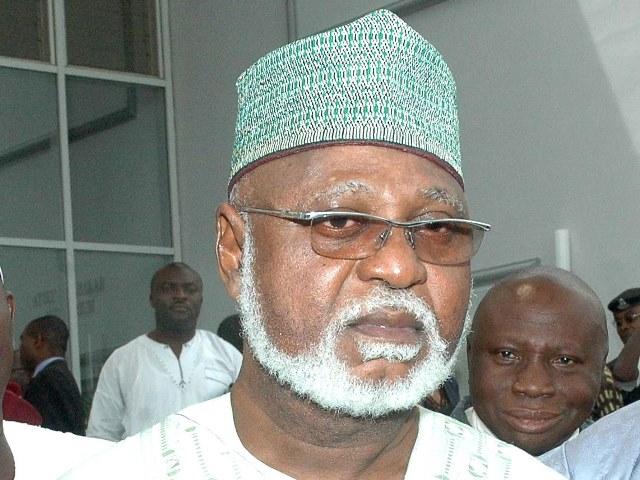
Garba Shehu, President Muhammadu Buhari’s Senior Special Assistant on Media and Publicity, has issued a statement on General Abdulsalami Abubakar’s health.

Remember that Abdulsalami was reportedly transported out of Nigeria for medical treatment, according to some media sources.

The retired Army General was reported to have suffered a minor stroke before being airlifted to a hospital in the United Kingdom (UK).

Shehu verified Abubakar’s release from the hospital in a tweet on Monday, stating that there was no need to be concerned.

“Alhamdu Lillahi for Allah’s mercy.

“I just ended a visit to His Excellency Abdulsalami Abubakar, former Head of State.

“He is out of hospital in a London apartment and apparently in no serious condition.

“He was his jovial self, maintaining a keen interest in developments back at home in Nigeria. Please, no cause for alarm.”

Abdulsalami was the Head of State in 1999, during which he conducted an election that brought the democratically civilian government of Chief Olusegun Obasanjo to power.