Month: June 2022

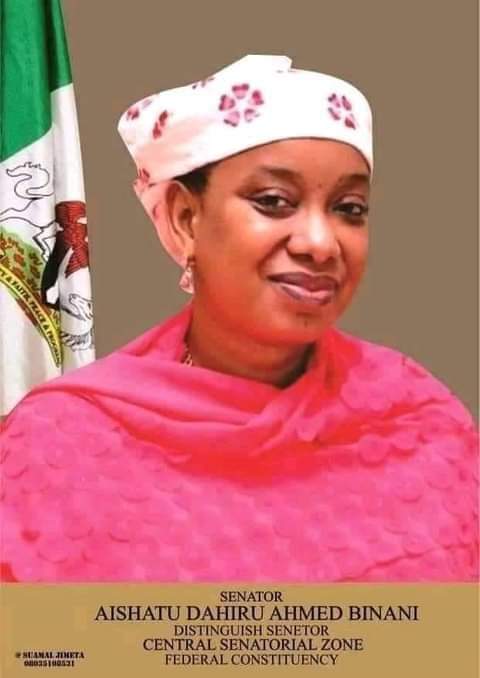
How APC’s only female guber candidate emerged in Adamawa

By Zayyad I. Muhammad

The May 27th 2022 Adamawa State All Progressive Congress (APC) gubernatorial primary election was hotly contested, very transparent, free, and fair.

Six contestants participated in the election — Former Governor Muhammadu Umaru Jibrilla Bindow, Senator Aishatu Dahiru Ahmed Binani, Former Chairman of the Economic and Financial Crime Commission (EFCC) Nuhu Ribadu, Member House of Representatives representing Ganye, Jada, Toungo and Mayo Belwa Federal Constituency, Abdul Razak Namdas, Former Chairman of the   Rice Farmers Association of Nigeria (RIFAN) Wafari Theman and  Umar Mustapha Otumba, a business tycoon.

Senator Aishatu Dahiru Ahmed Binani won the primaries with 430 votes, while Nuhu Ribadu came second with 288 votes, former governor Bindow got 103 votes, and Abdul Razak Namdas scored 94 votes while Wafari and Mustapha got 21 and 39 votes respectively.

Wafari came to the contest unprepared — firstly, his tactics failed to work for him. Wafari solely relied on the strategy that, being the only Christian in the contest, he will get all the Christians’ votes. In fact, Wafari painstakingly took the statistic of all the Christian delegates throughout the state. However, he failed to understand that, in such a contest, this kind of approach doesn’t work.  Secondly, and most importantly, Wafari suffered cash flow problems. He wasn’t able to tour most parts of the state nor meet the delegates. Wafari couldn’t even win his local government area – Hong.

Abdulrazak Namdas is the only aspirant that toured the entire state and spent heavily early in the campaigning period. In fact, this writer criticized Namdas’s behaviour as a candidate instead of as an aspirant.  However, Namdas’s behaviour of acting like a candidate is borne out of the contentment that he is the only aspirant from Adamawa southern zone- the zone has 9 local government councils. Furthermore, Namdas so much believe, that he already has the over 200 votes from Toungo, Jada, Ganye and Mayo Belwa LGAs. Namdas heavily relied on votes from the Adamawa Minority Forum, but he was shocked. Namdas’s errors were that he spent too much, and too early in the wrong ways. He also relied on votes that he had really not secured and lacked a robust campaign team.

Former Governor Muhammdu Umaru Jirilla Bindow is one of the most likeable aspirants in the contest. Since he lost to Fintiri in the 2019 governorship election, Bindow has remained the leader of the APC in the state. Most of the stakeholders’ meetings were held at his residence in Abuja until the time he asked Boss Mustapha to takeover. Though, Boss never called such a meeting at his residence. The reason is that Boss always tries to avoid controversy and he appears comfortable with his SGF position. Bindow came to the race with a strong war chest but poor strategy.  Bindow was convinced that the APC structure would work for him. After all, he erected it. However, he failed to secure the votes of Mubi North, Mubi South, and Maiha LGAs combined. Bindow and his team found it hard to believe he came third, because, on paper, Nuhu and Binani shouldn’t have beaten him.  

Umar Mustapha Otumba came to the race with a very poor understanding of real local politics. No doubt that Otumba understands the politics of the first world, he is in the know of how to analyze development, but those are not the languages the delegates understand. Otumba was aggressive and overconfident. He was the first to buy the APC governorship form. What ‘killed’ Otumba’s ambition was, that the delegate and in fact, the ‘politics; saw his approach as too artificial. What he did,  was just like, he spoke in Chinese while addressing the French- Nigerian local politics don’t understand his kind of approach.   

Nuhu Ribadu operated his game as the true policeman that he is. His entire approach was covert. Nuhu didn’t open an official campaign office nor set up the traditional campaign team with a DG, he only formed a small committee two weeks before the primaries. What Nuhu did was; that he spent a good time working on his weak point- grassroots link. He avoided controversies, he never underrated anybody, built friendships, and tried to localize himself. Nuhu has been silently assisting the APC financially and otherwise. His 288 votes were not a coincidence- he earned it – through constant engagement, mobilization, and support from all the APC executives at the LGA level. He supported the creation of an environment to discuss Adamawa APC’s problems at local government levels and proffer solutions. These were the major factors that facilitated the 288 votes secured by Mallam Nuhu Ribadu. Nuhu’s biggest error was poor logistics and war chest utilization and over-centralization. He could have segmented the state into its 8 federal constituencies with coordinators to handle each.

Aishatu Dahiru Ahmed Binani came to the race with assured votes in her ‘handbag’- women constitute nearly 40% of the delegates.   When Binani entered the voting arena, the entire women among the delegates welcomed her with a melody ( Guda). That was a big signal to her opponents that she was ready for the game. Local empowerment,  smart political calculations, and enormous & clever application of war chest including grassroots base were Binnani’s weapons, and they worked for her. Most of her votes came outside her zone. She found that Abdul Razak Namdas was ‘sleeping’, she chunked away the majority of the Ganye chiefdom votes.

In fact, that zone’s votes were the turning point. She also realized that Former Governor Bindow has underrated them and was carried away by his ‘past glory’- she grabbed good votes that were supposed to go to Bindow. Furthermore, her team realized that Wafari doesn’t know the game and had weak resources- she ‘won over’ a good number of his would-be delegates. Binani didn’t in any way made any attempt at Nuhu Ribadu’s, thus she smartly allowed the Nuhu team to be comfortable in their comfort zone while she carried her operations somewhere else.

Binani has a sweet victory but is coated with a bitter problem. There are allegations of over-voting and financial inducement. The EFCC has already arrested some of the accused while 2 people have been arraigned in a court. If the allegations of overvoting is established-  from the anomaly of accredited voters 1009, while total vote cast was  1011. The APC has no option but to cancel the primaries and organized a new one. The APC guidelines say: “no member shall vote for more than one aspirant, and where the number of votes cast exceeds the number of accredited voters the election shall be declared void”.

If the APC has to conduct a new gubernatorial primary election in the state   – the party has three options; conduct direct primaries, conduct indirect primaries or produce a consensus candidate.   Some pundits are of the view that due to the expensive nature of indirect primaries; some of the contestants may avoid another contest with Binani, secondly if indirect primaries are to be conducted – Binani may attract sympathy votes from many members of the APC and a revolt votes from the women folk. If a consensus candidate is to be carried, and Binani was not chosen, the ticket will come weightless.

 The Adamawa APC gubernatorial primary election was an interesting and unique one- apart from producing a woman as the party’s flag bearer for the 2023 governorship election, the ticket is laden with an intricate legal problem. Furthermore, the result of the contest has sent an important message to the Adamawa people- religious and ethnic politics is just an elites’ thing; the individuals that came first and second are Fulani, while the lone Christian aspirant didn’t secure even a fraction of the votes from delegates who share the same faith with him.

Zayyad I. Muhammad writes from Abuja via zaymohd@yahoo.com.
Why Kwankwaso deserves more accolades

By Najib Ahmad, PhD

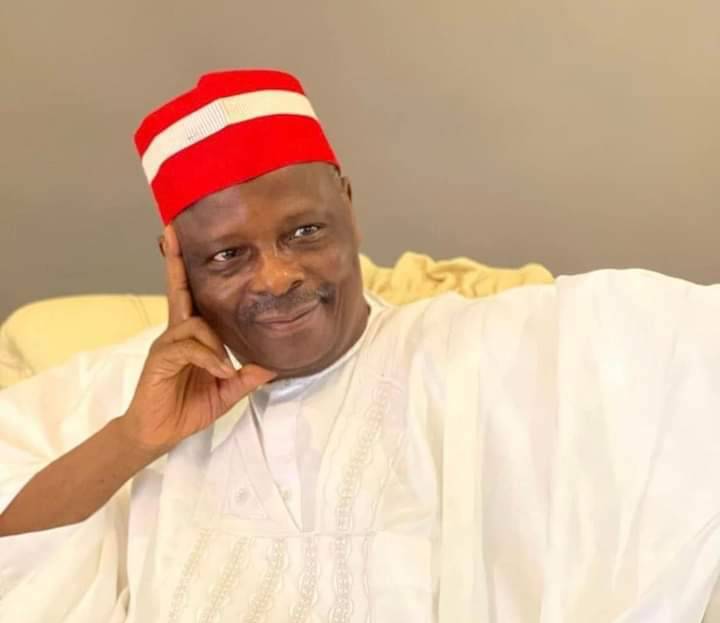
We often hear people saying that ‘he [Sen. Rabiu Musa Kwankwaso] did it with the government funds.’ And so? Oh, you expect him to do it with his money; then, you will ponder whether he’s worthy of their gratitude. But, this is not how things have been done right from the inception.

If you read over the history of the previous great Muslim rulers like Umar Ibn Abdulaziz (61-101 AH), may Allah have mercy on him, you will realize the incredible impressions he left on people despite being a caliphate for a short period. But, it is known that all he had achieved and built weren’t from his funds. Still, he’s remembered and admired.

People often appreciate the history of how other nations developed, which primarily transpired through human development. But, for example, how do you think today’s China and Singapore got it right? Do you think they only wake up to all this in the morning? No, it was because some leaders decided to do it right and went on to create policies that enabled them to reach where they are today.

For instance, if you take China, they unconditionally relish Deng Xiaoping – the architect of modern China. While Singapore’s Lee Kuan Yew is also highly recognized as the founder of modern Singapore, they constantly appropriate him for its development. During their time as leaders of developing nations, all they have accomplished weren’t with their funds but with the government funds.

Those leaders’ priorities then were primarily policies on education and the industrial revolution transformation. Sending students, including the peasant farmers’ children, to universities worldwide via scholarships was part of Mr Xiaoping’s most significant policies that China benefited from. His initiatives have matured into a whole system, i.e., the China Scholarship Council (CSC) and China Postdoctoral Science Fund. This remarkable initiative alone helps them strengthen their universities and vocational colleges with a quality workforce and, in turn, enables them to become the world’s industrial powerhouse.

Today, check all your household belongings to verify the above. Those two leaders are still relevant in China’s and Singapore’s present days. You can’t underestimate their significance no matter how you try due to the enormous opportunities and equal advantages they created for their people.

I understand your frustrations, which is why one person out of more than 12 million people of Kano is receiving too many accolades. First of all, it is their choice to appreciate him, mind you. This is because he means so much to them. The good thing is, you can’t deny them this satisfaction even if you try. So, why the resentment? Allow those that prefer to do what suits them to continue thanking and re-thanking him till the end of time, if that is their wish. What’s your problem with their choice, fisabilillahi?

Above all, the main thing to look at is that appreciating Kwankwaso’s effort doesn’t physically hurt you or anyone else or destroy any of our fundamental values. In fact, it is teaching people to learn to recognize good deeds and be thankful to whoever is responsible or part of their progress in life. Isn’t this a harmless mannerism to learn, emulate, and propagate?

Dr Najib Ahmad is a Postdoctoral Researcher at Shandong University, China. He can be contacted via namuhammad03@gmail.com.

Bola Tinubu’s last dance

By Ahmed Musa Husaini

Two things are now becoming clearer: Bola Tinubu will not clinch the APC presidential ticket if it is to be decided through consensus. The second thing is, he’s determined to be on the presidential ballot in 2023 (even if it means contesting on the platform of a different party).

Asiwaju Tinubu’s political career is one that is steeped in irony and drama. When he was a regional (southwest) leader, he was able to control his boys and consolidate his influence. He became the kingmaker feted by all who want to be president in post-Obasanjo’s Nigeria. Jonathan struck a deal with him in 2011 and Buhari sealed one 2015.

Tinubu’s mistake is his inability to adjust to the new political dynamics post-2015. His usefulness as kingmaker was only because he holds influence over the Southwest. As soon as that influence begins to diminish (as was seen in the 2019 elections), and as soon as he made open his intention to succeed Buhari, he’s no longer a kingmaker but simply a king-wannabe at the mercy of other kingmakers.

The truth is, no Nigerian politician comes into contact with power at the center and remain the same again. If Tinubu had remained a regional leader, he would still be in control of the Southwest, and presidential candidates would be trooping to Bourdillon seeking his alliance. Asiwaju is merely a victim of his own successes.

By choosing to go national, Tinubu not only risked diluting his own influence, but also exposing his boys to the federal side of political power and patronage never experienced before. His former commissioners and proteges are now vice presidents, ministers and presidential advisers. They have now experienced the enormous patronage of federal power in a way that enable them to outgrow his influence.

One after the other, his boys whom he had nurtured out of political obscurity started having problem with (and even plotting against) him. The only ones that stayed loyal are the ones who still need him. Osinbajo, Fayemi, Fashola, Ojudu, Aregbesola, the list is endless. His political capital begins to depreciate and people begin to perceive the Tinubu brand less favorably, gradually becoming a liability with the masses but still a force to reckon with due to his formidable political structure.

Success has its own price. The list of his adversaries keeps growing: his estranged political boys, his natural enemies in the PDP and Afenifere, and even those Buhari haters who must bring Tinubu into their hatred of the president. It didn’t help that the president was underwhelming, and it didn’t also help that after over 20 years of ruling Lagos via proxies and unprecedented growth in internal revenue, the city still remains a pastiche of everything that’s wrong with Nigeria.

Tinubu’s candidacy in the APC is insurmountable because he has problems with 3 groups of stakeholders: his own southwest group who see him as a dying political brand that is running out of steam. To them, Tinubu must choose between dignified political retirement or humiliation. One thing that cannot be disputed is that Tinubu made them or contributed greatly to their making. And their decision to abandon him exposes him to political attacks elsewhere. Little wonder that he’s now more promoted by northern politicians than his kinsmen from the southwest.

In the Buhari camp, there are two school of thoughts: one camp believes by virtue of his contribution to the Buhari project, the president should support Tinubu in reciprocity. The other camp argues that having given Tinubu the privileges of appointing the vice president, senate president, speaker of the HoR, ministers and other senior officials, Tinubu is more than compensated for his support and the president should not be beholden to any promise real or imagined.

Then there’s a third group of APC governors who are the real powerbrokers in APC. This group has mixed feelings about Tinubu from favorable to unfavorable. Governors want a president that will listen to and even consult them. Tinubu’s treatment of Ambode (despite interventions from his governor-colleagues) and his recent public lashing of Governor Dapo Abiodun are good indicators of the group’s opinion about Asiwaju. If they cannot count on his respect and consideration now as a candidate, what if he becomes president?

In all this mix, you have Bola Tinubu the politician on one hand, lamenting in the language of political betrayal, tired of being a kingmaker and ready to rock the boat if his boys and allies will not reciprocate his past support. And on the other hand, you have President Buhari who – true to character – has failed to groom a successor and does not even have a succession plan in place because he basically has no legacy to protect and no ‘personal’ scandals to cover up.

It is easy to understand Asiwaju’s pain if all that he built was predicated on personal ambition alone. Purpose determines reward. We cannot blame people for their ambitions, we can only discuss them based on our understanding of history and interpretation of current events. As Tinubu gets ready to gyrate full circle in his last political dance, one single misstep will condemn him to the wrong side of the stage, and of history.

Ahmed Musa Husaini is an APC enthusiast, he writes from Abuja

Water scarcity in Kano: ₦12bn spent in two years, people rely on water vendors

By Muhammad Aminu

Kano Metropolitan local governments remain in perpetual acute shortage of water supply despite budgeting 12 billion Naira for water supply in the last two years by the State Government.

In 2021 and 2022 budgetary allocations, Kano State Government earmarked six bn each fiscal year for the Kano State Ministry of Water Resources for its activities, including tackling water shortage in the state.

However, residents of different communities in Dala, Fagge, Gwale, Kano Municipal, Nasarawa, Tarauni and Ungogo Local Government Areas continue to face acute water scarcity as Kano State Water board could not meet up with the city’s water demand amid excruciating heat waves that require plentiful water to survive.

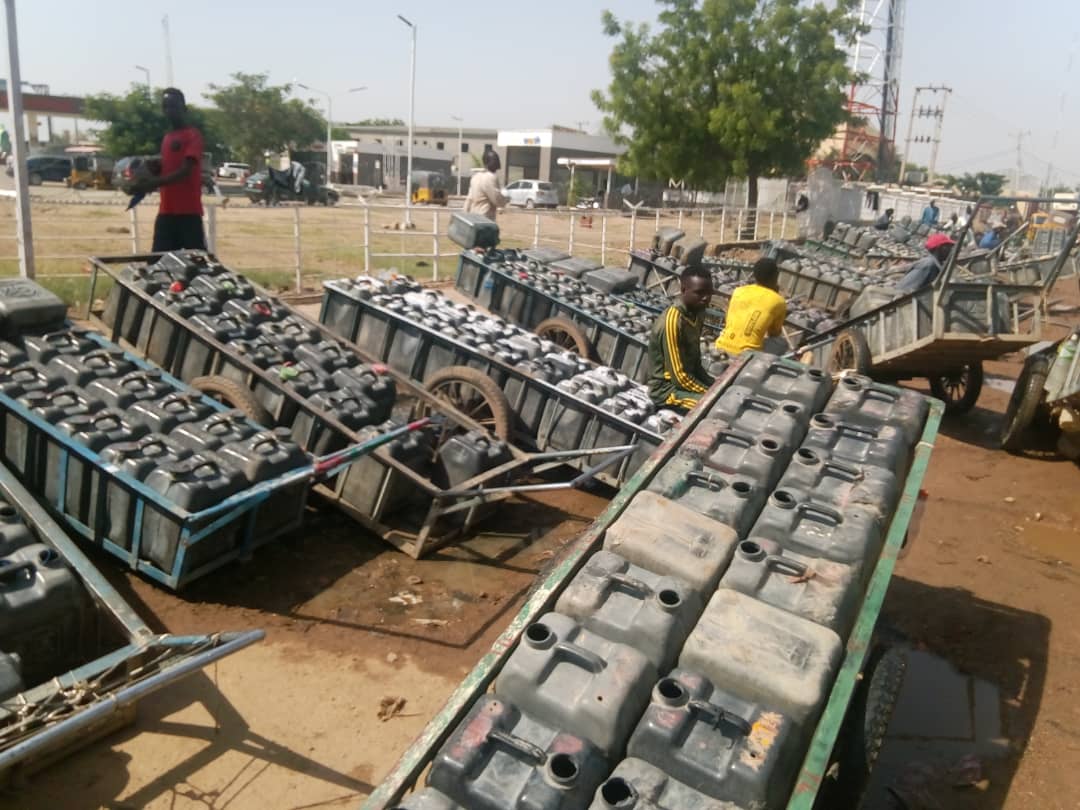
Many residential areas visited by The Daily Reality reporter remain at the mercy of water vendors, who are the leading suppliers of water for household consumption and daily need in the ancient city.

A resident of Fagge, Kabiru Sani, said that water had become a scarce resource that they use consciously to save themselves from the difficulty of sourcing it. “We are really suffering from lack of water. So we now use boreholes, and some good Samaritans that have boreholes in their houses often connect it to walls outside their houses so that their neighbours can access.”

Unlike Kabiru’s area, Abubakar Adam said their primary source of water supply is water vendors who supply them with water and some time. “We buy a 25-litre jerry-can at the rate of N50 on normal occasions, but when things are terrible, we buy the same jerry-can for ₦100.”

Ja’afar Musa said in their area, around Tal’udu, sometimes they get water at the mercy of good samaritans who supply them water in water tankers to ease off their suffering.

In the Dorayi Karama area, Haruna Bala told The Daily Reality that water vendors are their “Steady and reliable water suppliers.” Tap water comes to us sometimes once a month. The only well close to my house, which we abandoned, come to our rescue, but it cannot provide sufficient water to the neighbourhood.”

Other areas in the inner part of the commercial nerve centre of northern Nigeria, such as Tal’udu, Mandawari, Fagge, and Sabon Titi, often get respite from water tankers that supply water to the areas by good spirited individuals and, on some rare occasions, by the government.

In Dan Agundi, people resorted to fetching water to their houses from nearby mosques that make water provisions for worshippers to perform ablution.

“I once bought a 20-jerry-can cart of water from the vendors at ₦2000 because there was no electricity and not many water vendors then,” said Kabiru Idris of Kofar Nasarawa in Kano city.

Generally, the water supply problem cuts across all nooks and crannies of Kano with a varying effects from one location to another.

Some water vendors who spoke to The Daily Reality said they are also affected by the erratic power supply that makes it challenging to have a constant price for their supplies.

Rabiu Hussaini said he supplied a cart of 20-jerry-can for ₦1000, “I sell one jerry-can ₦50, but when there is no light sometimes, I sell more than that up to 100 per one because where we buy the water from also increase the price.”

He added that “We used to pay N70-100 per cart with 18 or 20 jerry-cans, but now we pay 120 – 200 to get water from the managers.”

Mohammed Sani, who survives on his water vending business, said they are finding things hard despite their crucial work of serving the water supply needs of the residents. He lamented that “We use our energy to do the work. We buy water from boreholes or tank owners before supplying it to the people. Then, we hire the cart, and we pay a tax of ₦50 daily.”

For Sunusi Idris, whose sole essence of leaving home to live in Kano City is working and gathering some money for his family’s needs. “I make a maximum of ₦5000 on a good day, but sometimes I make just ₦2000 a day.”

The vendors, however, complain that apart from the tax they pay, police and KAROTA officials charge them fines for any slightest misdemeanour.

This is coming despite Kano State Government’s yearly pronouncements and allocations to provide the state with adequate, portable drinking water.

Earlier during budget defence and presentation, the then Kano State Commissioner for Water Resources, Sadik Wali, said six bn was budgeted for the Ministry in 2022 in addition to loans secured from France and support from donors.

Sadik Wali told the press that Tamburawa and Challawa Water Treatment Plants were to be rehabilitated. “Our major focus is the provision of portable water supply, especially in the face of health challenges recorded in the state and also rehabilitation of our existing infrastructure….”

The Commissioner further said that “Tamburawa Water Treatment Plant has a capacity of 120 million litres per day while Challawa Water Treatment Plant has a capacity of 90-120 litres per day.”

He acknowledged that they are only running the plants at 40 – 70 per cent capacity subject to availability or otherwise of energy through electricity or generating set.

Kano State Water Board Managing Director, Dr Garba Kofar Wambai, earlier apologised to the residents over the inability of the board to supply water to the people.

The Daily Reality could not find any response from the Kano State Ministry of Water Resources for the lingering water problem in the state as the Commissioner for water resources, Sadiq Wali, resigned his position in March to pursue his gubernatorial ambition.

APC screening committee disqualifies 10 presidential aspirants

By Ahmad Deedat Zakari

The All Progressives Congress, APC, screening committee has disqualified ten aspirants vying for the presidency on the party’s platform. 

The Chairman of the Committee, Chief John Odigie-Oyegun, disclosed this on Friday, June 3, 2022, while submitting the committee reports to the ruling party’s Chairman, Abdullahi Adamu, in Abuja. 

The names of the affected candidates are yet to be disclosed, but 23 aspirants participated in the screening, and only 13 were reportedly successful. 

The successful candidates are expected to participate in the primary election scheduled to hold between 6 to June 8.

Is education still key to success?

By Kasim Isa Muhammad

Education is the bedrock of development. Suppose the education system in the country can be revised to emphasize the practical aspect of education, particularly entrepreneurship. In that case, there is a great tendency that youths will be self-reliant and employers of labour. This is because they must have developed knowledge in technology and had productive knowledge for the future.

Education can be the key to success if the government, at all levels, can create a technical support platform for undergraduates to learn how to transform their knowledge into something useful for the nation.

Also, education can be considered a key to success when the students acquire good knowledge from qualified teachers and trainers. Therefore, the government needs to look for quality teachers, put them at the forefront, pay them good salaries, and equip the educational buildings with modern materials. If the students go through such a way of acquiring knowledge, education can be described as the key to success.

There is no doubt that education is the key to the problem in every human society, but, unfortunately, in Nigeria, the case is entirely different, where graduates roam the streets looking for jobs. However, in developed countries, students are taught to invest in entrepreneurship.

Recent statistics establish that 25 million graduates are unemployed, indicating that the government cannot employ the high population of graduates. Thus, there is a need for government to think and rethink providing job opportunities for our teeming youths.

Nonetheless, the government is doing its best to reduce unemployment with many programs initiated by President Muhammadu Buhari’s administration. The N-power is a good example. The program was solely established to reduce unemployment, but unfortunately, many Nigerians are misusing the money that will help them invest in entrepreneurship.

Yes, education is still a key to success when some skills are acquired. However, many of our graduates do not know that skill is sometimes more important than a certificate. Obviously, in the real world, people need to see what you can give, not what you have.

We all need to wake up from our deep slumber because the government cannot do it alone. We need to use the skills we acquired to help find lasting solutions to problems bedevilling the country.

Kasim Isa Muhammad wrote from Potiskum, Yobe state.

I am from Tudun Wada

By Salim Yunusa

Whenever I proudly proclaim “Ni fa ɗan Tudun Wada ne” – I am from Tudun Wada, – people think I say that to sound tough, rough or somewhat a deviant. And they’re partly right, because being from Tudun Wada will make anyone dealing with you to know that you don’t take crap and you’re not a pushover.

Tudun Wada, Zaria, a place once known for thuggery, moral decadence and regression, has had an amazing twist of fate in the last few decades; the thugs have dropped their weapons and picked up tools, seeking gainful employment. Spots and sights that are notoriously famous for immoral acts have been converted to schools and trade sites. Of course, no society is perfect, but the progress recorded in our community is on the right side of history.

When I walk around the long roads of Aminu and Maje roads, I see the imprint of my childhood; of games played in filin Ka-ci-uwaka, of tyres rolled in the streets of Kugu road and playing “service” in the middle of Sabon layi. I see my peers, whom I once hid from due to fear as they sneaked for a swim in River Kubanni and Anguwan Ƙaya. As I walk around I pluck down memories of childhood from trees we once stripped off of their fruits and I see houses and faces that have weathered the weight of time.

But most importantly, whenever I say I’m from Tudun Wada – and I say it a lot, I say it with so much pride, encompassing the wholeness of it; of what it was, where it is now and where it’ll be. I am its people, its landmarks and its institutions. I am a walking encyclopedia of Tudun Wada, a reel of memories and a calendar of memorable dates and events. I am a visual album of its people, a hidden scroll of its past and a blueprint for its future.

I am Tudun Wada; the proud outcast son of Zaria, a son which traditional supremacists tag “baƙo” – a visitor, who has made his host and others proud. Taking on all the negative tags and ugly labels, I do not allow my past nor my origin define me. Like fine wine, I get better with time, constantly churning out prodigies that are putting not just Zaria, but Nigeria on the map.

I am Tudun Wada, the home of Muslim Refresher Course Program and its many offshoots – Muslim Special Training Program, ELSA and others. Refresher is the mother of all weekend lessons in Zaria and has successfully ran for 26 years and counting, producing professors, an appreciable number of PhDs and uncountable Msc and BSc holders in Zaria and beyond. Refresher is unarguably the pride of Tudun Wada, for it welcomes all students of knowledge from far and sundry has also been replicated in other areas of Zaria and beyond.

In my well-planned grid iron patterned streets, I contain historic and prestigious incubators of Islamic knowledge such as Higher Islam, Imamu, Nurut Tilawah, Darul Salafeeyah, the house of Sheikh Muazu, Dahleez, Markaz, Mu’assasah, many reputable Zaures and Islamiyyahs. In me are Niimah Jumuah Mosque, Eid Prayer Ground and many other prayer houses that people come to from far and wide.

I am the host community of many institutions; welcoming and making it a sanctuary for both staff and students of ABU Kongo, ABUTH Tudun Wada, FCE Zaria, Nuhu Bamalli Polytechnic, Queen FM among others. I contain the best secondary school in Zaria, Demonstration Secondary school, a melting point of great minds.

I am Tudun Wada, the proud father of illustrious scholars; from the learned Baba-Ahmed, whose teachings and progenies are a pride to Arewa and beyond; from establishing universities to conquering the media space and politics. I am the home of Abdurrahman Mora, who dedicated his life to the betterment of the community through knowledge, I housed Dr Abubakar Imam, a gifted storyteller, seasoned politician and a statesman Nigeria is still proud of, I am Adamu Dikko, Arewa’s first pharmacy technician. I birthed Namadi Sambo, a one-time Vice President of Nigeria and a one-time governor. I am Lawandi Tabaco, I am Maude and more. My story wouldn’t be complete without Hajiyar Makaranta, the female scholar who dedicated her life to teaching children.

I am Tudun Wada, who birthed Industrious sons and daughters; from Alhaji Banadeen, whose name is a household name in Zaria, to Alhaji Maje. I am the famous Shagalinku, who has a midas touch when it comes to commerce, to the large family of Baba Trader who are still standing tall to this day. I am Alhaji Haruna Ɗanja, whose mansion and mosque dots and adorn the Old Jos road. I am Hajiya Kaka, the story of my famous Masa has travelled far and wide. I am Ƴar Wali, the renown home of food for students and all. I am Alhaji Kilaco, whose sweetened yoghurt traveled far and wide.

I am Tudun wada, the home of tailors renowned for their expertise, interweaving the ancient skills of embroidery and design with modernity. I am the milkmaids of Bakin Kasuwa, traveling distant kilometers to satiate the thirst of hundreds everyday. I am the Igbo Spare Part sellers in Agoro. I am the home of insanely talented footballers and teams — I am Umaruru Zango and his brothers and the famous Hallirus. I am Salisu Yusuf D Black, I am Ibrahim Kwakwa. I am the past, present and future Nasara United — representing me both locally and internationally. I am a pool of energetic, ingenious youths such as Ibrahiym El-Caleel, Abdulhaleem Ringim, Ghazali Tanimu, Abubakar Sytees and more. I am a conglomeration of different tribes and cultures, living in harmony with all.

I am all I am today due to Allah’s blessings and the guidance and wisdom of our elders; Alhaji Ahmadu Ido, Alhaji Jibo, Alhaji Jafaru Mai Iyali, Baba Jafaru, Alhaji Shafi’i, the Musawas, Commissioner Jari and more, who pushed for education among their children and community. I owe my renaissance to Mal Aliyu Sabo and all the staff that dedicated their lives to educating the youth.

So, before you label and profile me, know that I am everything you could think of. I am all they say I am – and more. I am Tudun Wada and I am proud.

  • Salim Yunusa,
    Salim writes from Zaria and is the Founder of the PoeticWednesdays Literary Initiative.

Battling financial insecurity in Nigeria

By Nusaiba Ibrahim Na’abba

It is indeed sickening and quite unfortunate to have been part of the Nigerians alive to witness the gruesome killing of Harira and her children and two others in Anambra State. We haven’t even been relieved of tensions that arose from the derogatory remarks on our beloved Rasul SAW. And amid these tensions, another heartless fellow has murdered his niece in Kano – a similar event as Hanifa’s.

Undoubtedly, these seven years since the administration of President Muhammadu Buhari kicked off have been the most unprecedented for many Nigerians. Stressful periods have made killings assume a state of normalcy, especially in the Northern part of the country, and many horrendous activities now don’t even get into the spotlight.

While we continue to deal with post traumas after witnessing more than enough horrifying stories of senseless murders and killings of innocent lives, we continue to fiercely battle financial uncertainties from different angles, coming in distinct shapes and sizes. There has never been a time when we have found ourselves at risk of losing our earnings. From a series of unfounded mobile messages to mysterious calls and emails from strangers, we have been bombarded with multiple ‘Yahoo! or 419’ daily. We think one step to securing our earnings while these ‘intellectuals’ are already a hundred miles ahead. Such is the cruel world we live in a while our leaders wander in a desultory fashion.

To begin with, are the ‘Yahoo intellectuals’. In this context, they have proven beyond any iota of doubt that they are efficient to prosper and have almost always never missed their targets by successfully outsmarting technologies our private financial institutions, alias banks, breaching secured accounts of innocent people in order thieve their hard-earned money – only God knows the kind of cumbersome efforts put in to get them. They are perfectly immune to any countermeasure provided by these banks. Only a few of them are being traced.

The height of this situation will not puzzle you until you hear a bank staff declaring that it is not the bank’s fault but ‘yours’ – the customers’ fault – who exposed your bank details to a ‘Yahoo Pro’ unknowingly. Ideally, banks are supposed to be substitutes for traditional means of saving assets, but the current situation shows that they’re becoming dangerous institutions. Filing a complaint is intensely laborious as your insignificant earnings do not matter so much to the banks. You’d spend hours in a queue to face your worst fear – they can do nothing to help you.

In a recent report published by FJI Nigeria, a student’s $2000 was stuck and only released after their report. Similarly, just on May 8, 2022, the same FJI Nigeria published how a nurse based in Ogun State lost her N95,000 after her ATM card got stuck in the ATM and after her communication with one of the GT bank’s staff. Millions of peoples’ earnings have continued to slip away through untraceable means as banks claim or through multiple deductions from the banks. In some southern states, you could be robbed with a gun when withdrawing cash from an ATM and others adopt POS machines for these fraudulent activities.

There is also another set of dubious humans that use religious covers to decorate their Yahoo strategies. For example, you’d receive calls from unknown fellows claiming to be in good spirits, giving references from the Holy Qur’an and directing you to a strange place where they want you to keep the money for them, and they help you in return. Sounds hilarious, though, but it still happens. Another way they opt for is by sending random text messages about a critical condition of their family member, and they’d threaten you to send a stipulated amount to them or fear the unthinkable happening to you.

Let me highlight that the current wave of rancorous political exchanges in the primary elections is also enshrouded by financial insecurity. We have all vividly seen the disparity in the offers presented to ‘delegates’; it all boils down to ‘money’. Of course, it unveils how deep-seated corruption is in our country, but it also paves the way for us to see that not only the ruled are financially unstable. As the delegates go for the highest bidder, so do the aspirants try to bid the highest amount or withdraw from the race and embrace the likely winner for basically financial and political advantages. For the aspirants, some are very calculative to either invest where they’ll win or save what they’ve pocketed.

I wouldn’t do justice to this discourse without reiterating the kidnap for ransom mishap that continues to flourish without any sign of slowing down. The ‘business’ has now reached a stage of maturity such that Nigerians are challenged to save for unwary expectations indirectly. You may not be directly involved, but your support would be needed when an outrageous amount of money is demanded from a person you know.

The dangerous convergence of economic hardship, lack of political will, and financial insecurity has placed Nigerians grievously. The damage done to widows, orphans, families, workers and students is unimaginable. Assets aren’t safe at home and are neither safe at the banks. And with the continuous devaluation of the Nigerian currency, the means of our sustenance has become an uneasy endeavour.

For now, the government is overwhelmed with so much politicking – divergences, convergences and calculations are taking a toll on virtually everything. So, since the major financial institutions that deal with the exchange of money are private, and the government has proven its incompetency to bring solace to our impediments being at the receiving end, we can offer solid suggestions on how best we can be treated with dignity by these banks.

Securing our dignity and finance at this point means banks must make a move to create codes that we can use to halt the operation of our accounts when necessary. It’s distressing how they have created codes for transfers and recharge card purchases without prioritising securing our accounts. This can be a gigantic step to counter our susceptibility to fraudsters as they are fully aware that their malicious intentions can only be crushed when the damage is done.

Then, it would be worthwhile for the government to equip its legal system to challenge these private financial institutions to ensure sanity in their operations. I firmly believe they aren’t above the law, and nobody is.

Nusaiba Ibrahim Na’abba is a master’s student from the Department of Mass Communication, BUK. She is a freelance writer and researcher. She can be reached via nusaibaibrahim66@gmail.com.

Terrorist bandits launch brutal attacks on Zamfara communities, kidnap many

By Muhammad Sabi’u

Gunmen have carried out another horrific attack in four Zamfara State towns, killing dozens of residents. According to an eyewitness, the number of villagers slain could not be determined yet, but the bandits took several of them, leaving four individuals with varying degree of injuries.

According to reports, the villages are Gidan Dan-Inna, Gwaji, Karoka in Kwai-Kwai District, and Faru, in Bungudu and Maradun local government districts.

Some eyewitnesses reveal that, majority of those killed were members of a local vigilante group who were protecting the communities, and some of the community members were attacked on their farms.

Terrorists with powerful weapons were claimed to have assaulted the villages, killing and rustling animals. The communities were reportedly attacked on Sunday evening and early Monday morning, destroying properties worth millions of naira.

When contacted, the State Police Command Spokesman, SP Mohammed Shehu, confirmed the tragedy, adding that twenty people were slained in three villages in Bungudu Local Government and five more in Maradun Local Government Areas of the State.

Armed operatives have been dispatched to the affected and surrounding areas to protect people and their properties in the axis, he said.

Blasphemy: Legal Aid Council denies lawyer to Abduljabbar Kabara

By Muhammadu Aminu

Legal Aid Council of Nigeria has refused to provide legal aid services to a controversial Kano cleric, Abduljabbar Kabara, who is standing trial for alleged blasphemy.

The Daily Reality earlier reported that the cleric sacked his previous legal teams over a misunderstanding.

Justice Ibrahim Sarki Yola earlier urged the Council to provide pro bono legal services to the cleric to enable him to have a fair trial.

The Council argued that Sheikh Kabara does not deserve its services because he earns more than Nigeria’s minimum wage (30,000).

According to the Council, it is also out of its jurisdiction to defend an alleged blasphemy case.

The prosecuting counsel, Yakubu Abdullahi, appealed to the Judge to allow the Kano State Attorney General and Commissioner of Justice to provide lawyers for the plaintiff.

Justice Yola, however, denied the request and directed that a letter should be written by an independent lawyer, Barr. Dalhatu Shehu to defend the cleric.

Sheikh Kabara has been facing trial for charges related to blasphemy in an Upper Shariah Court in Kano, although he denies the allegations.

Justice Yola adjourned the case to June 9, 2022, for a continuation of the trial.