Month: June 2022

When not to celebrate democracy

By Mukhtar Jarmajo

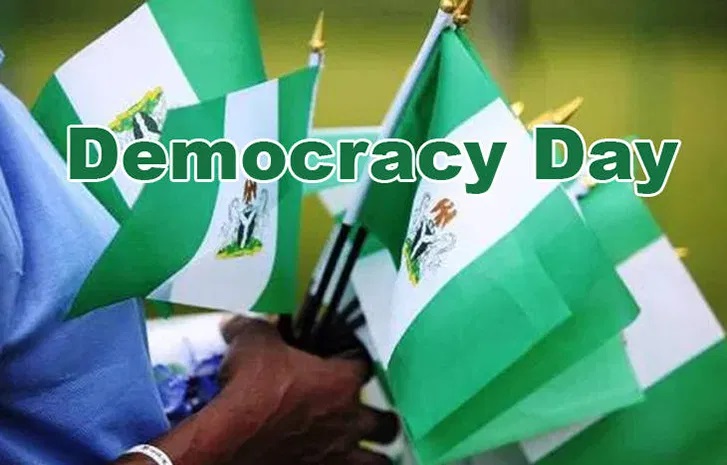
Every year, Nigeria’s federal government declares June 12 as a holiday to celebrate the nation’s democracy. It used to be May 29 as it was the date democracy returned to our shores in 1999 after many years of military dictatorship. But to acknowledge and immortalise the democratic struggles of the late MKO Abiola, the date was changed by President Muhammadu Buhari virtually two years ago. It is, however, astonishing that as a nation, we put so much time and energy into celebrating democracy, which in the truest meaning of the word, does not exist on the shores of Nigeria.

Democracy is about freedom, but what there is here is post-colonial slavery, where the ordinary man lives in untold hardship perceiving the miasma of hopelessness. When the lives and properties of the citizens of a nation are not safe; when there is no access to affordable and quality healthcare services; when a nation’s education system is shattered; when a nation’s economy is so unhealthy that most of its citizens hardly afford two meals a day, it bears no repeating that the citizens of this country are in the shackles of slavery. Therefore, one cannot talk about practising the democratic system of government.

How can we even celebrate democracy in today’s Nigeria when our universities have been under lock and key for almost six months owing to industrial action embarked upon by lecturers? It is here that Petroleum Motor Spirit (PMS) is scarce and therefore only obtainable at high prices with attendant consequences on all goods and services.

In today’s Nigeria, human life has no value given the spate of kidnappings and killings that occur daily across the country. Moreover, corruption, which is like a poison coated with sugar and thus mortally dangerous to the entire human species, is rooted in Nigeria’s public and private sectors.

There is no law and order in the polity. Almost everyone is morally and mentally impatient that we cannot follow queues in banks, hospitals, airports and shops. In virtually all instances, one person tries to take advantage of the other. The public space is chaotic. So, ordinary people are under pressure as we go about our daily activities. And worse is that there is hopelessness on our faces, given that there is no hope in sight for merry days ahead.

What is very obvious is that both the leaders and the followers in this country are ready to let the nation continue journeying on this very rough and dusty path. While most of the leaders here are selfish, the biggest number of followers are irresponsible. Most Nigerian politicians aim to rule and please themselves through corruption and self-aggrandisement. They achieve it by using the fault lines of religion, region or ethnicity to divide the people and eventually get the opportunity to perpetuate themselves in power.

And to worsen matters, the people, the electorate, who have the democratic means to save the nation from the drift towards collapse, have failed to do so for obvious reasons. Poverty and illiteracy, which are direct products of bad governance, have effectively forced the people into allowing the leaders of Nigeria to divide us on the fault lines of religion, region or ethnicity and then rule us. This is one of the reasons why Nigerians rarely speak in unison against all the hardships and the apparent injustices the people are grappling with.

Jarmajo writes from Misau, Bauchi state, via dattuwamanga@gmail.com.

Buratai calls for dialogue with terrorists

By Ahmad Deedat Zakari

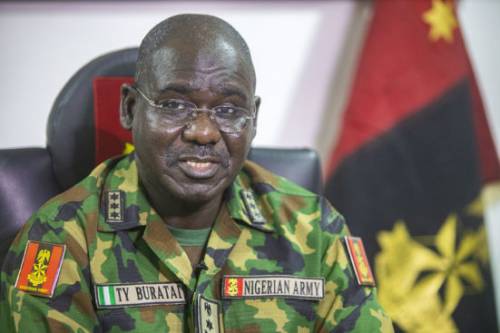
A former Chief of Army Staff and Nigeria’s Ambassador to the Benin Republic, Lt. Gen. Tukur Yusuf Burutai, has called for negotiation with insurgents and armed groups terrorizing the country.

Buratai spoke at a one-day symposium on National Security organized by Arewa House in Kaduna on Saturday.

According to Burutai, there must be a serious effort that there are no ungoverned places in the country.

Buratai also commended Sheikh Ahmad Gumi and agreed with him on his negotiation approach with bandits as a way of ending insurgency in the country.

“This is where I commend Sheikh Gumi for his initiative. One-third of the fight is military; others should be non-kinetic through dialogue. We must get this solution, and this is the right time to get it done,” he stated.

Some clarifications ahead of 2023

By Amir Abdulazeez

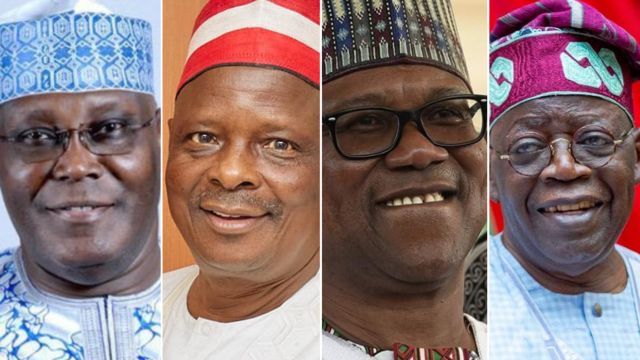
The primary elections of the two leading political parties, APC and PDP, had come and gone. However, the dust raised by the exercises across various states of the federation is yet to settle. As things are going, it is unlikely that both parties’ primary election appeal committees will adequately or significantly settle the dust to the extent of amounting to a major change of the status quo. After all, everything was clear; the contests were majorly a measure of financial power.

As usual, our attempts to digest the intrigues and expectations of the upcoming grand 2023 event have once again resulted in endless debates that often lead to more confusion than clarifications. Certain political dynamics cannot be adequately explained by simple analysis or even complex ones. This is truer for cases like Nigeria, where deep insight is considered old-fashioned, authentic information is always scarce, and genuine narratives are always twisted.

Ahead of the just concluded APC Primaries, many accused Yemi Osinbajo of being a traitor and betrayer by contesting against his benefactor Tinubu. However, few people will understand that only one out of a million people will go so close to the presidency as Osinbajo did without succumbing to the temptation of taking a shot at it. The cabal theory notwithstanding, he is perhaps the Nigerian Vice President who was closest to the full privileges of the presidency in recent history. At a time, the Professor himself appeared like the next President in waiting. In sincere terms, Osinbajo may feel that running for the Presidency is more of an attempt to fulfil a destiny than betraying a godfather whose help he may not need any longer.

Maybe, many have forgotten that the Vice President had at a time been an Acting President with virtually full Presidential powers. He is aware of people’s confidence in his competence and knows that many factors are against Tinubu’s candidacy. With the Southwest as the default region where APC will likely have its next candidate, it is only natural he (the second default candidate) tries his luck in case Tinubu (the default candidate) does not get the nod. How can he cash in on a Tinubu collapse if he doesn’t contest? If he hadn’t competed, his promoters would never have forgiven him. Now that he had competed, he knows the extents and limits of his political strengths, which might have been hitherto exaggerated.

Some analysts have accused Tinubu of trying to become President at all costs despite being sick and unstable. We have forgotten that he had, since 1998, invested almost 25 years of his life (and health) trying to reach this point, and we all know he will need an ultimate reward at the end of it all. Now that the prize is within reach, only one out of a million people will back off over health challenges that are yet to prevent him from managing a public appearance. When he made all those sacrifices and concessions, many of us did not bother to understand the larger picture of where he was heading. If not for democracy, one will suggest that the APC ticket should’ve been handed over to him unopposed.

Therefore, Tinubu has fought for long. He has been in the opposition all his life. He has helped build a new political order in Nigeria. Without him, power will still likely be with the PDP and maybe forever. It’s not his making that his health appears to be failing him at this moment of near fulfilment, but as a human, he will continue believing his condition is good enough to manage him to the finish line. The late President Ƴaradua’s situation in 2010 should teach us some lessons, that of Buhari in 2017 too. Tinubu is undoubtedly not the best APC had on offer capacity-wise, but he is the most formidable. His political structure is out of this world. Win or lose, at least they have repaid a significant part of the debt they owe him.

In the build-up to the primaries, we all thought everyone was an enemy of the Southeast since the rest of Nigeria had refused to zone the presidency to the region exclusively. In his speech at the APC convention, Ogbonnaya Onu emotionally shouted for justice against the Igbo marginalization. If not for the APC and PDP Southeast delegates who proved the Igbos’ unpreparedness by refusing to vote for any of their kinsmen, everyone would simply be emotionally blackmailed. Besides, we have all seen how disorganized the Southeast aspirants were across both parties.

From 2003 to 2010, the Southeast was considered a formidable political bloc, but they wasted opportunity after opportunity to consolidate. Instead, they focused on ethnic and religious politics. Conceding the Presidency to the Southwest in 1999 was basically a military arrangement executed against democratic principles. The Southeast demanding the same in a maturing democracy is quite tricky. In this era, no one will gift you the Presidency; you have to earn it.

Another aspirant is NNPP’s Rabi’u Kwankwaso. His critics accuse him of being a local champion. However, his supporters insist on rating him higher than Atiku and Tinubu based on a tangible track record. However, the debate is not as simple as it seems. The same scale cannot be used to measure Tinubu, Kwankwaso and especially Atiku, as their political career paths are distinctively different. The truth is that Kwankwaso is a national figure who has invested too much energy in local politics, which was why he achieved what he has achieved. However, this has come with a price because he has dominated and taken away all the local relevance he could’ve easily allowed his subordinates to coordinate, a feat that would’ve given him a Tinubu-like aura. In the end, he ends up fighting for crumbs with local people, making him unavoidably local.

What of Peter Obi? He appears to have more packaging than substance, but he is yet another litmus test for the Southeast. They feel denied, marginalized and short-changed. Their response should be a massive vote for him. Even if he may not win, they will succeed in sending a strong message ahead of 2027. However, there is a wiser option. They can use Petr Obi as a bargaining tool with someone like Kwankwaso for example; form an alliance, challenge the red-cap man to deliver the Northwest zone while offering Southeast and see whether something will come out of it.

The bottom line is that we don’t need to be too upset or over-obsessed with anybody’s ambition, any region’s miscalculations or any party’s misdirection. There are so many choices in the political landscape that our myopia hinders us from utilizing. For example, if you genuinely want an Igbo president, the Labour Party has fielded Peter Obi. If you want somebody whose hands are not shaking, NNPP has fielded Kwankwaso, etc. So quietly do the needful and urge others to do the same. Give it a try. The strong parties and candidates are only front liners because you and I made them so.

Nigerian public discourse often makes complex political analysis look simple and simple political analysis look complex. And finally, we end up achieving no political analysis at all.

Twitter: @AmirAbdulazeez.

Thugs restrain EFCC officials from arresting Rivers PDP guber candidate

By Uzair Adam Imam 

Armed thugs have assaulted and restrained officials of the Economic and Financial Crimes Commission (EFCC) from arresting the governorship candidate of the Peoples Democratic Party (PDP) in Rivers State in the 2023 general elections, Siminialayi Fubara.

The incident that surprised many took place Tuesday at the Port Harcourt International Airport when Fubara, alongside other PDP chieftains, arrived at the airport from Abuja.

The Daily Reality gathered that Fubara jetted to Abuja to receive his certificate of return alongside some of the PDP chieftains. 

The thugs, who were believed to be his supporters, reportedly thwarted the EFCC officials from arresting him.

The EFCC Head of Media and Publicity, Wilson Uwujaren, confirmed that the operatives of the Port Harcourt Zonal Command of the EFCC were restrained from arresting Fubara.

Uwujaren condemned the development, describing it as a blatant attempt to obstruct justice.

He, however, warned that the commission’s civility should not be taken for granted. 

The Daily Reality recalls that the EFCC had declared Fubara wanted over alleged N117 billion fraud.

Wole Soyinka, Ibrahim Maqary and Western Neo-Paganism

By Ibrahim Ado-Kurawa

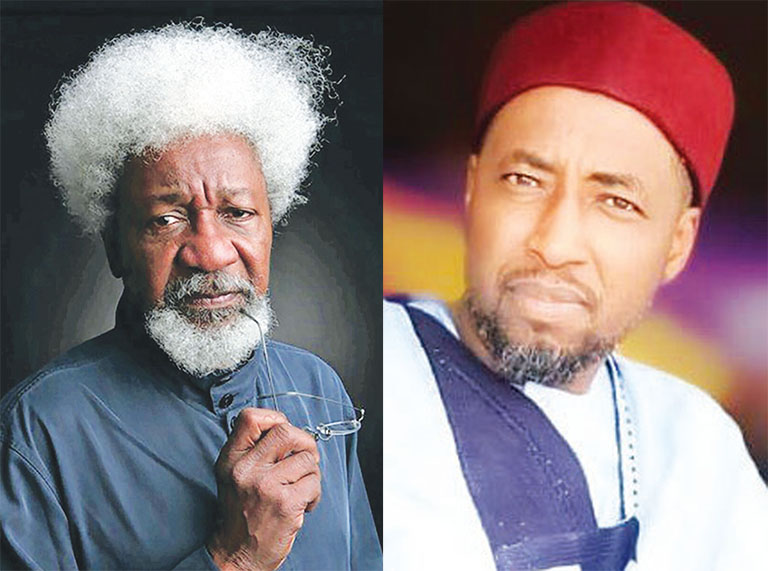
Wole Soyinka is a Nobel Laureate who won the highest prize for his work in Drama, where he excelled. But as everyone knows, no one who opposes Western ideas will win that prize. In fact, those who oppose their indigenous worldviews are more likely to win it. A good example is Neguib Mahfouz, the Egyptian anti-Islamic intellectual. Ibrahim Maqary, on the other hand, is an Islamic scholar who became prominent at a very young age because of his proficiency and erudition. They are from divergent backgrounds. Soyinka was nurtured in the neo-pagan Western intellectual tradition. Maqary was nurtured in the Muslim intellectual tradition of Sudanic Africa.

The neo-pagan Western Civilization, sometimes referred to as Western Christian Civilization, considers itself as the superior civilization, and all others must judge their practices according to its criteria. The West, since Enlightenment, has continuously incorporated pagan traditions. Hence Roberts’s conclusion that “Europe once coterminous with Christendom is now post Christian and neo-pagan” (Roberts 1996: 583).

The Islamic and Sinic Worlds have resisted Western intellectual domination. Therefore Ibrahim Maqary and other Muslim scholars always speak their minds damning the irritation of Western neo-pagan inspired scholars. Soyinka will insist that he is independent, but this is not true. His ideas of freedom are not original but primarily influenced by Western Neo-Paganism. He is not even a pan Africanist compared to Walter Rodney, Ngugi and Franz Fanon, who resisted colonialism. He was only engaged in sophistry, which is a form of intellectual cowardice.

Yes, there are elements of African traditionalism in Soyinka’s ideas, but they are those acceptable to the West. They include his anti-Islamic and anti-Muslim postures. He supports animism in Muslim majority Yoruba land. Hence despite his liberal pretensions, he never opposed the killings of innocent Hausa Muslims in Yoruba land by Sunday Igboho and other Oduduwa terrorists as much as he opposed the extra-judicial killing of Deborah Samuel in Sokoto.

Like his Western patrons, Wole Soyinka never opposes the killings of innocent Muslims. Hundreds of Hausa Muslims and non-Muslim northerners have been killed by IPOB and unknown gunmen in the South East. Yet, Wole Soyinka and Christian Bishops never protested loudly as they did for the extra-judicial killing of Deborah. Their conception of human beings is rooted in the Western intellectual tradition where the other has no value.

Why has the Neo-Pagan West become so inhuman even though Man has been the pivot of its philosophy since Renaissance? This could only be understood within the context of European history and the abolition of Christianity, and the entrenchment of secularism. Jesus (peace be upon him) did not come to destroy the Law of Moses but to confirm it and give glad tidings of the coming of Ahmad (SAW), the last Prophet. Therefore his followers remained Jews until the conversion of Paul. And eventually, Jewish Christians under the leadership of James, who upheld the Law, were obliterated (Wilson 1984: 126-7). This paved the way for emphasizing only the teachings of Jesus relating to personal piety, and people were encouraged to regard Caesar as supreme in worldly matters (Mark 7: 17).

Subsequently, Christianity became the Roman Empire’s official religion, and the clergy wielded power and influenced decisions. During the theocratic phase, in some areas, the clergy ruled, and the Pope, as the head of the Christendom, crowned the Kings and Emperors. The Church abused this privilege because Pauline Christianity was not equipped for this purpose. This necessitated a Reformation led by the Protestant fathers. In most parts of Europe, the clergy were made to revert to the position Paul intended for them. Many scholars have shown how Protestant ethics led to capitalism (Raghuram 1999: 236). The Catholic areas of Europe also followed these steps, and the influence of religion in public life was gradually reduced. Europeans believe that they were backwards in the Dark Ages because of the influence of the clergy, which caused the “Christian disease” (Lewis 2002).

With the curing of the “Christian disease,” religion became marginalized in Europe, and there was a shift from God as the pivot of philosophy to Man (Aminrazavi 1996: 384). This was the Enlightenment philosophy. According to Kant, one of the greatest Enlightenment philosophers, this current facilitated the emergence of man from his self imposed infancy and inability to use his reason without the guidance of another (Inwood 1995: 236-237). The Enlightenment philosophy preached equality for citizens of the nation but encouraged brutality and even genocide against others.

For example, the French revolution, which was a product of Enlightenment that gave birth to the republic based on “liberty, equality and fraternity”, but it restored slavery after it jailed Toussant L’Ouverture, the leader of the revolt in Haiti who was inspired by the French revolution (Time, December 31, 1999 p. 164). This shift from God to Man led to all the atrocities committed by Westerners who came to regard themselves as superior and all others as expendable. They lost the compassion of Christianity and became Christians in name only. And they were always willing to use Christian missionaries for this agenda. As confirmed by Pope Paul VI, the apostles who were extremists were also willing to be associated with the European imperialists because they regarded all non-Christians as heathens.

The public aspect of Christianity was abolished because the clergy misused the privilege. This was why Roy made his statement: “Secularity and politics are born of a closing of Christian thought onto itself” (Roy 1994: 8). Fukuyama also observed that: “Christianity in a certain sense had to abolish itself through a secularization of its goals before liberalism could emerge” (Fukuyama 1992: 216). This made it possible for some Western Christians to hate others and commit the worst crimes in human history: colonialism and Nazism. As a result, more than fifty million people lost their lives during the Western-inspired Second World War, the worst in human history.

This Western imperialist epistemological vision has enabled Western leaders to commit the worst atrocities against humanity despite human rights pretensions. European Americans committed genocide against Native Americans and Africans to build their economy. It is universally acknowledged that Western leaders lied when they invaded Iraq, as there were no weapons of mass destruction.

They spent trillions of dollars to destroy Muslim countries: Iraq, Afghanistan, Libya and Syria, causing the worst humanitarian crisis. Since World War II, the worst conflict has been the resource war in the Democratic Republic of Congo (DRC) caused by Western companies. Over three million people have lost their lives. No one cares about these atrocities in the West, but their diplomats can talk about Deborah in Nigeria.

Wole Soyinka and some Christian leaders can show their outrage against the extra-judicial killing of Deborah but not the massacre of innocent Muslims in the South East precisely because their worldview is rooted in the Western intellectual tradition. Muslim lives are nothing to people like Wole Soyinka. Hence, he was one of those who signed the petition that the murderers of Tafawa Balewa, Sardauna and military officers of northern origin should be released because the lives of Muslim and non-Muslim northerners eliminated do not matter. And now they want the mob that killed Deborah to be prosecuted simply because she symbolizes the violation of the sanctity of the Prophet (peace and blessings be upon him), not because of any humanitarian consideration since they are selective.

Wole Soyinka has no respect for the Prophet of Islam (peace and blessings be upon him). There is no problem with this since he is an acclaimed unbeliever, but he should show understanding of the Muslim position as an intellectual. Ibrahim Maqary, on the other hand, as a Muslim scholar, considers the position of the Prophet of Islam as more important than the world and what it contains. Therefore, just as Western imperialists can destroy countries to satisfy their hedonistic lives, Muslims are willing to sacrifice their lives for the Prophet (peace and blessings be upon).

Muslims have no history of genocide against non-Muslims or cruel destruction of countries as in the case of Iraq, Libya, Afghanistan and Syria or evil obliteration of communities like Tafawa Balewa in Nigeria.

Muslims, unlike Western Christians, have not abolished Islam; therefore, they cannot tolerate infringement on the sanctity of the Prophet. This is the worldview of the Muslims, and why should anyone query it? Must Muslims adopt a Western neo-pagan worldview? This can never happen. No Muslim scholar has ever called for the extra-judicial killing of anyone who violates the sanctity of the Prophet. It is the responsibility of the state to take action against those who commit this crime.

There is no doubt Wole Soyinka will continue his pretentiousness that Ibrahim Maqary should be sacked from the position of Imam of the National Mosque. This is one of the reasons why he was awarded the Nobel Prize – to promote Western neo-paganism against Islam. Ibrahim Maqary, on the other hand, will continue to attract the respect of the Muslims for protecting the sanctity of the Prophet (peace and blessings be upon him). Muslim scholars will also continue to maintain their position that Prophet must not be insulted and, at the same time, no mob action or human rights violations of innocent citizens.

Ibrahim Ado-Kurawa is the Editor of Nigeria Year Book and Who is Who. He can be reached via ibrahimado@hotmail.com.
Tinibu Victory: Atiku, PDP govs in closed door meeting

By Uzair Adam Imam

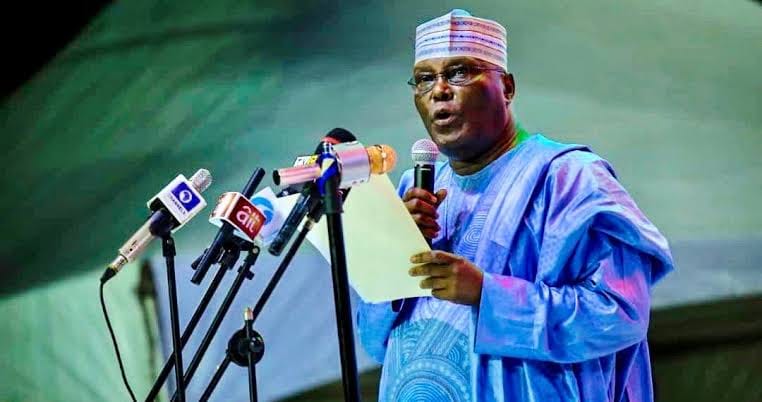
The presidential candidate of the Peoples Democratic Party (PDP), Atiku Abubakar, is reportedly holding a closed door meeting with the governors of the party in Abuja.

This is however coming not long after the former Lagos state governor, Asiwaju Bola Ahmed Tinubu, was announced winner as presidential candidate in the ruling All Progressive Congress (APC) primaries took place last night.

It was gathered the isses to be discussed include strategies of the presidential campaign with the view to uproot the APC from power in the 2023 general election.

The Daily Reality learnt that some of the governors at the meeting were Samuel Ortom, Sokoto state Governor Aminu Tambuwal and his Oyo state counterpart Seyi Makinde.

Others were said to have been Bayelsa Governor, Douyi Diri, Bauchi Governor, Bala Muhammed, Rivers Nyesom Wike, and that of Benue.

All these are coming as preparations towards the 2023 general election, with all the candidates from different parties trying to emerge winners as the time is due.

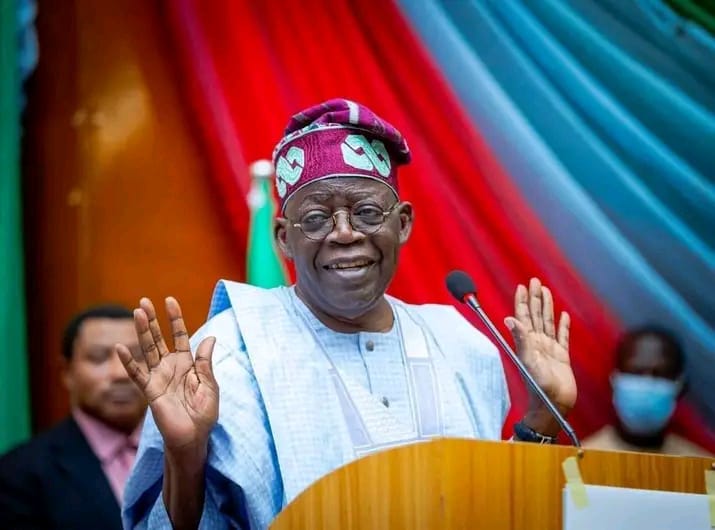
Tinubu wins APC presidential primary election

By Ahmad Deedat Zakari

Former Governor of Lagos State, Asiwaju Bola Ahmad Tinubu, has been declared the winner of the All Progressives Congress, APC, presidential primary election. 

APC held a special convention between 6 to 8 of June 2022 to elect the ruling party’s presidential candidate.

Tinubu emerged as the APC candidate at the end of the presidential primary after polling about 60% of the 2300 votes. 

He defeated his closest rivals, Nigeria’s Vice President, Professor Yemi Osinbajo and former Minister of Transportation, Rotimi Chibueke Amaechi, to clinch the ruling party’s ticket.

Tinubu is expected to face the candidate of the country’s major opposition party, Atiku Abubakar, and others in the 2023 general election.

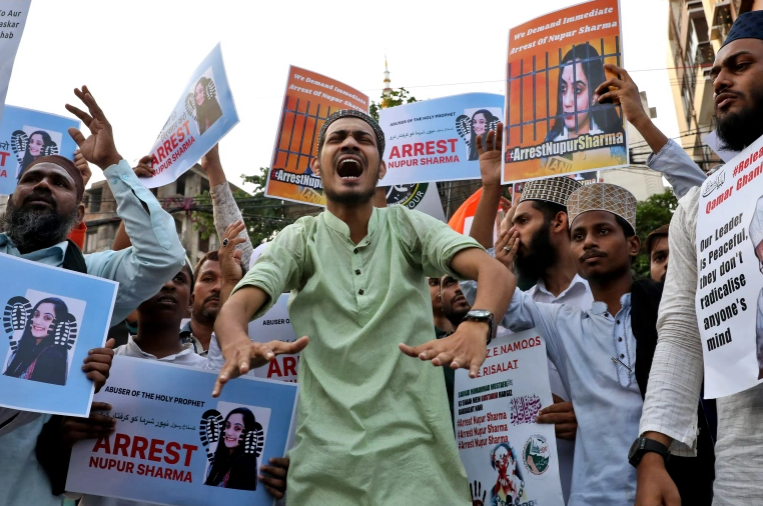
Nupur Sharma: Indian BJP member who attacked Islam

Throughout this week there is a heavy tension in the Muslim world, as one lady called Nupur Sharma, who is the spokeswoman of the Indian Hindu party, BJP, spewed insults on the prophet of Islam. Many commentators around the world accused Modi’s government of complicity in such crimes as there is so much increase in attacks and humiliation of Muslims and Islam in India right from the beginning of his reign. This time around, the Muslims worldwide, are outraged and condemned the barbaric act of Sharma and called upon the Indian government to act against such transgression.

Indian women protesting against the ignorant Nupur Sharma’s madness

According to Aljazeera, leaders “of India’s Hindu nationalist ruling party have instructed officials to be “extremely cautious” when talking about religion on public platforms after derogatory remarks about the Prophet Muhammad drew protests from Muslim nations.

Two leaders of Prime Minister Narendra Modi’s Bharatiya Janata Party (BJP) said verbal instructions were given to more than 30 senior officials and some federal ministers who are authorised to take part in debates hosted by Indian news channels often broadcast live to millions of viewers, the Reuters news agency reported on Tuesday.

 “We don’t want party officials to speak in a way that hurts the religious sentiments of any community … They must ensure the party’s doctrine gets shared in a sophisticated manner,” said a senior BJP leader and federal minister in New Delhi, according to the report.

With about 110 million members, mainly Hindus, the BJP is the world’s largest political party, while Muslims comprise about 13 percent of India’s 1.35 billion population.

Last week, the BJP suspended its spokeswoman Nupur Sharma and expelled Delhi media cell head Naveen Kumar Jindal after Muslim nations demanded apologies from the Indian government and summoned diplomats to protest against anti-Islamic remarks made during a TV debate.

Qatar, Saudi Arabia, Oman, the United Arab Emirates, Indonesia, Afghanistan, Pakistan and Iran were among the nations that made their complaints public.

The influential 57-member Organisation of Islamic Cooperation (OIC) said in a statement that the insults came in the context of an increasingly intense atmosphere of hatred towards Islam in India and systematic harassment of Muslims.

On Wednesday, Iranian foreign minister Hossein Amirabdollahian arrived in New Delhi for bilateral talks with India – the first visit by a senior minister of an OIC member nation after remarks on the prophet triggered outrage in the Arab world and other Muslim-majority countries.

Iran had summoned the Indian envoy in Tehran to lodge its protest against the anti-Islam remarks made by Sharma and Jindal.

BJP youth leader arrested

Meanwhile, police in northern Indian state of Uttar Pradesh arrested a BJP youth leader for posting anti-Muslim comments on social media, officials said on Wednesday.

Harshit Srivastava was arrested in Kanpur city following communal tensions last week during a protest by Muslims to denounce the anti-Islam comments.

“We arrested the local politician for making inflammatory remarks against Muslims,” said Prashant Kumar, a senior police official, adding that at least 50 people were taken into custody following the tensions in Kanpur.

Srivastava’s lawyer was not available for a comment.

Sporadic unrest was reported in other parts of the country over the anti-Islam comments by the BJP’s Sharma.

Members of Muslim groups in India said it was the first time influential foreign leaders had spoken out against what they called the humiliation experienced by the minority community.

“Our voices have finally been heard, only world leaders can nudge Modi’s government and his party to change their attitude towards Muslims,” said Ali Asghar Mohammed, who runs a voluntary rights group for Muslims in Mumbai city.

India’s Muslims have felt more pressure on everything from freedom of worship to wearing the hijab (head scarves) under Modi’s BJP. There were Hindu-Muslim clashes during religious processions recently, following deadly riots in 2019 and 2020.

Although the party has denied any rise in communal tensions during Modi’s reign, the BJP rule has emboldened hardline Hindu groups in recent years to take up causes they say defend their faith, stoking a rise in anti-Muslim sentiment.

The US State Department, in an annual report on international religious freedom released last week, said that attacks on members of minority communities, including killings, assaults and intimidation, took place in India throughout 2021. India’s foreign ministry said on Monday the offensive tweets and comments did not in any way reflect the government’s views.

“We are not barred from speaking on sensitive religious issues, but we must never insult the basic tenets of any religion,” said senior BJP spokesperson Gopal Krishna Agarwal.

Modi in recent years has improved economic ties with energy-rich Muslim nations, the main source for India’s fuel imports, but relations have come under stress from the anti-Islamic comments by the two BJP members, foreign policy experts said.@

Women’s education and socio-cultural injustice

By Ismaila Academician

Day in, day out, one will come across discriminatory remarks deadlier than plasmasonic missiles against educated women nowhere but in Northern Nigeria and, narrowly, among Hausa and Fulani people.

To begin with, every human deserves a better life that comes through development that comes through a civilisation that comes through education or knowledge. Like the solar system, our life as a system is made up of some fragments that are an integral part of the whole system syntagmatically. After existing in form and soul, education is the second most important thing. It provides us with other parts health, food, shelter etc.

In this regard, life at the superordinate level is the same as the sun, supporting the entire system. Education at the ordinate level is the same as oxygen on earth, our planet. Without life or the sun and education or the oxygen, we cannot survive. This emphasises the importance of education in human life.

However, 21st century is considered the age of information. This is to say there’s no time more prevailing for one to get educated than now. Internet brings whole lots of information to our doorstep. Thus, knowledge becomes much easier to acquire. Probably, there is no field of inquiry that is yet to be digitalised. And, it seems this is just the beginning of things.

The above picture baffles me to see people, some of whom are educated, chastising women for being educated. And that is coming in a prime time when people worldwide are benefiting from products and by-products of education.

The theatre of operation

Now, coming to the bone of contention, Western Education, it’s apparent that these pseudo-critics, feeling dissatisfied with the autonomy women achieved by attainment of knowledge, and out of their chauvinistic attitudes to over-dominate the women-dome, keep barking up the wrong tree. They draw a series of comics that only reveal their disengagement with logic. Whether one is liberal, religious or inadvertent, I don’t think any law or logic is denying and limiting women from getting an education. Education is not gender-specific; it’s for all. It’s one of our distinctive features as humans to acquire knowledge.

A woman can be described as a permanent secretary in her matrimonial home. A secretary is someone entrusted with a secret; he is a confidant to the head of a government department or household. There is nothing worth protecting and entrusting than life and property. Man risks his life and property to his wife, both in his presence and absence.

 A woman is a manager that manages all the resources needed to run the organisation, her matrimonial home. She alone knows the input and output of the house family members that drive the house’s affairs forward. A manager is a person whose job is to manage something, such as a business, a restaurant, a house etc.

A woman is a human resources manager. An HRM is a person responsible for developing employees (or children) so that they become more valuable to the organisation (or family and society in general). She manages the entire people in the house, including the husband. For example, she assigns who to cook, go shopping, tidy the home, etc. At the end of this, the house becomes a real home.

Now, come one come all. Let’s think about this: for one to have a sound and efficient secretary overseeing the activity of his home, life and property, he needs an educated wife. For instance, children return home after school with lots of homework, assignments etc. And with the increasing rate of child abuse, sexual abuse and domestic violence, the best and safest extra teacher your children can get is your wife, their first and best teacher ever.

Additionally, take this scenario as a case study: you work in Abuja, and your family live in Kano or Katsina. Definitely, your wife is in charge of the entire household, raising your children to the moral standards, making sure children attend school, and providing and taking care of their needs. She settles school fees; pays water, power, DSTV bills etc., on your behalf. Yes, that will best be carried out efficiently only if one is educated.

Clear of all doubts, we need more educated women than men since they are that vital pillar supporting our homes – by and large, our life entirely, because men move from the custody of their mothers to the custody of their wives.

Lastly, I am in no way downgrading the good image of uneducated women to the detriment of the educated ones, no and never!!!

May we get the best spouses, amen.

Ismaila Academician wrote via ismailaacademician@gmail.com.

Bandits Kill 3, kidnap 23 in Zamfara

By Muhammad Aminu

Bandits-cum-terrorists have killed at least three people in Gayawa village of Bukuyum Local Government Area of Zamfara State.

They also kidnapped 23 people from Gayawa village and two other villages of Takalafiya and Kairu.

The attack was reported to have taken place in the early hours of Tuesday, June 7, 2022.

A Village head from one of the affected areas who did not want his name mentioned told The Daily Reality that the attack had displaced many villagers.

“We are restless and have been turned into displaced persons by the Dogo Gudale’s terror camp who attacked us today and kidnapped our 23 youths between the age of 19 and 35 years.”

He said the terrorists have moved them into their den to farm for them and expose them to other inhumane labour. 

“This has been his usual cruelty to our people. This is why my people ran away from the village to escape being kidnapped, killed, molested or held for ransom,” the monarch said.  

Twenty-two-year-old Balki Adamu, whose husband was among those abducted, expressed fear that the terrorists may demand ransom to release her husband. 

“My greatest fear is that the terrorists should not ask for ransom because we have no money and no assets to sell out for his freedom,” she said.

A member representing Bukuyum South at the Zamfara State House of Assembly, Sani Dahiru, told journalists that activities of terror groups had made seven villages in Kyaram Ward under his Constituency unaccessible. 

He said: “Zamfara State Government, in synergy with Nigeria’s security agencies, are tirelessly working hard to end the scourge of the insecurity affecting the areas.”

“As you might have been briefed on the situation in the affected areas, Zamfara State Commissioner for Disaster Management and Humanitarian Affairs has already put everything in place to respond to the IDPs’ immediate need.”

Police Public Relations Officer in Zamfara State, Mohammed Shehu, told our reporter, “the Command is presently contacting its sources in Bukuyum LGA for quick response to the latest security breaches in the areas.”