Month: May 2022

Reflection on poor parenting

By Abdullahi Yusuf (Abdool)

The viral tape of Chrisland School, Lagos, has become a trending topic lately due to its indecency and the nature of the people involved (i.e. children).

But before we conclude on whether the act involved rape or not, let’s look at the bigger picture, which is questioning the moral upbringing of the kids involved, who are obviously at the initial stage of puberty (below 13 years of age). We can all believe that it is too early for them to have such a bad experience at this young age. But who is to be blamed for this?

The 21st century has come along with many technological advancements. Some of these are of optimal benefit to humanity but detrimental to morality in some aspects. Contemporarily, one can access information and things we merely hear about in the olden days.

Internet is one of the goodies of this century. It enables its users to access what happens around the world quickly. Internet helps one learn a lot of things and get exposed to global opportunities with ease, while on the contrary, it holds a lot of negativities, especially for our younger ones.

We can’t dodge away from the reality of the moment, but we can put a lot of effort into making sure the negativities of the moment do not corrupt our progeny or us.

Parental negligence is the major contributing factor to the immorality we are experiencing. Parents nowadays show an unreasonable love to their children, which haunts them when they can no longer protect themselves or the children. This love gradually exposes the evil in the children due to a lack of due diligence in discharging parental responsibilities by the parent.

In the olden days, a total stranger could discipline a child for misbehaviour, and the child’s parent would appreciate the stranger for helping them do the right thing. But unfortunately, in the present time, a neighbour cannot punish a child for any misdemeanour because doing that could instigate the wrath of the child’s parent, and they would fight back as if punishing their child is a felony.

I could remember a scenario I read about on Twitter not long ago. A lady who visited her aunt narrated the story. She was necessitated to make a call and realised that her phone was out of credit which compelled her to borrow the phone of her aunt’s son, who was about 14 years of age, to make the urgent call. When using the phone, a video suddenly came in through WhatsApp, and she became curious to see what had just come in. She was shocked when she saw a nude sent to the boy by a young lady who happened to be his classmate. So she went through his chat with the same young lady to ascertain the fact. What she saw was devastating. She realised that the boy had been in a sexual relationship with that girl for a very long time.

In the above scenario, the parents are unaware of what’s going on with their child. He has been destroying his life without their knowledge due to their negligence. Their contribution to his misbehaviour is massive as they provided him with a phone and never cared to monitor what he was doing with it.

Typical African parents find it disgusting to give sexual orientation to their children. They think doing it is immoral, while not doing it causes more harm than good to our contemporary society.

Sex education to children is not about telling them about sexual intercourse; it’s about orienting children about their sexuality, sexual abuse, and what they should know about the sensitive parts of their body and acts they should consider as molestation. It is also about gender stereotypes and limitations concerning their morphology and physiology.

In conclusion, being a parent means being a protector, a teacher, a guide and a counsellor to the child. As a parent, don’t ever become reluctant to discharge your sole responsibility. Whenever you fail as a parent means unlocking an element of distress to society, which will strain you before diffusing to the larger community.

Abdullahi Yusuf (Abdool) studies at the Department of Human Kinetics and Health Education, Bayero University, Kano. He wrote from Kaduna State via abdoolphd@gmail.com.
Almajiri System: From the prism of broken marriages

By Nusaiba Ibrahim

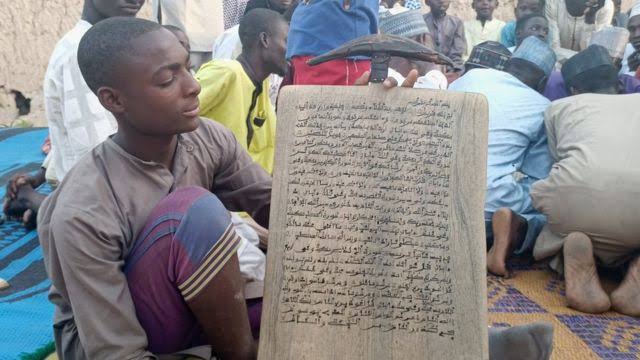
When all this brouhaha on the Almajiri system of education is over just before we hop on another discussion likely to be initiated by random persons online, we will then realise we have failed to acknowledge the failed infrastructure that has created and will continue to fuel the unrefined Almajiranci system of education by the day.

The earlier we realise how enormous challenges have, over the years, consumed our societies in the North, courtesy of broken marriages or homes, the better for us to understand the enormous task ahead of us in empowering our communities with the correct information and strategies to face greater challenges now and in the future, especially with regards to marriage as an important social institution. No matter how hard you try, as an optimistic Northerner, to overlook the series of ongoing debates in the past week online, it is practically difficult and impossible to ignore them, given the current reality that we have found ourselves in.

There is a reason why I choose to deliberately sideline discussing the Almajiri system from the premise of system reformation, the aspect of its essence or in contrast to modern primary education that has continuously screamed for aid. Unless we address the myriads of problems faced by the major social institution that is essential for development – family/marriage, we are hence, collectively wasting our efforts and brains to come up with solutions to transforming the system. At the same time, many under-aged will continue to be pumped out into these traditional Islamic schools, which are, of course, overwhelmed in the name of Qur’anic education.

It’s impossible to continue thinking that only strategic transformation, erasing the system or replacing it with a standard Islamiyya system, will bring a lasting solution to this misery. Agreed, they are essential to improving the system and even sustaining it. But as time flies, if they ever get a chance to be thoroughly revamped, they too will be overwhelmed to take care of these children sent to them in multitudes.

Now, let us take a quick recap of why our primary education has continued to suffer greatly. If you choose to think critically, you will understand that it’s the same reason in the context of the Almajiri system of education that has continued to promote this unending menace. It continues to act as a shield to a lack of good parenting, thanks to unsuccessful marriages. It’s nothing other than overpopulation alongside a dwindling economy. Hence, a multi-faceted menace like this requires a robust approach from virtually all aspects of social life.

My thoughts on why broken homes have the lion’s share of Almajiri menace are based on the facts highlighted in many of the reports that have been consistently aired on our local radio stations in Kano State and a recent publication by The Daily Reality on the 28th of March 2022. Several instances of why these unkempt children are sent to these schools all boil down to the separation of parents either directly or indirectly, which necessitates living with grandparents and stepmothers, who are eventually left without no quicker choice but to use the Almajiri system as an escape route from discharging their parental duties.

In a bid to understand the in-depth social ills of our dearest Northern Nigeria, particularly on the marriage institution, The Daily Reality published a report highlighting the rate of divorce in Kano State to be at about 32%, with an average age of divorcees ranging from 20-25. Presenting these figures shows a red flag and a slap on our faces as we boast of some of the best religious scholars, undisputed morals and values compared to our neighbouring counterparts.

But unfortunately, some low-IQ dimwits denied the facts with fierce rebuttals. While some challenged the veracity of the facts, another portion challenged the authenticity of the reportage/research findings by reducing it to mere propaganda than research. And for others, it doesn’t even reflect the reality on the ground. And the consequences aren’t confined to their families alone, which we are well aware of. Unfortunately, with developments in several aspects of social life around the world, we are still in the age of denying facts that are under our noses.

Let’s assume the facts aren’t authentic enough. Still, mere observations and intuitions have made us all realise that there exists a particular season of the year when agricultural products are everywhere in the markets. The number of these children quadruple on our streets. These periods always signal the season of new marriages in villages with the bit of fortune made from the sales of agricultural produce, thereby forcing these children out of the homes to accommodate new wives. You may choose to argue with whatever is next to you – these are undeniable facts. Interviews during the height of the ban against street begging unveiled many children narrating experiences of their grandparents, fathers and step-mothers taking them to traditional Qur’anic education alias Almajirci before harmattan season kicks off. Radio stations in Kano State primarily documented these.

Delving deep into the report, what struck me hard was, who will then take responsibility for the children out of these marriages? In whose custody will they survive if their mothers remarry? Will their new stepmothers be willing to accommodate them? What about their step-fathers? Indeed not the government, and it cannot be the community either. So, they’ll add another layer of complexity to our complex problems. In my thoughts, I silently hoped that people might look at this dimension which happens to be the root cause. If you think broken marriages aren’t the problem, try surveying many Almajirai in your community.

In all sense of honesty, I must recognise that the essence of the Qur’anic education in the North has not only proven to be undisputedly essential for authentic Islamic education but is also the pillar that sets the pace for all modern Islamiyya education in Northern Nigeria. Contemporary Islamic education has only gone further to modern teaching and learning methods in line with global Islamic development based on the strategies of traditional Quranic education. Many of our reputable religious scholars, professors and other professionals in different fields of endeavour are beneficiaries of the conventional Qur’anic systems.

Apparently, we have seen examples of why transforming the Almajiri system of education is almost impossible, especially because of government inconsistencies, discontinuity of government policies and lack of political will to tackle the menace. Besides, there are even mightier problems that are yet to be addressed. However, I firmly believe that strengthening marriages via introducing policies to safeguard and sustain good parenting can be a strategic move to tackle the menace of Almajirai. It will undoubtedly produce a desirable result by solving multiple challenges simultaneously.

Nusaiba Ibrahim Na’abba is a master’s student from the Department of Mass Communication, BUK. She is a freelance writer and researcher. She can be reached via nusaibaibrahim66@gmail.com.

Zamfara: Fire destroys Kauran Namoda INEC office

By Ibrahim Nasidi Saal

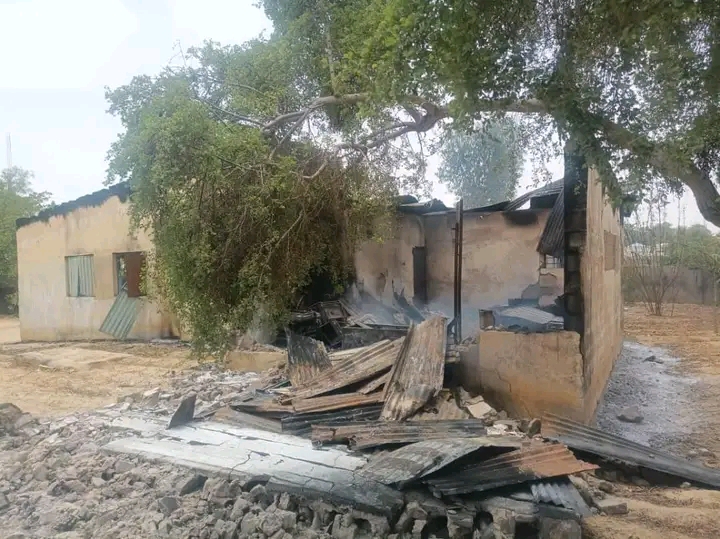
The Resident Electoral Commissioner for Zamfara State, Professor Sa’idu Babura Ahmed, reported that a fire gutted the Kauran Namoda Local Government Area office of the Commission.

The tragic incident occurred around 11.00 pm on Monday, May 2, 2022. No casualties were reported while critical materials such as Permanent Voters’ Cards (PVCs) and registration machines for the ongoing Continuous Voter Registration (CVR) exercise stored in fireproof cabinets were saved. 

However, the building was extensively damaged. Several fixed and movable office furniture were destroyed despite the best effort of the Zamfara State Fire Service and the spirited efforts of good Samaritans to contain the inferno.

The attention of the Nigeria Police has been drawn to this incident. Together with the Fire Service, they have commenced an investigation to ascertain the cause of the fire.

Abba Kyari: NDLEA uncovers Tramadol worth N22 billion imported by Ukatu

By Ibrahim Nasidi Saal

The National Drug Law Enforcement Agency, NDLEA, has said that the ongoing investigation of a billionaire drug baron, Chief Afam Mallinson Ukatu, has led to discovering how the suspect imported into Nigeria in October 2019 two containers containing 1,284 cartons of Tramadol with a market value of over N22billion.

The Agency stated this in a statement on Tuesday, May 3, 2022, to counter insinuations by some hirelings that NDLEA has no evidence to pin a crime on Ukatu, who is the Chairman/CEO of Mallinson Group of companies.

After months of surveillance, Ukatu was eventually arrested on board a flight to Abuja at the MM2 terminal of the Lagos airport, Ikeja, on Wednesday, April 13. 

Investigations reveal that he is a major importer of large consignments of different brands and high dosages of Tramadol Hydrochloride, ranging from 120mg, 200mg, 225mg and 250mg, all of which are illicit. In addition, Ukatu owns pharmaceutical and plastic manufacturing companies, which he used as a cover to import illegal drugs into Nigeria.

The Agency said that in investigating the N3billion Tramadol saga between Ukatu and the Abba Kyaris IRT team, its operatives unearthed more evidence establishing how Ukatu has been importing large quantities of Tramadol far above the approved threshold allowed into the country.

In one instance, Ukatu, through his Mallinson Group of companies, imported into the country two-container loads of five different brands of Tramadol in October 2019 through the Apapa ports in Lagos.

All the evidence so far gathered shows that the imported Tramadol brands were far above the threshold permitted into Nigeria.

Intra-religious dialogue: Let’s begin from here

By Sheikh Prof. Muhammad Babangida Muhammad

The growing trend of conflicting religious verdicts being issued these days by the Ulama in Nigeria is alarming. That they differ and argue on issues is not in itself the problem. In fact, they should differ in order to provide the people with a variety of acceptable perspectives of the secondary teachings of Islam. At the same time, there should be no cause for Muslims to differ on the fundamentals of Islam.

The problem lies in how the Ulama express the differences in their understanding and interpretation of texts. Some Ulama resort to launching abusive missiles and questioning the integrity and sincerity of the other scholar who differs from them, which is out of tune with the ethics of differences (adab al khilaf). They create an unnecessary atmosphere of distrust, tension and ill-feeling, accompanied by intolerance, lack of moderation and self-centredness.

The institution of scholarship in Nigeria is gradually being abused by intruders who lack the basic prerequisites of scholarship. Some vacuum seems to exist somewhere as people fail to recognise who genuinely is a Malam and who is ‘ pro-Malan’ – for wealth or worldly-inspired. An era of Ulamisation (crowning the ignorant as Ulama) of the ordinary uninformed people seems to be taking over as religious verdicts are issued by ‘Awaam al nas’, disrespecting the precise position of qualified Ulama.

We are in a state of ‘Kowa Malam’- everyone claiming Islamic knowledge. There are the ‘social media Malams’ and the ‘Market and roadside Malams’. We have the ‘Amulet-vendor Malams’, ‘political-opportunists Malams’ and all sets of quasi-Malams who wriggle in themselves and slug it out with the real Malams in the religious and socio-political space. They corrupt the religious environment, promote confusion and chaos and ultimately cause societal decay. Something needs to be done to stop these people and keep them away altogether.

We all recall that Maitatsine and later Boko Haram emerged out of such a situation and, fuelled with ignorance, developed into a monstrous extremist ideology. The current race by the uninformed to take over the religious garb and platform might be a fallout from the wrong perception of freedom provided by democracy or societal disequilibrium and failure or the incapability of the real Ulama to provide the needed leadership and guidance in response to emerging contemporary issues. In any case, it is an unacceptable trend that must be arrested.

In most Islamic countries, an established Central Committee of Leading Ulama (Hai’at Kibar al Ulama) or a Fatwa Council collectively deliberates on any issue requiring a verdict. Uncertified people who issue fatwa are sanctioned. Within the Fatwa Council, the majority opinion is upheld, while the minority view of any scholar is respectfully appended, but the majority view remains the official position. It is probably high time we considered instituting such a body in Nigeria, which will consist of capable and qualified Ulama who would be saddled with the responsibility of issuing fatwa based on well-informed opinion.

The Fatwa Committee of the National Supreme Council for Islamic Affairs could be expanded to include various religious tendencies within Sunni Islam. Alternatively, a university-based Islamic research Centre may constitute a broad-based non-sectarian Fatwa body (Majma’u al Buhuth wal Fatawy al Ilmiyyah). Only the most qualified (not necessarily certificate holders) would be admitted into the body. This will go a long way in arresting the seemingly uncontrollable trend of ‘Ulamitism’ or false claim to Islamic knowledge.

Only recently, during this blessed month of Ramadan, an unnecessary controversy on Inter-religious Dialogue (IRD) was blown out of proportion. Before you know it, accusations and counter-accusations were flying all around. Some ‘Ulama’ issued fatwa literally declaring those involved in IRD and any form of a committee consisting of people of other religions as apostates. Fatwa without strings or borders. A dangerous trend indeed. Something is definitely wrong somewhere, and we need to trace our steps back to do the right things in order to right the wrongs.

Let’s begin from here. First, establish an Intra- Religious Dialogue Committee, which would promote mutual respect, understanding and tolerance amongst the Ulama and, by extension, a broader atmosphere of peace and unity amongst the Muslims. It should not be an assembly of the argumentative elements who strive in controversies. If we fail to appreciate the value and significance of intra-religious dialogue and positive engagement with one another, Inter-religious dialogue will indeed appear out of order.

In a multi-religious society like Nigeria, engagement with people of other faiths for some common good is essential. Therefore, we should use sound knowledge, wisdom, sincerity and consideration of the general good of the Muslims (al Maslahah al ‘ammah) to determine any engagement of Muslims with other faiths. Ulama who are well-grounded in knowledge should be given a chance to guide how to pursue such engagement.

At the intrafaith level, the example of the Coalition of Ulama in Kano is a commendable initiative. Ulama belonging to various inclinations, came together under a Forum to pursue and tackle shared problems related to insecurity, drug abuse, child theft and trafficking, issues of IDPs and disaster-stricken communities, orphans and related problems. The Coalition established an NGO, NUSAID Humanitarian Initiative, which since 2016 has been extending assistance and community services to the needy members of the community, including the IDPs in Borno. The Kano initiative may serve as a model for Ulama in other states to adopt to promote Muslim unity, peace and mutual assistance.

May this piece not be a source of yet another controversy. Ameen, Ya Allah.

Sheikh Prof. Muhammad Babangida Muhammad is the Director Center for Quranic Studies BUK & National Amir, National Islamic Center (Ummah Movement).

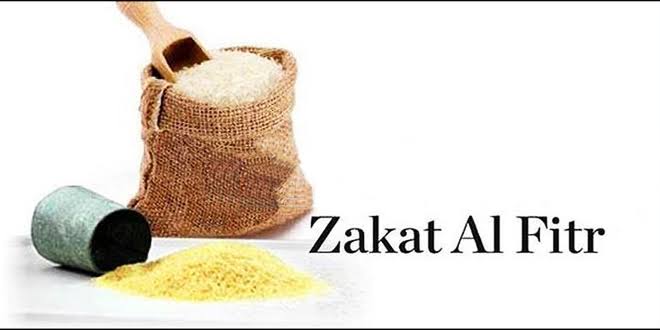
Zakat-ul-Fitr: when, how it should be given

By Uzair Adam Imam

Zakat-ul-Fitr, referred to as Zakkar Fidda Kai in Hausa, as reported in Bukhari and Muslim, is a means of forgiveness to a Muslim for his minor sins during Ramadan, Sheikh Abubakar Ayuba Tangimi said.

Zakat-ul-Fitr, also Zakatur Riqab or Zakatul Abdan, is an obligatory charity for the break of the fast at the end of the month of Ramadan.

Sheikh Tangimi, who explained this to our reporter in an interview, said that woe awaits anyone who deliberately refuses to give this alms.

He said, “Zakat-ul-Fitr is an obligatory alms to any Muslim, man, woman, boy or girl. However, in the case of small kids and slaves, the responsibility of giving the alms is on their parents or masters. 

Zakatul Fitr, when and how to be given 

“Many traditional hadiths, as reported by Abdullahi Bin Umar, Abu Sa’idul Khudri and many of the Prophet’s companions in Bukhari and Muslim, disclosed that the alms is given in the morning before the Eid.

“Some Islamic scholars posited that it could also be given two days before the Eid day. The wisdom behind this is for the poor to have what to eat before going for the Eid prayer, the act that believes to put a smile on the face of the person who lacks.

“Abdullahi Bin Umar said the Prophet (peace be upon him) taught them to give one mud of date, wheat, cikwi, a food made with milk, as their alms. 

The Sheikh also called on the general public to give the alms from the kind of food they consume, adding that “it is entirely wrong to give maize whereas you cook rice.”

Woe betide anyone who deliberately refused to give the arm

Tangimi reiterated that the alms are meant to seek forgiveness for our shortcoming deeds during Ramadan. 

He said, “those people will be punished on the day of judgement for their refusal to give the alms.”

Explainer: The anatomy of kidnapping/abduction

By Group Captain Sadeeq Shehu

As the hostage situation continues, the kidnappers have released a second series of pictures of the Kaduna-Abuja train captives, which include women and children. Though my reading may not be 100% correct, I will be drawing from training I received on anti-kidnap, hostage survival and hostage incident management,  and my involvement in managing real-life hostage situations while working abroad. Most importantly, this is to help family members understand and come to grips with the situation of their loved ones. I hope this explainer will help the victims’ families understand what is likely happening to their loved ones. 

First, kidnapping is defined as an event of forced capture or detention to receive something in return for the captive’s release. “Abduction” and “hostage-taking” are often used interchangeably, but they are not synonymous. Abduction means to capture someone forcefully but with no demand for ransom. Hostage-taking refers to the forced capture of a person or people to gain an advantage during a siege.

Kidnapping situations can be divided into two broad categories. The first is a hostage situation. Here, the victim(s) location is known (it could even be in the victim’s home). A kidnapping situation is when we do not know the location of the victims (first stage of train incident). A kidnap situation can turn into hostage-taking if the security forces get involved in the rescue operation (second stage of train incident and where we are now).

There are generally 5 phases of kidnapping, although they may not be sequential, and two phases could occur simultaneously. The phases are: 

1. Abduction and transfer

2. Captivity,

3. Contact,  

4. Negotiations, 

5. Release or rescue.

In the case of our brothers, sisters, mothers and fathers in the current situation, phases 1 and 3 have taken place. Phases 2 and 4 are happening currently and concurrently. We hopefully await Phase 5.  

I will explain what happens or is likely happening in Phase 2, Captivity, and offer some advice on how the victims or any person unfortunate to be in similar situations could cope.  

During the captivity phase of kidnapping, the victim(s) you could either be held in seclusion or confined with a group. Unfortunately, it’s also possible that victims could be held captive for a long time, so it is advisable to be mentally prepared for such a situation.

Victims are advised to be calm, neutral and project that you do not pose a threat or nuisance. Show a mature, controlled and stable appearance in any interaction with the kidnappers. Multiple groups can manage victims, and sometimes, they are sold to other political or criminal groups to obtain concessions. Different groups handle victims differently. Victims may be kept at the same location or moved frequently. Some captors keep hostages in reasonable conditions, but the living conditions will be primarily difficult.

If you are part of a group of hostages, try not to be separated. Instead, identify a spokesperson who can interact with the captors. Needless to say, living conditions can be pretty tricky during captivity, so victims should take measures to cope with the situation to the best of their abilities.

The situations the captives may be facing currently and how the abductors may behave are as follows: 

Living conditions

Living conditions are likely to be basic and primitive, with minimal access to facilities—for example, lack of toilet, washing, etc. The place may be dark, infested, cold/hot etc. Sleeping arrangements may be quite basic (mat/blanket). Food might not be served regularly, so you may need to ask for it. Eat whatever food is provided. 

The kidnappers may engage other people (cleaning, food, and health). Be respectful to these people but beware they are under the control of the kidnappers.

Abductor behaviour

Abductors may try to dehumanize victims by indicating that they are nothing more than a thing or a commodity, such as telling the victims that nobody cares about them, committing degrading acts, conducting aggressive interrogation, and playing on victims’ psychology (promising immediate release).

Surviving captivity

Captivity can adversely affect victims in many ways. Victims must maintain their equilibrium to stay healthy and clear-headed. It is advisable to take the following steps to keep your dignity and self-respect:

Maintain your appearance and keep yourself and your surroundings clean.

Exercise as much as possible and try to keep yourself fit.

Eat what is served to you.

Sleep properly. Your body will need sufficient rest. 

Think positively, but be realistic.

Focus on pleasant memories such as the time you spent with your family.

Be optimistic. Believe that you will be released eventually.

Have confidence that the government and family are working tirelessly to secure your safe release

Never blame yourself for the situation.

Believe in your family and friends.

Retain the human values you have earned.

Use your beliefs as a means to keep your spirits high and calm your nerves.

Pray. Meditate. Seek your spiritual comfort.

Maintain a positive attitude and set achievable goals.

Perform relaxation/mental activities that can help you control your emotions.

Keep track of time. Develop a routine, and ask for reading materials, blankets, and access to facilities (if possible).

Engage in creative activities to keep yourself occupied.

Communication and Building Rapport 

As difficult as it may seem, it is essential to realize that the kidnappers are also humans. Therefore, victims are advised to maintain their dignity while treating the captors with respect. When the opportunity arises, try to develop and maintain rapport with the kidnappers.

Guidelines for building rapport with the kidnappers

Whatever a victim understands about the kidnappers can inform their survival strategy. Therefore, Try to understand your kidnappers. In addition, be sensitive to the captors’ cultural norms and practices. Do not make assumptions about their level of intelligence or knowledge.

Observe their behaviour and learn what they consider respectful practice.

Communicate

All communications with the kidnappers should be done to improve your chances of survival. Therefore, avoid discussing political, religious or sensitive topics. Don’t get drawn into arguments. Instead, talk about your family, if appropriate. Keep your emotions in control and avoid outbursts. Communicate your human needs, such as hunger, thirst or the need to relieve yourself.

Be vigilant

When questioned, keep your answers short and to the point. Be careful not to divulge too much information.

Avoid making any suggestions.

Do not lie to your kidnappers, but try not to provide them with additional information. Do not give away any personal belongings unless the items are demanded. 

NB. I will not talk about the negotiations phase for obvious reasons. Still, hopefully, I will later talk about the Release/Capture phase and what families need to do in the aftermath.

Group Captain Sadeeq Shehu can be reached via sgshehu@gmail.com.

Does Sheikh Dahiru Bauchi contradict the Sultan?

By Malam Hassan Mohammed

You see, I have a lot of issues with Mallam Dahiru Bauchi when it comes to the sighting of the moon for the commencement and ending of Ramadan. The man has been, in the past, a deliberate source of unnecessary controversy and in the process dividing the Muslim Ummah. But we have to be fair to him this time. He did not ask anyone to break his fast, eat today and also observe Eid-el-Fitr. He did not contradict the Sultan or anyone in the position of authority to make the pronouncement of the termination of Ramadan whether locally or internationally.

In fact, listening to the conversation (the audio is almost everywhere) you’ll hear that even after serious pressure from some unscrupulous dudes who were discussing with him, the man was careful to refer to the Sultan. He was clear. He initially said that though it can be accepted that the moon may have been sighted in Doma (Nasarawa) and Abuja if as they claimed there are witnesses. But he could not tell people not to end Ramadan or that they could not if they chose to. Or call them people who knowingly violate injunctions.

However, he (1) specifically asked them if the Sultan is aware or had announced, which took the dubious guys aback because they didn’t expect that push back from him. And (2) when he got tired of their pressure he pushed back by saying just wait till next tomorrow, regardless of the claims that the moon has been sighted in Doma, Abuja and Niger Republic. If you can’t listen to the all 3:42 minutes, you may fast-forward to minute 1:33 where and when he asked if the Sultan has been informed and instructed that he must be informed so he will announce. And also 3:38 where he said he will not lead Eid, so they should wait.

The man simply ceded the right to announce the ending of the fasting to the constituted authority by saying, “If you are in Nigeria, you have no justification for breaking your fast unless you have not heard (the instruction of the Sultan). For that, we will not observe Eid. We are going to wait till next tomorrow. They should wait”.

These guys that were with the revered Sheikh and many others are used to the usual rebellion that they thought the Sheikh will simply agree and announce that the fasting should end and Eid to be observed today. To be fair to him, especially this time around, he didn’t. This is because one of our major problems with respect to moon sighting is that there are people who consider not accepting to commence the Ramadan fasting or ending it with the rest of Ummah/everyone, this is an act of rebellion. It is to them, a continuation of the denominational war. So, irrespective of the religious injunction and obligations, and also irrespective of their own beliefs as at the time of moon sighting, they must reject whatever the authorities say.

That this year’s Ramadan, the commencement and ending of the fasting, is not controversial as it usually is, is a serious letdown for them. If you pay serious mind to the nearly 4 minutes discussion, you’ll hear that Sheikh Bauchi was probing as he was also careful not to reject the idea that those who said they have sighted the moon completely have done so, but to also tell them that while he is not saying they lied, he emphasized that he desperately tried to avoid that, but he will not end his own Ramadan. That’s the wisdom of elders and of the learned, not the exuberance of young people who rebel in unnecessary and unhelpful controversy.

This shows that Sheikh is always at loggerheads with authorities over when to commence the Ramadan fasting because of his philosophical conviction and not because of ideological differences. So, if you end your Ramadan fasting just chest it. Don’t lie against the old man. Don’t use him. Just say that you just feel like it. It’s just about you and you, and nothing else. Try using another excuse for why you endured 29 days of fasting but cannot take just one more day. It is you, and you. Not Sheikh Dahiru!

Hassan Mohammed is a social analyst. He writes from Kaduna, Nigeria.

MURIC’s Sallah Message: Get your voters’ cards

News Desk

Nigerian Muslims have been advised to get their voters’ cards in readiness for the 2023 general elections. The advice was given by an Islamic human rights organization, the Muslim Rights Concern (MURIC), in a Salah message issued on Sunday, 1st May 2022 by the chairman of the group in Sokoto State, Barrister Muhammad Mansur Aliyu.

The statement reads:

“Nigerian Muslims will join billions of their brethren in celebrating the end of the 1443 (2022) Ramadan season on Monday, 2nd May 2022. We felicitate with President Muhammadu Buhari, Senate President Ahmed Lawan and the Speaker of the House of Representatives, Femi Gbajabiamila.

Barrister Muhammad Mansur Aliyu also paid homage to the leader of all Nigerian Muslims, the Sultan of Sokoto.

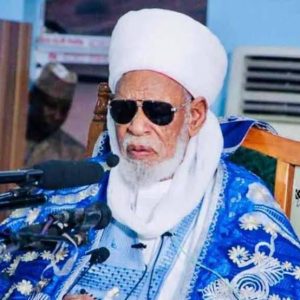
He said, “We also congratulate the leader of all Nigerian Muslims, the Sultan of Sokoto and President-General, Nigerian Supreme Council for Islamic Affairs (NSCIA), Alhaji (Dr.) Muhammad Sa’ad Abubakar, on the occasion of this year’s Id al-Fitr.

“MURIC reminds Nigerian Muslims of their civic responsibility of participating in all aspects of political activities in the country particularly as we prepare for the 2023 general elections. We lay emphasis on the need for every Muslim to collect his or her voter’s card in order to be eligible for voting. No amount of sacrifice is too much for this important civic duty.

“Muslims must not shun politics if they want to be liberated from the current spate of stigmatization, marginalization and impoverishment. We warn that Muslims who fail to obtain their voters’ cards have voted for bad rulers and Muslim haters whose main preoccupation is to persecute and oppress Muslims.

“Apart from obtaining their voters’ cards, Muslims must ensure that they participate in all political activities which will take place between now and the election period, including waiting patiently to cast their votes on election day.

Barrister Muhammad Mansur Aliyu had a word for South West Muslims: “Our brothers in the South who are facing persecution on a daily basis must allow their number to count by ensuring that they obtain their voters’ cards. Muslims constitute the majority in a place like the South West but unfortunately, they are still facing oppression today because they have not been leveraging on their majority status.

“The opportunity has now come. Go all out and get your voter’s card. Your voters’ card is your weapon of liberation. A majority population that fails to vote is, technically speaking, a minority. We, therefore, urge you to spare no efforts in getting your voters’ cards in readiness for the 2023 general election.

“We are looking forward to an election that will reveal the true picture in the region. A majority of people that has been turned into a minority due to their apathy for politics must wake up from their deep slumber. We must stop the stereotyping, the segregation, the religious apartheid and the hijab paranoia.

“We must stop the practice of denying jobs to qualified Muslims and their political marginalization. The time to do it is now. Political power will change the narrative and the popular vote is the only legitimate tool for obtaining political power in a true democracy. Your vote shall make you free.”