Month: February 2022

Banditry: Custom officer shot dead, six others abducted in Kaduna

By Uzair Adam Imam 

Bandits have shot ASCII Muhammad Maradun, a Customs officer with Federal Operations Unit (FOU), to death in Kaduna.

The Daily Reality gathered that six people, among whom was a bride-to-be, were abducted in the process. 

It has been discovered that the bandits had stormed his house at Rogachikun Community of Igabi local government, Kaduna, in the early hours of Wednesday.

The deceased, Mr Maradun, was reported to have sustained gunshot injuries.

The FOU Chief Public Relations Officer (CPRO), M.A Magaji, confirmed the victim’s death.

However, the deceased was said to have died while undergoing surgery, putting all attempts to save his life in vain.

Kannywood movies review: NADEEYA

Director: Yaseen Auwal

Producer: Rahama Sadau and Abubakar Bashir Maishadda

Screenplay: Yakubu M. Kumo

Language: Hausa

Company: Sadau Pictures

Release Date: 18/02/2022

Cast: Rahama Sadau, Umar M. Shareef, Rab’u Rikadawa, Asma’u Sani etc.

After a brief hiatus in Kannywood, superstar Rahama Sadau is back with an eponymous movie NADEEYA. There have been high expectations of the film because of the good reputation of its director, Yaseen Auwal, and the female lead, Rahama Sadau, who also doubled as the producer. It, however, failed to open with a bang due to little publicity as it wasn’t initially made for the big screen.

The film is an issue-based drama about ‘upbringing’. It depicts how some parents spoil their kids, specifically daughters, and the practical difficulties such children face in life. The story revolves around a pampered daughter, Nadeeya (acted by Rahama Sadau), who faces similar challenges after her marriage.

Plot:

On their first day as newlyweds, Nadeeya’s husband (Umar M. Shareef) begins to discover mysterious things about her. She prays badly and can’t correctly perform even a simple ablution, not to speak of the ritual bath. The husband learns further that his bride doesn’t master domestic chores like cooking and housework. She once cooked a pretty heinous meal that nobody could eat. He is, thus, obliged to question her past. Viewers are then shown a series of flashbacks as she recounts her story.

Nadeeya is, since childhood, spoiled rotten by her father (Rabi’u Rikadawa). The father tried hard to get rid of anything that could cause discomfort to his favourite daughter. He had once fought an Islamic school teacher for punishing her and eventually pulled her out of the school. He also divorced her mum for disciplining her. Therefore, she was brought up single-handedly by the impious father with a maid doing everything for her. Nadeeya is now extremely remorseful and ready to change for the better. The story continues…

Critique:

The film is, indeed, hard-hitting and very meaningful. Through the eponymous character, it shows that children’s first learning begins at home, and their personality and morals depend largely on how they are raised. It also reminds of the responsibility of protecting one’s family from the hellfire, as contained in Qur’an (66:6). It reiterates that the responsibility is on both parents and husbands — this is seen in the portrayal of Nadeeya’s husband (Umar M. Shareef).

Nonetheless, despite some scenes being highly overdramatized, the director, Yaseen Auwal, succeeded in handling the serious theme with the utmost gravity. He deserves an accolade for making this topical movie that not only slams indulgent parents but also underlines the need for religious knowledge. Additionally, the film’s locales are beautiful, except for the bride’s room, where we see cracks in the painting. It was also well shot with an audible sound.

Again, the actors all did well. The lead, Rahama Sadau, is no slouch at acting. She melded every action with a fitting gesture, making a brilliant performance throughout the movie. M. Shareef tried to deliver his dialogue. He impressed in the scenes where he recites the Qur’an and where he teaches Nadeeya about Islam—although his chemistry with her didn’t take. However, Rabi’u Rikadawa did excellently as usual.

On the whole, Nadeeya is a well-made movie. I recommend it for those who are tired of Kannywood’s overblown romantic melodramas. Rating 3.5/5.

Habibu Maaruf Abdu wrote from Kano via habibumaaruf11@gmail.com.

Ukraine: Boris Johnson describes Russian invasion as ‘catastrophe’ for Europe

By Muhammad Sabiu

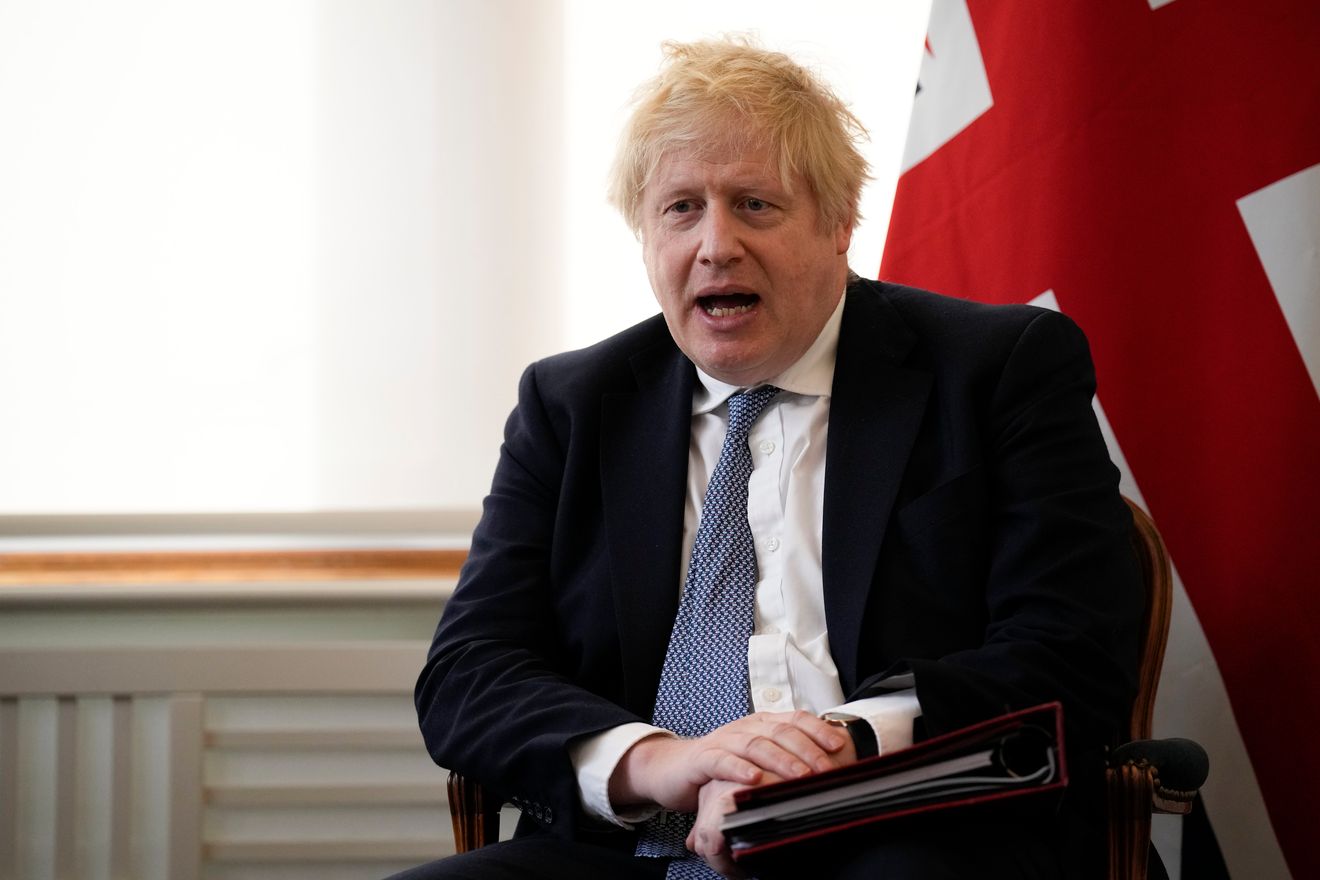
The invasion of Ukraine by Russia is a “catastrophe” for Europe, according to British Prime Minister Boris Johnson, who has asked for an emergency summit of the NATO military alliance led by the United States.

He was quoted as saying on Twitter: “This is a catastrophe for our continent.”

Mr. Johnson added that he would make a national address on the developments.

“I will also speak to fellow G7 leaders and I am calling for an urgent meeting of all NATO leaders as soon as possible,” he said.

President of Ukraine Volodymyr Zelenskyy calls on citizens to fight

Zelenskyy has appealed to all civilians who are willing to protect Ukraine against Russian soldiers to come forward, stressing that Kyiv will provide firearms to anyone who requests them.

Ukrainian President Petro Poroshenko also urged Russians to resist Moscow’s plan to invade their country’s neighbour.

Recall that Russian President Vladimir Putin has ordered the launch of attacks on parts of Ukraine as part of the move to support intending breakaway regions in the Eastern part of the country.

The attack has caused outrage and condemnations from world powers as citizens flee Kyiv, the Ukrainian capital city, although Putin stated that the attacks were not targeted at unarmed civilians.

Ukraine claimed that it had shot down fighter jets belonging to the Russian forces stationed in the unresting part of the country.

Governor Zulum: Restoring hope amid adversity

By Abdullahi Adamu

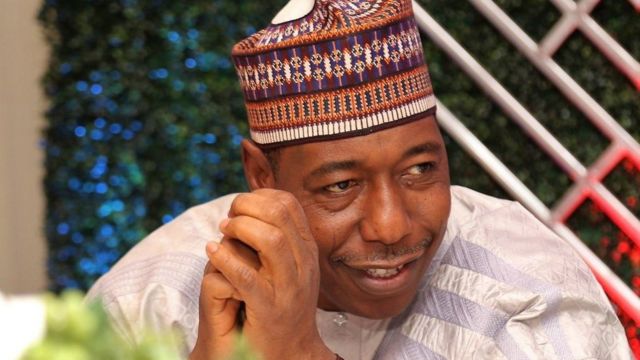
His name rings a bell across the landscape of Borno State and Nigeria. Yet, many Nigerians have never met him face to face. Still, his strings of achievements anchored on people-oriented projects have made Governor Babagana Umara Zulum of Borno State a household name in the country, drawing ceaseless applause for him.

But he remains a very simple and unassuming man despite the strategic work he has been doing to change the face of Borno State and restore hope to a people traumatized by ceaseless attacks unleashed by the Boko Haram fighters. Zulum came to the scene when the morale of the people and their psyche had been battered by the evil elements who have continued to distract the polity. These terrorists still steal and destroy whatever is of good report and value to the citizenry.

If the governor had not been on the side of the people, he could have chosen to resign to fate and sit back to moan the atrocities being waged against the state and its people by Boko Haram. But he has refused to act and behave like a typical Nigerian politician who seeks self-gratification over the nation and people. Instead, Zulum has chosen to make a difference in the lives of his subjects and add value to them. The governor has chosen service over propaganda and quality and verifiable projects to add value to his people instead of propaganda which many of his contemporaries deploy as a survival strategy in governance.

The 50-year-old Agricultural engineer, who himself has tasted poverty and hardship, chose to embark on projects that directly impact the people’s lives. And the projects are many and widespread across the length and breadth of the state. They are verifiable and physical for even the blind to see, touch and feel their presence. The projects touch all aspects of development, with education topping the list apparently because the governor comes from the ivory tower, where he has made a mark as a professor of agricultural engineering.

The statistics speak for themselves: “On education, Professor Babagana Umara Zulum undertook 76 capital projects in one year. He created and built 21 primary, secondary and sub-tertiary schools in 13 local government areas. These include a new 60-classroom mega primary school at Njimtilo; 30-classroom mega school at Ajilari Cross, another at Abuja-Sheraton community; yet another in Askira.

“All of these were started and delivered within one year. Six additional new schools were delivered, while 11 are at various levels. Fifty-five existing schools were completed, reconstructed or rehabilitated and equipped across the state. Beyond infrastructure, Zulum regularly appears in schools unannounced. He takes teachers roll call to instil discipline and restore the glory of the public-school system in Borno State,” a report written about him captures boldly.

In health care delivery, the governor has also left an indelible mark within the short time he has spent in the state. “In his first year, Professor Babagana Zulum accorded greater priority to primary healthcare at the grassroots level. In that sector, Zulum undertook 46 projects, from which 37 new primary healthcare centres, PHCs, were established in 17 local government areas. Twelve of these new PHCs have been completed, while 25 are at various stages.

Zulum reconstructed two primary healthcare centres in Tungushe and Walama; and rehabilitated the state’s Psychiatric and Skin Disease hospitals. Zulum rehabilitated two hospitals in Rann and Lassa; and upgraded Biu General Hospital to a specialist level. The Umaru Shehu Specialist Hospital was also remodelled. Zulum also established and funded a Contributory Healthcare Scheme to increase access to quality and affordable healthcare services by the people of Borno State.”

The governor has also extended the area of security, agriculture, and infrastructure to alleviate the suffering of the people who have come under constant attacks by terrorists in the state. Governor Zulum has, through hard work, commitment and dedication to his people, emerged as a true servant/leader.

Abdullahi Adamu sent this article via nasabooyoyo@gmail.com.

Zamfara deputy governor impeached

By Muhammad Sabiu

Reports coming from Gusau have it that Mahdi Aliyu Gusau, the state’s deputy governor, has been impeached by the Zamfara State House of Assembly.

The members ousted Mr Gusau from office on Wednesday during plenary after 20 out of 21 voted in favour of his removal.

Following the submission of a panel report by the state’s chief judge, Kulu Aliyu, to investigate alleged impeachable offences against the deputy governor, the parliamentarians quickly voted.

ASUU Strike: We’ll protest to the world the situation of our education in Nigeria – NANS

By Uzair Adam Imam

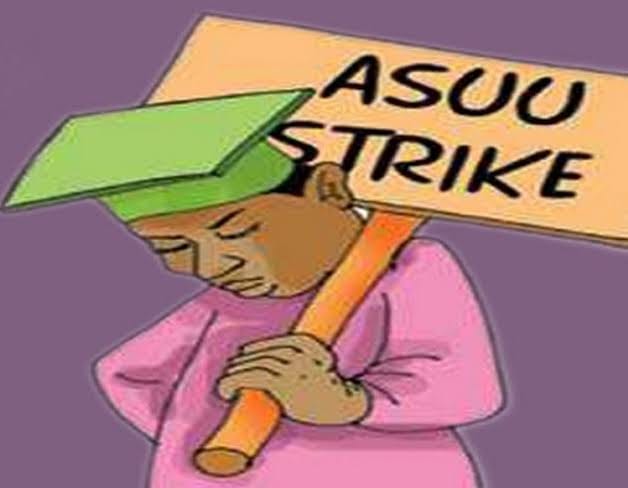
The National Association of Nigerian Students (NANS) has threatened to occupy all roads to Abuja Monday if the Academic Staff Union of Universities (ASUU) ’s strike is not brought to an end.

The association stated that the protest would involve students, parents and civil servants.

The Vice President of the Union, Comrade Yazid Tanko Muhammad, disclosed this to BBC Hausa on Tuesday, February 22, 2022.

He added that they would all gather to tell the world the situation they are facing in the country with regards to their education.

Muhammad also reiterated that the protest had become necessary to rescue the country’s educational system from incessant strike actions.

Comrade Yazid Tanko Muhammad said: “The reason we choose to embark on a protest is that it is the only language that can be understood, and it is the only way we can show the world our situations and feelings towards the strike.

“So, it is a protest which, if we start, will not stop until the issues are resolved, and the lecturers resume work.

“So we will block the roads linking Abuja from Kogi, Abuja from Kaduna and Abuja from Nasarawa states.

“That means we will block the whole Abuja on that day. We will also block the Federal Secretariat.

“That is why we are calling on Mr President to show concern and solidarity to us by not attending to work on that day.

“He should please remain at home. Since everyone is a student, either a Minister, Senator, House of Representatives member, they were all students before they reached the level they are now.

“So, we are doing this because of the future of our education and the country.

“We can’t just stay at home and watch. No country in the world can go on strike for a whole month without any concrete reasons like a pandemic or similar things,” he stated.

A whirlwind of change

By Lawi Auwal Yusuf

So great are the expectations. Some people believe it to be long overdue, and others are immensely surprised. But, to those who understand, the Infallible Saints Party (as they call themselves) and its government are much to be anticipated. Probably, it seems like coming with strong whims of making a revolution.  

Is it a one change whirl like that championed by the ANC in South Africa under its propellant, Nelson Mandela? Or the CCP in China contrived by its mastermind, Mao Zedong or the PAP in Singapore with the engineering of its leading figure, Lee Kuan Yew? But, as the change charlatans are about to leave office, people have realized that their revolution is nothing but a trick, deception and betrayal. Thus, the malignant political parties of old crooks and the treacherous ISP of the self-righteous saints are but the two sides of a coin. 

As the stormy wind of politics swept across the country in 2015, people were in a dilemma because the incumbent party had taken the nation to the verge of absolute rot. Hence, it was necessary for a vibrant new captain to take over so as to save the capsizing ship on the muddy, turbulent and already disturbed ocean. ISP and its leading forces, the messiah, who promised a miraculous change, were our last hope for survival. Therefore, we undoubtedly reposed the trust, firmly believing that the mess would be cleared once and for all, come what may. 

For over a decade, people sacrificed their wealth, resources and lives for the success of the so-called “jagoran talakawa” (masses emancipator). Today, what is the gain earned? An excoriating economic hardship, an avoidable but seemingly inevitable mass killings and abductions. Sadly, he campaigned unwaveringly for the big office for more than a decade. However, he practically lacks any blueprint for the motherland’s development. 

They violated the faithful confidence and trust of compatriots for personal gain. It was a deliberate and calculated disregard for trust and faith, failing to understand that change requires tireless efforts, sacrifice and effective policies. 

Contrarily, the head of the government remains aloof. As a result, the government’s obsolete and unrealistic policies aggravate the people’s misery. They make life worse, more challenging and make the poor poorer. Moreover, they deepen the crises rather than resolve them. 

ISP has assured people that they are the masters of ineptitude and mediocrity by engaging dirty incapacitated politicians to do the job. This is why they are making the project uglier than ever before. 

The sanctimonious Mai Gaskiya (The Truthful One) and the die-hard cohorts of the ISP boastfully brag that the administration performs better than the preceding regimes since the inception of democracy. This is a gaffe and a baseless argument to fool the psych of those who are gullible. If the ISP believes this to be true, it’s a self-guile at its most deceitful form. This evidently shows that they are only specialized in the game of political wangling and finagling. Indeed, this is the worst government in the history of the modern motherland. And expecting them to do better is like kicking a dead horse.

On account of this, people are in deep regret as frustration is boldly written on their faces. This is the worst decision and mistake they have ever made. Consequently, they have fallen from the frying pan into the fire. 

At last,  they will leave next year as ones who promised a better life but made it more grievous. Those that vowed for a quintessential change instead come with an illusionary one. They can not save innocent souls being murdered in cold blood daily, ones who couldn’t save us from woes. Those saviours have turned into disappointment.  

Lawi Auwal Yusuf wrote from Kano, Nigeria, via laymaikanawa@gmail.com.

As an affected student, I have solutions to ASUU’s strikes

By Hassan Ahmad Usman

As a student in a public university in Nigeria, I don’t need anyone to tell me how devastating and frustrating the Academic Staff Union of Universities (ASUU) strike is. Before that, I spent three years trying to secure admission into a university. Registering JAMB year-in-year-out and despite, not for once, failing to make it, I couldn’t secure admission until the fourth attempt. Finally, I got admission into the Federal University of Lafia in September 2018 for a four-year programme. At that time, our colleagues with silver spoons were already in their final year in other private universities. We might claim not to envy them, but we were left with no option other than to play catch-up.

My first taste of the ASUU strike did not take long after I started enjoying academia. It happened just a few weeks upon resumption and lasted for four months. To cut a long story short, this is 2022, and I’m still halfway into my level three. There have been debates since ASUU declared a one-month warning strike on whether or not the strike is the only tool that ASUU can use to press home their demands from the Nigerian government, considering that it is the students that bear the brunt of these strike actions, the most, for the past twenty years.

To some, ASUU has achieved some progress with strikes, and the most notable achievement they cite is the creation of TETFUND. While others believe there is no significant progress that ASUU achieved with strike actions for the past twenty years. Hence, the need for a change of approach. As a directly affected student, I am with the latter group. Whenever one speaks against the embarking on strike by the union, one thing they and their apologists challenge you on is to bring a workable approach aside from the strike. I took that challenge, and here, I’ll provide a possible two-step way out:

To be realistic, the fight against this administration by ASUU is over. ASUU wasted another eight years fighting in vain. This is primarily due to their short term fighting tactics. In 15 months, a new administration will take over. ASUU should forget this administration and set its eyes on the next one. The two steps to be taken are as follows;

ASUU should meet the candidates of the two leading political parties (no disrespect to other political parties) and discuss their plans to bring a solution to the unending issue. However, this should be just the preliminary.  

The first step of action from ASUU should come after the new administration has taken the mantle of leadership. Let’s say six months unto assumption of power. ASUU, at this stage, should seek an audience with the president himself and should not entertain sitting with any minister, cabinet members or the so-called religious bodies. I did not see the president denying them a chance of meeting him. After all, we’ve seen different groups – some with no meaning and motive – meeting the president, so why not ASUU?

The meeting (with the president) will make Nigerians know and have the feeling that the failure comes from the president himself/herself if he/she could not keep to promises made before the election. They should not meet people like Chris Ngige or another Adamu Adamu. ASUU starts losing public sympathy, and they need it to succeed.

They should make sure they strike a deal within a year with the administration with the president himself in attendance and watch how things unravel within the first two years of the administration. A 55% achievement of their demand within two years is a success. 

After seeing and realizing how committed the administration is towards meeting their demands, ASUU can decide to take the second step if there is no significant progress. Let’s say a less than 50% attainment of their needs. Then, I suggest a strike as the second step, yes, a strike action! It has always been what is effective in this country. And I only blame ASUU because it becomes a recurrent issue for them.

This strike should come in the third year of the new president and the year in which the atmosphere is filled with political activities heading to the polls in the succeeding year. Therefore, they should declare a strike that the only condition to suspending it is by granting their request in toto. They should resist any sweet words from the FG. And they should also withdraw all their members from participating in the election activities.

Let the average Nigerians go to the polls with the anger of their children being out of the school walls for over a year. Let the oppositions have what to campaign with and have the neck of the administration in their hands. Let the president face his reelection bid with voters’ anger. Let the world see a president who prioritizes his stay in power without education more than the country’s future. I think only a coconut head leader would fail to succumb! ASUU, please try this. I am your obedient student.

Hassan Ahmad Usman writes from Lafia, Nasarawa State, Nigeria. He can be reached via basree177@gmail.com.

For Nigeria’s foreign policy and international security goals

By Mukhtar Ya’u Madobi

Nigeria is referred to as the “Giant of Africa”, largely owing to its strong economy and large population among other African countries. Nigeria has therefore continued to maintain this position by demonstrating good and quality leadership aimed at fast-tracking progress for the entire continent.

Nigeria’s goal is not only to ensure and maintain peace and security within its territory, but having the sole aim to ensure that appropriate security architecture is also mounted throughout the region for peace, development and stability to reign.

Through bilateral and multilateral agreement with other nations within the region and beyond, Nigeria was able to contribute immensely to providing sanity and solidity across various institutions both at home and between its sister countries.

During conflict situations, especially in the African continent, Nigeria had always stood to be the largest contributor of military personnel and other forms of technical assistance in the affected countries so as to restore normalcy. Professional military engagement of Nigeria was clearly demonstrated when they led the twin peace missions that returned stability in Liberia and Sierra Leone, just to mention but few. 

Recently, in early February, Nigerian National Security Adviser (NSA), Babagana Monguno has engaged his United Kingdom counterpart, Stephen Lovegrove, in a dialogue bordering on a range of issues including counter-terrorism, serious and organised crime, civilian policing and human rights. The three days long dialogue is the first of its kind since the formation of the ‘UK-Nigeria Security and Defence Partnership’ in 2018.

The latest version of National Security Strategy (NSS, 2019) released by the Office of the National Security Adviser (ONSA), retired Major General Babagana Monguno, has apparently captured and elucidated the contribution of Nigeria to international security by saying:

“Active participation in UN peacekeeping missions remains a fundamental pillar of our foreign policy. Nigeria has been a major contributor of troops and police to the UN since 1960. We have deployed military contingents, unarmed military observers, staff officers, police formed units and advisers to more than 25 missions globally.”

“Our troops constituted the military backbone of peacekeeping efforts in Liberia and Sierra Leone; initially as part of ECOWAS Monitoring Group (ECOMOG) and later under UN peacekeeping operation – UN Mission in Liberia (UNMIL) and UN Assistance Mission in Sierra Leone (UNAMSIL). We will continue to promote global peace and international security through our commitment and deployment to peacekeeping efforts.”

With the spate of military coups currently ongoing across African countries, Nigeria has been rendering diplomatic assistance through regional organisations including African Union (AU) and Economic Community of West African States (ECOWAS). This is to ensure that the affected nations return to the path of democracy and that the respect for the rule of law is equally safeguarded.

Recall that, a number of African countries are currently under the control of Juntas who have seized power after ousting the democratically-elected Presidents in various coup d’états. The countries are Mali, Guinea, and Sudan as well as Burkina Faso that recently joined the list. Meanwhile, the military also took over in Chad after the late President Idris Deby died due to injuries sustained in the battlefield.

Up to now, the regional organizations and other international communities have been working in collaborations with Nigeria to ensure a successful transition from military to democratic government in these countries.

Nigeria’s engagement on the African continent towards international security is not only restricted to peacekeeping operations, but also entails mediation in crisis situations. This is cognizant of the fact that mediation is an increasingly popular dispute resolution mechanism throughout the world as it provides a more cost-effective alternative.

As a result of this status, the ECOWAS has appointed Nigeria’s ex-president, Goodluck Ebele Jonathan as special envoy to Mali in order to head its mediation mission. The aim is to focus on facilitating dialogue with all Malian parties including the opposition leaders, religious organizations and civil societies to resolve the worsening socio-political situation in the country. 

Apart from military support, Nigeria has also been giving interventions to African countries across various imperative institutions. Nigeria provides succor to education, health and judiciary systems of many countries in the region through Technical Aid Corps.

“Nigeria’s development assistance to our neighbours and other countries in sub Saharan Africa is part of fostering mutual peace and security in the region. We will continue to extend development assistance not only to our neighbours, but other countries. We will also strengthen the Technical Aid Corps (TAC), a programme under which Nigeria deploys experts in education, health and other human endeavours to render developmental services and capacity building in the receiving countries.”

“We will equally sustain deployment of judicial officers to other countries to strengthen their judiciaries and promote the rule of law. On good governance, we will continue to offer strategic level training assistance through our strategic institutions to African countries and other allies. This will foster collaboration and strengthen democracy in the region. We will also support countries conducting elections by deploying election monitors to observe and assess the conduct of the elections as part of democratic consolidation,” NSS said.

During the 2014 Ebola outbreak, Nigeria’s approach to containing the situation was a watershed and highly commended by WHO. The country was able to train and deploy 250 volunteer personnel to Liberia to help fight the diseases. Additionally, in January 2020, Nigeria had also handed over TAC medical practitioners to the Sierra Leone Ministry of Health and Sanitation to work in various health facilities across the country. Still, Nigeria is also gearing up toward sending about 74 medical doctors to Guinea Bissau to help the country’s health sector as well.

Therefore, Nigeria must continue deepening her relationship with regional and global partners, strengthen regional and global institutions, thereby achieving national interest, foreign policy objectives and maintaining regional influence.

Mukhtar wrote from Kano via ymukhtar944@gmail.com
Foreign coaches or indigenous coaches, what way Africa?

By Abdulrazak Iliyasu Sansani

It is no longer news that another African coach has won the African Cup of Nations, bringing it to six out of the last nine editions won by African coaches. Coach Aliou Cisse of Senegal joined the illustrious list of African coaches that have won it in the period under review:  Hassan Shehata of Egypt, three times, Steven Keshi of Nigeria, Djamel Belmadi of Algeria,  all once.

While I don’t know have anything personal against expatriate coaches, I have everything against the perception that our African coaches are not technically sound to manage our national teams. This is absurd. There are good coaches all over the world.

There are brilliant football managers all across mother Africa who should not be disapproved merely because of what can be referred to as our syndrome of not valuing our own. It shouldn’t be so. 

Of course, Nigeria’s best coach in history is a Dutchman, Clemens Westerhof, who coached Nigeria from 1989 to 1994: winning silver in Algeria 1990, bronze in Senegal 1992, and winning gold in Tunisia 1994.

Westerhof Qualified Nigeria to her maiden World Cup, played some of the most entertaining football ever in Africa and achieved the highest ranking by an African national team, 5th in April 1994 FIFA rankings.

Thus, there isn’t any way I would despise foreign coaches. It isn’t logical. However, I advocate that they be given fairgrounds to compete with our local coaches, and when appointed, all should be supported sufficiently to succeed. 

It is still fresh in my mind how Nigeria Football Federation got itself trapped in a web it is still striving to overcome. They sacked Gernot Rohr at the eleventh hour, which I still think is debatable. Yet, they went ahead to ‘appoint’ a new manager while an interim manager was in place. Who does that before a major tournament and the World Cup playoff around the corner? 

I had thought they should have waited for the AFCON to conclude before appointing any manager, especially with an interim manager already appointed. And all those who shared my views have been proven right with the latest development of allowing the interim manager, Austin Eguavoen, to continue until after the World Cup playoff against Ghana.

I think we would have been saved all this rigmarole if the NFF had at least trusted him enough to be the interim manager and not gone ahead to supposedly have an agreement with someone to succeed him regardless of his performances. 

Until, the Nigerian football fanatics reigned and rallied around the interim manager after some spectacular displays at the group stage of the AFCON, which seemed to have been adequate to make NFF take this recent decision, despite our shock elimination at the last 16 by Tunisia.  May we learn to give our best any job, support, and trust them to deliver. God bless Nigeria. 

Abdulrazak Iliyasu Sansani wrote from Turaki B, Jalingo, Taraba State via abdulrazaksansani93@gmail.com.