Month: December 2021

Kaduna to dismiss 233 teachers, vow to conduct competency test

By Sumayyah Auwal Ishaq

The Kaduna State Universal Basic Education Board (KADSUBEB) will dismiss 233 teachers who presented fake certificates. According to the board chairman, Mr Tijjani Abdullahi, “the Board has verified 451 certificates by contacting the institutions that awarded the certificates.”

“The responses from the institutions show that 233 teachers presented fake certificates. This represents 51% of the 451 certificates on which responses have been received from the awarding institutions. One institution disowned 212 of these 233 fake certificates,” Abdullahi said.

A statement by the Board further added that it “will follow up the competency test with series of training programmes, organized in batches for teachers. This will begin in January 2022 for 12,254 teachers.

The Board has signed MoUs with the National Teachers Institute, the College of Education, Gidan Waya, and the Federal College of Education, Zaria, to conduct the training exercise.”

Nigerian soldiers kill many insurgents in Yobe

By Muhammad Sabiu

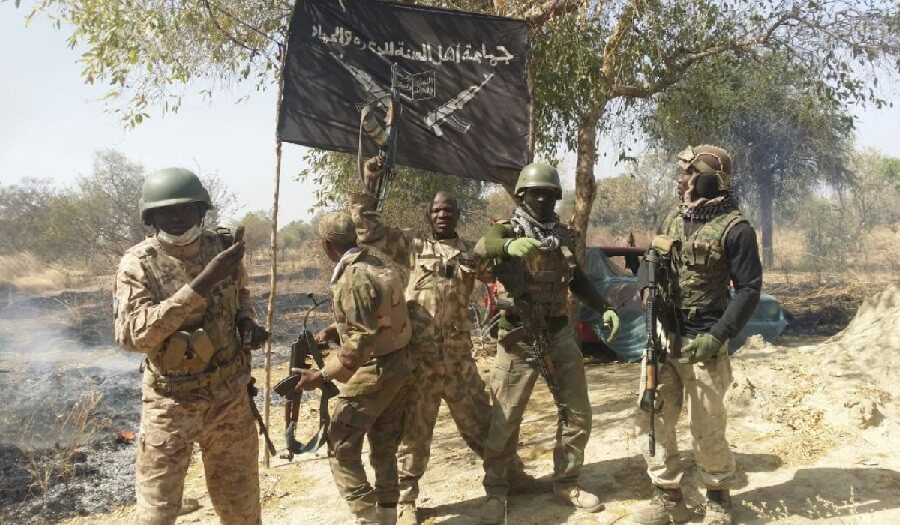
The Nigerian Army announced that its troops killed Boko Haram (BH) and Islamic State’s West Africa Province (ISWAP) terrorists in a fierce battle in Buni Yadi, Gujba Local Government Area of Yobe State, on Tuesday.

The terrorists were met with stiff resistance from troops of 27 Task Force Brigade and Nigerian Army Special Forces School, supported by the Nigerian Air Force Component and personnel of the Nigerian Police, according to Onyema Nwachukwu, Director, Army Public Relations, in a statement on Wednesday.

The fierce gun duel, he said, drove the criminals to flee in different directions after suffering huge losses while the troops took out numerous gun trucks and their occupants.

The accuracy with which Air and Land soldiers engaged the terrorists, destroying their gun trucks, was revealed in a preliminary battle damage assessment.

Troops are still using exploitation to take out fleeing terrorist remnants, he added.

Lieutenant General Faruk Yahaya, Chief of Army Staff, praised troops for their operational success and urged them to maintain the current operational pace in order to deny the insurgents from moving further.

Boat Mishap: Kano State Gov’t bans use of commercial boats in Bagwai

By Uzair Adam Imam

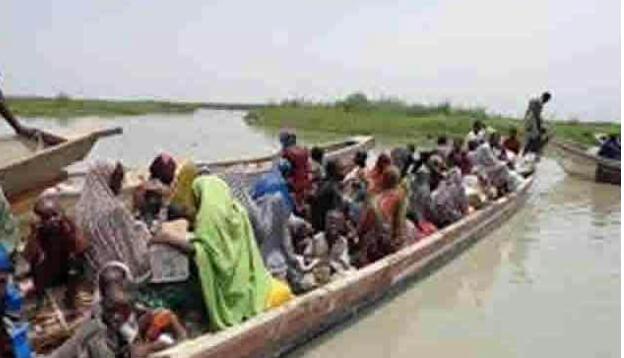
Following the boat mishap on Tuesday, 30th November, 2021 in Bagwai Local Government of the state, the Kano State Government has announced a ban on the use of commercial boats in transporting passengers in the river.

The Daily Reality has reported the incident that had claimed the lives of twenty nine people. Adding to that development, Kano State governor, Dr. Abdullahi Umar Ganduje disclosed the ban in a statement issued to journalists by the State Commissioner for Information, Malam Muhammad Garba.

In her effort, the Kano State government has provided two buses for passenger shuttle between Badau and Bagwai, while three new boats would be procured for effective water transportation in the area.

He added that: “Other control measures are expected to be instituted when the investigation committee set up by the state government submitted its report for implementation.”

How Kano officials locked up SAN who represented Shekarau faction

By Uzair Adam Imam

The lawyer who was reported to have played a vital role in the victory of Malam Ibrahim Shekarau faction of the All Progressives Congress (APC) in Kano State, Mr Nureini Jimoh, was locked up in his chamber by the government officials hours ago.

Reports have it that the Federal High Court in Abuja dissolved the excos of Governor Abdullahi Ganduje’s APC faction, taking that of Shekarau.

On Wednesday, December 1, 2021, police and officials of the Kano State government stormed Jimoh’s chamber at 16c Murtala Mohammed Way, Kano.

The officials sealed off the building while Mr Jimoh and his staff were inside the building, making it a thing of surprise to many.

However, the building was later unsealed after outrage from the Kano branch of the Nigerian Bar Association (NBA) and media reports.

Hassan Idris, the team leader, has disclosed that they were instructed by the Permanent Secretary from the ministry to unlock the premises.

Speaking at the scene, the Kano Police Spokesman, Abdullahi Haruna Kiyawa, said he was there to confirm the involvement of police as being reported by the media.

Beyond true/false: Things to know about information consumption in the era of Infodemic (I)

By Isah Nasidi

A report has it that about three hundred and sixty-one million (361,000,000) videos were uploaded on YouTube in just 30 days, and about 19,200 articles have been published on Google Scholar in the year 2020. Similarly, around 550 million tweets, including terms like “coronavirus,” “COVID-19, or “pandemic”, were recorded in March 2020. These are just a few platforms where information is produced, distributed, and consumed. Imagine the gross total of all the information shared on the entire world of conventional media, new media, and media.

New information technologies fueled the overabundance of information known as the “infodemic,” which is now the new feature of the information flow. Due to technological affordances, a fair percentage of people have the technical know-how to produce authentic and unauthentic information and circulate it without any professional gatekeepers. This makes it difficult for people to differentiate between accurate and inaccurate information, which in the end may cause disinformophobia. However, it is not only about the accuracy but also the safety or health of the information.

For journalists, social media influencers, and the entire audience or users to produce, circulate and consume safe information and avoid information disorder syndrome, media literacy on the ecosystem of information disorder is a must.

Basically, fact-checking organisations use truth metres or scales to categorise information. Depending on the in-house style, information can be divided into four categories based on the dimension of true or false: purely true, largely/partly true, false, largely/partly false, unconfirmed.

True information is not always good. Information can be true yet harmful to society. Information that is true and harmful is labelled as “malinformation”. Such information can be hate-speech, leaks about personal privacy without any justification of public interest, stereotypes, prejudice, and embarrassment. For instance, it is a true representation of identity when you call a Hausa man Aboki or Malam, but the intent and the approach may be harmful.

The largely/partly true information is the most common strategy for information contamination and is very dangerous and challenging to deal with. Here, the root of the information is genuine but diluted with false information, misinterpreted or misrepresented. This is what I call diluted information (dil-information). The intent may be good or bad. For instance, the military has been accused of reducing the number of casualties from their side while increasing the number of casualties from the enemy side. Yes, the Nigerian Army indeed killed some scores of bandits, but the number is not correct.

The false information can be classified as “false,” “transformed false,” or “unknown false. False information happens when both the producer and the consumer know the false status of the information. The majority of the content shared for entertainment purposes is false, and it is treated as such. However, known false content may be shared with another community of consumers that do not know the origin of the information, thus considering it true, which is transformed into true. This is very common in this era of globalisation, where content can be shared easily across the globe.

The unknown false information can be from either the source or the consumer. For instance, a journalist may unknowingly receive false information and share it as true, or he may deliberately fabricate information and share it as true. The former is classified as misinformation while the latter is called disinformation. In both cases, the consumers of the information do not know the false status of the information.

We will continue.

Isah Nasidi is a media consultant and research fellow at PTCIJ.

Kano boat mishap: Ganduje commiserates as 20 people die

By Uzair Adam Imam

Governor Abdullahi Umar Ganduje of Kano State has expressed shock over the death of twenty people in a boat mishap in Bagwai Tuesday evening.

The statement signed Wednesday, 1st December 2021, by the Chief Press Secretary, Mr Abba Anwar, disclosed.

The statement read in part: “Bagwai boat mishap, which so far caused the death of 20 people, as rescue operation still on, is a state tragedy.

“We learned that the boat started from Hayin Badau to Bagwai on their way to attend Maulud celebration.

“The boat was ferrying about 50 people with some loads; it capsized because of overloading. Most of the passengers were Islamiyyah students,” the statement stated.

The governor prayed for forgiveness to the deceased and also quick recovery of the rescued who are receiving medical treatment.

“I urge boat operators to always take the issue of overloading very seriously. They should know that they can still get profit without overloading their boats,” the governor said.

Ganduje said it was unfortunate that a similar incident was recorded some years ago on the same axis.

“People should know that the lives of their fellow human beings are too important to be risked deliberately.

“Based on the information we received this morning, there are 20 deaths. Seven persons have been admitted to the hospital and another eight others were found this morning. The rescue operation is still going on.

“We salute the courage and patriot posture of the rescue teams,” the statement added. (NAN)

On power rotation, Nigeria should face reality

By Aliyu Ammani Junior

Leadership has been one of the common unbalanced difficulties in Nigeria’s political space since independence: 1964 Federal Election Crisis, January 1966 coup, 1966 counter-coup, Nigeria/Biafra civil war, Gideon Orkar’s failed coup, post-June 12 political crisis, and more. All in one way or another—linkable to one part’s sentiment of being marginalized, omitted, or denied the sense of representation.

Ideally, merit, competency, integrity, and capacity are the benchmarks in selecting a leader, not a power rotation or sharing formula. Nevertheless, the situation in Nigeria, a complex country of multiethnic and multi-religious organizations with uneven federalism that is almost consolidated, is not about competency, merit, integrity, and capacity.

A centralized structure ravaged by agitation, deep suspicion of fear of ethnic and religious hegemony demands a rotating power between north and south to accommodate the emotions and sentiments of these regions and their people. Providing a rotation formula would go a long way in sustaining a united Nigeria considering the existing deep divisions among Nigerians. It will produce fairness, equality, equity, justice, a sense of possession, and identification.

Unless a requisite equate is attained, where every part and tribe has developed a sense of possession, identification, and the federalism is no longer leaning; Nigeria will always require a practical formula for unifying the diverging segments that formed ‘The Federal Republic Of Nigeria.’

The fault of power rotation is theoretical and unrealistic; some argue that it is ‘undemocratic’ because it deprives certain people with competence, capacity, and experience the right to be voted—for when zoning does not favour their locus. There is no universal structure of democracy; what is universal about democracy is the basic principles that guide it. The focus of democratic practical demands remains locally confined. As a substantial social value, democracy has complex and diverse considerations and needs. Therefore, it should be hacked to suit local conditions and circumstances.

It is deceiving and tricky to limit the democratic system to mechanical conditions (popular will) without referring to instrumental conditions like the blanket sense of identity—inclusiveness—possession from every component.

Another narrowed argument against the rotating formula is that it is ineffectual and of no help – since a typical citizen from the leader’s zone is not better comforted ‘materialistically’ than other citizens from distant zones. Realistically, it is restricting, reducing, and neo-Marxist to limit the decisive quest of political aspirations and struggles to ‘distribution of resources’ without appreciating other factors; recognition, possession, and sense of identification. In a heterogeneous populace, it is significant to feel represented and connected by having someone from your spot and its experience, occupying a high post (including the office of the President) at least—in a while.

As earlier acknowledged, in usual events—merit, competency, integrity, and capacity should be ‘benchmarks’ in deciding a leader, not a formula. Undeniably, the merit, competency, integrity, and capacity test is a dubious and probable trial.  With a power rotating procedure, the questionable and possible trial remains untouched. Except that something is going to be fixed, every portion will develop a sense of possession, identification, and responsibility “I played: it’s time for someone.”


Aliyu Ammani Junior

Kaduna, Nigeria.