Month: September 2021

Phone snatchers slay schoolteacher in Kano

By Muhsin Ibrahim

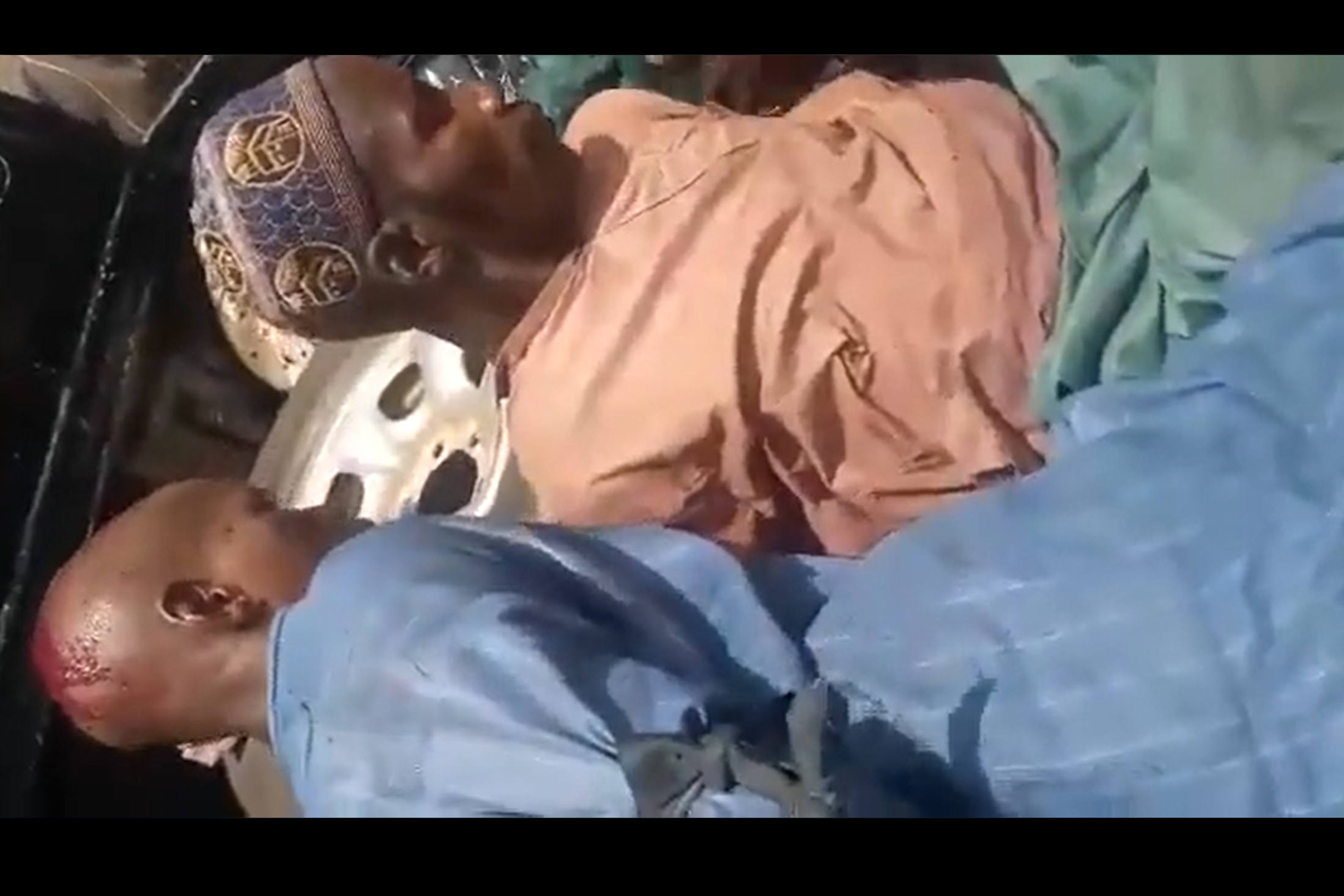
Despite the police efforts and arrest of several suspects, the menace of phone snatching continues to cost the lives of Kano residents. The most recent incident occurred Sunday evening in Sharada quarters, around Nana Petroleum filling station.

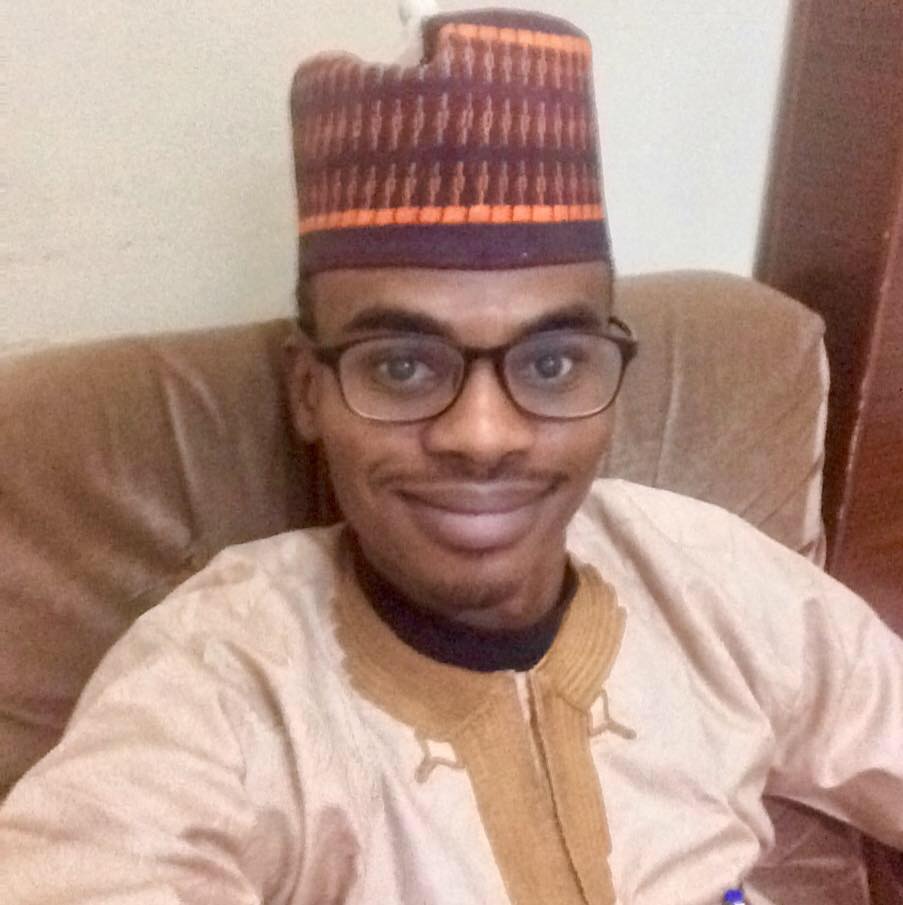
Muhammad Sulaiman, alias Labbo, was a schoolteacher and farmer who got married in June this year. He was walking with his bride when the assailants stopped them.

As reports suggest, Muhammad did not show any resistance. However, the phone snatchers stabbed him, leaving him to bleed to death.

Our attempts to hear from the bereaved wife for further details proved difficult as she was still devastated. However, other friends and relatives described him as very cheerful, caring and God-fearing.

Muhammad, 37, was a graduate of Kano State Polytechnic. He also attended Government Technical College (GTC), Kano.

Irate residents in Sokoto lynch six terrorists

By Muhammad Sabiu

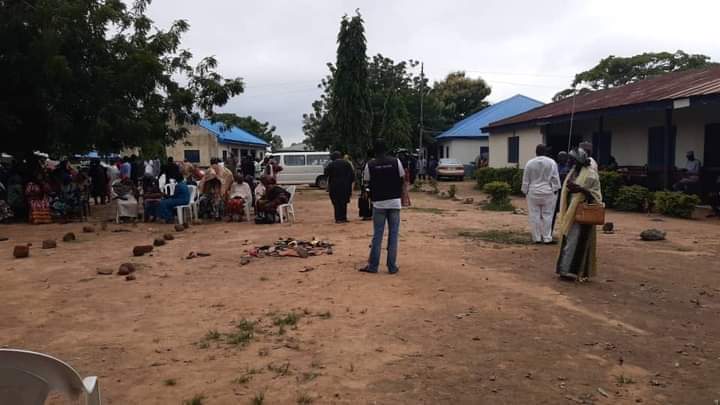
Reports coming from northwestern Nigeria have stated that angry people in a Sokoto community, Tangaza, took the bull by the horns, traced suspected bandits in detention and subsequently lynched them.

This is coming barely 12 hours after the bandits launched an attack on the community, which left two persons killed and two others abducted.

Premium Times reports that, first, it was vigilante members armed with locally-made guns and cutlasses in conjunction with the police that went after the bandits, killed two and apprehended about four others.

After their arrest, they were put behind the police net.

The state’s police spokesperson, Sanusi Abubakar, confirmed that in an attack meant to cart away foodstuffs from the community, the bandits launched a raid Friday night.

They were also said to have kidnapped two persons, who were later killed.

Angered by this attack and kidnap, youths in the community planned to join the police in an effort to crush the suspected bandits.

They followed them and successfully killed two and the other four arrested, who were detained in a police station and killed by the angry youths.

The youths insisted that the bandits must be killed, otherwise they would torch the police station.

A resident said, “The youths were angry and despite pleas from the DPO and the local government chairman, they insisted that if the policemen did not kill the bandits in their presence, they would burn down the police station.”

Sokoto State is also one of the northwestern states badly hit by the activities of bandits.

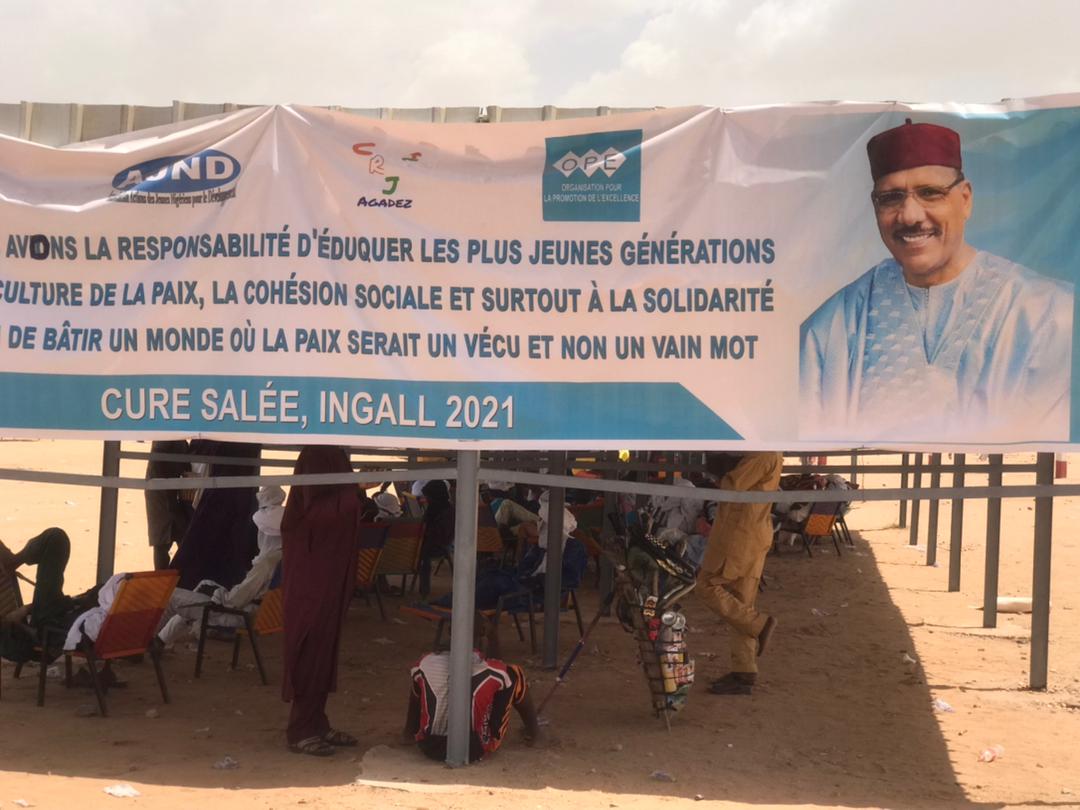
Strong Nigeria’s presence as President Bazoum opens 2021 “Cure Saleé” festival at Ingall

By Ibrahim Siraj

(Who is at Ingall, Agadez, Niger Republic)

Many Nigerians are attending this year’s ”Cure Saleé” festival at Ingall town, some one-hundred sixty kilometres Southwestern the ancient city of Agadez in the Niger Republic.

The three-day festival, which was declared open by President Bazoum, is officially billed to end today but may be extended to Sunday.

Cure Saleé is an annual event that showcases the rich cultural heritage of the Touregs and Nomads, including camel and horse racing, music and dance. It draws attendance from across Niger Republic, Africa and the world. Also in attendance are traditional rulers from Niger, Nigeria and other neighbouring countries.

Started several centuries ago, the festival brings together various Tuareg clans and Wodaabe Nomads to celebrate the end of the rainy season and to mark the beginning of a movement down south to survive the upcoming dry season.

The salty waters of Ingall are believed to possess medicinal and healing powers that can cure all diseases afflicting humans and animals.

Cure Saleé also serves as a melting point for several social, business, tourism and friendship activities.

The 2021 well-attended event is coming after the Covid-19 lockdown forced the cancellation of the festival in 2020.

Attending the event from Nigeria are scholars, researchers, tourists, journalists, photographers and other business and media personalities.

Declaring the 2021 Cure Saleé open, President Mohamed Bazoum, who attended the festival for the first time since he became President, welcomed all guests and assured the organisers of his government’s continued support.

Speaking to The Daily Reality on this significance of the festival, a foremost Kano Palace historian and researcher, Malam Nasiru Wada, said Cure Saleé offers students of culture like himself the opportunity to learn how life is defined by people living in the desert and to appreciate the difference between Africa’s divergent cultures. He listed the economic advantages of the festival to include tourism, inflow and outflow of goods and services, as well as job opportunities.

Also speaking, a Kano-based documentary photographer, Muhammad Mubarak aka Moha Sheikh, said his coming to Ingall is a follow-up to his participation at similar cultural event, Bianou, in Agadez last year. He said the two festivals had afforded him the opportunity to see and document culture.

Another documentary photographer, Emmanuel Abor, from Abuja, said the festival is a celebration of cultural preservation in the technological age.

At the end of the festival, prizes will be distributed to winners of different categories of competitions.

The unlived legacies of Alhaji Ahmed Joda

By Ahmadu Shehu, PhD.

To continue our conversation on a better northern Nigeria, let me bring you three unlived legacies of Alhaji Ahmed Joda, one of the most accomplished civil servants in this country. These are fantastic ideas capable of turning around the socioeconomic situation of this region and the entire country for good.

For the benefit of those who do not know him, Ahmed Joda OFR, CON, CFR was born on February 13, 1930, in Girei, a village located a few kilometres from Yola, the capital of Adamawa state. His basic education started at Yola Elementary School, from where he proceeded to Barewa College Zaria, before graduating from Pitsman College, London, in 1956. Before delving into journalism, Baba Joda started his career in agriculture and later became one of the longest-serving permanent secretaries of various federal ministries, including education, information and industry.  

Sometimes in 2019, former minister of Federal Capital Territory Dr Aliyu Umar Modibbo invited us to a meeting with Alh. Ahmed Joda. At the age of 90, Baba Joda, as we fondly called him, had assembled younger minds to think about the way forward for Nigeria and rethink the approach northern Nigeria has taken in negotiating its state, status and privileges within the Nigerian state. Baba Joda was very particular about the unity of this country, just as he was deeply concerned about the socioeconomic problems bedevilling the north. I, particularly, was astonished to see that despite his age, Baba Joda was chairing a four-hour meeting, perusing through documents and making amendments where necessary. After several meetings, recruitments, and deliberations, that meeting resulted in the “Nigerian Platform”, a collection of thinkers, excelled public servants, professionals, and academics, helping to chart a way forward for this country. The rest, as they say, is history.

Having noticed our contributions at the meeting, Baba Joda ensured my friend Dr MD Aminu and I stayed close to him and learned about this country as much as possible. We, indeed, kept in touch, learned, benefitted and enjoyed our relationship with this seasoned civil servant, experienced administrator, excellent intellectual and a special breed of the Nigerian elites.

One of Baba Joda’s agendas behind mentoring young Nigerians is to develop what he envisaged as the Nigeria Unity Forum (or any name that might suit the cause at the later stage of its development). Under this cause, Baba intended to develop a genuinely Pan-Nigerian national platform where citizens of this country will come together to discuss their grievances without hindrance, fear or hesitation. This was (to be) the first platform under which Nigerians from all walks of life, backgrounds and social status would have a free space to discuss, analyse and subject any topic of national interest without limits or limitations. The aim was to start a citizen-driven healing process among Nigerians to guarantee the true unity of our country. In the beginning, Baba had sacrificed his farmland and the facilities therein for weekly/monthly meetings of the groups. He was also to provide funding and feeding for the takeoff meetings. 

Another concept Baba Joda nurtured was a Sustainable Agricultural Model in which he invested so much time and resources in its conceptualisation and trial. Noting the waning natural resources, especially land and water, and the ever-growing population, vis-à-vis climate change and the attendant crises we are already witnessing, Baba had commissioned research into various models adopted by other countries such as India and Botswana. These countries have faced or are facing similar socioeconomic and environmental challenges. After thorough comparative studies, Baba proposed an agro-livestock model that, in my opinion, will forever change our society for good. The most fascinating and novel aspect of his proposal is its capability to deal with land and water resources, and at the same time, create a sustainable economic model that will undoubtedly work for the majority.     

The third and most important to him was the creation of the National Livestock Development Authority. Again, looking at the proposal of this agency, one cannot help but see the extraordinary visions and foresight in the manner in which it was to be designed, administered and supervised. This would not be another government-funded agency that would serve as a conduit for financial embezzlement and docility. Instead, it was meant to be a self-funding, self-sufficient and revenue-generating government agency responsible for making money for the country via our large, prosperous, but abandoned livestock sector. It was going to be a multibillion-dollar government company, richer than the NNPC and most of our aviation agencies. It would have led to vast foreign investments into our livestock sector, building companies for our manure, beef, leather, blood and born, etc., all expensive raw materials that go untapped in this part of the world. It would have been a major regional investor in this part of Africa, as it will not have had competitors for many years to come.   

While all of these and many more programs were coming up slowly but steadily, we sadly lost Baba Joda on August 13, 2021, at the age of 91. While I pray to Allah for his forgiveness and mercy upon his soul, I equally pray that those of us who are alive and are lucky to have drunk from his ocean of wisdom and patriotism will continue the struggle for a better future. I also pray that Allah will lead many more people to this cause and that these dreams, these ideas, will see the light of the day. Since Baba Joda is no longer around to pursue these ideas, I invite you to join his disciples and those who genuinely love this country to vigorously pursue and patiently work towards realising these ideas and their possible implementation.  

Dr Ahmadu Shehu is a nomad cum herdsman, an Assistant Professor at the American University of Nigeria, Yola, and is passionate about the Nigerian project. You can reach him at ahmadsheehu@yahoo.com.

Kano markets (I)

By Hussaina Sufyan Ahmed

Kano is the centre of commerce. Kano is the state where you find the complete structure of Nigerian cultures coexisting. The state gives potentialities of what Nigerians should envisage in peaceful coexistence. That includes interrelationship between marketers of different ethnic backgrounds to the various categories of people in the market system and beyond.

The Kano market system remains one of the most organised in Nigeria. The market structure sees room for you to decide your scale of preference as a buyer or seller. In addition, there are distinctions as to where and what you can obtain from a particular place in a specific setting.

These markets range in various products. Kano is known to harbour the sales of everything saleable, and this is why this essay intends to highlight to you a Kano resident or someone new to Kano the focus of some of the major markets.

Sabon Gari is the largest market in Kano state. In this market, you can get anything you wish to, irrespective of your preference. Though the market has sections of varieties from kitchen wares, shoe wares, body wares, home appliances, and many more, the most common segment exemplified as the rowdiest remains the perishable foods section (Yan Kura). You find fresh from farm tomatoes, veggies of various types, seafood, and many more in this part of the market. This market section has different Nigerian tribes. However, the most prominent remains the Igbos and the Edos. The sweet ambience that comes out of this market section is when you hear every tribe speaking in Hausa to form a unification.

Another prominent produce you can get in Yan Kura is raw food. You get rice, beans and even Garri at cheaper rates. This is because, in this market, the packaging of produce is not a celebrated thing. Therefore, lower-class, average and high-class people can access this market and find the prices very affordable.

Kasuwar Rimi is a market located around Kofar Nassarawa. It focuses on the sales of kitchen utensils. In this market, you get to be thrilled by the number of people that can hoard the same business and yet live on common grounds. Kasuwar Rimi is also a big market that can harbour newcomers asking about the routes if they do not know the ways of the markets; this is because the market is also very large.

 In this market, there are Kano indigenes, and the ambience that comes with the native speakers is so beautiful. However, you find out that those not from Kano find joy in communicating using the tone of the native speakers.

Kasuwan Wambai is more of a farther affiliation to the route of Sabon Gari market. To go to this market from Yan Kura, you get to board a specially organised tricycle generally known as “Keke Napep” that is different from the common yellow ones. In this market, you get to see the actual definition of runners and plastics with a preference for quality. You get to have wholesales in this market for almost every seller of the rubbers, plastics, jerry cans, and gallons sell in dozens or more. In this market, you hear a name like “Yan rubber”, and you know there are other boundaries to help you understand the market more according to the categorisation.

A sequel to this article will give you hindsight on navigating the various major markets in Kano state. This is to help you map out the way to go and the way not to go. This will also help curb if insecurity, as sometimes an unknown route becomes a danger zone.

Rethinking Nigeria’s healthcare financing

By Dr Abdulkareem Kabir Masokano

The announcement of a high profile committee by President Muhammadu Buhari on September 6,  2021, to be headed by his Vice President, Prof. Yemi Osinbajo, to oversee reforms in Nigeria’s health sector, is a laudable and timely one. However, like most sectors in Nigeria, the health sector is, to put it mildly, in a state of stagnation that, with the existing structure and organisation, is practically impossible to make any headway despite the enormous potentials abound in the sector to the economy.

There are numerous angles to the problem bedevilling Nigeria’s fragile health sector. They include the collapse of the primary health care system, poor infrastructure, inter-professional rivalry, poor accountability, inefficient, limited health insurance coverage, etc. However, the single most important factor causing the apparent none progress of the sector is the absence of a robust, patient-centred health financing model. Every single one of the problems can be directly attributable to this.

Contrary to what many think, modern healthcare is too expensive to be offered for free anywhere in the world. Nigerians think other countries provide healthcare services almost free of charge to their citizens. Actually, these are products of either heavy government subsidies, strict universal taxation regimes, or compulsory insurance programs. Over the years, governments in Nigeria have gotten caught up with this delusion that they can offer free healthcare to their citizens from the little they generate of their internal and external revenues without any sustainable framework to ensure steady financing of such an important yet expensive sector.

The result of this thinking is the current problem of underutilisation of highly trained healthcare professionals across various tertiary hospitals in the country because of the unavailability of modern diagnostics and therapeutic equipment – all of which are very expensive to use and manage. For example, we have specialists across various surgical specialities with the necessary skills to perform highly technical surgical procedures like kidney transplants, open heart surgery and complex brain surgeries. However, the system is so designed that it cannot accommodate their expertise due to the unavailability of resources to sustain such programs. This leaves many Nigerian patients cumulatively spending billions on such medical procedures abroad, and Nigeria loses money tremendously.

Primary healthcare, the essential segment of any serious health system, is virtually non-existent in the country. This is not due to the absence of the structures. It’s because of the ‘internal’ brain drain within the levels of the existing health system. The primary healthcare centres are primarily under the care of the local governments in the country. Unfortunately, most of them cannot afford to employ the minimum required number of qualified doctors, nurses and other health workers who, by extension, are pulled by better-paying jobs available at the higher levels of the system. As a result, most of Nigeria’s primary health centres are manned by Community Health Extension Workers with minimal skills and expertise.

The National Health Insurance Scheme (NHIS), which is supposed to be the primary driver of universal health coverage in the country, is essentially running far below par due to the poorly regulated profit-driven model it is structured. According to various statistical sources, the NHIS covers less than 5% of all Nigerians (out of over 200 million people!). As a result, the vast majority of Nigerians resort to paying out-of-pocket to access specialised healthcare. With that proportion, the insurance pool can only generate a meagre sum of money.

Coupled with the profit-only motive that drives the Health Management Organisations (HMOs), one can only expect that the system cannot cover the comprehensive health needs of its enrollees, not to mention driving any meaningful growth in the sector. The state-run contributory health systems are even worse! They are fraught with inefficiencies, lack of transparency and corruption. And as far as I am concerned, they ought not to have been created as their creation only serves to decrease the pool and reach of the National Scheme.

From the preceding, it is evident that sustainable financing is the critical element missing in our health sector; the focal point of any meaningful health sector reform in the country should include improving it. The current model whereby health financing largely depends on what the governments generate from their dwindling revenue or generous donor agencies is not sustainable and cannot move the sector even an inch from its current state. Therefore, it is about time Nigeria’s policymakers look for other alternatives to fund our increasing healthcare needs, given our explosive population growth rate.

Accordingly, this high profile committee set up by Mr President should look into developing a comprehensive, sustainable, and transparent healthcare financing model that would cover every Nigerian’s most basic health needs. It should consider a complete overhaul of the country’s healthcare financing by the development of a hybrid health financing system at various levels of the healthcare system with varying blends of public, private and public-private partnership, through the creation of a compulsory basic healthcare taxation system to cover for a comprehensive healthcare financing at the primary level for all Nigerians regardless of socioeconomic class.

A comprehensive reform of the NHIS should supplement this to enforce the enrolment of all workers in the formal sector of the economy (public and private), cooperative organisations of the various non-formal entities of the economy like farmers, artisans, transport workers, among others. This will cover specialised healthcare across our tertiary and specialist hospitals, both public and private and broadening the insurance industry to include ethical health insurance systems like the Takaful system to increase inclusivity across the various demographics of the country.

The committee should also encourage creating windows for community-based contributory health safety nets to tap into the national health insurance pool to enable citizens from lower socioeconomic access to specialised healthcare at our tertiary health institutions.

Special funds can be set aside annually from the NHIS fund pool for research and development in our tertiary health institutions regarding funding for specialised healthcare services and preventive health. This should be enough to cover all the available infrastructure needed to procure, support and maintain modern diagnostic and therapeutic equipment.

The committee has qualified, world-class technocrats as members. It also has the Bill and Melinda Gates Foundation, Vesta healthcare partners, and WHO as observers. Thus, we are optimistic that it will develop a sustainable blueprint for health financing as the bedrock of their essential task. May the government implement the committee’s recommendation for the needed reforms in Nigeria’s fragile health sector.

Dr Abdulkareem Kabir Masokano is a resident Surgeon, ABUTH, Zaria. He can be reached via abdulkareemmsk@gmail.com.

Is federalism about “eat what you kill”?

By Simbo Olorunfemi

Federalism is not a Nigerian creation, tempting as one might be led to assume it is. Federalism is a concept in Political Science, with a consensus on what constitutes its grundnorm and what its main features are. I had thought, as a student of Political Science, that I had a modest understanding of what federalism is, having taken a number of courses wholly devoted to it at undergraduate and postgraduate levels. But that was until Nigerians happened on the concept of federalism and I realised how little I knew about it. I have now come to accept that what Nigerians cannot happen to does not exist. Nigerians took hold of federalism, created the aberrant idea of ‘true federalism’, as if there is ‘false federalism’ in practice somewhere, and there has been no rest ever since.

Yet, even though dissensus over the definition of concepts is part and parcel of interrogation in the field of Political Science, there is, in fact, a broad consensus on the definition of Federalism. “What sets federal states apart from other national communities is not their values but a number of institutional design principles that include a division of legislative authority between two orders of government, each of which is elected directly by citizens, and each of which is sovereign in at least one legislative domain. This division of powers is set out in a written constitution that cannot be amended unilaterally by either order of government. In addition, federal states provide for the formal representation of their constituent communities (states or provinces) within the national legislature, although the means by which this is done range from direct popular election (Australia and the United States) to indirect election through constituent governments (Germany), and even to the appointment of friends and partisan colleagues of the prime minister (Canada)” (Watts,1998).

In simple terms, federalism is essentially about shared and self-rule is about sharing powers, functions and responsibilities, against the backdrop of forces of plurality and diversity pulling the people apart. In accordance with this principle considered by Political Scientists as the fundamental plank upon which the concept of Federalism rests, Watts (1996) submits that there are 23 federations in the world. “They vary widely, however, in the character of the underlying social diversity, in the form and scope of the distribution of legislative and administrative powers and financial resources, in the form and processes of the shared representative institutions, in the scope and role of the courts as constitutional umpires, in the character of intergovernmental relations, and in the processes for flexibility and constitutional adjustment”.

The variety out there again reinforces the argument against the ‘Nigerian’ assumption of one Federalism as true and another false. It is absolutely erroneous. As I have repeatedly argued, every federal arrangement is a work in progress, each with its imperfections, with no finishing line for any to arrive at, that it might be adjudged as having attained perfection. On account of constant friction and collision by what Tekena Tamuno described as ‘centre-seeking’ and ‘centre-fleeing’ forces, federations are often under stress and in a constant state of flux, coming under pressure to undergo recreation and adaptation.

In North America, Canada has been struggling with what Ronald Watts described as “three decades of political and constitutional crises, rooted deeply in its fundamental cultural cleavages”. Her neighbour, United States has her issues to deal with as the national and state governments clash. Mexico has its own issues, just like Argentina, Brazil, and Venezuela in South America. The situation is the same in Australia, countries in Europe, India and of course, in Africa as well.

While the nature of the stress in Nigeria, as to be expected, does differ from that of other places, that does not in any way vitiate the position that what is in practice in Nigeria is federalism, contrary to what some argue. It is simply a confirmation of the fact that federalism is a coat of many colours, with our green-white-green been one of the variants.

I recall that it was in the course of our conversations around federalism five years ago, that the distinguished Prince, Adekanmi Ademiluyi anchored his submission around a statement he attributed to the former Canadian Prime Minister, John Diefenbaker that ” Federalism means that you eat what you kill”. I disagreed with his position then and I, obviously, still do now. I don’t even think the essence of Federalism is about pulling apart, as the statement seems to suggest, as it is about pulling together. I do not think the essence of the coming together is that each might farm with the mind of self, by eating on the strength of the kill, rather I would suggest that it is more about broadening the collective base, that there might be enough for the collective good.


I have, however, only just decided to check up on the statement by John Diefenbaker to gain insight into the context in which he might have made it. Unfortunately, I have been unable to track it. Well, what does it matter? The statement provoked enough curiosity in me to have inspired this interrogation. Taking a second look at it, I cannot find grounds to agree with it. I would even argue that Diefenbaker must have been misled about what federalism to have made such a statement. What will be the point of a federation if it is all about self? Why will anyone want to be a part of a federation if the fundamental plank upon which a group, diverse in culture and other respects, is just to “eat what you kill”?

As I have repeatedly argued, federalism is primarily about pulling together, with accommodation for the interests and peculiarities of the component parts, with a view to widening the pool and leveraging on opportunities that come with size and other factors.


Indeed, there is the economic component embedded in the political shell of federalism and for some, it is about the political component tucked inside an economic shell, especially for federalist arrangements that started out as ‘customs unions’. I do not even think that the primary essence of federalism is about eating. Eating what one kills is not and cannot be the driver for federalism. Fundamental to the concept is shared duties and responsibilities with governance.

As we have come to see, the Nigerian elite has managed to make the arrangement here about eating, the same way everything else is reduced to food. That misunderstanding of the essence of Federalism is at the root of a lot of the crises – real, imagined or contrived. It is what is fueling the confusion around VAT. It is behind the divisive and bigoted positions increasing dominating the civic space. It is about people assuming themselves to be better endowed arguing that it should be about “eat what you kill”. If only the mentality can change from that to “eat what you need”.

The argument about eating what you kill is largely about revenue allocation. On that, I had this to say in 2017:

“Much has been made of the revenue allocation system which many see as rather lopsided in favour of the FG and have called for a review. One Senator declared the formula being used by the Revenue Mobilisation Allocation and Fiscal Commission (RMFAC) illegal’ by some weird deduction.

There is really nothing new to the debate as finding the most appropriate revenue allocation formulae, just like the debate, is an age-long one. Some recommendations have been made, just as reviews have taken place over time, especially In the last 40 years.

Before independence, there was the Phillipson Commission set up in 1946, the Hicks-Phillipson Commission of 1953, the Raisman Commission in 1958 and the Binn’s Commission of 1964, even after independence, all with the mandate to work out an acceptable formula, to no satisfaction of any group.

There was the Dina Commission in 1968, the Aboyade Technical Committee of 1977 and there was the Okigbo Commission which largely influenced the 1981 Revenue Act which allocated 55% to FG, 30.5% to State Governments, 10% to LGs and 4.5% for Special funds.

Modifications were further made in 1984 and 1992 which allocated 48.5% to FG, 24% to State Governments, 20% to LGs and 7.5% for Special funds, of which 1% for mineral-producing states on the basis of derivation.

By virtue of the current formula, about 52.68 % is allocated to the federal government from the Federation Account, 26.70% to the 36 states and 20.60% to the local government councils in the Federation.


Please note that sharing revenue among State governments and local governments were done on the basis of 4 principles, with different weights attached to each – population; equality of states or LGs, as the case might be; social development factor, revenue factor.

Also note how the allocation to Local Governments, in terms of percentage, going from 10% to 20%, even when many argue that the LGs are mostly non-functional, delivering very little in value.

So, by and large, there have been only marginal reviews in the structure of the allocation formula, over the years, especially the vertical aspect of it.

That, in spite of the fact that experts like Prof Okigbo and others have worked on it. So, when some reduce this to a North-South thing or hide behind the finger of restructuring to push it, it is obvious that they are not as guided on process or details behind some of the issues they pick up or simply echo”.

So, am I saying that there is nothing wrong with the system as it is? Far from it. The point I make is that Federalism is a work in progress and that as the journey goes on, what people do is engage in the process of negotiation to navigate into a more acceptable arrangement. It is not about seeking to bring the roof down. Our undue obsession with who eats what, when and how, makes our conversations convoluted and unhelpful. How we redirect the conversation to enlarging the pot, rather than wanting to have a bigger spoon or even making away with the pot should be of greater concern, as I think that is what federalism is supposed to foster.

There is nothing to suggest, either from the historical, ideological or philosophical premise, that federalism is supposed to be a closed shop arrangement, which locks one variant in and a different type out. It makes allowance even for hybrids, with quasi-federalist arrangements as well receiving the nod, as fundamental to the adoption of federalism is the desire to seek accommodation for forces seeking to pull and push. That being the case, where each federation finds its solution and how it adopts it will be up to it, as long as it is democratic, for Adele Jinadu maintains that “democracy is a condition of federalism”.

The challenge with some of our conversations is not just a defective recollection of history but the tragedy of assumptions about a number of things. This time, it is about what federalism is. I would suggest that the real essence of Federalism is in the traditional motto of the US – “e pluribus unum” which means “out of many, one. At the end of the day, we must remember the words of J.J. Linz that “federalism can only assure that nobody could be fully unhappy but certainly not that everybody will be happy with the solution.”

In Football, not everyone in the squad can make the team, not everyone in the team makes the field at once. Perhaps, there is something there as a cue. It should always be about what is in the best interest of the collective. As someone says, federalism can be a flexible system if the partners themselves are capable of flexibility.

Simbo Olorunfemi can be reached via simboor@yahoo.com.
VAT: Between common sense and critical observation

By MA Iliasu

The chart showing the performance of Nigerian State governments in internal revenue generation has done its part in unveiling the mixed performances of the state economies. As expected, the public reactions, which to me are warranted, carry both the weight of reason and emotion. And maybe for the first time in the history of the Nigerian political economy debates aren’t taken over by regionalism and ethnic jingoism. Instead, it seems that consciousness has succumbed after realising how laziness and incompetence have been fairly distributed among both the northern and southern ruling classes, governors mainly.

Having learnt the flow of sentiments from the day the revenue rankings were released to date, I conclude that the discussions around Internally Generated Revenue (IGR) and Value Added Tax (VAT) are more skewed toward the search for self-actualisation rather than exclusive state independence. For which I’m hoping to be correct. Because if I’m wrong, that’ll mean most of the commentaries are not more than unwarranted emotional outbursts on how the economy really works.

Critical observation will tell that states like Kano are painfully underachieving. Possibly because the government ignores countless taxable entities and many other revenue streams, or it doesn’t care to investigate the conduct of the revenue agencies, it’s very self inclusive. For it’s a fact that the government source massive revenue not only from taxation but from the sales of valuable assets, among others.

On the other hand, without even mentioning Lagos that no economy has come close to compete with, you’ve Kaduna and Rivers states. The economies that can quickly be agreed to be of similar strength if not inferior to Kano’s. Yet with the astronomical difference in IGR. The defining factor in that dilemma lies in their respective self-actualisation and economic competence. The same can be said on the other high-earning states against their low-earning counterparts. And where that’s concerned, questions are right to be asked on why should a state enjoy a sizable share of other state’s hard work when in itself it’s in a unique position to contribute as much if not more.

The way I see it, that’s where the conversation becomes critical. The high-earners think every state should enjoy as it earns. While the low-earners think the economic union should not be dissolved because they’re geographically and industrially rigged by nature. The indigenes of high-earners agree with their state’s notion. As do that of low-earners who think isolating their state expenditure with its earned revenue will awake them from the shameless slumber and make them more creative. The important of all is, does the economy work that way?

To begin with, governors who believe nature hinders their income stream must know that geography in an economic context is either an advantage or a symbol of unique opportunity. For example, it’s a fact that Lagos and Rivers, as the custodians of Nigerian ports, have found it easy, therefore, advantageous to source revenue. But it’s the same with Jigawa, that’s strategically positioned to be a massive tech-hub and schooling environment across Sahara, Yobe that’s agriculturally equipped to grow the most unique seeds and Delta that’s attracted to the non-fossils industry. Therefore, using nature as an excuse is beyond lazy.

Nevertheless, no matter what any state does to achieve economic supremacy, one state must earn more than another. Thus, one state must record a deficit in trade with another. It’s a simple law of nature that’s very sensitive in economic policy, especially in accounting internal trade.

For instance, it makes sense that Kano, the largest textiles market and importer in Africa, pays more to Lagos and Rivers, who are the custodians of ports than it receives. Likewise, if Kano, as the distributor of the shipment, receives more from Bauchi, a retailer, than it pays. The same line of argument can be asserted to the states that own what other states need more than it needs from them. And so, recording deficit by the paying state is inevitable because needs and economies of scale can never be the same.

Due to that vivid notion, the famous British economist John Maynard Keynes argued that economies must be bound together to solve the inevitable rigidities that’ll be caused by the unavoidable deficit bred by such economic interdependence. According to Keynes, crises can be redemptive and non-redemptive crises. The redemptive crisis is the type of crisis that’s capable of becoming its own medicine. In short, any problem that can paradoxically become its own solution qualifies as redemptive. While the non-redemptive crisis is the type of crisis that can’t solve itself.

For example, the ever prophetic General Theory explained how a trade-off exists between inflation and unemployment. That’s to say, by compromising inflation, unemployment often rises, which give rise to another wave of cyclical negativity. Meanwhile, inflation can be risked to reduce the level of unemployment. And the lower level of unemployment means higher employment which can help eliminate inflation. That way, inflation has laid the very foundation of its demise. The very redemptive crisis that Keynes had explained concisely.

The phenomenon with our state economies is that the internal trade between those respective states records deficit in the books of payers and surplus in the books of the receivers. The receivers are often the highest-earning in the ranking of VAT, while the payers are mostly the low ranking. And the intriguing dilemma is that where deficit and surplus are concerned, a serious tension occurs to the market flexibility that’ll need cohesive effort by those states to be released. And if they’re isolated from one another by warranting each state only to enjoy as it earns, it won’t be possible.

It’s like two siblings in a family of three. The older is a farmer who therefore is discharged with buying food and consumables. While the younger is an engineer, who’s charged with water and electricity bills. It was agreed that none should interfere with any’s responsibility. Interestingly a period of bumper harvest keeps taking place for the older. But sadly, the younger hasn’t been able to secure a job. Food has been available. But no water and electricity. The family eats, but it reaches the level where there’s neither the water to boil the food nor the electricity to power the oven. The bathrooms are inept too. Their mother becomes worried. Things begin to fall apart because the house has gone insane, and a family meeting gets summoned. A tension of similar magnitude will happen if state economies are left to their own mercy.

Firstly, in an economic context, Nigeria is a single-family because the states are bound by a single currency and enjoy free trade with one another. Secondly, the states must collectively pay for one another’s incapabilities like beloved siblings because they live within the same family. The flaw of one can devastate the situation of the other. Just like what happened when the above younger sibling couldn’t secure a job while the older enjoyed bumper harvests. Thirdly, all that has been mentioned doesn’t need to be accepted or agreed upon but must be complied with, whether one side is lazy or hardworking because it poses a direct threat to the economic stability of Nigeria. Moreover, it’s compensation for inflicting deficit in the event of a trade, which was why the US and its dollar have been more stable than Europe and its Euro; all because the same currency binds them.

It’s from that, therefore, that I learnt when Gov. Wike of Rivers suggested exclusive state supremacy on VAT, he was totally ignoring or ignorant of how the remittances among those states become what enables the highest-ranking states to record the surplus that they’re boasting about. It’s simple logic. As the lowest in the ranking, Bayelsa State is isolated with its small Internally Generated Revenue (IGR), its purchasing power would decline severely. And state’s purchasing power is the consumer’s purchasing power. If it drops, it’ll mean no buyers for the available commodities in the Bayelsa market, which will hinder restocking from the industries in Lagos and Anambra. When it persists, the commodity market will die. Deflation will strike, and consequently, the investment will disappear. Small enterprises will become bankrupt.

Trade deficit goes hand in hand with governments that are also in deficit. If an economic crisis occurs within any among the economies that are bound by the same currency, the fall in demand will trickle down to the deficit economies. Once the crisis began, whether in a surplus state or not, it would inevitably soon reach both the surplus and deficit states. Even if it arrived in the form of a slight downturn, some debtors would be made to feel that they were carrying too much debt. Keen to reduce their exposure, they would cut spending. But since, at the level of the national economy, society’s overall demand is the sum of private and public expenditure, when a large segment of the business community tries to reduce debt (by cutting expenditure), overall demand declines, sales drop, businesses close their doors, unemployment rises, and prices fall. As prices fall, consumers decide to wait for them to fall further before buying costly items. A vicious debt-deflation cycle thus takes hold.

Now that’s the question the Nigerian state economies must sit down and ask themselves; is this where we want to go?

From what we’ve learnt, recycling mechanisms are necessary to avoid the bubble from bursting. Likewise, it’ll be absurd to allow lazy economies to keep enjoying off the hard work of others. The best response, in my opinion, is to set a minimum threshold, one that each state must abide by. An evaluation of the state’s income streams must be made so that no state should source less than it should. Gubernatorial candidates must adequately explain henceforth how they intend to fund ambitious capital and recurrent projects. Both to the voters and intellectuals. Because the days of off-head projections are over. The truth is Nigeria is broke. And most states are lazy. While cutting them off will destroy the economy as a whole. The room for politicians who dreamt of becoming governors when they’re young is no longer there. What’s there is a capacity for difference makers. Policymaking bodies can no longer be filled with empty-headed pot-belly carrying nepotists. Trained economists must be engaged. For now, everything is up to the central authority; we shall see if it’ll tame the situation or sink the economy further.


MA Iliasu writes from Kano State. He can be reached via his email muhada102@gmail.com.

Nomadic Education: panacea for banditry

By Tajuddeen Ahmad Tijjani

As long as ignorance becomes the norm, insecurity, instability, lawlessness, and all sorts of violence will continue to erode, escalate, and nibble in every nook and cranny of Nigeria. According to statistics, the country has spent 6 trillion Naira on defence over the last ten years, with no end in sight. 

If a small fraction of this enormous sum of money had been spent on training the young people in the forest, the result would have been positive, with greater output and revenue for the country. Likewise, if herders were taught to raise cattle like Brazilians, Americans, and the rest of the industrialised world, the result would have been productive enough to cover the country’s domestic demands while increasing our foreign reserve.

Multiple flaws in the country’s administrative system and social values appear to be the source of these archaic sorts of violence. The federal government seems to have lost effective control over the North-West, particularly in relation to bandits and cattle rustlers, who have become more militarised and destructive in their operations, which have destroyed a significant portion of the economy and resulted in the deaths of an untold number of people with impunity. Lack of knowledge and cultural orientation are the causes of many forms of violence and insecurity. Education is the key to showcasing the human psyche’s behaviour pattern.

In fact, the vicious cycle of violence perpetrated by these hoodlums, murderers, and godless animals stands condemned by all well-meaning Nigerians. However, this shouldn’t allow us to forget that they are Nigerians who deserve a better life with the expectation of contributing their quarter to the country’s development. Unfortunately, they are brainwashed to take up arms against the state. Positive outcomes would have been much more likely if they had received adequate education.

These pastoralists are within our communities. It baffles me that ballot boxes reach them during elections, but they are hardly seen where Western and Islamic education is being taught. Perhaps they are considered second class citizens, but their ignorance has affected everyone in Nigeria. Only when they are well-informed educationally they can rationalise reasonably and be softhearted people who find it hard to deny any boon, whether it be for a friend or stranger or just general feelings towards humanity. 

Lastly, I would like to appeal to the government to consider educating these folks to reintegrate them into society. Thus, the hostility they have towards the Nigerian populace would indeed vanish, and innovations would emerge that could be of immense benefit to not only our country but the ‘world’ in general.

 Tajuddeen Ahmad Tijjani writes from Galadima Mahmud Street, kasuwar-Kaji Azare, Bauchi state.