University Education

No-Show: Nigerian professor expresses frustration over students’ absence in his class

By Hadiza Abdulkadir

A postgraduate class at Bayero University faced an unexpected turnout issue during a recent lecture on social media’s role in popular culture. 

Professor Abdalla Uba Adamu, from the Faculty of Communication, scheduled his M.Sc. Popular Culture lecture for 2:00 p.m. on Monday, March 24, 2025. However, when he arrived, he was met with an empty classroom.

In a candid post on his Facebook page, Professor Adamu described the situation, expressing disappointment at the absence of his students, many of whom are mature individuals committed to their education. 

“I will wait one more hour, all by myself,” he wrote, revealing the gravity of the situation as he sat alone in the lecture hall.

The incident raises concerns about student engagement and commitment in higher education, particularly among postgraduate students who are expected to take their studies seriously. 

Professor Adamu’s experience reflects a growing trend of attendance issues in classrooms, prompting discussions among his social media followers about students’ attitudes to learning in Nigerian universities.

As the academic community reacts to this situation, it remains to be seen how institutions will address these challenges in the future.

BUK sets up task force to digitise students’ transcripts

By Hadiza Abdulkadir 

Bayero University, Kano (BUK), has constituted a Task Force Committee to address challenges related to the production and issuance of students’ transcripts. 

The initiative responds to a recent outcry on social media from several former students and staff of the university. Its aim is now to convert all paper-based academic records into electronic format, thereby enhancing efficiency and accessibility.

The committee has scheduled a series of visits across various faculties, beginning with advocacy and sensitisation from January 17 to 21, 2025. 

Faculty-specific engagements will continue in phases until April 18, 2025, covering all academic units, including the College of Postgraduate Studies and Dangote Business School.

Ali Umar Yakasai, Chairman of the Task Force Committee, expressed confidence in the cooperation of faculty members to ensure a smooth digitisation process. 

The university management urges all stakeholders to support the initiative, which is expected to enhance students’ academic experience.

From uncertainty to success: The remarkable journey of BUK’s best graduating student

By Fatimat Ibrahim Abedoh 

Students frequently justify their disappointing academic performance by claiming they intended to pursue a different course but ended up in another or that they dislike their current course. Kudirat Oyiza Abdulkareem has disproved this narrative by demonstrating dedication and a strong desire for success.

When Kudirat Oyiza arrived at Bayero University, Kano (BUK), in 2018, she was filled with uncertainty. She had applied for Medicine, but fate had other plans. She was offered Forestry and Wildlife Management, a course she had never even heard of. At that time, the only image that came to her was of lions.

Her mother was the only one who seemed familiar with the course, as her late father had been a forest officer. However, she was too young to remember what he did. Confused and unsure, she considered rewriting JAMB, but her sister advised her to give the course a chance.

Turning Uncertainty into Excellence

The first semester was tough. The weight of studying a course she had not chosen left her unmotivated. Yet, despite her doubts, she ended the semester with the highest GPA in her faculty with 4.72. Instead of celebrating, her sister reminded her that she could do even better. A friend encouraged her to set a higher standard for herself, grading her performance as though she were still in her secondary school, NIOMCO Staff Secondary School, where an “A” started at 80% instead of BUK’s 70%.

With this mindset shift, she achieved a perfect 5.0 GPA in her second semester at the 100 level.

Finding Purpose Beyond Grades

By the 200 level, she had started seeing Forestry and Wildlife Management beyond academics. She became curious about its real-world applications and how to use her knowledge to tackle climate change, food insecurity, and environmental sustainability. This curiosity led her to connect with forestry students worldwide, engage in meaningful discussions, and explore the impact of her field.

Her passion for the environment extended beyond her studies. She traveled across the country, attending various developmental projects and workshops related to her course, visiting six states. She also volunteered with over 10 organisations, mostly remotely, using her skills to address pressing environmental issues.

In addition to her academic work, she co-founded the Forestry and Wildlife Student Association of Nigeria, BUK chapter, where she served as the financial secretary in her final year.

Overcoming Challenges and Staying Resilient

Her journey was not without challenges. Financial struggles loomed over her education, and there were times when different individuals paid her school fees. Even her faculty stepped in to support her. To ease the burden, she applied to teach during school breaks to earn money, an experience she cherished as it aligned with her passion for teaching.

Time Management: A Key to Success

Despite all her engagements and travels, Kudirat Oyiza remained focused on her academics. Her secret? Time management. She was conscious of how she spent her time, balancing her studies, social life, and work commitments.

“I know my brain doesn’t retain half-baked information,” she admits. 

As a slow learner, she needed to review material multiple times to grasp concepts fully. While others might read something once, she would read it three to four times until it stuck. She also knew that her brain wasn’t efficient at night, so she developed a unique scheduled time for mainly reading mornings. 

She always set targets for herself and monitored her time carefully to meet them. During exams, she allocated time based on the number of questions and avoided dwelling on a single one, no matter how confident she was. This strategic approach to time management became her trademark.

A Grand Finale: Graduating at the Top

Fast-forward to 2025, she graduated as the best student in her department, faculty, and the entire university, which speaks volumes about her determination and resilience.

Looking back, she sees her success as a reward for hard work, not just a gift. 

She remains grateful to God, her siblings, friends, mentors, and everyone who supported her through the highs and lows.

But this is just the beginning. She is eager for the next chapter, ready to take on new challenges with the same grit and passion that brought her this far.

She says, “Do the things others aren’t willing to do, and you will get the things others will never have.”

Fatimat Ibrahim Abedoh, a Fellow PRNigeria, writes via abedohzahara@gmail.com.

Kudirat Oyiza Abdulkarim shines as Bayero University’s overall best-graduating student

By Hadiza Abdulkadir

Bayero University, Kano, celebrated its 39th Convocation Ceremony, during which Kudirat Oyiza Abdulkarim from the Faculty of Agriculture was honoured as the Overall Best Graduating Student. 

With a remarkable Cumulative Grade Point Average (CGPA) of 4.92, Kudirat’s exemplary academic performance has made her a standout figure at the institution.

In her remarks, Kudirat shared insights into her journey, emphasising the dedication that fueled her success. “From my very first year, I was resolute in my goal to graduate with distinction. It was never an easy road, but I remained focused, dedicated, and consistent. Today, my dream has become a reality,” she stated.

Kudirat expressed heartfelt appreciation to Almighty Allah, her lecturers, and her parents, acknowledging their crucial support. “Their encouragement played a vital role in my success,” she added.

Looking ahead, Kudirat aspires to become a researcher, aiming to make significant contributions to agricultural development. She believes that Bayero University has been a life-changing institution for her and vows to represent it proudly.

Kudirat Abdulkarim inspires her peers, proving that excellence is always attainable with determination and hard work. As she embarks on her next chapter, her story serves as a motivational beacon for aspiring students everywhere.

FUBK honours Dr Ekeh for ₦50m IT infrastructure donation

By Muhammad Sulaiman

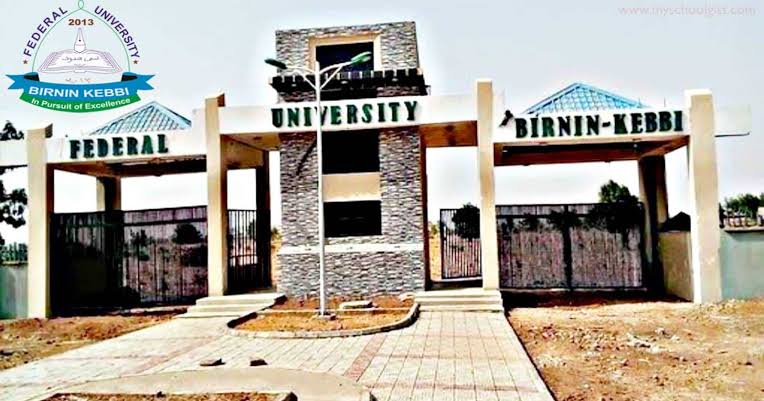
The Senate of the Federal University Birnin Kebbi (FUBK) has commended Dr. Leo Stan Ekeh, CEO of Zinox Group and Founder of konga.com, for his generous commitment of fifty million naira to enhance the university’s IT infrastructure. The commendation was issued at the 34th Senate Meeting held on Thursday, 30 January 2025, in the Senate Chambers of the university. 

The Senate acknowledged the tremendous support and commitment of the IT boss and philanthropist, who is passionateabout education and technological development in the institution and the country at large. 

Chairman of the Senate and Vice Chancellor of FUBK, Prof. MZ Umar, informed the Senate that he, along with the Chancellor of the University, HRM Eze (Dr.) Cletus I. Ilumuanya, CON, the Obi of Obinugu, recently visited Dr. Ekeh in Lagos, where he reaffirmed his commitment to providing the university with essential IT resources.

FUBK Bulletin reports that Dr. Ekeh received an honorary Doctorate from the University at the maiden combined Convocation ceremony, held on 12 October 2024.

Meanwhile, the Senate considered the Examination Results for the 2023/2024 Academic Session after Dr. Mohammed Bashar Danlami, the director of examinations and registration, presented them.

Examination malpractice violates students’ ethics

By Hamza Almustapha Paki

Examination malpractice is regarded as any deliberate act of wrongdoing that violates examination rules intended to provide a candidate with an unfair advantage. Examination malpractice, also referred to as the unlawful actions students undertake during their exams to achieve good grades by taking shortcuts.

Exam malpractices, such as cheating, impersonation, and leakage of examination questions, have become a persistent and widespread problem among students in Nigeria. These malpractices threaten the education system and the country’s future. 

The phenomenon has infiltrated the education system, compromising the integrity and fairness of assessments, undermining efforts to foster a skilled workforce, and eroding public trust in the system. Examination malpractice, alongwith its disadvantages, has negatively impacted all facets of society.

The examination law and ethics state that the sanctions or penalties for candidates involved in examination malpractice in Nigerian tertiary institutions range from a warning letter to not allowing the candidates to sit the examination, suspension for two semesters, expulsion, and dismissal from the institution, depending on the degree of misconduct. 

According to the National Examination Council (NECO), it is estimated that the total number of students involved in various forms of examination malpractices was about 20,000 as of 2021.

On the other hand, 178 cases of malpractice were detected in the Unified Tertiary Matriculation Examination in the 2022 and 2023 batches.

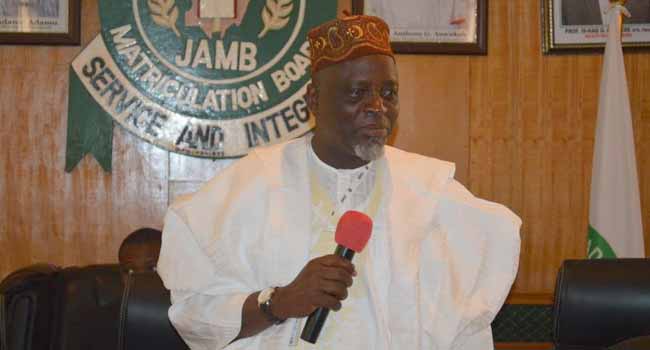
The Joint Admissions and Matriculation Board (JAMB) identified the malpractices as including “multiple registrations, manipulation of biometrics, collusion of some private CBT centres with parents, impersonation, deliberate disruption of the examination process, and syndicate of adjacent centres in examination.

It is depressing, regrettable, and shameful to engage in examination malpractices after all the energy expended by our respected lecturers or teachers.

In conclusion, examination malpractice could lead to a loss of confidence, self-esteem, determination, and indolence. 

It also acts as a source of future persistent sadness, which could cause psychological, emotional, and physical disorders in the victim. Therefore, it should be seen as the enemy of society and jettisoned.

Former BUK staff raises concerns about transcript delays

By Muhammad Sabiu

Dr. Muhsin Ibrahim, a former Bayero University, Kano (BUK) staff member, has expressed deep concern over the challenges students and alums face in obtaining academic transcripts from BUK.

In a recent commentary on Facebook, Dr Ibrahim highlighted the plight of many former students who have missed out on opportunities due to delays in processing transcripts. “This is sad and embarrassing, especially as the problem is completely avoidable in this day and age,” he wrote, noting that the issue is prevalent in many public universities across Nigeria.

Dr. Ibrahim shared a personal experience, revealing his inability to assist a former student in obtaining her transcript despite his connections within the university. He described the situation as unfortunate and urged those responsible for transcript processing to act with empathy and diligence.

He also called on the university’s management to address the problem decisively, suggesting that any staff found guilty of causing unnecessary delays should face appropriate disciplinary actions. “Think about what a delay means to these people. Don’t ruin their chances at a scholarship or a job. Be empathetic. Fear God,” he appealed.

Dr. Ibrahim’s remarks resonate with affected students and alumni, who have long sought reforms to streamline administrative processes. This underscores the need for transparency and efficiency in accessing critical academic documents.

Breaking through: A PhD holder’s rise from Third-Class to lecturer

By Ishaka Mohammed

Sometime in 2023, I wrote about a PhD holder who couldn’t get a lecturing job because of his third-class bachelor’s degree. Neither his postgraduate qualifications and a significant number of journal articles nor his vast experience in education could override his weak first degree, thanks to supposed standards set by the National Universities Commission (NUC).

A few years after obtaining a third-class Bachelor of Science in Geography, this man started teaching in a government secondary school and, with his diligence, experience, and additional qualification (a postgraduate diploma in education: PGDE), he became a vice-principal. 

He later obtained a postgraduate diploma (PDE) as part of the requirements for a master’s degree (due to his weak first degree), successfully completed an MSc, and was a short while into his PhD program when he lost his job. 

It was a big test, especially for a family man, but he faced everything head-on and acquired his PhD in 2020.

Dr Ali Ameh Danbaba had always wanted to be a university lecturer, so he submitted applications despite having heard of the obstacle (his third-class bachelor’s degree) before him. Two universities had almost employed him when they noticed the class of his bachelor’s degree. I saw the situation as a case of someone being denied admission to tertiary institutions because of their poor primary school results.

However, Dr Ali Ameh Danbaba is perseverance-personified. At the time of his last rejection, he was already doing another bachelor’s degree (though as a part-time student). He spent four more academic sessions and obtained a first-class Bachelor of Science in Geography.

One amazing aspect of his doggedness was the uncertainty of his financial sources. Despite living with his wife and children and being mostly unemployed during his PhD program, Doctor (as he’s fondly called) persisted, majorly freelancing with his academic prowess.

Outside his academic life, he’s famous for his joviality and frequent calls to prayers. His humility could be easily mistaken for timidity. Despite his qualifications and age (with his first child already at university), he is never condescending. He takes my relationship with him like that between age-mates.

I was away from town and on the phone with him when he broke the heart-warming news of his employment to me. This job was his target for years. I’m delighted that he finally got it.

Success has multiple meanings, one of which is the magnitude of one’s wealth, but the meaning I often refer to is the achievement of one’s goal(s). Dr Ali Ameh Danbaba wanted to become a university lecturer, and now he is. I see him as a successful man, and, among other things, I’ve learned much from his life, especially his perseverance and humility.

Until his latest employment, he was the Chairman of the District Education Committee, Kaduna North Local Government Area of Kaduna State.

Senator Barau to offer 300 master’s degree scholarships in Nigerian universities

By Sulaiman Abdullahi

To expand educational access for young Nigerians, Deputy Senate President Senator Barau I. Jibrin has launched a domestic scholarship program funding 300 Master’s degree students at leading Nigerian universities.

This initiative comes just a week after the Barau I Jibrin Foundation (BIJF) facilitated the departure of 70 students for postgraduate studies in India. The beneficiaries, drawn from the three senatorial districts of Kano State, left via Malam Aminu Kano International Airport on December 29, 2024.

Through the BIJF, applications have now been opened for the “Postgraduate Domestic Scholarships for the 2025/2026 Academic Session,” targeting outstanding graduates from Kano State.

Speaking on the program, Maikudi Lawan, PhD, Secretary of the BIJF Postgraduate Scholarship Committee, emphasized the foundation’s commitment to fostering academic growth and human capital development in fields critical to Nigeria’s future.

“This initiative offers a unique platform for academic excellence, research, and innovation in fields such as Artificial Intelligence, Robotics, Cyber Security, Data Science, Mineral Exploration, Climate Change Management, and many others,” Dr. Lawan said.

Six prestigious universities have been selected for the program: Bayero University Kano, Ahmadu Bello University Zaria, University of Ibadan, University of Lagos, Obafemi Awolowo University Ile-Ife, and the University of Nigeria Nsukka.

Ismail Mudashir, Special Adviser on Media and Publicity to Senator Barau, described the scholarship as part of the senator’s broader vision for human capital development in Kano State and beyond.

“Senator Barau is passionate about empowering the next generation of leaders through education. This program underscores his unwavering commitment to academic excellence and national development,” Mudashir said.

The announcement has been met with widespread commendation, with many viewing the initiative as a game-changer for graduates in Kano State seeking advanced education opportunities.

Interested applicants are encouraged to visit the foundation’s portal for more information and to submit their applications promptly.

Namadi’s SSA was wrong: A clarification concerning students’ allowances

By Isma’il Alkasim

Since the Jigawa State government announced a 100% increase in scholarship allowances for state students, it has served as a beacon of hope and high expectations. This timely intervention comes amid the economic hardship caused by the removal of fuel subsidies and the subsequent increase in registration fees at tertiary institutions. 

The government emphasised that Governor Umar A. Namadi understands the challenges students face. To support their education, the state’s scholarship board was instructed to disburse scholarship payments before the start of each academic session. This directive has undoubtedly restored hope and brought joy to the students.

The State Executive Council approved a series of memos and tags to supplement the payment, but only to a few institutions. Although the state government boasts of having paid all students, over eighty percent of institutions have not received any payment from the board. We have repeatedly read that the government approved a substantial sum for the payment, but to no avail. This has engendered mistrust and left a deep scar in our memory, raising concerns that heartless and corrupt opportunists may have stolen the funds.

Moreover, in an interview with Radio Jigawa, the Senior Special Assistant on Students Matters to the Executive Governor of Jigawa State claimed that the government had given scholarship allowances to all Jigawa State students. This claim either demonstrates his inability to represent his office truthfully or suggests his complicity in misappropriating public funds intended for student support. 

Furthermore, to strike a balance and provide an honest treatment of this issue, we attempted to reach Ambassador Muhammad Salisu Seeker, the SSA, to clarify his ill-founded assertion. However, despite our numerous text messages, he arrogantly refused to answer our calls. He did not even have the courtesy to respond. This arrogance is unbecoming of a public servant who represents the government in students’ eyes. 

As a concerned student, I find the SSA’s claim offensive and insulting. To date, Ahmadu Bello University, Zaria students have not received any payment from the Jigawa State Scholarship Board. The Senior Special Assistant has abused the trust bestowed on him by the Governor, demonstrating sheer incompetence and a monumental failure in public service.

Finally, as a concerned citizen of Jigawa State, I call upon Governor Umar A. Namadi to investigate this matter thoroughly and ensure that anyone found guilty faces the full force of the law. I also urge him to address the misconduct of his Senior Special Assistant on Students Affairs, Amb Muhammad Salisu (Seeker), who has demonstrated a pattern of abusing his office through gross incompetence.

Isma’il Alkasim is a student at Ahmadu Bello University in Zaria. He writes from Garki Jigawa State and can be reached at kogasgarki@gmail.com.