Tinubu

Tinubu hails Gumel’s new role, Amusan’s world silver medal

By Abdullahi Mukhtar Algasgaini

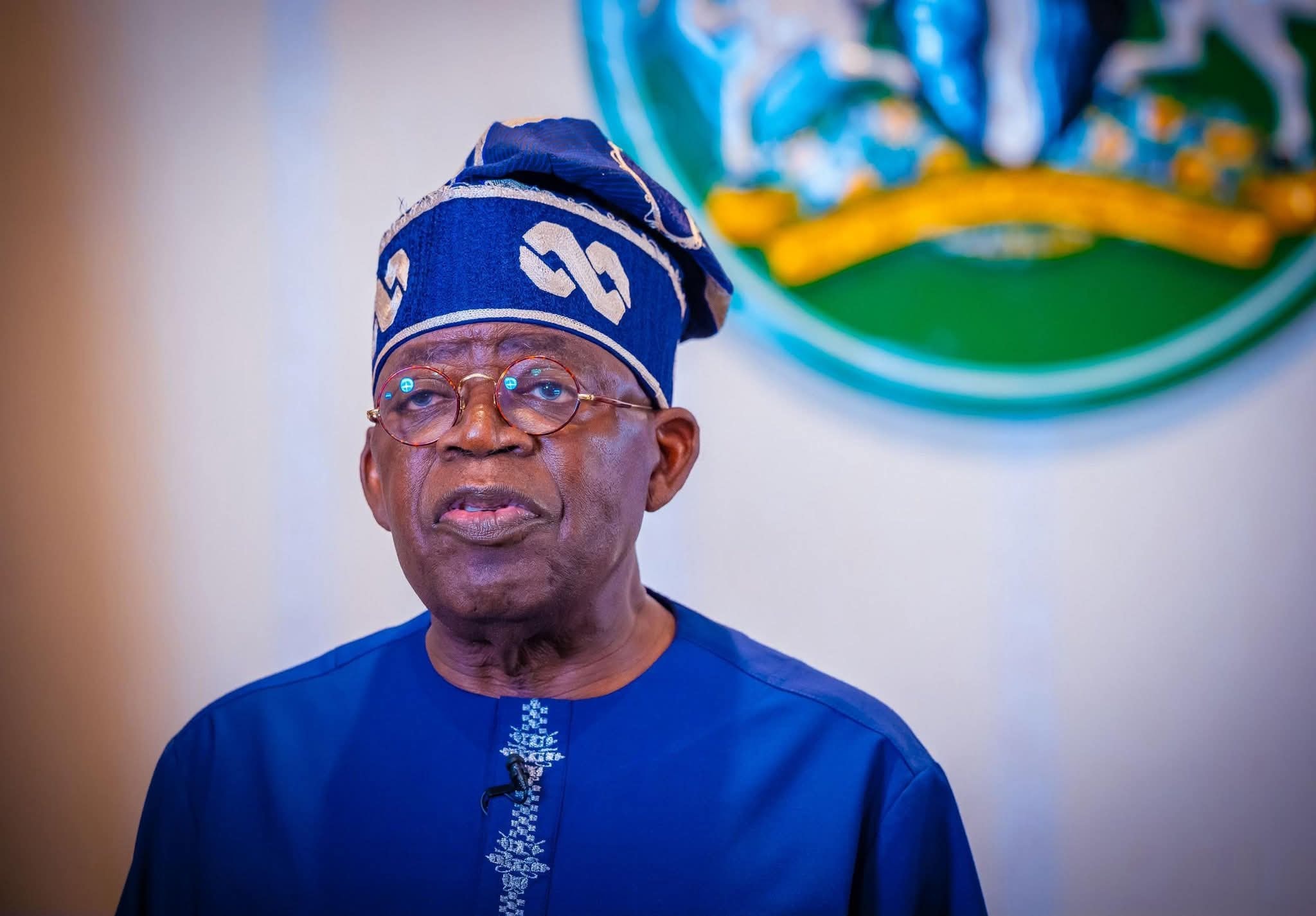
President Bola Tinubu has extended his congratulations to two Nigerians, Farouk Gumel and Tobi Amusan, for their recent exceptional accomplishments on the international stage.

In a press release issued on Monday by his Special Adviser on Information and Strategy, Bayo Onanuga, the President commended Gumel on his appointment as the Chairman of the Botswana Sovereign Wealth Fund Limited.

Tinubu described the appointment as a recognition of Gumel’s expertise and dedication, noting that it reflects the high esteem in which Nigerian professionals are held globally.

The President highlighted Gumel’s role as Vice Chairman for Africa at the Tropical General Investment (TGI) Group and his contributions to Nigeria’s food security efforts.

“I am confident he will excel and further cement Nigeria’s reputation for excellence in global finance,’’ the President stated.

The President also celebrated hurdler Tobi Amusan for winning a silver medal in the women’s 100m hurdles at the 2025 World Athletics Championships in Tokyo.

He praised her relentless drive, resilience, and unwavering spirit, calling her achievement a source of immense national pride.

“Tobi has once again demonstrated that with patriotic fervour, coupled with hard work and determination, any height is surmountable,” Tinubu said.

The President wished both individuals continued success in their endeavours and assured them of the federal government’s full support.

Nigeria hits 2025 revenue target early—Tinubu

By Abdullahi Mukhtar Algasgaini

President Bola Tinubu announced on Tuesday that the Federal Government has already met its revenue target for the 2025 fiscal year, achieving the milestone in August of this year.

Speaking at a meeting with legacy members of the defunct Congress for Progressive Change (CPC) at the Presidential Villa in Abuja, the President attributed this achievement to his administration’s economic reforms, which have focused on stimulating the non-oil sector.

“The economy is now stabilised. Nobody is trading pieces of paper for foreign exchange anymore. The economy is now predictable. You do not need to know the CBN Governor to obtain foreign exchange or import goods,” President Tinubu stated.

He assured Nigerians that his Renewed Hope Agenda remains focused on building critical infrastructure, improving healthcare, ensuring food sovereignty, and providing security.

To guarantee food sovereignty, the President revealed plans to establish agricultural mechanisation centres across all regions of the country to build capacity and expand cultivation.

“We are going to have trainees. That programme is our path to food sovereignty,” he said.Reflecting on the political merger that formed the ruling All Progressives Congress (APC), Tinubu described it as “a sweet memory” and thanked the delegation for their support.

He also promised to sustain the legacies of former President Muhammadu Buhari, including immortalising him with a ‘Buhari House,’ and assured that more members of the old CPC would be brought into the government.

The leader of the delegation and former Governor of Nasarawa State, Umaru Tanko Al-Makura, assured the President of the group’s loyalty and commitment to the success of his administration and his ultimate victory in the 2027 elections.

Speaker of the House of Representatives, Rt. Hon. Tajudeen Abbas, who was also present, thanked the President for his statesmanship and magnanimity.

Banditry: Tinubu approves troop deployment, drone usage in Katsina

By Abdullahi Mukhtar Algasgaini

President Bola Tinubu has authorized a major security overhaul for Katsina State, promising a fierce military blitz involving drone technology and tactical troop redeployments to crush banditry.

The decisive move comes after a high-powered Katsina delegation, fearing the state was under siege, stormed the State House to demand urgent action.

The delegation, a who’s who of Katsina’s political, traditional, and religious leadership, was led by Governor Dikko Umaru Radda.

It included the Emir of Daura, former Governor Aminu Masari, all three state senators, and two federal ministers.Confronted with the grave situation, President Tinubu issued immediate orders to security chiefs.

“I have directed all the security agencies to energize further… Additional deployment of air drones, and if they have to shift movement between Katsina and other boundary areas, they should do so,” the President declared.

He promised that ground forces would intensify operations to “smoke them out.”

The President also backed the growing call for sub-national policing, revealing plans are underway to establish state police as a critical part of a holistic security strategy.

Governor Radda expressed profound relief, thanking the President for his unwavering support and labeling him “a true son of Katsina.”

During the meeting, the Emir of Katsina’s representative, Senator Ibrahim Ida, disclosed the state’s massive financial commitment to the crisis, having already invested over N40 billion in security logistics.

He pleaded for federal reimbursement and the establishment of a permanent military presence in the vulnerable southern part of the state.

The meeting signifies a significant escalation in the federal government’s response to the security crisis plaguing the Northwest.

Atiku accuses Tinubu of using EFCC to intimidate opposition over Tambuwal’s detention

By Uzair Adam

Former Vice President Atiku Abubakar has alleged that the administration of President Bola Ahmed Tinubu is weaponizing the Economic and Financial Crimes Commission (EFCC) to target political opponents.

Atiku made the claim while reacting to the detention of former Sokoto State Governor and Senator, Aminu Waziri Tambuwal, describing it as part of a broader plan to “harass, intimidate, and decimate” members of the opposition coalition.

He stated that, “The only reason the EFCC has detained the former Governor of Sokoto State, Senator Aminu Waziri Tambuwal, is because he is a member of the opposition Coalition. It is a continuation of the Tinubu-led administration’s agenda to intimidate the opposition.”

The former Vice President, who played a key role in establishing the EFCC during his tenure, accused the commission of abandoning its core anti-corruption mandate to serve political purposes.

He alleged that opposition leaders were being targeted with “phantom” corruption allegations, only to be absolved once they defect to the ruling party.

Atiku warned that such practices undermine institutional integrity and fuel corruption, pointing to what he called a “growing trend” of using anti-corruption agencies to pressure governors and political leaders into joining the ruling party.

While expressing support for a genuine anti-corruption fight, Atiku urged Nigerians, civil society groups, and the international community to resist “anti-democratic machinations” aimed at creating a one-party state.

“We will never succumb to these tactics. The use of anti-corruption agencies as a political agenda must be roundly condemned,” he added.

2027: Why replacing Shettima with Kwankwaso would be Tinubu’s biggest mistake

By Musa Shehu

The rising speculation that President Bola Ahmed Tinubu may replace Vice President Kashim Shettima in the 2027 elections is not just a distraction—it is a dangerous political gamble that could cost the All Progressives Congress (APC) everything it has built since 2015.

While official voices try to downplay the narrative, recent events—especially within the party’s North-East wing—indicate that the matter is no longer mere rumour. What happened in Gombe, the calculated omissions in party endorsements, and the president’s deafening silence all point to a coordinated, if cautious, effort to test the waters of a political switch. But history, logic, and the current political climate all speak clearly against such a move.

Also, there has been another disturbingly growing speculation that President Tinubu may consider replacing Vice President Kashim Shettima with Dr. Rabiu Musa Kwankwaso. While this idea may appear strategic on the surface, it would be a serious miscalculation.

Kwankwaso is not as capable or disciplined as Shettima. He lacks the patience, composure, and loyalty that Shettima has consistently demonstrated both during the 2023 campaign and throughout his time as vice president. Unlike Shettima, who has proven to be a team player and a stabilizing figure in the presidency, Kwankwaso is widely seen as a local champion whose political relevance rarely extends beyond Kano.

Again, Kwankwaso is also known for his domineering style and confrontational approach. He often moves with a crowd of blindly loyal supporters who tend to stir division rather than build consensus. Tinubu needs a dependable and steady partner, not a disruptive and self-centered figure who could complicate governance. Replacing Shettima with Kwankwaso would be inviting internal crisis, not national progress.

Moreover, Shettima is not just a placeholder or ceremonial figure in the Tinubu presidency. He was a key player in Tinubu’s emergence, standing firmly with him when many in the North, especially the political elite, were either undecided or opposed to Tinubu’s ambition.

His nomination as vice president was not just strategic—it was loyal, bold, and calculated to balance the controversial Muslim-Muslim ticket in a way that maintained the party’s regional grip while managing national tension. Attempting to discard him now undermines that delicate balance and sends a dangerous message to APC loyalists and the broader Northern constituency: loyalty is negotiable, and regional representation can be sacrificed at will.

Recent developments in the APC suggest that some within the party see Shettima as expendable. His name was glaringly omitted during key moments in the party’s North-East stakeholders’ meeting in Gombe. The violent reactions from party delegates who stormed the stage, chanting Shettima’s name and attacking speakers, are not random acts of protest. However, they reflect genuine political frustration and a deep sense of betrayal.

The North-East, especially Borno—Shettima’s home state—has stood firmly behind the APC even in difficult times. Discarding its most prominent representative in the federal government would not only be unwise, but also politically suicidal.

Moreover, dropping a sitting vice president in a bid for second term is historically rare and politically dangerous. Nigeria’s democratic experience, shaky as it is, has shown that stability in leadership tickets often yields better results.

Obasanjo retained Atiku in 2003 despite personal and political differences. Jonathan ran with Sambo in both 2011 and 2015. Buhari did not drop Osinbajo in 2019. In each of these cases, keeping the vice president on the ticket was a signal of continuity, unity, and loyalty to political partnerships. So why does Tinubu attempt to break from this tradition? This, according to many, will not be seen as strategic—it will be interpreted as cold, calculated betrayal.

Moreover, there is also no credible reason that has been given—or can be given—for dropping Shettima. He has not been involved in any scandal. He has not rebelled against the president or the party. He continues to represent the administration with measured tone, loyalty, and a calm that contrasts with the chaos in some parts of the country.

The idea that he lacks “visibility” is hollow. Shettima has always been a backroom operator, more interested in delivering results than seeking applause. That was his style as governor of Borno, and it remains his approach as vice president.

Furthermore, the APC risks opening old wounds and repeating past political mistakes if it proceeds with this plan. In 2015, the PDP lost its northern base largely due to internal exclusion and the perception that it had betrayed zoning arrangements. That single miscalculation allowed a coalition to form around Buhari, ultimately bringing the APC to power. Tinubu himself benefitted from that revolt. For him to now allow—or lead—a similar alienation of a key northern figure would be politically disastrous.

What is unfolding now mirrors the political climate of 1983, when President Shehu Shagari removed his vice president, Alex Ekwueme, under pressure from internal party factions. That decision split the party, weakened Shagari’s legitimacy, and accelerated the military coup that followed. The cost of betraying one’s political base in a fragile democracy like Nigeria’s is always steep. APC leaders, especially those urging a replacement, would do well to revisit that history.

Perhaps the most unsettling part of this entire episode is President Tinubu’s silence. Unlike his predecessors, who openly reaffirmed their vice presidents ahead of their second-term bids, Tinubu has allowed ambiguity to take root. The clarification by his media aide, Bayo Onanuga, that the president will only choose his running mate after accepting the party nomination is technically correct—but politically tone-deaf. The impression it leaves is that Shettima’s position is hanging by a thread. That kind of uncertainty does not build party confidence; it fractures it.

In truth, the campaign to replace Shettima is less about religion or regional balance and more about ambition—by those who believe they deserve the VP slot, and by those who think they can engineer a political realignment in their favour. But these short-term calculations ignore the long-term damage they could cause. The North-East has already shown signs of agitation, and the idea of switching loyalty to the PDP or other parties is no longer hypothetical. If APC loses that bloc, no amount of last-minute reconciliation will save it in 2027.

President Tinubu still has time to shut this rumour down and make it clear that the 2023 ticket remains the 2027 ticket. Anything less will continue to create chaos within the party and hand the opposition a ready-made campaign message. Nigerians are watching.

The North-East is watching. The APC base is watching.

Musa Shehu wrote in from Kano State, Nigeria.

MRA raises alarm over rising attacks on journalists in Tinubu era

By Uzair Adam

Media Rights Agenda (MRA) has expressed deep concern over what it described as a sharp rise in attacks on media freedom and civic expression in Nigeria, particularly the misuse of the Cybercrime Act by law enforcement agencies to intimidate and penalize journalists and government critics.

The concern was raised in a mid-term assessment report of President Bola Tinubu’s administration released on Monday.

Titled “The Onslaught Intensifies: A Mid-term Assessment Report on Media Freedom under the Tinubu Administration,” the report documents 141 cases of attacks on journalists, media workers, and citizens between May 29, 2023, and May 29, 2025, for peacefully expressing their views on issues such as governance, economic challenges, and security.

According to MRA, 61 of these incidents—representing over 43%—were carried out by personnel of the Nigeria Police, while the Department of State Services (DSS) was responsible for seven cases.

Together, the two agencies accounted for nearly half of all recorded violations.

The report held the Tinubu-led government responsible for these abuses, citing Principle 20(5) of the Declaration of Principles on Freedom of Expression and Access to Information in Africa, which holds states accountable for violations committed by law enforcement and other state actors against media practitioners.

In the report’s preface, MRA’s Executive Director, Edetaen Ojo, highlighted the use of repressive laws like the Cybercrime Act to suppress journalists, alongside politically motivated sanctions, arbitrary arrests, surveillance, and censorship of government-owned media outlets.

Ojo described the report as a necessary intervention amid growing threats to Nigeria’s democratic values, stressing that its goal is not just to criticize but to document and analyze the government’s impact on freedom of expression.

Among the report’s most troubling revelations is the continued abuse of Section 24 of the Cybercrime Act (2015), which has been frequently used to arrest, detain, and prosecute journalists and social media users for online expressions deemed critical of the government.

The report documented several such cases, including the arrests of Emmanuel Uti of the Foundation for Investigative Journalism (FIJ), blogger Destiny Ekhorutomuen in Edo State, four staff members of Informant247 in Kwara State, lawyer and activist Dele Farotimi, and others who faced harsh bail conditions or prolonged detention.

MRA noted that international concern over the misuse of the Act reached a peak in June 2025, when the Heads of Mission of the United States, United Kingdom, Canada, Norway, and Finland issued a joint statement condemning the Nigerian government’s abuse of the law and calling for urgent reforms.

The report also criticized the government’s treatment of peaceful protests as criminal acts, pointing out cases where even minors were charged with treason—a capital offence—for simply demonstrating.

Journalists covering such protests were often brutalized, detained, or had their equipment confiscated or destroyed, with no perpetrators brought to justice.

Commenting on the report’s release, MRA’s Communications Officer, Idowu Adewale, described it as troubling that President Tinubu—once a pro-democracy activist and media proprietor—is now at the helm of an administration increasingly defined by repression.

The organization called on all stakeholders, including media professionals, civil society, the judiciary, the legislature, and international partners, to pressure the Nigerian government into enacting reforms that protect media freedom, free expression, and democratic principles.

Presidency slams Buhari’s allies defecting to opposition coalition

By Abdullahi Mukhtar Algasgaini

The Nigerian Presidency has launched a scathing attack on former key allies of ex-President Muhammadu Buhari who have joined a coalition of opposition parties aiming to challenge President Bola Tinubu in the 2027 elections.

Presidential spokesperson Bayo Onanuga, in a statement posted on his Facebook page, accused the defectors of lacking principles and being motivated solely by bitterness after losing political relevance within the ruling All Progressives Congress (APC).

Onanuga specifically named and criticized several prominent figures like Rotimi Amaechi (Former Minister of Transportation) whom he described as having “lost everything politically” after failing to secure the APC presidential ticket in 2022.

Onanuga stated that Amaechi had effectively left the APC long ago.

Abubakar Malami SAN (Former Attorney-General and Minister of Justice) was then characterized by Onanuga as a “bitter loser” since President Tinubu took office, particularly after losing the Kebbi State governorship ticket.

Onanuga claimed Malami’s hostility towards the APC was well-known.

Others he slammed include Hadi Sirika (Former Minister of Aviation), Rauf Aregbesola (Former Minister of Interior and ex-Governor of Osun State).

Onanuga also mentioned Kashim Imam and Chief John Odigie Oyegun as longtime APC figures nursing grudges after losing out on the vice-presidential ticket in 2022.

He described Oyegun, a former APC National Chairman, as having lost influence within the party.In his statement, Onanuga warned Nigerians to be wary of the opposition coalition, labeling its members “bitter” individuals united only by their resentment towards President Tinubu.

He dismissed the coalition as “unprincipled” and “without ideology.””Their eyes are closed by the pursuit of their ambition, the hunger for power is glaring, not for the benefit of Nigerians, but for their own benefit,” Onanuga stated.

He predicted the coalition would inevitably collapse due to internal clashes and conflicting political ambitions among its members.

“Their mutual antagonism and political ambitions will make them fight each other,” Onanuga asserted.

Tinubu mediates Rivers crisis in Abuja talks

By Abdullahi Mukhtar Algasgaini

President Bola Tinubu convened a high-stakes reconciliation meeting on Thursday night at the Presidential Villa in Abuja, aiming to resolve the political turmoil in Rivers State.

The closed-door session included Governor Siminalayi Fubara, Federal Capital Territory Minister Nyesom Wike, Rivers State Assembly Speaker Martins Amaewhule, and other lawmakers.

This comes after President Tinubu declared a state of emergency on March 18, suspending Governor Fubara, his deputy, and the entire State House of Assembly.

The discussions focused on restoring stability in the oil-rich state, though details of the agreement remain undisclosed.

President Tinubu passes ECOWAS leadership to Sierra Leone’s Bio, stresses unity, growth

By Abdullahi Mukhtar Algasgaini

President Bola Tinubu officially handed over the chairmanship of the ECOWAS Authority of Heads of State and Government to Sierra Leone’s President Julius Maada Bio on Sunday, urging regional leaders to remain vigilant and united in fostering peace and prosperity.

The symbolic transfer took place at the closing of the 67th Ordinary Session of the ECOWAS Authority in Abuja.

Tinubu, who completed his two-term tenure, expressed confidence in the bloc’s future under Bio’s leadership, calling for deepened cooperation and inclusive growth.

“With continued collaboration, ECOWAS will achieve greater heights in peace, security, and prosperity for West Africa,” Tinubu stated.

He emphasized the need to balance economic integration with political stability, noting that democratic values must be upheld for sustainable development.

In his acceptance speech, President Bio outlined four priorities: restoring constitutional order, strengthening regional security, boosting economic integration, and enhancing ECOWAS’ institutional credibility.

He pledged to lead a “people-centred” ECOWAS, addressing challenges like terrorism, political instability, and youth demands for accountability.

Bio commended Tinubu’s leadership, vowing to build on his predecessor’s efforts in regional dialogue and peacebuilding.

Both leaders called for collective action to secure a stable and prosperous future for West Africa.

Tinubu yet to decide on 2027 running mate — Presidency

By Uzair Adam

President Bola Ahmed Tinubu will only announce his running mate for the 2027 presidential election after officially accepting the party’s nomination during the All Progressives Congress (APC) convention in 2026.

This clarification was made by Bayo Onanuga, Special Adviser to the President on Information and Strategy, in an exclusive interview with Daily Trust on Thursday.

Amid growing speculations over the absence of Vice President Kashim Shettima’s name in recent endorsements for Tinubu, Onanuga dismissed any insinuations of a planned replacement, describing the situation as “a non-issue.”

“In a presidential system, the candidate comes first, and then a running mate is picked. That’s what happened under Buhari—he was nominated first before selecting a running mate. The same process will apply here,” he said.

Onanuga stressed that a decision will only be made after the Independent National Electoral Commission (INEC) releases its timetable, prompting the party to hold its convention.

He also rejected the idea that Tinubu’s history of changing deputies during his tenure as Lagos State governor hints at plans to drop Shettima.

“Those were different political circumstances. In his first term, he and his deputy, Kofo, had issues and she had to leave. Femi Pedro replaced her, but later defected in the second term to pursue a governorship ambition. It’s wrong to frame this as a pattern of discarding deputies,” he explained.

Addressing the speculation of a strained relationship between Tinubu and Shettima, Onanuga dismissed such claims as baseless rumors.“From what I know, they have an excellent working relationship. The idea that there’s friction is just beer parlour gossip. Some even claim Seyi Tinubu is the vice president—it’s all nonsense,” he said.

When asked if the APC would repeat the controversial Muslim-Muslim ticket in 2027, Onanuga said the issue has lost relevance.

“There’s no Islamisation agenda. Christians are living freely, and the president even attended the Pope’s inauguration in Rome. Many of the speculated running mates are also Muslims—it’s not a matter of concern anymore,” he said.

Responding to criticisms over early endorsements before the official campaign season, Onanuga said it was a necessary reaction to opposition attacks.

“If the so-called coalition hadn’t started attacking the administration, we would’ve waited until next year. But we had to respond and show readiness. You can’t expect the president to stay silent while others plot openly,” he said.

He noted that the endorsements reflect public confidence in Tinubu’s leadership, even if the campaign has not yet formally begun.