Student Union

Namadi’s SSA was wrong: A clarification concerning students’ allowances

By Isma’il Alkasim

Since the Jigawa State government announced a 100% increase in scholarship allowances for state students, it has served as a beacon of hope and high expectations. This timely intervention comes amid the economic hardship caused by the removal of fuel subsidies and the subsequent increase in registration fees at tertiary institutions. 

The government emphasised that Governor Umar A. Namadi understands the challenges students face. To support their education, the state’s scholarship board was instructed to disburse scholarship payments before the start of each academic session. This directive has undoubtedly restored hope and brought joy to the students.

The State Executive Council approved a series of memos and tags to supplement the payment, but only to a few institutions. Although the state government boasts of having paid all students, over eighty percent of institutions have not received any payment from the board. We have repeatedly read that the government approved a substantial sum for the payment, but to no avail. This has engendered mistrust and left a deep scar in our memory, raising concerns that heartless and corrupt opportunists may have stolen the funds.

Moreover, in an interview with Radio Jigawa, the Senior Special Assistant on Students Matters to the Executive Governor of Jigawa State claimed that the government had given scholarship allowances to all Jigawa State students. This claim either demonstrates his inability to represent his office truthfully or suggests his complicity in misappropriating public funds intended for student support. 

Furthermore, to strike a balance and provide an honest treatment of this issue, we attempted to reach Ambassador Muhammad Salisu Seeker, the SSA, to clarify his ill-founded assertion. However, despite our numerous text messages, he arrogantly refused to answer our calls. He did not even have the courtesy to respond. This arrogance is unbecoming of a public servant who represents the government in students’ eyes. 

As a concerned student, I find the SSA’s claim offensive and insulting. To date, Ahmadu Bello University, Zaria students have not received any payment from the Jigawa State Scholarship Board. The Senior Special Assistant has abused the trust bestowed on him by the Governor, demonstrating sheer incompetence and a monumental failure in public service.

Finally, as a concerned citizen of Jigawa State, I call upon Governor Umar A. Namadi to investigate this matter thoroughly and ensure that anyone found guilty faces the full force of the law. I also urge him to address the misconduct of his Senior Special Assistant on Students Affairs, Amb Muhammad Salisu (Seeker), who has demonstrated a pattern of abusing his office through gross incompetence.

Isma’il Alkasim is a student at Ahmadu Bello University in Zaria. He writes from Garki Jigawa State and can be reached at kogasgarki@gmail.com.

My journey in student politics at Bayero University, Kano

By Bilal Muhammad Bello (BMB)

From a young age, I have been deeply fascinated by politics and dreamed of actively participating in it one day. Growing up in Kano State, I listened to political programs on local FM stations and national media, which nurtured my passion and understanding of the political landscape. This enthusiasm carried over into my academic journey at Bayero University, Kano (BUK), where I discovered opportunities to channel my political ambitions.

Upon gaining admission to BUK, even before lectures commenced, I visited the Students’ Union Government (SUG) Secretariat with a friend in his second year. At that time, the SUG President, fondly known as Third Man, led a vibrant administration. Observing the activities at the Secretariat left a lasting impression on me. I resolved that, despite the challenges ahead, I would one day participate in student politics.

However, during my first and second years, the school management suspended SUG elections and replaced the union with a caretaker committee (CTC). To stay involved, I joined my local government students’ association and other student unions, which allowed me to gain valuable experience and insights.

In 2023, during my third year, the school management reinstated SUG elections, and I seized the opportunity to run for the position of SUG Departmental Senator. Around the same time, my department, the Mass Communication Students Association (MACOSA), was preparing for elections. Since the position of Departmental Senator was part of the SUG elections, MACOSA executives decided to conduct a primary election to streamline the process. The winner of the primary would automatically secure an SUG election form.

I was one of three candidates vying for the position, determined to represent my department in the Students’ Representative Assembly (SRA). Financial challenges posed significant hurdles, but I remained optimistic. My campaign strategy focused on building genuine relationships with students across all levels. From my first year, I had shared resources like past question papers, handouts, and PDFs with my name attached, ensuring I was remembered. Additionally, I provided timely updates about school affairs and assisted newcomers in settling into university life. These efforts resonated with students and garnered their support.

The campaign period was intense. While my opponents distributed campaign materials such as hand fans and handouts, which I couldn’t afford, I relied on the unwavering support of my friends and team members. A close friend, Sa’ad Abubakar, even purchased my election form. My campaign team, including Hajara Abdullahi, Benjamin Jacobson, Umar Farouq, Junaidu Shehu, Abubakar Sadeeq Yahaya, Raheela Usman Buhamas, Sani Labaran and Abdulrauf Abdulrazak Rugu Rugu, worked tirelessly to mobilise voters.

The night before the election, we conducted a face-to-face campaign, visiting hostels such as Sa’adu Zungur (Blocks A, B, and C), Yar’Adua Block, El-Kanemi, Dantata, Dangote, and Ramat. We engaged students directly, explaining our vision and soliciting their support. Influential friends like Al-amin Musa Muhammad, Musa Rabiu and the current MACOSA President, Abbas Ynbs,  played pivotal roles in reaching key student areas with contribution of Fateemah Dabo, Anas Abbas, Alhassan Alhassan Gidan Kara, Khadijah MakkahSanda, Anwar Usman, Abdullahi Mohammed Abubakar, Uzair Adam Imam, Sadi Sada, Yusuf Aminu Yusuf and Adamu Muhammad Dan Hajiya.

The election results were a testament to the power of grassroots engagement and genuine relationships. I emerged victorious, securing the automatic ticket to represent my department in the 24th SRA. I initiated projects that strengthened our department’s presence in the university’s political landscape during my tenure.

Encouraged by this success, I later contested for the position of Faculty Senator and won unopposed, representing the Faculty of Communication in the 25th SRA. This journey was made possible through the unwavering support of friends like Abubakar Ibrahim Shehu, the President of the Department of Information and Media Studies, and the contributions of Distinguished Senator Abdullahi Yunusa Alkah of Law and distinguished Senator Ahmad Mijinyawa of Computing.

Reflecting on my journey, I attribute my success in student politics to a genuine commitment to helping others and fostering meaningful relationships by prioritising the needs of my peers, sharing knowledge, and maintaining mutual respect.

This experience has fulfilled my dream of participating in politics and equipped me with valuable lessons in leadership, collaboration, and perseverance—qualities I intend to carry forward into broader political endeavours.

Bilal Muhammad Bello (BMB) is a Senator Representing the Faculty of Communication 25th Student Representative Assembly SRA-SUG-BUK.

Today’s students’ union and future Nigerian politics

By Nasiru Tijjani

Human society is intricate, comprising individuals from diverse backgrounds and social classes who interact. For society to thrive, it is essential to maintain peace, order, transparency, unity, teamwork, discipline, accountability, sanity, tranquillity, and justice.

However, when corruption, injustice, and criminal activities become rampant, society is bound to collapse. Good leadership, followership, a sense of togetherness, and patriotism are crucial to addressing these issues. 

Established in 1956, the National Association of Nigerian Students (NANS) has played a significant role in Nigerian politics. It advocates for students’ rights and participates in protests for educational growth.

To ensure a brighter future for Nigerian politics, it is essential to revive the spirit of patriotism and collective responsibility among students, leaders, and citizens. We can build a more prosperous and equitable society by promoting transparency, accountability, and justice.

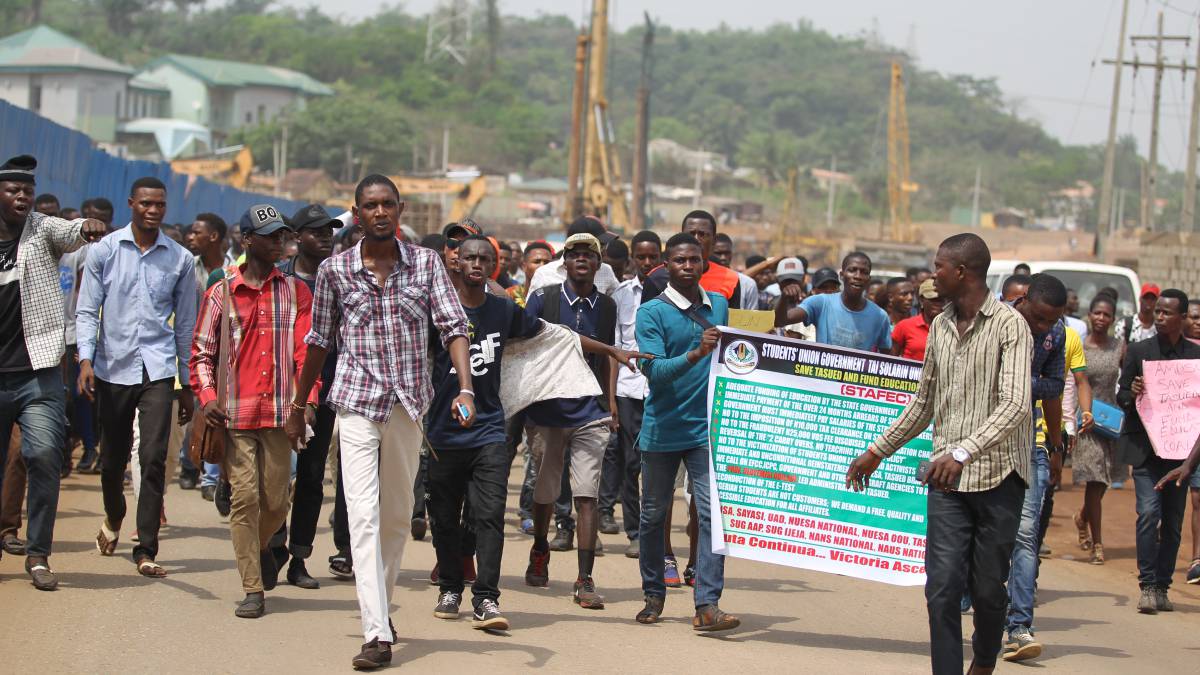
Frequent student demonstrations and unrest have plagued Nigerian universities and other tertiary institutions for years. These protests have often turned violent, destroying public property and resulting in arrests, injuries, expulsions, suspensions, and even the loss of lives. Despite these efforts, students usually return to the same conditions that sparked the protests, with their demands left unaddressed.

Students must form associations and unite under a common banner to address these issues effectively. By doing so, they can discover their strengths and attributes and develop resilience and assertiveness. A well-organized student union allows students to express their opinions, take independent positions, and ask questions on critical issues.

As Jega (2003) aptly noted, students’ unions play a vital role in helping students develop essential organisational skills and strength of character. These skills prepare students for greater responsibilities in their future endeavours.

In its heyday, students’ unionism in Nigeria commanded respect and inspired awe in governments, students, and institution administrators alike. These unions were built on strong ideologies, fostering a culture of intellectual debates and resistance against oppressive government policies and institutional administrators. They fearlessly expressed dissenting views to authorities when necessary, enjoying broad support from the student community.

The primary objective of these unions was to promote and defend the welfare needs of their members. To achieve this, they engaged in constructive dialogue with governments on policy matters and with institutional authorities to secure essential services. These efforts aimed to create a conducive environment for teaching and learning, ultimately enhancing the academic experience.

A Students’ Union is an organised association of students within an educational institution governed by established rules and regulations that guide its operations. According to Isah (1991), the primary objective of a Students’ Union is to promote and defend the collective interests of its members, aligning with the broader societal context.

This underscores the intrinsic connection between education, students, and society. Students can be viewed as raw materials, shaped and refined by institutions of learning. Through this process, they transform, ultimately emerging as finished products, equipped to contribute positively to society.

Students’ union and the future of Nigerian politics

The state of students’ unions in Nigeria is alarming. The desire for leadership positions is no longer driven by a passion for public service but rather by personal gains and fame. This trend is worrying, as it suggests that Nigeria’s future leaders are more interested in self-aggrandisement than in serving the people.

The situation is further compounded by the fact that some student leaders have become professional beggars, presenting awards to undeserving individuals based on their financial contributions rather than merit. The embezzlement of funds generated from such programs is also common.

This decay in students’ unionism poses a significant threat to Nigeria’s future, as many of these leaders will eventually become politicians. If they already exhibit corrupt tendencies, these habits will likely continue in their future careers, perpetuating a cycle of corruption and poor governance ¹.

To break this cycle, students’ unions must return to their core values of promoting the welfare of their members and advocating for positive change. Student leaders must be selfless, transparent, and accountable, demonstrating the moral values and character essential for effective leadership.

The future of Nigerian politics hinges on the quality of leaders from students’ unions. If these leaders prioritize personal interests over service, the country will struggle. Revitalizing students’ unions for their original purpose offers hope for a brighter Nigeria.

Nasiru Tijjani writes from Gwaram Tsohuwa, Jigawa state and can be contacted via tijjaninasiru@gmail.com.

My journey into student unionism

By Mubarak Shafiu

I joined the train of the Students’ Union right from day one at the university. My painstaking journey to the world of student activism has also fed me with sour, bitter and sweet experiences. Often, I feel nostalgic about the onerous struggles we underwent and the myriad of obstacles we encountered.

Being a passionate advocate for good governance, leadership and democracy, I was overwhelmingly compelled by nature to partake in the diversity-politics. My participation is solely to add my own quota and refine the university’s political atmosphere.

It is indeed sad seeing incompetent, incapable, self-centred and unpatriotic students take the leadership mantle and run the affairs of this vast student body.

Though my fundamental assignment is to study, acquire knowledge, experience, and skills, more importantly, earn my degree with colourful grades. Yet, I developed a burning desire to involve in the school’s extracurricular activities, more precisely- politics, intending to make sustainable reformation.

As a freshman, my initial preoccupation was to study and adequately understand my new environment. Being well-informed would assist me tremendously in making better decisions as events unfold.

Along the process, on many occasions, my parents called me to order and cautioned me to be steadfastly focused on my studies and not mingle with bad company. These cautionary words always crossed my mind, and I decided to keep myself away from anything that could interfere with my study.

Since then, I shunned anything apart from my study as the drumbeat of my parents’ cautionary remarks sounded louder and louder into my eardrums. This made my ambition of becoming a student leader a pipe dream, for naturally, I disliked betraying the parental confidence reposed in me.

As an obedient child, who always wanted to please his parents, I had never turned down every admonition. I just dispelled and dismissed anything that had nothing to do with my study. I attended classes, dug into research, engaged in group discussions and made the library my best friend. 

As the exam approached, I became consistent, determined and accelerated my efforts towards achieving my goal. Expectedly. I passed out with flying colours in my first-semester examination, as I made an “A” in the overall result.

Out of sheer joy, I presented the result to my parents to bless it, as they had been nursing the dream of seeing their son become a champion. 

After a short break from the first-semester examination, we all returned to our dear University, and academic and social activities began fully.

Students from various departments and faculties started expressing their interests in different positions, especially in the “Students’  Union Government” (SUG) and other associations like departmental, faculty and state associations.

Being sceptical and scared of my parent’s stance on not getting involved in school politics, I let my intention be latent and inexpressible. I was only debating whether to seek my dear parents’ approval.

Seeing how time flew, I just took the bull by the horn, shook off my phobia and sought permission to contest for a position that would not be infectious to my study.

 Surprisingly, my parents gave me the go-ahead to participate on the condition that I should not interfere with my academic performance. Having heard of this had gladdened my heart and brightened my spirit. 

Long story short, I vied for a senator representing my department in the “Students’ Representative Assembly (S.R.A), and I effortlessly made it. This assembly shared some things in common with the “National Assembly regarding greatness, corruption, unaccountability and many more.

Millions of funds were annually poured into the students’ union government account.

However, these funds were being mismanaged, misappropriated and stolen in collaboration with representatives of various departments.

The brainlessness and wickedness of the so-called student leaders tremendously moved me. This compelled me to resign and distance myself from the system. I recently retired from S.U.G to my state association, “The National Association of Kano State Students”. But you guess what? The Story was the same or even worse than that of S.U.G.

I contested for the presidential position under the bona fide umbrella of the association, and I won the election by a wider margin. To my dismay, under the watchful eyes of the students, some unscrupulous folks rubbed, snatched and ran with my mandate to one’s advantage.

Sadly, these corrupt individuals are the so-called leaders of tomorrow. Imagine an institution like a university where learning, character and discipline are inculcated. The university management should force such student-leaders to face punishment to deter others.

If we have not changed ourselves into better persons, we will continue to produce bad leaders in the country. Let’s desist from insulting, cursing, and condemning our leaders at all levels.

“Change begins with me”…….

Mubarak Shafiu wrote via mubarakshafiu596@gmail.com.