Straight of Hormuz

Trump Lambasts UK, European Allies, Says US Won’t Help Them Secure Oil

By Sabiu Abdullahi

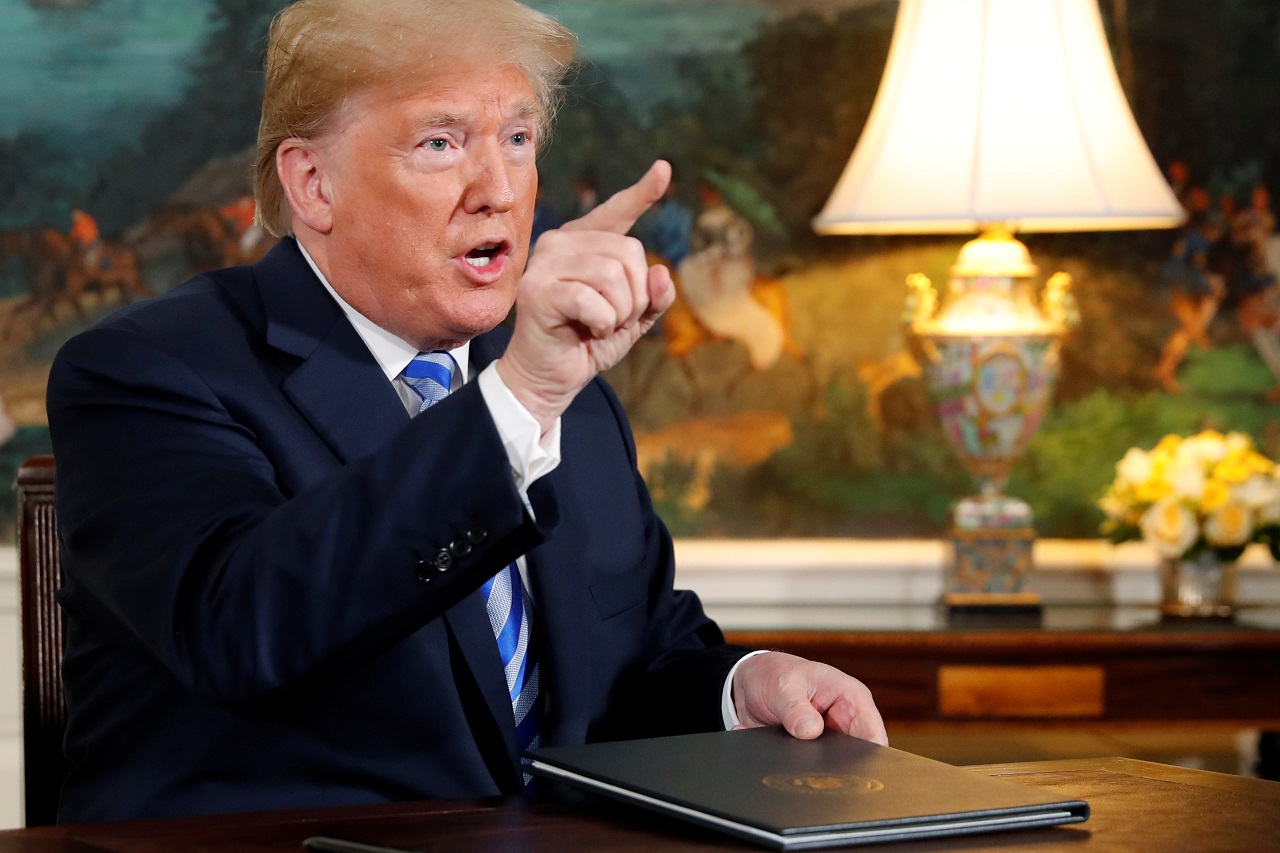
United States President Donald Trump has criticised key American allies, including the United Kingdom and France, over their refusal to support recent military operations against Iran.

In a series of posts shared on his Truth Social platform on Tuesday, Trump accused the European countries of failing to cooperate during what he described as the “decapitation” of Iran’s leadership. He singled out the UK for maintaining a neutral stance and France for denying airspace access to U.S. military aircraft heading to Israel.

The remarks come amid a worsening global energy situation. Several countries are facing jet fuel shortages as the Strait of Hormuz, a major route for global oil shipments, becomes difficult to access due to the ongoing conflict.

Trump addressed the United Kingdom directly and ruled out further American support. He advised the British government to rely less on U.S. protection and act independently.

“I have a suggestion for you: Number 1, buy from the U.S., we have plenty, and Number 2, build up some delayed courage, go to the Strait, and just TAKE IT,” Trump posted.

He also warned that Washington would withdraw its security support from allies who did not back the operation, stating, “The U.S.A. won’t be there to help you anymore, just like you weren’t there for us.”

The U.S. President also criticised France over its decision to block American transport planes carrying military supplies to Israel. He referred to Iran’s late leadership as the “Butcher of Iran” and insisted that the mission against them succeeded.

“France has been VERY UNHELPFUL… The U.S.A. will REMEMBER!!!” he said, suggesting a possible strain in relations between both countries.

Trump described the military phase as largely complete. He stated that “the hard part is done” and that Iran has been “decimated.” However, international observers have presented a more concerning outlook on the situation.

They reported “A dramatic spike in global jet fuel prices and a near-total halt of tankers through the Persian Gulf.” Reports from the United Nations indicate that about 2,000 civilians in Iran have died, while millions have been displaced.

Observers also pointed to “A complete breakdown in the “Special Relationship” between the U.S. and the UK, as London continues to distance itself from the unilateral military action.”

Trump’s remarks reflect a stronger push for his “America First” policy. His call for allies to “Go get your own oil” signals a shift away from the long-standing U.S. role in securing global energy routes in the Middle East.

Political analysts say the comments could deepen divisions between the United States and its allies. The United Nations and the European Union have already described the strikes on Iranian civilian infrastructure as violations of international law.
Iran plane departs India with sailors, bodies as Hormuz passage opens for Indian ships

By Sabiu Abdullahi

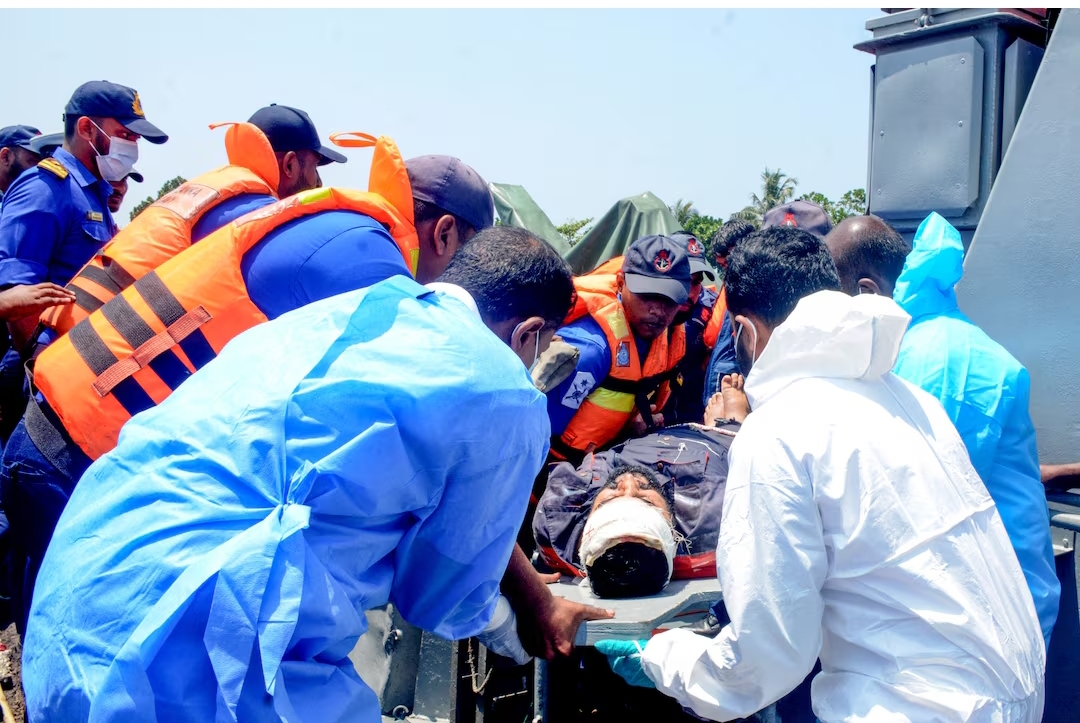
A chartered aircraft arranged by Iran left southern India late on Friday carrying sailors and the bodies of crew members killed in a recent U.S. attack at sea, according to two sources familiar with the development.

The aircraft had earlier departed from Sri Lanka with the remains of Iranian sailors who died after a U.S. submarine struck an Iranian warship off the Sri Lankan coast last week. An Indian official with direct knowledge of the situation said the plane transported the bodies of 84 sailors.

The flight later landed in Kochi in southern India. It then departed with sailors from another Iranian vessel that had docked in India. The aircraft also carried several Iranian tourists who had been stranded in the country, the official said.

An Iranian source confirmed that the plane departed from Kochi. The source declined to reveal the destination or provide further details due to security concerns.

The Iranian warship IRIS Dena sank on March 4 after a torpedo fired from a U.S. submarine struck it. The vessel was returning from a naval exercise in India when the incident occurred. The attack took place during the ongoing conflict involving Iran, the United States, and Israel.

Two other Iranian naval vessels that took part in the exercise sought shelter in nearby countries. The IRIS Lavan docked in India. The IRIS Booshehr sailed to Sri Lanka.

A Sri Lankan court ordered authorities earlier this week to hand over the bodies of the sailors killed in the attack to Iran’s embassy. The remains had been kept at a morgue in the National Hospital in Galle, a southern port city.

Thirty-two survivors from the sunken vessel remain in Sri Lanka. Another 208 crew members from the IRIS Booshehr are also in the country.

Sri Lanka’s foreign ministry said it has maintained communication with the Iranian embassy in Colombo regarding the situation of the crew. Iranian authorities in Tehran are also involved in consultations.

The developments come amid rising tension in the region. The war involving Iran has disrupted shipping through the Strait of Hormuz, a key route for global oil shipments. About 40 percent of India’s crude oil imports pass through the strategic waterway.

Iran confirmed on Friday that Indian ships would be allowed to transit the strait safely. The announcement brought relief to New Delhi after days of uncertainty caused by Iranian attacks on vessels in the area.

Iran’s ambassador to India, Mohammad Fathali, reaffirmed the decision while speaking to reporters.

“Because we believe that Iran and India are friends,” he said. “We have common interests and a common fate. I, as the ambassador for Iran in India, I say to you that the government of India .. after the war, will help us in different fields.”

India has continued discussions with Iranian officials to ensure safe passage for ships flying the Indian flag or carrying cargo to the country. Several vessels have already passed through the Strait of Hormuz in recent days. Officials in New Delhi see the development as an important step toward stabilising energy supplies.

Iran warns no oil will pass through Strait of Hormuz amid war

By Sabiu Abdullahi

Iran’s Islamic Revolutionary Guard Corps (IRGC) has warned that no oil shipments will pass through the Strait of Hormuz as the conflict involving the United States and Israel continues to shake global energy markets.

A spokesperson for the IRGC’s Khatam al-Anbiya Headquarters said on Wednesday that the waterway would remain effectively closed. The official warned that vessels linked to the United States, Israel or their allies could face attack.

“You will not be able to artificially lower the price of oil. Expect oil at $200 per barrel,” the spokesperson said. “The price of oil depends on regional security, and you are the main source of insecurity in the region.”

The warning came as the war, which began on February 28, entered its second week with no sign of easing. The conflict has already caused major fluctuations in global oil prices.

Iran has launched missiles and drones at targets across the Middle East in response to continued attacks by the United States and Israel. The situation has raised fears of deeper disruption to global energy supplies.

The Strait of Hormuz is a vital maritime route for global energy trade. About one-fifth of the world’s oil passes through the narrow waterway. The closure has already slowed oil shipments and affected production in some Gulf countries.

Maritime security firms also reported fresh attacks in the area on Wednesday. Three vessels were struck by projectiles in the Strait of Hormuz. One of them was a Thai-flagged cargo ship that came under attack about 11 nautical miles north of Oman.

Despite the security concerns, U.S. President Donald Trump encouraged commercial vessels to continue using the route.

“I think they should,” Trump said when asked whether ships should keep passing through the strait.

“I think you’re going to see great safety, and it’s going to be very, very quickly,” he added.

Meanwhile, the United Nations warned that the disruption is also affecting humanitarian operations. UN aid chief Tom Fletcher called for special arrangements to allow relief supplies to pass through the strait.

“We’re appealing to all the parties to try and secure those routes, including the Strait of Hormuz, for our humanitarian traffic … so we can reach anyone, anywhere, on the basis of greatest need,” Fletcher said.

“We’re living through a moment right now of grave peril,” he added.

The ongoing disruption has pushed world leaders to consider emergency measures. Members of the Group of Seven and the European Union are reviewing steps to reduce the economic impact of the war.

On Wednesday, the International Energy Agency (IEA) announced that its 32 member countries had agreed to release 400 million barrels of oil from emergency reserves to stabilise the market.

“This is a major action aiming to alleviate the immediate impacts of the disruption in markets,” IEA Executive Director Fatih Birol said.

“But to be clear, the most important thing for a return to stable flows of oil and gas is the resumption of transit through the Strait of Hormuz,” he added.

Energy analysts warn that if shipping through the strait does not resume soon, the global economy could face a serious supply crisis.

Christian Bueger, a professor of international relations at the University of Copenhagen, said the shipping sector is already struggling to operate in the area.

“For the shipping industry right now, it’s impossible to go through the Strait of Hormuz,” he said.

“And if there are not stronger signals in the near future that they can at least try to go through the strait, then we are looking at a major shipping crisis, which can last weeks if not months.”

Several countries have already begun preparing for the disruption. Japan announced plans to release about 80 million barrels of oil from its national and private reserves. Germany and Austria also signalled that they would make part of their emergency reserves available.

Japanese Prime Minister Sanae Takaichi said the country would begin releasing the oil from Monday, noting that about 70 percent of Japan’s oil imports pass through the Strait of Hormuz.