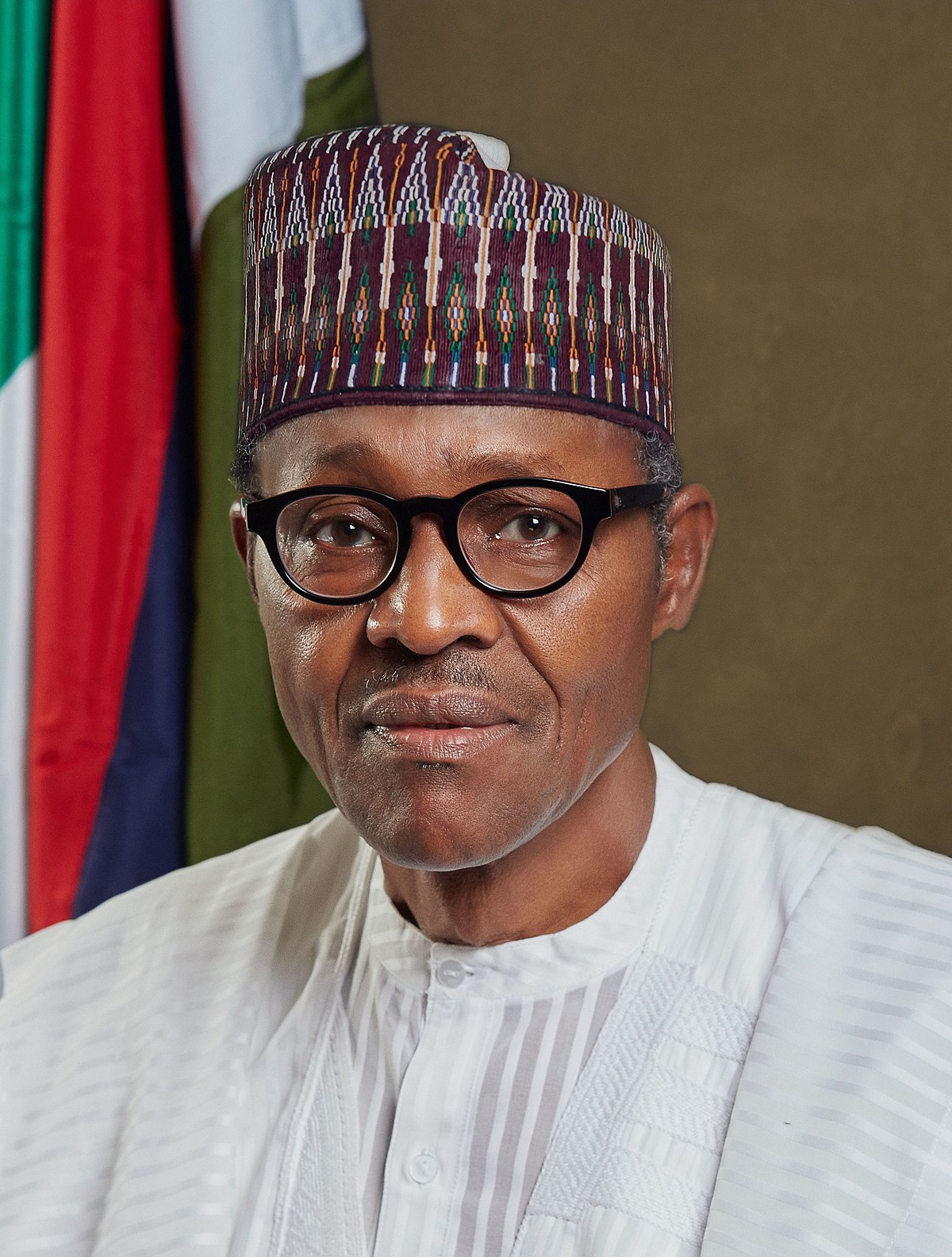
President Muhammadu Buhari

President Buhari: The good, the bad and the ugly

By Mubarak Shu’aib

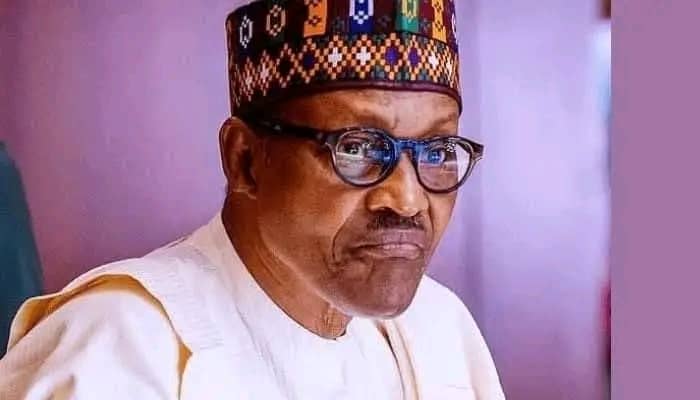
Portrayed as a fraud. Painted as a failed leader by others, there’s more to President Muhammad Buhari’s tenure than meets the eye. Charged with the titanic assignment of bringing Nigeria back and on track, his ascension to the Number One seat in 2015 highlighted the arrival of a new era. 

No living politician enjoyed the overwhelming support, love, care, concern etc., like Buhari. However, the time he spent in power has proven to be anticlimactic. Rightly so? 

President Buhari’s biggest flaw, his Achilles heel, can be summarised in one word. Narrow-mindedness.

His failure to recognise, acknowledge or accept ideas other than his own, even when reasons suggested, proved to be his greatest weakness. In addition, he’s a staunch critic who sees no good in his political rivals, except for President Goodluck Ebele Jonathan (GEJ), who later handed him power on a silver platter. From labelling fuel subsidy as “Fraud”  and blabbing Jonathan’s efforts in his fight against the Boko Haram insurgency to touting the ASUU strike as something that could be resolved in a blink of an eye.

When he was declared the winner of the 2015 Presidential election, nothing but the second return of Jesus could elicit such a nationwide reaction. 

The Good:

From his inaugural speech, Nigerians, both at home and in the diaspora, were swept in joy. More interesting was his (in) famous line, which rekindled our hope, “I belong to everybody, and I belong to nobody.”  He further added, “My appeal for unity is predicated on the seriousness of the legacy we are getting into. With depleted foreign reserves, falling oil prices, leakages and debts, the Nigerian economy is in deep trouble and will require careful management to bring it around and to tackle the immediate challenges confronting us, namely; Boko Haram, the Niger Delta situation, the power shortages and unemployment especially among young people. In the longer term, we have to improve the standards of our education. We have to look at the whole field of medicare. We have to upgrade our dilapidated physical infrastructure.”

“The most immediate is Boko Haram’s insurgency. Progress has been made in recent weeks by our security forces, but victory cannot be achieved by basing the Command and Control Centre in Abuja. The command centre will be relocated to Maiduguri and remain until Boko Haram is completely subdued. But we cannot claim to have defeated Boko Haram without rescuing the Chibok girls and all other innocent persons held hostage by insurgents.”

Throughout the inaugural speech, President Buhari was full of himself, firing shots across his bow, which almost suffocated the guilty minds. 

The Bad:

The first signs of bad were Buhari’s procrastination, complacency, blame game and failure to take responsibility. His greatest strength, which is the use of rhetoric to scare and naturally bully the guilty minds, slowly grew to become one of the biggest reasons for his fall. Initially, he has established himself as someone strategic, prowess and predatory. However, it later became clear that he was devoid of such qualities, even more obvious after it took him over six months to appoint his ministers. When he eventually did, some dead people made the list of the appointees. Concerns began to leak out around his leadership’s identity as an undefined style. Doubts began to set in. His lackadaisical approach continued to grow, but to doubt Buhari at that material time, was a heinous sin. Nigerians continue to play the sport of attacking ringworms while leprosy festers. Blaming the Sarakis, Dogaras etc., on the NASS floor as saboteurs of his government. This threw the re-election bid of Saraki, Dino, and Isah Hamma under the bus in the 2019 election to pave a clear pathway for Buhari. 

The ugly:

Nigeria’s Jekyll and Hyde performances under Buhari grew out of control. While Buhari struggled to explain the abnormal nature behind his government’s inconsistent performances, his puzzled supporters appeared equally as confused. 

His record in infrastructural development is good without being impressive. And, better not to visit the issue of insecurity, which assumed many dimensions (banditry, kidnapping, etc.), corruption/looting in billions, high unemployment rate, the exorbitant cost of living, fuel scarcity, the marathon ASUU strike, 8 months old. Cutting a long story short, the most anticipated “Jarmiya” and the aspirations to see Nigeria back and on track during “Mai Gaskiya” went up in flames. 

There were a series of decisions that had repercussions. Such as the border closure, adopting the economy of ‘borrow-and-spend’, unaccounted CBN loans, etc. A disturbing reflection of his tenure was the gruesome murder of innocent souls by the bandits, rampant ransom demand by kidnappers, attack on the Abuja-Kaduna train, Abuja Central Prison, and the Presidential convoy. 

Is Buhari Unfortunate? 

The economic recession, the coronavirus pandemic, oil doom,  etc., could all be attributed to his below-par performance. However, even at that, with good economic policies, and shrewd investment in the critical areas, he can do more. Even better, had he accepted responsibilities and moved on?

Final Days:

To borrow a word from the intimidating Mike Tyson in Dark Trade, “The leader’s always by himself in a time of doom.” As is Muhammadu Buhari. 

As Nigerians started counting down to just some days to the General Election, the frustration of the “talakawas“, like a rolling ball, is just getting bigger and bigger. First, it was in his home State, Katsina and later, Kano, where he was jeered and stoned. An incident which summarised how everything had turned ugly for him. Uglier still was his inability to understand the frustration of Nigerians. The love and support he enjoyed in those days have ebbed away. 

Conclusion

Nigeria had deteriorated in and around Goodluck Jonathan’s final years as a President, which Buhari recognised. 

He did fairly well in the security sector during his first tenure, but his second tenure spiralled into chaos once more, as he was eventually unable to liberate the country from turmoil. 

Although it didn’t sit well with my spirit that he was jeered and or stoned, Buhari of the masses failed to love them. He dropped the most critical ball that saw him claim victory against a sitting president. And it hurts to love and not be loved in return.

Mubarak Shu’aib write from Hardawa. Misau LGA Bauchi State, Nigeria. He can be reached via naisabur83@gmail.com.
Assent to Mental Health Bill, better late than never

By Lawal Dahiru Mamman

Ann Soberekon, a retired laboratory scientist, was almost lynched by a mob in Port Harcourt following an accusation of witchcraft. Ann was actually suffering from dementia – a condition of the brain characterised by impairment of brain functions such as memory and judgment that interferes with doing everyday activities. 

The incident led a rights group, Advocacy for Alleged Witches, to decry the ill-treatment meted out to those with mental health challenges. According to the group, the attribution of dementia and other mental disorders is rooted in irrational fear, misinterpretation and ignorance of the cause of disease. 

Living in fear of being called names and other forms of stigmatisation is the way people with mental health issues live in Nigeria and even other African countries. Mental disorders are viewed as spiritual attacks, and patients are mirrored as those under the influence of evil spirits, bewitched or hexed. The only way to cure the world of such back in the dark days and put victims out of their mystery is to send them 6 feet down, while in more recent times, stigmatisation and other forms of inhumane treatment are dished out to mental health patients forcing them to instead of seek for solution drown in their unfortunate circumstances. 

With the proliferation of knowledge of mental health, some African nations started signing Bills to protect the right of people suffering from mental health issues. Foremost among are countries like South Africa which signed the Mental Health Care Act 17 of 2002 on October 28, 2002, which then took effect on December 15, 2004, to cater for treatment and rehabilitation of persons with mental health illness. In 2012 Ghanaian government signed Mental Health Act 2012 into law. Zambia signed its Mental Health Act in 2019, and then in June 2022, Kenya’s President Uhuru Kenyatta signed the Mental Health Bill into law.

Nigeria followed suit when President Muhammadu Buhari, as a parting gift, bequeathed Nigeria on the 5th day of January 2023 the long-awaited Mental Health Bill by signing it into law, repealing heretofore extant law, which was known as the Lunacy Act CAP 542, of the laws of Nigeria 1964. 

This is coming after the Bill has failed two attempts. Firstly, it was after the presentation in the National Assembly in 2003 before its withdrawal in April 2009 and secondly, in 2013 when the National Policy for Mental Health Services Delivery set out the principles for the delivery of care to people with mental, neurological, and substance abuse problems, but it was not signed into law.

The Mental Health Bill is a piece of legislation that covers the assessment, treatment, care and rights of people with mental health disorders while also discouraging stigmatisation and discrimination by setting standards for psychiatric practice in Nigeria, among other provisions. 

The assent of the law generated a positive response, with physicians saying the law will afford those in the field the power to work unhindered and also enlighten Nigerians of the dangerous lifestyles that may lead to a breakdown in one’s mental health. 

Doctor Olakunle Omoteemi, a physician in Osun State, said, “Due to the negative perception attached to mental health issues in Nigeria, the society still sees any case related to it as that of lunacy, and as a result of this negative perception, individuals shy away from making known, discussing or approaching professionals to discuss or reveal their mental health status.

“People also often cannot go for counselling based on the prejudice from the society. There is also the issue of stigma attached to it, as people are afraid to be called certain names. With this law, it is hoped that the prejudices and stigma attached to mental health issues will be laid to rest.”  

The World Health Organisation (WHO) said at the 2022 World Mental Health Day on the 10th of October that One Hundred and Sixteen million (116,000,000) Africans suffer from one mental health disorder or another, and according to the President of the Association of Psychiatrists in Nigeria (APN), Taiwo Obindo, over sixty million (60,000,000) Nigerians agonise from mental illnesses. 

Since the Bill this time around was not allowed to fade in oblivion, it will be safe to say ‘it is better late than never’ considering the statistics of the WHO and that of the president of APN. What is left is for those responsible for the bill to take charge in ensuring that the purpose for which the bill was signed is not defeated.  

Lawal Dahiru Mamman, a corps member, writes from Abuja and can be reached via dahirulawal90@gmail.com.

Celebrating Prof. Pantami: The architect of Nigeria’s digital revolution

By Yakubu Sani Wudil, PhD

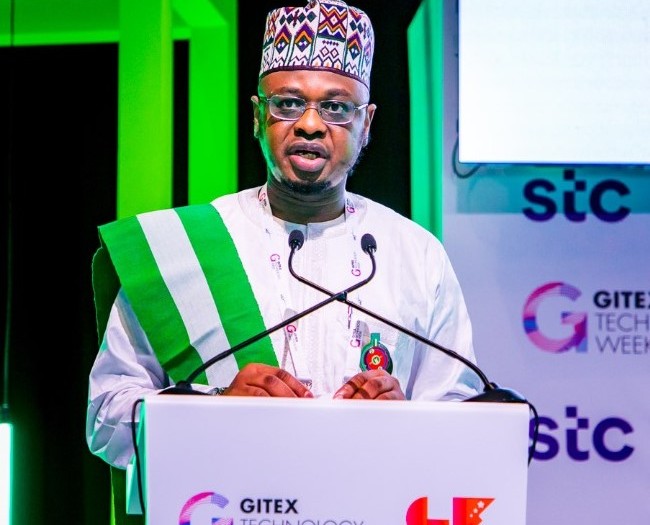
During the last three and a half years, Nigeria’s Minister of Communications and Digital Economy, Prof. Isa Ali Ibrahim Pantami—a digital dynamo—has demonstrated quality in leadership and has raised the bar of good governance in the country. Specifically, the Digital Economy sector has come to the limelight under his stewardship.  Since his assumption into office, he has become the champion of Nigeria’s digital revolution.

Prof. Pantami has exhibited exceptional leadership skills in driving the Communications and Digital Economy sector to record several unprecedented achievements. His leadership has not only escalated the sector’s quarterly revenue generation by more than 500 per cent due to his digital innovations but also played a pivotal role in lifting the Nigerian economy out of recession.

Under his watch, the Digital Economy sector has multiplied the revenue generated from fifty-one billion Naira quarterly to about four hundred and eight billion Naira, according to an independent assessment carried out by the Foreign, Commonwealth & Development Office (FCDO). On the other hand, the ICT sector recorded the highest growth rate in the year 2022, as reported by the National Bureau of Statistics.

From the onset, Professor Pantami has identified eight priority areas for development: developmental regulation, digital skills, solid infrastructure, service infrastructure, digital services development and promotion, soft infrastructure, digital society and emerging technologies, and indigenous content development and advancement. The Minister has done exceptionally well in these areas by implementing policies and projects that have significantly impacted the Nigerian economy.

For instance, he has established ICT skill acquisition centres across the states and has recorded over 219,000 direct beneficiaries of digital skills training. Additionally, he has laid about 19 kilometres of fibre cable to expand reach and coverage to MDAs (covering 28 MDAs). Furthermore, he has established digital economy centres to support the growth of the economy in the country. He has also developed policies and initiatives to promote indigenous content and created an enabling environment for the sustainable development of Nigeria’s economy, which has been able to resolve challenges that have lingered for decades.

Under Professor Pantami’s leadership, a significant number of National Policies have been developed. Currently, over a dozen of these policies are already being implemented, one of which is the National Digital Economy Policy & Strategy 2020-2030, which sets out a comprehensive plan for the growth and development of the digital economy in Nigeria.

The Minister has also executed several projects, too numerous to mention, which have significantly impacted the Nigerian economy. Nevertheless, some of these projects include the establishment of ICT skill acquisition centres in most of the states, registration of all mobile sim cards, emergency communication centres, virtual examination centres, Data Sharing Centres, Digital Industrial Parks, Wireless Internet Cloud, Digital Capacity Training Centres, NITDA Community IT Training Centres, IT Innovation Hubs, IT Capacity Building Centres, and Provision of ICT Facilities in our Institutions of learning.

In his effort to transform governance to the 21st-century model, the minister has established the E-Government Training Centre to equip stakeholders with the necessary skills to achieve optimum productivity. He also constructed several E-Health Facilities, E-Libraries, and E-Accessibility Projects. Furthermore, the minister has coordinated the establishment of multiple Community ICT Centres, NIPOST Digital Centre, Tertiary Institution Knowledge Centres, School Knowledge Centres, Rural Broadband Initiatives, National Centre for Artificial Intelligence and Robotics. He also empowered Farmers through the National Adopted Village for Smart Agriculture Program.  The Accelerated Mobile Phone Expansion-Base Transceiver Station was also accomplished under his watch.

Furthermore, to complement the efforts of security agencies in ensuring adequate National security, there have been over 92 million unique National Identification Number enrolments as of November 2022.  These achievements are a testament to the hard work and dedication of Professor Pantami, who has been tireless in his efforts to drive the digital revolution in Nigeria.

It is worth acknowledging that President Buhari must be commended for the wise decision to appoint Professor Pantami as the Minister of Communications and Digital Economy. He is one of the best-performing ministers in the cabinet and has succeeded in delivering on his mandate to the Nigerian people. The country needs more brains like him to drive the nation’s development and ensure that we can compete on the global stage.

As we look to the future, it is clear that Professor Pantami has the ability and vision to continue to drive the growth and development of Nigeria’s Communications and Digital Economy sector. The erudite scholar has distinguished himself for integrity and selflessness. In addition, he has been a worthy ambassador for Nigeria’s young population.

We pray that he will have the opportunity to serve the country in many capacities and higher positions in the future. His leadership and expertise are vital to the continued progress of our nation. The policies and projects executed under his leadership have significantly impacted the Nigerian economy and have laid the foundation for a sustainable future in the sector.

Dr Yakubu Wudil writes from King Fahd University of Petroleum and Minerals, Saudi Arabia, and can be reached via yswudil@yahoo.com.

Osinbajo chairs first 2023 cabinet meeting

By Ahmad Deedat Zakari

Nigeria’s Vice President, Professor Yemi Osinbajo, chaired the first Federal Executive Council (FEC) meeting for the year 2023 on Wednesday. 

The meeting was held at the Council Chamber of the Presidential Villa, Abuja.

Osinbajo stood in for his principal, President Muhammadu Buhari, who departed the country to Nouakchott, Mauritania, to participate in the Programme of the Third Forum of the African Conference for Peace on Monday.

In attendance are the Secretary to Government of the Federation (SGF), Boss Mustapha; the Head of the Civil Service of the Federation, Dr Folasade Yemi-Esan; and the Deputy Chief of Staff to the President, Dr Adeola Ipaye.

Most of the cabinet members were also physically in attendance for the first FEC meeting of the year. 

However, the Ministers of Foreign Affairs, Geoffrey Onyeama, Defence, Maj. Gen. Bashir Magashi and the National Security Adviser, Maj. Gen. Mohammed Monguno were absent as they were on the President’s entourage in Nouakchott.

The President and his entourage are expected to return to the country on Wednesday.

I asked governors, ministers to stop naming projects after me—Buhari

By Muhammad Sabiu

President Muhammadu Buhari said that he aimed to prevent governors and ministers from naming projects after him, but the Kogi state governor, Yahaya Bello, defied him.

On Thursday, during a visit to Kogi State, Buhari made this remark during a live broadcast on Arise TV.

New township road networks were opened in Idah, Okene, and all three senatorial districts by Buhari, along with the Reference Hospital in Okene and the Confluence University of Science and Technology at Osara.

Other projects in Lokoja include the Civic Center and Muhammadu Buhari Square, as well as the Ganaja Flyover, Model Science Secondary School, and school.

Buhari was quoted as saying, “I thank the Governor and the people of Kogi state for naming it (Muhammadu Buhari Square and Civic Centre) after me. Here, I have to digress; I attempted to stop governors and ministers from naming projects after me, but the Governor disobeyed me here.”

Currency redesign and its attendant expectations

By Muhammed Umar-Hong

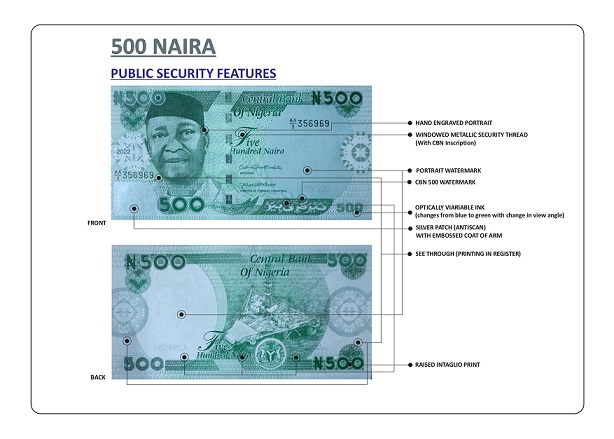
Changing the appearance of a country’s currency is widely practised worldwide by various methods and for different reasons. It could portray a nation’s rich cultural heritage, a change in regime to symbolise a ruler or celebrate national heroes with portraits of them attached to these currencies. However, the most cited reason has been to combat threats of counterfeiting. Threats which may lead to inaccurate figures of the total amount of money in circulation, for example. 

The Naira is certainly not a stranger to the redesign concept, which has seen various denominations change over the last few decades. Chief among the changes had been the transition to more durable currency notes which began with the N5, N10, N20 and N50 denominations all upgraded to polymer substrates in 2007. While 2014 saw the birth of the N100 commemorative note marking the nation’s centenary celebration. 

It should thus not be a contentious issue if the CBN decides, as it has, to make further modifications to the country’s currency. After all, it is within the apex bank’s constitutional powers as stated in the CBN Act, 2017 (Section 19, subsection 1b). This time, its primary aim will be to address our security challenges by reducing the hoarding of certain denominations whilst ensuring proper monitoring of monies in circulation. 

But before the release of the new bank notes, however, interactions on social media had clearly shown that not many Nigerians understood the difference between currency redesign and currency redenomination (which involves removing/adding more zeros to the currency), and some were highly expectant of the policy to have some technical outcome. Opinions and suggestions are illogical or don’t seem to rest on sound economic principles. But I took the trouble to note a few, and to explain my views on them below. Feel free to make your contributions.

Q: Why wouldn’t the government set our highest currency denomination to N20 to end money laundering? 

V: The reason for raising our highest denomination to N1000 is because our Naira has a fallen value. The change in exchange rates between two countries is usually determined by the constant demand for one currency by the other. If a country produces goods and services in commercially exportable quantities, the demand for those goods by foreign customers would automatically lead to foreign currencies being converted to local currency to enable these purchases, which ultimately drives the value of the local currency up. Foreign currencies would have to chase more Naira, thereby bolstering its value. 

On the other hand, for products such as petroleum, where the purchases are made in US dollars, the additional dollars can be used by the apex bank to purchase the Naira, thus creating a sort of artificial demand for the Naira that usually raises its value. 

I don’t think any money launderer (assuming I know how this is being done) would be deterred just because he now has to carry/stash away more currency in N20 denominations.

Q: Why wouldn’t the government choose an interval of four years to redesign its currency? 

V: The international standard for countries to redevelop their currencies is between a 6 – 8 year interval. This is not, however, a strict rule, as some countries do it more frequently than others. In the US, for example, the practice is to focus more on widely used denominations (prone to more wear-and-tear) or are frequently targeted for currency fraud (counterfeiting) for a redesign. For instance, a currency like the two-dollar bill has a much longer lifespan due to its near-absence in daily transactions compared to a dollar bill. 

Additionally, not every need for currency changes can be accurately foreseeable. And it may only sometimes be financially viable to make wholesale changes if it coincides with financial or economic shocks. Both of which our mono-economy is particularly susceptible to.

Q: Will the unaffected currency notes (i.e. N5, N10, N20, N50 and N100) remain in circulation after this redesign? Would their value fall?

V: The other currency notes that haven’t been affected by the current redesign will still maintain their legal tender status, fortunately, until the CBN says otherwise. They will also retain value as market forces dictate and are expected to remain in wide circulation. Elsewhere though, lower denomination currencies have been the most exchanged and most subjected to redesign, mainly due to their frequent use.

Q: Why not grant amnesty to hoarders of cash instead of embarking on the expensive redesign?

V: Well, I believe you can’t exert leverage over hoarders of cash if you were never going to carry out your threat (the redesign). 

But Abdullahi Imam has another angle to it: The question of amnesty is straightforward. Amnesties are mostly for criminal activities. It’s not a crime to have cash or to store it. So the topic of amnesty is a non-starter. Except if an amnesty is for those that need to exchange their old notes before the agreed deadline. 

Q: The government should introduce the use of coins if it hopes to increase its purchasing power.

V: Purchasing power is simply the value of a unit of currency in terms of the goods/services it can buy, which is effectively how strong/weak your currency is. The higher the purchasing (buying) power of a unit of your currency,  the greater the number of goods/services it can purchase, and vice versa.

Does the N5 note come to mind? It’s okay to say the note has become worthless these days. I can’t remember when I walked into a shop for an item priced in the multiple of 5. Most of our goods have now been (deliberately, I think) rounded up to the power of 10.

Although they play little or no role in our daily transactions, coins are currently the oldest form of money available to us. They used to have intrinsic value based on the valuable metals (gold, silver) they were made with until it became less expensive to produce using materials like Copper. In more notable climes, they have been used for commemorative purposes. 

Just recently, Britain had to redesign its fifty pence (50p) coin to feature the portrait of its new king, Charles III, following the death of Elizabeth II. And in many other countries, coin usage has practically been resigned to handling smaller transactions, often serving as ‘change’ from paper currency payments. This is more evident in countries assigning lower denominations to coins, effectively making the highest value of the coin in circulation worth less than the lowest-value note. 

Even in our case, Prof. Soludo, then CBN governor, in his 2007 paper titled ‘Strategic Agenda for the Naira’ had proposed the reintroduction of coins in the following denominations: 1 kobo, 2 kobos, 5 kobos, 10 and 20 kobos in his bid to make the Naira a currency of reference in Africa. 

Paper currency has become the preferred medium of exchange for higher denominations worldwide due to their convenient nature and the fiat status conferred on them by governments. To the best of my knowledge, no relationship EXISTS between using coins and increasing the purchasing power of a nation’s currency. But that’s not to say coins are wholly valueless and lack significance in the overall dealings of a country because, who knows, “the most important decisions you will ever make in your life may be decided with the toss of a coin.”

Muhammed Umar-Hong wrote via muhammedu.hong@gmail.com.

NIGCOMSAT gets new Managing Director

By Muhammad Auwal

President Muhammadu Buhari has approved, with immediate effect, the appointment of Engineer Tukur Mohammed Lawal Funtua, as the new Managing Director of Nigeria Communications Satellite (NIGCOMSAT), following the retirement of the erstwhile Managing Director, Dr Abimbola Alale, after two terms of 10 years in office.

Engineer Tukur Mohammed Lawal Funtua, an indigene of Funtua Local Government Area of Katsina State, Northwest Nigeria, was born on 24th November 1966.

He holds a Bachelor’s Degree in Chemical Engineering, PGDM, MBA, a Professional Diploma in Education and a PhD in Environmental and Sustainable Development Management in view, at the University of Port Harcourt.

He was, before his appointment, Director, health community affairs, safety and environment with BUA Cement Plc, and served in various capacities, including Health and Safety Manager, Country HSE Manager and Regional Manager for Communications, Public Affairs and Sustainable Development at Lafarge Africa Plc and Group Head, Environment and Community Affairs at  Dangote Cement Plc among others.

Engineer Tukur, who has thirty years of professional experience in manufacturing, process engineering, health, production, safety and environmental management, communications and various other fields, is a Chartered Environmentalist at the Society for Environmental Toxicology and Pollution Mitigation, a Fellow of the Nigerian Society of Chemical Engineers, and the Professional Leadership Practitioners Institute.

He is a Registered Engineer with the Council for the Regulation of Engineering in Nigeria (COREN), a member of numerous professional bodies and institutes.

I know the problems affecting our police, armed forces—Buhari

By Muhammadu Sabiu

President Muhammadu Buhari has stated that improving the well-being of police and military personnel is a priority of his administration.

Buhari spoke at the Police Service Commission’s 2023 budget proposal on Thursday in Abuja.

The Nigerian president noted that reforms were a sacred obligation and that his administration gave top importance to the well-being of police officers.

The morale of the operators will be good, according to Buhari, if they are posted on duty or missions and they are aware that their families are well-cared for.

He was quoted as saying, “I am pretty aware of the problems and challenges confronting the Nigeria Police Force and the Armed Forces.

“The problem is relative to time and resources and this administration has done a lot with the limitations.”

Don’t be deceived, northerners will never reject Atiku

By Mubarak Shuaybu Shelleng

The unprecedented mammoth crowd that welcomed Atiku’s campaign entourage in almost every state they visited is shockingly mind-boggling. The recent one in Katsina, President Muhammad Buhari’s home state, speaks volumes and needs no further political argument that the opposition party has amicably conquered the heart and minds of the northern populace.

Most of the north-eastern electorates feel they now have ample opportunity to produce a president from the region after considering the clear development this has brought to the north-western parts of the country. It’s general knowledge that most of the Federal Government initiatives, such as National Social Investment Schemes, N-power, and other beneficial capital projects, under this current government were enjoyed mainly by in the north-western states. They are making it more developed in politics, infrastructure, and the economy.

The above issue is a welcome development because the region is considered core-north large and more densely populated than the northeastern parts.

But, the northeastern parts, for example, are yearning to produce the first-ever president from the region, which will undoubtedly pave the way for social, political, and infrastructural development. Thus, the hit helps curb the devastating effects of extreme poverty, and hardship occasioned by the Boko Haram Insurgency in some parts of the Borno and Yobe States. And communal, Farmers Herder’s clashes in Adamawa, Taraba, Gombe, and Bauchi States.

Unquestionably, whoever understands the psyche of a typical northerner must agree that it is difficult for one to reject Atiku despite the current circumstances in the country mindfully. Therefore, the northern populace that massively voted for Buhari in the previous elections unopposed should have no regrets about doing the same for the leading People democratic party’s candidate.

Besides, even the elites and the ruling party stalwart knows that are a shot of words on how to stop people, especially from the north, from voting for the Peoples Democratic Party’s candidate in the upcoming general election. Thus, remain with no option but to beat around the bush, able to maintain their political positions and offices.

Atiku may win or lose the election, but undoubtedly, the staunch and unalloyed support Buhari previously enjoyed in the north will certainly be transferred to him and no other.

The northeastern people have never rejected Atiku Abubakar in Nigerian political history but chose Buhari ahead of him due to the political exigencies of the time.

Interestingly, the era of political manipulation has gone. As a result, an average Nigerian from the remote and urban centrist now has a proper knowledge of the game of politics. Consequently, it allowed individuals to amicably exercise their constitutional franchise by considering the most deserving candidate regardless of religion, region, or political party.

Above all, politics, they say, is a game of numbers and interest, and whoever wants to play it should imbibe the culture of flag-waving, unity in diversity, and national Integration.

Mubarak Shuaybu Shelleng writes from Yola.

As underpaid Bauchi oil workers complain

By Ibrahim Garba

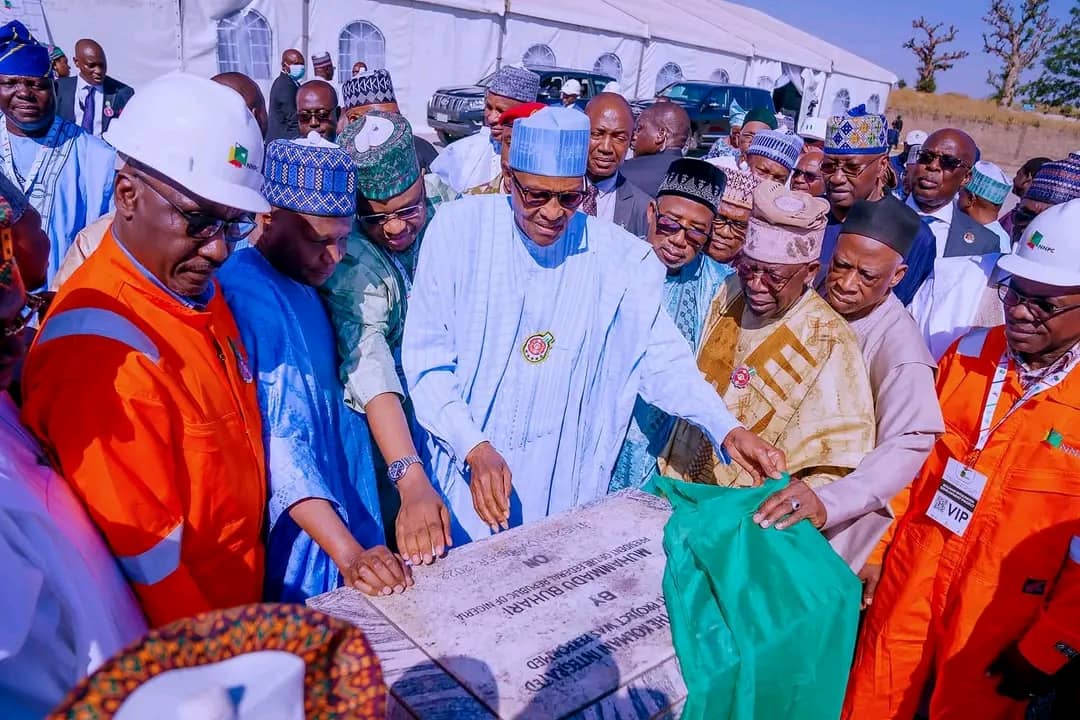
The discovery of oil in the north is a national development that is worth celebrating as it would bring about several national developments, provide many employment opportunities to citizens, and enhance the nation’s economic state.

Nigerians, especially northerners, celebrated the news break of the success recorded in Bauchi, north-eastern Nigeria, hoping that the citizens are going to benefit from such a remarkable achievement of president Buhari’s led administration as the Federal Government signed an agreement of establishing a power plant and fertilizer-producing company in the area.

Besides, for oil to be discovered, it has to go through specific series of activities, an operation called SEISMIC, A geological data acquisition operation that leads to the discovery of a hydrocarbon reservoir, which is the key foundation to any success recorded in oil discovery, hence it requires rigorous activities of hard work with persistence and perseverance from the management function and indeed the labourers who are responsible for the entire hard work surrounding the seismic operations.

Also, Seismic is such a difficult job that comes with a series of hard work ranging from carrying and laying heavy loads of cable, drilling machines, and stems, among other equipment and material needed for the operation. It is usual for seismicity to work from 6 am to 6 pm, seven days every week, without any complaints because that is the nature of the work. Still, to JV209, a seismic joint venture between the subsidiary of NNPC Integrated Data Services Limited (IDSL) and that of China National Petroleum Corporation CNPC, Bureau Geophysical Prospecting (BGP)  workers, the case is different, as the company introduces and succeeded in night operation.

Wholeheartedly the workers stand through thick and thin, thereby enduring the extreme cold weather and highly scorching sunshine of the region as the work cuts across the entire season, where workers often get drenched due to heavy rainfall during the wet season.

The workers on the field are left with no option of which route to follow while working in the bush because the lines to work on are preassigned and therefore have to pass through every nook and cranny, thereby climbing mountains, entering water bodies penetrating through thick forest in the course of discharging their duty.

Notwithstanding, the sacrifices of the workers did not go in vain as the crew recorded the highest production ever in the country and yielded positive results of quality data, and was able to complete an estimated two years project in just a year, which should have been paid for if extended to the said period.

Unfortunately, some workers lament that they were promised a certain amount of money after work by the crew management, which is yet to be fulfilled. Almost every worker was admitted to a crew clinic and some to a medical centre in the state capital during the operation only the sacrifice of staying a year away from our family with a lower salary should be rewarded” and cite their ability to finish two years project in one which if extended to that period they would be paid for it. 

Above all, the government should try and fulfil such promises, as failure is a significant threat to the nation’s security. We are not done with militants, bandits, and insurgents, among other security challenges bedevilling the country’s growth and required development.

The workers should follow the right way of pressing home their demands. This may hinder the progress to the logical conclusion of the project, which will be detrimental to all and sundry.

Ibrahim Garba writes From Bauchi.