President Muhammadu Buhari

On the Abuja-Kaduna train attack

By Tajuddeen Ahmad Tijjani

It would be an understatement to imply that the Nigerian government has failed in its primary responsibility of protecting the lives of its citizens. Under any form, this catastrophe is cruel, inhumane, insensitive, and repugnant.

The only solution is to take decisive action by tracking these terrorists attacking and kidnapping travellers to their hideouts. It’s inexcusable to wait for them to attack before confronting them. They only deserve death by any means necessary.

The terrorists have declared total war on the country and undoubtedly put our territorial integrity and sovereignty to the test. Thus, allowing them to experience the freedom of fresh air is unacceptable.

Sadly, you only see government action promptly when their party is in crisis, or some forces are threatening their power. Surveillance can only work when these unrepentant bandits are followed to their hideout and eliminated.

Our gallant security operatives should sustain an offensive and kill the terrorists without wasting time on our weak judicial system. Perhaps, special courts to try terrorists and send them to God for them to answer for the crimes against humanity is simply the way to go. Then, the national assembly can come in to achieve a better bargain to make our country save.

My thoughts and prayers are with the victims who are being attacked innocuously daily, while the government’s apparent incompetence keeps reassuring citizens just on paper, with no hope in sight. But, of course, it is neither them nor their children who are the victims. That’s what makes them not act promptly. 

I, therefore, call on the government to rise to its responsibility. 

Tajuddeen Ahmad Tijjani wrote from Galadima Mahmoud Street, Kasuwar Kaji Azare, Bauchi State.

The political calculations of 2023

By Muhammad Sagir Bauchi

As the political atmosphere in the country started to get momentum, top political actors are back on the strategy board to put down action and execution plans for successful campaigns and elections victory. Overnight, some controversial politicians are now running away from their once arrogant and nonchalant attitudes to a born-again one, thereby looking away from whatever may dent their newly ‘customised integrity’. As a result, the usual campaign promises of provision of security, creating job opportunities, fighting against corruption, etc., now appears unsaleable talking points to the electorates as they once were.

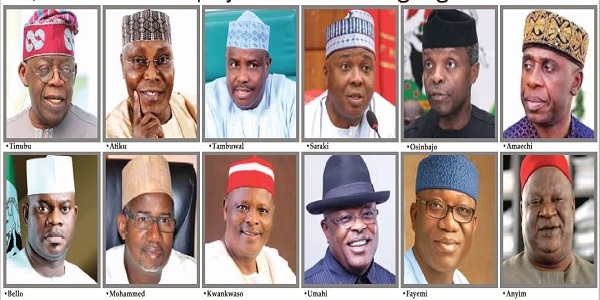
News of the inter-party crossover from some prominent politicians like former Speaker Hon. Yakubu Dogara (PDP-APC), Matawalle of Zamfara (PDP-APC), Kwankwaso (PDP-NNPP), etc., are making headlines.

Hon. Yakubu Dogara is one of the major political figures in Bauchi State politics. His role in ousting the previous governor of the state would never be neglected or underestimated. He played a vital role in his constituency and other spheres of the system.

When he decamped from PDP, the party that brought the present administration of Governor Bala Muhammad, several opinions were expressed in respect to that. To some, he joined the ruling party in anticipation of giving him the party leadership (i.e National Chairman of the party). While, to others, he was craving for the seat of Vice-President, in case the party ticket is won by a Southern Muslim. In present Nigeria, a Muslim-Muslim or Christian-Christian ticket at the presidential ticket is a non-starter, as it will polarise the country, create chaos and mistrust.

Of the two opinions surrounding the decamping of Dogara, none could totally be disregarded as they contain some elements of truth. For instance, If APC assigns Bola Ahmed Tinubu as its flag bearer, the party must pick a Northern Christian politician with popularity, high political experienced and wide acceptance among the regional religious, political and traditional leaders/institutions. The aim is to convince the electorates to go out and vote for the party on the election day. Dogara is one of those Northern Christians with broad appeal and political experience. But, can he win the confidence of his Northern block to vote for their ticket?

For that answer, we have to examine the current political doings and his image in his home state, Bauchi, to answer that question.

The present political situation in the state is a bit complicated. We all witnessed how his doings in his constituency influenced the emergence of the current governor of the state during the last gubernatorial elections. Still, events have overtaken the once-political comrades’ romance between him and the governor. His popularity has significantly dropped in 2/3 of the constituency he’s representing. And that could affect his future career in the state and beyond. Therefore, the Dogara factor alone cannot influence Northerners to vote for his party.

Now, away from Dogara to the party at large. Months ago, APC Governor’s Forum paid an unexpected visit to the former President, Dr Goodluck Ebele Jonathan. Of course, we did not know what was discussed during the visit. Still, looking at how the party is desperate to retain the president’s seat, it’ll be hard to disconnect it from what the Hausa people termed as “gaisuwa da ro’kon iri”. So they visited him, likely to ask for his blessing, sympathy and support to use his influence in the South-South to canvass support for their party flag bearer during elections. Or maybe, to lure him into accepting to contest for the presidency on the party ticket. 

If we take the party entirely and put it on a scale, we can see that the party is in a dilemma of who to be entrusted with the party ticket to retain the presidential seat. But looking at how the party zoned the national party executives, now it is clear that the flag of the party would come from the South.

Among the top Southern candidates that expressed interest in the presidency are Vice President Yemi Osibanjo and the party leader, Bola Tinubu. One of these two have every chance to win the party primaries. But, who among them can be an easy sale to all the regions of the country? Would the old rivalry between Igbos and Yorubas resurrect and allow Igbos to support anyone of them? Only time would tell.

But in the North, despite the significant drop in trust and popularity of President Muhammadu Buhari, there still exist those supporters that will go for whoever PMB anointed to succeed him at the polls. But many will be in a dilemma of choosing between one of their own, an outsider or may even decide not to vote.

After the country’s return to Democratic rule, PMB was among those with a desperate ambition to rule the country again. He contested three times but lost at general elections. Fortunately for him, he won at his fourth outing. Unfortunately, during his failed bids, his body language was that he only relied on the votes of his fellow Northerners.

By 2010, Buhari realised that that illusion wouldn’t give him the presidency. So, he aligned/merges his one-man party, CPC, with an umbrella forum of some rebellious and highly influential mainstream politicians from the ruling party, nPDP, ANPP and the Southwest’s AC to form the APC. This conglomeration of parties (merger) is what solely got him the presidency.

With all honesty, looking back at the significant contribution of the Southwest politicians, this is the right time for him to pay back those that helped him actualise his presidential ambition with the party ticket on a platter of gold, especially to a Southwestern candidate.

There’s not much tension within the PDP due to their discipline and expertise in handling intra-party conflict. However, the party must be careful with an emerging conflict from Wazirin Adamawa and governors’ overzealous ambitions. In addition, they must learn from their 2015 avoidable mistake that cost them the elections and government.

Sagir Ibrahim is a graduate of Economics from the Department of Economics, Bauchi State University Gadau. He can be reached via ibrahimsagir1227@gmail.com.

Buhari returns to Abuja after UK medical vacation

By Muhammad Sabiu

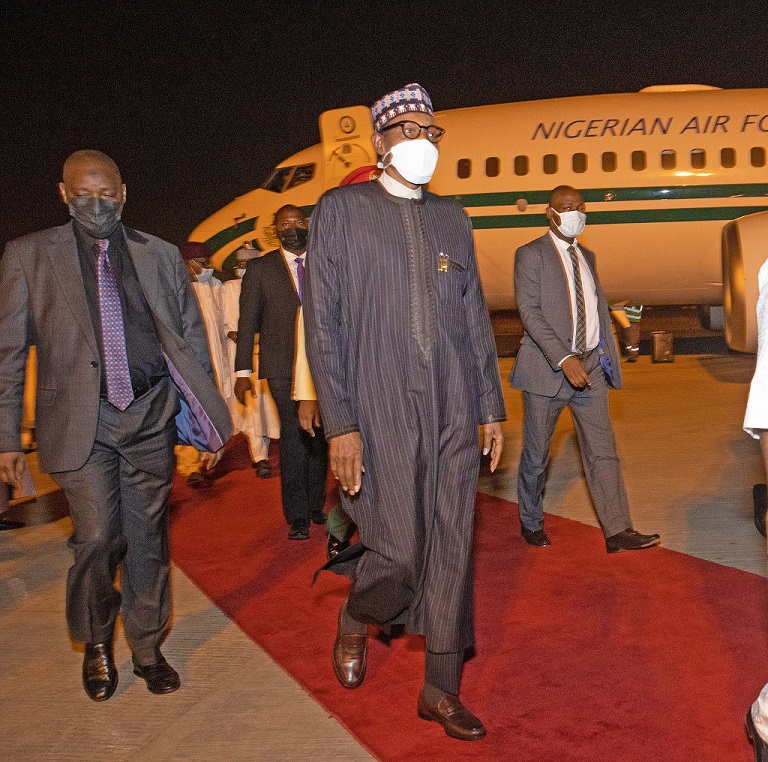
After a medical check-up in London, President Muhammadu Buhari returned to Abuja on Friday.

The President was scheduled to leave for the medical trip from Nairobi, Kenya, after attending the UN Environment Programme at the age of 50, but he returned to Nigeria on March 4.

He met with Mai Mala Buni, the Interim National Chairman of the APC Caretaker Extraordinary Convention Committee, amidst the party’s leadership tussle while in London.

At about 7.09 p.m., the presidential plane carrying Buhari landed at the Presidential Wing of the Nnamdi Azikiwe International Airport in Abuja.

Nigeria sets to evacuate citizens from Ukraine

By Ahmad Deedat Zakari.

President Muhammadu Buhari has approved $8.5m dollars for the evacuation of Nigerians stranded in Ukraine.

This was disclosed by the Minister of State for Foreign affairs, Zubairu Dada on Wednesday, March 2 shortly after the weekly Federal Executive Council (FEC) meeting presided over by the Vice President, Professor Yemi Osibanjo at the Council Chambers of the Presidential Villa, Abuja.

Addressing State House correspondents after the meeting, he said the president approved $8.5 million for the evacuation exercise.

” The Ministry of Humanitarian Affairs wrote a memo to the president seeking funding to enable us conduct this exercise. The memo was to the tune of $8.5 million which Mr President has graciously approved. That Provision entails an arrangement to evacuate no less than 5,000 Nigerians” he said.

According to him, the pickup flights would be headed to four countries, which are : Poland, Hungary, Slovakia and Romania.

Character and strategy: The nutritive requirements for Nigerian leadership

By Mubarak Shu’aibu Hardawa

Nigeria is on borrowed time at the moment and not just because of an awful leadership it is experiencing, but for having that ‘onerous’ task of finding the marquee leader that would be her saviour. This arduous mission has become inevitable after many years of failed attempts that defied belief, much less explanation.

The leadership problems in Nigeria are structural and systematic, while the crisis at hand is long-lasting and accelerating. The system has become so overwhelmed by anger and frustrations that even the most basic task of any government, which is securing the lives of its citizens, is becoming increasingly impossible.

While good leadership is essential – especially in a country the size of Nigeria- the anticipation, grit, and determination to inspire the citizens to be there, unfortunately, that looks like a distant hope. Despite the arrays of potentials and the abundance of resources, which, if properly harnessed, would transform Nigeria into an unmatchable place, this runs contrary to reality. The result obtained is a satiric giggle. The reason may not be unconnected to the fact that our leadership group lack the requisite qualities to take Nigeria to a greater level of ceaseless progress and prosperity.

To put it simply, Nigeria has the capacity and nous to be as rich as the United Arab Emirates. Still, due to its poor choice of leaders, it is now as filthy as pigsty moving on India in the pecking order of countries with the highest number of citizens living in extreme poverty. This situation is avoidable. How? By not allowing ethnicity, religion, region and party affiliation to cloud our judgment when choosing the right leader.  

Thus, by eschewing leaders of a good character, grand ideas and strategy, we are restricted only to a bunch of clowns whose leadership style cannot inspire even a cheap hope in anyone. And what is obtainable from such leaders is a failure that we are now seeing as it has metamorphosed to a greater extent that most Nigerians no longer have faith in the government. 

As it is now, it will only take the starriest eyed optimist to make a case for believing in Nigeria at the moment. The dailiness of wanton killings, kidnapping, stealing of public funds, the meteoric rise in poverty index, corruption, and so on say everything about the kind of leaders Nigeria has. With what is obtained today, Nostradamus himself will hesitate to bet that wrecked Nigeria will be great in the near future. (I’m optimistic, though! As optimism oils the wheels of everyday living.) But such a level of demoralisation and crestfallen require a strong antidote whose composition is character and strategy combined to turn things around.

Since the return of democracy in 1999 to date, those touted with the leadership of this country come with asterisks—either of corruption, poor economic management, health challenges, ethnicity, ageing, nepotism, etcetera. Although there were numerous pros with President Yar’adua’s short shelf-life, the hopes were soon taken away by the inevitable finality which laid him and his famous anthem of “7 Points Agenda” to rest. The rest doesn’t have much to write home about.

The point where Nigeria looked set to hit the proper course was in 2015 when President Buhari came with his ‘Change’ mantra, but that ultimately goes to show that he is not the finished article based on his sheer lack of strategy. This imbalance left Nigeria without a vertebra in her spine for a couple of years. Although we had the chance to change the narratives in the 2019 election, with character (Buhari) coming up against strategy (Atiku Abubakar), Nigerians failed to the wisdom in the saying “A leopard never changes its spot” thus persisted with Buhari thinking that things will change in the second term. The majority of Nigerians at that material time held the view that his character, which fetched him the public appraisal of “Mai Gaskiya”, would wave wands and make things magically better. A dogma that is fruitless at best and hazardous at worst.

Some Nigerians even went vigorously beyond delimitation and common sense, arguing that Atiku was plotting to sell Nigeria (NNPC). While some purported that President of the Senate Bukola Saraki, Speaker House of Reps Yakubu Dogara, Senator Dino Melaye and co are the saboteurs of Buhari’s government in the NASS and must therefore be cleared off the deck to allow Buhari an enabling environment. These are publicly sold opinions and thus became very hard to change even when most of the evidence suggests that they should.

This premature decision under predicated conditions of illusionary belief backfired heavily as his weakness for lack of strategy has been laid bare even in the second term, with Nigerians paying the premium price to date.

Today’s Nigeria is unrecognisable from halcyon days, and her golden generation passes. However, some ethos is sacrosanct, such as having the leadership group to look up to, such as Tafawa Balewa, Dr Nmandi Azikiwe and Ahmadu Bello (the Sardauna of Sokoto). Even without the crude oil, they left Nigerians every reason to be optimists. That was a sheer display of character and strategy.

While you would hope to see a similar Nigeria sooner rather than later, the choice to be made should be factored into character and strategy. Nigeria is in a store for hectic decisions to make. However, the cold, hard reality is that Nigeria, like never before, needs a leader whose character will help unify the country through healing, dialogues and not by polarising the recent past. 

A strategic leader will find a way to midwife the return of peace to Nigeria, grow and maintain our economy, asphyxiate corruption, fix our education to be able to stand on our own, and cut down the unnecessary government expenditure all the recklessness we are known for. Meanwhile, a character will help that leader follow the right path in seeing through the above tasks.  All these sound plausible, right? Theoretically, it does. However, in reality, given the constraints of apparent options, debates were ignited on whether we could find such a man in our political arena (that’s a pulsating debate!). 

Nigerians must challenge and X-ray anyone who throws his hat in the ring to avoid falling foul of past mistakes. 

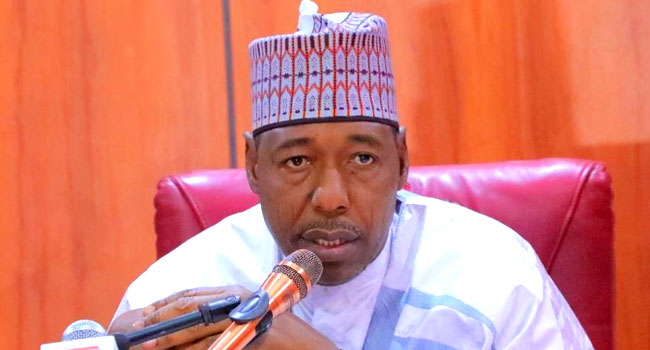
Finally, I insist on a person who embodies these invaluable assets (character & strategy). We hope our leaders and Nigeria itself are going to be alright! And reeling out the rationale for pitching tent behind such a person, Prof Zulum of Borno will suffice.

Mubarak Shu’aibu Hardawa wrote from Bauchi State via naisabur83@gmail.com.

Ukraine-Russia crisis: What should Nigeria do?

By Salisu Uba Kofar-Wambai

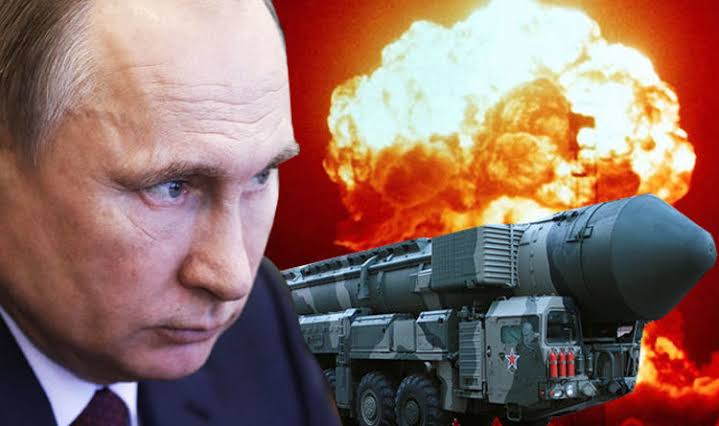
Nigeria’s foreign policy of nonalignment is on the right track. Thus, I commend how we keep mute and only call for peace in this ongoing face-off and altercation between Ukraine (backed by Western powers) and almighty Russia under President Putin.

Nevertheless, any attempt to side with one of the warring parties can be a big blow to the international relations prowess we have been displaying over decades. History had it that Russia supported Nigeria during the Biafra civil war. Reportedly, Malam Aminu Kano served as a bridge and intermediary embodiment between the Nigerian government and Russia in arms purchase, which positively impacted winning that war.

Aminu Kano’s Communist stance captivated Russia. Therefore, he successfully had that bilateral thing with them. It was a critical moment for Nigeria when France was solidly behind Biafrans.

However, even our much-talked-about project expected to shoot Nigeria into the league of technologically oriented countries – Ajakuota Steel project – was Russian technology. As a result, many of our technocrats were and continue to be trained in Russia.

Despite the shift in our foreign policy from the East to the West and now to Asia, Russia still maintains fantastic and fine bilateral relations with Nigeria. So supporting Ukraine to please Western powers will not do us better.

We better keep to our callings for peace and leverage primarily on this soaring of oil prices in the international oil market, evacuate Nigerians caught up there. We shall continue to run with the hare and hunt with the hounds.

Salisu Kofar-Wambai wrote from Kano. He can be reached via salisunews@gmail.com.

Buhari signs Electoral Amendment Bill into law

By Ahmad Deedat Zakari

President Muhammadu Buhari on Friday, February 25, signed the Electoral Amendment Bill into law.

The President signed the Bill at the Presidential Villa on Friday in the presence of the Vice-President, Professor Yemi Osinbajo; President of the Senate, Ahmad Lawan; Speaker of the House of Representatives, Femi Gbajabiamila and others.

In the president’s address, he said, in line with traditions, he received input from different ministries and relevant departments and agencies of government after thorough reviews of the bill and the implications it will have on democratic processes in Nigeria.

He said, “It is gratifying to note that the current Bill comes with great deal of improvement from the previous Electoral Bill 2021. There are salient and praiseworthy provisions that could positively revolutionize election in Nigeria through the introduction of new technological innovations. These innovations would guarantee the constitutional rights of citizens to vote and do so effectively”

Many political commentators have argued that the new law will define the incoming general election in diverse ways.

A whirlwind of change

By Lawi Auwal Yusuf

So great are the expectations. Some people believe it to be long overdue, and others are immensely surprised. But, to those who understand, the Infallible Saints Party (as they call themselves) and its government are much to be anticipated. Probably, it seems like coming with strong whims of making a revolution.  

Is it a one change whirl like that championed by the ANC in South Africa under its propellant, Nelson Mandela? Or the CCP in China contrived by its mastermind, Mao Zedong or the PAP in Singapore with the engineering of its leading figure, Lee Kuan Yew? But, as the change charlatans are about to leave office, people have realized that their revolution is nothing but a trick, deception and betrayal. Thus, the malignant political parties of old crooks and the treacherous ISP of the self-righteous saints are but the two sides of a coin. 

As the stormy wind of politics swept across the country in 2015, people were in a dilemma because the incumbent party had taken the nation to the verge of absolute rot. Hence, it was necessary for a vibrant new captain to take over so as to save the capsizing ship on the muddy, turbulent and already disturbed ocean. ISP and its leading forces, the messiah, who promised a miraculous change, were our last hope for survival. Therefore, we undoubtedly reposed the trust, firmly believing that the mess would be cleared once and for all, come what may. 

For over a decade, people sacrificed their wealth, resources and lives for the success of the so-called “jagoran talakawa” (masses emancipator). Today, what is the gain earned? An excoriating economic hardship, an avoidable but seemingly inevitable mass killings and abductions. Sadly, he campaigned unwaveringly for the big office for more than a decade. However, he practically lacks any blueprint for the motherland’s development. 

They violated the faithful confidence and trust of compatriots for personal gain. It was a deliberate and calculated disregard for trust and faith, failing to understand that change requires tireless efforts, sacrifice and effective policies. 

Contrarily, the head of the government remains aloof. As a result, the government’s obsolete and unrealistic policies aggravate the people’s misery. They make life worse, more challenging and make the poor poorer. Moreover, they deepen the crises rather than resolve them. 

ISP has assured people that they are the masters of ineptitude and mediocrity by engaging dirty incapacitated politicians to do the job. This is why they are making the project uglier than ever before. 

The sanctimonious Mai Gaskiya (The Truthful One) and the die-hard cohorts of the ISP boastfully brag that the administration performs better than the preceding regimes since the inception of democracy. This is a gaffe and a baseless argument to fool the psych of those who are gullible. If the ISP believes this to be true, it’s a self-guile at its most deceitful form. This evidently shows that they are only specialized in the game of political wangling and finagling. Indeed, this is the worst government in the history of the modern motherland. And expecting them to do better is like kicking a dead horse.

On account of this, people are in deep regret as frustration is boldly written on their faces. This is the worst decision and mistake they have ever made. Consequently, they have fallen from the frying pan into the fire. 

At last,  they will leave next year as ones who promised a better life but made it more grievous. Those that vowed for a quintessential change instead come with an illusionary one. They can not save innocent souls being murdered in cold blood daily, ones who couldn’t save us from woes. Those saviours have turned into disappointment.  

Lawi Auwal Yusuf wrote from Kano, Nigeria, via laymaikanawa@gmail.com.

Boko Haram will be defeated before 2023 – Zulum

By Ahmad Deedat Zakari

Borno State Governor, Babagana Zulum, had expressed confidence that Boko Haram would end before the end of Buhari’s administration.

He said this on Thursday, February 10, while responding to questions from reporters in Abuja after meeting with President Muhammadu Buhari at the Presidential Villa.

When asked whether it would happen in his administration, he said: “Inshaa Allah. Even now in Borno State, we are doing very well, extremely well.”

He was pressed further if he meant Boko Haram activities would end before 2023. He said: “Inshaa Allah. You know what I mean by Insha Allah, God willing.”

Governor Zulum added that about 30,000 repentant terrorists from Boko Haram and Islamic State’s West African Province (ISWAP) have also surrendered without any incentive from the government.

Road to Aso Villa 2023

By Ahmad Murtala

Ever since Asiwaju Bola Ahmed Tinubu declared his ambition to succeed President Buhari earlier this month, the political sphere off and online stirred up debates in favour of Tinubu and the potholes along his way. People cite some irrelevant motifs that may hinder Tinubu’s success. However, these are not paramount of any buyable candidate at the moment, and of course, for the electorate.

The intrinsic status quo of our polity entertains those factors that undermine the democracy and the governance—rating region, tribe, religion, age, school attended, above competency and capacity going even further to dig up the ancestral root of a candidate. The result we are cultivating under this administration says a lot about the mistakes we’ve committed in the past – from  2015 to date—by using only those yardsticks to scrutinize a candidate. Can we still pelt with our intelligence to subscribe to the same mistake of the past come 2023, which appears new dawn to our country?

We imported the American presidential system of government, which is quite expensive and implemented its only cover page. It’s a multi-party system that compels too much spending which a saleable candidate capable of taking the lead is hindered from contesting by the processions. These include the ticket, the campaign, and the mobilization. In this context, two major parties are on the run, which the rest endorses the party that has the chance of winning in subterranean manoeuvre.

The Southeast has configured and domesticated PDP as its political party since 1999, while APC appears nascent in the region—the weakness of the ruling party and the deterioration of the security across the country under the watch of APC makes the nascent party lose its credibility far to the NE. If the president is to emerge from the region, two possibilities may arise.

First, northern people stereotype and characterize PDP as evil, callous and looters, which most of the states in the region are under. Second, APC has lost its shining plate before the people based on what appears on the ground since coming to power in 2015. Therefore, no matter the candidate’s credit from the SE, if APC deems it fit to give the flag bearer to the region to entertain zoning as postulated by some northern state governors, the chances are its success would be a bottleneck.

The polarization within the spheres of politics that SouthEast translates to secession if not given a chance to rule, it appears that PDP would have to play the same card of the last election, by choosing the running mate from the SouthEast, here the North would draw a line looking at the indices of the carnage their businesses faced in the region. Meanwhile, APC would play the South-West and the running mate from the North, perhaps a Muslim-Muslim ticket. The result would be determined by the primaries from the parties in a couple of weeks ahead.  

In those countries that have built the social establishments and have smooth working systems with literally little or no corruption, the age of presidential aspirants is not a matter of concern. We see Biden of US—unlike Nigeria when chunks of domestic battle are entangled yet to be addressed. The age of the candidate matters a lot in this context. Tinubu, who appears to be more robust so far from those who declared their aspiration, is brazenly feeble. If not a good diet and wealth make politicians appear strong, most of the politicians at the frontline ought to assume coach duties guiding the upcoming ones. We forbid the like we’ve seen in this administration by encasing the president in the Villa and plunging the country into anarchy.

From the view and the colour of the game, Atiku Abubakar, the former vice president, would swiftly take the PDP flag and Tinubu APC. Both have been dented by the people’s court to have maliciously accumulated wealth—having no other alternative polling box for the electorate. If history is to repeat itself, Buhari contested four times before he won. Now, Atiku is running on his fifth time is likely to have a smooth ride based on APC losing its credibility because of insecurity across the country. 

The extreme thirst for power to fulfil the ‘need hierarchy’ is not dangerous to the beholder alone. The motive is only to possess the authority without a sketched-architectural blueprint and clear manifestos which will coalesce with the national need. Buhari came on this platter, and the result is unbecoming.

So far, the two giants have not made it to the public the what-and-how to attend to the tangled problems agonizing every sector. The currently delicate security and imbalanced economy are at the top, strangling the country by the neck—finding it arduous to breathe. We, for now, don’t need the so-called ‘kingmakers’ who cannot heed or take advice from the public opinion but become foreign puppets—since, intrinsically, the presumption of superiority as the number-one citizen is established. 

Road to Villa 2023 must come from the parties and play the game card to sew the polarization across the region. The Villa in 2023 and beyond begs for a head that has both stick and carrot in his hands, the one who has a clear understanding of foreign policies and has immediate treatment to our problems, both short and long-term solutions. If to suggest best candidates, there are a multitude of them from SS, SW and NW, both fit in into position of President and Vice President, but for now, let’s see the outcome of the parties convention, which is the utmost decider.

Ahmad Murtala sent this article via ahmadmurtala@outlook.com.