Persons with Disabilities

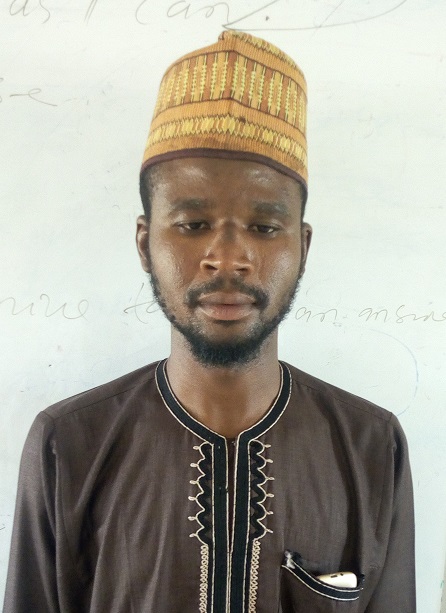
Musa Abubakar Daura: The talented blind man who defies odds

By Salisu Yusuf

Musa Abubakar, 29, was born a full-sighted child in Daura, Katsina State. He came from a low-income family, though his mother teaches at a primary school. Her job helps her support a family that lost their breadwinner 18 years ago.

At 9, Musa started feeling some discomfort and strain in his eyes. When his mother took him to a hospital, he was diagnosed with “retinitis pigmentosa,” a rare inherited degenerative eye disease. Initially, he witnessed vision decrease and impairment, especially at night or in low light. While Musa went through this predicament, his father was bedridden with a terminal illness. So, he was loaded with the dice at a tender age.

At 11, he lost his father and, later, his sight. Life had taken its toll on him as he grappled with going to school, looking for a guide and contending with walking with a blind cane. Musa felt lonely, isolated and disillusioned; he needed a company that proved elusive. Sometimes he would want somebody beside him with a gentle nudge, but nobody was around to whom he could unburden and escape from his loneliness. So he started meditating on an escape route.

Later, Musa discovered that education was the only antidote against loneliness, boredom and disillusionment. So he went back to school. In the beginning, his classmates served as his guides. However, social stigma forced him to opt for a blind cane as his guides were insulted or maligned daily. Whenever he reached class, his classmates would take notes and dictate to him. His mother had attested to his precocious talent; he demonstrated extra guile and quick-wittedness during his childhood.

After his primary education, he also joined another conventional junior school, obtaining a junior school certificate with flying colours. His potential was realised when in 2015, he joined Katsina School for the Blind. He learned how to use his “embosser typewriter” to take braille (a form of written language for the blinds, in which the characters are represented by raised dots that are felt with the fingertips). He also learned to use his emboser printer to convert conventional texts into braille for easy manual reading. He artfully mastered the skill of manual reading. Whenever I visit him, I am bewitched by the power, beauty and manual dexterity of his tactile reading. 

Musa Abubakar completed his ABU diploma in English Education at the College of Arabic and Islamic Studies, Daura, with a merit pass in 2020. 

His academic activities were wonderfully exceptional; he didn’t only surpass many full-sighted coursemates, but he mastered a good command of English during class presentations.

While studying for his diploma, Musa proved exceptional and combined conventional and unique learning methods. He used the braille writer to take notes, a recorder to record the lecturer’s voice,  and would later use the braille printer to write his notes and unorthodoxly use the braille writer to convert longer texts into braille for easy manual decoding. 

Musa is currently a 200-level undergraduate of English at an NTI degree satellite centre in Daura. He weaves baskets and local chairs to earn his daily bread and support his education. He can teach and perfectly write on the board. He can also assess his students by converting their works into his embosser and grading them. He’s also computer literate. 

Katsina State Government should not leave this talented blind man to waste. Instead, he should be employed so that his intellectual treasures are explored. His likes shouldn’t be left to beg. They should, like his braille, be converted to help the human cause. 

Salisu Yusuf wrote from Katsina via salisuyusuf111@gmail.com.
Kano Gov’t settles NECO fees, includes PWDs, female students

By Muhammad Aminu

Kano State Government has said that all students who passed its qualifying examination would write the 2022 Senior School Certificate Examination organised by the National Examination Council (NECO).

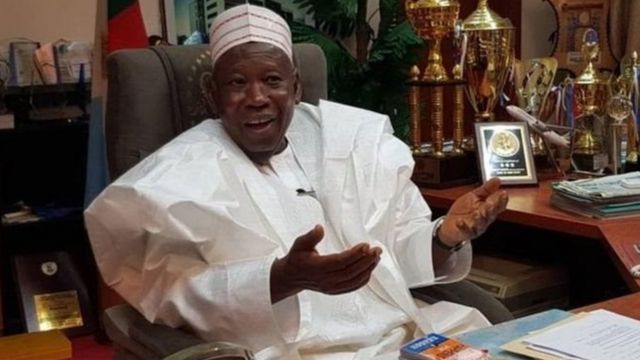
Kano State Commissioner of Information, Malam Muhammad Garba, told journalists in Kano on Monday that the Kano State Government had settled part of its debt with the examination body.

Malam Garba further debunked what he called “erroneous reports” that the State owes NECO N15 billion naira.

He confirmed that 15, 313 students would sit for the examination as planned.

Mal Garba also hinted that the examination would not hold on Monday as it is only the Test Interpretation Practical for teachers to come up with modalities for the practical exams that would be held Monday.

He said the State Government also paid examination fees for over 1000 students with special needs in public schools to enable them to write this year’s examination.

He said: “We have settled for 15,313 Students with nine credits and the essay part of the exam is commencing on 4th July while the State still paid for 1,018,000 Disabled Students, which means that the story that Kano is holding N15 Billion Debts is untrue”.

According to the Commissioner, 7,500 female students’ registration fees had been also settled as part of a special intervention to promote girl-child education in Kano State.

He added that LGAs cumulatively also sponsored 5,400 students for the examination.

“15,313 students that had 9 credits from qualifying examination; 1,018 students living with disabilities, as well as 7,300 for Special Intervention which is basically for Girl Child Education; and local government councils paid for 5,400 students,” the Commissioner explained.

The Daily Reality reported earlier that Kano students may not write the examination due to debt settlement conflict between Kano State Government and the examination body.

The examination body demands settlement of N700m of the N1.5bn before the students will be allowed.

He said the state government had paid NECO N356m last week and would finalise their discussion any moment to resolve the impasses.

The need to introduce sign language as a core course in Nigerian schools

By Ibrahim Tukur

Communication barrier is one of the major problems holding many deaf people back. Living in an inclusive world—a world that comprises people with differences, one has to know the others better to get along together. We can only achieve that through communication. Unfortunately, however, many people have immensely misunderstood due to the communication barrier. Some see people with hearing impairment as stupid, insane, mad, etcetera.

Communication barrier has brought various challenges that not exclusively affect the personal achievement of the deaf but also their educational, spiritual and economic development.

Due to this barrier, many deaf experience loneliness, depression and isolation at home because they have no one to communicate with as most of the family members don’t know how to communicate with them. In the same vein, their parents often neglect them and find it challenging to communicate with them in their day-to-day interactions and operations. Thus, this makes many deaf children, if not all, grow up morally deficient.

In many tertiary institutions, deaf students face many academic challenges that interfere with their studies. Although all tertiary institutions are inclusive, they are not offering special services like Sign Language interpreters. Consequently, those students often sit in the class watching their lecturers lecturing verbally and their coursemates with no hearing loss drinking from their knowledge flow.

Deaf people face immense challenges when it comes to employment. Many organisations and companies find it difficult to employ deaf people due to this barrier, as good communication is one of the essential requirements in entrepreneurship. This is why many deaf people have automatically been disqualified during job interviews despite meeting all the requirements.

Again, because of this barrier, deaf people are denied from getting jobs as doctors, engineers, journalists, lecturers, lawyers, accountants, etcetera. Many deaf who have studied others fields are forced to become classroom teachers as if teaching is the only profession for the deaf.

Although the current administration has enacted a law that prohibits discrimination against people with disability, thanks to their bid for inclusion, they failed to trench the underlying causes of the discrimination. 

To nip the deaf-based discrimination in the bud, Sign Language should be introduced as a core curriculum in all schools since the communication barrier is its underlying cause.

Sign Language specialists should be employed in all schools and tertiary institutions to teach Sign Language so that everybody will learn to communicate with the deaf and get to know them better.

Teaching Sign Language in schools nationwide will improve this communication gap and end the disparagement, discrimination, and stigmatisation they experience. It will equally create a comfortable environment for the deaf folks to live in this Inclusive world.

Ibrahim Tukur is a 400 level student of Bayero University, Kano. He can be reached via inventorngw@gmail.com.

Participate in politics to end disability-based discrimination

By Ibrahim Tukur

For many years, persons with disability have been encountering various forms of discrimination from the government of all levels in Nigeria. From the onset of Nigeria’s democracy, nay, independence, there had been the executions of different, life-changing, life-saving and life-enhancing projects. However, if meticulously observed, one can see that only a very few numbers of persons with disability have benefited from it. Finally, in its bid to battle against abject poverty, and thanks to the establishment of the National Disability Commission, the current administration began to make a difference.

Persons with disability, for many years, have been using various mediums to battle against the discrimination thrown at them by the government. They clamour for their right, but their efforts yield only a slight result. Although the current administration enacted a law prohibiting discrimination against persons with disability, it has yet to be implemented in its entirety.

Disability-based discrimination is a huge problem that seems to have abounded every nook and cranny of our country. Fighting such entails a decisive element in the vicinity where the discriminations exist.

Persons with disability in Nigeria receive little concern or attention from the government regarding employment, health, education, empowerment etc. This happens as a result of the fact that persons with disability do not have a voice that will fight for them.

To eradicate this irrational discrimination, persons with disability should participate in politics. They can then play roles or be advocates of good leadership to help their kind and the general public.

Ibrahim Tukur wrote via inventorngw@gmail.com.

Are persons with disabilities rightless? An open letter to Jigawa North-East politicians

By Abubakar Umar Gbs

Dear Sirs/Madams,

Let me start with these questions: Who among you has ever included people with disabilities in their empowerment programs? Who among you has ever offered a single person with a disability a job? Who among you has ever appointed a person with a disability as his aide? Finally, who among you has ever sponsored their basic diploma, NCE, or undergraduate program?

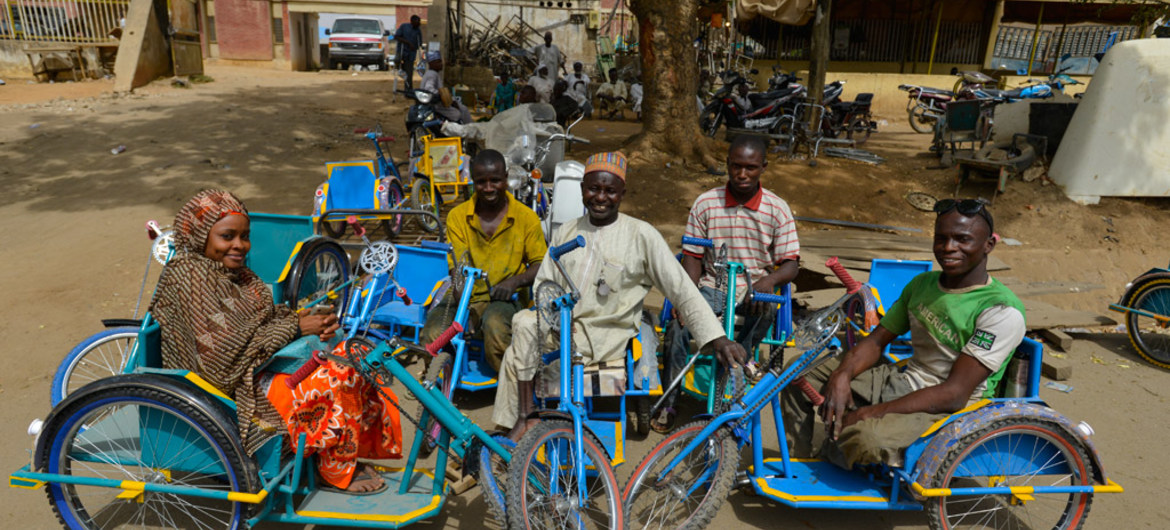
Since the 2015 election, Persons with Disabilities (PwDs) in the said region have suffered negligence from you even though they voted for you like everyone else. You do not consider them for empowerment, job provisions, educational supports, and so on. For basic education, many of their parents cannot take them to the only deaf school in Hadejia because of their physical location. There is no school for the blinds in the region, making it difficult for parents of blind children to take their children to school. The cripples, too, suffer going to school because of the absence of tricycles or other accessibility measures.

Please note that their defects made them require special needs, which means they should be given ‘special’ consideration in all aspects. Their needs should equitably be granted. They require inclusion, equal treatment, but this is not the case in the region as “those not in need are given more than those in need” or “those not in need are given what those in need needed the most.”

At this time, we have many PwDs from all over the region who have qualifications doing some handwork and are expecting jobs because their impairment may affect them doing other self-employed jobs. Some want to start a business but do not have the capital to kickstart. Some have hidden talents but do not dare to put them into practice or are being discriminated against in government and private companies, making them wait for government jobs which you (politicians) have the opportunity to offer them. 

There is one disabled lady who completed her NCE 5 years ago, but until now, she hasn’t secured any job or any seed capital to start a business as she complained.

Where are all those offers you are giving your people? Where are all those empowerment packs you are giving to your people? Did you know how it feels to have a defect in any body part? What if one of your children has a defect?

Imagine the son of less privileged parents with physical defects. They are citizens who have equal rights to education, health, and human rights. Sometimes, you will ask for what belongs to you from a serving leader like you, but you will be labelled a beggar. How can someone beg for what belongs to him? You begged them for votes that don’t belong to you but themselves and took them for granted after that. Their exclusion in campaigns has reasons as we can’t expect crippled men to take their bikes or join campaigners to go far and campaign. In the meantime, you can expect a blind man to do so too, so the deaf has his limitations.

Every citizen, irrespective of disability, race, tribe, or religion, deserves to be treated equally as per the constitution. Also, traditionally, persons with disabilities have equal rights, even if not constitutional. They have 100% rights, and that should be respected.

We know how well you perform, but the ‘well’ is not enough until you put PwDs’ rights on top of the agenda because society needs them. If they are neglected, they retort to some odd jobs to survive life which I don’t see their mistakes.

Thank you

Abubakar Umar Gbs sent the letter via abubakargbs@gmail.com.