Northern Nigeria

Book Review: ‘Economic Diversification in Nigeria: The Politics of Building a Post-Oil Economy’

By Abdulhaleem Ishaq Ringim

Economic Diversification in Nigeria by Zainab Usman is an in-depth analysis of Nigeria’s political economy that presents an apt delineation of the interplay of politics, institutions and policymaking in the process of economic development. Zainab’s is an attempt at instituting a diagnostic exercise to identify(beyond prevailing conventional narratives) major impediments to sustained development.

By repudiating ‘resource course’ and ‘backward neopatrimonilaism’ as the causal roots of Nigeria’s economic underperformance, the book presents a thesis that centres on challenges to economic diversification in resource-rich countries as the major impediment to economic transformation and development.

The author did a great job at identifying pathways to achieving economic transformation and establishing the state’s role in guiding the process but argued that the efficacy of the state’s guiding interventions remains a function of its institutional capacity which in turn depends on its political character.

Hence, to deconstruct Nigeria’s peculiar political character and its implications for economic transformation, the book deployed carefully designed frameworks for the analyses. Central among these analytical templates is the political settlement framework, which defines the influence of the distribution of political power on policymaking for development.

Per Zainab’s model, economic transformation, especially in resource-rich countries like Nigeria, depends on a kind of political settlement that distributes power among elite formations to ensure the emergence of a stable political coalition. This is why even while Nigeria has witnessed periods of semi-steady economic growth in her national life, such has never been adequate enough to usher in sustained development.

As an “Intermediate” State, Nigeria’s breed of political settlement is characterized by the formation of unstable political coalitions and cyclical political crises (especially in political transition periods). This has ensured that the country is always in crisis management. And the resulting policy and reform orientation has always assumed a manner that prioritizes short-term macroeconomic stabilization over long-term structural economic transformation.

The author, however, believes that such a political configuration is not immune to change. She explained that certain “critical junctures” determine whether a prevailing political configuration will change or persist. At these junctures, elites are constrained to take certain policy actions. And the economic outcomes of such policy actions depend on whether the assumed policy direction takes a stabilization or transformational orientation.

Using this framework, the author analyzed two subnationals, Lagos and Kano, to demonstrate the complex interplay of politics and policymaking and its influence on economic outcomes. The analyses mainly focused on critical junctures for both states and the resulting policy orientation and outcomes in relation to their contrasting political settlements. Lagos presented itself as a model for economic transformation while Kano a microcosm of Nigeria as it is.

The book concluded with recommendations on how Nigeria’s political settlement can be balanced by institutionalizing “zoning” as a power-sharing agreement, adopting a shared vision for transformation, and addressing market failures while emphasizing the imperative of building a post-oil economy. I find the book very interesting. It presents thought-provoking arguments and indeed updates our mental models on the challenges of economic diversification in Nigeria’s context.

Not that I agree with every postulation. In fact, I can’t entirely agree with the relegation of culture as an outcome of economic development rather than a determinant. Culture precedes economic activities(not to talk of development) in global historical trends, so I believe it cannot be an outcome of what it fundamentally precedes as far as existence is concerned.

As I posited some weeks back (linked), I belong to the school of thought that considers culture as a significant determinant of economic development alongside geography and climate. However, I believe culture itself is a product of nature, geography, climate and the environment.

I believe that at every point in human history, the culture of any people is determined and constituted by a combination of the powerful and inter-generationally persistent ‘cultural legacies’ the people have inherited over time (mostly developed in response to geographical and climatic determinants) and the cultural aspects developed as a result of the influence of [mostly unpleasant] environmental changes and the need to adapt to them.

Hence, I believe nature, geography, climate, and environmental changes determine the cultural compatibility and disposition(positive or negative) of any people towards development. Therefore, I have not seen enough reason to forgo Varoufakis, Gladwell and others on geographical and cultural determinism regarding economic development.

Nonetheless, the book is a masterpiece!

Insecurity: Kogi governor suspends traditional ruler, queries LGA chairman

By Ahmad Deedat Zakari

Kogi State Governor, Alhaji Yahya Bello, has ordered the suspension of a traditional ruler and queried the Chairman of Ajaokuta Local Government Area of the state because of insecurity

This was disclosed in a statement signed by the governor’s spokesperson, Onogwu Muhammad, on Sunday, July 31, 2022.

The Spokesperson said :

” Kogi State Governor Yahaya Bello has directed the suspension of the Ohi of Eganyi and Chairman, Ajaokuta Traditional Area Council, HRH Alhaji Musa Isah Achuja with immediate effect after an investigation that led to his arrest and detention by the security agency.”

Mr Muhammad added that the Chairman of Ajaokuta Local Government, Hon Mustapha Aka’aba has also been queried and asked to respond within 24 hours.

Mr Muhammad, in explaining the reason for the governor’s disciplinary action, also stated that: 

“The governor’s directive against the affected persons is in connection with the recent security breach in the area, which led to the untimely deaths of some security personnel on their legitimate engagements of maintaining law and orders. 

The governor strongly warned other traditional rulers across the state who may have connections in one way or the other with criminal elements in their domains to desist forthwith, saying that his administration will deal ruthlessly with anybody who romances with criminal elements, no matter how highly placed they are.”

On the emerging narratives of Hausa/Fulani animus in the Northwest

By Dr Raji Bello

The past few years have witnessed a gradual emergence of references in public commentary and social media to a potential or actual rupture of relations between Hausa and Fulani groups in the Northwest geopolitical zone of Nigeria. Prior to this, the two groups had enjoyed a largely harmonious relationship for much of their history which was only punctuated during the period of the establishment of the Sokoto Caliphate.

Since Nigeria came into being at the turn of the 20th century, conflict between the two groups was limited to occasional farmer/herder disputes. While the region has distinct Hausa (majority) and Fulani (minority) communities in the rural areas, the urban centres tend to have mostly mixed populations united by the Hausa language and Islam, which eliminates the possibility of ethnic conflict.

The idea of Hausa/Fulani antagonism began to emerge several years ago in the commentaries of individuals from outside the North like Femi Fani-Kayode and Nnamdi Kanu who relished in promoting it as a potential tool for undermining northern hegemony, as they saw it. But recent developments in the Northwest like the emirship succession in Kano and Zazzau, and the violent conflict between rural Fulani and Hausa vigilante groups as well as the wave of banditry against local communities by Fulani elements has created narratives of Hausa/Fulani conflict among northerners themselves.

As we acknowledge this new reality, it is also important to recognise that there are two strands of these narratives out there and the motives of those who articulate each of them are different. I will group them into non-extremist and extremist narratives.

Non-extremist narratives

These are propagated by ordinary Hausa citizens who are concerned by what they see as the continued suppression of Hausa identity and prestige as well as threats to the security of Hausa communities in parts of the Northwest as a result of banditry. They hold an unfavourable view of the existence of exclusively Fulani traditional ruling dynasties in Hausa-dominated emirates like Kano, Katsina, and Zazzau which were established when the Sokoto Caliphate came into being over 200 years ago. They object to the references that are often made to the Fulani heritage of the emirs (although I believe that this is not done out of ethnic chauvinism but because of a need for historical accuracy). These are concerns that the state governments in the Northwest can engage, with a view to introducing reforms that would assuage negative feelings and lead to a more harmonious society.

Traditional institutions play a vital role in preserving our heritage but for some segments of society, they may also be permanent reminders of an unpalatable past. It is the responsibility of modern day governments to ensure that they strike a balance between the two i.e. preserving heritage while not alienating some segments of society.

Reforms could be introduced that would formally recognise and integrate the legacies of the pre-Caliphate Hausa emirs. Like a contributor Aliyu Ammani has suggested in a Daily Trust article, Hausa ruling houses could be included as contenders during succession to the emirships; our governors are fond of creating new emirates where they didn’t exist before and therefore, they should not find it difficult to create new ruling houses within the existing emirates. The Sokoto state government may also consider elevating the status of the Sarkin Gobir of Sabon Birni – the ancient Hausa kingdom of Gobir being the epicentre of the Sokoto Jihad.

Governments have a duty to recognise and preserve heritage holistically; the heritage of some segments of society should not be elevated over those of others in a post-Caliphate and post-colonial nation state. This is a recipe for entrenching communal tension and possible conflict. The Northwest governments should collectively nip these emerging issues in the bud and not allow them to fester and grow into major problems in the future.

I expect some readers to either say that these suggestions are too radical or that they will be impossible to implement. I’m used to hearing this from reform-shy Nigerians who like things to remain just as they are even when the existing situation is pushing us towards the edge of the cliff.

The second cause for concern is, of course, the ongoing wave of banditry against local Hausa communities in many parts of the Northwest in which Fulani elements are major actors. However, this is not primarily an ethnic conflict; if communities that have lived in peace for generations are now locked in violent conflict we need to scratch below the surface to find the actual causes.

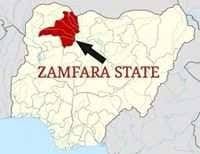
The banditry is a symptom of the failure of governance at various levels. Even a report commissioned by the Zamfara state government (the MD Abubakar-led committee) has alluded to that by indicting former governors, top government officials, traditional rulers and members of the security services. There are chronic issues with agricultural land management, law enforcement capacity, corruption and maladministration by local officials and traditional rulers.

The lack of a long term plan by successive federal and state governments for transitioning nomadic pastoralists to modern and sustainable livelihoods is itself an evidence of leadership failure. While people are entitled to show concern about the apparent ethnic divide in the conflict, it is clear that it is not fundamentally an ethnic one.

Extremist narratives

These are deeply inciting and apocalyptic portrayals of the state of Hausa/Fulani relations in the Northwest which are propagated on the internet by people with no apparent desire for peaceful co-existence. Their aim seems to be to incite a major upheaval in order to undermine the fabric of society. They are a faceless mix of anarchists, genocide entrepreneurs and probably, people with a religious agenda. They often start their narratives by depicting the arrival of the Fulani in Hausa land hundreds of years ago as an invasion, then portray Usman Danfodio as the original Fulani bandit leader before dwelling on their favourite topic of interrogating the validity of Hausa-Fulani as a descriptive term for a segment of the population of the Northwest. They hide behind a veneer of seductive Hausa ethnic nationalism but their true agenda is to engineer maximum disruption in the Northwest which they hope would serve their interests.

There is a YouTube site and a Facebook page dedicated to the project (yes, it does appear to be a well-funded project) and I have viewed a few of their videos. Some of the voices on the videos bear distinct Nigerien accents (with French-influenced pronunciations) and some of their messages give a hint that they are non-Muslim Hausas. One of the voices called for unity among Hausa people of all faiths – Muslim, Christian and pagan to confront the Fulani threat, as they saw it. From my knowledge of northern Nigerians, it is very unlikely that a Hausa Muslim Nigerian would call for unity between Hausa Muslims and Hausa pagans considering how paganism is viewed in Islam. A Hausa individual who makes this call is likely to be a non-Muslim. And if those behind the extremist messages on the internet are non-Muslim Hausas, the question arises about whether they are working for a religious agenda or not. By saying “non-Muslim Hausas” I’m not necessarily alluding to the Hausa Christian community; there are also a small but assertive number of Hausa atheists and modern day pagans who are not necessarily enamoured of the prevailing order in Northwest society. If anyone feels that I’m being alarmist here, they should visit the YouTube channel of Jaruma Hausa Tv and listen to the messages themselves.

Conclusion

Authorities in the Northwest need to face the new reality of tension and misgivings between the hitherto harmonious communities of Hausa and Fulani. There are issues that are germane (the exclusivist Caliphate traditional dynasties in some of the Northwest emirates and the ongoing banditry) behind the new unease in ethnic relations which need to be actively addressed, in order to re-establish harmony. But it should also be recognised that not all those who are currently pushing narratives of Hausa/Fulani conflict or Hausa nationalism on the internet are working for peaceful co-existence. Some of them are merely exploiting contemporary issues in the Northwest to achieve their own dark agenda.

Kaduna Train Attack: A scenario 

By Hamza Muhammad Tasiu 

Let’s imagine this: 

You are a young mother. You leave Kaduna a few days earlier for a task in Abuja. After finishing the task, you call your husband and tell him that you will be coming back and that he should buy your best food from your best restaurant for you. You tell him how badly you miss him. You tell him that you’ve bought his favourite perfume for him. You even tell him that he should tell your little daughter that you have bought her a special present from Abuja.

And given that this is the first time you go to Abuja, you tell him that you have a lot of stories from the nation’s capital. So you stop and buy your mother apples and pineapples on your way to the train station. You also buy a new shirt for the Almajiri that runs errands for you.

You leave Idu station at 6 pm and are scheduled to arrive at Kaduna’s Rigasa train station by 8 pm. On the train, you say salaam to the other occupants and shake their hands. You smile at a little girl, and she smiles back. Her cute smile injects you with a dose of happiness you’ve not felt in a long time. The woman sitting next to you is an elderly woman in her late 60s. She looks like your mother. She starts a conversation, and, before long, you feel at home with her. You talk about a lot of things with her. You talk about the month of Ramadan and how you plan to spend it. You even tell her your readiness to fast throughout Ramadan as your ulcer seems to become dormant lately. She complains that she cannot fast as she is on medication. She says she will fast after finishing her drugs. 

Not more than 30 minutes into your journey, that woman now seems like someone you have known for many years. Amidst the exciting conversation you are having, she suddenly falls asleep. You want to continue the conversation but feel it uncourteous to wake her up from sleep. You allow her to continue sleeping. Before long, you also get overpowered by sleep due to the exhaustion from your work in Abuja. Suddenly, you wake up to the sounds of explosions and gunshots. In what seems like the twinkle of an eye, all the unlucky passengers are rounded up by the terrorists. They rain all sorts of abuse on you and force you to walk for tens of kilometres on foot in the bush.

Days have now become months, and you are still under the pharaonic care of these terrorists. You look at that older woman, and you feel sorry for her. Her health is deteriorating as she does not have the drugs that she takes three times a day. She often tells you in the night: “Zan mutu ‘ya ta. Ga ruwa, ga sauro, ga yunwa, ga duka, ga jinya. Ba zan iya ba. Karfi na ya kare!” But you give her words of encouragement and ask her to keep on, promising her that God will bring help.

Your comments seem to boost her spirit. She says to you: “Allah Ya miki albarka ‘ya ta. Da ba dan ke ba, da bansan inda zan sa kaina ba.” As soon as she closes her mouth, one of the terrorists says to her: “Idan ba kiyi shiru ba hajiya, zan zane ki wallahi! Kar kiga shekarun ki, yanzu zakiyi kuka wallahi! Kin manta dukan da aka muku da safe koh?” 

The elderly woman then says, somehow inaudibly: “Ya Allah ka saka mana. Ka mana hisabi da wadanda suka daurawa kansu nauyin kare mu amma suka banzantar da nauyin da suka daurawa kan su, amin.” As if someone has put her on a speaker, all the kidnapped victims say, “amin” in a resounding voice. The terrorists then descend on them, beating them mercilessly, saying: “Mu zaku hada da Allah? Wallahi zamu kashe ku gaba daya! Matsiyata kawai! Tsinannu! Idan ba a bamu kudi ba, wallahi sai mun kashe ku duka! Wahalallun banza! Dangin matsiyata!” You become angry because of the abuses they rain on you because you are someone your people highly respect, but then you remember there’s nothing you could do.

Back at home, your little daughter has been waiting for you for more than 100 days! All she can do is to pray to Allah to rescue you. She often tells her father: “Baba ni na hakura da present din, kawai ni mama nake so na gani. Dan Allah ka dawo da ita!” The father goes into his room and cries because there’s nothing he can do. He raises his hands in prayer: “Verily, the most helpless of people are those that are unable to ask for Your help. We ask for Your help regarding these servants. Rescue them, Ya Allah!

If this story touches you, then wait a minute and reflect on what the kidnapped victims are going through. Think of what their families are going through after watching that video. It’s devastating, to say the least. May God rescue them! The leadership has failed them!

Hamza Muhammad Tasiu 

Pieces of advice on maternal mortality


By Abdurrazak Muktar Makarfi

Maternal mortality is one of the devastating and heartbroken issues, especially in Africa, where we have many unqualified and fake health personnel, which leads to such menace. In the community where I belong, we don’t value ante-natal. Many think it is not that important; some consider it a waste of time, resources and energy.

Most times, lack of awareness to some people is negligence and ignorance to many. I once heard someone saying, how could I allow my wife to deliver in hospital while she’s fit and healthy? I don’t blame him even once because our health personnel’s attitude discourages many people from going to the hospital for ante-natal.

The attitude of health personnel in the hospital is absurd. I sometimes feel like absconding whenever I hear a nurse screaming and yelling at pregnant women; some even raise their hands to beat them! This happens at the time of delivery, which makes it more unfortunate.

Government, religious leaders, community elders and traditional rulers advocate that daughters must be educated, especially in the health sector, where we are lacking. However, to my dismay, when they are, they turn black eyes and become arrogant by yelling at women to show they are superior. Some of those they shout at are old enough to be their grandmothers. What a shock!

On the other hand, research has shown that 99% of maternal deaths occur in developing countries, but why? It may be because of the complications that occur during pregnancy and childbirth. Most of the complications can be managed, but the woman may end up dying due to a lack of skilful health personnel.

Furthermore, most maternal deaths are caused by the following: Severe-bleeding (mostly bleeding after childbirth), which can kill a healthy woman within hours if left unattended. Injecting oxytocin immediately after childbirth effectively reduces the risk of bleeding.

Infection after childbirth can be eliminated if good hygiene is practised and early signs of infection are recognised and treated promptly.

Pre-eclampsia should be detected and appropriately managed before the onset of convulsions (eclampsia)and other life-threatening complications. Administering drugs such as magnesium sulphate can prevent pregnant women from developing eclampsia.

Poverty-stricken women living in remote and slum areas are least unlikely to receive adequate health care; this is likely my region where we have a low number of skilled health workers.

Cultural practices: These are the things like local surgeries (episiotomy called “yankan gishiri” in Hausa) done by traditional birth attendants without or with inadequate knowledge about the birth canal. They remove the vulva and vaginal, causing damage to some tissues resulting in fistula formation and easily causing infection, which may lead to maternal mortality.

I hope my people will heed some of the things I mentioned as the direct or indirect causes of maternal mortality, i.e. death of a woman while pregnant or within forty-two (42) days after delivery.

Abdurrazak Muktar Makarfi wrote via prof4true1@gmail.com.

Don’t forget your date of birth 

By Nasiru Tijjani

The role of guidance, counselling, and mentoring in our interaction remains strategic and fundamental for achieving one’s goals and objectives. Doubtless, none of us is perfect enough not to be mentored, guided, counselled or nurtured at one point or another. Therefore, mentors, parents, counsellors, teachers and the likes are vested with the power of educating the teeming youth on the implication of age in one’s life.

Honestly, age is one of the problematic issues that need to be treated with extreme caution. But unfortunately, the problem appears to be common even among the students of tertiary institutions, civil servants, corp members and business people. Initially, the issue cannot be divorced entirely from ignorance, carelessness, poor mentorship, parental attitude toward learning, policy review and implementation, selfishness and what have you. Therefore, age is needed in every situation to meet a particular requirement for admission, job or anything.

In Nigeria, as we grow older, our services are no longer needed in some institutions. Accordingly, National Identity Management Commission (NIMC) has classified ‘date of birth’ as one of the fields in the data of a person to be non-updatable and non-modified unless an approved fee of ₦15,000 is paid. Meanwhile, the country’s birth certificate is issued to the citizens by the Nigeria National Population Commission. However, until recently, ‘date of birth’ has not received proper attention from the youth, parents, teachers, mentors, etc. UNICEF (2016) has reported that only 30 per cent of  Nigerian children under the age of five (5) have their births registered. Meanwhile, the country had one of the highest average birth rates in the world between 2010 and 2015.

In the academic arena, date of birth has denied many people access to secure admission into higher learning institutions at national and international levels. For instance, a friend of mine was recently denied admission to an undergraduate programme in Sudan. The university management told him that was due to his age.

In addition, the National Examination Council (NECO) has reviewed its policy in 2020 and mandated that ‘date of birth’ be written on the candidates’ results. Furthermore, the National Youth Service Corps has introduced a new policy in the year 2020, which states that the date of birth must be written on the national certificate to guard against age falsification. Before this, the NYSC  policy had mandated that graduates should not be or exceed 30 years of age to be enrolled on the scheme. Therefore, with this mandate, many graduates end up collecting exemption letters.

Returning to civil service, ‘date of birth’ has sent many civil servants to early retirement. I discussed with someone who lamented that he had unceremoniously and unduly retired from service due to the age written on his documents. In contrast, his colleagues are still in the system, for they have no problem with age. I trust you have a lot to say on this case. In Nigeria, for example, the retirement age of civil servants is 60 years by birth and 35 years in service. However, on January 20, 2021, the Federal Executive Council (FEC) approved a bill to increase teachers’ retirement age and service years. With the bill in effect, teachers are now to retire at 65 years by birth and 40 by service.

Furthermore, no one can deny that banks attach value to the topic of discussion, and due to this, many people, including the writer of this piece, have suffered the pain of having dual dates of birth. Without hesitation, I can attest that many accounts have been restricted and closed due to irregularities in age. Equally, many transactions have been denied, cancelled or withheld by the banks’ managements. I trust you can give an example of the victim of the problem.

In sum, the issue of ‘date of birth’ should not be treated slightly…Therefore, one will be at an advantage if one pays attention to the date of birth. Because of this, the following recommendations will be helpful:

  • One should ensure they have a unique and standard date of birth.
  • Parents should be cautious by avoiding anything that will jeopardise their children’s future, such as negligence to NIN enrollment.
  • Parents should endeavour to register the birth certificates of their children in time or right at a tender age.
  • Birth certificates or date of birth should be committed to memory so that forgetfulness and what have you will not strike between what is and what ought to be.
  • No reason, or whatsoever, will warrant you to allow your friends to use your dates of birth.

Nasiru Tijjani writes from Gwaram Tsohuwa, Jigawa State. He can be contacted through tijjaninasiru@gmail.com.

The dilemma of being a hostage in the kidnappers’ den (II)

By Alkasim Harisu Alkasim

The abductors got bewitched by Hajiya’s daughter and wanted to hold her for marriage. Had they ever had sex with her? This remains an unanswered question, although such an act is their capital source of chillaxing. During their stay, the abductees could not be in the arms of Morpheus. I told you earlier that the kidnappers do different assignments, such as denying the victims a chance to sleep. There are others assigned to supply food and water and those to provide bullets, etc. 

Naturally, women suffer from menstruation period. How do they look after themselves during their monthly friend? It is devastating that the kidnappers eject from the den any victim suffering continuing ill health by gunning him. The kidnappers love talkaholism. They talk their ears off after drinking alcohol and dragging marijuana until an uproar overwhelms the place. Nobody is to tax the patience of these bestiality-stricken people unless they want to die.  

The bitterest part of this tragic story was where Hajiya came the selfish with the driver. Given the opportunity to call a blood brother residing in Saudi Arabia, she said something that made my blood boil. When the Saudi-Arabia-based brother asked how many of them got abducted, she shamelessly said they were two, deliberately forgetting to mention the driver. This unprintable selfish behaviour of Hajiya redounded back on her as the kidnappers held her daughter all the more and threw away the key. What a world! The driver got sorrow-ridden as problems slammed him. 

The superior kidnappers exploit the inferior by capitalising on their weaknesses and expertise. The inferiors bust their asses to gather money for the superiors, yet they can’t get the money that is worth their effort. The toil of the junior kidnappers is worth hundreds of thousands of naira. Things continued to pick up steam. As a result, they got pretty fed up with how the senior kidnappers capitalised on their expertise to gain money. This dilemmatic situation they got entrapped in emerged as a genuine concern. 

As raging parties, the senior and junior kidnappers failed to ensure a common mind among themselves. As the high frequency of their getting exploited steamed more, the juniors cut corners with some of the hostages despite their being under the magnifying glass of the kidnapping honchos. The new abductors collocated their new abductees in a new hidey-hole. Hmm! There is betrayal and sabotage even among the abductors.

One of them said to the driver, “Between you and me and these four walls, do you have relations who can ransom you?” The kidnapper did this to gain money to recompense the exploitation he had stomached when under the employment of their former superiors. But will they ever mend fences with their bossyboots? Nobody knows. The seceded kidnappers considered releasing whoever paid a ransom. They ordered the driver to pay some handsome amount to compensate himself. He told the kidnappers that his whole family could not gather such an amount. 

The driver bequeathed his wife and children through Hajiya, who was released on that very day following her ransom payment. So that the driver could not afford the amount they requested, they told him to pay any amount he could, no matter how smattering. Upon payment, he finally got relieved of being a hostage.

At this juncture, society and the government must do their utmost to see the youth walk a straight line in their respective communities.  Otherwise, they will always be putting a foot wrong. We all need to stop this problem, for failing to do so means we are putting a gun to our heads. It is also good to know that gaoling the criminals is not the only solution. Because at times, gaoling does not end social ills such as this.  Rather, the criminals should be rehabilitated, educated, enlightened and offered jobs. If you give them jobs, they can put butter on their bread.

Parents, too, should stop spoiling their children rotten to avoid paving the way for them to stubbornness. They should be more thorough with their children and reprimand them if they go wrong. They should be taken to market to learn the basics of trading. Maybe, some of them have got a Midas touch. Some boys are brilliant for they can work like clockwork. They can perform like a duck takes to water at anything they start. Let’s help them mend their lifestyle to begin to feel like a million bucks. It is disgusting that some parents contribute to spoiling their children by refusing to admit to handling even simple misbehaviour their children start to embody. This makes me lose the run of myself. This fact can’t admit to two interpretations. First, it is your faux pas. Period! 

I feel like a chicken with its head cut off to see our children engaging in the misbehaviour of flirting, misspending, playing truant, etc. Like it or lump it, our youth are rampantly becoming wayward. They abuse drugs like it is going out of style. They don’t only like it, but rather like it like mad. They busy themselves smoking and drinking like nobody’s business as if their lives depended on it. But indeed, if we make it our business, stopping this behaviour is just like taking candy from a baby. 

In conclusion, the government should redouble efforts, tighten security and reconnoitre suspicious places. The more disturbing thing the government should know is that the Chadians, Cameroonians, and other Fulani tribespeople form most of the kidnappers, while Nigerian kidnappers form a minority of those abductors. The government should also wake up to this, work hard to gain a wonder drug for the situation and record a great success. Let us strike while the iron is hot.

Alkasim Harisu Alkasim wrote from Kano via alkasabba10@gmail.com.

Musa Abubakar Daura: The talented blind man who defies odds

By Salisu Yusuf

Musa Abubakar, 29, was born a full-sighted child in Daura, Katsina State. He came from a low-income family, though his mother teaches at a primary school. Her job helps her support a family that lost their breadwinner 18 years ago.

At 9, Musa started feeling some discomfort and strain in his eyes. When his mother took him to a hospital, he was diagnosed with “retinitis pigmentosa,” a rare inherited degenerative eye disease. Initially, he witnessed vision decrease and impairment, especially at night or in low light. While Musa went through this predicament, his father was bedridden with a terminal illness. So, he was loaded with the dice at a tender age.

At 11, he lost his father and, later, his sight. Life had taken its toll on him as he grappled with going to school, looking for a guide and contending with walking with a blind cane. Musa felt lonely, isolated and disillusioned; he needed a company that proved elusive. Sometimes he would want somebody beside him with a gentle nudge, but nobody was around to whom he could unburden and escape from his loneliness. So he started meditating on an escape route.

Later, Musa discovered that education was the only antidote against loneliness, boredom and disillusionment. So he went back to school. In the beginning, his classmates served as his guides. However, social stigma forced him to opt for a blind cane as his guides were insulted or maligned daily. Whenever he reached class, his classmates would take notes and dictate to him. His mother had attested to his precocious talent; he demonstrated extra guile and quick-wittedness during his childhood.

After his primary education, he also joined another conventional junior school, obtaining a junior school certificate with flying colours. His potential was realised when in 2015, he joined Katsina School for the Blind. He learned how to use his “embosser typewriter” to take braille (a form of written language for the blinds, in which the characters are represented by raised dots that are felt with the fingertips). He also learned to use his emboser printer to convert conventional texts into braille for easy manual reading. He artfully mastered the skill of manual reading. Whenever I visit him, I am bewitched by the power, beauty and manual dexterity of his tactile reading. 

Musa Abubakar completed his ABU diploma in English Education at the College of Arabic and Islamic Studies, Daura, with a merit pass in 2020. 

His academic activities were wonderfully exceptional; he didn’t only surpass many full-sighted coursemates, but he mastered a good command of English during class presentations.

While studying for his diploma, Musa proved exceptional and combined conventional and unique learning methods. He used the braille writer to take notes, a recorder to record the lecturer’s voice,  and would later use the braille printer to write his notes and unorthodoxly use the braille writer to convert longer texts into braille for easy manual decoding. 

Musa is currently a 200-level undergraduate of English at an NTI degree satellite centre in Daura. He weaves baskets and local chairs to earn his daily bread and support his education. He can teach and perfectly write on the board. He can also assess his students by converting their works into his embosser and grading them. He’s also computer literate. 

Katsina State Government should not leave this talented blind man to waste. Instead, he should be employed so that his intellectual treasures are explored. His likes shouldn’t be left to beg. They should, like his braille, be converted to help the human cause. 

Salisu Yusuf wrote from Katsina via salisuyusuf111@gmail.com.

Why do people hate this regime?

By Lawi Auwal Yusuf

The unfortunate attack on the advance team ahead of President Buhari’s visit to his hometown, Dura, Katsina State, made the day of so many people. Indeed, it’s unarguable that, initially, the administration commanded deep respect. It was the most liked, revered and popular in this country’s history. But, of course, today, it’s the most loathed, and people solemnly disown it with an excessive feeling of hate. What stimulated such offensive aversion and malice? Why did this esteem veneration turn a disgust overnight? What made such immense support go swiftly on the wane? These are questions we need to ask ourselves.

For over a decade, people gave their lives, wealth and resources for the success of the assumed emancipator to wipe out the woes and salvage the country that came within the whisker of a failed nation come rain, come shine. People expected the saviour to be whiter than white, demonstrate ingenuity and were very optimistic that he would make life far better off than in the previous regimes. Instead, failure to create a framework for his success led to an embarrassing fallacy change, contrarily making life worst off. Moreover, forging policies behind the times really ravaged people’s lives, making the poor poorer.

Unfortunately, things went downhill after taking over the big office; life became an epic struggle for the masses to earn a living at a push. The economy is flat on its back, while markets are dead. We also witness a significant rise in unemployment, inflation, heinous crimes and terrorism. The security forces were overwhelmed and couldn’t check the horrific security threats, lest dancing to the tune of politicians and remain only specialised in molesting those that come out against the status quo or political opponents.

Moreover, to add insult to injury, tertiary institutions were closed for almost a year, whereas no society can develop unless its citizens are well educated. Regrettably, the country descends deeper into crisis. Hence, no one enjoys life at the moment, and hopes of a better life have faded.

As a result, the administration fell flat on its face, fell from favour due to corruption and mismanagement, disappointing even the most loyalist cohorts. They should have taken the great expectations, faithful confidence, and trust reposed on them seriously, not an indifferent attitude.

However, taking a leaf from the books of other dynamic leaders who made history was a good idea. They should have picked the brains of successful personalities like Lincoln, Mandela, Lee or Mao. But instead, they show a great zest for life, spend public funds like water, engage in swanky trips that break the bank and award lavish contracts for self-enrichment and kinsmen. Indeed, the damage done in those few years will surely take decades to repair. Today, people are not out of the woods yet and have realised that the wolf in sheep’s clothing and the past malignant regimes are but six of one and half a dozen of the other.

Not realising the long-lost potential of this nation and forging a global superpower blew their best chances of becoming great leaders without equality. This consequently irritates people and turns their back on them for achieving nothing important. It is so vexing that they cannot be courteous enough to return such favour, going down in history as the worst actors.

This abnegation has shown that people are in hot water. They are on the wrong side of the people and have pushed them too far. They are in their bad books for stabbing them in the back and no longer run the country’s affairs with their consent. However, it manifested the frustration, anxieties and disparagement that depict the lives of the citizens of this dystopian country. Thus, they are worn out of the cruelty and no longer anticipate any help. They are only anxious to survive to the end of this hardship.

As they are still blind to their faults, they will soon realise the error of their ways when given the push come 2023. The future of the party hangs in the balance, while history will always show them in an unfavourable light. However, we will never despair because we honestly believe that where there is life, there is hope.

Lawi Auwal Yusuf wrote from Kano, Nigeria. He can be reached via laymaikanawa@gmail.com.

The dilemma of being a hostage in the kidnappers’ den (I)

By Alkasim Harisu Alkasim

If you are eating like a horse, learn to eat like a bird because once in the abductors’ den, you will never gain enough to eat. Your thighs, hips, and cheeks will slenderise. Recently, nothing devastates me like the story of three abductees. Still, I was wondering how in this world a person would choose to win his living either by robbing, kidnapping, etc. and feel okay notwithstanding. This huge misfortune leaves me wallowing in confusion. 

The story opens with a taxi driver, a mother, and her daughter chartered to convey them to some place in Kaduna. The woman was also in the company of a young man, her close relative. The woman is a do-gooder because her trip was bound for a place populating the poor. She was travelling there to distribute goods and other gifts to the needy. But, alas! The goody-goody gesture of this fortysomething mother suffered the sabotage and heartlessness of a cruelty-ridden lad who also doubles as a relative. He has made his bed and must lie in it because he must reap what he has sowed when the authority arrests him.

The incident communicates a misfortunate and the truth we are no longer safe even in the fellowship of friendly people, our blood included. Society abounds with criminals starving and drowning in the urge to make megabucks. We are just between Scylla and Charybdis. Our desire to live beyond our means transforms our societies into hell. And all hell breaks loose when people choose to not live within their means. We want to cut ties with poverty by living a prostitute life. This is the path many youths have picked and chosen for themselves. 

One of the kidnap kingpins, to whom money means nothing, told the kidnapped driver that should he get a house to buy in the G.R.A, he would buy it no matter how expensive, provided the government would let him walk alone. That an abductor had such an intention demonstrates what a menace kidnap is. The kidnapper obviously envies the life his kidnappees will continue to enjoy once he releases them. This afforded him the idea of thieving out of the kidnapping den at the slightest opportunity. To hell with such a life of people abductors.

The kidnappers are exceptionally talented at weaponsmithing. They manufacture local double barrels that can gun down five people at a time should they vertically line up. When asked about the number of the kidnappers at the den, the driver-cum-abductee said, after swearing, that they amounted to a thousand. I am still reeling from the zinger of hearing this harrowing story. 

Rest assured, the desire to make beaucoup bucks overnight is the Newton apple pushing these low-IQ people into kidnapping. The kidnappers’ den is not a home away from home. But instead, a Jahannam on earth. The lust for money triggers kidnapping to catch fire in the North. Bitten by poverty, many youths choose to become repeat-offending abductors.

If their prey misbehaves, the abductors eat him for breakfast. Nobody can dream of getting a breakfastcupful of tea or milk in the morning, never mind chips or fried yam. When their hostages are hungry, these wrongdoers give them a small mango to lick and a bottle of water to share among the five or even more. There is always not enough to eat. When everybody is silent, nobody should break the silence. Otherwise, the kidnappers will break his balls. 

Certainly, kidnapping makes a song and dance about our wobbling social structure. What a prettily dilemmatic situation that destroys our social fabric! This menace is never a job in which one can make a name. The government should make an example of them to the teeming public when it arrests them. The police should feel their collar and take them to court for proper sentencing. Frankly, from the perspective of readiness and sufficiency, we are still in dire need of security agents. But, of course, we need enough sense to pound sand into the rathole. 

According to a victim, a few security personnel would underwhelm the outpouring number of the kidnappers because they are enough to choke a horse. The situation is enough to make the angels weep. Thus, the government should provide its people with enough security to avoid throwing them to the wolves. The kidnappers are armed to the teeth while the hostages are naked as the day one entered the world. These baddies have got screaming guns fit to wake the dead. 

The driver said there was a time when the kidnapppers narrowly escaped soldiers’ arrest, which compelled them to change den by forcing their victims to walk to a distant place on foot. In the kidnappers’ den, no one can stand on their two feet because horror looms. The den presents a panorama of difficulties. The kidnappers deny the hostages water as if they were drought-tolerant trees. The faculty of these people must not be intact due to their bestiality and inhumanity. The driver, who shares no blood with the woman and her daughter, established a kindred spirit with them. The trio began to bear the undertreatment they were suffering. 

The kidnappers cannot eat, wear, or sleep where they want. They are only trousering, potting and sacking money they cannot enjoy. They do their utmost to herd the kidnapped by being all eyes and ears with them. They do not give ear to anything unless it is relevant to their job. The kidnappers’ lair is where the sexy ladies cannot hussy up, nor can they keep themself to themself. It is where everybody contemplates escaping, and one can quickly get gunned down if they fail to fall to command.

It is also where the hostage is to eat out of the palm of his master’s hand. A place where no one should drive the kidnappers up the wall. A place where downpouring of torture is a common occurrence. A place where everybody is constantly at a loss for words. Maltreatment and suffering are the only hood of this hell on earth. These abductors rape female hostages in a very unacceptable way, even to women selling sex.

The driver said that he had absolutely lost hope in living when they were relocated to another hideout as the security agents nearly ambushed them. More so, in the early days of their kidnapping, the kidnappers swore to kill him and the daughter of the Hajiya on account of I.D cards they saw them carrying. The abductors mistook the cards for police I.D cards. The driver and the girl insisted that they were not police officers and that his card was a driving licence card and the girl’s was a school’s. They did not leave them alone until they asked one abductee to clarify the situation for them. Still, they partially agreed with the cards. 

To be continued.