Northern Nigeria

NNWS elects new executives

By Khalid Imam

The Northern Nigerian Writers’ Summit (NNWS) elects new Executive officers to pilot its affairs for a two year term.

The election held at Katsina State Secretariat Conference Hall on 11st September, 2022 was conducted by a Four Man Electoral Committee under the able leadership of Professor Idris Amali, the DVC Admin., Federal University, Lafia. Professor Albishak, MON and Professor Yusuf Adamu served as Members with Zahradeen Ibrahim Kalla, former Treasurer of NNWS serving as the Secretary. At the end of the Congress, members of NNWS in attendance voted in new officials.

Those elected and their portfolios included Dr. Bashir Abu Sabe as the new Chairman, Isyaku Bala Ibrahim as Vice Chairman, Khalid Imam as the General Secretary, while Isma’ila Bala is to serve as the Ass. Gen. Sec..

Other included the Financial Secretary, Dr. Shamsudeen Bello, Treasurer, Abubakar Zukogi, PRO North Central
Tim Cuttings, PRO North West, Dr. Murtala Uba Mohammed, PRO North East, Legal Adviser
Ogbe Benson Aduojo Esq., Auditor Fatima Bello and an Ex-Officio, Auwal Gata

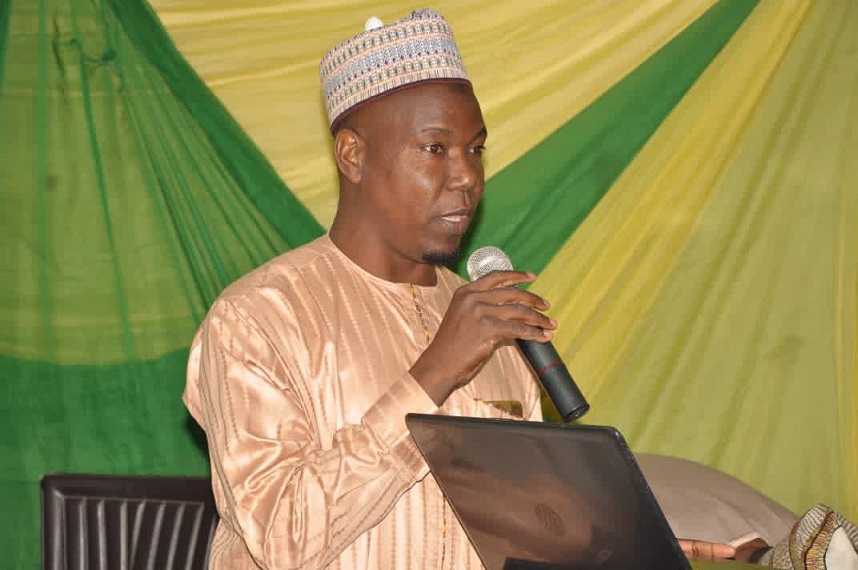
Soon after taking oath of office, swiftly administered by the reelected Legal Adviser, the reelected Chairman, Dr. Bashir Abu Sabe delivered a brief acceptance speech in which he thanked call members for their votes of confidence and giving him new mandate. He also appealed to all new Executives to put all hands on deck for them to reinvigorate the association. He concluded by calling on all members and other stakeholders to support him to provide the desired leadership the association needs to attain greater hight.

The election coming on the second day of the Two Day Conference and the first Arewa Literary Awards the NNWS organized. Thereafter what followed immediately was the illuminating papers presentation by carefully selected literary scholars and some writers from different regions of the North with papers presented in Fulfulde, Hausa, Nupe and Tiv indigenous languages.Prior to that, the Keynote Address was presented by Professor Saleh Abdu, former DVC, Federal University, Kashere after the conference was declared officially openned by His Excellency, Right Honourable Aminu Bello Masari who was ably represented by Honorable Abdulkarim Sirika, the Commissioner of Information, Culture and Home Affairs.

The unveiling of “Tulu: A Multilingual Anthology of Northern Nigerian New Writings” was the hallmark of events held on the opening day of the Two Day Conference on Northern Nigerian Indigenous Literatures and Languages themed: ‘ Indigenous Literatures and Languages as Vehicle for Taming Insecurity in Northern Nigeria”.

A powerful delegation of NNWS led by Professor Idris Amali were warming received by His Excellency, the Right Honourable Aminu Bello Masari, the Governor of Katsina State at his residence.

On Day Two, participants toured some fascinating historic sites in Katsina and the Daura Emir’s Palace.

Fund Raising: Kebbi govt donates N100m to Hisbah

By Uzair Adam Imam

Kebbi State Government has donated N100 million to the state Hisbah Committee to strengthen its activities of promoting moral values and tackling social ills.

The donation was made known by the state governor, Atiku Bagudu, at a fund raising event to mark twenty years anniversary of the committee on Sunday.

The Daily Reality reporters gathered that the committee, whose doggedness was commended by all, was hoping to raise N120 million for its service.

The Minister of Justice and Attorney-General of the Federation, Abubakar Malami (SAN) acknowledged the performance of the committee.

The minister made a donation of N5 million to the Hisbah committee while the state APC gubernatorial candidate, Dr Nasir Idris, donated N500,000.

Many people who have commended Kebbi State Government believed that this gesture is worth emulating to strengthen the activity of the Hisbah in other states.

What is wrong with Nigeria? What is wrong with Africa?

By Nura Jibo

There is no point wasting time on Nigerian leaders and their style of leadership.

Since its independence, Nigeria has been embroiled in a series of leadership experimentation. And the reality of its situation is that it cannot develop! I argued this position nineteen (19) years ago in a full-page opinion column in Daily Trust stable of 19 November 2003, page 6. I highlighted the dual mandate of Lord Lugard extensively.

Nigeria falls squarely under a plural society with several groups of population sharply divided along religious, ethnic and cultural formations. The sharp divide between the North and South qualifies the country as a plural community with lots of ethnic, tribal, religious and cultural conflicts.

Unlike the pluralistic United States, which was or/and is able to embrace a cultural semblance, Nigerian people are yet to even start appreciating the essence of togetherness. Its people’s behaviour (s) is not significantly different from dual societies such as Belgium and Rwanda, for example. Under these dual societies, each group accounts for about eighty-five per cent ( 85%) of cultural independence.

Now contrast my assertion with other countries of the world that have this duality in operation. Belgium, for example, is a classical example with its significant population from France and another group of Flemish identities. But today, the GDP value of Belgium accounts for more than 0.45% of the world economy.

Sweden, on the other hand, constitutes more of a singular society with ethnic swedes population of up to 80.3%. The rest are Syrians 1.9%, Iraqis 1.4%, Finnish 1.4% and others 15%.

Now contrast this with Senegal, which has a near-perfect singular society with a predominantly Muslim population that accounts for 94% that two Christian Presidents ruled for two decades. And yet the Senegales lived peacefully under those Christian Presidents.

Nonetheless, Sweden, because of its large singular population with the same cultural, tribal and ethnic semblance, has been enjoying peace for over 500 years!

Why Senegal did not enjoy this kind of Swedish peace is a subject for another day.

Now coming back to Nigeria as a plural society, it cannot develop like the United States because of its multifaceted traditional beliefs and cultural barriers brought about by the colonial demarcations and global mapping.

One wonders why the colonialists drew their countries’ maps so perfectly that it favours them from all angles.

Indeed, Gérardus Mercator did not favour Africa and all African nations like Nigeria when he came up with his conformal cylindrical map projection that he and his groups originally created to display accurate compass bearings for sea travel. In the end, they added additional features to this projection in form of local shapes by defining them as “accurate” and “correct”. The irony is they demarcated Europe so perfectly at a finite scale by drawing Nigeria and all African countries at an infinitesimal scale in 1569.

That is why Nigerians, even though are pluralistic under Mercator’s cylindrical mapping, the diverse population do not share common identities and cultural semblance like the Swedes.

People like me that consider Geography as the mother of history will continue to question the division or/and the dichotomous drawing of the African continent, which did not in any way and spot favours its people to grow and develop.

Therefore, it is not out of place or context to say or/and conclude that Nigeria and the African continent cannot develop as it is because the African States can’t take advantage of their multiethnic, multicultural and multireligious Mercator “gifts”.

Instead, they will continue revolving leadership that is corrupt and very dangerous for national and international development.

And, of course, there is the need for me to explore the ambivalent nature and relationship(s) between what is wrong with Nigerian and African leaders, their leadership styles and the African condition by tracing these to the fundamentals.

In the end, we may conclude that it is better for Nigerians and Africans to move out of Nigeria and Africa and settle somewhere in Europe and the Americas because the conditions there are more favourable and Mercatoristic than living in the African continent that is deliberately mapped out not to grow and excel by the colonial masters. I will, in the end, take a tour to Rwanda and Senegal to sit with the former African Union president, His Excellency Paul Kagame and its current Chairperson, His Excellency President Macky Sall of Senegal.

But before I do that, I hope to write formal open letters to President Kagame and President Sall on the way, I think the African continent and its people must follow to call or agitate for a united African Security Council. This will be distinct from the United Nations Security Council. It is when we have this, in my view, that we can call for an emergency meeting with European Union and redraw the map of Africa in an African style. Only then can we start championing the cause of Africanity, and its revolutionary proposal, and the triumph of facts for its underdevelopment will begin to emerge through the ages.

But as it is, the message to all Africans, including Nigerians, is: Never care to suffer about elections or having a better Nigeria or Africa. Because the duo are not meant to grow.

Indeed, listening to former and current Nigerian leaders and their African counterparts’ leadership “gospels” will never change anything. Rather it will inflict more pain and quandary on Nigerians and Africans, multivalent French, American, British and European marketers, negotiators and their marketability of African continents’ wars and resources.

Nura is a Research Analyst for the Director of Whitney Plantation in Louisiana, United States.

Bandits keep abducted DPO in chain despite ₦2m ransom

By Uzair Adam Imam

The Divisional Police Officer (DPO) abducted in Birnin Gwari, Kaduna, over 90 days ago has said that all the rain of this year has been falling on him.

The officer said he was ill and had a blood clot as the bandits kept him in chain long since his abduction in June.

One of the family members, Musa Muhammad Gyadi-Gyadi, made this disclosure to journalists saying they usually hear how the gunmen torture the HOD every time they called.

The Daily Really reported that CSP Mohammed Gyadi-Gyadi was abducted while driving to report for duty at the Police Division in Birnin Gwari town, the headquarters of Birnin Gwari Local Government Area.

He said: “We are talking to him on the bandit’s phone. The officer told me that all the rain this year is falling on him, and he is sick and has a blood clot.

“He begged us to save his life. He said they were chained. He was just begging us to save them, because he is currently defecating blood, stooling, and has pain in his leg.

“N2 million was given to someone to take to the bandits, but they collected the money and refused to release the ransom bearer,” he added.

According to him, the bandits keep demanding more money for airtime, as well as a motorcycle.

Arewa digital literacy centre, Engausa, commences classes next week

By Muhammadu Sabiu

A Northern Nigerian digital skills learning centre, Engausa Global Tech Hub, will admit students and commence its September classes next week Monday.

This is contained in a short announcement posted on its official Facebook page Sunday.

“New Engausa Global Tech Hub classes will begin on Monday 12th November 2022 Insha Allah,” the post reads.

The classes, largely delivered in the Hausa language, focus on teaching skills like video editing, blogging, graphics design, web design and Android dev., social media literacy, and digital marketing.

Others are installations (CCTV, solar panels, electric fencing, and Intercom) and smartphone repair skills.

The training costs twenty-five thousand naira (N25,000) and lasts for a period of five weeks.

In order to register, interested applicants are advised to click www.EngausaHub.com or call any their phone numbers.

Katsina police rescue politician, Katsina CoE Registrar from terrorists’ den

Hon. Ibrahim Tafashiya, the PDP candidate for Kankia Zone in the State House of Assembly for the elections in 2023, has been rescued by police in Katsina State.

According to reports, terrorists kidnapped the lawmaker on Saturday.

The police command’s spokesman, Gambo Isah, stated that the command acted as soon as it received the distress call and intervened quickly.

He added that the PDP candidate was saved by the Kankia Divisional Police Officer, SP Ilyasu Ibrahim, who led the cops under his authority to approach the thugs and engaged them in a bloody gun duel.

In the same vein, the Katsina Police Command reported that it also freed Salisu Gide, the Isa Kaita College of Education’s Registrar, who had been kidnapped along with his wife.

However, “Unfortunately, the police team was unable to rescue his wife from the assailants,” he lamented. But still, the command is still doing its best to secure the nation and free all those in captivity.

Politicians should stop using religion for political gain—Bishop Kukah

By Muhammadu Sabiu

Matthew Kukah, the Catholic Bishop of Sokoto Diocese, has cautioned politicians against exploiting politics in the nation through religion, noting that a severe result would follow such a move just as it had in Germany during Adolf Hitler’s rule.

On Tuesday in Abuja, as part of the celebrations for his 70th birthday, Kukah spoke at the launch of his new book, Broken Truth.

“If you look at history, there is a consequence for using religion to manipulate politics. We just need to look at Germany. The consequences are there to see in Hitler.

“The problem is that the Nigerian political elites lack the mental capacity to understand the consequences of the fire they are stoking because there is nothing to suggest that the average person who is living in the north, who is Fulani, who is a Muslim, or who is Hausa, can say that they are proud of the Nigerian political system, beyond a very tiny percentage.

“So, if you decide that you want to give privilege to a religion or an ethnic group, what will happen is that others automatically become outsiders,” the bishop was quoted as saying.

Additionally, he indicated that protests are still taking place in the nation because the populace is more knowledgeable than those in charge of its affairs.

Kukah added, “The agitation that persists in Nigeria is largely borne out of the fact that those who govern us are not aware of how much mental progress ordinary people have made.

“Those who are being governed are more intelligent and endowed. And it will not have been a bad thing if people who don’t know seek knowledge.”

The imperatives of Nigeria’s war against poverty (II)

By Lawi Auwal Yusuf

Researchers in social policy now prefer to use the concept of social exclusion to explain multiple deprivations that prevent individuals from joining important community activities. This goes beyond commodities that can be directly purchased. For example, it’s difficult for the socially excluded to secure a job, engage in recreational activities or participate in politics beyond mere voting.

It moves beyond consumption to examine how resources affect the participation of worse-off members in society. Poverty impinges on participation in social activities that are essential to everyday life. For instance, visiting a hospitalised brother or friend. Individuals are deprived if they cannot afford even the cheapest activities.

In the same vein, controlling inequality is indispensable if poverty and social exclusion are to be combated. Any nation with a broader gap between the rich and the poor is bound to be stubbornly enmeshed in poverty. However, some scholars accept that it is not easy to uproot inequality completely. They suggest making a poverty benchmark: income below the average. Those individuals with scanty resources less than this dividing line are considered poor with an intolerable living standard. In this case, there might be inequality devoid of poverty. This idea is primarily concerned with dissipating poverty altogether and integrating people rather than making them more equal.

It is crucial to distinguish between poverty and social exclusion. Poverty refers to material fewness or the lack of means to live a happy life. While social exclusion consists of a broader range of ways whereby members of a society are disadvantaged, consequently predisposing them to poverty. It involves a lack of participation in decision-making and civil, social and cultural life. These deprivations hinder individuals from participating fully in social life. However, both portray the existence of injustice in society.

Tackling social exclusion must involve measures to deal with institutional ethnic stratification, tribalism, sex discrimination, and gender inequality and encourage stronger community cohesion. Nonetheless, institutional ethnic stratification of minority groups is more likely to cause poverty and exclusion among disadvantaged groups than all the other factors. This is because ethnic harassment does produce fear and a sense of isolation, thereby augmenting the social exclusion produced by other inequalities.

Furthermore, women and children are more vulnerable to extreme poverty than men, while lone mothers are at higher risk. This speaks to the high rate of unemployment which is also higher among women than men. This is a reason that helps to explain the high rate of women deprivation that is becoming more noticeable. To cut women’s poverty, it’s necessary to combat the underlying causes like girls’ educational disadvantage, idleness of women, gender discrimination/inequality, lack of promotion for women on low wages and deficient educational achievement for the children of impoverished households. However, a significant increase in welfare services and full employment of women would make a difference.

Disability is another relevant factor prone to poverty and exclusion. Rude attitudes of people towards disabled individuals remain a major cause of exclusion, whereas the need now is for inclusion. Stigmatisation is not only a barrier to participation in the community but also a deliberate move to distance them from the existing opportunities. Moreover, high rates of deprivation among disabled people are a result of marginalisation in the labour market.

Unfortunately, impaired persons tend to have higher living expenses than normal persons for commodities of their special needs. The extra costs for disability include healthcare, physical aid or transport. As a result, they suffer from poverty alongside exclusion, while participation in society is restricted by sensory defects or limited mobility. This results in overall deficient health, which impedes their employability and the ability to work, unlike the non-disabled.

However, poverty and social exclusion are not inevitable consequences of disability. Instead, they are due to discrimination and failure to provide the resources and facilities needed to reduce its effect. Thus, authorities must make strict laws against the harassment of persons with an impairment. Furthermore, public and private organisations must also take reasonable steps to accommodate the needs of disabled persons until the physical environment becomes completely user-friendly for them.

The major causes of poverty in Nigeria include dead-end jobs, low pay, lack of promotion of low-income workers, poor education for the children of the poor and high taxes. The government must understand that excessive taxes such as Value Added Tax and duties tend to take up a larger share of the income of average Nigerians.

Furthermore, a lack of sound education and training for the children of ordinary Nigerians is the leading force behind poverty and exclusion. Skills are increasingly becoming more valuable in the labour market, and without them, there is a high risk of redundancy.

Joblessness is a strong predisposing factor because participation in the labour market greatly reduces the risk of poverty and exclusion, while idleness is closely correlated with them. Provision of full employment with prospects is the gateway to ensuring a better and prosperous life. It also provides the poor with social networks that give a sense of inclusion. It also helps in coping with these acute situations.

Similarly, a high number of children in a family is another factor that increases the risk of poverty compared with smaller households because of the extra costs involved.

Finally, for Nigeria to win its war against poverty, good governance must be the leading force in this crusade. Stealing, embezzlement and turning public office into an instrument of creating wealth for acquaintances and tribal brethren must utterly vanish. Contrarily, transparency, providence, judicious redistribution of resources and equal treatment of all irrespective of closeness or ethnic background must prevail. 

Lawi Auwal Yusuf wrote from Kano, Nigeria

Police, vigilante raid kidnappers’ den, arrest suspects in Jigawa

By Muhammad Aminu 

Police in Jigawa State have arrested two suspected kidnappers following a raid at the kidnappers’ hideout in Nisan Marke Settlement in Ringim Local Government Area.

The Police, in collaboration with a vigilante group, acting on earlier received intelligence information, carried out the raid successful.

Police spokesperson in Dutse, DSP Lawan Shiisu, said operatives from Ringim Area Command in conjunction with a local vigilante group led by Ringim Divisional Police Officer (DPO), SP Shehu Hamdullahi, acted on credible and actionable intelligence and conducted the operation at the identified suspected kidnapper’s hideout.

He noted that one 45-year-old Muhammad Sama’ila of Madari village in Warawa LGA of Kano State was reported to have been wounded all over his body while fleeing from the suspects.

He explained: “On receipt of the information, a team of Policemen swung into action, visited the scene of the crime and conveyed the victim to the hospital.

“While at the hospital, after regaining his consciousness, the victim revealed that he was Kidnapped on Tuesday 22nd, August 2022, at about 0130hrs from Madari Village in Warawa LGA of Kano State and taken to Nisan Marke Herdsmen.”

He added that when he attempted to escape from the abductors, he was attacked by one of the kidnappers and inflicted injuries on his body.

He said: “On the same date at about 0850hrs, a team of Policemen stormed the Area, where one of the kidnappers named Abdurrazaq Musa, 40 years of Gurgunna village, Babura LGA, Jigawa State was arrested, and the phone that belongs to the victim which was used for ransom negotiation was recovered in his possession.

“Furthermore, one Hassana Jimau, age 30 years of Nisan Marke village, was also arrested at about 1230hrs.

“During interrogation, both the suspects confessed to having abducted the victim with eight other gang members while the effort to trace their accomplices is on top gear.”

According to him, the suspects have been handed over to the team of the anti-kidnapping section of Kano State Police Command for discreet investigation and necessary action.

Over 75 Zamfara secondary schools shutdown over insecurity

By Uzair Adam Imam

Over 75 secondary schools in Zambara State were closed due to the menacing security challenges bedevilling the area over the years.

A permanent secretary in the Ministry of Education, Alhaji Kabiru Attahiru, made the disclosure Saturday in Gusau while reading a goodwill message during a two-day meeting.

It was gathered that the meeting was held to sensitise the National Policy on Gender in Education (NPGE) and was organised by the state’s Universal Basic Education Board in partnership with UNICEF.

He stated that the schools had been closed since September 2021 following attacks on two girls’ schools in the state.

He added that the state government is working very hard to ensure the reopening of the schools that were shut down due to threats by bandits.

Zamfara has become the epicentre of banditry and kidnapping, the development that widowed many and orphaned thousands of kids.