Northern Nigeria

Three people killed as gunmen attack Benue community

By Uzair Adam Imam

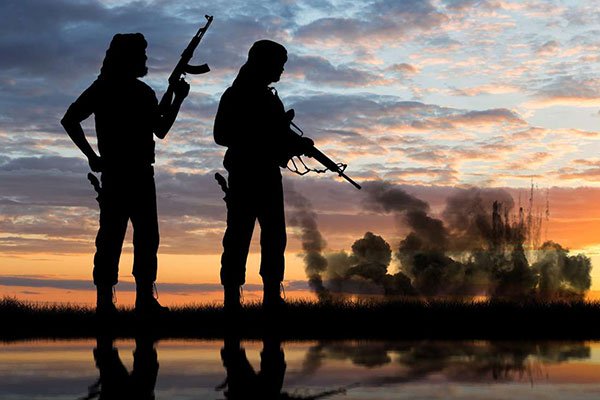
Three people were reportedly killed as unknown gunmen descended on Tse-Ikem, Ukemberagya/Tswarev Council Ward of Logo Local Government Area of Benue State.

It was gathered that the incident, which happened twice, took place on Friday and involved a young man while the other one that led to the death of two people took place on Sunday.

A community leader, who confirmed the development to the Daily Trust on the condition of anonymity, said the incident which occurred near Arufu rural town caused pandemonium among the residents.

“On Sunday October 23, 2022 at about 6 pm, Mr Aondona Saai and Mr Avalumun Ukerchia Adaa all of Tse-Igbur in Ukemberagya of Ukemberagya/Tswarev Council ward of Logo LGA were murdered at Tse Ikem on the road near Anawah settlement between Chembe and Anyiin road,” the community leader said.

Solome Tor, the Chairman of Logo LGA, Salome Tor, confirmed the development to journalists in the state.

He said, “On Sunday at about 5 pm, two men on a motorcycle with a lady were ambushed by those who butchered them.

“They (gunmen) left the woman and she ran into the bush, so that was how we were able to know what happened.

“There have been selected killings of people and the target is the men not women per se… we have a high patrol of security agencies. Even on Friday, they killed one young man and burnt his motorcycle.”

At the time of filing this report, the police in the state said they were yet to receive any report about the happening.

I was not behind your detention – Obi tells El-Rufa’i

By Uzair Adam Imam

Peter Obi, the Presidential Candidate of the Labour Party, denied the allegation made by the Kaduna State Governor, Nasir El-Rufa’i that he was detained during Anambra governorship election in 2013.

El-Rufa’i laid the claim on Monday at an event for presidential candidates organised by the Arewa Joint Committee, saying that Obi ordered security operatives to detain him some nine years ago.

Responding, the LP candidate stated that he was not behind the directive for El-Rufai’s detention in Anambra.

He said, “When I came in now, somebody told me that my brother, the governor of Kaduna state, said that he came to my state and I detained him. Let me tell you, it is good when these things happen, you clarify them.

“Number one, in my eight years of being governor, only in the first three months did I have a commissioner that is not from the north — Commissioner of Police. And that’s because I met the person.

“At the time the governor said this, it was during election. The police commissioner that was there then was from Adamawa — CP Gwari from Adamawa. The AIG that supervised that election was CP Nasarawa from the north. The DIG that came for that election was from Kano.

“Tell me my power, that I was in APGA — government was PDP and APC. Tell me how APGA person will issue order for somebody to be detained. Even me was detained in my local government.

“However, the only offence I committed is that when they asked me, I said ‘that’s how they treat everybody; that I wouldn’t be in Kaduna on the day of election’. That was the only thing.

“I cannot do that. As governor of Anambra state, I had the best ADC in Nigeria — the best policeman. My ADC, Mohammed, is from Kano. He’s the best policeman that I have ever met. Who will I give the order? How will I tell who lives in my house every day; I’m close to his family; I get up and say ‘Mohammed, I want to deal with your people’, and he will stay there.

“Call my ADC today. I will give you his phone number. He’s the best policeman. He’s a CSP now. So, when people say Peter Obi is black. 2019, I was [vice-presidential candidate], I was a good man. Now that I want to be president, I’ve become a bad man. I did not do anything wrong. I want to change Nigeria.”

On Climate Change: We Need to save our environment

By Nusaiba Ibrahim Na’abba

Regretfully, the calamities unfolding these days are unceasingly proving that our climate is indeed shifting in ways we’ve at no time conceived. Whether climate change will remain a hoax or not is something that can only be proven over time. But, the world isn’t at peace knowing that we are living in desperate times, courtesy of weather conditions our environments haven’t experienced before, even worsening our disorderly states. The experiences of these calamities have massively multiplied and are painting a dusky time ahead.

Poverty levels are increasing as people are forced to flee their homes and farms in search of safety, not because of only insecurity but as a result of deadly climate-related catastrophes. Many of these climate problems are associated with human and natural causes. However, they are also primarily associated with how public development initiatives have, over time, been neglected, grossly squandered and unaccounted for. Now, we are all paying the price. Unlike health, economy and education issues, the environment barely segregates the poor and rich, illiterates and literate, among other unfounded claims used, to create divisions within developing societies like ours.

Climate change is mainly explained within the purview of science. However, not all scientific evidence sits well with religion and culture, core pillars held in high esteem in developing societies worldwide. This is quite understandable as scientific outcomes often contradict cultural and religious perceptions, hence the disagreement. However, communities are now mindful that everyday living is enveloped by gigantic piles of plastic wastes, massive refuse-clotted drainages, insufficient foods, low agricultural turnout, excessive heat and flooding.

On the premise of religion and culture, disagreeing with and disproving new concepts happens to everything alien. It had occurred to diseases like HIV/AIDs, Sickle Cell Anemia, Tuberculosis and, recently, Covid-19 before they were finally accepted as problems in places like Nigeria. Similar to older rejections, climate change has also faced backlash. There are underlying elements of political and economic contestations fueling quests for advanced economies in the world alongside cultural and religious underpinnings. However, that does not erase the authenticity of such events as the current realities are proving them.

The detrimental consequences of climate change have transcended boundaries and excessively destroyed societies. Calamities like flooding, which we spot from afar, are now occupying top spots on our disaster checklists, which is quite frightening. The recent downpour witnessed in Nigeria degenerated into floods that consumed lives and displaced many communities in some parts of Jigawa, Kano and Yobe among the 24 states listed by NEMA through its director of Relief and Humanitarian assistance, Alhassan Nuhu. And with existing IDP camps around the northern part of the country, more devastation has hit the nation.

Until it became a global discourse, the spontaneous activities happening in developing countries like Nigeria were never seen as causatives of climate change. However, the corrupt nature of our systems enables substandard building structures. It fuels illegal dumping of refuse, deforestation, desert encroachment, and various climate problems. Now, these challenges have united to unleash colossal damage to our environment.

Recurrent flooding forcing people out of their homes signals a huge alarm as Nigeria remains in economic chaos and a messy political scene. Unfortunately, no particular problem was attributed as the sole reason for the unusual persistent floods we face in Kano and other neighbouring states. And the reason is mainly that multiple mismanaged natural and human causes have piled up over the years.

With dynamics intrinsic to climate change, the communities in the Northern part of Nigeria, like Kano, Yobe, and Bauchi, among others, have been selected to be part of the Great Green Wall Initiative to combat these environmental changes. Essentially, the project focused on battling climate crises, including desertification, erosion, and other problems related to shifting climate conditions in the Sahel region of the World, including Nigeria.

Whatever the more robust economies are set to achieve, these times are not the best for the independence of thoughts and decisions. We have a collective responsibility to save our environment to save humanity at large. And it is only through collaborative and calculative efforts of communities and the government that the consequences of climate change can be averted to halt its rapid advance. Our duty as humans is to consistently avoid harming the environment and adopt sustainable ways of creating energy, practising agriculture, waste management and other viable solutions offered by experts.

Utilizing these available sustainable methods is highly strategic to align Nigeria with global best practices in the fight against climate change. But on the other hand, our governments at all levels must provide robust and all-inclusive policies that align with citizens’ goals to propel development and support sustainable-driven initiatives to achieve massive, unprecedented mutual successes for humanity and the environment.

Nusaiba Ibrahim Na’abba is a master’s student from the Department of Mass Communication, BUK. She is a freelance writer and researcher. She can be reached via nusaibaibrahim66@gmail.com.

Bayero University emerges best university in northern Nigeria 

By Uzair Adam Imam

Bayero University, Kano (BUK), has emerged as the first in the north on the Times Higher Education 2023 World University Rankings list. 

Topping the list in the north, BUK is the fourth in Nigeria, with the University of Ibadan emerging as the best in the country.  

The University of Lagos is the second, while Covenant University is the third in the ranking in Nigeria. 

BUK, being the first varsity in Kano, was established in 1975. It currently has over fifty thousand students.

The University of Oxford emerges as the best university in the world, followed by Havard University, the University of Cambridge Standford University. 

BUK students, alums, and some of the university’s lecturers took to their social media spaces to jubilate the success.

An open letter to the Chairman of Kumbotso local government

By Musa Idris Panshekara

Dear Sir,

I am Musa Idris, an ex-student of Government Secondary School (GSS) Panshekara.

Mr Chairman, news has been spreading like wildfire all over the town that you are planning to sell some parts of GSS Panshekara or build staff quarters on the land.

Mr Chairman, this news became a nightmare not only to the ex-students or the students but to the entire people of Panshekara.

Mr Chairman, I want to let you know that the school bear its name “GSS Panshekara” because it is located there, under Kumbotso local government. The people benefitting from it are not limited to the people of Panshekara or Kumbotso local government. Still, the school accommodates some students from some parts of Madobi and Gwale LGAs.

Mr Chairman, with your plan of selling or building staff quarters in the land, do you know the school has two sections, one in the morning and the other in the evening, senior and junior classes, respectively? This is happening not for style but because of the insufficient classes to accommodate all the students contemporaneously.

Moreover, the school does not have a friendly and conducive learning atmosphere, despite the overpopulation of students per class. As old as the school is, it has no more than four classes with sufficient seats for the students, not to mention the worn-out ceilings and floors which even you, you can not rear your animals inside one of it. The problems are not limited to that – some classes were previously used but are no longer in use now due to the lack of funds for upkeeping them. Nonetheless, about eight incompleted classes have been without cemented floors for over a decade.

Mr Chairman, there are countless problems the school has: liable scientific laboratory, biological garden, etcetera.

Therefore, no one asks you (if so) to rehabilitate the school from your pocket but the local government treasury. If there is no sufficient amount in the local government treasury, you can refer it to the state government. If the state cannot grant, nobody forces you to intervene in rehabilitation.

Mr Chairman, selling this land for the rehabilitation of the school is inept and inappropriate; moreover, it is a lack of priority if you think of building staff quarters on the land. There are previous chairmen before you who left without glancing at the school. So you are not the first and will not be the last. If you could/would not give your contribution, you can leave the school as it is.

In conclusion, Mr Chairman, do not be deceived by all these people parading behind you like a queen bee. They are parasites who would only suck your blood and throw you away. They will not be with you when you leave your position or with you when you go to your grave.

Mr Chairman, I urge you not to consider yourself or people like you. Instead, please consider the vulnerable children of poor masses coming in the 20, 30, 40 years, whose parents can not afford to take their children to private schools.

Mr Chairman, remember that Boko Haram use weapons to kill students, and teachers and destroy schools brutally. So please, you should not use your office to destroy our mother school in the name of reviving the school.

Yours,

Musa Idris Panshekara

Parenting: A call for a re-examination

By Mallam Musbahu Magayaki

In the past, when a child reached the first stage of school enrolment that was provisionally five to six years old, wrong perceptions were instilled in his mind that he could be a breadwinner for his family when obtaining educational qualifications. Instead of, at the same time, being fully furnished with the positive impact of skill acquisition. So that if he, unfortunately, doesn’t get a white-collar job after graduation from school, he may situationally turn to the other side to become self-reliant and driven by self-buoyancy.

Nowadays, parents’ failure to engage their children in varied forms of skill acquisition training is seemingly revealing and mulling over the alarming rate of crimes being perpetrated in the country, which could be attributed to unemployment as the majority of the countrymen didn’t learn any skills or hold reliable small-scale businesses rather than depending on educational qualifications which do not guarantee one’s life success.

This mistaken belief has to be timely and utterly changed by exposing their children to various productive and creative skills that can help them meet their needs after learning the skills professionally. However, relying heavily on the government, specifically the Nigerian government, jobs as a source of income is a huge mistake that yields nothing but disappointment!

Let us learn from developed countries such as China, South Korea, and Malaysian citizens who have become productive due to engaging their youth in various aspects of skill training schemes with the support of their serious governments. And they successfully channelled them further to where they are now in terms of development.

In a nutshell, I urge Nigerian governments at all levels to replicate China’s Green Business Option (GBO) at both secondary and tertiary levels, which can feasibly pave the way for their products to acquire skills to develop themselves by becoming self-reliant even if they fail to be employed by the government and other related agencies.

Mallam Musbahu Magayaki writes from Sabon Fegi, Azare, via musbahumuhammad258@gmail.com.

Noma, a deadly but neglected infection 

By Lawal Dahiru Mamman 

Noma, otherwise known as necrotising ulcerative stomatitis, gangrenous stomatitis, or cancrum oris, is a bacterial infectious but non-contagious infection; resulting from poor oral hygiene, lack of sanitation and malnutrition, affecting both soft and hard tissues of the mouth and face, rapidly progressive and more often than not fatal.

The most common sign and symptom is the development of an ulcer in the mucous membrane of the mouth before spreading to other parts of the face. If detected early, the condition can be arrested with antibiotics, proper nutrition and oral hygiene, while late diagnosis does not restore disfigured or damaged tissues even if treated.

Affecting children between 2 to 6 years of age, the disease is prevalent in impoverished communities in Asia and Africa. However, infection was also found decades ago in Europe and South America. This infection has since vanished with improved livelihood and healthcare.

Preventable but deadly, all over the world, Noma has been given the cold shoulder (neglected) over the years. The absence of current epidemiological data has made the data of the World Health Organisation (WHO) from 1998 the most frequently cited estimation of the disease, with a global estimate of 140,000 new cases recorded annually, with a majority in Sub-Saharan Africa and a mortality rate of 90% if not treated within two weeks.

The infection has not spared the children in Nigeria, falling under the countries in Sub-Saharan Africa, killing numbers and leaving survivors disfigured, coupled with the reality of leaving the rest of their lives under stigmatisation.

This informed the decision of the Federal Ministry of Health to call on the WHO at the 75th World Health Assembly to include Noma on the list of Neglected Tropical Diseases (NTDs) where it belongs.

The call was aimed at rallying global support to eliminate and start preventive and curative measures against the preventable but deadly disease.

Established in the year 1999, the Noma Children’s Hospital, Sokoto, up until May 2022, when Noma Aid Nigeria Initiative (NANI) began construction of a new 100-bed National Noma Treatment Centre within the National Hospital, Abuja, has been the only specialist hospital shouldering the burden of the debilitating disease in the country.

The Chief Medical Director of the hospital in Sokoto said, “what is lamentable is that the disease is curable and even preventable, but lack of awareness has made a good number of patients die at home without visiting the hospital, exacerbating knowledge gap.”

To create awareness on predisposing factors like malnutrition, vitamin (A and B) deficiency, contaminated drinking water, immunodeficiency and living in proximity to livestock, November 20th have been set aside as Annual Noma Day.

Before resting my case, let me advocate that the awareness campaign held annually on NOMA DAY be taken to people in rural areas. These people are most vulnerable and unaware. Therefore, it will be better than having the symposia in town or city halls where the inhabitants are most likely informed. Moreover, more specialists should be trained on the infection to establish more specialist hospitals in at least each geopolitical zones of the country to unburden that in Sokoto and the upcoming one in the Federal Capital Territory.

Furthermore, people should be encouraged to embrace oral hygiene and proper nutrition like a religious ritual. In suspected cases, patients should be taken to the hospital for appropriate treatment to prevent disfigurement. Routine vaccination for children ought to be taken as a priority of every parent, and individuals with any information on Noma are encouraged to carry out a personal campaign in their locality amongst family and friends because the little things we do can make a difference.

Lastly, I urge all to avoid stigmatisation of survivors because they were but victims of circumstance.

Lawal Dahiru Mamman, a corp member, writes from Abuja and can be reached via dahirulawal90@gmail.com.

Nigeria of my dreams

By Abdulhalim Ishaq Ringim

The giant of Africa and emerging global giant in all ramifications; the story of Nigeria’s journey to greatness has become a subject for intellectual and academic delineation, for it eludes the projections of even the most reputable global think tanks.

Nigeria solidified its position as the largest economy in Africa and became the fastest growing economy in the world. The nation achieved such a feat by restructuring its economy. Successive governments have over the years focused on structural economic transformation for long term economic growth with commensurate development. The economy became diversified not only in terms of output, but also in terms of productivity and revenue generation.

Today, Nigeria no longer depends on oil revenues courtesy of our booming value-added manufacturing-led industrialization and knowledge-based economy. This positive economic trend was further crystallized by the diversification and expansion of the tax net through an efficient and leakage-free tax regime. The expansion of our export basket with processed agricultural commodities and mineral resources produced by our manufacturing sector have ensured steady inflow of foreign exchange and that has stabilized our currency’s exchange rate. We are now a global power in trade.

We are witnessing massive capital influx in form of Foreign Direct Investments(FDIs) due to our favorable business environment, abundance of material resources and a skilled labor population. This has guaranteed an upward trend in our employment rate and a resultant free fall in our unemployment and poverty rates. The skills and technology transfer initiatives that accompanied the massive FDI influx has increased the employability of our working age population and our productivity.

Additionally, the huge tax receipts and social responsibility commitments from our large private sector formed a gargantuan financial resource base that funds our human capital development endeavors. Basic and Post-basic education is now free and compulsory. We have increased the penetration of healthcare institutions across the country and have driven down maternal and child mortality and morbidity rates. We have invested hugely on tertiary education, research and development and such have greatly contributed to our transition to a knowledge-based economy. We also have developed a robust social protection system that adequately caters for our vulnerable geriatric and pediatric population.

Gratifyingly, the number of out-of-school children we have is very insignificant today. Thanks to a proper diagnosis of the problem and the deployment of a robust solution. We understood that we had over 10 million out-of-children and we realized that the almajiri population in Northern Nigeria was the major source. So we restructured our education system in such a manner that it will be able to accommodate and admit a significant percentage of the out-of-children. We also deployed variable policy actions based on the individual peculiarities of Nigeria’s states and regions.

In the North, which contributed the highest number of out-of-school children, we revitalized more than 150 Tsangaya Model Schools and operationalized a standard curriculum for these schools which included modern education, Islamic education and technical/vocational education.

We then systematically engaged all stakeholders involved and secured their support to absorb all the Almajiri population into these schools in batches. The Almajiri teachers continued to offer lessons in Islamic studies while other teachers complemented their efforts with modern and entrepreneurial education.

We then banned the Almajiri system and imposed stringent penalties in case of violation. We trained all the absorbed Almajiri students in batches and the moment we were done with that, we converted all Tsangaya Schools to conventional primary schools. At that point, we had no Almajiri roaming on the streets. So these conventional schools became an addition to the pool of primary schools we have. And we now hardly have a child that is out of school.

In our bid to improve the productivity and employability of our working age population, we effected broad changes in the upper levels of the education sector in a manner that created extra routes to employment. We created a skill-based educational system that complemented the university education system. This new system assured the creation of what we call “new-collar jobs” or skill-based jobs. To achieve this, we constituted a broad apprenticeship program that trained and acquainted students with high demand industrial and technology skills. We then created a certification system for these students which was used to confirm their competencies by industries and organizations that require their services.

With this, many youths who were not able to pass through the university and could not get jobs in the previous system we operated were now suitable for the “new-collar” industry we created. This was how we reduced our unemployment rate and improved the productivity and employability of our working age population. A lot of industries of both local and international origins found Nigeria as a suitable investment destination because of our highly skilled, productive, employable and easily trainable working age population. Resultantly, our national productivity and output increased greatly. And millions of families were brought out of poverty because of the resultant increase in employment and income.

We witnessed a massive reorientation of the entire Nigerian population. The Nigerian people even with huge diversities in ethnicity and religion have been peacefully living together. This stems from the national reorientation exercise that prioritized the understanding of our differences and learning to tolerantly adjust and accommodate one another. The political terrain was sanitized in a way that disincentivized ethno-religious manipulation. We had series of constitutional amendments that reshaped the country towards true federalism where every federating unit is autonomous and productive.

The characteristic recurrent political crises that usually ensued from ethno-religious causations was put to an end by a political settlement arrangement backed by constitutional provisions that mandates the rotation of political powers among the 6 geopolitical zones of the country. This arrangement was conditional and was to be abolished after all geopolitical zones have had their share of political power. The underlying principle was that the frequency of political crises would be reduced. This resulted in smooth political transitions and Nigeria was no longer in a state of constant crisis management. Ultimately, this served as an enabler for the new political coalition that have ruled Nigeria over the years to be visionary and to focus on consolidating on successive efforts to achieve long-term structural transformation.

The rotational system has today been abolished having accomplished its ultimate objective and Nigeria’s political terrain is now completely meritocratic and significantly devoid of ethno-religious divisive undertones. Elections have also become very credible and peaceful. The structural and functional capacities of agencies of government responsible for enforcement of electoral laws and punishing election-related crimes were enhanced. The government also improved the country’s financial intelligence network for effective monitoring of financial flows during election seasons by responsible agencies and resultantly ensured enhanced compliance to financial regulations during election periods by political actors(individuals and parties). These among other measures improved Nigeria’s political climate and sanitized the country’s election processes.

Corruption which was once a major challenge we faced is now alien in this country. Few years back when Nigeria was still in a troubled state, we consistently ranked lower than average in most indexes that measure countries’ transparency, accountability and Integrity. However, the fact that most of the ranking organizations were mostly overseas made it easy for Nigerians and the government to fault the validity and accuracy of the data and methodologies employed.

Resultantly, home-grown transparency, accountability and integrity indexes were designed to assess the compliance of governmental institutions and organizations to national and global anti-corruption and good governance standards, regulations, guidelines and statutes. The indexes ranks these governmental organizations based on their respective compliance levels.

The ranking system exposed a lot of cases of lack of compliance to national and global commitments to anti-corruption and best governance practices. Some of the local statutes that were not being complied to included Freedom of Information Act, 2011; Executive Order No. 001, 2017; Fiscal Responsibility Act, 2007; Federal Character Principle; Framework and Guidelines for the Use of Social Media Platforms in Public Institutions, 2019; and Discrimination Against Persons with Disabilities (Prohibition) Act, 2018.

United Nations Convention Against Corruption (UNCAC), 2004; Nigeria’s Open Government Partnership (OGP) Action Plan II; Sustainable Development Goal (SDG) 10 and 16; African Union Convention on Preventing and Combating Corruption, 2006; Convention on the Elimination of All Forms of Discrimination Against Women; and Convention on the Rights of Persons with Disabilities and many others were on the other hand part of the international commitments that a lot of the government institutions contravened even while Nigeria was a signatory to them all.

Based on the discouraging results obtained from the assessment and ranking exercise, Nigeria embarked on a massive public service and institutional reform exercise. Government organizations were restructured and the capacity of public and civil servants was improved through a robust capacity building exercise. Those among them who could not withstand the rigor of the retraining exercise were retrenched in accordance with labour laws and were replaced by young, capable hands.

Accessibility and Functionality of Institutional Websites; Fiscal Transparency and Accountability; Transparency in Procurement; Citizens Engagement, Responsiveness and Effective Feedback Mechanisms; and Effective Human Resources Management were assured by the reformed public and civil service. The combination of these public service reforms and reforms in anti-corruption administration largely alienated the magnitude of corruption in Nigeria. Long-term stability in government, judicial independence and improved citizen consciousness contributed to the establishment and sustenance of this resilient anti-corruption regime.

The insecurity that characterized Nigeria was approached from a holistic perspective. With de-escalated ethno-religious tensions resulting from massive citizen reorientation and improved political settlement, marked improvement in all human development and economic indices and a rejuvenated armed forces; Nigeria applied a hybrid of kinetic and non-kinetic interventions to solve her insecurity problems.

We restructured our security architecture holistically, amended our constitution to legalize state and community policing and rebranded our Federal Ministry Of Interior to Federal Ministry Of Internal Security And Home Affairs. The rebranded Ministry housed new security bodies that were responsible for border and forestland security. We developed and employed efficient technology-based methodologies in the surveillance of our borders and other spaces of concern. We also leveraged spaces that were formerly ungoverned for real estate, recreation, tourism, agriculture, modern livestock management and other industrial endeavors.

Our media sector also restructured itself to conform with the vision of a new Nigeria. While we were still in troubling times, the media adopted a role that was defined by a balance between freedom of press, social responsibility, fact-seeking and healthy media-government relationship. As a guiding philosophy, the media assumed a role that discouraged the glorification of terrorism/Insurgency and encouraged the operationalization of selective censorship or measured reportage of terrorist activities in favor of counterterrorism efforts. This was of course adopted without losing cognizance of the imperative of protecting freedom of expression.

The media continued to consistently condemn acts of terrorism and adopted editorial policies that embodied patriotism while denying the terrorists the notoriety they so much desired. The media and government worked closely towards disincentivizing the lack of balance between patriotic and unpatriotic reportages by discouraging the receipt of funding specifically meant for reporting terrorist incidences from both local and international organizations. This process was driven by pure patriotism. Due to the influence of national reorientation, the love for our country was the only incentive that drove this media restructuring process.

Resultantly, the stability of our economy and security and our status as a global power in trade and commerce guaranteed us improved recognition in the international community. And as we continued to consolidate on our renewed patriotic consciousness, Nigeria defied all odds and rose to take her proper place in the comity of nations. We joined important global power associations including the BRICS(now BRINCS), G-20 and G-8. We also got nominated into the United Nations Security Council as a permanent member.

Deep sigh! How I wish the above exposition was our reality. Sadly, it is just a compilation of many of my dreams which I have overtime documented in a collection I call the “Nigeria of my Dreams”. But the fact that I was able to dream of a prosperous Nigeria(including the details of the road to prosperity) means it could indeed become reality.

Abdulhaleem Ishaq Ringim writes, being an entry submitted for Sana’a da Ilimi Foundation’s Independence Anniversary Essay Competition.

Gas explosion burns family displaced by flood in Kogi

By Uzair Adam Imam

A cylinder explosion has burned a family of four who were earlier displaced by the River Niger flood.

The victims have been hospitalized at the federal Medical Center, Lokoja, immediately after the traumatic incident.

The incident happened on Wednesday, September 28 at the victims’ new abode at Adankolo, a suburb of Lokoja where flood victims relocated to.

The Daily Reality gathered that the victims are Halimat Sadiya, Musa Aminat, Muhammad Musa and Abdussalam Hadizat.

It was reported that the victims were trying to fix a gas cylinder to cook when it suddenly exploded.

One of the victims’ relations, Godwin Wanbebe, told journalists that, “Shortly, after settling down in their new temporary abode, the victims decided to prepare something to eat. So, they brought out their gas cylinder and lit it. The cylinder exploded immediately.

“The explosion of the gas cylinder was attributed to the hurried manner in which they packed their belongings to avoid being taken over by water. Probably the cylinder was leaking and led to the explosion.”

Wanbebe, who urged members of public to come to their aid, said the family had spent all it had on the victims treatment.