Northern Nigeria

Celebrating Babayo Mustapha Charity Foundation

By Mallam Musbahu Magayaki

Humanity is the only language individuals of proven hospitality and character best understand; people with big hearts are the light of society. 

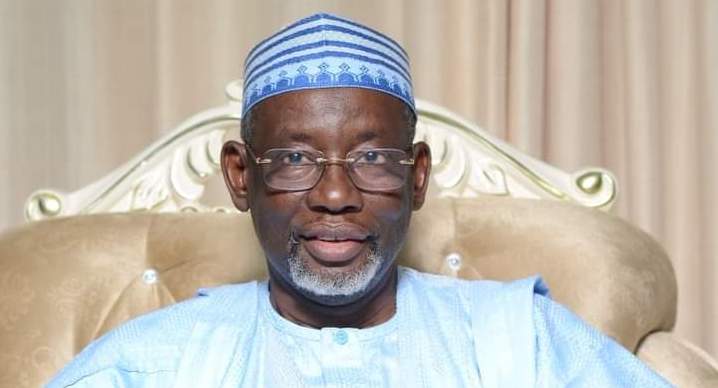
The star of our community has done it again, shining and brightening people’s lives. On March 25th, 2023, the Babayo Mustapha Charity Foundation, under the chairmanship of Bello Mustapha and Kogunan Katagum, distributed over 400 bags of rice, maize flour, and sugar to the economically disadvantaged individuals as Ramadan support for them to break their fast. 

This foundation has been positively impacting the lives of the less privileged for quite some time now, ranging from financial assistance to the downtrodden to academic support to undergraduate students in different higher institutions of learning.

Also, part of his community services is furnishing mosques with mini solar inverters, a gesture that the people of our community immensely appreciate. 

Koguna is the true replica of the late Mustapha Babayo (may he continue to rest in peace) in assisting the people and wearing smiles on commoners’ faces. 

Many, including those outside the Azare community, celebrate the Kogunan of Katagum, a man of the people, the son of the soil, and the most celebrated pillar of our community.

Mallam Musbahu Magayaki writes from Sabon Fegi, Azare, Bauchi State.

Embracing 4th Industrial Revolution for socioeconomic growth in Nigeria

By Abba Ado

Investing in technology and the sciences will undoubtedly play a significant role in enhancing our socioeconomic development. The World Economic Forum reports that innovation is critical to the future well-being of society and the driving force of economic growth.

In the past, people used their energy, physique, and animals in different industries, such as agriculture, transportation, and communication, to attain economic growth. The emanation of the first industrial revolution (industry 1.0) came with a paradigm shift in various industries when people began to use steam engines instead of their bodies or animals. The second industrial revolution (industry 2.0) created a profound development with the discovery of electricity, unprecedentedly enhancing economic stability and growth.

Another remarkable achievement is the emergence of the Third Industrial Revolution 3.0; at this stage, digital computers were developed, which improved our communication sector and enabled people to store and share data. The Fourth Industrial Revolution (4.0) is an emerging epoch of industrialisation that will undoubtedly revolutionise every sector. Because industry 4.0 is a knowledge-based economy that requires manpower, creativity, and innovation, embracing industry 4.0 will significantly increase our economic development.

Despite some portable advancements in current technology, we desperately need to pertain to science and technology to be competitive and achieve a palpable objective in the outlook of the Fourth Industrial Revolution. The 4.0 Industry is an emerging technology that would revolutionise humanity in almost every aspect of our lives, including health care, agriculture, energy, and various industries. Moreover, the 4.0 industry uses the assortments of the physical, biological, and digital worlds to design and develop disruptive technologies to shape and alleviate numerous humanitarian crises. 

The fourth industrial revolution, otherwise called the “4.0 industry,” is a technological epoch encompassing artificial intelligence, automation, biotechnology, and the digital economy.

Artificial intelligence (AI) is a potential and multidisciplinary field that impacts various industries. According to Accenture’s estimation, clinical healthcare with AI applications will have a future increase of $150 billion in savings only in the healthcare sector by 2026. McKinsey reports that the global GDP of AI will be significantly boosted by 1.2% annually. Modern technology will emerge in the healthcare industry that can execute hospital services without human intervention. For example, timely automotive machines can accurately diagnose nefarious diseases like cancer and provide reliable treatment. Surgical robots are another AI approach that can effectively perform surgical tasks without medical doctors. 

Artificial intelligence in agriculture is another milestone development that will indisputably increase the rate of crop production. Innovative AI technology in agriculture can detect plant diseases, impoverished nutrients, and pests. In addition, automotive devices can be influential in quality harvesting. AI technology is a widespread approach applicable in numerous areas, such as renewable energy, climate change, and the financial sector. 

Biotechnology is another 4.0 industry with massive agriculture, biodiversity, and human diseases capabilities. Using a technique called “Clustered Regularly Interspaced Short Palindromic Repeats,” popularly known as “CRISPR Cas 9,” is a classical gene editing tool that paves the way for inserting or expelling genes of interest from an organism. This technological tool allows for rewriting plants’ “genetic composition” and disposing of unwanted genes from plants to improve plant growth. It produces genetically modified crops, thus addressing food security and production challenges. Also, CRISPR Cas 9 will probe into the human genome to decipher the onset of diseases and discover new treatments for different types of illness. Animal breeding is another integral part of biotechnology, with the aid of increasing biodiversity for economic growth. 

The digital economy will not only provide profits and economic growth, but it will also curtail the unemployment rate in Nigeria. Engaging the youth to leverage the digital economy will provide independent jobs to the citizens, and the gorgeous aspects of the digital economy are manageable, so an individual can start with zero capital and build a high-dividend startup. 

According to the International Business Machines (IBM) definition, “technology” is a field where human infusion is substantially reduced. Therefore, automation is an important part of economic growth and development. Automation machines can effectively perform a duty that humans can do; the era of automation will displace labour work in various industries. Self-driving cars are an example of automation that would help manage and prevent fatal car accidents. It can also be a substitute for vehicles or engines that require gasoline or diesel to tackle carbon dioxide emissions in the future. Automation will also play a role in business, climate change, and the energy industries. 

We must embrace “science and technology” as a significant economic growth and development source. Several studies have shown that R&D, incorporated into science and technology, is the primary driver of socioeconomic development. But, according to an essay written by Adamu Tilde titled “CBN’s Inconsistent Policies,” is this true? A quick response to Dr Sheriff Almuhajir. In this essay, he points out that “knowledge” is the ultimate goal for success in modern economic development.

Adamu adds, “There have to be deliberate, continuous efforts in producing and training skilled manpower with the required expertise to navigate the thorny terrain of the modern economy.” This would take decades.   But a journey of thousands of miles starts with a step. Let’s start with primary and secondary education. Until then, no amount of crying wolf about exclusion, unfair treatment, and harsh requirements would solve the sorry state of our economic development because the modern economy is not a respecter of sentiment. “You have to compete.” And the tool for the competition is knowledge.

Eventually, with the infatuation with the oil-based economy, the Nigerian government will neglect various other ways of economic growth. Therefore, the Nigerian government needs a paradigm shift in its economic policies. Capacity building in diverse sectors, such as artificial intelligence, agriculture, and the digital economy, can solve Nigeria’s economic problems and, at the same time, provide jobs for the youth. 

Accentuating science and technology programmes in our media and newspapers will entice the government to impose strategies that will hasten economic development and encourage the youth to engage in a knowledge-based economy. For the past centuries, when the world heavily relied on a material-based economy, war was the only way to gain wealth and economic development, and many countries invaded their neighbours to seize their resources. But we are in the 21st century, where knowledge cannot be halted. In his book Homo Deus: A Brief History of Tomorrow, Yuval Noah Harari asserts that “the current source of wealth is knowledge.” Bargaining on mineral resources such as gold, oil, and silver is no longer the best approach for economic growth; knowledge, which requires skills, creativity, and innovation, is one of the major sources of economic development. Therefore, our domestic media companies and newspapers should have a special programme or weekly column covering the importance of technology, research, and growth in economic diversification. 

Abba Ado wrote via abbaadomusa0@gmail.com.

This is the time for women to be financially independent

By Aisha Mahmud Yusuf

A few days ago, Dr Muhsin Ibrahim shared a story about a divorcee whose ex-husband refused to pay her medical bills. This is a familiar story as it happens to many people in our society.

I know of a divorced woman with three kids who has nowhere to go. Another woman was in an abusive marriage. When asked why she wouldn’t leave her husband, she said that he took care of her financial needs.

There’s also this woman whose husband was a serial womaniser and a drunkard, yet she couldn’t leave him because she has no means to sustain herself as her parents are dead.

In this society, a woman will be married off with no skill or education. Then get divorced and be left to start from scratch, thanks to the stigma attached to divorcees. No woman should be in an abusive marriage or miserable because she lacks financial independence.

Parents should let their girls finish at least secondary school and ensure they learn a skill. Those who finished higher institutions should be allowed to work or engage in business. The time to stay idle for women has passed. We should not let this poverty and misery cycle continue.

A woman should be financially independent regardless of her marital status. In case of divorce or the husband’s death, she should be able to care for herself and her children at least.

There’s no denying that our marriage institution needs reform, and the time to do so is now. Alhamdulillah, our scholars are now discussing it, but we need action. There is a need for sensitisation across rural as well as urban communities.

Girl-child education should be supported. There are many opportunities for learning that women can learn in the comfort of their homes, and they should be encouraged to do so.

 Aisha Mahmud Yusuf wrote via aishatyusuf63@gmail.com.

“All this hardship I am going through is for you to be educated”: My Mother’s words that always sound in my ears

By Hamza Basiru Tsoho

My name is Hamza. My father had two wives.  The family comprised ten children from two different mothers. I was the eldest and the sixth in my mother’s room and the family, respectively. We were three in my mother’s room. 

One fateful day, our father, Alhaji Basiru, and his friends travelled to Katsina. Unfortunately, they had a ghostly road accident returning to Funtua, our hometown. Only one person survived. I was not enrolled in a public primary school at that time, not to talk of my younger brothers. Our mother became our father and mother; for she had taken all the responsibilities of the father. 

Glory be to the Sustainer.  Since before our father gave up the ghost, she had embraced some petty trade at home like selling ruwan leda (water, then, usually,  packed in a medium-sized leather after being cooled by a Randa ‘earthy pot’), roasted groundnut and selling food later. Her local restaurant, which was home, had become renowned in the locality and the neighbour then, as there were fewer restauranteurs in the area. 

She used to sell a bag of rice in two or three days in the comfort of her home. Over time,  competition increased. Sequel to that, she boiled to cook only a few measures of rice. I hawked the food on a silver tray when things started getting out of hand. The hawking was usually done after I returned from morning school and sold before late afternoon prayer (Asr), after which I had the opportunity to go to Islamiyya.

Furthermore, she ensured we had all we wanted so that we had the equal privilege to be educated like other children whose parents are alive. I can never forget when I told her what someone told me about what seemed to them like we were chasing education. He said one of his friends said, “If he (referring to me) must further his education, we will see who will sponsor him.” 

I felt sad even after narrating the story to our mother. She said, “You see, all these hardships that I endure are for you to be educated. I wish I had money to sponsor your education to university; I can spend any amount in my belongings for you to be educated”. She continued, “Although I do not have enough money to sponsor your education, I believe you will get someone to help you, and that is what I always pray for.” Whenever I remember that, I feel motivated. 

Fortunately, I sat for my SSCE and came out with flying colours. It was in the school of our neighbour and brother who sponsored a duo of us, my half-brother and I, in his school. May Allah (SWT) reward him and add to his wealth, amin. 

I then applied to Ahmadu Bello University (ABU) Zaria with a JAMB score of 252 for MBBS in 2020. After some years of waiting, due to Covid-19 and the lingering strike, I sat for post-UTME and scored relatively well. However, afterwards, I did not secure admission. That may be due to too much competition.

Still, I did not give up. I knew MBBS was, most of the time, not a one-off thing. So the following year, I sat for another one, prayed, and worked harder. This time around was Federal University Dutse (FUD) and still the MBBS. After all, I got it in that school in early January this year (2023). 

I owe my success to my dearest mother. As Prof. Abdalla  Uba wrote, her likes are the “REAL woman of substance.” In a few years, I hope to become a feather in her cap ( to be a professional medical doctor ), become an important person to society and save the lives of many victims.

Hamza Basiru Tsoho wrote from Funtua via hamzafta212@gmail.com.

How to survive without a housemaid

By Aisha Musa Auyo 

The current trends of housemaids poisoning their employers are so sickening and scary. It happened countless times, and one can’t escape seeing one or two videos of such heinous acts. From sexual and physical to mental abuse, housemaids and their masters always have these issues in their relationship.

Whenever I encounter such an incident, I wonder why we continue to employ maids or why others leave their homes and work with people they hate. I had maids, and I grew up with maids in our house. But things are different now. People do not fear God. Humanity is lost. From the employee to employers, we are all at fault. 

As much as we agree, the maids are vulnerable and more likely to become victims. Unfortunately, these maids have upped their games, and the family employed them are becoming the victims. I’m not here to tell who is right or wrong, but I know that maids had abused us, taken advantage of our kindness, stolen from us, and deceived us to the extent that we decided we no longer have maids in our home.

Is it easy? No. Is it doable? Yes. We can bring an end to this problem. This issue is almost none existence in developed countries. Regardless of how educated or wealthy you are, cleaning your home is something one takes pride in doing, except for celebrities and rich people who employ the services of cleaning agencies who can hardly be cheated on and are less likely to betray too.

Another advantage of doing your house chore is that it helps you burn calories. Moving your body here and there, doing this and that makes you burn calories, makes you more energetic and more alert. As a result, you gain most of the advantages that come with doing exercise. Researchers have proven that active women around the home are healthier and less likely to be attacked with a certain illness than women who sit and do nothing all day.

As a homemaker, I’ve devised ways to survive without a maid, and with the help of Allah, I’m doing fine, if not great. I don’t have the constant apprehension of trying not to harm another person or be hurt by that person. The peace that comes with this feeling is priceless. 

1. Wake up earlier than others, or simply reduce your sleep hours. You will be surprised what an extra hour will do to make your work faster and your home cleaner. This can be an hour before everyone wakes up or an hour after everyone else sleeps. This will give you undivided attention to do whatever needs to be done.

2. Engage other family members. From your kids to whomever you are living with, allocate an age-appropriate chore to everyone, and ensure they do it. Even if it’s just cleaning up after their mess. A five-year-old can wash their plate and spoon. Can pick up toys, and older than/six years old can change the bedding, bathe themselves, and clean up after using the loo.

3. Clean as you go. From always picking up dirt and cleaning drops with wipes or napkins to washing dishes as you cook and immediately after eating, you will manage to have a clean space almost all the time.

4. Reduce the number of plates for dishing up. All those fancy food flasks, jugs, spoons, forks, saucers, knives, and big trays are not a must. Use only what you need except when you have visitors. I mostly dish up from the pot straight to the plate (there are elegant plating styles to please the eyes) or a plate and a bowl. Fruits could be served or arranged in a big bowl for everyone to eat together. Drinks can be served directly in used water bottles or paper cups, so you can just throw them away after use. 

5. Hire a one-day help at intervals. The point here is to get someone to help you with things you find hard and time-consuming. For example, laundry is my number one weakness, so we employed someone to do this, as the person doesn’t have to go and stay with us to achieve this. You can engage them weekly or bi-weekly, so they can help you with bulk cleaning, like removing the cobwebs, cleaning the compound, brushing sofas and rugs, and doing other deep cleanings that will help keep the house sane throughout the weeks. If this is not an option for you, you can just take the clothes to laundry services, as you will need all the help you can get.

6. The toilets. Depending on the number of people using it, a bathroom should be washed every other day. In between, ensure that every mess is cleaned after usage.

7. Fridges and freezers; the fridge can be cleaned and decluttered once a week, and the freezer can be cleaned once a month, depending on how you shop and cook.

8. Buy machines that will make your work easier. From a washing machine, a strong blender that can blend Tiger nuts and beans, a vacuum, a dishwasher, and many others, depending on your pocket size, you need all the help you can get. This is where your husband comes in. He should know that you made a sacrifice for the safety and sanity of the family, and you need his financial support and understanding.

9. Husbands, we need your support here. You see, all those allowances that should have been used to pay a maid, we need it, in two or three folds. We are the glorified house helps now. We keep the home set and safe. A token will motivate us to do better.

Verbal support is a must. Commend her efforts for taking good care of the homeland and everyone in the family. It’s not easy. I know it’s her duty, but one or two good words won’t hurt, you know?

Still, the husband should try to overlook when she sometimes errs in caring for the house. She is only human, with two hands. And if you can sometimes help with one or two things when you are less busy, that will be a plus for you and her, if you know what I mean.

If you can afford it, make water and electricity 2/47-thing. This is a necessity, not a luxury. She needs this to make work easier for her. Almost all the tasks at home need either electricity, water, or both.

10. Look for temporary help when you are sick or pregnant. Find someone reliable from your family or friends to help you before you get back on your feet.

11. If you can afford it, carve out a playroom or a play area for your kids so that they limit their playing objects to that place. Your living room should always be clean; a toy here and there will make that mission impossible.

12. Lastly, start the day with prayers and a potent stimulant. A hot black tea or coffee will do the trick. Trust me; you need it. If you are an addict like me, ensure you never run out of it. Also, habitually do the zikrSubhanallah, Alhamdulillah, and Wallahu Akbar – while you go around your daily routines. Our prophet taught Nana Fatima this when she asked him to give her a slave to help her with domestic chores. He said this would be best for her, here and hereafter. Listen to radio, podcasts, Quranic recitations, music, or audiobook. This will energise, entertain, educate and make housework less burdensome and easy for you.

My fellow woman, this piece is not for the sick, pregnant, lazy, or full-time working mom (9-5). If you are lucky with your maid, hold on to her, don’t come and kill yourself with work.

But if you are healthy, up and doing, have a flexible job, or not working at all, this is for you; congratulation. You will be rewarded immensely for this. You will have peace of mind, thus not constantly worrying about what’s happening in your house. You will raise a family who will learn to manage a home without depending on others. You won’t raise another person’s child at the expense of yours. And trust me, it won’t last forever. Once the kids are all grown, you can relax and do minor chores.

Whenever I feel overwhelmed and think of getting a maid, this idea will often cross my mind, especially if I can afford it. I ask myself, how will I cope if I live in a Western country? This resets me.

Aisha Musa Auyo is a Doctorate researcher in Educational Psychology, a mother of three, a Home Maker, a caterer and a parenting/ relationship coach.

Behind every negative human tendency is an enabler

By Dr Raji Bello

Last Tuesday, I listened to a panel on AIT’s morning programme discussing the increasing weaponization of ethnic and religious identity in Nigeria, particularly during the current election cycle. The discussants were particularly alarmed by the developments surrounding the governorship election in Lagos state, which has witnessed threats, intimidation and violence against voters of a particular ethnic group. The politicisation of ethnic and religious identity in this election cycle is, of course, not limited to Lagos.

Religious identity was a major issue for the APC presidential ticket and some governorship tickets like that of Kaduna state. Religion was a major issue in the Taraba governorship contest, and the issue of indigene vs settler reared its head during the Kano governorship election. There is even a Facebook group which is committed to getting candidates with pure Hausa blood elected into the governorship posts in the Northwest states. Nigeria may be on a slippery slope towards eventual implosion. 

What I have noticed about the AIT discussion is the same thing that I have observed about other similar discussions – they are limited to expressions of sadness followed by appeals to Nigerians to change their behaviour. There is very little discussion on why Nigerians do what they do and if there are any enablers for those tendencies. In my personal reflections, I have tried to answer these questions.

Most negative human tendencies have things which enable them, and rooting out the enablers is an important part of the measures for suppressing these tendencies. Anyone who is familiar with Islamic theology, for example, knows that there is little tolerance for things which are deemed to be enablers of vices. The prohibition of the consumption of alcohol is an example; alcohol intoxication is regarded as an enabler for many vices, which has necessitated a full prohibition of it.

Likewise, the encounter, in isolation, of two eligible and unmarried members of the opposite sex is regarded as an enabler for sexual vices. In the secular world as well, drinking and driving are prohibited in many countries because it is an enabler of fatal road accidents. Relationships between academic instructors and students are prohibited or restricted in many American institutions because they could be enablers for abusive relationships and conflicts of interest.

If Nigerians have come to the conclusion that toxic identity politics is harmful to the corporate well-being of the country, they must find the enablers for such politics and uproot them. Issuing passionate appeals is bound to be ineffective because human beings do not always respond to reason or appeals to stop a negative behaviour, especially when there are things which incentivise such behaviour. In my view, there are two enablers for the weaponization of identity in Nigeria:

1. There is no punishment for it. There are either no laws against toxic identity politics and incitement against ethnic and religious groups in Nigeria or they are never enforced. The result is that offenders almost always get away with their actions. This lack of accountability is a powerful enabler for similar behaviour by the same individuals or others.

2. There is a reward for it under our federal system. Our current constitution provides for semi-autonomous federating units (states) which are loosely coterminous with ethnic and religious identities – for example, Imo State is Igbo and Christian, Katsina is Muslim and Hausa-Fulani, Niger is Nupe, Gbagyi and Hausa, Ogun is Yoruba etc. The federal system has also granted these federating units the power to elect their own leaders (governors and LGA chairmen), unlike in unitary states where these leaders are often appointed by the central government.

Since elections are competitive and every state is identified with certain ethnic and religious identities, the possession of these identities by any individual becomes an advantage towards winning elections. This is why Nigerians have learnt to hold on to these identities and even to flaunt them. Being a Tiv is a huge advantage in Benue state, just like being a Kanuri is in Borno state. It’s not hard to imagine that when electoral competition becomes very stiff, these identities will be weaponised. There is no way to stop Nigerians from engaging in toxic identity politics as long as these two enablers are in place.

Our country was founded on the basis that it has diverse and irreconcilable ethnic and religious communities. Our founding fathers wanted it that way, and they chose a federal system which they thought was best suited to manage our diversity (although most of the major federal states in the world are not so diverse internally). While countries like Ghana took off with the mantra of unity in diversity and did everything to build a united nation, our founding fathers did not even pretend that the country was united. Each of them had regional priorities higher than Nigeria’s unity.

We started with three federating units and have now grown to thirty-six plus the FCT, and the more we created states and LGAs, the more identity fault lines we created. The country is now balkanised into 37 identity enclaves (states), and 774 LGAs and each citizen is marooned inside their own enclave and is entitled to few formal privileges in others – even neighbouring ones.

In the First Republic, this divisive effect of federalism wasn’t up to what we have now because the federating units were much bigger, and they functioned as unitary states internally. The former Northern Region, for example, had thirteen or so provinces whose administrators were appointed rather than elected, and a northerner from one province could be posted to work in any of the other provinces. The provincial boundaries did not keep northerners away from each other, and as a result, the people of the region saw themselves as one because they were indeed one in practice. 

The Northern Region alone has now evolved into 19 federal states and hundreds of LGAs, each with a rigid boundary which separates it physically and functionally from other federating units. This has made intercommunal relations to be worse than they were in the old Northern Region. The late former SGF Alhaji Gidado Idris, who was from Zaria, was once a divisional officer in Benue, Adamawa and Sardauna Provinces, but his grandchildren cannot work for the Benue State Government in today’s Nigeria. They may even struggle to gain admission into state-owned schools in Benue State.

Mr Selcan Miner, a former secretary to the government of Benue-Plateau State, was once an administrative officer in Sokoto Province, and he still has fond memories of his stay there, particularly his close relationship with Sultan Abubakar III. But in the present day, the government of Sokoto State may not grant privileges to Mr Miner’s grandchildren because they are not “indigenes” of the state.

The late chief of the Mbula people in Adamawa state Joram Fwa, who was a US-trained educationist, was the pioneer principal of Ramat Technical College in Maiduguri under the then Northeastern State. He was entrusted with the assignment of establishing the college and was made its pioneer head. The college has since grown to become Ramat Polytechnic and belongs to the Borno State Government. I will not be surprised if, in the present day, the application of Mr Fwa’s grandchildren for entry into the polytechnic is turned down on the grounds that they are not from Borno state. I have used the examples of these three Northern elders to illustrate what we have done to ourselves over the years through our so-called federal system.

Not too long ago in the 1990s, the governor of Lagos state was a military officer named Buba Marwa, a native of Adamawa State. He was appointed under the military government’s unitary style, and he was well-received in the state because the people knew that that was the system in operation then. At a different time before that, a native of Lagos State, Bode George, was appointed the governor of Ondo State. From all indications, Marwa had performed well in Lagos in terms of infrastructure and crime fighting.

If we do a cost-benefit analysis of the process of appointing Marwa as governor and that of the re-election of Governor Sanwo-Olu in 2023, we would see that the former didn’t cost any significant amount of money and didn’t involve any fracture in relations between major ethnic communities in Lagos while the latter had cost the federal government a lot of money in election expenses and has led to flaring of inter-ethnic animosity, intimidation and violence. In the end, both governors are capable of doing a lot of good for Lagos, the difference in the nature of their appointment notwithstanding. This is why we need to ask ourselves if we really need to have elected governors and LGA chairmen as provided in our current federal constitution or we could simply have them appointed and monitored by the central government.

In the late 1960s and 70s, the governor of Kano State was Audu Bako, a police commissioner and native of present-day Kebbi State. He was appointed by the government of General Yakubu Gowon, and from all historical indications, Kano State has had it so good under him. His appointment didn’t cause any inter-communal upheaval in Kano, and there was no violence. Compare that to the re-election of Governor Abdullahi Umar Ganduje in 2019 or the election of Abba Kabir Yusuf in 2023, which were both marked by communal tension and violence. Why should we keep using this costly option of election and risk so much when Kano can have good appointed governors just like Audu Bako and Sani Bello? Only a small number of democracies around the world have elected sub-national chief executives as we have, and countries which don’t have them are not deemed to be less democratic than us.

Sometimes Nigerians view unitary systems negatively because they equate them with military governments, but there is nothing that stops us from having a unitary democracy like many countries in the world. The appointed governors and LGA chairmen under this system are going to be civilians, maybe even members of the ruling party at the centre, just like in the system in Ghana, whose 16 regions are all governed by appointed regional ministers who, at the same time, are elected members of the national parliament.

The other fear that Nigerians have about a unitary president becoming too powerful is also misplaced. Ghana’s presidents are not regarded as dictators, and opposition presidential candidates have even won elections there. In any case, parliament is always there as a check on the powers of the president. Unitary systems are cheap, can minimise toxic identity politics, guarantee harmony in the pursuit of developmental priorities and provide better coordination in fighting insecurity. It’s a better system to have than our current federal system, with its unaccountable and politically autonomous governors whose elections are now driving our ethnic and religious communities further apart and threatening the stability of our country.

Whoever brought this American-style federal constitution and gave it to our African tribal groups to implement has not served us well. It’s time we found the courage to abandon the farce. What Nigeria requires is a unitary democratic system with an element of rotational leadership at the centre to ensure its various groups of inclusion.

Dr Raji Bello wrote from Yola, Adamawa State.

Man refutes social media gossip about wife’s age

By Muhammad Abdurrahman

A photo and video clip of a man and his wife went viral in the past days on Nigerian social media. Several users, especially on Twitter, alleged that the wife was 11 years old while the man looked much older.

Others condemned the marriage, calling the man a paedophile and other unprintable words.

The man, identified as Aminu Danmaliki, debunked all these rumours. He those sharing them “blackmailers and doubting Thomas”.

Danmaliki, in a Facebook post, says:

“My recent marriage with Sakina has generated a lot of tension and unfounded allegations that I married an underage girl, some suggesting she is 11 years old and that she was forced to marry me. That is untrue.

“The wedding video went viral. We decided to keep mute, but [I] was advised to state the true facts. Here it is: My beloved wife is 21 years old. She made her own choice of me as her husband, and I loved her too.

“I hope the blackmailers and doubting Thomas will see the reality in this picture and leave us alone to enjoy our honeymoon.”

Alhaji Aminu Danmaliki and his bride, Sakina

Danmaliki, per his social media profile, hails from Bauchi. However, he now lives in Abuja. The Daily Reality has not been able to contact him for further information.

Planting trees: A quick response to desert encroachment

By Abdullahi Khairalla

Growing up in Maiduguri, a city highly prone to desertification, raises many concerns about my environment and the impending mishap.

Scientists have already concluded that tree planting and vegetation are the two most effective and quick measures to ending and halting the looming catastrophe (desert encroachment).

Tackling this ecosystemic malaise lies with the governments (state actors), private sector, individuals and communal efforts to arrest the menace.

On the part of the government, I think urgent action is required for state legislation compelling any person who fells a tree to plant two in its place and coming up with stringent disciplinary measures to punish a defaulter.

The “Tree Planting Approach” is of great significance to Nigeria, whose northern borders are directly on the path of their ecological holocaust.

The country has been losing more than a kilometre a year to this scourge for several decades, per Jibunoh’s finding.

Green vegetation seen ten, twenty or thirty years back has vanished. Rivers, Lakes and other water courses are being lost. The most tragic is the shrinking of lake Chad which now hosts less than half of its volume of water a few decades ago.

Of the $42 billion lost to desertification yearly, Africa accounts for two-thirds of the losses incurred annually, as per the statistics released by the UN.

Northern Nigeria should develop a regional approach towards preventing the region from the shackles of climatic disasters. The effects of this problem (desert encroachment) are not philosophical, but we literally feel its adverse impacts on our lives.

Most importantly, at the level of individuals like me, awareness creation is the cornerstone of our responsibility, while the private sector and Non-Governmental Organizations can help in no small measure, particularly in the areas of partnership and bridging gaps between the community and the state actors in the ongoing fight against the dreaded threat to mankind.

On a macro scale, the Africa Union should also strive to devise an African response to the time bomb. If Israel could do wonders and reduce the threat to its bare minimum, we can follow suit because wherever there is the will, there is always a way. Of course, all we need is the will across the board.

The working of Nigerian federalism

By Abubakar Muhammad Tukur

In Nigeria, true federalism means different things to different people. The newfound phrase could be better understood using a geo-political lens. Let us begin with the southwest, which the Yoruba dominates.

The agitation for true federalism started in the southwest immediately after the annulment of the 1993 presidential election, believed to have been won by a Yoruba man. The Yoruba elite argued that the election was annulled simply because their northern counterparts were unwilling to concede political power to the south. Hence, their vigorous campaign for a ‘power shift’ to the south. By power shift, they meant an end to the northern elites’ stranglehold on political power and, by extension, economic control.

However, with a Yoruba man, Olusegun Obasanjo, emerging as the president in 1999, the clamour for a power shift became moribund and was replaced with that of ‘true federalism’. By true federalism, the Yoruba elite means a federal system with a weak centre, a system in which the constituent units are independent of the centre, especially in the fiscal sphere.

The cry of marginalisation has been loud in the southeast, home to the Igbo ethnic group. The Igbo’s position regarding Nigeria’s federal system is that the system is characterised by lopsidedness, particularly in allocating national resources.

Another ground of Igbo agitation for true federalism is their perception of non-integration into mainstream politics since the end of the civil war in 1970, citing a lack of federal presence in the region. This sense of lack of belonging informs the views of some pro-self-determination groups like the Movement for the Actualisation of the Sovereign State of Biafra (MASSOB) and Indigenous People of Biafra (IPOB) that the Igbo people are no longer interested in being part of Nigeria and should be allowed to secede and form an independent state of Biafra.

It is, however, doubtful if the campaign for the resurgence of Biafra is popular among the elite of the southeast whose political and business interests cut across the country. By true federalism, therefore, the Igbos of the southeast mean a federal practice that accommodates every ethnic group in the multinational federation.

Similarly, a sense of political and economic marginalisation forms the basis upon which the minorities in the Niger Delta (or the south-south geo-political zone), where the bulk of Nigeria’s oil is located, persistently demand their own exclusive political space using the euphemism of ‘resource control’ and true federalism.

In the Nigerian context, the term resource control means the right of a federating unit to have absolute control over the mineral resources found within its jurisdiction and contribute to the central government to fund federal responsibilities.

The perceived injustice in resource distribution is the main driving force for the struggle for resource control. The oil-producing states have repeatedly argued that Nigeria’s fiscal federalism, which encourages lopsided distributive politics, has been unfair to them. For the people of the Niger Delta, therefore, resource control is a solution to marginalisation. Thus, for the people of this region, true federalism means a federal practice whereby the federating units are allowed to own and manage their resources as they desire.

Seemingly, the northern elite wants the status quo to remain based on the belief that the present system favours its interest in some quarters. These include the federal character principle, majority representation at the federal level and quota system.

We have been able to demonstrate in this article that central to the agitations for true federalism in Nigeria is the struggle for access to national resources. Oil rents and their distribution have shaped the operation of Nigeria’s federal system and have also contributed largely to the failure of federalism in Nigeria. Nigeria’s history of revenue distribution is about each ethnic group or geo-political region seeking to maximise its share of national resources. One reason for the acrimonious revenue allocation system is that Nigeria’s component units lack viable sources of revenue of their own.

Also, the economic disparity that has given rise to unequal development among them is another source of contention. Therefore, any future political reform must ensure the accommodation of the country’s ethnic diversity because this is one of the many ways national unity could be achieved.

As a way out of the over-centralisation of the system, the country’s fiscal federalism should emphasise revenue generation rather than revenue distribution, as this would ensure the fiscal viability of the states. Any future reform should be tailored towards the states generating their own revenue, and those not endowed with resources should devise strategies to generate revenue from other sources. Internally-generated revenue should only complement a state’s share of federally collected revenue. Moreover, with the decentralisation of economic resources, the states would be in relative control of their resources and be less dependent on the centre.

A weakening of the federal centre may not be a bad idea, but Nigeria needs a federal system that would ensure the relative supremacy of the central government vis-à-vis the state governments. The size of the federation, as well as its ethnic diversity and economic disparity, requires a relatively strong federal government that would be able to regulate the competition for national resources.

It may be concluded at this juncture that Nigerian federalism is defective, and reforms are inescapable. The unending quest for true federalism, political restructuring, and self-determination within the context of the ethnically heterogeneous Nigerian federation will disappear until the political leaders reform the institutions and structures of the federal system to give a semblance of genuine federalism.

Abubakar Muhammad Tukur, LLB (in view), can be contacted via abubakartukur00396@gmail.com.

On Southern Nigeria’s selective outrage

By Suleiman Ahmed

In Nigeria, an election period is like watching a classic Series for the umpteenth time. You know how it’s going to play out, but it doesn’t make it any less fascinating. The most entertaining episode, of this Series, after the presidential election, of course, is the debate leading up to the Lagos gubernatorial election.

Firstly, the Yorubas must perform a ritual of agonisingly re-iterating the exact same thing: that Lagos is not a “no man’s land.” This is quickly followed by an outcry from the non-Yoruba, Lagos-based (mostly southern) Nigerians. They argue that, as Nigerians, every inch of land in the country, belongs to all Nigerians. That any attempt to deprive them of this right is ethnic bigotry. But how true is this? And do they practise what they preach? Let’s go down memory lane.

A few years ago, when the federal government suggested to some (southern) state governors to provide grazing lands to cattle farmers (who’re predominantly Fulanis) to grow their herds; to control herder-farmer clashes in parts of the country, many of the governors rejected this proposal. (Mostly) Southern Nigerians also took to social media to applaud the governors for refusing fellow Nigerians access to Nigerian lands.

Dangerous words like “invaders” and “take over” were recklessly deployed to stoke ethnic tension. No one cared to remember that these people, too, were Nigerians and therefore were entitled to own land and do business anywhere in Nigeria.

Now, in 2023, it’s election time again, and this same divisive rhetoric is being deployed, albeit in different circumstances. The same people who once championed an anti-Fulani campaign that ensured their fellow countrymen from the north couldn’t get lands in their own country are now complaining of being othered by Yorubas in Lagos. So, I’m asking: why is it ok for them to own lands and freely do businesses, have some influence on who becomes governor in “another man’s land,” but at the same time, see no contradiction in telling northern Muslim cattle farmers to return to the north, to look for land, because “the south does not belong to them?” Why are you concerned that the Fulanis “will take over your land” but are now getting triggered because the Yoruba people feel the same way towards you?

They wanted the land for free

When I first shared my thoughts on this topic on my Facebook Page, some interlocutors argued that the reason for the southern governor’s pushback was that the federal government wanted the land free of charge.

“Free,” in this context, is debatable. When an industry such as cattle farming wants the land for its activities, it’s not usually a mere hectare or two. A reasonable size would be hundreds to thousands of hectares. The size and complexity of such a project is not something private individuals can execute without support from the government.

Therefore, it was not out of order for the federal government to step in to help with things like making the land available and then building the infrastructure needed for the place to function properly. After which interested parties can be invited to come in and rent/buy spaces to set up shop. These farmers were clearly going to pay taxes to local authorities and generally operate the same way market stall owners do in places like Kano, Lagos or Aba.

Having said that, let’s say, for the sake of argument, I agree that the federal government wanted the state government to give “free” land to the cattle farmers; why was the response not: “bring more money!” Or “let’s have a better financial agreement?” We didn’t hear of any such request — of a better (financial) offer, from the southern governors. Instead, what we got from them, and many southern Nigerians, were: “the Fulanis should go back to the north and ask for land there,” “this is a plan by the Fulani government to take over our land and hand it over to their people,” and many other unpleasant, divisive comments. The protest from the south was a clear message to those cattle farmers from the north. It was made known, loud and clear, that their land was in the north and not in the south. What happened to being a Nigerian citizen with full rights anywhere in Nigeria?

We can’t be comfortable with othering and divisive languages when it involves the Fulanis and then suddenly become appalled when they’re deployed against a different group of people. It doesn’t work that way. We cannot, on the one hand, say things like Idoma land, Ijaw land, Tiv land, Igbo land, or Niger Delta land (or Niger Delta oil) and then throw tantrums when Yoruba people say Lagos is Yoruba land. You’re clearly not appalled at any injustice. You’re only now concerned because you are at the receiving end of it. What you’re practising is Selective Outrage (apologies to Chris Rock), and it is hypocritical.

Suleiman Ahmed is a writer and the author of the socio-political novel, Trouble in Valhalla. He tweets from @sule365.