Northern Nigeria

Is the English language a measure of intelligence? 

By Salisu Yusuf

I was drawn into this debate by Abubakar Shuaibu Rimi when he mentioned my name under the status update of one of his Facebook friends on the above subject. Rimi wanted to hear my side of the argument. I am not supposed to say something on this issue because it’s my area of specialisation. But I am writing on it to make some clarifications.

First language is a name given to either native speakers or those who acquire a language from early childhood; I mean those whose parents are non-natives but who are exposed to the language after birth. So first language is learned successfully during childhood without the need for a formal setting. First language is, in fact, acquired (acquisition), not learned, because a child is endowed with what linguists call LCD, a natural gift endowed by God so that a child will automatically acquire any language he’s exposed to.

The first language is learned with less effort because the acquirer acquires it subconsciously, as he’s not even aware of grammatical rules.

 A second language learner, on the other hand, is someone who learns a language later after acquiring his native language. It’s usually through the formal setup and is leaned consciously with a lot of effort. While the first language is natural, the second language is a gift(intelligence), as the learner learns it consciously aware of grammar and can talk of the rules. 

Second language learner is intelligent because:

In second language learning, the learner grapples with linguistic elements such as grammar, syntax, phonology, phonetics, sociolinguistics, morphology, semantics, etc. Whenever he’s speaking in the target language, he’s conscious of almost all of them, yet you say he’s unintelligent!

When learning a second language, the learner must scale cultural barriers and embrace certain new cultural elements in the target language. In other words, he must acculturate by bypassing what linguists call social and psychological distances.

Part of the learner’s acculturation is to learn how to use the new target language independently of his mother tongue,  even though traces of his first language can be found in his expressions.

A second language learner must be intelligent enough to fight certain linguistic impediments such as systematic errors, mistakes, language interference, transfer, and interlanguage and learn the language, not his own.

A second language learner must pass certain difficulties to learn, especially when he passes 15 years, as his linguistic receptors in the brain are becoming strained, therefore, making learning more difficult. 

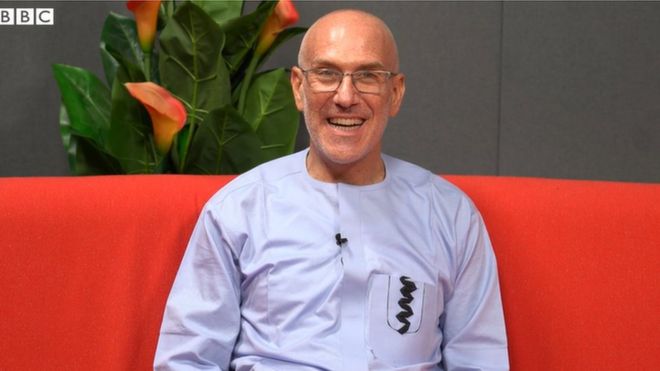
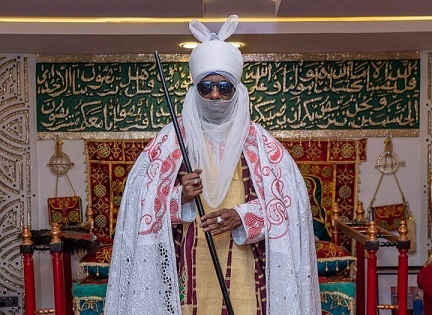
The question ‘Is the English language not a measure of intelligence?’ may only be applicable to native speakers because they have learned the language since childhood and in their linguistic environment. Even this claim is contestable. This is because not all speakers of a language communicate with it efficiently. A select few do. For example, if the late Ɗan Masanin Kano or the former Emir of Kano, Muhammadu Sanusi II, addresses a Hausa audience in Hausa, people tend to listen because any one of the two masters the art of speaking even in Hausa. Can you call any one of the two dull? 

So not only the English language, which isn’t our language, even a good Hausa speaker is intelligent because an unintelligent man can’t organise his words to impress an audience. Also, a good native/non-native Arabic speaker is also intelligent enough to organize his words to communicate impressively, so also is a Hausa native who communicates in either Fulfulde, Yoruba, etc.

Generating some linguistic elements such as grammar, phonetics, phonology, morphology, syntax, semantics, etc and combining them to negotiate meaning isn’t an unintelligent job. Not all language users combine the spoken and written expertise of language. The Hausa oral skills of Ɗan Masanin Kano, for example, wouldn’t be a sign of dullness but intelligence.

In other words, reaching linguistic “competence and performance” (the ability to combine sounds and meaning to communicate) even for native speakers isn’t a simple act of a simpleton, for not all language users are endowed with the skill to communicate well.

Amina Buba, a trailblazer: The first female urologic surgeon from North-Eastern Nigeria

By Kamal Buba Danladi

According to the Oxford Dictionary, Urology, also known as genitourinary surgery, is the branch of medicine that focuses on surgical and medical diseases of the urinary tract and the male reproductive organs. Organs under the domain of urology include the kidneys, ureters, adrenal glands, urinary bladder, urethra and the male reproductive system.

On the 19th of April 2023, Dr Amina Buba became the youngest urologic surgeon in Nigeria, the 7th female urologist in our country and the first Muslim woman in Nigeria to bear that title. Amina truly has shattered the glass ceiling! She is an inspiration to young women all around the world that anything is possible.

Amina was born in Lagos and attended St. Jude’s private School in Festac Town, Lagos. Then she started her secondary school at Federal Government College, Kwali, Abuja, before she transferred to Federal Government Girls College, Bwari, Abuja. After completing her junior secondary school there, she moved to El-Amin International School, Minna, where she completed her senior secondary school and then proceeded to her A-levels at Irwin College Leicester, England.

Amina also studied medicine at Brighton & Sussex Medical School, Brighton, England and then did her Master’s in Tropical Medicine & International Health at the Prestigious London School of Hygiene and Tropical Medicine, where she gained an MSc. as well as a diploma in Tropical Medicine and Hygiene. Shen then did her surgical residency in Abuja, Nigeria, which she recently completed.

When asked about why she chose this particular field, Amina says that she has always wanted to be a doctor, and when she qualified as a doctor, she knew that she wanted to be a surgeon but wasn’t sure of the surgical speciality. She began her residency programme with a posting in urology, and she fell in love with urology instantly because it is such a diverse surgical speciality, and you get to operate on the entire urinary tract as well as the male genital tract. There are also so many facets to it; there are paediatric urology, reconstructive urology, and upper and lower tract surgeries.

She further says that there are also plenty of opportunities to engage in both open and minimally invasive surgery, that is, laparoscopic, robotic and endoscopic surgeries. She was also drawn to it because, as a junior resident, she had 5 amazing consultants who, despite the strains of an under-resourced working environment, ensured that their patients got the absolute best.

Another interesting thing about the field, according to her, is that most urology patients have fixable problems and so it is really satisfying to identify a pathology in a patient, operate on it and discharge a happy, healed patient. She also added that urology is a fantastic speciality with so much room for growth.

She gave thanks to her mentors because they have been encouraging, and says she has had excellent teachers. Speaking about some of the challenges she faced, she says that they were there but were minimal and mainly from her peers questioning her decision to specialize in urology. This also prompted her to carry out a questionnaire-based survey on patients’ perceptions of having a female urologist. And interestingly, the majority of patients have absolutely no qualms at all.

In her practice, she has seen that even the few patients who seem sceptical tend to relax once she starts talking to them and establishes a rapport. She also says that she has had patients who specifically only want to see her, and she also added that when people are sick, they just want a good doctor and don’t care about their gender. She jokingly often asks people who question a decision to specialize in a primarily male-dominated area; “what of the men in gynaecology”. They only see women, but at least as a urologic surgeon, she sees both male and female patients. Another challenge she faced in training which she says is not peculiar to her, is the lack of facilities in Nigerian Teaching Hospitals. Our government really ought to do better.

And when asked about her family’s view on it she says that they were extremely supportive, and she really would not have been here if she didn’t have such supportive parents. Amina also says that her two elder sisters have been supportive, and they cheer her on in the process because the training is strenuous, emotionally and physically demanding and without her family’s support, it would have been impossible.

She also states that they have gone through the entire journey with her, and she appreciates them tremendously. She adds that she had some really supportive friends and bosses who have always cheered her on, and finally, her advice to young girls, especially in Northern Nigeria, is they should believe in themselves and strive for excellence, don’t settle for mediocrity. Pray hard, establish a good relationship with God and work hard.

Amina also has this to say “Pray like you are not working and work like you are not praying”. The world is our oyster, and there are so many glass ceilings waiting to be shattered! She concludes by thanking Allah for the mercies he has shown to her and by saying if she can do it, then anybody can. She hopes that her achievement will inspire young ladies to realize that there is so much that needs to be done.

Kamal is a student of Mass Communication from Skyline University Nigeria. He writes from Kano, Nigeria.

Notes on “Manyan Mata” series

By Abdullahi Haruna Kandash

In my opinion, Mayan Mata is one of the best series, if not the best movie ever produced in Kannywood. The movie portrays the vicious circle of poverty, a retinue of marriages, the mutilation of pregnant women and how children in society are raised with no regard for their futures.

Sadik Sani Sadik thinks nothing a man should be ashamed of if he bullies his wife. In the series, his pregnant wife faces a crisis despite her pregnancy. Unfortunately, they lost the child by miscarriage. Jamila Nagudu experiences petty humiliation after her one and only child is taken to Almajiranci. Daso’s son is a nasty disciple, too, a spoiled one. He was taken to Almajiranci when he was a child. He follows the gang and gets spoiled.

The movie portrays what really sabotages relationships, couples and children’s futures. The best part of this movie tells us that there are people in society with more clout who show no concern for other children and other women whose lives have been shattered by the cruelty of their spouses. I became truly interested in the movie after I watched some episodes. And I have seen many things that happen in real life portrayed in the movie. The director has done a wonderful job.

Kannywood should continue to bring cultural identities into its movies. The director also depicts literature, art and culture in the movie, and all these can be vividly seen in the different scenes of the film. Literature, art and culture are not something we can simply despise. They are like the air we breathe. And If we cut them off, the whole world will suffer.

Literature has enormously helped so many movies to gather an audience because of its literariness. Manyan Mata pictures exactly what is happening in our communities nowadays. It shows how parents treat their children with contempt. The director shows us how our societies are sliding backwards and experiencing immaturity.

But the best part of it, however, is that it teaches us how to understand the beauty of humanity, that everyone’s life matters.

Fati Washa experiences a worst-case scenario with her deceased mother’s co-wife. After watching the scene where her mother’s co-wife was trying to burn her schoolbooks rudely, I sensed that the movie is trying to tell us that societies that achieve better prosperities are those where huge investments are made in education. These are societies where every child is allowed to go to school to learn. This part also attempts to show us that every child should have access to education so that just and egalitarian societies can be built.

I hope the director will continue to fight inequality and bring sameness because that is what brings safety, security and a sense of belonging among people.

Kannywood in London: Actors bring Northern Nigerian culture to the global stage

By Aliyu Abubakar

Kannywood actors Ali Jita and Ali Nuhu recently took to the stage at Success Hall in London on Saturday, April 22, 2023, showcasing the talent and artistry of Northern Nigerian culture for the first time as part of the 2023 Eid celebration party. Their performance not only highlighted the cultural richness and diversity of the Hausa and Arewa people but also demonstrated Kannywood’s growing reach and influence beyond Nigeria’s borders.

As Ali Jita and Ali Nuhu performed in London, their fans watched in awe as they seamlessly blended music and dance to showcase the beauty of Hausa and Arewa culture. The audience was treated to a stunning performance that celebrated the talent and creativity of the actors and showcased the unique heritage of Northern Nigeria.

For those who may not be familiar with Kannywood, the film industry produces movies in the Hausa language in Northern Nigeria. It has been gaining popularity recently, with a growing following among Nigerians and beyond. The success of Ali Jita and Ali Nuhu’s performance in London is a testament to Kannywood’s increasingly global reach and influence.

This achievement is a proud moment for the actors, their fans, and the entire Kannywood industry. Moreover, it marks a significant milestone in the growth and development of Northern Nigerian culture, highlighting the resilience and creativity of its people.

Ali Jita and Ali Nuhu’s performance in London was significant for the Kannywood industry and the Hausa and Arewa communities in the diaspora. For many Northern Nigerians living outside their homeland, the performance reminded them of their culture and heritage, bringing a sense of pride and joy to their hearts. In addition, the event provided an opportunity for the diaspora community to come together, celebrate their traditions, and connect with their roots.

The success of Ali Jita and Ali Nuhu’s performance in London also reflects the power of culture in fostering cross-cultural understanding and promoting unity. The event brought together people from different backgrounds and cultures, providing a platform to showcase the beauty and diversity of Northern Nigerian culture. It also helped to break down stereotypes and promote a deeper appreciation of the vibrant cultures that exist in Nigeria and Africa as a whole. As Kannywood continues to grow and gain global recognition, it has the potential to serve as a bridge between different cultures, promoting understanding and fostering unity.

In conclusion, Ali Jita and Ali Nuhu’s triumphant performance at Success Hall in London as part of the 2023 Eid celebration party is a significant milestone for the Kannywood industry and a proud moment for the Hausa and Arewa people. It celebrates the beauty and richness of Northern Nigerian culture and showcases the talent and creativity of the region’s actors and filmmakers. Furthermore, the event has helped promote cross-cultural understanding and foster unity, highlighting Kannywood’s potential to serve as a bridge between different cultures. As the industry grows, we can look forward to more exceptional performances from Northern Nigeria’s talented actors and filmmakers.

Aliyu Abubakar is the MD. Rbm e-Tech and Digital Services, Hadejia, Jigawa State. He can be reached via aliuabubakar852@gmail.com.

The need to shun obsession with scholars

By Ishaka Mohammed

There is a clause that is capable of solving many problems, but most of us often use it only to defend our flaws. The clause is: Nobody is perfect. Instead of internalising and living with this priceless statement, we tend to remember it only when people criticise our misbehaviour or mistakes. This clause is much more than a defence tool. Its proper use comes with an invaluable gift: open-mindedness.

Almost every time I come across a war of words (especially such that involves religion) between ordinary people on social media, I quickly blame our inability or refusal to listen to alternative views. I find it unfortunate that my guesses regarding such unhealthy behaviour are usually right.

We sometimes hold certain opinions so strongly that every other view becomes repulsive. This is one reason that makes me doubt if I will ever forget the year 2007. It was a time when I realised the danger of obstinacy. I discovered that a single source or person could never attain a true scholarship. Although it is still a work in progress, when I receive an important piece of information from anyone, I try to examine it or consult other sources to confirm its reliability. 

I’ll explain my point with a few examples. In my quest to upscale my communicative competence in English, I follow certain scholars online. One of them, a professor of English, once made a social media post about English grammar, and I noticed a “wrong” pattern in the post. In an attempt to know if that was an exception to the general rules, I told him what I knew about the pattern. He never replied; he only liked my comment. If it were today, I would try to ignore his “mistake” because, considering his status, such a question could embarrass him.

Three years later, I bought a book he authored, and I noticed about six “wrong” patterns, including the one I had asked about on social media. Although the book is an interesting read, when a colleague of mine asked how she could get it for her daughter, I discouraged her because I feared that the teenager might internalise some “wrong” patterns.

Much as I would refrain from stating categorically that the prof is completely wrong, all the sources I have consulted, including the Oxford Advanced Learner’s Dictionary, point to that.

Away from English grammar, there is a renowned Islamic scholar who has been on the international scene for decades. Today, like many other people, he stresses the need to avoid castigating Muslims who try to mend their ways in Ramadan, arguing that the season is an opportunity to turn over a new leaf. However, I once heard him criticise the same category of people, calling them Ramadan Muslims (who are disbelievers for 11 months, only to become the most sincere believers in Ramadan). I would say that his earlier statement was either a mistake or due to a gap in his understanding. He is a human being.

In addition, my little exposure has revealed certain mistakes my teachers (from elementary classes to university) made while I was under their tutelage. I have also realised some of my mistakes as a teacher. My students could discover even more.

This discussion points to one fact: Humans are fallible. If you pointed out one perfect human being today, I would argue that you do not know that person. Therefore, it is advisable to tread very carefully in our interactions with human beings. Although I respect my teachers, [religious] scholars and elders, I believe that there is no single person in the world today whose lifestyles are completely worthy of my imitation or whose statements are totally deserving of my adherence. Instead, I strive to expose myself to multiple sources before taking a stand on issues, especially religious ones. It is dangerous to be obsessed with a single scholar because nobody is perfect.

Ishaka Mohammed wrote from Kaduna. He can be contacted via ishakamohammed39@gmail.com.

Take pity on the innocent children!

By Muhammad Muhammad Khalil

Marriages built on love, affection and mercy are expected to last forever. But, unfortunately, whilst some marriages crash in infancy, others spanning for decades end up in divorce, too. The psychological trauma children of those failed marriages experience due to their parent’s separation is deep and enormous, negatively affecting their physical and mental health.

In most cases, the love lost between ex-couples shifts to their children. Both the mother and father show unconditional love and care for them, for love of one’s progeny is an inborn disposition in humans and animals.

Despite this, there are pockets of male parents in our society who decline to provide sustenance for their children once the split occurs. They, sadly, leave their ex-wives and their families with the burden of fending for their seeds. Instead, the wives’ families, stacked with their backbreaking responsibilities, bid their daughters to take the matter to court.

It is profoundly depressing how our Sharia courts are flooded with such cases (as mentioned above). I have seen multiple men go to jail for failure to comply with court orders, namely, to give their ex-wives the measly amount designated for the sustenance and upkeep of their children.

From what I have learnt thus far, some men defaulted not because they could not afford it but rather due to their fall-out with their ex-wives, the children’s mothers. The innocent kids usually take a back seat thanks to the resentment the father harbours against the mother. To treat their ex-wives harshly, they deprive their children of their necessities. One wonders: what benefit do such men draw from putting their kids’ lives in misery and danger?

The situation of some divorcees is both worrisome and pathetic. Many have become frequent court-goers because their kids’ fathers are reluctant to relieve the burden. Scores of children of failed marriages suffer significantly because the wrangling between their parents barely stops. The kids’ welfare stays truncated as a result.

My plea to such men is to fear Allah (SWT). And remember that the children they’re endowed with are a trust for which they’ll account. Their children have rights and responsibilities upon them.

As the prophetic saying goes: “All of you are guardians and are responsible for your charges; a man is a guardian of his family and is responsible for his charge.”

Muhammad Muhammad Khalil wrote this via muhdmuhdkhalil@gmail.com.

Forty years without Malam Aminu Kano


By Amir Abdulazeez

I became familiar with politics before the age of ten. One contributing factor was family members who contested for elective positions during Nigeria’s botched 3rd Republic in the early 1990s. I was close to people contesting positions as low as councillorship and as high as president. Whenever they were having discussions, there was one name that came up frequently, and that name was Malam Aminu Kano. At that time, his death was not even ten years old.

I knew little about this frequently discussed man then, but I grew up striving to understand more about him. I noticed that politicians from all affiliations adore him, pray for him and then treat him like a prophet. Whenever he is mentioned, people get filled with nostalgia. There is virtually no politician in Kano and, by extension, the greater part of Northern Nigeria who doesn’t want to be associated with the Aminu Kano brand.

For over thirty years since I first heard his story, I have struggled to understand more about him.  The deeper I went, the more I realized how special he was. From 2002, when I became much keen on observing and studying Nigerian politics, up to date, I have been very much convinced that the majority of the set of people we call politicians today are mere jokers without any vision compared to the likes of Malam Aminu Kano. Only a very few of them have tried to replicate the kind of discipline and honesty he was known for. During their era, the likes of Aminu Kano were in politics for a reason which was never self-centred.

Although he was known mainly as a politician, emancipator, reformer and activist, Malam was also a great author, orator, mentor and educationist. He is credited with establishing the modern Islamiyyah system we operate today. He is also believed to be one of the shapers of mass education practised today. He had touched society positively in many ways other than politics. That is why we have diverse institutions named after him; roads, schools, hospitals, airports, etc.

At the peak of his powers, Malam was literally the owner of Kano politics, yet he was humble, kind and generous even to his opponents. His honesty was uncommon even for his era. It was reported that one day, the then Kano State Governor, Muhammadu Abubakar Rimi, visited him with the gift of an electric generator. Malam enquired whether the governor had provided a generator for all the people of Kano State. That was how he rejected it, and Rimi had to leave with it. When Malam died, he didn’t leave any wealth for his family. His only house is now a research centre managed by Bayero University, Kano.

Today marks exactly 40 years since the demise of this rare human being. Although his ideology, ethics and teachings have remained significant, the people have never stopped mourning him. Every year, his death looks fresh; Malam will be mourned forever. He was a champion of progressive politics and justice, a defender of the oppressed and downtrodden, a true man of the people and a dedicated ad unique statesman. He is among the most outstanding Nigerians and a role model to millions of citizens and leaders. He will remain a reference point for a long time or forever. His history will be written and rewritten severally.

His death marked the end of ideological politics in Northern Nigeria. I see him as the greatest Kano citizen of all time, at least in the modern era. He has established a norm by living a life that any right-thinking person would aspire to lead. But, unfortunately, a society like Kano, which enjoyed a solid political foundation laid by the likes of Aminu Kano, is now governed by the kind of shameless and self-centred people we see today.

While some political leaders have worked hard and tirelessly to sustain the Aminu Kano legacy, many others have been anti-people, playing the politics of self-interest at the expense of society. The bitter part is that even political crooks and criminals disguising themselves as leaders are claiming to be identifying with the teachings of Aminu Kano.

Today, we have so many pretenders who claim to be disciples of the late sage, and only people with historical knowledge can unearth their treachery. It is funny that some people even wear his kind of attire, bragging about being like him, while in practice, they are corrupt, morally bankrupt and don’t adhere to any of his teachings.

Unfortunately, many who lived with him did not inherit his modesty, honesty and simplicity. Many of the influential people who remember him today only do so hypocritically. They were never sincere about promoting his virtues. People who claim to have him as their role model are stupendously rich beyond rationality while maintaining a questionable character. If he were alive, he would disown most of these pretenders.

Malam Aminu Kano was not wealthy; he didn’t hold many government positions. Malam didn’t force people into building a political empire, and he wasn’t greedy; his name has been written in gold, and nothing can erase it for the rest of history. The corrupt leaders of today will die to have his kind of name, but they can’t exercise any of his virtues. Instead, they are shamelessly hell-bent on garnering wealth, wealth and more wealth as if there is no life after death.

All my life, I have aspired to become myself and carve a niche from my own view of life. I had understood very early in life that every human being is unique in his own right, and there is no rigid template that everyone must follow to become great. Many great men have inspired me, but I still enjoy being myself. However, for every rule, there is an exception; from what I’ve gathered about Malam Aminu Kano, he is one person I can give up everything to be exactly like him.

Twitter: @AmirAbdulazeez 

Hate over Love: The tragic consequence of custody battles

By Hajara Shehu Esq.

A broken marriage can have adverse effects on the custody of children. In many cases, when a marriage ends, the focus of each partner is solely on how to hurt the other, regardless of the impact on their innocent children.

Nowadays, custody of children has become a weapon of choice in this scenario. As a result, the battling parties are often blinded by fury and anger, sacrificing their children’s well-being in the process.

Unfortunately, the person fighting for custody may not have a conducive environment to raise the child/children. The primary objective is simply to separate the child/children from the other parent as a token of hatred. The main problem is that whoever wins the custody case often destroys the child/children’s lives. In most cases, the child loses the love, care, and affection of the parent who lost the case due to anger, and the parent who wins may not offer the best life for the child.

For instance, if the father wins custody, he may not be married and may live with an elderly mother. In this situation, the child/children often wander around without proper and adequate care. In another scenario, the father may be married and take the child/children to a stepmother. However, this can lead to complete abandonment from the stepmother due to the father’s attitude and behaviour, overprotectiveness, and unending interference.

Similarly, if the mother wins custody, the father may neglect the child/children and completely surrender them to the mother. Unfortunately, most mothers from less privileged families or orphans may find it difficult to meet all the financial needs of the child/children.

While credit is given where it is due, a mother always tries her best until she remarries and has other children. Then, the children will automatically suffer the same fate as above, except in favourable situations where the mother is privileged.

Leaving a child/children to their maternal/paternal grandmother is not a bad thing. However, it is not the best option considering the grandmother’s age and the need for a child to have love, closeness, and affection to be a good individual. The most disturbing circumstance is when both parents are married and have other children, and the child/children are left alone under the care of their dearest grandmother. In such cases, the child/children become hardened by circumstances and are forced to grow faster than their age.

Every child needs to be allowed to grow according to their age in love, care, and affection. Every child deserves the love, respect, and affection of both parents. It is not a privilege but a huge responsibility placed on them by Allah, the Most High, which they shall account for. The Prophet (PBUH) said we are all shepherds and shall account for it on the last day.

Many victims of broken marriages have grown up to become drug addicts, thugs, armed robbers, thieves, and engaged in many other crimes. Love, care, and affection are the foundation of a good individual. Where these are lost, most children go astray except those that Allah guides.

It is disheartening to witness parents cursing, abusing, and calling each other names while holding each other responsible. However, the truth is that these kinds of parents are equally and jointly responsible.

In conclusion, no matter how a marriage ends, Allah’s precious gifts (children) are not the reason and should be kept away from battles. Instead, parents should allow each other to play various roles in the child/children’s life. Relationships might end, but the child/children’s relationship with the ex-partner will forever remain. Children deserve a good life filled with love, care, and affection; parents should ensure they have it!

Hajara can be reached via Hbshehu301@gmail.com.

A crack on Hadiza Gabon’s wall: Humanizing Northern Nigerian stories

By Sa’id Sa’ad

Being a lover of reality shows, award nights, behind-the-scenes and documentary movies, I’d always dabbled from one interview to another, especially exclusive interview rooms that humanise celebrities from various industries. Something that often allows me to see these people beyond their screen-portrayed selves, beyond their polished English-speaking tongues in sets, and beyond their filtered pictures on Instagram.

From Steve Harvey’s show to Trevor Noah’s. From Coffee with Karan to dozens of international shows of the same make-up. Each of them has always fed me the dose of vitamins I needed to see different fantastic interviewees in their human form. Sometimes, I would wonder deeply how one person could have this widened, divergent existence.

However, in Nigeria, shows like #WithChude hosted by Chude Jideonwo have become relevant to Nigeria’s entertainment industry, bringing music artists and Actors – Nollywood – to live through personal exclusive discussions that spark varying conversations. Meanwhile, the advent of Ebuka Obi Uchendu’s Black Box Interviews has presented a new dimension for this art. Through bringing similar personalities as #WithChude’s, the Black Box interviews – geared by Ebuka’s mastery in media and moderation makes it more humane, deep – yet story-driven and intense conversations that would take about fast-phased 2-hour discussion that would leave you wanting more. Undoubtedly, these contents have been the source which news media and bloggers would often plug their ‘stories’ and ‘gossips’ from, giving more relevance to the celebrities and promoting their art. And above all, selling the stories of these people, majorly, using it to their career advantage.

As you might already predict, Northern Nigeria’s entertainment industry has lagged same platforms, except for a few interview programmes produced by media companies. BBC Hausa’s Daga Bakin Mai Ita and Arewa24’s Kundin Kannywood are a few examples of what it was for the industry. Perhaps – as perceived by many – as a lack of “capacity” or “interest” to pursue the same, especially from the industry players. Or rather, others believe that as a result of the notion that northerners do not appreciate northern content. The latter, as sad as it may sound, has continued to place a borderline between contents from the region and its market. However, a robust attempt – from the industry players as thus they benefit from it – would have been a Noah’s Ark to what northern Nigeria’s storytelling would become and even the industry market. Hence, Hadiza Gabon’s Room.

Since the advent of the show – as much as I hardly ever skipped Daga Bakin Mai Ita – I am one of those who’ve watched every episode of Hadiza Gabon’s Room since its inception. Being a household name in northern Nigeria, Hadiza Gabon’s Room, a personal show produced by the actress lately, has gained attraction in the region. This should raise an eyebrow as to how northerners react to northern content or stories specifically produced in Hausa. Prior to the production, the most likely, perhaps consistent programme that ‘tries’ to do this task of humanising the northern entertainment artists has been Daga Bakin Mai Ita which, of course, contributed, though very shallow.

Another close ally to that was what used to be Kundin Kannywood, produced by Arewa24 – the first indigenous Hausa-speaking TV channel – and hosted by ace Kannywood actor Aminu Sheriff Momo. With the wider reach and technical skills invested in producing them, the duo have proven to have a lighter foundation of sustainability as they are run, produced and aired by media organisations who might – at any moment – halt, pause or terminate the programme, especially if any of its episodes attempt to wobble with the organisation’s reputation. But one would never separate celebrities and trends. Or can we?

I agree that “northern Nigeria does not appreciate northern Nigerian content” due to my experiences with middle-class-elite Hausa-speaking northern Nigerians who find their faces wrapped in shame to consume anything northern or anything Hausa. Be it music, film or any form of art. But even more, sometimes you could drop your jaw at how much northerners “dismiss” what becomes of Hausa celebrities from the region. Many were caught “bragging” about how much they didn’t recognise a certain northern celebrity they bumped into at a shopping mall.

But this is not so much different from what the same generation of Yoruba and Igbo does to their indigenous language promoters and contents as well. Perhaps the only difference between the Hausa-consuming northern Nigerian population and the others is that the typical educated middle-class or elites half-baked exposed northerner consume Hausa-produced content with ‘shame’. While a Yoruba or Igbo population consumes these contents in their own languages with ‘pride’. Unless for few who are bold hit the table, some have made it a subject of mockery to their friends who listens to Hausa songs or watch Hausa movies. Making it a “measure of exposure”.

Ordinarily, I’d assume that only a few people like myself – who are interested in storytelling and care about northern stories – consume Hadiza Gabon’s Room until a few weeks ago when the host interviewed a Kannywood actress who’d broken down on the show over what people would describe as “poisonous love” with another unnamed artist. This brought numerous comments from different people in the industry and beyond. But most surprising, from the same “typical educated middle-class or elites half-baked exposed northerners” admitting to having “been watching” the show. Perhaps this can also reflect a hypocritical-denial and intentional lack of acknowledgement. So, it’s safe to say these two contributed to placing the region’s storytelling where it is. Maybe even moved it farther.

Now, self-made analysts on social media have been placing the show on a scale weighing Hadiza Gabon’s skills in media or journalism, and some even going to the extent of breaking bits and pieces of how the questions should be asked. In all honesty, it is not balanced to completely dismiss the fact that there is still more to do from the producer in terms of the technicalities of the show, but it is also imperative to understand that Shows like these grow, get better and improve, with time. This could be reflected in what Ebuka Obi Uchendu or Chude Jideonwo’s shows were ten years ago and what they are now.

However, as a writer and a communications specialist, I would rather than analyse, admit that Hadiza Gabon would have become one of the bravest from northern Nigeria’s entertainment industry to self-produce such funnel that would feed – good or bad – stories from what creatives do in northern Nigeria. At least, a good or bad story is better than no story. Or better still, if Ebuka’s Black Box Interview Show could tell deeply personal stories about the life, career journey and even growth of certain entertainment stars from other parts of Nigeria, then there is a likelihood that Hadiza Gabon could be to northern Nigeria celebrities what Ebuka Obi Uchendu is to Nigerian Celebrities.

Though balancing stories is an essential part of storytelling, it is also unimaginable to think that one day you would find Chude Jideonwo interviewing Hamisu Breaker or Ado Gwanja on his show. This is not to be dismissive about the possibility of that, but the prospect as of now is blurry. Therefore, these stories from these people from northern Nigeria have to come out from northern Nigeria. And that is why Hadiza Gabon should be commended for that.

On the other side, celebrities have soon produced multiple of these shows – using their popularity to sell their stories – while putting a spotlight on their artists, storytellers, entrepreneurs, writers, tech gurus and even educators. And like tomatoes spread out on the front line of an open market, these have been central to the stories they tell the world about themselves. Since we refused to do the same, we are left with our favourite duo, “Almajiri and poverty” narratives.

Imagine if Hadiza Gabon’s Room is a Live show where these guests will speak – without filters, editing or CUT!? Such that truth will be told as raw as it should be, and the eyes will communicate a lie? Imagine if other writers and journalists would consistently write about whatever in-creatives-sake is coming out from northern Nigeria in theatre, movie, and music, such as Muhsin Ibrahim? Imagine if there were multiple consistent shows produced by the industry players who would use their popularity to air their stories, such as what Hadiza Gabon does in her Room? Imagine if consuming these contents in local languages is seen as mere “interest” rather than as a “measure of exposure”? Imagine! Imagine! Imagine!

This is a crack created by Hadiza Gabon’s Wall. We have now seen the gap. And there is more to see. Storytelling does not rest on the edge of a singular art form. Rooms as well, have ways of speaking. They have walls that portray. They have a roof that reflects. They have floors that nurture. We can only humanise our stories when we hang them on the walls and paint them. But what will become of us if our walls continue to crack?

Sa’id Sa’ad is a Nigerian writer, poet and playwright from Maiduguri. He is the NFC Essay Award Winner 2018 and the Peace Panel Short Story Prize Winner 2018. He tweets at @saidsaadwrites and can be reached via saidsaadabubakar@gmail.com.

Nigeria: Prognosis and challenges against the incoming government

By Iranloye Safiu Taiye

Nigeria became an independent State on 1st October 1960 from her former British colonial masters, which ushered Nigeria to the comity of a sovereign state and membership of the United Nations (UN) after decades of British colonial administration officially came to an end (1900 – 1960). On the eve of independence, our nationalists and politicians were mandated to administer Nigeria after rigorous agitations, struggles, and movements by our nationalists, who fought passionately to attain self-rule and independence. It was a memorable period when millions of Nigerian citizens, at home and in the diaspora, troops out with Nigerian flags to celebrate and jubilate the end of the British colonial rule on our father’s land. 

Nigeria is a heterogeneous and multiethnic state with multifaceted socio-economic and political backgrounds. These invariably made Nigeria a unique pluralistic State with more than 450 ethnic nationalities. Despite the diverse culture, religions, customs, languages, social beliefs, and norms within Nigeria’s setting, we’ve managed to dwell together even in the face of our glaring diversities, and this is one of our greatest achievements decades after the independence, notwithstanding the several events that have posed challenges to our national unity. Our country is one of the most blessed states globally, occasioned by the abundant natural endowments deposited across the States of the federation, which had positioned Nigeria better in the comity of nations. Not just that, we’re also blessed with adequate human resources capable of culminating our development. Hence, these human and abundant natural resources can better stimulate sustainable growth in Nigeria than we are currently experiencing.

Paradoxically, the Nigerian quest and cruise to greatness were aborted and short-circuited by the military intervention in Nigeria politics on 15th January 1966 led by Gen. Chukwuma  Kaduna Nzeogwu, who later installed Gen. J. T. U Aguyi Ironsi as the first military head of state, according to the prominent argument of many scholars. The 1966 bloody coup de tact and the subsequent counter-coup de tact had been pointed out by many as the rationality behind Nigeria’s development stagnation.  Because the military regime that lasted for three decades was driven by a mere parochial desire  to rule devoid of prior political training or orientation about governance

Like every other country, Nigeria had hills and challenges that required mechanisation to provoke development and fulfil its obligation to its citizens. However, six decades plus after Nigerian independence, there are some questions critically requiring answers; 

A.) Is this the envisioned Nigeria by our nationalists and founding fathers? 

B.) Have we been utilising our cultural plurality and resources to catalyse the State of our dream? 

C.) Despite these enormous endorsements, can Nigeria even compete with the countries aboard with little endowment compared to Nigeria? 

Nay! The Nigerian vision and enormous resources had been ill-managed, and we’ve scrapped our national interest to the hand of corruption, nepotism, favouritism, and chauvinism. It’s saddened these challenges have become a phenomenon, very terrifying, cumbersome, and complex because we have failed to implore a holistic approach to proffer an answer to our societal challenges. Hence we pursue individualistic and least regional interests against national interests, which have ejected the spirit of one Nigeria from most citizens. Sadly, this has also metamorphosed and Jingerd the swagger of many separatist movements and self-rule agitations across the Northern and Southern pole of the country. i.e. IPOB in the Southeastern region, Middle-belt in the Northcentral region, and Yoruba Nation in the Southwestern region.  

Security which has to be the first duty of every government, has been compromised by the action of terrorists, bandits,  kidnappers, armed robbers, ethnic militias, and other criminals everywhere. This horrible event threatened the safety of life and properties of every citizen, regardless of their position or calibre in the state. Therefore, though the actions of our gallant military men, Nigeria police, and other law enforcement agencies cannot be overemphasised, they will be better off if they can empower the service men with better-sophisticated weapons and machinery to curb the insecurity across the nooks and crannies of our country. Therefore, more advanced weapons and ammunition with technical military training are germane now than ever.

The Nigerian economy was known to be enormous and giant before, but currently, the buoyancy of our economy is now a past glory; even Naira is now at the bottom of the global currency index. Diversification of our economy from crude oil dependency must move from a mere paper presentation to reality. The agricultural and manufacturing sector needs serious attention. Recharging this sector is the only remedy to witness a balance of trade, open the door for more investors and open Nigeria’s market to the international community, and change our status of a perpetual importer, if we want our economy to get back on track and compete favourably with other developing and developed countries of the world. Significantly, both the education and health sector needs critical attention and consideration because this is the brain and blood of every state, and the sorry situation of these two sectors is currently condemnable. 

Glaringly, Nigeria has been ravaged with internal problems ranging from separatist movements, clamouring for restructuring, intimidations, domination, and masterminding of regional agenda despite the constitution forbidding that. However, the pluralistic situation that has polarised us must be considered when deciding to affect the entire country if we don’t want unnecessary agitation that can further divide us. 

In conclusion, I will opine the new regime because of National unity and to curb rising agitation for self-government from different parts of the country. The political parties that won the national election should establish a federal government, not the usual winner-take-all, and douse the growing tension. Optimistically, realising Nigeria’s better tomorrow is achievable and redeemable only if we are ready to admit our differences and substitute our regional, ethnic, religious, and personal agenda for national interests. 

Notwithstanding, we must all be ready to partake in national affairs, challenge our leader for accountability, and embrace our national culture devoid of unholy ethnic jingoism when debating national issues.  

Iranloye Safiu Taiye (Optimism Mirror) can be reached via iranloye100@gmail.com