Northern Nigeria

Why all patriotic Nigerians must support the Youth Movement

By Ismail Hashim Abubakar, PhD

I have had sleepless nights these days reflecting and worrying over the ordeal my fellow Nigerians are passing through that ranges from inflation, hunger, and fuel price hikes to insecurity, not to talk of the usual and condonable suffering of lack of social amenities as essential as electricity, water supply, education and healthcare provision, employment, roads and so on.

Poor Nigerians are now literally dying of starvation, and the government seems to be myopically unprepared to decisively fight famishment by countering the inflation of food items, much less than investigating and gathering the statistics of those who lost their lives due to lack of food. 

The hardship results from years of bad leadership and corruption that bedevil Nigeria. My worries worsen when I look at the right, left, and centre of Nigerian politics. I cannot envisage any tangible attempts to reduce or checkmate these unbearable life burdens and simplify things for my fellow compatriots.  It is so disheartening to see that matters which did not constitute part of our problems a few years ago are now huge issues that citizens have to grapple with for them to make ends meet, with millions of Nigerians now wishing to miraculously return to where they were less than two decades ago.

Nigerians are desperately looking for ways to articulate and reassert their essential human need for survival to hearing the deaf ears of their leaders, who are always mischievously claiming to be good listeners but who are viewed by their subjects as oppressors and draconian rulers. This explains why all the efforts of the government, which manifested in clerical interventions, propaganda and security threats, all to thwart the mass hunger protest organised and held by Nigerians in August, ended in fiasco, albeit, of course, it was later extinguished undemocratically with excessive use of force to disenfranchise Nigerians. 

The government would have mildly aborted the August hunger protest if it sincerely attacked hunger by arresting the increasing rise of prices of commodities and by restoring the fuel subsidy, which President Bola Ahmed Tinubu announced on the day he was sworn in even before stepping into his office. Nigerians are still shocked by how the government found solace in procuring a multimillion-dollar jet and yacht for the President as his subjects still languish in economic misery.

Nigerians are puzzled by the unresponsiveness of their leaders to public concerns. Organisations like the NLC and ASUU have lost their influence, and religious scholars and public speeches no longer hold the same sway over public opinion and elections. Nowadays, prominent clerics defend politicians, posing as their spokespersons. This shift marks a radical change in the relationship between the political class and religious elites. It’s important to remember that Nigerian politicians often have a give-and-take mentality when dealing with religious leaders. Some scholars compromise their truth by accepting gifts from politicians. While some scholars have joined the government and performed well, many have completely changed after doing so.

All these have combined to intensify the pessimism of the Nigerian masses, who are tired and so desperate, looking for solutions to their country, which is on the brink of precipice. The emergence of a movement mobilised by Nigerian youth, meant for all patriotic citizens in an actual sense, is a significant sign that things have reached the peak of their flashpoints.

From the speeches of the founders of the youth movement, one can infer that it is a mass struggle born out of tiredness with the current leadership system and which aims at displacing the despotism of the ruling and political class by way of justifiably hijacking the loyalty of citizens to partisan politics and redirecting them towards supporting selfless, sincere, committed, development-oriented, transparent, accountable and law-abiding governance which the nascent movement aspires to help produce. 

The movement seeks to prosecute a mild political revolution that will end regimes of impunity, lawlessness, corruption, bribery, lack of integrity, massive looting, thievery, embezzlement, sabotage, cruelty and all forms of vices that characterise the attitudes of the minority of people who run the affairs of Nigeria. The ambitious movement hopes to halt the situation in which a few people, just by being at the helm of affairs, monopolise the country’s wealth to service their selfish ends, greedily devouring public resources, treating the national assets as their estate, too hell-bent to exploit and feast on the local treasures while simultaneously refusing to improve public infrastructure and avoiding local healthcare, leaving the education system in dilapidated conditions. They race for medical care in foreign hospitals and send their children to study abroad. 

It is alleged that Nigerian leaders have already mortgaged millions of barrels of crude oil that the country is expected to produce within the next 30 years to foreign business institutions. Even if this allegation has not yet been proven, the kind of treatment the newly established Dangote Refinery receives from the Nigerian National Petroleum Company Limited (NNPCL) speaks volumes to the weight of such an allegation.

The youth movement is a herculean task that some may dismiss as practically impossible and utopian. For someone familiar with Nigeria and how it operates, the tip of the iceberg of which is only known by ordinary citizens, one may not accuse pessimistic sentiments towards reform of nurturing despair in this direction. At the same time, however, for someone who hears about or reads how some countries passed through similar tribulations and after some extraordinary efforts of some patriotic men they scaled through and overcame challenges, one cannot help but accept that the salvation struggle can as well succeed. There has to be a serious, sustainable and resilient plan, genuine will and invincible determination for all those who believe in the struggle to make strong dedications and major sacrifices.

Ismail is a Research Fellow at Advancing Education and Research Center (Rabat) and is reachable via ismailiiit18@gmail.com.

Turji’s Accusations: Shocking truth or false claims? 

By Usman Abdullahi Koli, ANIPR 

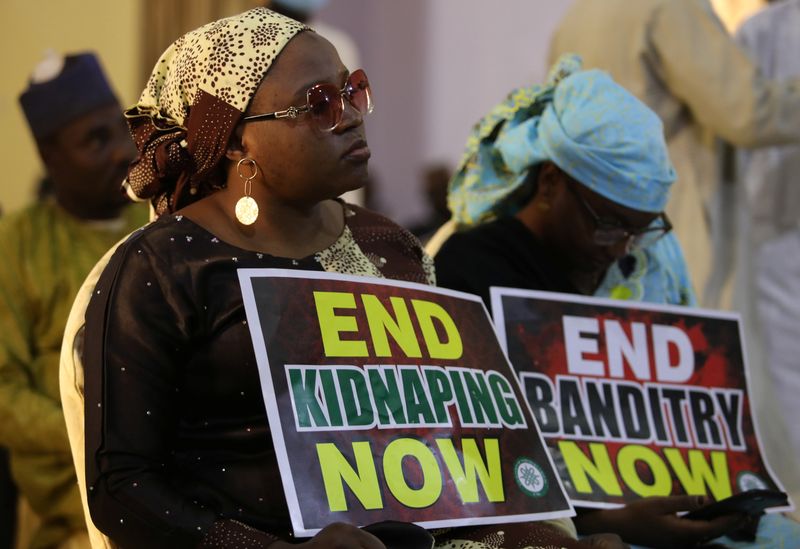
In a dramatic move, Bello Turji, the notorious kidnapper and the most wanted bandit who has claimed responsibility for most prominent terrorist attacks in Northwest Nigeria, released a video clip where his deadly gang surrounded him and passed a vote of confidence in the Chief of Defense Staff (CDS), General Christopher Musa.

The terrorists described General Musa as their ‘leader’ “Shugaban mu mai albarka”, and suggested that he should grant Musa Asada (an Islamic scholar) a military or paramilitary appointment. Turji’s expression of loyalty to the military boss suggested an unofficial relationship between him and military insiders.

That aside, for now, Turji’s trending video clip is evidence of system failure, intelligence weakness, and political will to nail the enemies of the state. The military might be challenged, and a terrorist rubbished the ‘technological know-how’ of the giant.

His outlandish accusations sparked widespread debate and concern, with some on social media misinterpreting Turji’s words and using them to question the integrity of the Nigerian military, especially General Christopher Musa’s role in combating insecurity.

As a staunch advocate of good governance, I have long been calling on the government to take more decisive action against banditry, terrorism, and kidnapping. For the past five to six years, I have consistently raised awareness about the threats posed by these criminal elements to the safety and prosperity of Nigeria, particularly in the North. Unfortunately, much of this advocacy seems to have fallen on deaf ears as banditry continues to ravage communities. Nonetheless, I feel compelled to discuss the issue, especially to analyse the confusion and misinformation that Turji’s statements have caused.

Let it be clear that Turji’s claims are false, and the military has the responsibility of taming him. No evidence supportsthe insinuation that General Christopher Musa is associated with Turji or any criminal network. General Musa has been instrumental in Nigeria’s ongoing efforts to combat insecurity, including taking decisive action against high-profile criminals like Turji.

Since being appointed CDS, General Christopher Musa has demonstrated endless commitment to restoring peace and order in Nigeria. He has led several strategic military operations aimed at dismantling the networks of bandits, terrorists, and kidnappers that have terrorised communities across the country, especially in the Northwest. One of the most significant achievements under his leadership was the recent elimination of Halilu Sububu, a key figure in the banditry networks terrorising Zamfara and surrounding areas. Sububu’s death dealt a major blow to these criminal gangs, sending shockwaves through their ranks.

It is no coincidence that Turji, now cornered by relentless military pressure, has resorted to making baseless accusations against the institution that has been dismantling his operations. His statement is nothing more than a desperate attempt to divert attention from the military’s successes in combating his criminal activities. Turji, like other criminals of his kind, understands the power of propaganda and is trying to manipulate public perception by targeting prominent figures like General Musa.

Furthermore, Turji’s threats against notable voices such as Bulama Bukarti, Musa Asada, and Bello Yabo, three fearless advocates who have stood against his reign of terror, reflect his growing desperation. These individuals, alongside many others, have been instrumental in raising awareness about the accurate scale of banditry and advocating for more decisive government action to protect communities. Turji’s frustrations with these figures only further reveal the pressure he is under from public opinion and military action.

Despite these military gains, it is essential to recognise that Nigeria’s security challenges, particularly in the North, require more than just military action. The complexity of the insecurity crisis demands a comprehensive approach that includes social, economic, and political dimensions. The government must continue to invest in addressing the root causes of banditry, which include poverty, lack of education, and underdevelopment in many rural areas.

For the people of the Northwest, the situation has become unbearable. Many can no longer farm their lands, as bandits have taken control of vast territories, instilling fear in local communities. Despite having fertile land, farmers cannot plant crops because of the constant threat of violence. The government must prioritise providing immediate relief to these communities, ensuring they are protected and given the necessary resources to rebuild their lives.

In addition, efforts must be made to strengthen local intelligence networks, improve border security, and ensure that arms do not flow freely into the hands of bandits. Collaboration with neighbouring countries, particularly Niger and Chad, is crucial to stop the transnational flow of weapons and fighters. The government should also foster stronger partnerships with local vigilante groups, civil society organisations, and community leaders who have an intimate understanding of the terrain and the dynamics of banditry.

Nigerians must approach security issues with a balanced and informed perspective. We must avoid being swayed by the propaganda of criminals like Bello Turji, whose only objective is to sow discord and confusion. Rather than focusing on baseless accusations, we should channel our energy into supporting efforts to restore peace and security in affected regions.

General Christopher Musa and the entire military deserve our support as they continue to risk their lives to protect our nation. Their task is enormous, and while there may be challenges along the way, there is no doubt that significant progress is being made. The military’s recent successes, such as the killing of Halilu Sububu, prove that with the right strategy, it is possible to turn the tide against insecurity.

Bello Turji’s recent comments are nothing more than the desperate outbursts of a criminal whose days are numbered. His attempts to drag General Christopher Musa and other figures into his web of lies should be seen as a distraction. Under General Musa’s leadership, the Nigerian military has made notable strides in combating banditry and terrorism, and we must continue to support their efforts.

At the same time, we must recognise the urgency of the situation in the Northwest and other affected regions. A holistic approach that addresses both the security and developmental needs of these communities is essential for lasting peace. Only through a combination of military action, community engagement, and sustained government investment can we finally put an end to the scourge of banditry, terrorism, and kidnapping in Nigeria.

Usman Abdullahi Koli wrote via mernoukoli@gmail.com.

Why our people attract less fortune in Nigeria: A personal experience

By Saifullahi Attahir Wurno

I had the privilege of working in a private firm during a long break from medical school. It’s like a dream, being versatile and getting the opportunity to work as a marketing officer instead of holding a scalpel and stethoscope. It would allow me to enhance my communication skills and human relations, increase my networking, and learn to be more responsible and accountable.  

Indeed, it’s teaching me how to be more assertive and aggressive, unlike my initial shy character. I had to learn to sell my product, pressure people to pay me back, and say no to fraudulent transactions. Indeed, I am learning that there is a larger world outside of the hospital.

I had a firsthand experience of the reason why the ‘major’ Northern Nigerian tribes lag in terms of competitiveness in business, science, athletics, and education compared to our Southern counterparts and even the ‘minority’ tribes from the North. This is a sad reality and a bitter truth. I stand humbly to be corrected if my statement is far from fact.

I began this work not more than three months ago, but their level of humility and respect toward the bosses was something I had never seen. These people always greet their boss with respect. They respect their colleagues at work irrespective of their level. They attend to customers with courtesy and gentility. 

They have this attitude of taking their job seriously no matter how meagre their pay is. I have never heard any of them complaining about their pay despite having heard of numerous complaints from ‘my people’. Although I tried to arrive at the office at least 3 minutes before 8 a.m., thanks to my medical professional training, those people always arrived 15-20 minutes earlier. I observed this from the attendance record in front of the Security man.

This story was about our security man from the South-East. I used to see him working in the hospital where I lived (since I reside in the medical students’ hostel). He used to work with a private security company in Dutse, Jigawa State, working a shift daily between 8 pm and 5 am. I have known about this man for the past year. 

Surprisingly, we met in this company, too, working between 8 a.m. and 5 p.m. daily. When I enquired more about him, I discovered he was even managing a small trader kiosk in front of his house with his wife. The most astonishing part was that this same person has a National Diploma (ND) in Public Administration and is currently doing his part-time HND at Jigawa Polytechnic during the weekend studying Criminology.

It’s hard to instil this attitude of resilience in our people, who have families to feed while juggling two lowly-paying jobs that take up most of their daily lives and are also studying for personal development.

There was this teenage girl who was also of the same South-eastern origin. She was just out of secondary school. She was the company cleaner and one of the lowly paid staff. But this Lady took her job with every seriousness, coming out daily earlier before all others arrived, sweeping and cleaning the environment neatly, and even using pleasant deodorants. She would not disappear after all this but remain in the office until 2 pm if something arises.

This young lady preferred to come out every morning and do a lowly paying, menial job of cleaning the toilet and mopping floors to be paid ₦30,000 monthly to help her parents financially and felt proud of her achievement instead of sitting down at her mother’s room all day, wasting time of social media.

The spirit of humility and looking after one another was mind-blowing and pathetic whenever I remember ‘my people’ who constantly brag about good culture and religion. There was a time when this young cleaner was sick, and all the staff arrived one morning ready for work. So, we realised she was ill and, thus, absent. We were in this dilemma of what to do; what I saw next was astonishing: there was a group of about five young and classic ladies, all of whom were graduates of the university and among those highly paid in the office. 

Without delay, these ladies volunteer to bring out all the cleaning equipment and do the job wonderfully. Without telling, this thing happened in front of about three of the same young ladies from ‘my people’ despite being Diploma holders and one with even a secondary school certificate.

During my stay, I observed that these people were not very involved in office politics, gossiping and abusing bosses. They were not in the habit of making silly excuses just to move around. I have never observed anyone attempting to involve himself in any fraudulent act to cheat a customer or act against the established rules of company ethics.

From this alone, I have come to draw the answers to why most of the reputable private investment in this country is dominated by ‘those’ people. I have discovered why they dominate our banks, the FinTech, and most prominent organisations. I have seen the reason why they dominate our science and technology establishments. I have seen why they even dominate our athletes and sports sector.

The answer is relatively straight. It is simply character and nothing else. It is about our character, perception of life, and attitudes. It is all about their attitude of resilience, respect, humility, gratitude, and discipline.  Let’s learn and not use excuses or blame games.

Saifullahi Attahir Wurno wrote via saifullahiattahir93@gmail.com

Nigeria: A country on the precipice of dystopia

By Aliyu Hamza

It is so sad that Nigeria’s economic and security architectures are obviously on the precipice and it is so unfortunate nothing much tangibly convincing is being done to salvage the sorry situation. This is especially worrying as it seems that overtime, the leaders of our country have resolved to subject us to a state of dystopia. Every reigning administration always seem to perform worse than its predecessor.

On the security front, the Nigerian state has submitted the fates of its citizens to the “Mercy” (or should one say Wrath) of rag-tag terrorists and bandits marauding and slaughtering about with impunity. Some theories even suggest the security crisis is State-abated and certain information and explanations, especially as they relate to Solid mineral deposits in worst hit areas, command logical credibility to such theories especially as it relates to Zamfara and Sokoto states.

On the economic front, the Nigerian economy continues to defy every economic logic. For decades, a country producing petroleum resources has never had a single petroleum drilling/extracting company only to outsource services to international firms who are also looking to feast on our resources.

Paradoxically, the home refineries meant to process the extracted crude have been deliberately incapacitated to favour fuel importation, a venture which benefits a few selected oil moguls who sell imported products at discretionary prices amid a shady subsidy regime.

Then came, subsidy removal in 2023. The nation was told it would favour competition which would force down prices. On the contrary, we’ve seen price hikes eversince including the recent September hike which ironically, was introduced same day as the first private domestically built Dangote refinery commenced roll out of its refined petrol product.

In normal mainstream economic sense, internal production ought to have eliminated importation and other overhead costs which would bring down prices. But in our country, the reverse is the case. The resource managers of our nation always cite new economic jargons to the bewilderment of the masses to justify price increases every now and then.

STATE-BACKED PSYCHO–FINANCIAL TERRORISM

Today, there is nothing cheap in Nigeria as a result. Even the most common of foods such as Garri and sweet potatoes are no longer cheap and are nearly out of reach for the poor.

Pathetically, there are now people who feed on edible weeds to survive because they can’t afford basic food. There are also those including many familiar faces who were formerly doing averagely ok financially, but who have now become visibly emanciated while always wearing worried looks — clear symtomatic manifestations of the current oppressive economic climate.

Meanwhile, the government keeps on rolling backwards on its duties by eliminating incentives and subsidies (from kerosine to petrol, electricity to education) while heaping taxes (VAT and others). This is as incomes remain stagnant in the midst of an insecure/unstable environment unfavourable to both internal businesses and foreign direct investments.

The so-called minimum wage the government pledged to increase after much dragging with the labour unions has not even been implemented but the same government has already devised strategy of taking it back with the other hand through the outrageous fuel price increase.

In essence, the message being signalled to us is that ordinary Nigerians are expected to continue bearing brunts upon brunts of every economic austerity measure and pains that accompany them.

Contrarily, government officials keep on perpetuating mind boggling and incomprehensible state thefts regime after regime – financial crimes of which majority of the perpetrators go virtually unpunished.

For the citizens, they say we should keep on exercising patience for better days of prosperity, days that don’t ever look forthcoming as the economic squeeze bites harder. This is what I call State-backed and tolerated Psycho-financial Terrorism being perpetuated against its people.

NATIONAL PATRIOTISM?

Some may say it is an incitement to sedition but to be bluntly honest, the sense of optimism and patriotism I used to have for Nigeria have been significantly degraded all thanks to the mounting levels of socio-economic and security dystopia that have now thrived for at least over a decade. Nothing I think, would bring back such national fervour in me unless there’s tangible national progress as I now live as a helpless passive citizen.

As the government has proven incapacitated (at best description) or unwilling (at worst) to provide the basics for its citizens, patriotism in the common man as he concentrates on how to survive seems farfetched. One should not even mention the plights of our droves of Internal Displaced People (IDPs) languishing in miserable camps. For many, claims of patriotism today are a mere fantasy. A mere fantasy indeed!

Aliyu Hamza is a PhD student of Political Science in Ahmadu Bello University. He is also a writer, public affairs commentator and international relations analyst. You can contact him via haliyu86@gmail.com.

The Fulani Identity: Tradition, misconception, and the truth

By Hassan Abdulkadir

The Fulani are traditionally a nomadic, pastoralist trading people across the dry hinterlands of their domain. They are the largest nomadic ethnic group in the world, inhabiting several territories over an area larger than the continental United States.

The Fulani follow a code of behaviour known as “PULAAKU,” which encompasses patience, self-control, discipline, prudence, modesty, respect for others (including foes), wisdom, foresight, personal responsibility, hospitality, courage, and hard work.

It wouldn’t be fair to judge an entire faith, religion, or tribe by the actions of a few aberrant individuals. It is more just to evaluate them based on the scriptures and teachings of the faith or the traditions and conventions of the tribe. 

History has shown that some of the greatest massacres committed on this planet were by individuals like Adolf Hitler, a European Jewish Christian. However, his actions were never equated with his religion or tribe. 

Similarly, Benito Mussolini and Menachem Begin, who were responsible for numerous atrocities, were not judged by their faith or tribe. Yet, when a single Fulani or Muslim individual commits an act of terrorism, the entire religion (Islam) or tribe (Fulani) is unjustly blamed.

Moreover, the most infuriating aspect of this situation is that many of these individuals are brainwashed and used by heartless people who are not Fulani. For example, videos circulating online vividly demonstrate this is true. In one instance, an arrested Fulani man explains how much the masterminds paid him after abducting someone. 

The amount given to the Fulani men is not even a quarter of the ransom collected, yet they are still blamed. It’s important to note that some of them are forced into this due to intimidation and life threats by the gangsters. These masterminds exploit the Fulani and Bedouins because they know the bush well. 

For God’s sake, as educated, wise, and prudent individuals, how can anyone believe that the people they consider inept could successfully carry out such complex operations without being caught? They can’t even perfectly operate phones. This is unfair. Such acts require logic, strategies, and prudence. However, due to biased perspectives, Nigerians are generalising the entire tribe instead of targeting the deceived and manipulated individuals among them.

Candidly, the truth must be trumpeted. When our southern brothers say “Hausa-Fulani,” they’re not referring to the tribe but to a Muslim or Northerner, whom they consider terrorists, bandits, and so on. Meanwhile, in some parts of the southern region of this country, there are places where humans are slaughtered like animals. Generalising the Fulani as bandits and terrorists is truly unfair and unjust.

All the calamities this country, especially the North, has been facing—such as insecurity, insurgency, banditry, terrorism, and critical hardship—are not due to the Fulani people but are the result of politics, business, and the selfishness of our unpatriotic and tyrannical politicians.

I urge the youth to be patriotic, equip themselves with adequate and pure knowledge, and engage in politics. The rich also have a crucial role to play by sponsoring these energetic youths in politics for the betterment of our country and for the coming generations to flourish.

May Nigeria prosper and thrive, amin.

Hassan Abdulkadir wrote via hassanabdulqadeerabubakar@gmail.com.

A legacy of strength and wisdom: Remembering Emir Yunusa Muhammad Danyaya

By Usman Abdullahi Koli, ANIPR

In the rainbows of history, some leaders leave an indelible mark that time can never erase. Alhaji (Dr.) Yunusa Muhammad Danyaya, the revered Emir of Ningi, was one such leader. His influence reached far beyond the borders of his emirate, touching lives with his wisdom, strength, and dedication to his people. His departure marks the end of an era, a monumental loss not just for Ningi but for the entire nation.

Born in 1936, Alhaji Yunusa Muhammad Danyaya was destined for greatness. His educational journey began at Ningi Elementary School and continued through Bauchi Middle School. He later attended the School of Hygiene in Kano and earned a diploma in Public Administration from Ahmadu Bello University, Zaria. Before ascending the throne in 1978, he made significant contributions to the Ningi Emirate Council, the Medical and Health Department, and other critical roles within the region’s governance.

Ningi Emirate, a land steeped in history and resilience, has long held strategic importance in northern Nigeria. Founded by Islamic scholars who migrated from Tsakuwa in Dawakin Kudu Local Government Area of Kano State, the emirate’s origins are rooted in a principled stand against unjust taxation. Throughout his reign, Emir Yunusa Muhammad Danyaya upheld these principles, ensuring that justice, fairness, and equity remained the foundation of his leadership.

As Emir, Alhaji Yunusa Muhammad Danyaya was a steadfast guardian of tradition and a visionary leader who steered Ningi through an era of transformation and progress. Under his leadership, the emirate witnessed significant development initiatives that significantly improved the quality of life for its people. His reign was a masterful balance of tradition and modernity, preserving Ningi’s rich cultural heritage while driving progress.

The people of Ningi hold their late Emir in the highest esteem, remembering him as a just and fair leader deeply committed to their welfare. His passing leaves a void that will be difficult to fill, but his legacy will continue to inspire and guide future generations. 

We are reminded of the Hausa saying, “Kwari garin jan kaya, kwarin da ba ruwa ya ci mutum, da akwai ruwa da ya ci duniya,” which translates to, “The wasp is known for its resilience, even without water, it can take a man down; with water, it could conquer the world.” This saying, deeply rooted in the spirit of the Ningi Emirate, speaks to the enduring strength and determination that defined Emir Yunusa Muhammad Danyaya’s life. 

Another saying resonates within the emirate: “Ko yaki ya ci Ningi, zai bar Dutse,” meaning “Even if war defeats Ningi, it will leave behind its mountains. ” This demonstrates the resilience that the Emir exemplified throughout his reign.

His journey into royalty began in 1959 when he was turbaned as the District Head and Chiroman Ningi. Over the decades, his leadership was marked by wisdom, courage, and commitment to his people. More than just a ruler, he was a mentor, a guardian of tradition, and a beacon of progress. His reign embodied the resilience and strength of the Ningi Emirate, much like the majestic elephant known for its unyielding spirit.

Alhaji (Dr.) Yunusa Muhammad Danyaya’s legacy will forever be etched in the hearts of those he served. As we mourn his passing, we also celebrate a life dedicated to service, leadership, and the upliftment of his people. His contributions to the Ningi Emirate and to Nigeria will never be forgotten. Though the giant has fallen, his impact will continue to resonate for generations to come.

Usman Abdullahi Koli wrote via mernoukoli@gmail.com.

Matawalle’s controversies and gains in the defence sector

By Haroon Aremu Abiodun

As they say, “Uneasy lies the head that wears the crown,” but Bello Matawalle, appointed by President Bola Ahmed Tinubu as Minister for State Defence in 2023, has risen to the challenge. His tenure in office so far is marked by a blend of persistent controversies and significant achievements, with the latter shining a bright light on his leadership and the impact of his decisions.

As Governor of Zamfara state, Matawalle was reported to have taken stringent measures against banditry and insurgency, which led to some success in the fight against terrorism in the Northwestern region.

As such, it is not surprising that he and Mohammed Badaru Abubakar, another former governor of Jigawa State, were appointed Ministers to supervise the defence sector.

This feat was accomplished through military precision and a strategic, forward-thinking focus on infrastructure revitalisation. Their joint efforts led to the rehabilitation of military barracks nationwide, improving the living conditions for soldiers and their families—a clear demonstration of their commitment to the military’s welfare and the future of Nigeria’s defence sector.

A recent major highlight of Matawalle’s leadership was his role in revitalising Nigeria’s defence infrastructure. He worked closely with the Defence Industries Corporation of Nigeria (DICON) and the National Agency for Science and Engineering Infrastructure (NASENI) to establish a domestic arms and ammunition production facility.

This initiative is projected to save Nigeria $60 million annually by reducing the need to import military hardware, marking a significant step towards self-reliance in defence production.

Matawalle’s focus on defence sector reforms to improve efficiency has also caught attention. His reforms are designed to build a more resilient military by streamlining procedures and holding the system accountable.

One of Matawalle’s standout initiatives was his hands-on approach to addressing the grievances of military personnel. His open engagement with soldiers about delayed allowances and welfare issues demonstrated a rare willingness to tackle the heart of the defence system’s morale, evoking empathy for the soldiers and their struggles.

Despite these accomplishments, Matawalle’s tenure has not been without its controversies. Allegations of corruption and mismanagement, along with disputes over his qualification to run the defence ministry, continue to cloud his leadership. Critics question whether these shadows will define his legacy or if his achievements will ultimately shine through.

Born on February 12, 1969, in Maradun, Zamfara State, Matawalle’s educational background includes studies at Yaba College of Technology and the University of West London. His journey from a teacher to a politician has been marked by resilience and a steadfast commitment to public service.

After a successful stint in the Zamfara State House of Assembly during the Abacha regime, he served as a state commissioner before being elected to the House of Representatives in 2003. His political career reached new heights in 2019 when he became the Governor of Zamfara State following a Supreme Court ruling that disqualified the supposed winner.

During his tenure as governor, Matawalle made efforts to address the rampant insecurity in Zamfara State, a region plagued by banditry and violence. He initiated dialogue with various armed groups and made efforts to implement infrastructural projects across the state, including constructing governor’s lodges in all 14 Local Government Areas (LGAs) of Zamfara.

Matawalle’s career reflects a blend of determined public service and significant scrutiny, particularly regarding his financial decisions as governor.

A fanatical loyalist of President Bola Ahmed Tinubu, Matawalle’s leadership in various capacities during this period laid the groundwork for his current role in national defence, where he continues to confront external threats and internal controversies.

Matawalle must prioritise transparency and communication to secure his legacy, ensuring the public understands his decisions and reforms. His continued focus on the welfare of soldiers and veterans, alongside his strategic defence initiatives, will be crucial in determining whether his story will be one of triumph or a missed opportunity.

The final chapter of Bello Matawalle’s legacy is still being written. The world watches as he walks the fine line between triumph and turmoil. Will he be remembered as a transformative leader, or will the crown’s weight prove too much?

His legacy teeters on the edge, and only time will reveal whether his story is one of greatness or missed opportunity.

Haroon Aremu Abiodun is a Mass Communication graduate and a corps member with PRNigeria Center, Abuja. He can be reached at exponentumera@gmail.com.

Naira notes live double lives in different parts of Nigeria

By Jibril Mutalib

The naira notes live a life as colourful as the country itself. This isn’t just any currency—it wears its experiences on its sleeve, or rather, on its creases, tears, and patches. The naira isn’t just a medium of exchange; it’s a survivor with a story that shifts depending on where it finds itself in this country.

In the northern part of the country, the naira is a seasoned warrior. It has seen the depths of pockets unwashed for years and battled with rain and sun, leaving it bruised and wrinkled. Yet, the good people of the North, perhaps because of their warm hospitality, never turn their backs on the naira, no matter how worn out it appears in most cases. 

A naira note in Sokoto could look like it just took a swim in the gutter, got into a wrestling match with a goat, and lost a few limbs. But fear not! The traders in the North would still embrace it with open arms. Ah, my friend,” a northern trader might say, “kudi kudi ne”, whether it looks like a prince or a pauper. 

As long as it can buy me a cup of fura or a plate of Denkeli, it’s good enough!” If your money is rejected, then it must be very bad. Perhaps it might have undergone an abnormal surgery where you have Obafemi Awolowo appear on a #50 naira note. Lol.

But when travelling to other regions, the naira’s fortunes change quicker than you can imagine. In places like Kwara, the naira is subjected to intense scrutiny—borderline interrogation. The traders will examine it like a detective at a crime scene, looking for any sign of distress. A small tear? Rejected. A hint of dirt? Not in my shop! And don’t even think about presenting a naira note with a sellotape surgery—it might as well be a counterfeit. Lol.

So, the naira itself is living a double life in different regions of the country. In the North, it is a rugged hero, loved despite its flaws. In the South, it is an outcast, shunned for the slightest imperfection. I wonder why naira notes are treated so differently based on location. 

And so, if you ever find yourself possessing a naira note that has seen better days, do not despair. Simply tuck it away safely and wait until you return to the northern lands. There, you’ll find a warm welcome for your weary traveller. And remember, it’s not just about having money; it’s about having the right money in the right place.

In any region you find yourself, blend with how they treat the currency. When you’re in Sokoto, bring whatever naira you’ve got—no questions asked. I’m not saying they accept money in Sokoto; they do but on rare occasions. If your money is denied, it’s already very bad beyond repairs.

What I discovered about Nigerian women and public discourse

By Rabi Ummi Umar

Recently, I found myself in the heart of Abuja—a bustling city surrounded by the everyday hustle and bustle of urban life. The streets were alive with activities—commercial drivers calling out for passengers, pedestrians hurrying to their destinations, and the overall pace of the city reflecting the urgency of modern life.

Though an intern, I was there with some female staff writers of Economic Confidential, a tabloid published by Image Merchants Promotion (IMPR) Limited. This, however, was not for leisure or sightseeing but for an official assignment—to shoot an episode of ‘Economy on the Streets’ for the Economic Confidential’s YouTube channel. Yet, what caught my attention was something that went beyond the task at hand, revealing a deeper issue about women’s involvement in public discourse.

As a budding communicator, this ‘field trip’ was more than just an opportunity to write news stories, features, or opinion pieces. It was a chance to extend my skills beyond the written word, to engage directly with the public through a street interview—what we call a vox pop—to gauge Nigerians’ thoughts on the contentious issue of the reintroduction of fuel subsidies.

It was also a chance to experience the realities of journalism beyond the confines of a newsroom. To my surprise, I noticed that most of the respondents were men. Conversely, women seemed reluctant to lend their voices or share their opinions on the matter.

At first, I rationalised that perhaps the women were in a hurry, given that it was a weekday. I thought they might not have a few minutes to discuss Nigeria’s pressing economic challenges as more important tasks were awaiting them.

However, as the seconds, minutes, and hours ticked by and the number of women who declined to participate grew, it became clear that they did not want to discuss our nation’s challenges.

This realisation took me back to last year when I was on my Student Industrial Work Experience Scheme (SIWES) with News Digest, an online media platform. I was invited as a guest on WE FM (106.3), a radio station in Abuja, to discuss “Women Participation in Politics.”

During that discussion, I argued passionately that there were insufficient opportunities for women to engage in politics, and I stood firmly by my belief. Yet, a year later, my experience during the street interviews has led me to question this stance. The opportunities, it seems, are indeed out there.

On the streets, even though these women were not holding political office themselves, they had the chance to contribute to public discourse. Yet, they chose not to. This realisation troubles me because it raises questions about women’s participation in public life—whether in political offices or the organised private sector.

We frequently hear discussions about gender equality, inclusivity, roles, and the presence of women in positions of power. However, when we look deeper, we might find that men are not the primary reason women like myself remain on the periphery of public discourse or power.

As women, we may contribute to our marginalisation by refusing to seize opportunities, even when they are right before us. This brings me to a few questions we should all consider: Are women not given opportunities because men seek to dominate?

Are women holding themselves back because society expects them to remain confined to domestic roles? Are we, as women, making efforts to break free from these constraints? Or are we simply holding ourselves back?

While I leave these questions for you to ponder, I want to call on women to recognise that opportunities exist to showcase our capabilities, our capacity to deliver, and much more. We should strive to reach our goals based on what we have to offer.

But we must start somewhere, even if it’s as simple as participating in a street interview. Your voice is vital to society’s prosperity. No matter how insignificant you may think your contribution is, your participation in various aspects of society, community, and the nation at large matters more than you realise. Your voice truly matters.

Rabi Ummi Umar is a student of Al-Hikmah University, Ilorin. She can be reached at rabiumar058@gmail.com.

A feminist reading of Azizah Idris’s A Sackful of Wishes

By Abdullahi Yusuf Tela

Introduction 

In many societies, women are constantly reminded of their roles as wives and mothers. They are saddled with the responsibilities of producing and nurturing children and caring for the home. Over the years, however, women have embarked on a struggle aimed at affirming their identities while at the same time doing all they can to transform the societal, cultural, or traditional perceptions of their gender. Women are striving very hard to change these perceptions through education and by creating awareness.

Female writers have significantly helped by making the female characters in their works more prominent. They aim to have female characters that are powerful and outspoken. This is because women in most male writings are often illustrated as subservient. 

In 1966, Flora Nwapa broke the silence of women by publishing her first novel, Efuru, inspiring other female writers. These women used literature to explain the state of their societies, either good or bad, and the importance of female existence in society. These feminist writers include Zaynab Alkali, Buchi Emecheta, Mobolaji Adenubi, and Hilary Rouse-Amadi.

Notably, Azizah, like other female writers, has been able to outline the following feminist angles in her book, A Sackful of Wishes.   

Cultural Feminism:

Cultural feminism celebrates human attributes in women. It focuses on the feminist virtues by celebrating the positive sides of womenIn A Sackful of Wishes of Azizah Idris M., Inna Binta, Hadiza’s mother, is a character who portrays aspects of cultural feminism. Inna Binta is a calm, reserved woman who faces a lot of tragedies as a new bride to Mallam Musa. She is hated and manipulated by her co-wife, Mairo Lauje. Inna Binta’s character shows a woman with patience despite the confrontations she faced from Mama Mairo. Cultural feminism believes that there is strength in a woman’s silence. They see the strength in women in the face of oppression. 

Hadiza’s mother, Inna Binta, could endure hardship from her co-wife or return to her parents. Binta remains strong even when Mairo Lauje makes her evil plot to charm her into never staying in Mal Musa’s house. 

Despite all the plots, Binta says, “It’s okay, I can do that . . .as long as she lets me stay with you. You are worth it.”

It is evident from the above quote that Binta, as being put in the cultural feminism, wanted peace for herself, her husband, and her children; that was why she heeded Mama Mairo’s deal. At this point, the cultural feminists view the mother’s strength as crucial. “Mothers have to be strong to take on both roles, loving, protecting, and counselling in turns” (Ngcobo 536).

Marxist feminism: 

The Marxist feminist approach propounded by Karl Marx is embedded in this work. The author portrays Hadiza Musa as someone who earnestly wants to earn for herself and feed her children. When she faces hunger, starvation and poverty, Hadiza immediately engages in a skilled job to take care of her children. She was into plaiting people’s hair and got an immense reward in cash. Hadiza becomes her own woman, independently sourcing and feeding herself and her children. 

It should be noted that Marxist feminists connect the oppression of women to social exploitation and oppression. A Sackful of Wishes by Azizah Idris M. majorly portrays an oppression of the female gender. According to Sotunsa, Marxist feminists believe that male domination is one of the societal ills, and gender oppression must be overcome to overcome societal ills. Hadiza resists the dominance of her husband, AR, whom society believes she needs to bow to. In the text, Hadiza says:  

“I want to start a business.” 

“I don’t have enough money, but I have skill in weaving hair. So, I’m going to start making people’s hair, I want your permission.” (129)

When her husband, AZ, decides to stop her, Hadiza says:

You can’t stop me, you know. You don’t feed me, nor clothe me, you don’t know how I buy my detergent or my body cream or provide the needs of Maahir. You just go out and come home. Some nights, you would try to come near me. Why do you think I got the money for those perfumes and creams that make me feel smooth and appealing to you? You either man up and hold on to your responsibilities or you let me start a business. (129)    

Fortunately for Hadiza, she wins the battle to make people’s hair after Umma Sala, Abdurrazak’s mother, intervenes.   

In portraying her bizarre situation, Hadiza was quoted as thus: 

I resorted to selling two of my wrappers from Mahir’s naming gifts to buy some foodstuffs since I was so heavy, I could not plait my customers’ hair at this stage. I found it difficult to sit for long. They did not sell for much. I saved some of the cash because I knew my situation, and I could need it anytime. I bought some spaghetti and vegetables. My sisters came to check on me the next day. We ate and chatted, and I even gave them some transport fare. Nobody would think things were amiss in my house. (141

Another portrayal of Marxist feminism in the text is in the character of Umma Sala, Abdurrazak’s mother. Umma is the boss of the house because her husband, Abdurrazak’s father, is not earning much, and she’s making money with her food business. 

As it turns out, Umma took over control of the house. With her business as a food vendor and other small businesses, whenever she did something in the house, she billed it to Baffa. Whether he had it or not, he would pay when he got some money. 

Radical Feminism: 

A Sackful of Wishes by Azizah Idris M. portrays richly a form of radical feminist approach. Radical feminists view society fundamentally as a patriarchy in which men dominate and oppress women. According to Shulamith Firestone, radical feminists seek to abolish the patriarchy in a struggle to liberate women and girls from an unjust society by challenging existing social norms and institutions. This struggle includes opposing the sexual objectification of women, raising public awareness about such issues as rape and violence against women. 

The central character, Hadiza Musa, exhibits a taste of radical feminism as a woman who mysteriously falls in love with a man so obsessed with her that Hadiza rebels against her husband’s oppressive behaviours. The radical feminism inked in the work portrays Hadiza as a woman who stays firmly and fights against starvation, rape, humiliation, and disrespect from her husband and, subsequently, his. Hadiza Musa rebels to the extent that she leaves her husband’s house several times out of her mother’s frustration and anger. 

Hadiza states that: 

I was fed up with my life. I was just twenty-five years old, but I had seen the difficulties of a sixty-year-old’s lifetime. I did not put on fancy clothes, nor did make-up appeal to me. I had forgotten how to laugh heartily, my soul was a wreck, my spirit in shambles. I was a walking time bomb waiting to explore. The things I bore in my chest were unimaginable. I had a sackful of wishes that I craved, that I needed to explore but could not do that because I was a coward. There, that’s it. (172)

Her rebellious act makes her stand tall against society, which tends to make her return to her horrible marriage. With the assistance of her brother, Yusuf, Hadiza can take the matter to court. She perseveres despite the intricacies of her husband, Abdurrazak, until she finally gets a favourable judgment dissolving the marriage.  

Conclusion

A Sackful of Wishes is one of the many texts that portray the difficulties, hardships, pain, angst, and oppression women experience in their marriages. It is one of the works that uses a feminist approach to fight for women’s freedom and free them from society’s shackles. 

Thus, it is evident from the text that there still exists a repressive and hostile environment against women. The text shows how young Hadiza faces and traverses through oppression and pain from her psychopath husband and his mother. 

Abdullahi Yusuf Tela wrote via abdullahiyusuftela@yahoo.com.