Northern Nigeria

Tax reform bill: What the North needs to do

By Bilyamin Abdulmumin, PhD

Passing bills in Nigeria (and apparently everywhere else) has a tradition of generating controversies. For instance, the Petroleum Industry Act (PIA) endured decades of rejection before finally passing into law. When the Electoral Act 2022 was signed into law, the opposition went agog, crying to high heaven. Similarly, when the Social Media Bill was passed, it was seen as proof of a government obsession with suppressing dissent.

The reform that is now raising the dust is the Tax Reform Bills. Days after sending the bills to the national assembly, the nineteen governors of the northern states convened in Kaduna to oppose them, describing them as anti-North. The Federal Executive Council (FAC) also backed the northern governors. However, like the vigour with which subsidy removal was pursued, the president insisted on proceeding with the reform.

Northern governors fear amending VAT to a derivation-based model will diminish their states’ revenue contributions. Governor Yahya, the NGF chairperson, notes that companies remit VAT based on their headquarters, not where goods and services are consumed. Consequently, while MTN services consumed in Kano generate VAT for Lagos, Kano’s allocation decreases despite the consumption.

This reform is a dream come true for the state where the plants and industries are sited; unfortunately, for the state’s bottom rock in terms of industries, it is a crying face to them.

 While seeking redress to the proposed bill, it is also better to take charge; no more time is needed for the North to dust off all the moribund infrastructure, pass and implement industrial policies, continue with the uncompleted, and maintain the few industries in the region than now. 

There are plenty of them in Kano; notwithstanding Karota revenue, Abba Kabir Yusuf needs to rise to industrious revenues. Dangote’s Tomato processing industry is said not to be meeting expectations and optimism.

In Zamfara, a once peaceful and serene area, Dauda Lawal needs to recall all the companies aground and those existing only in paper, e.g., fertiliser plants by his predecessor Mutawalle. Apart from raising revenue, industrialisation benefits in Zamfara are numerous, combating even the insecurities that bedevil the state (through job opportunities in the long run).

In Kaduna, Uba Sani needs to continue with the Malam El-rufai’s exploit, maintaining and upgrading Olam Nigeria and a host of economic initiatives.

In Kebbi state, the comrade Dr. Nasir Idris Kauran Gwandu needs to extend his widely recommended administration to continue the ongoing legacies of  Senator Abubakar Atiku Bagudu, like the bioethanol mega plant, maintaining and promoting already established ones ( e.g., GB Food tomato processing plant and WACOT). 

Ironically, the southern states (especially the west), where the proposed bill is set to favour, are upping the ante. Lagos, for instance, is making unprecedented investments in energy generation.

The interest in remodelling the proposed Tax Reform Bills is not enough; it is a wake-up call for the North to raise the bar regarding regional industrialisation.

Bilyamin Abdulmumin, PhD, wrote via bilal4riid13@gmail.com.

Tinubu’s tax reforms will cripple north, trigger nationwide crisis – Zulum warns

By Uzair Adam 

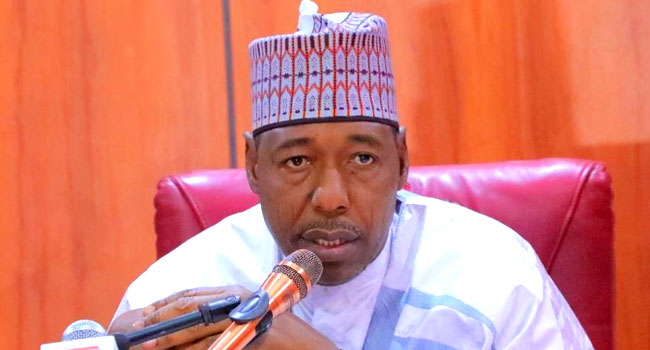
Governor Babagana Umara Zulum of Borno State has expressed strong opposition to the tax reform bills introduced by President Bola Ahmed Tinubu’s administration, cautioning that their implementation could significantly harm the northern region.

The controversial bills, which propose shifting the basis for Value Added Tax (VAT) distribution to the location of consumption, have sparked widespread resistance, particularly in the north. 

Key stakeholders, including northern governors, traditional rulers, and the Northern Elders Forum, have called for the withdrawal of the proposed legislation.

Speaking with BBC Hausa, Zulum criticized the rapid progress of the bills through the National Assembly, contrasting it with the protracted passage of other critical legislation, such as the Petroleum Industry Bill, which took nearly two decades to become law.

“We condemn these bills. They will set the north back and affect other regions, including some states in the South West like Oyo, Osun, Ekiti, and Ondo,” Zulum said. 

“This is not mere opposition; it is about safeguarding our future. We urge President Tinubu to reconsider. 

“He received substantial support from the north during the election, and our interests must be protected.”

Zulum warned that the financial strain imposed by the reforms could make it difficult for many northern states to pay salaries, adding, “Even if we manage to pay, it won’t be sustainable in the following year.”

When asked if the bills would exacerbate poverty and insecurity in the north, the governor affirmed, “Yes, it will. This isn’t just about the north; even Lagos is concerned. If so many regions are against these bills, why push forward without careful consideration?”

Zulum also addressed speculation about lawmakers being influenced by lobbying or kickbacks. 

“There are rumours, but we cannot be sure. What we need is patriotism. We have children, grandchildren, and relatives in rural areas. We must avoid endorsing policies that would hinder their progress.”

While emphasizing that his stance is not an act of defiance against the federal government, Zulum maintained that it calls for a more thoughtful approach. 

“We supported and voted for President Tinubu, but these bills are not in our best interest. We are simply asking for a reconsideration to protect the future of our people and the nation at large.”

Plateau First Lady flags off Project 10 Million campaign 

By Abdullahi Mukhtar Algasgaini

The Plateau State First Lady, Barr. Helen Caleb Mutfwang has stated that the Project 10 Million campaign is dedicated to screening and managing hypertension and diabetes mellitus in the state.

According to her, the project campaign represents a critical mission to improve the health and quality of life of the people of Plateau State. The state’s goal is to change lives, save lives, and work towards a healthier, stronger, and more vibrant Plateau. 

Barr. Helen explained that the initiative is about screening and increasing public awareness, gathering essential data, and fostering collaboration among stakeholders to make health services more accessible across the states and federal capital territory.

The First Lady added that by working together, the state can implement effective communication and data management strategies to guide interventions and improve Nigeria’s health and well-being. 

Barr. (Mrs.) Mutfwang, who commended the Nigeria Health Commissioners Forum (NHCF) for spearheading and domesticating the campaign, acknowledged its impact on the health and quality of life of the citizens, adding that it has the primary objective of screening over 200,000 Plateau residents for hypertension and diabetes and the secondary objective of collecting data on the prevalence of non-communicable diseases to better the state health policy and planning, among others.

Speaking earlier was the State Commissioner of Health, Dr Cletus Bako Shurkuk, who said the Project 10 Million is a national project with the theme: “KNOW YOUR NUMBER, CONTROL YOUR NUMBER”, saying it is aimed at screening 10 million Nigerians for hypertension and diabetes mellitus, which marks a significant step in the fight against non-communicable Diseases.

According to him, the project aims to provide immediate counselling and referral, link newly diagnosed patients to treatment facilities, increase public awareness about hypertension and diabetes, and improve data collection.

Shurkuk explained that selected primary and secondary healthcare facilities would screen 200,000 people across the seventeen local government areas.

He appreciated Barr. Helen Caleb Mutfwang for accepting to flag off the program and also serve as an ambassador. He called on people to take the screening exercises to learn about their blood pressure and sugar levels.

In a closing remark, the Permanent Secretary of the State Ministry of Health, Mr Gayi Timothy Gayi, appreciated Barr. Helen Caleb Mutfwang, the government, and development partners, among others, for gracing the occasion, urging the people to avail themselves to know their health status.

The high point of the event was the decoration of the First Lady as an ambassador of the project and her screening to determine her blood pressure level.

The challenges of integrating Almajiri traditional schools into mainstream education

By AbdulMajid Haruna

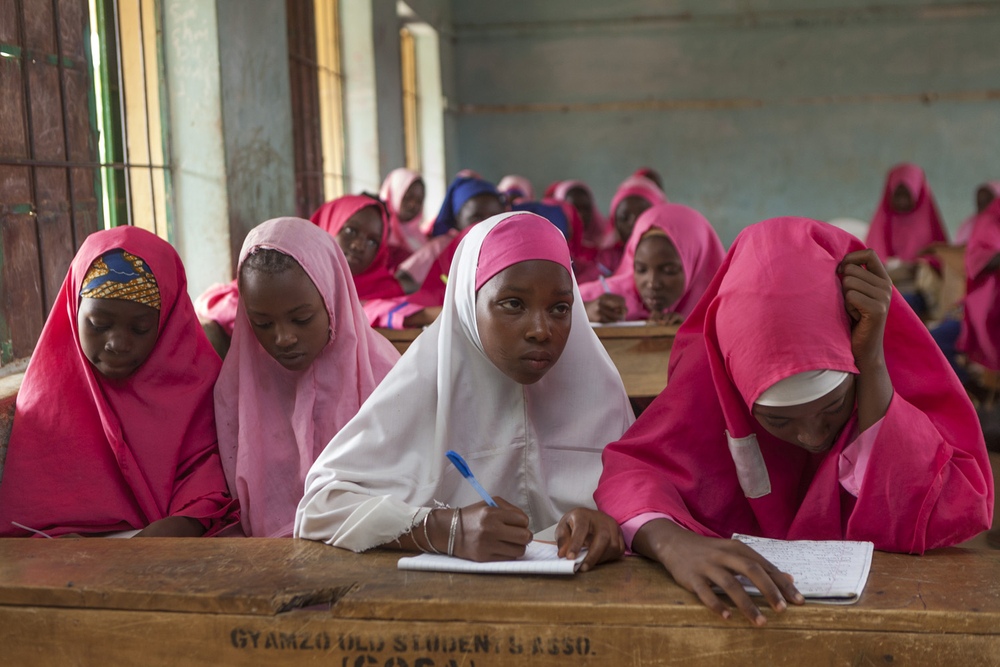
Several policies on education span across four decades, and yet Nigeria is still grappling with the menace of out-of-school children. Recent statistics from UNESCO projected a figure hovering around twenty million, with a significant portion of the children being the Almajiri Quranic students. 

Issues such as inconsistent government policies, poor implementation, inadequate funding, and limitations in terms of the scalability and scope of interventions provided by non-state partners and international donors have hindered efforts to address the problem. However, cultural and religious resistance remains a significant barrier.  

The classical system of Quranic Almajiri education imbibes Islamic teaching that every Muslim must acquire religious knowledge. However, culturally, the system aims to instill self-reliance and a sense of responsibility in the social and moral training of the child through hardship, toil, and hunger.

Sufism, the doctrine on which the system was founded, frowns at self-indulgence and believes asceticism and humility to be the hallmarks of a seeker of knowledge. This sentiment was echoed in the Weekend Triumph Newspaper of August 26, 1989, by Abdulkareem A. Bello, who describes the system as “the old wine in an old bottle”. 

In this article, Samaila Ado, an Almajiri in the Kano municipality, was reported to have said, “Our deplorable and wretched condition is a symbol of selflessness and humility.” According to Samaila, a true Almajiri is not concerned with worldly gains but rather is busy preparing for eternal life, which is more paramount.

Historically, the system had flourished owing to the support from the state’s public finances, the local community, and the philanthropic efforts from elites that catered to the modest needs of the children. During this time, the Almajiri scholars were artisans who, during their lecture-free hours, engaged in farming, fishing, well construction, production, masonry, trade, and tailoring. Most were farmers of the iconic Northern Nigerian cotton and groundnut pyramids. Some engaged in leather tanning and shoe and bag making in the old Sokoto empire. 

Sadly, however, the system has failed to adapt to the realities of the twenty-first century, with the modern Quranic Islamiyyas overshadowing the traditional Tsangayas and the Western secular education providing the safest route to climb up the socio-economic ladder. But more worrisome is the report that said six out of ten Almajiri pupils never find their way back home, and many lose their lives through street violence, ritual killing, kidnapping, disease and hunger.

Over the years, Integration has proven difficult due to the inadequacy of our policies. A careful analysis of the failure of Jonathan’s Almajiri integrated Model Schools by the Former Director of the Universal Basic Education Commission, Professor Ahmed Modibbo Mohammed, at Arewa House In Kaduna revealed that the lack of sensitisation and mobilisation of the nation affected the level of buy-in leading to a decrease in support and acceptance of the new system.  

Qualitative assessment research corroborated this analysis, carried out among Almajiri communities in Adamawa State. It demonstrated that including secular subjects was one of the major reasons parents did not welcome the program. 

Time and again, our policymakers have underplayed the subtle but widespread sentiment among the Islamic traditionalists who fear the new order poses the danger of erasing the cultural identity of the people. In a 2021 report published by The Resource Centre for Human Rights and Civic Education (CHRICED), Sheikh Bakura Assusaawi was remarked to have said: “Every Islamic scholar had gone through the system which shows us that there is indeed a great benefit in that system which we cannot afford to lose. There is no other help apart from helping the religion, and when we all neglect to do that, there is never a way forward.”

This allegiance to the old system and aversion towards Western education is rooted in the early events of the 20th century. On October 9, 1902, Fredrick John Lugard replaced Arabic & Hausa-Ajami (Hausa written with Arabic alphabets) with English & Romanized Hausa as the official language of Northern Nigeria. 

This single act in history changed the region’s educational scholarship trajectory. Not only did it render the rich knowledge produced in Ajami in the fields of humanity, science, and social science by the preeminent Sokoto caliphate obsolete and dying, but it relegated those proficient in this script to the background because to be “literate” and “employable” means to speak English and to write in the Roman script.

Tragically, the British also failed to recognise the Almajiri schools and abolished their state funding, tagging them as mere religious schools. This linguistic displacement brewed an identity threat in the people’s social psyche, igniting disdain and antagonism for the new system introduced by the colonial state and the Christian missionaries. 

Unfortunately, a century gap is still not enough to change the thought patterns of the Almajiri community. A recent story shared by a Twitter user about his late colleague’s son aptly drives home my point: 

The colleague had died, and the possibility of sponsoring the child’s education was hanging in the balance because the grandmother was standing in the way. She wanted the son to be enrolled in an Almajiri Quranic school instead of a secular Western school. 

The Twitter user was baffled because the grandma wouldn’t budge even when it was suggested that the child attend a formal school on weekdays and the Almajiri school on the weekends.

Many juxtaposing factors remain underpinning enrolment in traditional Almajiri education, barring socio-religious commitments and an aversion to Western education. These include rural-urban migration in search of greener pastures, disbanded families due to divorce or the death of the breadwinner, poverty, irresponsible parenting, and bad governance. 

Integration begins by fixing the stated problems, but reorienting society to the limitations of this age-long conservative approach to Islamic scholarship takes precedence.  Ever since the pilot scheme of 1964 to modernise Islamic schooling in the Northern Nigerian government headed by Sir Ahmadu Bello that ran successfully for few years before coming to a halt after his assassination, subsequent education policies namely Universal Primary Education (1976), National Primary Education Commission (mid-1980s), Universal Basic Education Act(2004) and Ministerial Committee on Madrasa Education (2009) which led to the establishment of President Jonathan’s Almajiri Model Schools have suffered detrimental setbacks.

Policies are cathedrals in the grand scheme of things; reality is the quicksand sinking them to the bottom. The government and relevant stakeholders must develop the political will to implement policies to their very ends. Most importantly, they must engage in intensive enlightenment, mobilisation, and re-orientation of the populace through the mass media, town hall meetings, and active involvement of the traditional Ulamas and leaders. 

AbdulMajid Haruna is an education thought leader and an inclusive education advocate primarily focused on vulnerable Almajiri children. He can be reached via abdoulmajeed570@gmail.com.

Lakurawa as a diversionary tactic

By Prof. Abdussamad Umar Jibia

For nearly a decade, the North West geopolitical zone of Nigeria has been suffering from the menace of banditry. The bandits who live in the vast forest spanning several states in the Northwest and North-central zones started as cattle rustlers before metamorphosing into fully pledged armed robbers. They attack communities, schools, travellers, etc. Wherever they go, it is a story of killing, kidnapping, rape, arson and other unprintable atrocities. 

Bandits lack the civility of the erstwhile armed robbers. In those days, armed robbers only sought money and valuables like jewellery. Once they had them, they were satisfied and would leave without dropping blood. That is not the case with bandits. When they visit a community or block travellers on highways, they usually start by killing some before kidnapping others. 

Payment of ransom is not a guarantee of getting the kidnapped victim freed. They may collect ransom from relatives and still kill the victim. There are many examples. 

Bandits’ locations and leaders are well known to the Government and members of the communities in which they operate. Many of them serve as the de facto government in their domain of operation. This is not a story I am telling from one of those video clips circulating on social media. Some of my blood relatives have been going to work on the farm of the bandits’ kingpin, who is in charge of their area. 

To agree to live under the protection of an “officer”, the de facto rural government of Jibia and Batsari, a village has to send its elders with some money to go and beg for him to accept them. You may wish to go back to my writeup on “Submission to bandits authority”.

However, an “officer” is not the only bandit leader known to the government and the people. There are more deadly and more popular “officers”. One of them is Ado Aleru, who killed dozens of villagers in Katsina State and told the BBC Hausa service that he doesn’t kidnap; he only kills. Asked to give the number of people he killed, he said it is too large to remember.

Another officer is Bello Turji, who, among other crimes, once burned a passenger bus with 30 people in it days after opening fire on a village market that claimed 60 lives in Zamfara state. He is popular because he speaks frequently to the public. That, however, doesn’t make him the deadliest.

Dogo Gide is another “officer” who was notorious for, among other things, the abduction of 90 students and teachers of FGC Yauri, 11 of whom he married off in the process. 

Among the many popular “officers” is Dankarami, who publicly confessed to killing many combined troops of Nigeria and Niger Republic in addition to kidnapping and killing many innocent citizens in Katsina and Zamfara state. 

The above crime leaders and several others in their category are still alive and active.

The Buhari administration made the first blunder in dealing with the menace of banditry. The federal government under Buhari asked governors of the affected states to strike a peace deal with the bandits. Peace agreements were sealed between some state governments and bandits in 2016 and 2019; in both cases, the latter reneged. 

Unlike what some of their sympathisers would want us to believe, the bandits are not freedom fighters but pure criminals and stark illiterates. The only thing that would make them drop their weapons is a continuous flow of cash from the Government, the kind of cash they make from their criminality. That is unrealistic for a Government struggling to pay its civil servants a paltry minimum wage. Hence, the peace deals were failed under Buhari.

Bandits’ sympathisers who gave Buhari the wrong advice have found their way into the Tinubu Government. The first indication of that is what a young Islamic scholar revealed early this year. The scholar alleged that, under the financial influence of unnamed federal defence officials, some Islamic scholars are campaigning for not just amnesty for bandits but their appointments into public offices by the government. He alleged that he was among those invited to participate in the campaign but refused.

As far as we know, the federal government did not deny Sheikh Koza’s claims. If he had lied, he would have been arrested and asked to name the defence officials. Neither of those things happened.

Then came the kidnap and murder of the Emir of Gobir. With the public outcry that followed, the Federal Government had to show its will to fight banditry. Thus, the Minister of State of Defence and service chiefs were asked to move to Sokoto and end banditry. However, despite the budget, since the movement of the minister and service chiefs to Sokoto, the only bandit of note who was killed/arrested by the Government is Halilu Sububu. Banditry business has continued as usual, even with the presence of our nation’s security heavyweights.

For example, as reported by national dailies, the Funtua-Gusau highway was blocked by bandits on several occasions during this period with no consequences. For frontline local Governments in Katsina state, the attacks became worse. The only place considered safe in my local Government area was Jibia town, the local government headquarters. However, since the so-called “Operation Fansan Yamma” started, Jibia town has lost its safety as bandits attacked, killed and kidnapped with impunity.

As Nigerians were waiting anxiously for the expected miracle due to the presence of security chiefs, the Lakurawa issue came up. According to sources, Lakurawa is a group with similar ideologies to Boko Haram. They have a total number of just 250 in Nigeria and no cases of frequent attacks on communities. Lakurawa militants are said to have been in Nigeria for some years at the instance of some Kebbi communities who sought their protection against bandits. 

The question here is, why is the issue of Lakurawa now being brought up when we have a more serious problem to solve? Lakurawa are obviously not as dangerous as the bandits, and their presence in Nigeria has been linked to the failure of the government to protect citizens from bandits.

From day one, the approach of this and immediate past governments has made Nigerians believe they are not ready to end banditry. If they are now talking about some Lakurawa instead of our real problem, why should we not think they are using it to divert our attention?

My advice to President Tinubu is to remember that he was elected by Nigerians. Ribadu, Badaru, Matwalle or Christoper Musa did not contest and win an election. The president is responsible for appointing his aides, continuously monitoring them, and ensuring they are doing the right thing.

That the officials mentioned above are Northerners is immaterial.

Professor Abdussamad Umar Jibia wrote via aujibia@gmail.com.

Addressing Nigeria’s insecurity crisis 

By Fatima Dauda Salihu

Nigeria is a beautiful country with diverse cultures and vibrant people. Unfortunately, insecurity has become a significant problem in recent years, causing many to live in fear and struggle to access essential services. 

Despite being culturally rich and endowed with abundant mineral resources, Nigeria struggles with insecurity primarily due to negligence by the government and its citizens. Nigeria faces insecurity challenges across all six geopolitical zones. This insecurity takes various forms, including insurgency, terrorism, communal clashes, banditry, kidnapping, and piracy, and is fuelled by deep-rooted socio-economic, ethnic, and religious tensions.

The consequences of insecurity in Nigeria are dire, leading to displacement of communities, loss of livelihoods, economic stagnation, human rights abuses, and psychological trauma.

Effective governance is critical in addressing insecurity. The government must provide leadership, resources, and policy direction to tackle insecurity. Citizens also have a vital role to play by engaging in community policing, reporting suspicious activities, and promoting tolerance. 

The private sector can also contribute by investing in security initiatives and socio-economic development projects. Civil society organisations can advocate for policy changes and community empowerment. We can restore peace, stability, and prosperity to Nigeria by working together.

Strengthening institutions and promoting good governance, investing in education, enhancing security infrastructure and capacity building, promoting community engagement and conflict resolution, and addressing socio-economic inequalities can help mitigate if not. 

In conclusion, addressing the challenge of insecurity in Nigeria requires a holistic and multifaceted approach that encompasses effective governance, community engagement, strategic coordination among security agencies, and long-term investments in education and socio-economic development.

Ultimately, Nigeria’s future depends on our collective ability to address insecurity and promote peace, stability, and development. We owe it to ourselves, our children, and future generations to take action and create a better Nigeria.

Fatima Dauda Salihu wrote from Bayero University, Kano

Multiple blows to a reactive North: Emilokan na your mate? 

By Shettima Dan’Azumi, ESQ

Northern Nigerian states are gradually losing a significant portion of their Federal Accounts and Allocation Committee (FAAC) allocation shares, which is undoubtedly their biggest revenue source. From the Local Government Funds and Fiscal Reform Bills to dividends from NLNG shares of NNPC and, today, the National Lottery, all these are part of the pool that makes up the monthly national cake distribution known as FAAC.

These developments are not surprising to any student of development. We all saw it coming. Early this year, the Supreme Court, in a suit filed by the Federal Government, scrapped the States and Local Government joint account, which had previously entrusted local government funds to their respective states.

In another case, the Supreme Court also agreed with the AGF’s argument. It held that the NNPC’s stake (shareholding) in the NLNG, unlike the NNPC itself, actually belongs to the Federal Government, not the entire Federation. Those billions of dollars accrued to NNPC from NLNG annually are no longer to be shared with the States as part of FAAC. 

Similarly, VAT, a chunk of the non-oil revenue currently shared based on equity, derivation, and population formula amongst FG, States, and Local Government, will, if Emilokan’s Executive Bill succeeds at the National Assembly, now be shared based on derivation or consumption or both. Either way, I don’t see how the North can benefit. I will get to the reason shortly. 

Then came today, another blow in a Suit initiated by the Lagos State Government. The Learned Justices of the Supreme Court, while granting all the reliefs sought by the AG of Lagos State, held that revenues accrued to the Federation through the National Lottery Commission from the regulation and royalties of lottery and other online games are in reality within the Residual Legislative List, exclusive to States to regulate and generate revenues from. 

I believe there may be more of these seemingly harsh interpretations of the law in the near future because that is what the Constitution actually contemplated. 

If you put these chains of events together, you would only come to one conclusion: that full federalism is taking a crude shape in the country against the wish of everyone. We would have prepared for this time if northerners had been thoughtful and proactive. We would have confronted the issue of restructuring with strategy rather than our usual rejectionist attitude to achieve it on our terms and put a timeline for gradual implementation to minimise its impact. With our sell-out NASS members, who either do not appreciate where all this is headed or have been bought to look away, it’s only a matter of time. May Allah rest the soul of Senator Suke Yaro Gandi and the rest of his contemporary visionaries and patriots. 

What should we expect now? Our FAAC-reliant states will receive a shorter allocation. If VAT is to be shared based on derivation, then most of the Corporate Headquarters of businesses where the remittance of VAT takes place are far away from the north. What if it’s to be shared based on consumption? The follow-up question is: how do you determine the end users when you don’t have the data to prove where it is consumed? Even if this data exists, most of our businesses in the north, including Kano State, are not formal businesses, so their distributors are in Lagos and other Southern States. Our traders are running away from the institutionalisation of corporate governance frameworks in their businesses, which will give them the capacity to deal with manufacturers and wholesalers directly and document their dealerships properly. We are simply traders. 

The lottery is worse because most states think the whole business is haram. But, wait, is it not the double standard that you are operating a secular state, collecting VAT revenue generated from breweries and royalties from casinos, including the lottery, for all these years while still believing it’s haram? At least, it would soon be over, and we shall stick with halal revenues.

To cut a long story short, the North must wake up on governance and development issues. The culture of electing clueless governors and the dominance of corrupt and soulless political class must end. We must pay more attention to our manpower and skills development policies and reform our education systems because that’s what all these boil down to. EDUCATION! Our youth must stop social media praise-singing and political sycophancy and embrace education and skill acquisition. Our businesses must adopt corporate governance and innovation and be more industrious and forward-thinking. 

Because Emilokan is not your mate.

Tinubu mourns Ahmadu Kurfi’s death

By Anas Abbas

President Bola Tinubu expressed his condolences to the government and people of Katsina State following the death of Alhaji Ahmadu Kurfi, the Maradin Katsina and district head of Kurfi. 

Alhaji Kurfi, a distinguished elder statesman, was renowned for his significant contributions to public service throughout his career. Notably, he served as the executive secretary of the Federal Electoral Commission (FEDECO), playing a crucial role in overseeing Nigeria’s transition to democratic rule in 1979.

President Tinubu praised Kurfi’s exemplary dedication to the nation and humanity, urging current public servants to reflect on the legacy he has left behind.

The President also offered prayers for the eternal peace of the late elder statesman and extended his deepest sympathies to Kurfi’s family during this difficult time.

The passing of Alhaji Kurfi marks a significant loss for Katsina State and the nation as a whole.

The challenging job of being a popular ‘Ustaz’

By Ibrahim Suleiman Ibrahim

One thing about being a public figure is that it deprives you of your nature to be human (one bound to make mistakes). Moreover, it makes you lose your private life, as everything you do is often turned into a public affair.

It’s even more troubling when you’re a religious public figure who is commonly referred to as an Ustaz because you’d have to go the extra mile to pretend to be who you’re not sometimes to remain in people’s good book.

Now, imagine having to tender an apology and an explanation to an entitled public for your personal affair, which they consider inappropriate, or risk being bullied. Some of these issues that raise concerns are debatable or even irrelevant.

People with visible flaws would even be the ones at the forefront of bullying you when you derail from their definition of saint or Ustaz just because they expect you to be completely flawless.

Nobody would understand the irresistible youthful exuberance, satanic temptation, peer group influence, and other factors that might have led to your deviation from the path of saintliness. 

Anyway, such prestigious recognition and status come with a price. So, I can say that’s the price you’d have to pay for being what so many people are not.  

It is more important to please God while being true to your conscience than trying to please humans, as pleasing humans can never be completely achievable.

Ibrahim Suleiman Ibrahim wrote via suleimibrahim00@gmail.com.

Cultural diversity and its benefits in Nigerian education

By Waliyat Ayomide Oseni

In an era increasingly defined by globalisation and interconnectedness, cultural diversity has become pivotal in shaping educational frameworks worldwide. In Nigeria, a nation rich in ethnic plurality and cultural heritage, cultural diversity within educational institutions assumes strategic importance.

Cultural diversity refers to various cultural, ethnic, and social backgrounds represented within a community. Nigeria is often called a “melting pot” due to its numerous ethnic groups, languages, customs, and traditions. This diversity can enrich the educational experience, providing students with a broader worldview and enhancing their understanding of global issues. 

Nigeria is a diverse country with over 250 ethnic groups and more than 400 languages spoken, reflecting a rich cultural tapestry. This diversity is fundamental to Nigerian society and contributes to its vibrancy and uniqueness. Ethnic groups such as the Hausa-Fulani, Yoruba, and Igbo, among others, each bring their traditions, languages, and customs, creating a mosaic of cultures across the nation. 

Religious diversity is also prominent, with Islam, Christianity, and traditional African religions coexisting harmoniously. This cultural richness is celebrated through various festivals, ceremonies, and events, showcasing the country’s diverse heritage and promoting unity among its people.

One of the most significant benefits of cultural diversity in Nigerian educational institutions is promoting critical thinking and problem-solving skills. Diverse classrooms encourage students to engage with differing viewpoints, challengepreconceived notions, and foster respect for others’ beliefs and practices. This exposure sharpens analytical skills andcultivates empathy and social awareness, which are crucial for functioning in a diverse society and workplace. 

Diversity also fuels creativity and innovation in the learning process. When students are encouraged to collaborate across cultural boundaries, they combine unique experiences and ideas, leading to imaginative solutions to complex challenges. 

For instance, blending cultural perspectives in group projects can enhance creativity and result in more comprehensive and multifaceted outcomes. Educational leaders who emphasise collaboration among students from diverse backgrounds can harness this potential, creating an environment that nurtures innovative thinking.

In addition, extracurricular activities such as cultural festivals, language clubs, and international exchange programs can enrich students’ learning experiences and promote cultural appreciation. These initiatives foster community and belonging while encouraging students to celebrate their unique identities.

In conclusion, cultural diversity within Nigerian educational institutions offers many benefits, including enriched learning experiences, enhanced critical thinking, and improved interpersonal skills. Educators play a vital role in embracing this diversity and fostering an inclusive environment where every student can thrive. As Nigeria continues to navigate its identity within a global landscape, prioritising cultural diversity in education will undoubtedly enrich the learning experiences of future generations and contribute to the nation’s development.

Waliyat Ayomide Oseni wrote from the Department of Mass Communications, Bayero University, Kano.