Nigeria

Hushpuppi: Abba Kyari has a case to answer, says Malami

By Ahmad Deedat Zakari

The Minister of Justice and Attorney General of the Federation, Abubakar Malami (SAN), said reasonable grounds for suspicion had been established against the embattled Deputy Police Commissioner, Abba Kyari.

Malami disclosed this while featuring on Channels Television’s ‘Politics Today’ programme on Monday, February 7.

According to Malami, “Reasonable grounds for suspicion have been established, and that will eventually translate to the possibility of prosecution and conviction if indeed one is adjudged guilty by the law.”

The discussion became necessary due to Kyari’s alleged involvement in a $1 million scam allegedly involving the international internet fraudster, Ramon Abbas, alias Hushpuppi and five others. 

Malami also noted that justice would be done, “It is an issue that has international and national dimensions. Actions have been taken, it is a work-in-process locally and internationally, and we are doing what it takes to ensure justice is done within the context of law regardless of the personalities that are involved,” He said.

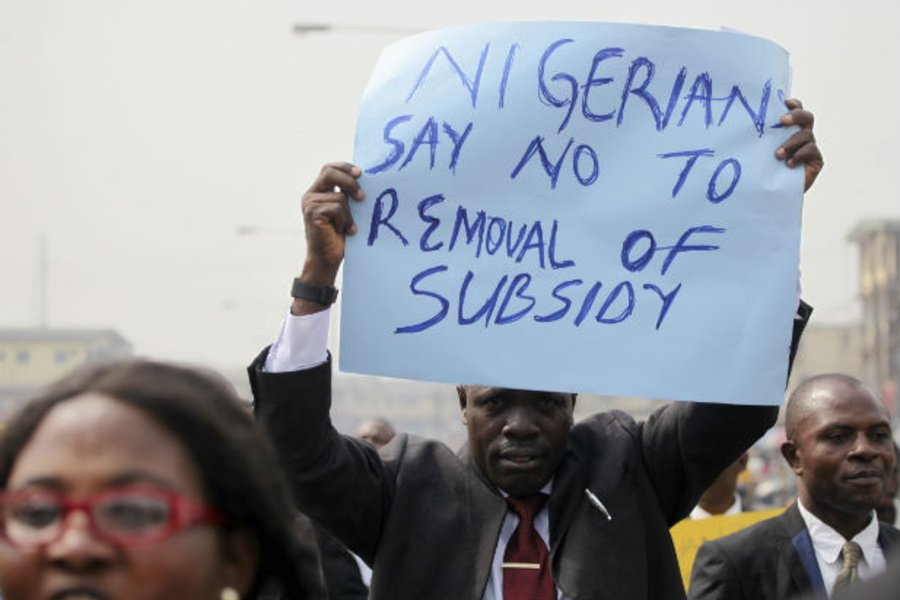
Subsidy Removal: Is Nigeria on the verge of collapse like Lebanon?

By Sa’adatu Aliyu

In August 2020, the Port of Beirut came under explosive attacks, which shook the country’s very foundation. After many reports came in after that, it was said that another attack to have shaken the country with such intensity was that which killed the then Prime Minister Rafik Hariri in 2005.

Before the explosion, however, Beirut had been struggling with its economy, thanks to its widespread corruption. That already had it standing at the doorstep of the World Bank begging for financial relief. It also saw many of its populace unemployed, uncertain of the future.

Therefore, for a country already grappling to pay its citizens their salaries, with families finding it increasingly hard to feed their children or send them to school, the explosion added fuel to the fire. After much investigation, it was gathered that the port officials had been indirectly responsible for the incident, which killed and injured many. This is because the large amount of chemicals initially bound for Uganda was instead stashed up in the Beirut port, left without any safety preservative precautions taken to prevent an imminent attack.

After that, Beirut was indeed to see itself knocking at the gates of the World Bank, yet again-if once silently and with patience – then now it was with desperation for help. It would, in fact, at this point turn its hands to accept any offer coming in from any country but most importantly, the Saudi government with which it maintains a close political tie.

What makes me liken the Nigerian state to the status quo in Beirut is its corruption and the most recent proposition by the government on the possible removal of fuel subsidy. For a country whose system is heavily built on corruption and even more so we can say still thrives because of it, I am afraid to say that I hope we, too, do not one day wake up to the smokes of our country in flames with everyone running helter-skelter in search for safety.

Beirut’s reality stares Nigeria in the face. The trudging of its imminent collapse is ever so closer. Abject poverty remains the order of the day with the larger part of the population living below one dollar; price for education forcing worry heaves and sighs out of its largely lower-middle-class population, price of food items costing twice more than before. To make matters worse, the state of our country’s security has never been so fragile and then to have life becoming more difficult by the removal of fuel subsidy by a government on which many have placed the hope of a better living condition is to assert to the population that the government lacks any sense of good direction.

I don’t want to sound pessimistic. However, with the country’s challenges rising every day and a government that focuses more on enriching themselves and their families, I cannot see a brighter future for us either.

With the drama in display and the Nigerian state calmly maintaining its dance on the tracks of lagging-behind countries, and as we face yet another upcoming election next year, I pray we do not wake up to the scorching burns of increased crime rate, escalating terrorism, among other ills.

One thing that doesn’t require divine telling is that Nigerians have never felt more apathetic towards the system. We are all bracing for what lies ahead.

Sa’adatu Aliyu comes from Kogi state. She is a graduate of English Language from Ahmadu Bello University, Zaria and a Masters student in Literature at the same institution. Her email is saadatualiyu36@gmail.com.

Sympathising with a criminal is a crime itself

By Usama Abdullahi

Nothing could be scarier than seeing some people sympathising with the ruthless murderer of little Haneefa Abubakar. Anyone who does that does it out of unflinching apathy toward human’s life. Liu Jan, a Chinese billionaire businessman, was convicted of murder and executed in February 2015 simply because he ran a mafia-style gang. Likewise, one of his siblings and some other three associates were executed. 

If this could happen in a well-evolved, progressive and most populous country on earth, I wonder why it wouldn’t happen here in Nigeria. Does it mean Nigerians are the most softhearted people in the whole wide world? Of course, no. If issues of sympathy arise, I bet many Nigerians would bury themselves in shame because they are wont of barbarism.

Our hypocrisy knows no boundary and is second to none. It’s deep-rooted, and we seem not ready to change for the better. Innocent poor people are cruelly barbecued as chickens and kidnapped daily, yet the (un)repentant criminals are warmly received and mollycoddled. Their barbaric actions are overlooked. Unfortunately, those wounded and displaced to new unfavourable suburbs are left unaided.

It’s a grave sin to glorify or pardon criminals whenever they fake repentance. This is why our country breeds a generation of stubborn criminals and why insecurity thrives. Actually, we do no justice by neglecting the fact that those criminals are worthless and deserve to be tortured to death just as they did to our brothers and sisters.

We escalate the precarious situations of our dear nation by being soft on criminals. No doubt that laws in this country are imposed upon the labouring classes or less privileged ones. If the needy steal to feed their bereaved or starved families, they are burned to ashes when caught by mobs who are thieves themselves. Those disadvantaged are primarily refugees and victims of bad governance. I’m not trying to justify their crimes either. No, I am not. 

But who do you think should be burned to ashes unhesitatingly? Yes, the real unsparing and often politically sponsored criminals, I suppose. It’s true that the so-called sympathisers neither mourn the slain nor denounce the slayers. On the contrary, they are quick to condone and gloat over innocent people’s death. One who sympathises with a criminal is either crueller or no different than the criminal himself.

By excusing barbarism, we are trying to eliminate these two words, “deterrence” and “justice”, from our constitution. If criminals are not punished accordingly, there’s no “deterrence”; many people will probably carry out their unlawful activities without fear. And if justice can’t be done too, then this society is lawless. Until Haneefa’s murderer, Abdulmalik, faces the death penalty, I will never forgive our judicial system.

Usama Abdullahi wrote from Abuja, Nigeria. He can be reached at usamagayyi@gmail.com.

Suspension of subsidy removal: Nigeria narrowly escaped collapse 

By Lawan Bukar Maigana 

The Nigerian government was lucky enough to salvage itself from the intractable calamity it wanted to put itself in—the implications of removing subsidies on petroleum products from July this year. Whoever advised FG to suspend their noxious plans to remove subsidies on the products mentioned above is a true lover of the vast majority of Nigerians and Nigeria as a country.

Even though virtually every country in the world today battles an economic downturn, it is still unjustifiable for the FG to remove subsidies on petroleum products at this critical point. The country is fighting ethnoreligious conflict, refuse-to-end Boko Haram, kidnapping, banditry, mass employment, non-quality education, poor health services for the masses, illiteracy, and unpatriotic leaders, which other countries or most don’t. 

I said it even before the government took a second look at its ugly plan to make subsidies on petroleum products history at the detriment of patients citizens. Had the plan come true, the country would have scattered, and perhaps the avoided fear would have been unavoidable because no one can bear the impact of removing subsidies on petroleum products, not even the haves can. 

Nigeria would have had an unprecedentedly historic hike in foodstuff prices, transportation fare, building materials, medication, among others. And there would be a collapse of many companies in the country because they too cannot bear it, and the cost of living would be unbelievably unexplainable. 

The inflation rate has never been so alarming as today in the country, and it keeps rising every day. Yet, the FG wanted to turn a blind eye to it and remove subsidies on petroleum products from July this year until a group of genuine professionals reviewed the plan and finally rejected it because of the nation’s current state. 

Kudos to the considerate committee for being truthful to themselves. Every reasonable person knows that doing anything that will result in a hike in prices of commodities and services in Nigeria is untimely because most people are still ‘youth.’ Anyone who is economically unestablished is a youth regardless of their age. 

In 2021, the National Bureau of Statistics (NBS) extrapolated that “ Nigeria’s annual inflation rate rose to 15.63% in December of 2021, after eight straight months of decline, amid a slight acceleration in prices of major component food (17.4% vs 17.2% in November), linked to the increase in demand during the festive season. Upward pressure also came from non-food products, including transport (15%, the same as in November); clothing & footwear (15.1% vs 14.8%); miscellaneous goods & services (14.1% vs 14%); housing & utilities (11.1% vs 10.6%), among others. 

The annual core inflation rate, which excludes the prices of agricultural produce, rose further to 13.87% in December, the highest since April of 2017, from 13.85% in the prior month. Monthly, consumer prices inched up by 1.82%, the most since May of 2017, after a 1.08% increase in the prior month.

The Consumer Price Index (CPI) measures the change over time in the prices of 740 goods and services consumed by people for day-to-day living. The index weights are based on expenditures of both urban and rural households in the 36 states. The most important categories in the CPI are Food and Non-Alcoholic Beverages (51.8 per cent of total weight); Housing, Water, Electricity, Gas and Other Fuel (16.7 per cent) and Clothing and Footwear (7.7 per cent). 

Transports account for 6.5 per cent of the total index and Furnishings and Household Equipment Maintenance for 5 per cent. Education represents 3.9 per cent of total weight. Health is 3 per cent, Miscellaneous Goods and Services 1.7 per cent, and Restaurants and Hotels 1.2 per cent. Alcoholic Beverages, Tobacco and Kola account for 1.1 per cent of the total index, Communications for 0.7 per cent and Recreation and Culture for the remaining 0.7 per cent.” 

So, tell me how we can endure the impact of removing subsidies on petroleum products in Nigeria? I am happy that the Nigerian government has indefinitely suspended the planned removal of subsidies on petroleum products. 

Lawan Bukar Maigana writes from Maiduguri, Borno State, and can be reached at lawanbukarmaigana@gmail.com

Is the Nigerian public still divided over 2023?

By Kabiru Danguguwa

January 15, 1966, was the beginning of ethnopolitical division in Nigeria, followed by a civil war a year later. One may argue that colonialists initiated this division when they amalgamated the two, perhaps unrelated, protectorates for easy administration and exploitation in 1914. This manifested in the political parties formed on ethnic lines as a prerequisite for self-rule. Whatever the genesis of our division might be, January 15 1966, has been instrumental.

Different regimes have made several attempts, perhaps in vain, to create unity in diversity to address the above issue. Unfortunately, our democracy has not been a solution either. In a book chapter published in 2018, I argued that Nigeria’s democracy had recorded only one achievement. That’s the sustenance of “democratic rule” since 1999 without the return of the military. This is an outstanding achievement indeed. Thus, I conceptualised Nigeria’s democracy as an electoral democracy.

One of the most critical steps in electoral democracy is the transfer of power from the military to civilians, which happened in Nigeria in 1999. The remaining significant features are conducting elections as provided by the constitution and governing citizens with at least some concern of the process of law. From 1999 to 2019, we witnessed six general elections every four years as the constitution demands. The government also, to some extent, care about the citizens. Political science students may agree that we are operating above a facade democracy and, of course, below the liberal democracy found in the West. Put simply, unlike some countries in Africa and Latin America; we keep our military in the barracks and other places they constitutionally belong.

On the other side of the coin, the 23-year old Nigeria’s democracy is full of conundrums. The democracy is so illiberal that some citizens think of going back to the colonial era or the least, returning to military dictatorship. We often celebrate former military heads of state, especially when comparing them with civilian leaders. We almost unanimously prefer the military personalities of the people that ruled as military heads of state to their characters as civilian leaders. What is wrong with our democracy?

As 2023 approaches, just like the previous general elections, Nigerians are being divided over the choices of political parties and candidates that will govern the county. Several divisions emerged; some have been with us since the 1960s, while others were recently created. The North-South division might have come to stay. Southwest-Southeast has also been there for decades. There’s also Igbo versus the rest of Nigeria, mainly connected to January 15, 1966, and the Civil War.

There are at least two recently created or popularised divisions: Yoruba versus the rest of Nigeria and Yoruba versus the North. The duo, especially the former, is connected to the alleged concentration of the present government’s efforts on the welfare and well-being of Lagos and Lagosians.

Other popular divisions are APC-PDP and intra-political party rivalry between camps and political groups. I don’t believe in the religious division, for there are many Christians in the North and numerous Muslims in the South. There is Nigerian youth versus old-timers rift.

Political trends show that Northern Nigeria is more united politically. The North showcased its unity in 2015 when Boko Haram was on the verge of crippling socio-economic activities in the region. Out of optimism, people hated the regime of the day in favour of a Northern candidate. Forgive my conceptualisation of the North to include those who see themselves as Northerners.

There is a need for another unity as the region faces another severe problem mightier than pre-2015 general elections. In 2023, we must gear our unity using our strengths to present candidates who can deliver irrespective of their backgrounds and political parties. The South has never, since 1999, been united, but Yorubas have been. Look at how Southwest (Lagos), with Vice President, has been benefiting from this administration at the expense of the entire country. I firmly believe that we should only be united, not too ambitious. They say “politics is a game of numbers”, and we have the “numbers”.

Kabiru Ibrahim Danguguwa lectures at the Department of History and International Studies, Yusuf Maitama Sule University, Kano. He can be reached via kabiru.ibrahim87@gmail.com.

The role of a writer, first off, is to inform: A response to Rabiu Jibril’s letter to Prof. Farooq Kperogi

By Ambali Abdulkabeer

On January 22, 2022, a seemingly terse letter by one Muhammad Rabiu Jibril to the perennial critic of Nigeria’s asphyxiating political system and its enablers was published by The Daily Reality, an online news medium headquartered in Kano. In the letter, Bashir writes about Kperogi’s consistent verbal umbrage at Nigeria’s geriatric political stagers and asks him to recommend a candidate for Nigerians in the 2023 elections. Bashir implicitly hints that faulting our leaders alone won’t suffice. More worryingly, several people who commented on the letter challenge Kperogi to, in lieu of writing belligerent, “big grammar” articles to condemn all the candidates currently available for Nigerians to pick from in 2023, come out and participate in the laborious task of choosing a leader for Nigerians during elections. That, to me, seems ignorant at best and unwarranted at worst. Here is why.

We need to understand that political participation is in layers. In other words, our involvement in politics, as significant as it is, can take various forms. Some of these include voting during elections, participating in mature political campaigns, conducting political sensitisations especially in places far removed from the mainstream politics, holding political positions, donating money to a political cause (in the interest of collective prosperity), participating in meetings that keep citizens close to their leaders and blogging writing about political happenings.

It’s unarguable that Prof. Farooq Kperogi is renowned for one or all of the above. As a dyed-in-the-wool political commentator and justice advocate, he writes consistently about political issues. His writing has propelled many public decisions that have shaped the country’s economic, social, cultural and political trajectories. His weekly political columns are devoted to critically analysing the myriad of sociopolitical issues bedevilling Nigeria in the last three decades or more. For me, this is a heavier role to assume by someone who, despite not being directly affected by several political diseases in the country, takes his country’s progress as a priority.

The fact that Kperogi has taken it upon himself to right the wrongs of the monsters in power by exposing their egregiously corrupt practices, not minding the consequences, should be enough for us to know that he wants the best for the country.

Ngugi wa Thiong’o, the Kenyan man of letters, aptly reminds us about the responsibility of a writer in his essay “Writers in Politics: The Power of Words and the Words of Power” when he argues that writers in politics operate within complex forces. He refers to them as people who risk many things to create a befittingly just world. One of the paragraphs in the strongly-worded essay is worth quoting here:

“He (writer) must reject, repudiate and negate his roots in the native bourgeoisie and its spokesmen, and finds his true creative links with the pan-African masses over the earth in alliance with all the socialistic forces of the world. He must, of course, be very particular, very involved in a grain of sand, but must also see the world past, present, and future in that grain. He must write with all the vibrations and tremors of the struggles of the working people in Africa…behind him. Yes, his work must show commitment, not to abstract notions of justice and peace, but the actual struggle of African peoples…and be in position to lay the only correct basis for real peace and real justice”.

In all fairness to Prof. Farooq Kperogi, his writing has always been within the prism of the above-identified responsibilities of writers, especially those who are caught up in the terrible sociopolitical conditions of countries like Nigeria. Nigeria is plagued by existential problems, including bad leadership, mass ignorance, and smelling regional biases exemplified in people’s attitudes toward the establishment and others. Therefore, for anything, any writer that informs their people and unrelentingly writes to challenge the status quo by giving the blueprint for emancipation and genuine leadership, which Nigeria truly needs, doesn’t deserve ill-founded condemnation.

This is not to argue that Prof. Kperogi’s political essays are watertight recommendations; it’s hard to discredit the courage and foresight his work forges for concerned Nigerians. Perhaps, this is what Breyten Breytenbach means in his polemical essay titled “The Writer and Responsibility” when he says, “a writer, any writer, to my mind has at least two tasks, sometimes overlapping; he is the questioner and the implacable critic of the mores and attitudes and myths of his society, but he is also the exponent of the aspirations of his people”.

Those who have commented on Jibril’s letter by calling Prof. Kperogi out should know that it takes massive grit to do what he is doing. They should know that his writing is really helpful. Even though he is not in Nigeria, he is doing what many Nigerians who are direct victims of the mess the country is enmeshed in can’t or fail to do. Of course, many scholars in Nigeria should have taken it upon themselves to inform the public through writing and go against the grain in the interest of a better Nigeria.

I would end this essay this way: Voting during elections isn’t the only way to participate in politics. Before voting, voters need to have the required knowledge of the process and understand the qualities a responsible political aspirant should possess. They must also come to terms with the power dynamics in the country and know who is fit to say this and that on their behalf. This is the leitmotif in Kperogi’s writing. So, before launching baseless ad hominem digs at a patriotic Nigerian who is voluntarily doing his part to fight for a country we can all cherish, we should understand that the role of a writer, first and foremost, is to inform. And that is exactly what Prof. Kperogi is doing.

Ambali Abdulkabeer is a writer and critic of contemporary writing. He can be reached via abdulkabeerambali@gmail.com.

Domestic service or domestic slavery?

By Yusuf Shuaibu Yusuf

Though there is still one form of slavery or the other worldwide, I was particular on this topic after watching recent footage showing how a housemaid was savagely killed by her supposed Arab employer. I, therefore, aim to join multiple voices clamouring for the governments of some Gulf countries, United Nations and other international communities to end the practice of domestic servitude whose victims are primarily African and Asian migrants. These poor people are stuck in many Gulf countries. The housemaids undergo horrendous treatment. Among these victims are many Nigerians who leave their country for political or economic reasons. 

At first, I couldn’t have expounded on issues so sensitive as this, even more so, as it involves the place of birth of our Noble Prophet, the country inhabiting the holy sites, the Qibla and the pilgrimage of any Muslim. Still, the issue at hand transcends any sentiment. 

While many Arabs in Gulf countries are piously angelic, treating their housemaids with honour and dignity, others are contrary to that. Instead, they are fiendishly sadistic as they take delight in humiliating their African and Asian housemaids, turning them into modern-day slaves.

Since time immemorial, it has been a long tradition for African Muslims to stay in Saudi Arabia and work as domestic servants after performing their religious obligations. Consequently, domestic service in Saudi Arabia came to be considered lucrative jobs among many Asians and Africans, particularly Nigerians.

Recently, due to political and economic challenges, Nigeria has witnessed the proliferation of bogus travel agents who fill their clients with utopian ideals about Gulf countries and who themselves are loosely linked with the recruiting firms in those countries. Desperate to leave the country, these clients easily fall for these lies and illusions. Hence, there has been an influx of youth from Nigeria into Saudi Arabia, Oman, Dubai, Qatar, Lebanon and some few Arab countries in Africa like Libya and Algeria. 

While most of the pilgrims working as domestic servants in Saudi Arabia before were primarily people of diverse age and sex, the recent influx has seen political refugees and economic migrants constituting of youth – predominantly females. Some of these migrants usually become disillusioned a few days after their arrivals in such countries as their recruiters leave them at the mercy of their employers. Having nobody to turn to for help, they often become subject to molestation and other forms of gender-based violence.

Women are believed to be more exposed and vulnerable to all sorts of these harassments than men. Perhaps their relatively delicate biological constitution and the fact that most of them live in the same compounds with their employers heighten their risks of being abused. 

The emotional story of “Sarah”, a Ghanaian maid in Lebanon who narrowly made her escape from the abusive family she had been working for, is an excellent example of how prone to abuse housemaids are. Sarah is not her real name for privacy sake. Shortly after her escape, she narrates to Mark Stone, a Middle East correspondent, how she was raped at knifepoint by her employer’s brother while taking a bath. 

It was also recounted, in another video clip, by a former housemaid in one of the Arab countries that a housemaid can be called to work at any time. A housemaid is not assigned one particular job like cooking, cleaning, or attending to children. Instead, she is given different tasks like attending to the sexual needs of her employer or some members of his family or both. Should she fail one of these tasks, she is treated savagely. 

The case of housemaids being thrashed by their bosses in Gulf countries has become a norm. Racist and invective are the common languages used to address the housemaids on slight provocation.

I couldn’t believe what my eyes saw in one footage sent to my sister on September 16, 2021, from Saudi Arabia via WhatsApp. I had never before imagined a barbarous and atrocious act of that magnitude could be perpetrated against animals at this so-called civilized age, much less a human being. The footage videotapes a person, allegedly a Saudi nobleman, attired decently in Arab dress, closing in on a black lady, supposedly his maid, who is lying on the floor, screaming, frantically struggling to disentangle herself from her supposed killer. But, on the other hand, stands, a broadly built woman, dressed in a green jacket, clenched in her left hand is what looks like a syringe, yelling at the struggling and screaming woman to stop resisting (at what only God knows what). This second black lady could be a nurse or anything else.

I’m sure that she is also under the payroll of this assumed killer. Even though the man’s intention is bent on killing the other housemaid, this woman has never attempted to intervene. Throughout the footage, she can just be seen yelling and pleading with the screaming girl to stop resisting. The man is captured in the video clip incessantly hitting the face of this screaming lady with his right hand and his right knee while pinning her down with his left hand and his left knee so that she can’t escape. Finally, the man ruthlessly strangulates her.

Prompted by this macabre footage, I tenaciously grew more curious and went further to download some television interviews, more violent footage and audios (some of which I have already hinted about) of some ex-housemaids in Gulf countries recounting their harrowing experiences while conducting their jobs as housemaids. 

According to Middle East Eye, the first video is of Sumi Akter 25-year-old Bangladeshi maid, bitterly and soulfully crying and begging for her escape.  She shares how she was beaten, tortured and abused by her employer and his family in Saudi Arabia. She is said to have posted the video from a hidden location to her Facebook account, where millions viewed it, which prompted protests in Bangladesh. 

Another footage of a black lady trying to get out from what looks like a toilet while being sent back by repeated flogs by her supposed Arab boss. As shown in the video clip, the incident occurs in a family room in an Arab quarter in an unidentified country. Arab family and other black housemaids are in the footage. An Arab lady asks the enraged boss to stop beating the black lady, but he doesn’t seem to listen. Later the beaten housemaid is captured standing in the middle of the living room, desperate, her back awash with blood. 

An ex-Nigerian housemaid in Oman shared her tormenting experience in audio recently trending on social media. She recounts how she had to leave two jobs because of advances made to her by her lesbian mistresses.

To end this crime, the countries these victims come from should impose laws checkmating the activities of those bogus domestic service agencies and their clients internationally. They should also ensure the rights of their citizens are not only protected within their countries but also in foreign countries. The governments of the Gulf states should crack down on those households who take advantage of the defenceless migrant domestic workers in their states. The killers such as the one described above shouldn’t go unpunished. They should be tracked down and brought to justice to serve as deterrents to others. United Nations should also formulate stricter laws safeguarding the rights of domestic workers internationally. 

Yusuf Shuaibu Yusuf sent this via yusufshuaibuyusuf@gmail.com.

On teenage girls and the house help business

By Maimuna Abubakar

The house girl business is ancient in Nigeria and the most common one in my area. I am from the north-central part of Nigeria, also known as ‘The Middle-Belt’.

It is common among women here in my local government area to keep girls at home as house helps, girls who, in most cases, are between the age of 13-18 while some may even be younger.

The idea of keeping young children as house helps has always eaten me up, and I have probed a lot of people regarding the rationale behind it. And because I am familiar with a number of these girls and even one of the parents, I decided to ask directly from the horse’s mouth.

For the sake of privacy, I will name the girls after colours. The first house girls I know are Violet, Lavender and Purple. They were about the same age, 12 or 13, I guess. They were brought to the city by a man from their village, who works in the city and became the supplier of these girls. These three girls stayed with people I know, and their job description involved doing all house chores and hawking.

In addition, the girls took care of the domestic needs of their madam’s children, such as the washing of clothes, sweeping and tidying of their rooms, making their meals etc., including children that are older than the girls. Their case, except for Lavender, is a bit favourable compared to others because these madams treated them almost the same as their children. They bought whatever they got for their children and enrolled them in Islamic schools (Islamiyya).

When I asked Violet who I was closest to why they don’t attend a school like the children of their employers did, she told me their parents are against it and asked that they should be enrolled in skill acquisition instead. Unfortunately, the reason these parents are against their children going to school was not disclosed to the wards concerned, as Violet told me.

However, she was very curious to learn. She would always ask me to teach her how to spell things or say when speaking to someone who doesn’t understand Hausa. As Violet got older while staying with her madam, she began to lose interest in her job. Every time she came back from their two-week annual break – they got to see their parents for only two weeks in a year – Violent kept telling me that she wished she never returned, that her father is an older man who she believes needed her assistance. Still, her stepmother insisted that she be married off with nothing from her family if she didn’t return to her job. So she was sent out to the city to fetch money to get her married to a man chosen by her family. Violet later told me that she kept coming back even though she hated it because it was the only choice she got if she didn’t want to get married at such an early age.

The story is the same for Purple. Although, unlike Violet, who was very enthusiastic and ready to learn, Purple always stayed home and watched movies while her madam was at work and the children had gone to Islamiyya. 

On the other hand, Lavender was not as lucky as Violet and Purple. Her mistress owns a local restaurant. She woke up as early as 5 am and slept as late as 12 am, and the cycle continued. She often faced sexual harassment from her madam’s customers, but she could not report them because the first and the last time she did, she was beaten black and blue after being accused of lying. So she had to learn to protect herself by cursing them and drawing others’ attention when anyone tries something inappropriate.

Lavender didn’t attend any school, nor did she acquire any vocational skills. She later ran back to her village and never returned. But I heard from Violet that she was taken to another state different from ours. These three girls were later called back home by their parents and were married off.

Blue is another girl I know who was brought to the city by a woman from her village. She worked with this lady who didn’t allow her to eat with the rest of the family, wash her clothes along with the lady’s children’s or even sleep on the same bed even though they were almost Blue’s age or younger. She couldn’t eat if the children didn’t eat because she was supposed to eat only the remnants of the family’s meal. She got beaten for slight mistakes like accidentally destroying anything from the lady’s home, even if it was as small as a plate. The lady always threatened to deduct it from her annual payment.

I asked Blue why she stayed despite this visible maltreatment, and she said it was because she had to earn to support her family. She never returned after she left this lady’s house, but I am almost certain that she was taken to another home.

On the other hand, Ash is a bit older than the rest of them, and she is the one whose mum I know. Financial hardship made Ash’s mother send her to her neighbour’s house as a house help in exchange for Ash’s school fees. When this neighbour decided to relocate to a new environment, Ash’s mother pleaded with her to take her daughter along to get an education. But this neighbour is a difficult one.

If Ash doesn’t finish her chores on time, she won’t be allowed to go to school. If the neighbour’s children don’t go to school, Ash won’t go too. If they are sick, Ash cannot go to school. Ash will also have to miss school if their school is on break. And because Ash does everything in the house, including cooking for about eight to ten kinds of dishes a day since the neighbour loves varieties and always have guest around, Ash is consistently unable to do her homework and often fails her tests and examinations. Not considering all the extreme labour Ash is carrying out, this neighbour told Ash’s parents that she is a dumb girl and only wastes her money on Ash’s education. She refused to allow her to attend extra lessons organized for students like Ash, who are left behind academically, especially since they are about to write their SSCE. Ash was only enrolled in Islamiyya when the neighbour’s kids were old enough to attend. 

Ash felt she couldn’t take it anymore, so she sought respite in marriage. She decided she wanted to get married as soon as she completed her WAEC and NECO, so she brought home a man she chose for herself. He is a young man who owns a kiosk close to Ash school. He asked Ash out when she was in SS2. But Mrs Neighbor said that Ash could not marry an illiterate. That Ash should either bring an M.Sc. or at least a degree holder or no one. She told Ash’s parents that it is in the girl’s best interest that she is trying to make sure Ash has both social and financial security.

Although Ash is not very far from her parents’ house, she seldom visits them because, according to this neighbour, no one will do the house chores while she is gone. Therefore, if Ash’s parents wanted to see her, they would go to the neighbour’s house. Ash’s mother, on several occasions, goes to this neighbour’s house while the neighbour is at work to relieve her daughter of the overbearing labour.

These are a few out of a hundred horrible stories of such girls. I’m not saying there are no house helps who have attained success or are in the process of achieving their life goals with their initial job as a stepping stone. There are!

I know someone who owns a fashion designing shop. I also know someone who has graduated from a higher institution and is already starting a career. Some are still pursuing their education at different levels. But, there are only a handful of such girls, they are rare, and their rarity proves the point that house help business as conducted in my locality especially is just typical child labour and abuse.

How do we curb this dangerous abuse that has been going on in almost all parts of the country?

Since the growing number of working-class women in our society means that mothers can no longer take care of their children 24/7, entrepreneurs can use this opportunity to create niche markets. They can then form a house help agency in or around areas where mothers with such needs are residing.

Again, we have thousands of graduates from the department of ECCE (Early Child Care Education) both from our various colleges of education and our universities. These entrepreneurs can implore their services. These agencies can then employ older women willing to take care of children. Young individuals, both men and women, can also be engaged as either part-time or full-time employees depending on such a person’s financial needs.

The agency can also run a temporary employment program for college students who are on holiday to earn money before resumption. These agencies can have two or more departments; those involved in housekeeping, those responsible for babysitting etc. That way, hopefully, these teenage girls whose parents have been taking advantage of them can also have a life of their own. 

Maimuna Abubakar is a Sociology Student at Ahmadu Bello University, Zaria. She sent this article via maimunaabubakar200@gmail.com.

Breaking: Humanitarian ministry fixes NEXIT training for February, asks exited N-Power beneficiaries to check eligibility

By Ishaka Mohammed

The Federal Ministry of Humanitarian Affairs, Disaster Management and Social Development has fixed the first batch of NEXIT training for February 2022.

In a statement through its verified Twitter account late Saturday, the ministry asked exited N-Power beneficiaries to check their eligibility and confirm their availability within a week. 

“Kindly dial *45665# on or before Friday 4th February to check your eligibility and indicate your availability to take part in the programme,” the statement reads in part.

The NEXIT empowerment programme is designed for exited N-Power beneficiaries and will provide skills and funding to start up a business or support existing businesses.

Recall that 390,000 applicants were shortlisted for the programme in September 2021. 

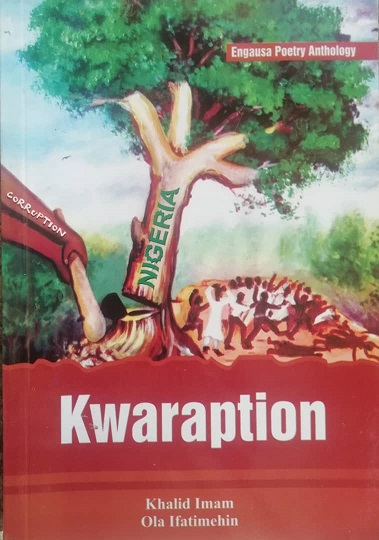
Book Review: “Kwaraption”

Book Title: Kwaraption

Editors: Khalid Imam and Ola Ifatimehin                                                                                   

Type: Anthology of poetry written in Engausa

Publisher: Whetstone Art and Information Service

Pages: 72

Year of publication: 2021

Introduction:

Although not simple to define, corruption is a major impediment and barrier to Nigeria’s progress. For many years the country suffers a lack of infrastructure and poor condition of living because of corruption, which not only stagnates the nation but also derails it from the path of progress. Although more endemic now than ever before, the story of corruption in Nigeria is at least very old.

A missionary teacher in Kano, Madam Ethel Daniel Miller (who came to Kano in 1917) in her book The change here in Kano complained of a prince from the emirate that gifted her a set of clothes for the simple reason that she is a sister to Dr Walter Miller, thinking that she could influence his choice as a successor to the throne.

Other examples can be found in fictional works such as Magana Jari Ce (1937), where Dan’iya bribed a police officer to deceive his friend, Daudu, in a story titled “An ƙi cin biri an ci dila.” The case of Obi Okonkwo in Achebe’s No longer at ease (1960) and that of The Incorruptible Judge (1962) by Olu Olagoke were just a few out of many similar cases. These are clear indications of how writers used their pen to expose and sometimes fight corruption since the beginning of Nigeria formation.

This anthology of poetry edited by indefatigable Khalid Imam and awesome Ola Ifatimehin contains 51 poems contributed by 45 poets. Nearly half of the contributors are female writers, which is a clear indication that females have come of age in terms of literature in northern Nigeria.

The title of the book “Kwaraption” is a Hausa and English attempt at pronouncing corruption. While the first, “kwara” part is just the Hausa sound of the first four letters, “corru” (in a word corruption), the second part was derived from the last for letters (ption) of the original word. In other words, kwaraption is a corrupt way of saying corruption. Instead of the editors using Hausa translation of the word corruption which is loosely translated as Cin-hanci or Rashawa, or just writing Hausa variant of corruption as kwarafshin, they decided to retain part of the original English words. This is to portray the uniqueness of the work as an anthology of poems written using Engausa which involves coding switch or mixing of languages (English and Hausa) with a view to achieving artistical beauty and increasing richness of literature.

An Appreciation of Some of the Poems in the Collection

Looking at the anthology, one can understand that the poems covered a wide range of issues of interest as far as corruption in Nigeria is concerned. Some of the issues covered are:

  1. Recognizing Nigeria as a rich country which is very blessed with both human and material resources, but whose citizens are poor because of corruption and other social vices.

ƙasa mai albarka da albarkatu,

mai attajirai, masu ilmi da yan siyasa Hafsa Ja’afar in a poem titled Rashawa (p. 30). 

  • The state of the country as far as corruption is concern. For example, Ameer Nasir in Cutar Zamani described the country as one having expertise in corruption to the extent that it is difficult to separate us from corruption “tamkar jini da hanta” (p.17). Basheer Adam Gobir assumes that ‘almost everyone’ in the country is corrupt (p.23). Similarly, Farida Mohammed Shehuin Abin Takaice (p.24)and Khalid Imam (p.37) see corruption as a hazard whose impact is everywhere; mosque, church and in all places, and Khalid particularly described corruption as ‘flood’ that destroys (Corruption Everywhere, p.39). Khadija Hanga in her poem titled Despicable Diseases sees corruption as marriageable girl, however dubious whose main goal is to deceive “a fool”. In fact, as captured by Ola in his allegory, “Kukan Kurciya”, corruption is now “new education”. Because we are so accustomed to corruption that we are given it good names and the corrupt person were assumed to be philanthropist as captured in a poem Philanthropist na gangan (p.26) “barazanar ɗan ta’adda ba ta mayar da shi gwarzo”. Also, YZ Ya’u corroborates this in his “Sai Mai Taimako”. Umma Aliyu educates us on different forms of corruption that we don’t see as such due to level of societal decay.
  • Looking at corruption as a cause to many problems this country witnesses.  For example, in a poem “Tick” byAbubakar Isah Baba, corruption is responsible for poverty and insecurity;

It causes abubuwa masu yawa,

Poverty mai kashe gwiwa,

Insecurity mai karkatse rayuwa,

Ga misalan scandals nan da yawa.

In “Lamentations for a Country,” Adesina Ajala blamed corruption for dividing the country along many social layers “Corruption is the common denominator that divides this land without fractions.” The division is along religious, ethnic, regional and even occupational strata. In “Gobarar Daji” Yahaya Abubakar sees corruption as “alpha and Omega”, hence, the chance of getting out of the current quagmire is very slim,

“ta yaya za mu yi rayuwa sustainable,

tattalin arziƙinmu disabled.”

Bashir Umar blames corruption for bankrolling the country such that it cannot meet its basic needs, he sees it as embarrassing that the country now relies on foreign aid for its development “wai yau ni ke neman aid from foreign organization”. The writers believed that Nigeria has taken a poisonous venom, whose effect transmitted to the children, making them engaged in killing one another “mun ɗauki kansakali, maimakon magani.” Ajuji in his “Bragging da Kayan Sata” captures an attribute of a corrupt person.

“there stand akimbo…

carrying pot belly,

like expected mother.”

  • Trying to understand the dynamism and causes of corruption is one other focus of the poets in the anthology. Amatullah Saulawa in her “We shall not be afraid” boldly says:

“yes, it is our faults,

if dictators shift gears,

we bring them back” (p.15).

This is a similar submission of Maryam Baffer in the poem “Har da ni”. However, the politicians are most blamed in the collection because they stand for it

“ko da tsiya ko da tsiya tsiya

sun kasa

sun tsare,

sun raka,

sun rabe”

as stated by Hafsa Ja’afar in Rashawa (p. 30). Lynda Mustapha in her two poems “Write it down” and “Buhu-buhun Iskanc”i blamed politicians for perpetrating corruption in the country. Moses Odozie writes on corrupt civil servants whom he nicknamed “Ɓarawo mai Biro”. Murtala Uba Mohammed, in his poem “Corrupt Nation”, believed that corruption is not limited to politicians, there is also the police, court and parents (p.51).  

  • The writers are tense of corruption and eagerly want it to end. Adesina Ajala said;

“Yaushe zamu warke daga wannan ciwon ne?

Wa zai haska fitilar gaskiya cikin wannan duhun baƙi?.

Corruption is here seen as a wound that needs to be cured and darkness of a night that should be put in the light. In “The Oak Tree”, Aliyu voices out; “yet we hope for betterment”

  • The authors not only lamented over the problem, they also recommended some solutions to the problem. Madinah Abdussalam in his “Yours and Mine” sees the solution as public, that every person should do it himself.  He says “who will end corruption in ba mu ba”.

In “Soyyayar Corruption” by Elizabeth Zephaniah, the public is seen as a solution, she metaphorically states “yaushe za mu ga eagle na fighting corruption”. Musa Adam was also having a similar view in his “My father’s 61st Rebirth”. Some of the poets expressed unity as an important factor in the fight against corruption, “dole we have to be united” as stated by Haneefa Musa Isah in her poem “Mu haɗa kai” (p 31). Also, Sani Abdullahi Salisu in his Kwarapshin (p.61).      

Engausa

It was not surprising when I saw this anthology. This is because of my prior knowledge of the debate that started on the page of APNETi when Dr Ola began to release his poems in a fashion of code switch, mixing English with the Hausa language which Khalid and some other members called ENGAUSA and opined that it is new and welcomed development. Some members of the group, most especially Professor Yusuf Adamu objected to that saying that language blend and code switch is not new in poetry particularly among Hausa poets citing a popular line of late Nai’ibi Sulaiman Wali in his poem Damina

“… su yi kasuwa su yi kantuna,

kowa busy sai su damina.

Yaran gari ko sai bal suke,

kowa ka duba very happy…”.

Khalid and his likes were not convinced arguing that the example given is INGAUSA, different from ENGAUSA. They said INGAUSA is a Hausa poem where words and phrases are used to complement the writer’s inability to come up with the right words based on context or meaning as opposed to ENGAUSA which is a poem written specifically with two languages blending and it is purely artistical. In the introduction of this book, the editors maintained this view indicating that they had not shifted their position, more so, in an interview conducted by Ola stated that this Engausa is almost his own daughter.

While this anthology may certainly be the first collection on the ENGAUSA poem, the view that the ‘new ENGAUSA’ is different from the ‘conventional INGAUSA’ is very weak. This is because language swap in Hausa poetry is not just triggered by weakness or inability to come up with the right phrase or word in a context, it is equally deliberate. Also, when we look at recent popular Hausa songs we can see Engausa. In particular hip-hop singers such as Billy’o in his song “Rainy Season” wherein he said:

Mosoyiya, farkon ganinki na yo confusing,

sai da zuciyata tai ta squeezing,

sai da temperature ta tai rising,

jiri nake sai ka ce na sha poising,

ni ko so nake a san ina da reason”

is a good example of Engausa. In recent, northern Nigeria’s film series such as “Son of the Caliphate” and “Gidan Danja” are also full of Engausa. In addition, Aliyu Idris aka Abdurabbihi is another example, whose poems are in a mix of Hausa, English and Arabic languages even before seeing Ola’s “Sarauniyata” which appeared first in APNETi platform. Agreed, Ola and to some extent. Khalid can take the accolades of popularizing the Engausa and APNETi for holding the first workshop to teach it. It is another issue as to whether the new Engausa has a rule or not. But it is important to state that Engausa is an attempt to mimic how we (particularly the educated elite among us) talk at home and other places.

Finally, I wish to congratulate the editors for the first Engausa anthology and the All Poet Network International (APNETi) and Centre for Information Technology and Development (CITAD) for sponsoring the publication of important literary work that can help in Nigeria’s corruption crusade. The text is truly a noble of a kind. While wishing to see more literary work of this format, I wish the editors will do more in editing the Hausa language in the subsequent publications. I noticed many orthographic errors with respect to the Hausa language, which our indefatigable Imam will share the larger blame for his expertise in the area. I also conclude with the following lines:

Mai biɗar gane corruption,

To ya ɗau wannan collection,

Hausa tare da Englishin,

Sandwich kuma conjugation,

An zubo concatenation,

Kar ku ce contamination,

An yi ne don education,

Tun da Ola ya yi motion,

Ka ga Khalid zai yi action,

An yi  don inganta nation,

Yau kwaraption mun rejection.

The reviewer, Dr Murtala Uba Mohammed, is with Geography Department, Bayero University Kano, and can be reached via murtalamuhammadu@gmail.com.