Nigeria

Hijab Judgement: Lawyer appears in traditionalist’s attire to court

By Ahmad Deedat Zakari

A Nigerian lawyer identified as Malcolm Omirhobo appeared in what looked like a traditional worshipers’ attire before the Supreme Court on Thursday, June 23, 2022.

Omirhobo was barefooted and dressed in a red wrapper, among other things to identify with his traditional belief.

According to him, his appearance is inspired by the Supreme Court Judgement delivered on Friday. The apex court had passed a judgement on Friday allowing the use of hijab by female Muslims in secondary schools.

Members of the Legal Profession have expressed divergent views on the act. While some are in support, others are against the behaviour.

A Nigerian Human Right Lawyer, Pelumi Olajenbgesi, took to his Facebook account to condemn the act.

“This is unacceptable! We cannot make nonsense of the respected and noble Legal Profession for any reason. Yes, we have issues and challenges, but this is totally condemnable.” Pelumi posted on his Facebook page.

Another Lawyer, John Aikpokpo-Martins, commended Omirhobo. “CHIEF MALCOLM OMIRHOBO IS MY MAN OF THE YEAR. He got Chutzpah,” He posted.

Although many bar members have reacted differently and expressed their biases, the leadership of the Nigerian Bar Association, NBA, which by law, is required to regulate and discipline lawyers, is yet to comment on the issue.

Presidency confirms ex-Head of State Abdulsalami Abubakar’s ailing condition 

By Muhammad Sabiu

Garba Shehu, President Muhammadu Buhari’s Senior Special Assistant on Media and Publicity, has issued a statement on General Abdulsalami Abubakar’s health.

Remember that Abdulsalami was reportedly transported out of Nigeria for medical treatment, according to some media sources.

The retired Army General was reported to have suffered a minor stroke before being airlifted to a hospital in the United Kingdom (UK).

Shehu verified Abubakar’s release from the hospital in a tweet on Monday, stating that there was no need to be concerned.

“Alhamdu Lillahi for Allah’s mercy.

“I just ended a visit to His Excellency Abdulsalami Abubakar, former Head of State.

“He is out of hospital in a London apartment and apparently in no serious condition.

“He was his jovial self, maintaining a keen interest in developments back at home in Nigeria. Please, no cause for alarm.”

Abdulsalami was the Head of State in 1999, during which he conducted an election that brought the democratically civilian government of Chief Olusegun Obasanjo to power.

Brain Drain: Who is to blame for the mortal exodus of Nigerian doctors? 

By Dahiru Mamman 

Undoubtedly, one cannot overemphasize the importance of health. Doctors ensure that we stay healthy and when we are knocked down by diseases, no matter how severe, they perform their magic to lift us. According to Mahatma Gandhi, “the best way to find yourself is to lose yourself in the service of others.” This is what doctors across the globe do: service to humanity.

Although we get graduates annually, doctors are still insufficient not only in Nigeria but across the globe. These numbers are supposed to increase with the number of universities that offer medicine and other related courses, colleges of health and schools of nursing and midwifery. Still, unfortunately, it is not the case as our health sector is threatened by a ‘mortal exodus’ of health workers, which is termed “brain drain” in the health sector. 

Recent reports from different media outlets show that no less than 727 Nigerian-trained medical doctors have relocated to the United Kingdom between December 2021 and May 2022. Between March 2021 and March 2022, at least 7,256 Nigerian nurses have left for the United Kingdom. This statistics is only on the migration to the United Kingdom. What about those that moved to other parts of the world? Most doctors were reported to have moved during the period the federal government failed to pay their hazard allowance.

With a winsome smile, I was pleased that we have home-trained medical personnel that are fit to work abroad, especially in places as advanced as the United kingdom. But on the flip side, my winsome face turns gloomy because our beloved nation is losing the scarce service of the medical personnel to countries that are supposedly ahead of us. So who should we hold responsible for the ongoing migration, the leaders or doctors? 

The question is, should the physicians and other medics move in search of greener pasture because they are not paid hazard allowance or because the health sector is crumbling? One could answer in the affirmative because scholars like Adams Smith, when propounding price (for goods and services) theory, said the higher the risk involved in a job, the greater the rewards or pay if you wish.

So, doctors are exposed to severe danger because they fight a battle against soldiers they can’t see: microorganisms (viruses, bacteria, fungi etc.). Hence, they deserve a decent salary. But should the pay be the criteria for doctors to work? What about the oath they swore during their various inductions to “….treat human beings because it affects family members and economic stability….” 

Should those in charge of the doctors’ welfare (government and other stakeholders) relent because their job is supposed to make them selfless? In negation, as they work round the clock to ensure that citizens are healthy for self and economic development, somebody has to look after their welfare since they also have a family to cater for. Aside from catering for their welfare, who should be responsible for providing infrastructure, medical equipment and instruments for treating the sick? We can say those that swore the oath to protect the lives of citizens are. 

My call to the doctors is that they wear the white coat and scrubs with dignity and pride and strive to make the profession worth practising in the country. Even though the practice still saves lives away from home, they should know that they owe the service more to the country.

To those in charge, efforts should be made to do well by the medics to avoid further migration. Leaders, they say, make choices that keep them awake at night, and if they sleep well, it means they are not getting the job done. Hence, the situation should be tackled in a way that favours the masses.

If the issue remains unchecked, the wealthy will continue to relish in the comfort of seeking medical attention abroad while the masses or less privileged live in despair.

Mamman, a corps member, writes from Abuja and can be reached via dahirulawal90@gmail.com.

ASUU strike and Nigerian students’ dilemma

By Aliyu Idris

The trouble with Nigeria is simply and squarely a failure of leadership. The Nigerian problem is the unwillingness or inability of its leaders to rise to the responsibility, to the challenge of personal example which are the hallmarks of true leadership. – Chinua Achebe.

It’s exactly four months since universities were shut down due to the lingering ASUU Strike. It’s disheartening for millions of university students like me in Nigeria who are at home idle; their fundamental rights to education are thwarted.

The government and politicians are busy with their political and elections shenanigans and do not bother to look into the menace of these excessive strikes.

None of the aspirants vying for the presidential throne has talked about curtailing the ASUU strike. This is utterly devastating. I always think about who to vote for regarding the issue of education in Nigeria.

To be candid, I don’t know how will this country continue to survive when its education sector is crippled. When the aviation sector wanted to embark on strike, the issue was solved a day before the strike because it’s not the education sector, which is too ironic for Nigeria.

The elections misdemeanour is their concern now. They invest heavily in politics and neglect education and other relevant sectors that will foster the country forward. The strike may be over soon or next year after the elections.

Let’s turn to the Lord (Allah) in prayers to give us the best leaders who have the country at heart, fulfil our vision and mission, and make our country great.

Aliyu Idris is a student of Bayero University Kano and can be reached via his email: aliyuidris063@gmail.com.

2023: CITAD launches hate speech monitoring team

By Muhammad Aminu

The Center for Information Technology and Development (CITAD) has launched a hate speech monitoring team to monitor and record politically inclined cases of hate speech on social media as the 2023 general elections approach.

In a press briefing in Kano, the head of monitoring team, Malam Hamza Ibrahim, said the team would provide database for incidents of hate speech in Nigeria.

Mal. Ibrahim noted that monitors were trained to monitor utterances in both English and the Nigerian languages on the Nigerian political process leading to the 2023 election.

“The essence of the monitoring is to record instances of hate speech and sensitise stakeholders about them and devise strategies to counter them,” he said.

According to him, hate speech on social media when left uncountered could impede unity and diversity of Nigeria as a country.

He cautioned political actors to avoid engaging in hate speech in their electioneering as many elected political actors engaged in it during the 2019 elections.

“In 2019, politicians used hate speech for political gain and incited violence. Government elected officials used hate speech.

“Politicians need to be cautioned. We advised that as we approach the 2023 election, politicians’ utterances should be free from inciting violence and hate speech.”

He called on scial media influencers, bloggers and the media to support in countering hate speech which he described as “a cancer that must be eliminated.”

He regretted that youths were mostly used hence targeting the youths in CITAD’s intervention against the menace of hate speech.

He further revealed that June 18 was set aside by the United Nations to observe countering of hate speech. That signifies the serious attention it’s getting because of its roles in conflicts that could lead to loss of lives and displacement.

“It’s timely recognition by the UN because many lives were lost due to conflicts induced by hate speech,” he noted.

The team unveiled a publication titled “Extinguishing Hate Speech: Roles for Politicians, Religious and Community Leaders” to help guide key stakeholders to ensure peaceful election in 2013.

“It is based on researches across Nigeria with recommendation for political, religious and community leaders on how prevent and tackle hate speech,” he concluded.

In another development, CITAD converged a roundtable on the draft code of practice released by the National Information Technology and Development Agency (NITDA) to guide operations of major social media platforms in Nigeria.

Experts argued that while some parts of the codes were needed to checkmate the excesses of the giant tech, others were aimed at stifling freedom of speech and expression.

They called on Nigerians to have their inputs before the draft codes were operationalized in the country.

UN Resident Coordinator calls on Nigerians to forge a new contract with nature

By Muhammad Aminu

The United Nations Resident and Humanitarian Coordinator for Nigeria, Mr Matthias Schmale, has called on all Nigerians to forge a new contract with nature in the face of the danger of desertification and drought, and its growing threat to lives and livelihoods across Nigeria and Africa.

In statement after a virtual commemoration of World Day to Combat Desertification and Drought 2022 signed by UN Information Officer, Nigeria, Dr Oluseyi Soremekun, Mr Schmale appealed to Nigerians to help preserve the nature.

He said:“Together we can build a more inclusive and sustainable world that leaves no one behind. On this day, let’s begin to see ourselves as caretakers of the precious resource that is land.”

He explained that “we could forge a new contract with nature that would ensure a healthy and prosperous Nigeria for future generations,” and noted that restoring nature was the great test of our generation, a test that could not be failed.

The Resident Coordinator advocated for a more inclusive, balanced and sustainable world that leaves no one behind.

Schmale further called for actions to be taken at all levels, from citizens, businesses, governments and UN partners, “everyone can come on board and lend a helping hand to rise up from drought together.” He added.

In his welcome remarks, the WMO Representative, Mr Benard Gomez, who was represented by the National Professional Officer, Mr Roland Abah, emphasized that the State of the Global Climate 2021 report released in May 2022 by the UN Community through WMO, indicated that the past seven years had been the warmest seven years on record, and drought affected many parts of the world, including parts of Africa.

Abah disclosed that “UN Agencies support programmes and projects to combat drought, desertification and other extreme climate-related events in Nigeria. These programmes cover meteorological and hydrological observation, data infrastructure, monitoring and forecast products from satellite and data processing centres, information services, and early warning systems, emergency response and recovery.”

FAO Representative, Mr Fred Kafeero, represented by FAO Assistant Representative, Mr Abubakar Suleiman, disclosed that “FAO’s large-scale landscape restoration activities were carried out in 15 communities with a total of 2,240 Ha of drylands put under restoration through the planting of native woody and herbaceous fodder species including 2,757 Ha farmland areas that were naturally regenerated for biodiversity conservation and protection.”

Abubakar emphasised that FAO was promoting nature-based approach through sustainable land management practices and restoration of degraded dry lands in three states of Bauchi, Jigawa and Sokoto in Northern Nigeria.

He further emphasized the commitment of FAO to transformation of the food system and sustainable management of Nigeria’s natural resources.

In her presentation on “Fostering Sustainability and Resilience for Food Security in the Savannah Zones of Northern Nigeria”, the Project Manager, UNDP-GEF-IAP- FS Project Nigeria, Ms. Rhoda Dia, explained how UNDP have worked with small holder farmers to build resilience to climate risks (Desertification and Drought inclusive) and other shocks that drives food insecurities.

She cited the introduction of different erosion control measures such as use of cover crops, earth and stones bund and use of sandbags; and disclosed that “So far, 17.14 % (84.4 hectares) of eroded land was reclaimed in farmers plots. Planted /grew 180,747 seedlings/tree at farmer’s plots, school compounds, orchards and household gardens.”

Ms Dia further informed that the project provided linkages to research institution to access foundation for Seed multiplication; Established over 97 orchards with economic tree species in schools and communities; Trained over 38,000 beneficiaries on: Integrated pest & weed Management, and different erosion control techniques; among others.

Explaining the remedy for drought management, the Coordinator, Northern Zone, Natural Eco Capital, Mr Umar Saleh Anka, said that “Reliance on ground water and surface water are viable option for reducing the impact of drought.”

On the other hand, Irrigation as an option, according to him, will increase cost of production, but will definitely save farmer from drought induced total loss or crop failure.

The virtual observance of the World Day to Combat Desertification and Drought 2022 in Nigeria under the theme, “Rising up from drought together”, was organised by the UN Information Centre (UNIC), Food and Agriculture Organisation (FAO), UN Development Programme (UNDP) and the World Meteorological Organisation (WMO).

If Nigerians are normal, APC will never be voted again

By Aliyu Nuhu

There is no way Nigerians will vote APC back to power if the country is a normal society with normal people. But the people voting our leaders are not the ones reading this write up. They are the people who vote with their stomach instead of their conscience. Stomach infrastructure is very much around and it is the reason why governors will be the deciding factor in who becomes the Nigeria’s president.

Here are APC failures and why Nigerians are not happy with it. But first let’s mention the areas the government made some progress.

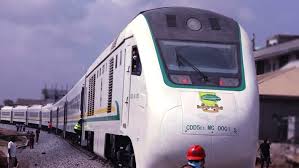
This government built infrastructure. It is the best in Africa by regional standard. More are needed but within its two terms it completed Kaduna-Abuja railway and kept it running. It completed Itakpe-Aladja rail and it is operating. It built in record time Ibadan-Lagos railway and it is running. It has started Kano-Kaduna rail, Kano-Katsina-Maradi rails. It has almost completed second Niger bridge. It has almost completed Lagos-Ibadan express. It has gone far in building Kano-Kaduna-Abuja express. It has almost completed Kano-Maiduguri express. It has expanded and improved all the international airports to very high standards. Aminu Kano international airport, Nnamdi Azikwe international airport, Murtala Muhammed international airport, Portharcourt international airport and Enugu international airport. There are many roads that cannot be mentioned. In terms of infrastructure, APC has developed Nigeria.

Economic development is about infrastructure. That has been achieved to a modest standard. The next government will build on it. That is how societies develop.

However, the areas of failures are here but not according to their importance though.

1- Electricity: APC did not build power plants and did not build transmission infrastructure. The Siemens $2.3 bn power deal is still on paper. The government inherited 4000mw Electricity generation and today we have national grid collapse and abysmal 2000mw generation. Nigeria can never grow without electricity. Any claim of growing the economy is simply preposterous.

2- APC did not build refineries. The country is still shamelessly importing fuel. Petroleum products are the country’s biggest import and biggest waste of foreign earnings. Whatever the country gains in exporting crude oil is wasted in importing refined petroleum products in the most corrupt and dubious style. Nigeria will never grow by importing a commodity it has in abundance and has comparative advantage over 160 countries. Because Nigeria imports fuel the commodity is never enough nor available.

3- Insecurity: by any standard, Nigeria is among the most violent countries on Earth. The whole country is circled by terror so much that killing of 40 worshippers is quickly overshadowed by more violent events. Most of Nigeria’s roads are taken over by bandits. People no longer travel for normal living. A journey from Abuja to Kaduna is becoming a suicide mission.

4- Bad economy: the economic health indicators are level of poverty, inequality, corruption, hunger unemployment, inflation, interest rates, foreign exchange rate and volume of international trade. There is no space to take each of them but in a nutshell Nigeria is simply facing economic crisis.

5- Education: APC inherited university strikes and is bequeathing university strikes. Primary school enrollment is at its worst level with 12 million children roaming thr streets. Child education is the telescope used in looking at the future of a nation. If the children who will be around in the future are not getting education, then it is easy to know the kind of Nigerians in the next 20 years.

6- Health: the hospitals are still what they were before APC or even worse. No equipments, no trained personnel, no drugs and no electricity. Nigerians travel outside for medical treatment and those that have no money stay and die.

7- Corruption: this government is gradually overtaking PDP in official stealing. The little gain made in jailing few governors has been reversed by the departing president who made fight against corruption his cardinal goal.

These are just few areas critical to nation’s life that makes APC a terrible choice for Nigerians. But unfortunately and very sadly APC may still remain in power because of a weak opposition. If the small parties don’t merge and present a single candidate in PDP there is no way APC will not form the next government. Mark my words. No political party can take on APC alone.

Between citizen and parachute journalism 

By Abdullahi A. Maiwada

“‘Parachute Journalism’ trivialize and sensationalize events that are more complex than a 30-second clip can capture” – Thomas L. McPhail.

However, this era of social media has made citizen journalists more dangerous than parachute journalists. While practitioners of the former are utterly ignorant about the basic principles of the profession, the latter is about placing journalists into an area to report on stories with little knowledge or experience. Lack of knowledge and tight deadlines often result in inaccurate or distorted news reports, especially during breaking news. 

While citizen journalists lack the fundamentals of news judgement, one cannot neglect their relevance in the business of news reportage. In some cases, the traditional media rely on citizen journalists for updates about issues in the form of eyewitness reports. 

The above implies that both parachute journalism and citizen journalism are interrelated at specific points. In most cases, their characteristics can be catastrophic and misleading instead of informing and educating. 

Even though I am not a fan of CNN, my recent update about the strategies by the new CEO Chris Licht making frantic efforts to redefine the usage of breaking news is a step in the right direction. “Moving away from alarming news distributing styles”, he said.

Both citizen journalists and mainstream media have fallen into the trap of fake news and hate speech precipitated by digital media. This is to satisfy the urge to take the lead in breaking the news.

In the word of my journalism lecturer Dr Kola Adesina “no time to think syndrome”. The outcome is having limited know-how to strike a balance between speed and accuracy. Thanks to convergence which created a blurry line between mainstream and digital media.

The primary reason we dish out content is to inform and not disinform, misinform and mal-inform. Why can’t we think twice and have a sober reflection before writing or talking? We should endeavour always to put a round egg in a round peg to avoid misleading society towards the direction of Rwanda. 

Influential media effect theories are still relevant in the digital age. The hypodermic needle/bullet, agenda-setting theories and the likes play a critical role in shaping the perception of the gullible and media illiterates who form the majority in our society. 

I have encountered a colleague who changed his perception of Russia based on an American movie. We have so many of them out there.

Finally, I will end my piece with the saying of our beloved Prophet (SAW). “Whoever believes in Allah and the day judgment should utter what is righteous or keep mute”. Gbam!!!

Abdullahi A. Maiwada is a superintendent of Customs attached to the Public Relations Unit, Nigeria Customs Service Headquarters, Abuja.

Supreme Court allows use of Hijab in Lagos schools

By Muhammad Sabiu

Lagos State’s ban on female Muslim pupils attending public schools in the state wearing the hijab was overturned by the Supreme Court on Friday.

In a 5–2 split ruling, the Supreme Court maintained the Court of Appeal, Lagos judgement from July 21, 2016, which overturned Justice Grace Onyeabo’s October 17, 2014 decision from the High Court of Lagos State.

The lead majority judge, Justice Kudirat Kekere-Ekun, dismissed the Lagos State appeal against the 2016 decision of the Court of Appeal, Lagos, because it lacked merit. 

Justice Tijani Abubakar read the lead majority judge’s decision on Friday.

Wearing the hijab in the Yoruba-dominated region, which is a mixture of Muslims and Christians, has been causing a lot of controversies.

2023: Atiku names Okowa as running mate

By Sumayyah Auwal Usman

The Governor of Delta State, Ifeanyi Arthur Okowa, has been named as the vice presidential candidate of the Peoples Democratic Party for the 2023 presidential election.

Former Vice President Atiku Abubakar who emerged the presidential flag-bearer of the main opposition party made the announcement on Thursday at the party’s national secretariat.

Born 8th July, 1959, Okowa attended Edo College, Benin City (1970–1976), and later proceeded to the University of Ibadan where he studied Medicine and Surgery, graduating in 1981 with an MBBS degree. 

He served as a Commissioner in the Delta State government for Agriculture and Natural Resources (July 1999 – April 2001), Water Resources Development (April 2001 – May 2003) and Health (September 2003 – October 2006).

He resigned to contest in the 2007 Delta State PDP governorship primaries, but did not win the governorship primaries. In June 2007, Ifeanyi was appointed Secretary to the Delta state Government.

He was elected Delta North Senatorial candidate in the January 2011 PDP primaries and won the election. He clinched the ticket for the gubernatorial election in 2015, and won the Delta State Gubernatorial elections.