Nigeria

High debt will burden future generations – Dr Hassan Mahmud

By Uzair Adam Imam

The Director, Monetary Policy Development, Central Bank of Nigeria, Dr Hassan Mahmud, said the high debt would be a burden on future generations in the country.

Dr Hassan Mahmud disclosed this on Wednesday at the 63rd National Conference of the Nigerian Economic Society (NES). 

The 3-day conference, which started on Tuesday at the Maryam Abacha American University of Nigeria, Kano, was themed “Fiscal Sustainability and Policy Response for Economic Recovery in Nigeria”.

It was gathered that the country’s public debt in the first quarter of 2022 had risen to N41.6 trillion from N39.56 trillion recorded in December 2021.

However, the debt by the Federal Government has continued to throw a big threat to future generations as it may impinge on the country’s economic growth.

He said, “When debt is high, it becomes a burden on future generations as it leaves no room for borrowing when there is a shock.

“High debt can increase the cost of private sector borrowing, crowding out viable private sector investment and high servicing requirements.” 

Mahmud said despite the challenges, the public debt is an important instrument for the economy, adding that the country’s borrowing plan is guided by debt sustainability.

He added, “Nigerian borrowing plan is guided by the debt sustainability threshold to ensure debt carrying capacity does not impinge on growth.”

The event hosted many academicians and politicians from all over the country, many of whom also commended the conference and its organisers.

Again, Nigeria ineligible to submit film for 2023 Oscars

By Muhammadu Sabiu

The Academy of Motion Pictures, Arts and Sciences’ Nigerian Official Selection Committee (NOSC) stated that no film would be forwarded for the 2023 Oscars.

Nigeria will not be submitting a film to the International Feature Film category of the Oscars for the second consecutive year.

The committee’s chair, Mrs Chineze Anyaene-Abonyi, apologized to the Academy of Motion Picture Arts and Sciences (AMPAS) for not being able to locate a film that satisfied the requirements for the International Feature Film category.

“Although the committee received three epic films following its call for submissions in August, it turned out that none of them will advance to the next stage owing to the voting patterns of members,” she said.

The voting, which took place on the 3rd of September 2022, amongst the 15 members of the committee, had a voting chart of 8, 5, 1, 1, with “No Film is Eligible” taking the lead.

The 15 members of the committee voted on September 3rd, 2022, and the voting chart was 8, 5, 1, 1, with “No Film is Eligible” receiving the most votes.

“Nigerian films had, no doubt, improved significantly as the awareness of the requirements has since grown among filmmakers, and potentially soon, we just might be bringing this award home in succession,” Anyaene-Abonyi also said.

To gain the necessary international exposure and position our films in its acknowledged level of creative debate, she advised filmmakers to become more familiar with Oscar-nominated movies in the International Feature Film (IFF) category.

The movie “The Milkmaid” was submitted in 2020. However, after passing the eligibility test for the first time, the Desmond Ovbiagele-produced film was disqualified because it did not make the category’s initial selection.

The Oscars disqualified Genevieve Nnaji’s “Lionheart” in 2019 for failing to meet the non-English conversation requirement.

TETFund charges institutions to comply with BPP processes

By Muhammad Aminu

The Tertiary Education Trust Fund (TETFund) has charged higher education institutions that benefit from its interventions to ensure strict compliance with the public procurement process to prevent corruption.

TETFund Executive Secretary, Architect Sonny Echono, disclosed this while opening a three-day capacity-building workshop on the public procurement process for TETFund beneficiary institutions organized by TETFund in collaboration with the public procurement Bureau (BPP) in Kano.

He said the training was for the institutions from the Northwest and Northeast subregions of the country to get equipped with the procurement processes to curtail corrupt practices in the agency’s projects.

He noted that the training would serve as a refresher training for desk officers of TETFund in the 246 enlisted beneficiary tertiary institutions across Nigeria.

Echono further called on the participants to utilise the opportunity and enhance their knowledge in public procurement law to achieve the desired objectives.

In his presentation, the Director General of the BPP, Mamman Ahmadu, said the workshop that intends to ensure attaining the provision of the public procurement Act came at the right moment.

”We are here today to build the capacity of accounting officers, principal officers, public officers and other key players in the procurement value chain.”

He said BPP would ensure that all provisions of the procurement act are strictly adhered in procurement in the Nigeria’s tertiary institutions.

Nigeria: Understanding flood and the outbreak of infectious diseases

By Adam Mustapha, PhD

Floods are natural disasters that occur globally, destroying lives and property, especially in developing countries like ours. As a natural disaster, it is caused by climate changes and human activities which distort the balance of environment, hosts and pathogens. Factors such as high sea level rise, urbanization, destruction of river banks, and deforestation increase the risk of flood disasters.

Flood results in the disturbance of the epidemiological triangle; environment, host and infectious agent, and as such, it could result in the emergence of new agents or re-emergence of infectious agents that previously existed. Therefore, the potential outbreak of infectious diseases is a matter of great concern, and urgent intervention is needed to break the chains of transmission.

Flood is known to increase the global burden of various infectious diseases, mortality, social and economic disruptions and displacement of people, which can result in both physical and psychological trauma. Of great concern is how flood causes the outbreaks of infectious diseases, as germs can easily be transported and contaminate drinking water sources, which will provide a conducive environment for the completion of the vector life cycle.

Like other developing countries, flooding has become an annual event in Nigeria, and many towns and cities are vulnerable and susceptible to it. This year, the Nigerian meteorological agency (NiMet) warned some states that they were at high risk of flooding in its yearly prediction of rainfall. Therefore, it was unsurprising that flooding hit many such states, states like Jigawa and Yobe have significantly been hit. In contrast, others such as Borno, Adamawa, Gombe, Kebbi, Kano, Kaduna, Lagos, Kogi, Niger, Delta, Rivers, Zamfara, Taraba, Ogun, Osun, Ondo, some parts of Ekiti, Edo and FCT are affected from moderately to low levels.

Flooding can cause waterborne diseases such as cholera, non-specific diarrhoea, typhoid and viral diarrhoea caused by Rotavirus. These diseases are known to peak after flooding as the pathogens such as bacteria, viruses, and parasites can be transported. In addition, the crowded nature of displacement camps can potentially result in and aggravate the outbreak of respiratory diseases.

The crowded nature of displacement camps can potentially result in the outbreak of respiratory diseases of different etiological agents. Wastewater is a breeding ground and carrier of infectious diseases. For instance, wastewater has the potential of spreading viruses, as they are known to be good-chance takers of a flood, which take days after flooding to meet their incubation cycle. Viral diarrheal diseases, such as hepatitis A and E, vector-borne viral diseases such as Yellow fever, and many others are also some diseases that could potentially spread after the flood.

The genome of some viruses, such as SARS-CoV-2, are known to be detected in community wastewater and this call for concern as it can be disseminated during a flood. Another agent to worry about due to flood is Naegleria fowleri, a brain-eating amoeba causing primary amoebic meningoencephalitis (PAM). As water level and temperature rise, such a situation could fuel the growth of the agent. Environmental contribution to the development of infectious diseases is a significant public health concern that should not be ignored. Antibiotic-resistant bacteria and antibiotic-resistant genes are quickly disseminated in environmental wastewater, which could be further transported into the water system, which calls for concern.

Furthermore, the vector-borne disease can occur as a result of a flood because the development cycles of vectors are provided. For instance, mosquito-borne diseases such as malaria and West-Nile fever tend to increase after floods. Rodent-borne diseases also expand during flooding because the flood increases contact between rodents and humans, resulting in outbreaks of such diseases. Common rodent-borne infectious agents due to flooding include Leptospirosis, Hantavirus pulmonary syndrome, Hemorrhagic fever with renal syndrome etc.

Health interventions

 First, public health measures are essential in preventing infectious diseases due to floods. Therefore, preventive measures should be taken before, during and after the flooding.

Second, the provision of crucial intervention. The critical intervention is an active early warning system that can alert governments to prepare for possible outbreaks and send signals for evacuation of people at risk.

Third, the activation of rapid emergency response is also a necessity. This includes the provision of basic materials and health care services.

Fourth, after the flood, the activation of an effective surveillance method is mandatory for the early detection of an outbreak.

The key intervention is active early warning systems which can alert governments to prepare for possible outbreaks and send signals for evacuation of people at risk. At this stage, all stakeholders and the public must act on time. However, compliance is low due to a lack of an alert system or people refusing to abide by the warning system. Furthermore, risk assessment is needed to ensure that no basic amenities are disrupted due to floods.

Moreover, there is a need for vector control after the flood to break the chains of transmission. There is a need for collaboration among all public health stakeholders. Public enlightenment and outreaches are equally essential intervention measures.

Finally, provisions of clean water, sanitation and hygiene after the flooding to prevent infectious disease outbreaks are also very significant.

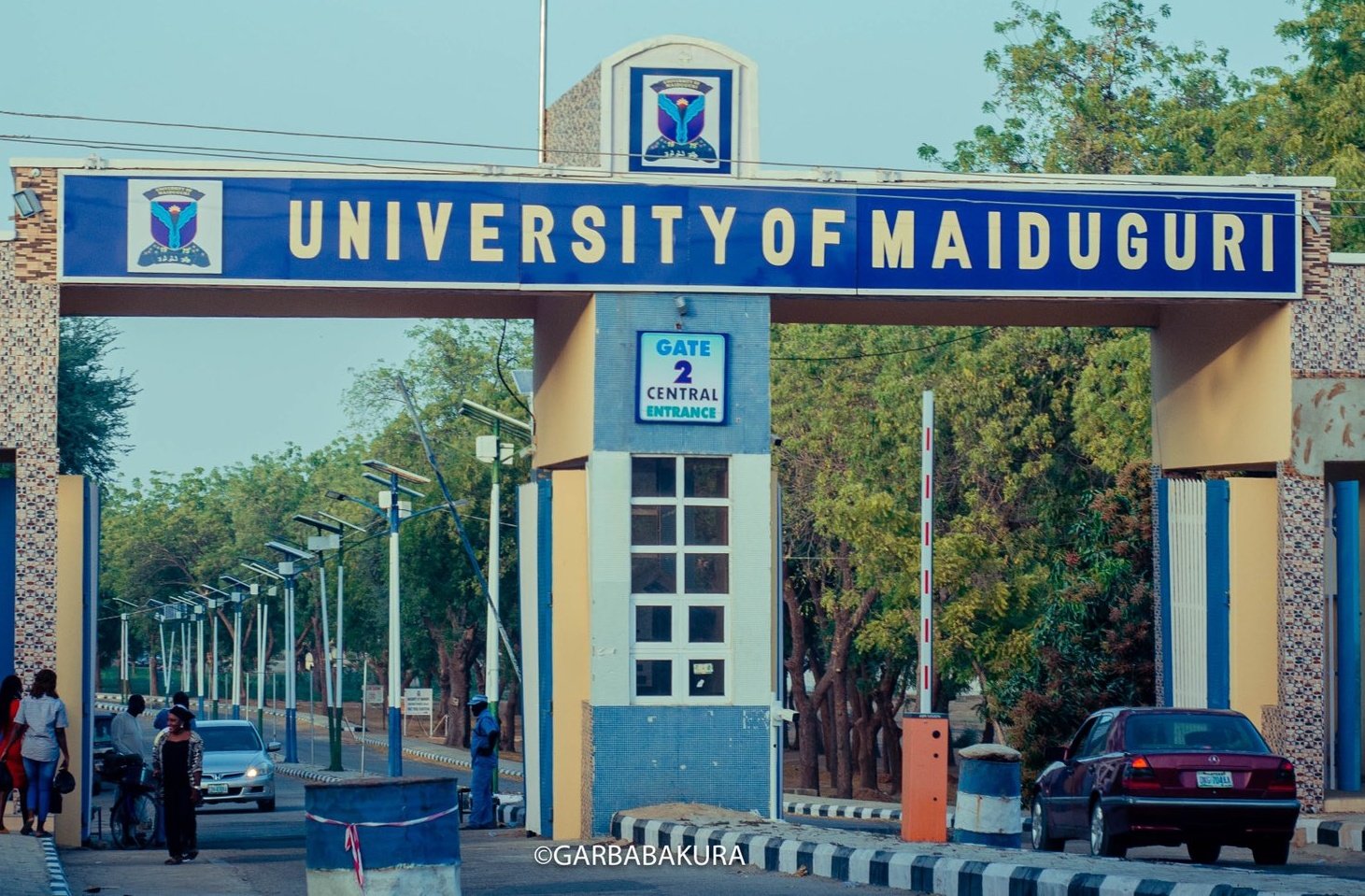
Adam Mustapha, PhD, is a clinical and medical microbiologist. He wrote from the Department of Microbiology, University of Maiduguri, via adadmustapha@unimaid.edu.ng.

Nigeria’s economy in chain since the start of Ukraine war – Minister

By Uzair Adam Imam

The Federal Government has said that the adverse effects of the war in Ukraine and the ongoing security challenge in Nigeria have contributed to the aggravation of the fragile economic situation in the country.

At the start of the war, the Organisation for Economic Cooperation and Development (OECD) warned that the world economy would pay a “hefty price” for the war in Ukraine, encompassing weaker growth, stronger inflation and potentially long-lasting damage to supply chains.

In Nigeria, inflation is already hitting living standards and reducing consumer spending as business owners become less optimistic about production.

The Minister of State, Budget and National Planning, Prince Clem Ikande Agba, disclosed this Tuesday at the 63rd National Conference of Nigerian Economic Society. 

The 3-day conference, which started Tuesday at the Maryam Abacha American University of Nigeria, Kano, was themed “Fiscal Sustainability and Policy Response for Economic Recovery in Nigeria”.

The Minister, represented by the Director Macro Economic, Mr Felix Okonkwo, said fiscal discipline is what Nigeria needs to build a stable and inclusive economy.

Agba stated that the Federal Government is focused on addressing the revenue issues, which it considers essential to the economic and financial health of the country.

He added that insufficient revenue was why Nigeria could not contain its fiscal deficit after the recession, meaning that the country’s capacity to continue to support and raise capital expenditure has not been improved.

He said, “The adverse effect of the War in Ukraine, insecurity, global food crisis, oil theft in the Niger Delta, rising energy prices, massive depreciation of the naira exchange rate, high fuel subsidy and increasing inflation as well as insufficient fiscal buffer aggravated the fragile economic situation in the country.”

The chairman of the occasion, Shamsuddeen Usman, said the conference aimed at providing possible ways to restore the country’s economic stability through enhancing fiscal policies.

The President of the Nigerian Economic Society, Prof. Umma Jalingo, who organized the event, said the association was founded three years before Nigeria’s independence and was aimed at enhancing the country’s economy.

The trend of bleaching among Kano people

By Usman Usman Garba

Taking good care of the skin among females has been an age-old desire and culture for years. Consequently, they develop various skin care practices to look beautiful and attractive. Girls of all generations, past and present, have been involved in this art, in which one area of focus recently may be skin bleaching, which seems to have become trendy among Kano ladies.

Skin bleaching is considered purposefully and deliberately an act of changing one’s skin colour by applying substances or solutions on the skin, with the sole intent of making the skin colour look lighter and brighter.

Research has shown that the idea of “Fara ko mayya ce“, which literary means “even if a lady is a witch”, by Kano male citizens has drastically driven females into the habit of bleaching their skin to look more attractive, fashionable, elegant and adorable.

According to some, women bleach their skin to remove skin imperfections such as rashes, dark spots and pimples and make or maintain softer skin. Some can meet the westernized standard of beauty, make themselves look “more attractive” in the eyes of their potential partners, and impress or meet their friends’ approval.

It is hard within Kano today to see a group of females without seeing one or some of them bleaching her or their skin. Unfortunately, it has become a tradition that even light-skin females bleach themselves in the sense that their bride price will be high or their class will increase in courtship or marriage.

Wives, too, are not left behind in this act. They engage in it to maintain their husbands out of fear that those ladies that bleach might snatch them away and in another way round, to help them maintain their marriages.

Men, too, are not excluded. They engage in it to become attractive to their female counterparts and celebrities or to copy local and western musicians and actors.

Before, when a male person bleached his skin, he did so because he was effeminate, but today, he does so to become a celebrity or popular and respected.

Others use pills to steam themselves while others use steaming drugs which remove their skin to be light as society considers white as beauty. They ignore that bleaching, as research has shown, has no benefits but harm.

Economically, instead of spending their hard-earned income on something beneficial, they end up squandering it on harmful bleaching products. 

The situation has become so bad that many women now have disturbing discolouration, contrasting colours and dark spots. The knuckles, knee caps and elbows are not spared as they carry different colours.

As disclosed by Dr Shamsudden Haladu, a dermatologist at Yadakunya General Hospital known as Bela Hospital, skin bleaching creates significant health problems for the users. Sadly, in Kano, its use had become widespread due to easy access to various brands of bleaching creams at multiple markets and shops.

A body that has been bleached becomes very light, fragile and tears quickly. Bleaching also leaves spots on the skin after being scratched or hard hit by an object. Such spots make the skin look rough and unattractive.

The doctor reveals that people differ in colour based on the five layers that human beings have: stratum corneum, stratum lucidum, stratum granulosum, stratum spinosum and stratum basale.

The basale layer, which is the last, has some cells called melanocytes, which make melanin and give our skin a dark colour.

All human beings have the same melanocytes. The only difference is the amount of melanin that melanocytes produce.

Skin bleaching has been established to have severe side effects. It has also been identified as the source of serious health-related issues among users, especially those who subject their bodies to creams formulated without proper safety precautions regarding chemical contents used in their production. 

The use of skin bleaching has also been reported to be responsible for skin cancers, skin discolouration, and depression among users leading to negative outcomes. Other risks include skin damage and severe depigmentation.

According to Dr Haladu, one should contact a dermatologist or visit a hospital before using any bleaching cream or soap. If possible, one should eat fruits as they contribute more to treating and whiting skin than any cream product.

Usman Usman Garba wrote from Kano via usmangarba100@gmail.com.

Total blackout as national grid crashes again

By Ahmad Deedat Zakari 

Many Nigerian states and cities have been thrown into total darkness as the national grid crashed for the 7th time this year. 

The national grid crashed early on Monday, September 26, 2022. 

Ikeja Electricity Plc confirmed the development in a statement and urged electricity consumers to bear with them. 

The statement reads in full, “Dear Esteemed Customer,

This is to inform you that the outage you are currently experiencing is due to the system collapse of the national grid, which occurred earlier today at 10:50hrs. This has affected the Transmission Stations within our network and resulted in the loss of power supply to our customers

Kindly bear with us as we await restoration of the grid.

Thank you for your understanding.” 

According to the records, the national grid crashed twice in July and once in August. Monday’s crash brought it to the 7th time.

Nigerian agricultural prowess and the current insecurity

By Lawal Dahiru Mamman 

Nigeria is so blessed with agricultural land that all that needs to be done is to tickle the soil with a hoe, and it smiles with a harvest. Therefore, the name Nigeria ought to be synonymous with agriculture by practice, not just by name, because our identity depicts agriculture; the green colour of the National flag shows land for agriculture, and the shield on the national coat of arms represents the fertile soil for same. Unfortunately, a good number of citizens suffer from malnutrition as a result of acute hunger. 

In the assumption that there is insufficient rainfall, the name Nigeria was suggested in the late 19th century by a British journalist, Flora Shaw, who married the British colonial administrator Lord Frederick Lugard. The nomenclature was derived from the River Niger, which enters the country from the northwest and flows down to the Niger Delta, emptying into the Atlantic Ocean through its many tributaries. With this feature (if harnessed properly) alone, we could produce crops and rear animals all year round.

Before the discovery of crude oil in 1956, agriculture used to be the country’s mainstay. When the nation realised it had to reclaim its past glory, feeding the teaming population and directing funds otherwise used for importing various food items to other infrastructural and human capital development, boom! Insecurity strikes from different angles, with each geopolitical zone with its peculiarities. Going back may not be possible if insecurity is not squarely addressed because farmers are afraid of being killed or kidnapped away from the civilisation where they have their farms.

The vociferation to achieve self-sufficiency in Agriculture and food security in the country may not be feasible anytime soon because of insecurity. Poverty is the inability to access basic human needs like food, shelter, clothing, portable drinking water and medical care. Those in this category become angry at all other persons in the society because they believe the society has failed them by depriving them of their fundamental human rights. With food on the top of the chart for these basic necessities, the agriculturist believes that most of the world’s problems will be solved if food is made available and affordable. 

These groups of people can easily be brainwashed by miscreants hell-bent on bringing the nation down to its knees, committing horrendous crimes against other humans and threatening the state’s sovereignty when offered as little as a meal.

In January 2020, the country became the largest rice-producing country in Africa, with 8 million tonnes per annum as against the total of 14.6 million tonnes produced in the continent, with progress being recorded in the production of other food crops simultaneously. At this point, citizens and even government officials started having a glimpse of hope in the independence we crave in agriculture. The hope faded into thin air when the agricultural practice became inversely proportional to insecurity. By implication, increased insecurity leads to a decrease in farming activities 

This is because for a farmer to practice, they would have to look over their shoulder, making those still willing to produce have divided attention – which is not good for any practice willing to succeed while others abandon the profession in totality because ‘Life is Precious’. 

For agricultural practice to continue and develop beyond the old-fashioned, the unwanted elements causing the unrest must be eliminated from the equation with efforts from the administrators, our gallant security forces and even citizens – by extending hands of fellowship to the less privileged.

Mamman, a corp member, writes from Abuja and can be reached via dahirulawal90@gmail.com.

Kano Ministry of Education conducts entry exam into Bilingual College Niamey

By Uzair Adam Imam

The Kano State Ministry of Education on Saturday conducted a screening test for the state’s candidates that would be sponsored to study in Bilingual College, Niamey, the capital city of the Niger Republic.

A statement Saturday by the Director Public Enlightenment, Ministry of Education Kano state, Aliyu Yusuf, said the test was in preparation for the 2021/2022 admission exercise.

Bilingual College is a joint initiative between the Kano State Government and the Government of Niger Republic to groom students in French and English languages.

The statement read in part, “The Screening test which was conducted across the 3 senatorial zones of the state was aimed at selecting 1 best candidate each from the 44 local government council areas of the state to study at the college.

“Similarly, another selection exercise will be conducted among the remaining candidates that have attended the screening test for the Bilingual College, with a view to admitting them into various Unity  Schools across 18 northern states that runs  Students exchange programme.

“In the same vein, the ministry has also facilitated the movement of another set of Kano state students that conducted an entry examination into Gifted Academy, Bamaina in Jigawa.

“The Successful students at the end of the examination will be sponsored to study at the Gifted Academy Bamaina by the Jigawa state Government,” the statement added.

Kano: Chinese Business Community condemns murder of Ummita

By Ahmad Deedat Zakari

The Chinese Business Community Association of Nigeria, CBCAN, has condemned the murder of Ummu Khulthum Buhari, alias Ummita, in Kano.

This was made known through a statement released on behalf of the Wakilin Mutanen China a Kano by his personal assistant, Ghuan Lei Zhan on Monday.

“The Chinese Business Community Association of Nigeria (CBCAN) under the leadership of Wakilin Mutanen China a Kano, Mr Zike Zhang, has condemned the Killing of Ummukuthum Buhari allegedly by a Chinese National, her lover Geng Quarong” Part of the statement reads.

The Chinese Business Community also said it supports law to take its proper course.

Ummukuthum was allegedly murdered by her Chinese lover on Friday night. Her murder has generated outrage on social media. Many people expressed concern over crimes allegedly committed by Chinese nationals working in Nigeria.