Nigeria

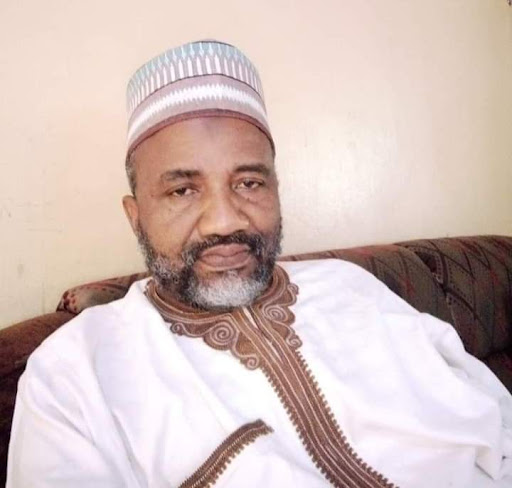
Mohammed Nasir Sambo, NHIA DG, is the man for the job

By Safiyanu Ladan

The National Health Insurance Scheme (NHIS), now Nigeria Health Insurance Authority (NHIA), was established under NHIS Act (2004) by the Federal Government of Nigeria to provide easy access to health care for all Nigerians.   

The central idea of the scheme is to enhance healthcare delivery to all Nigerians at affordable prices. Hence, easy access to health care installations for all Nigerians is consummate as it would drastically reduce, among other effects, neonatal and maternal deaths which have been the bottleneck of Nigeria’s development.  

According to World Health Organization (WHO), the maternal mortality rate in several low-income and middle-income countries is alarming. For example, Nigeria and India account for about 34% of global motherly deaths. 

Nigeria’s maternal mortality rate (MMR) is 814 per 100,000 live births. The lifetime threat of Nigerian women dying during gestation, childbirth, postpartum and post-abortion is 1 in 22, in contrast to developed countries, estimated at 1 in 4,900. 

Still, the WHO attributed the high prevalence of maternal deaths in Nigeria is inequality in access to health services.  

To contend with the challenges associated with maternal deaths in Nigeria, the studies by WHO suggested some modalities, one of which is perfecting the accessibility, availability, affordability and quality of health care in PHCs will most probably reduce the high rate of neonatal and maternal mortality in Nigeria.  

Upon assumption of duty in 2019, the selfless, diligent, and workaholic professor of family medicine unveiled a  novel 3 points agenda which includes, among other effects accelerating the scheme towards achieving universal health coverage for all Nigerians.  

In ascertaining that, the amiable and agile professor and his platoon worked round the clock, day in and day out, and sought out the legislation that changed the narratives in NHIS. A milestone that his forerunners failed to achieve. Therefore, the credit goes to him. 

On May 19, 2022, he made history, having successfully secured the signing of the National Health Insurance Act (NHIAA) 17 into law by the National Assembly. 

The signing of the National Health Insurance Act 17, which gave birth to the National Health Insurance Authority ( NHIA), is a breakthrough in the full implementation of all-inclusive access to health care.  

The legislation provided a legal framework for all Nigerians, including the most vulnerable, to have easy access to quality healthcare delivery through the National Health Insurance Authority.

 Professor Sambo said to ensure the effective perpetration of the scheme. The FG would spend a whopping 1.4 trillion for the Health Insurance premium of about 83 million Nigerians who fall within the vulnerable group of citizens of the country. 

His tireless efforts towards achieving the chivalrous change of NHIS clause “ May ” in section 16 of the NHIS to “Shall”, thereby making it all-inclusive, is greatly applaudable. 

The previous professor Sambo has set an unprecedented pace towards evolving NHIA to achieve its mandate of ensuring Universal Health Coverage for all by 2030. With Sambo at the helm of NHIA, it’s attainable. 

Safiyanu Ladan writes from Zaria.

Naira Redesign: Rumour on removing Ajami is false – Sunusi

By Uzair Adam Imam

The 14th Emir of Kano State, Muhammadu Sunusi II, urged the general public to reject the rumour that the Central Bank of Nigeria (CBN) would redesign the naira notes to remove the Arabic text (“Ajami”) on them. 

Sunusi, a former governor of CBN, added that the rumour was false and baseless and meant to mislead the masses. 

Recalls that the CBN Governor, Godwin Emefiele, announced the CBN’s intention to redesign, produce, release and circulate new series of N200, N500, and N1,000 banknotes.

Sunusi disclosed this on Monday in a short video he made, which immediately went viral on social media platforms. 

The former Emir said he noticed the rumour circulating among people and said he spoke to the CBN governor about the development. 

“I heard some people, including clerics, engaged in a heated argument over redesigning the naira note, claiming that the Arabic text would be removed if the naira is redesigned. 

“I contacted the CBN governor about the development, and he clarified that the rumour in circulation was false.

Sunusi also urged the general public to disregard the rumour.

Insecurity: Türkiye to deploy drones, helicopters in Abuja 

By Uzair Adam Imam

The development of security threats in the Federal Capital Territory, Abuja, has become worrisome and continues to terrorise citizens.

Countries, including the United Kingdom and the United State of America, issued the wake of a terror alert to Nigeria and their citizens that have been in the country for various reasons. 

On Saturday, Nigeria was greeted by the Republic of Turkey’s words to deploy drones and helicopters to Nigeria to help the country cope with the fears of insecurity threats. 

The Ambassador of the Republic of Turkey to Nigeria, Hidayet Bayraktar, disclosed this adding that the drones and helicopters would soon arrive in Nigeria as part of efforts to strengthen the security architecture of the country.

Bayraktar was reported to have made this intention public during the commemoration of the 99th National Day of the Republic of Turkey in Abuja.

He said, “The defence contracts signed between our countries last year marked a historical record.

“Taking this opportunity, I am proud to announce that two of our flagship defence industry platforms, Bayraktar (TB-2) drones and (T-149) ATAK helicopters, are set to arrive in Nigeria.

“We are confident that new Turkish defence products will support the efforts of the Nigerian government and contribute immensely to the peace, prosperity and security of fellow Nigerians,” Bayraktar said.

Paradigmatic Shift in Literary Ignorance: Ajami on Naira Reloaded

By Prof. Abdalla Uba Adamu

As we enter into the ‘will they, will they not’ mode of uncertainty typical of Nigerian public culture about the change of Nigerian higher currency denominations announced by the Central Bank of Nigeria (CBN) on 25th October 2022, my mind went back to an article I wrote on 16th April 2007. This was in the wake of the removal of “Arabic inscriptions” on the Nigerian currency (the Naira) on 28th February 2007 in the new currency notes that removed the Ajami (Hausa written in Arabic script) writing that indicated the denomination of the respective currency note and replaced with the Latin alphabet. This is a ‘remix’ of that posting on the then-popular platforms of Blogspot. Mine was called Nishadin Hululu (Hausa Popular Culture).

The full historical overview of how the Arabic “script” came to become part of the essentially northern Nigerian Muslim Hausa educational package is given in Manuscript Learnability and Indigenous Knowledge for Development – Hausa Ajami in Historical Context. A version is available at https://bit.ly/3zoi7XN.

I rarely bother to visit Nigerian “Naija” websites on the web or any other group of politically motivated Nigerians. I know what I will find – the usual vituperative tirade against northern Nigerians, Muslims, Hausa, ad nauseum. Southern Nigerians have three fundamental articles in their crusade against northern Nigeria: Islamic fanaticism, conservative feudalism and their weird perception of the “born to rule” syndrome held by the ‘northerners’. No matter how many groups of Nigerians you interact with, these three form the main focus of the divide in Nigeria. They are the main reasons why Nigerian “unity” is virtually impossible.

I doubt if there is any other group of Africans who hang out their dirty ethnic laundry like Nigerians. Although, I accept, for the most part, such ranting is probably not personal; they are basically religious – the Christian versus Muslim divide, rather than any feeling of superiority of one ethnic group over the other. Any such feelings of superiority are part of a religious template that sees the acquisition of education as the central criteria for judging the value of a whole people. Thus education, not religion, is the central fulcrum around which the Nigerian nation wobbles.

Southern Nigerians acquired education through Christian Missionary activities from about 1849. Such education became the mainstay of acquiring Westernized modernity. Inevitably Western education brought by Christian missionaries to Nigeria became equated with Western Christian values. For the most part, Christian southern Nigerians are happy with this because it makes them “civilised” – in the absence of any cherished antecedent cultural values. Thus, any other worldview is considered barbaric.

Northern Nigerians, specifically the Hausa and the Kanuri, acquired education through conversion to Islam since 1250 and even earlier in the Kanuri kingdom. The constant eddy of scholars from north African learning centres throughout the 14th to 17th centuries ensured a sustained scholastic tradition in Muslim northern Nigeria. Muslim northern Nigerians, therefore, had a longer exposure to the concept of formalised learning and literacy than southern Nigerians. Universal basic education was indeed introduced around 1464 in the city of Kano when new methods of indigenising the Arabic script to Hausa phonology were created. This led to the creation of a novel way of writing out the Hausa language in a script that young scholars will understand. This method of indigenising Arabic script to the Hausa language became “Ajami”. It became one of the main ways of educating young pupils in northern Nigeria. Do you remember all those “Almajirai” you see in northern Nigerian cities? Well, most are fluent in Ajami writing. Currently, the most prominent modern Hausa political singer (though not the most talented or likeable), Dauda “Rarara” Adamu Kahutu, has an extensive catalogue of his songs, all written in Ajami which he reads as he records in the studio.

Ajami, therefore, is any literacy strategy in which any language is written in Arabic. Over 50 languages are currently written in the script. First, let us look at the parallel sphere. If any African language is written in Latin characters, it can be called Ajami. Ajami is not Islamic; any more than the Latin alphabet is Christian.

However, in a new era of reform, CBN decided to remove the “Arabic” script from the Nigerian currency in new currency notes launched on 28th February 2007. The removal of the Ajami script on the Nigerian currency reflected Nigeria’s deep-rooted religious divide because the Arabic script was seen as religious – and Nigeria is considered a secular country. This equates Arabic with Islam – ignoring the vast number of Arab Christians throughout the Middle East.

The logic of the removal of what the Nigerian economic establishment calls “Arabic inscription” on the Nigerian currency given by the Nigerian Government was premised on using a Latin inscription that is available to all Nigerians (even if in mutually exclusive languages), rather than an exclusive script tied down to a particular religious culture. According to the then Governor of CBN, Professor Chukwuma Soludo, during a sensitisation visit to the Sultan of Sokoto,

“I will also like to inform you that the removal of the Arabic inscription on the notes is not targeted at any group or religion but rather to promote our language and cultural heritage…As you can see, Naira is the symbol of our nationalism and our pride. It is pertinent to let you understand that Arabic is not one of our national languages, and it was inscribed on the notes forty years ago because the majority of people then could read it in the northern part of the country to the detriment of their counterparts in the South (ThisDay, 16th February 2007, posted to the web 19th February 2007 at https://bit.ly/3TQ4FEw.

Similarly, the CBN issued a rebuttal to the controversies by stating that the “de-ajamization” was to “conform (to) Section 55 of the 1999 Constitution, which recognises four languages, English, Hausa, Ibo and Yoruba as medium of conducting government businesses.” After all, as they claimed, after forty years of Western education, most people in Nigeria should be able to recognise Roman inscriptions. This, we believe, can strengthen our unity by ensuring equity and fairness. Indeed, the replacement was done in national interest and the desire to comply with the Constitution of the country.”

But how can national unity be attained when a large proportion of the country is still marginalised? To prevent this marginalisation, the British colonial administration introduced the Ajami letters on the first Nigerian modernised currencies, well aware of the large education gap – and therefore, the ability to read and understand Latin characters on the country’s currency notes. An example was the £1 note.

Fam daya” was prominently written to enable those literate in Ajami, but not the Latin alphabet, to identify the currency.

Interestingly, the main argument was that the presence of Ajami on Nigerian currency was seen to the “detrimental” to southern Nigerians (who presumably do not understand it) – yet the inclusion of the Latin alphabet is not seen as detrimental to non-Roman literate northern Nigerians (mainly Muslim Hausa, who presumably do not understand it). In this warped logic, it is, therefore, easier to alienate Muslim Hausa northern Nigerians than southern Nigerians, especially since a Christian was the President of the country (and a Christian Governor of the Central Bank facilitated the alienation). Of course, when a Muslim becomes the President, the arguments might be revisited – and reversed, which another subsequent Christian president will also revisit, and so on endlessly. Farooq Kperogi actually imagined a nightmare scenario that might come out of this in 2022 at https://bit.ly/3TOt2T1.

The inclusion of the script on the Nigerian currency by the British colonial administration was an acknowledgement of the rich literary heritage of a vast number of people in Nigeria who could not read the Latin script– and not a strategy to impose Islam on anyone in Nigeria. Indeed, the British colonial administration had no reason to propagate Islam. Yet on the currencies circulated by the same administration, the “Arabic inscription” was conspicuously present. This was maintained until 2007 when the despised Arabic inscription was removed and replaced with the much-loved Latin ‘inscription’. An example with ₦50 illustrates this.

The ₦50 with the ‘Arabic inscription’ of Ajami merely indicates that it is fifty naira in Hausa. In the redesigned ₦50, the Roman name for the Hausa was ‘naira hamsin’ instead of the Ajamized ‘hamsin’ in the old note. Yet, ‘hamsin’ means fifty in Arabic! So, like it or not, Arabic remains on the naira. To get rid of it, you have to get rid of the Hausa language entirely since about almost 45% of Hausa words are based on the Arabic language.

Further, other multicultural countries pay such homage to multiple literacies in their currency notes. The Indian currency, for instance, has 15 language scripts, including Urdu (Ajami) – despite Arabic not being part of its national languages.

And while not explicitly stated, the links made by the Nigerian economic establishment with Arabic to Islam seem to be part of a move to “de-Islamize” Nigeria – scoring a cheap point, particularly in the way most northern Nigerian states re-introduced Islamic Shari’a in their governance from 1999 led by Zamfara State, and the earlier issue of Nigeria’s membership of the Organization of Islamic Countries (OIC) in January 1986, which the Nigerian Christian (as well as Marxist Muslim) groups were against.

We look forward to the new currency notes in December 2022.

Prof. Abdalla Uba Adamu wrote from the Department of Information and Media Studies, Bayero University Kano, Nigeria. He is, among many other things, the former Vice-Chancellor of the National Open University of Nigeria (NOUN). He can be reached via auadamu@yahoo.com.

The negative impact of the Covid-19 pandemic on education in Nigeria

By Maryam Mohammed Bawa

The outbreak of Covid-19 in late December 2019 has wreaked havoc worldwide, especially in critical sectors like education. Students, schools, colleges, and universities have been deeply affected. According to the United Nations Educational, Scientific and Cultural Organization (UNESCO), over 800 million learners from around the world have been affected, 1 in 5 learners cannot attend school, 1 in 4 cannot attend higher education classes, and over 102 countries have ordered nationwide school closures while 11 have implemented localized school closure.

The sudden outbreak of coronavirus disease 2019, which originated in the city of Wuhan, China, has become a major public health challenge for China and countries worldwide. The pandemic has led to the total lockdown of most human activities in various parts of the world. Infection control measures were necessary to prevent the virus from spreading further and to help control the epidemic. One of the control measures is the total lockdown of schools at various levels worldwide on March 19, 2020. Through the Federal Ministry of Education, the Nigerian government ordered the closure of all schools at various levels.

There is no doubt that the interference of the coronavirus pandemic has caused so many challenges in the Nigerian education system. Covid-19 has had an enormous negative impact on education at every level worldwide. Education is among the sectors with the devastating effects of the Covid-19 pandemic. Before the pandemic, the Nigerian education system adopted a face-to-face approach to teaching and learning in primary and secondary schools.

Primary and secondary school learners were not allowed to own any digital gadgets such as phones or computers. With the emergence of the lockdown condition and school closure, teachers and learners were helpless about how to continue learning in the face of the pandemic following the pandemic. In many African countries, the pandemic experience has been traumatic but not perhaps as catastrophic as some observers and experts had predicted. Mistakes were made, but there were notable successes too. Some African governments and institutions took steps that showed the sort of foresight, imagination, and innovation that was often lacking in other parts of the world.

It is on record that education challenges during the Covid-19 pandemic include school closures. So as not to spread the virus, the students and everyone else were advised to stay at home and have classes online instead for those who are able. The lack of face-to-face interaction and poor facilities sometimes led to poor learning. There was also unequal access to education opportunities and poor skills. As I stated earlier, not every pupil had access to gadgets, so there would be unequal knowledge gain or inequality in education.         

Furthermore, the pandemic negatively affects education, causing poor school enrollment and poor achievement because proper attention was not given to schools at that time. Poor school health and challenges in school assessment and transition. This was a challenge because some students were not a part of it, which led to chaos and confusion after the resumption. Also, schools weren’t going at the same pace because some were in their first term while others were already getting promoted. In this direction, Nigeria should put in place measures that will help to tackle such situations in the future, considering the negative impact of Covid-19 on education in Nigeria.

Maryam Mohammed Bawa wrote from the Department of Mass Communication, Skyline University, Nigeria. She sent this article via magicwriter009@gmail.com.

Naira Redesign: CBN, Minister of Finance trade words 

By Uzair Adam Imam

There have been up and downs concerning the re-design of the Naira note in Nigeria as the Central Bank of Nigeria (CBN) and Ministry of Finance, Budget and National Planning continue to trade words over the development. 

The minister of Finance, Budget, and National Planning, Zainab Ahmed argued that the CBN’s proposal to redesign the Naira might not yield any good result. Ahmed stated that the redesign would have serious negative effects on the country’s crippling economic growth. 

However, the Spokesman of the CBN, Osita Nwanisobi, challenged Ahmed, who said her ministry was not carried along.

Nwanisobi reiterated that CBN duly sought for the approval of President Muhammadu Buhari which he granted immediately. 

The Daily Reality recalls that the CBN Governor, Godwin Emefiele announced the intention of the CBN to redesign, produce, release and circulate new series of N200, N500, and N1,000 banknotes.

Re-designation of Naira portends serious consequences – Ahmed

“Distinguished senators, we were not consulted at the Ministry of Finance by CBN on the planned Naira redesigning and cannot comment on it as regards merits or otherwise.

“However as a Nigerian privileged to be at the top of Nigeria’s fiscal management, the policy as rolled out at this time portends serious consequences on [the] value of Naira to other foreign currencies.

“I will however appeal to this committee to invite the CBN governor for required explanations as regards merits of the planned policy and rightness or otherwise of its implementation now,” she stated. 

CBN was surprised by what Ahmed said 

However, the CBN spokesperson,  Nwanisobi expressed surprise at the minister’s claim, stressing that the CBN remains a very thorough institution.

He said the decision of the CBN management is in line with provisions of section 2(b), section 18(a), and section 19(a)(b) of the CBN Act 2007.

He also urged Nigerians to support the currency redesign project.

CAN is trying to create artificial food scarcity, worsen hardship – MURIC 

By Uzair Adam Imam

Investigations by the Muslim Rights Concern (MURIC) revealed that there had been massive purchases and hoarding of paddy rice across the country by the suspected members of the Christian Association of Nigeria (CAN). 

A statement by the MURIC chairman, Kano State Chapter, Mallam Hassan Sani Indabawa, disclosed on Friday, calling on the Nigerian authorities to look into what it described as the ‘unwholesome attitude by the Christian association. 

The Muslim body also revealed that CAN is deliberately trying to create artificial food scarcity to discredit the Federal Government by making its efforts in the agriculture sector look like a failure. 

The statement read, “Series of investigations conducted by MURIC has revealed a disturbing trend of massive purchase of paddy rice across the rice producing belt, cutting across the three northern agricultural ecological zones of the country. Several reports from the field established that a huge number of strange people are massively buying the commodity in bulk in Kebbi, Niger, Benue, Kaduna, Kano, Jigawa, Bauchi and Yobe states.

 “The eight northern states account for over 70% of the rice being produced in the country. Nigeria is currently the largest producer of rice in Africa with a production capacity of 5.0m metric tonnes per annum.

“With the onset of the current harvest season, the unusual high demand for the commodity has already spiked the price upwards, aiming for the roof. While farmers may be happy with a good price, however, the rush for the mass purchase of the commodity is enough to raise some genuine concerns.

 “Farmers and other stakeholders noticed an organized and coordinated purchase of the commodity in large quantity. From Kebbi State, down to Gashua in Yobe State, the story of the influx of people, mainly Christians, is the same. They came for massive purchases of tons of rice, both milled and paddy.

CAN make the purchase in large quantity

“Our investigations further point to a high likelihood of the Christian Association of Nigeria (CAN) being involved in this orchestrated mass purchase of rice produced for all Nigerians particularly because the buyers in large quantities are all Christians. They come with their weighing scale and tons of money. It is very suspicious.

 “Apart from the existing aggregating centers, new ones have emerged where the commodity is bought at a higher price. This has already made the price of the commodity to jump up at an alarming rate.

“While farmers and local dealers are happy with the new buyers, many are, alarmed by the disturbing trend. Many of the “new rice merchants” admitted to have been mobilized for the exercise. While it is obvious that the ordinary farmer is happy that he is getting ready buyers, the discerning mind must ask the question: Why are they all Christians?

CAN is plotting against Nigeria, Muslims

“The questions begging for answers are: What is the game plan of CAN? Why is the Christian body desperate to make the bulk purchase and hoard the commodity? And why at this crucial time, a few months to the general elections? Their action has already created unnecessary fear and anxiety, as no one is sure of CAN’s motive.

“Is CAN deliberately trying to create artificial scarcity, or is the Christian umbrella body preparing for a worst-case scenario? Or is it trying to discredit the Federal Government by making its efforts in the agriculture sector look like a failure? We all know how food is being weaponized in modern conflicts. Is CAN driving Nigerians to a stage when everyone will be forced to go to church for before they can get rice to buy?

“We call on the Nigerian authorities to look closely into this desperate move. Both the apex body of Nigerian farmers, the Apex Farmers Association of Nigeria (AFAN) and the Rice Farmers Association of Nigeria (RIFAN) admitted to the unusual demand and the unprecedented hike in the price of the commodity at the peak of this year’s harvest season. 

“The Federal Government should do the needful by preparing adequately and timely to forestall possible hunger due to mischievous hoarding of this essential commodity by some evil forces. FG can evolve a counter-purchase plan to save Nigerians from the Shylock merchants in CAN. We warn CAN to eschew any diabolical plan it may have with the massive purchase of the commodity,” the statement added.

Unlocking Nigeria’s innovation potential for economic growth and prosperity 

By Salisu Uba, FCIPS

I spoke on unlocking Nigeria’s innovation potential for economic growth and prosperity at the Digital Nigeria International Conference #DigitalNigeria2022 Innovation and Ecosystem Day in Abuja, held on the 28th of October, 2022. 

I focused on what innovation is in Tech and examined the top ten innovative countries; the difference is that they prioritise human capital development, infrastructure, and knowledge-based approaches to innovation. 

I emphasised Nigeria’s competitive landscape, which includes a youthful population, ICT-savvy people, low labour costs, the recent Startup Act, digital economy leadership, and internet access, as key drivers that can transform Nigeria into an innovative nation. 

I also stressed the importance of understanding how to diffuse innovation using the well-known Roger’s diffusion of innovation model. Surprisingly, despite technological advancements, the model remains applicable. 

I also discussed what young people could do to get to the point of developing and commercialising their ideas, emphasising the importance of equipping themselves with skills, networking, and openness. I consider these as factors that will propel one to success. 

More than 1000 people from all over the world attended the conference, which featured speakers from Europe, Asia, America, and the Middle East.

The full presentation and panel session can be found on the websites of Digital Nigeria and NITDA.

Salisu Uba, FCIPS, is a blockchain expert and supply chain and commercial leader from Glasgow, United Kingdom. He can be reached via salisuuba@ymail.com.

Why ‘The Atiku Plan’ is better for youth empowerment and job creation

By Abdulhaleem Ishaq Ringim

As rightly identified by policy documents of both Atiku Abubakar and Bola Ahmed Tinubu, young people remain the country’s most valuable assets. However, this tremendous resource base is severely underutilized, as evidenced by unemployment and underemployment numbers. This makes job creation and youth empowerment significant points of policy focus and concern for both candidates. 

Tinubu, to start with, in the 3-paged “Youth Empowerment and Entrepreneurship” section of his policy document titled “Renewed Hope 2023”, outlined a number of strategies his administration would implement if elected into office to ensure enhanced job creation, youth entrepreneurship development and empowerment. 

Identifying the lack of access to credit at the fore of the challenges impeding youth entrepreneurial development, Tinubu plans to ensure easy access to low-cost credit for youth-led enterprises and simplification of loan application processes. He plans to leverage the instrumentality of the CBN to develop suitable incentives for commercial banks in this regard and mandate federally owned and affiliated financial institutions to develop similar schemes. 

He also plans to bolster intergenerational business mentoring and cooperation with 2 million volunteer entrepreneurs and professionals across the nation committed to working with youth to find employment, hone job skills and create businesses. Per the plan, a Youth Advisory Council would be inaugurated to the Employment Action Plan the administration would develop if elected. 

In his bid to reform the National Youth Service Corps(NYSC), Tinubu intends to develop and strengthen a job-matching programme for graduates to enable more corps members to enter the private sector during their service years. Employers would also be incentivized to retain corps members at the end of their service.

Additionally, he intends to expand business incubation centres to support youth innovators to acquire and protect through patent and trademark registration, intellectual property and other proprietary rights over inventions and innovations. 

As far as governance and political appointments are concerned, his administration intends to preserve at least 3 cabinet positions for persons under 40, 6 more positions for persons under 50 and 20 per cent of political appointments to MDAs to persons under 40. A Presidential Fellowship Scheme would also be established to train future leaders. 

On the other hand, Atiku dedicated 10 pages to discussing his plans on “Job Creation”, where he outlined four pathways(to jobs ) his administration would create if elected President come 2023. 

The first pathway is the Informal Sector Pathway to Jobs. It starts with relaunching the National Open Apprenticeship Programme(NOAP). The programme would recruit 100,000 Master Crafts Persons(MCPs) annually who would, in turn, train 1,000,000 apprentices(especially those who have lost the opportunity to attend or complete basic education) on various trades and skills. 

The MCPS and apprentices(upon graduation) would be beneficiaries of 21st-century standard business advisory services, and their training clusters would serve as robust ecosystems that would guarantee ease of access to finance and other ancillary services. 

National Board for Technical Education(NBTE) would be mandated to create a credible, recognized and verified skills/competencies certification system for the beneficiaries of the programme. The certificates would serve as credentials for employment purposes in the “new-collar” or informal skills-based sector. The Programme, of course, would be operationalized in close collaboration with the private sector and relevant trade associations. 

The second pathway is the Entrepreneurship Pathway. It starts with working towards the speedy passage of the National Research and Innovation Fund(NRIF) Bill. When passed, the Fund would receive funding from the CBN’s MSME Fund, Development Bank of Nigeria, Bank of Industry and other private sector institutions and donor agencies. It is expected that at least 100,000 budding entrepreneurs will be added annually. 

Support from the NRIF will be in the form of grants, loans or equity investments in small enterprises. It shall be provided either as start-up capital or to scale up innovations that have already demonstrated a strong track record of impact and effectiveness. 

Atiku also seeks to introduce and actively promote a Graduate Trainee Internship Programme (GTI), which would target National Youth Corps members. The GTI will transfer useful employability skills to Corps members to increase their chances of finding sustainable employment. While they undergo entrepreneurship training, the NYSC will be matched with potential employers for internship/traineeship in the private sector. 

The technical and financial capacity of the Industrial Training Fund (ITF) would be grossly improved to operate its internship and apprenticeship programmes at a much higher scale to cover a minimum of 2 million workers per year.

The Schools to Jobs Pathway is the third pathway identified by Atiku. Here, a formal Technical and Vocational Education and Training (TVET) system will be supported and technical colleges and vocational skills acquisition centres will be re-positioned to produce skills and competencies for innovation and the creation of new ideas and products inside enterprises from where future jobs and future prosperity will derive. 

This would be followed by training of a low-level workforce, such as operatives, artisans, craftsmen and master craftsmen for commerce, industry, agriculture, and ancillary services. The absorptive capacity of the formal post-basic TVET and Vocational Centres will be increased from the current total enrolment and completion of fewer than 200,000 students to 500,000 in 2025 and 1,000,000 by 2030. 

Additionally, selected vocational training institutions would be remodelled into a one-stop shop to provide vocational training, entrepreneurship (accounting, management training expertise), life-skills programmes, etc. 

Enterprise start-up training programmes to be delivered by SMEDAN would be provided to the graduates of technical and vocational training centres who opt for self-employment. Upon completion of the training, participants will submit business plans to Micro Finance Banks and apply for loans from the Bank of Industry, which will be supported by a start-up grant from the National Innovation Fund. 

Graduates of the technical colleges will receive loans and Business Development Service coaching and support from SMEDAN/ Business Development Service Providers. On successful repayment of loans, graduates will receive a final grant (matched to the value of the original loan value) to boost their businesses.

The fourth and final pathway, as outlined by Atiku, is the MSME /ICT Special Entrepreneurship Pathway. This shall start with the facilitation of the establishment of the SME Venture Capital Fund by the private sector to provide longer-term capital for targeted small firms. The administration shall aim to attract a minimum of $250 million in private-sector funding for Nigerian small businesses. 

The administration would create a platform for de-risking SME lending, increase the MSMEs funding window from N200 billion to N500 billion, and set aside the same for the new platform. Awareness of the National Collateral Registry of Nigeria will be rigorously promoted, and the collateral registration process will be further simplified, especially for places without internet access. Enhanced registration access will help unlock much-needed finance for MSMEs. 

The administration would also establish the Financial Innovation Fund((FIF) to incentivize commercial and Microfinance banks to develop innovative solutions for providing credit facilities to the MSMEs sector. The Small-scale Industries and Graduate Loan Guarantee and the Small -Scale Industrial Credit Scheme shall be reformed and reintroduced. 

Special focus on the ICT sector will be provided by Atiku’s administration, and Nigeria shall be aggressively marketed as an outsourcing destination. With a robust IT infrastructure in place and more than 150 million mobile phones, opportunities abound in Business Process Outsourcing with the potential to create 2 million direct and indirect jobs. Nollywood, a great labour employer, would be actively promoted to make it the 3rd largest film industry in the world. 

And on political appointments, 40 per cent of the cabinet would be reserved for youth and women. 

On comparison, one would notice certain points of convergence from the above excerpts as directly culled from both policy documents. For example, both documents identified a lack of access to credit and finance as a major impediment to youth entrepreneurial development. 

However, while the Tinubu plan heavily stresses easing access to commercial loans and simplification of loan application processes, Atiku’s planned interventions seem more specific, overarching and diverse (with adequate involvement of the private sector). They also seem more sustainable as most of them would be backed by legislations and institutional pillars like the NRIF, SME Venture Capital Fund, Financial Innovation Fund etc. 

Another point of convergence is the identification of the imperative of intergenerational business mentorship as a veritable avenue for job creation, youth empowerment, and entrepreneurial development. However, with ease of access to funding interventions, the Atiku plan seems more practical considering specific policy prescriptions like the establishment of the NOAP under the Informal Sector Pathway to Jobs. It also seems more sustainable as it seeks to create a new labour market and standard for employment to be legitimized by the new NBTE skills/competency certification system. 

Additionally, while Tinubu’s NYSC reform focuses heavily on ensuring more corps members join the private sector mainly by simply incentivizing employers to retain them, the Atiku plan approaches the problem more prudently as it seeks to equip corps members with high-value employability and entrepreneurial skills through the Graduate Trainee Internship(GTI) programme before matching them with potential employers. No incentive matches the availability of employees with enhanced employability and entrepreneurial skills for private sector employers as it means enhanced productivity. 

The same goes for other interventions that both policy documents commit to pursuing. One intervention, however, that is important but seems missing in the Atiku plan is the Presidential Fellowship Scheme proposed by Tinubu to serve as a platform that gives young people the opportunity to experience and participate in public service and governance as with Kaduna State’s Kashim Ibrahim Fellowship and Lagos State’s Lateef Jakande Leadership Academy. 

Notwithstanding, the Atiku plan clearly provides more specificity and seems more practical and sustainable(backed by legislation and institutions). It is also more diverse in scope and solutions pathways for identified impediments towards enhanced job creation and youth entrepreneurial development. The Atiku plan is better for job creation and sustainable youth empowerment.

Abdulhaleem Ishaq Ringim is a political/public affairs analyst. He writes from Zaria and can be reached via haleemabdul1999@gmail.com and @pragmatist_AIR on Twitter.

Nigerian woman wins councillorship election in Canada

By Ahmad Deedat Zakari

A Nigerian woman, Nana Khadija Mamudu Haliru, was declared the winner in a councillorship election in Canada on Tuesday.

The Chairperson of Nigerians in Diaspora Commission, Mrs Abike Dabiri -Erewa announced the milestone in a tweet on Wednesday. 

” One of our own has done it. Nigerian in Diaspora. Nana Khadijah Mamudu-Haliru has done us proud..

She contested for councillorship in Ingersoll of Ontario council in far away Canada and has won…Congrats #ProudlyNigerian” She tweeted ” 

Mrs Haliru had expressed gratitude to the people of Ingersoll Town for electing her. She said she would dedicate herself to their service. 

She said: 

“Hello and I just want to say congratulations to all the winners tonight. I’m very grateful for the opportunity to represent Ingersoll, and I look forward to doing this with heart and all the dedication and devotion into this duty that you deserve.

“So thank you, and yes, we have a voice. We did it. We won,”