Nigeria

Buhari launches Dangote Refinery in Lagos

By Ahmad Deedat Zakari

Barely seven days before the expiration of his final tenure, President Muhammadu Buhari launched the long-awaited Dangote Refinery in Lagos. The newly commissioned refinery is the first private-owned oil refinery in Nigeria. 

The President was flanked by many dignitaries from within and outside Nigeria during the unveiling. He described the refinery as a ‘game changer’ for the country’s economy. 

“This clearly makes this event a notable milestone for our economy and a game changer for the downstream petroleum product market not only in Nigeria but the entire African continent,” He said.

The accomplished businessman and owner of the refinery, Alhaji Aliko Dangote, gave the welcome remark at the unveiling ceremony.

He thanked President Muhammadu Buhari for his support and said he was his source of inspiration at times he felt like giving up. 

He also appreciated the Governor of the Central Bank of Nigeria, Godwin Emefiele, for ‘moving mountains’ in the course of the project. 

The billionaire also revealed that the first product of the $12 billion facility “will be in the market before the end of July, beginning of August this year”.

“Beyond today’s ceremony, our first goal is to ramp up production of the various products to ensure that within this year, we’re able to fully satisfy our nation’s demand for higher quality products,” he said.

The Dangote Petroleum Refinery and Petrochemical is the largest single-train refinery in the world and has a capacity of 650,0000 capacity a day.

Presidential tribunal declines request for live coverage of proceedings

By Muhammadu Sabiu
 
The Labour Party (LP), the Peoples Democratic Party, and their presidential candidates’ requests for a live broadcast of the election petition proceedings in court have been declined by the Presidential Election Petition Tribunal in Abuja.
 
On Monday, Justice Haruna Tsammani, the Tribunal’s head, denied the request for live coverage of the court proceedings, adding that the request lacked merit.
 
The All Progressives Congress candidate, Bola Tinubu, won the presidential election on February 25.
 
Atiku Abubakar, the PDP’s candidate for president, submitted a request on May 8 for live coverage of the court proceedings in his case.
 
Peter Obi, who was also running for president in the election, had also submitted a request for a live broadcast of the court hearings related to the election petition.
 

Navigating the challenges of data journalism practice in Nigeria

By Jemimah Shuna Dogo

Data journalism has emerged as a powerful tool, allowing journalists to delve deeper into complex issues and present information in a compelling and accessible manner. However, data journalism faces numerous challenges in Nigeria that hinder its full potential. This article aims to shed light on some of these challenges and explore potential solutions to enhance the practice of data journalism in the Nigerian context.

The first challenge is that of limited Access to Reliable Data. The lack of credible and current data is one of the biggest problems data journalism in Nigeria faces. Government institutions and agencies frequently lack transparency and may suppress information that would interest the general public. Obtaining accurate and thorough data, essential for fact-checking and creating data-driven stories, is difficult for journalists. Journalists find it challenging to offer unbiased analysis and hold public officials accountable without trustworthy information. To curb this challenge, it is essential to promote open data laws. This can be achieved through advocacy and campaign. The government should encourage openness and give the general public and media easy access to data.

Secondly, the lack of data literacy among journalists is a setback. A unique skill set that combines conventional reporting with data analysis and visualisation is needed for data journalism. To properly deal with data, however, many journalists in Nigeria lack the requisite data literacy abilities. Because of this knowledge gap, fewer journalists can use data-driven methodologies in their reporting, leading to a dearth of data-driven stories. Training and capacity building is the answer to this challenge to be tackled. Media institutions, NGOs, and international organisations can work together to provide workshops, seminars, and online courses that give journalists the skills they need to gather, analyse, and visualise data properly.

Another obstacle that hinders the practice of data journalism in Nigeria is a lack of adequate technological infrastructure for journalists using data; issues including limited internet connectivity, erratic power, and obsolete devices and software present serious difficulties. These challenges limit the potential for data-driven journalism in the nation by impeding data collection, analysis, and distribution. Overcoming this obstacle involves Infrastructure development. Stakeholders in Nigeria’s media sector should give infrastructure improvements a top priority. Collaborations between media outlets, IT firms, and governmental organisations can help find long-term solutions to these infrastructure problems.

Furthermore, security and safety issues obstruct the practice of data Journalism. When reporting on corruption and other pressing societal issues or conducting sensitive investigations, journalists in Nigeria frequently worry about their safety and security. These hazards can increase when using data journalism, which may involve disclosing untruths. Data journalism is discouraged by threats, intimidation, and attacks on journalists, which also restrict press freedom and the public’s right to information. Strengthening press freedom is vital to ensuring that journalists can work without fear of retaliation. Government institutions, civil society organisations, and international organisations need to collaborate.

Finally, lack of locally-bred Journalism models. Scholars believe that If journalism adheres to the Western model’s principles, it will be unable to fulfil its mandate to contribute to “new knowledge”. In this context, “new knowledge” may refer to understanding rules and traditions that are particular to each culture. Therefore, a model that best fits regional circumstances is required. To conclude, data journalism holds immense potential for enhancing transparency, accountability, and public engagement in Nigeria.

Jemimah Shuna Dogo can be contacted via Jemimah.dogo@kasu.edu.ng.

Academic dream: My research, my citations, my h-index, and the “true impact”

By Prof. Abdelghaffar Amoka

Colleagues have been sharing their experiences as academics in Nigerian universities with several reactions. The essence is not to discourage people from going into academia but to know what lies ahead of you if you want to go into academia. Like most colleagues, I had no idea of the challenges in Nigeria’s academia when I was so eager to join. For example, I never knew the job is for 24 hours, and that promotion is based on research output you will fund from your pocket.

After graduating in 1999, I looked forward to being part of the academia. During my youth service in Kano, I visited the HoD of Physics, ABU Zaria, Prof I. B. Osazuwa, to discuss my “academic dream”. He directed me to the late Prof. N. I. Hariharan. I met him, and he advised that I should enrol for MSc. So, in 2001 on my way from Kano, I stopped over in Zaria, purchased the PG form, and left for Lagos.

As we were job-hunting in Lagos, I remember my friend and Brother, Yusuf Osafore, saying it appears I was not taking the job hunting seriously but was more concerned with pursuing a Master’s degree. My looking forward to becoming an academic was so apparent to people around me. Then, I eventually got hired in March 2005. It was a dream come true. I have finally joined the group of intellectuals. The “most revered” group in the society. A group of knowledge generators. A group of reservoirs of knowledge.

After a few months in the university, they revealed the reality of Nigerian academia. The fact that I had no prior knowledge of. There are, of course, viable ideas, but they die within the university walls because the political class isn’t interested in them. The ideas are published, but it is just for promotion’s sake. I paid N7,000 or so to publish my first paper in a Nigerian university-based academic journal in preparation for the next promotion to Lecturer II. These made me begin to meditate on “my academic dream”.

In 2007, I had the opportunity to visit ICTP for a two weeks workshop, and my interaction there revived my academic dream. Then, in 2009, I got lucky and left the country for my PhD, strengthening my revived “academic dream”. My joy knew no bounds when I published my first research paper in an Elsevier-indexed Q1 journal in 2011. From then on, the papers kept coming.

There are two publication options. You either publish in close access journals where publishers are paid for access to your research work, or you pay between $1,500 to $3,500 to publish as open access for everyone to have access. I remember spending some dollars in 2014 to publish the last paper from my PhD work in Elsevier’s Sustainable Materials and Products journal as open access. That money came from my salary in Norway.

We were told that research impact is based on the number of citations one has. Something they called h-index was brought to classify our research impact. I began to monitor my citations and h-index on Scopus, ResearchGate, and Google Scholar. I usually wear a smile on my face whenever I receive citation alerts. As the promotion period approached, I counted my number of publications and was excited as my number of citations grew. We began to use Scopus h-index to rate academics. Unfortunately, we get carried away so much that if you talk too much, we ask, “What is your Scopus h-index?”

The irony is that you look for money (either grant or personal fund) to do research and get it published in a reputable journal after rigorous reviews (reviewers work for free) and are excited for an additional paper to your credit. Brag that you have so many articles in indexed journals and get promoted for a peanut added to your salary. In Nigeria, you become a Professor to earn about 440 USD (N325,000) per month. You proudly go around with the title (Prof). Meanwhile, a multi-billion dollars cooperation makes money from your sweat and the knowledge you have laboured to create. And all that we are happy with are citation alerts, a growing h-index, and promotions that come with peanuts.

The best publication time is during our young age. As we grow older, our students take over the writing. Then, the university will ask why you are the paper’s first, second, or last author. They have got no idea how it was funded. The academic dream can truly be defined as spending our entire youth creating knowledge and paying a billion-dollar corporation to take it from us in exchange for career capital that you can then use to buy meaningless promotions from other exploited individuals.

Sometime back, I logged into the university network, and the research output of a senior colleague on Google Scholar was highlighted on the university webpage with thousands of citations and a high h-index. So I decided to follow the link to check mine. Mine was very much below his, but it wasn’t that bad. So then, I sat down and began to question the true impact of my research work beyond what Google Scholar has evaluated.

Do a mere citation of our publications truly translate into research impact? Research is global, but you should see your work impact your immediate environment. We have Professors with thousands of citations that can’t present an inaugural lecture, faculty colloquium, or even a departmental seminar; so, what is the impact of our research on our immediate community?

I tried to reflect on our impact, especially as Professors and Farooq Kperogi came to mind. I remember checking on him on Scopus when he became a Professor in the US. However, when I later reflected on his writeups on Nigeria’s sociopolitical scene and the healthy discussions he had generated towards repositioning the country, I began to realise that Farooq has made much more impact on Nigeria than many of us with a better presence on Google Scholar, Researchgate, and Scopus.

Let me introduce myself properly—a Professor of Physics specialising in dielectrics and high-voltage electrical insulation. I have 33 research documents indexed in Scopus and an h-index of 11, 13, and 14 in Scopus, Reseachgate, and Google Scholar, respectively. In addition, I have about 585 citations on Google Scholar. My published research articles are on high-voltage insulation. Still, the articles and the citations, put together, have not impacted our electricity network in Nigeria, which is on a breakdown spree. So, what, then, is my impact?

Universities are identified as keys to innovation, from developing new ideas to providing state-of-the-art facilities. Industrialists and managers of the countries engage them in keeping the workflow full of new ideas. But in Nigeria, our university system has been made the most insignificant institution that has been reduced to lecture rooms. We only publish to avoid perishing.

Everywhere in the world, academics are respected and heard when they talk. But in Nigeria, especially during the Buhari government, they are tagged as enemies to crush. Our universities were once places where policies evolved. Academics generated ideas that shaped the country. Discussions in academia are used to shape the policy development of our nation. The golden time of Bala Usman can never be forgotten. What happened to those intellectual discussions? Who killed it? We now chase appointments within and outside the universities, especially after we become ‘Professors’.

Nigeria has been messy for the last eight years, and universities are in the worst state ever. But the government of Buhari used eight years to run away from education stakeholders’ engagement. The political class are educated people with no value for the education of the people. The best gift that Buhari gave to the people that so loved him was to strangulate the public universities for the people. Rather than having a public engagement on how to salvage the situation he was well aware of before his appointment, the outgoing Education Minister, Adamu Adamu, described the backwardness that they have imposed on us as “self-imposed backwardness” and their idea of the solution is by approving the establishment of more substandard private universities in the North.

The incoming government of Bola Ahmed Tinubu needs to come in with a clean and open mind to engage the academia with sincerity. They should look at ASUU as partners in progress rather than enemies to crush. The solutions to our problems are right in our hands if we are willing to engage each other. On the other hand, academia needs to start looking beyond publishing, not to perish. We need to start thinking beyond journal publication impact that has no impact on our immediate constituency, Nigeria. We need to wake up and revive the golden days of Bala Usman on our university campuses.

©Amoka

Teaching is not a cheap profession 

By Mustapha Dauda

People should be screened thoroughly before becoming certified teachers. Now, Colleges of Education are home to lazy and mainly copy-and-paste students. Although there are several academic gurus in the field, a higher percentage of educational students chose to be only there because of their inability to secure admissions in their various intended courses of study.

The alarming nature and downfall of the educational system in this country will be halfway associated with this very problem. So sad. Lack of potential and rigidly talented persons in the academic career is as dangerous as a fire outbreak is to wildlife in a bush to our society. Very dangerous and heart-breaking indeed. 

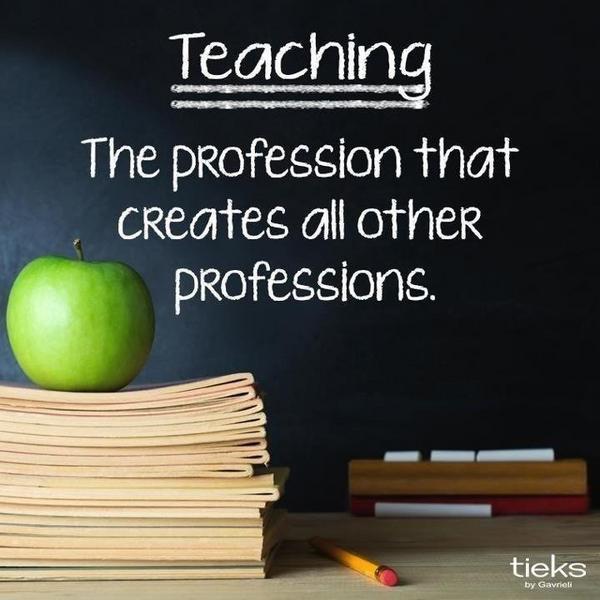
Teaching is the master of every profession, no doubt. Teachers nurture students in their preferred disciplines. Teachers head and guide and direct in every place of learning. They impact the character and learning of students: they play a vital role in inculcating good moral behaviours, knowledge impassion and impartation. How beautiful and nice of a profession. Moreso, they play a parental role during school hours. 

Though the responsibilities of teachers are beyond that which I have queued and listed here, even with the little above listed, we must agree that this is not a lazy profession. Hence, it should simply be handled by readily authentic, prepared, learned and responsible personalities. A kind of people that shun examination malpractice and any illegalities. Having fully reliable teachers guarantees the production of well-educated students from all levels of education. And, God forbid, vice versa. 

The only effective weapon that will end educational failures is the availability of qualified teachers. Steps in providing qualified teachers include: Demanding higher Unified Tertiary Matriculation Examination, UTME, scores before getting admission into any institution capable of certifying one as a teacher. It also comprises impromptu student-teacher supervision during their Teaching Practice, TP, periods.

And an important aspect is an instalment of a well-paid salary system to newly employed and already teaching teachers the government. This, for sure, will get the educational system many brilliant minds. Most students go for courses they expect can fetch them money. And for already teaching staff, a kind of test of qualification can be given, perhaps, through external bodies, thereby confirming their strength and teaching capabilities, and also changing the unqualified ones to the non-academic part of the institution, to at least help them maintain the source of income and from being unemployed.

A quack doctor can only kill or jeopardise one person at a time. A building engineer endangers a family or a building at a time. For teachers, it is a different case. An unqualified teacher cheats and misleads a whole generation. And the scary part is that what he wrongly misled the current generation is the same thing that will be passed and taught to the upcoming generation by the current ones, for they’re the leaders of tomorrow. And the problem, the misleading, the imperfection will go like that. The whole generation is in vain. Uncontrollably. Unknown to all, where it may stop, just perhaps. And all these, Just a single damage, by a single teacher. Just one person. Ohh! What will a class of unqualified teachers do to our society? Or what do we think all those quack teachers out there have been doing? 

Everything is just as straightforward as everyone can see it, yeah. Students sitting silently and helplessly listening to quack teachers are helpless and hapless and don’t know the misleading they’re in the middle of. The work is ours and the government’s. From our side, we don’t encourage and invite brilliant and vibrant students to teach. Ohh, sad; one will ask that, after graduating as a well-learned and certified teacher, what will I do, as much as a source of income? This question is too head shocking, and one may hardly get an answer to continue further convincing him to go for teaching.

How I wish and how beautiful to see teachers, too, being screened, being made to practice what they were taught, being made to face challenges that make them look every inch equal to their tasks like it’s usually done to qualified engineers and doctors and every other highly regarded course of study. It will make meaning this way. Indeed, there’s a huge need to look at and upgrade our educational system, of which teachers are the backbone.

Mustapha Dauda wrote from Azare, Bauchi State, via mustaphadauda399@gmail.com.

Ten quick practical indicators which Tinubu should look into

By Aliyu Nuhu

First; Nigeria does not generate enough electricity to support industries and sustain growth. When leaders talk of addressing poverty and unemployment they forget the single factor holding Nigerian economy down. With 3000-5000mw of electricity, the story of Nigeria will always be associated with darkness.

Second; Nigeria is still unable to employ its youths, about 90% of them finish schools and are sitting at home or roaming streets and committing crimes. The number is alarming.

Three; Industries are either closing down due to insecurity, absence of forex to import critical spare parts or electricity.

Four; Thousands of Nigerians are losing their jobs. MTN and some banks are still retrenching. Only government is employing and doing it selectively for sons and daughters of the elites, politicians and government officials. Government can’t employ everyone. As long as the private sector is not employing, unemployment will always be high in Nigeria.

Five; Start up businesses die due to failure of banks to give them loans. No Nigerian bank gives any form of loan at all.

Six; Big and small industries are being killed by multiple taxation. There are more than 20 different taxes that companies pay in Nigeria.

Seven; Some states are taxing companies for broad band satellite receivers, something that is vital to their operations, especially banks. Other states are imposing tax on boreholes even as the governments fail to provide pipe borne water to factories.

Eight; Agricultural goods in transit, including livestocks are subjected to all manner of extortion by police, LG officials, VIO, FRSC and security forces. Once a truck or car is loaded with goods, it is fair game to security agencies. Nigeria is becoming an impossible nation to move goods, capital and equipment. No nation develops without free movement of labour and capital. In the northern part of the country, insecurity has ensured that most farmers don’t go to farms due to activities of bandits and Boko Haram.

Nine; Despite efforts to build roads, rail, bridges, power plants and other social and economic infrastructure, it is becoming clear that the government will finish its two terms leaving Nigeria with the same tragedy of uncompleted and abandoned projects.

Ten; Nigerian businessmen are being rewarded for investing abroad. In other words the government rewards them for exporting Nigerian jobs to other African countries. Dangote has been building factories outside Nigeria in the name of diversifying his risks. Government should take a cue from what Donald Trump did in America. He rewarded those that built factories in US and punished those that built factories outside the United States. He slashed taxes on American companies to encourage them employ Americans.

Are Nigerians fair to Buhari?

By Prof. Abdussamad Umar Jibia

Many years ago, when I was a young lecturer at Kaduna Polytechnic, I had a discussion with a senior colleague of mine. I have always disliked having disagreements with my seniors because I easily admit defeat as I don’t want to appear disrespectful. 

My discussion with the Chief Lecturer was around General Muhammadu Buhari’s achievement as PTF Chairman. The senior colleague, who bitterly disliked Buhari, was of the opinion that PTF under Buhari “did nothing except for some roads he constructed around Katsina”. When he was reminded that the road he followed daily to work was constructed by Buhari’s PTF, the man vehemently denied it even though it was well known to all the people around the Tudun Wada area of Kaduna, and he could easily find out in case he forgot. But his mind was beclouded by hatred. Hatred stinks, and it blinds.

My discussion with my senior colleague came to my mind this week while I was travelling back to Kano from Kaduna. For two decades before Buhari assumed office as a civilian President, this road had become one of the most dilapidated in the country, and Nigerians, including myself, wrote to call the attention of President Buhari to it while his administration was still taking off. These calls did not fall on deaf ears, and even Buhari’s enemy cannot deny that the quality of work done in the renovation is high.

Of course, more work is needed on the Kaduna-Abuja side, and although it is ongoing, it is clear that the project will outlive the Buhari administration, which has less than three weeks to go. His is, however, much better than PDP governments that were more interested in politics than service.

Two other projects attracted my attention while on the same journey. They are the Kaduna-Kano-Maradi rail line and the famous AKK gas pipeline project. The speed at which the two projects are being pursued is high, but the completion date can obviously be no earlier than May 29, 2023.

On December 25, 2018, while travelling along the Kano-Katsina highway, I stopped at Tsanyawa to take a picture of an accident caused by Rabiu Musa Kwankwaso’s five-kilometre project. The five-kilometre project was a failed project of the Kano State Government under Engr. Dr Rabiu Musa Kwankwaso, in which a five-kilometre length of the expressway was supposed to be built in each local Government headquarters.

For local government headquarters on major federal highways like Tsanyawa, Bichi, Rimin Gado, etc., the state government only succeeded in spoiling Federal roads on which partitions were made without increasing the widths of the roads. I displayed the picture on my Facebook page with a call to Kano State Government to correct the mistake it made. 

Two years later, on 24th October 2020, I stopped at the same spot in Tsanyawa and took another picture of the road after Buhari’s dualization project. The dualization solved the problem in both Bichi and Tsanyawa, the two local government headquarters on that road. I am personally happy that the dualization of the Katsina-Kano road was embarked upon by the Buhari administration because it is the road I ply more than any other in my life.

So why are we only looking at the mistakes? Were our expectations from Buhari too high? Did his mistakes overshadow his achievements? Or are we simply difficult to satisfy?

A fair answer is to say, “All of the above”. You may not be happy to hear that, but it is my opinion.

I have never seen people more expectant than Nigerians. When they love a person, he is fault-free and infallible. Anyone who disagrees with him must be insulted and disgraced. He will solve all their problems. I think that is why when they eventually hate the same person, they go to another extreme of not seeing anything good with them. Buhari is a victim of this, unfortunately. Examples of other objects of extreme blind love by their supporters are Peter Obi and Rabiu Kwankwaso.

What about the mistakes? Are they too many or too grave, or both? Are all of them mistakes or blunders? Or are they simply contempt for Nigerians or some groups thereof by President Buhari?

I sometimes wish Buhari did not accept to become the President. Many people are at a loss about how he simply allowed innocent people to continuously be killed in his home state while speaking about defeating Boko Haram in the faraway North East. By the time he leaves at the end of this month, President Buhari will leave Katsina more insecure than he met it. Last week, a major national daily reported the migration of dreaded bandits in large numbers from Zamfara to Katsina state. 

On several occasions, when Buhari was asked about banditry in the North West, he dismissed it as a fight between people of the same culture and tradition. This can mean farmers/herders or Hausa/Fulani communal clash. Many victims like me are not happy with this kind of response and see it as the reason why well-known bandits’ kingpins are operating freely in our state, kidnapping, enslaving, killing, raping, etc. 

The least corrupt Nigerian politician I know will leave Nigerians in a more difficult economic hardship than he met them. I observed Nigerians taking a long time comparing their income and prices of foodstuffs (yes, food, not any luxury item) in 2015 when Buhari came and in 2023 when he is leaving. Nigerians are suffering.

What about Education? Buhari kept poor people’s children at home for eight months last year and many months in 2020 while his children were schooling in Europe is an indication of the contempt he has for the poor people of Nigeria who formed his support base. The number of out-of-school children is rising. The Almajiri Education Commission should have come earlier, but it is still a welcome development which we hope the incoming President should implement with the seriousness it deserves.

Finally, Nigerians are also difficult and unfair. When they love a politician, they don’t consider him a human being with strengths and weaknesses. If they do that at the beginning, they will certainly be fair to him at the end. But like some binary machines, they only have two states; absolute love and absolute hate.   

Prof. Abdussamad Umar Jibia wrote from Bayero University, Kano. He can be contacted via aujibia@gmail.com.

EFCC declares British national wanted

By Ahmad Deedat Zakari

The Economic Financial Crimes Commission, EFCC, has declared a British and Indian citizen, Deepark Khilnani, wanted on the ground of fraudulent activities.

The Commission in a post on their verified social media accounts disclosed on Wednesday that Mr Khilnani is wanted for conspiracy, stealing and money laundry.

The Commission gave his brief details and requested that persons with information that could lead to his arrest should not hesitate to contact the EFCC.

“Deepark Khilnani, 63, Indian/British citizen is wanted by the EFCC for Conspiracy and Money Laundering. If you have any information that could lead to his arrest, please do not hesitate to contact the EFCC immediately”, they posted.

Senator Ndube to drag Buhari to court over $800 million loan plan

By Uzair Adam Imam

There are still debates on the Presidency`s plan to collect $800 million loan from the World Bank. The money is said to be used to succour to the poorest of the poor upon removal of the petrol subsidy in the country.

President Muhammadu Buhari had sought the Senates approval to collect the debt few days to leave office as the President of Nigeria.

Ali Ndube, the senator representing Borno South, has threatened to drag President Muhammadu Buhari to the court over this plan.

The senator stated this in an iverterview on Trust TV`s Daily Politics, describing the attempt as unfair, illegal and unconstitutional.

Ndume stated that, “I will go to court on that because it is unfair, illegal and unconstitutional. Let me give you example, we are two now in the studio and you say you are going to borrow one million and share among the two of us, how are you going to select the two?

“Beside that if you are giving to the two and they are the ones to pay that is okay but it is all Nigerians that will pay.

“If you give Nigerians today ₦4,000 randomly, how fair is that? In fact, it is unconstitutional because the constitution of Nigeria does not allow you to discriminate.

“These guys they will just use grammar to confuse this old man (Buhari) and he will just approve. He (Buhari) doesn’t understand this, they just want to steal the money, we cannot continue to allow this kind of things.

“What they are targeting is what they can get out of it not, what Nigerians can get, you can quote me on that, any of them come to challenge me on TV, I will come back to explain myself, they are misleading the President,” he stated.

Doctors’ anti-migration bill and nurturing greener pasture

By Lawal Dahiru Mamman

Brain drain in Nigeria has lingered for some time now. In the medical profession, it is the most dominant issue occupying the mind of physicians and other health personnel. This may not be unconnected to the fact that human life is sacrosanct.

It goes without saying that the incessant brain drain of medical personnel in Nigeria will slow the attainment of Universal Health Coverage (UHC), that all people have access to the full range of quality health services, they need, when and where they need them, without financial hardship, in this part of the world.

Mainly, the mass exodus of doctors out of the country is caused by poor welfare of medical practitioners, lack of or insufficient working equipment, and poor working environment leading to the need for seeking a more sumptuous alternative – greener pasture as it is called.

This is purely a reflection of the theory which argued that “…… if wages rose above subsistence, the number of workers would increase ….” By implication, wherever our medical brains are sprinting to have a more luscious wage or salary for the profession. This would increase the country’s workforce while wearing out our dear nation.

Discussions have sprung over time on how to salvage the situation. Experts have suggested an increment in the welfare of doctors. In contrast, others have voted for ending medical tourism, especially public officeholders, to enable them to pay more attention to funding health facilities at home.

The most recent attempt to curb the mortal exodus of medical practitioners is to shackle them with the power of the law. This is through a bill sponsored by Ganiyu Johnson, a lawmaker from Lagos. The bill seeks to amend the Medical and Dental Practitioners Act 2004 to address the brain drain in the health sector. According to the lawmaker, it is only fair for medical doctors who enjoy taxpayer subsidies on their training to give back to society.

The legislation is titled, ‘A Bill for an Act to Amend the Medical and Dental Practitioners Act, Cap. M379, Laws of the Federation of Nigeria, 2004 to Mandate Any Nigeria Trained Medical or Dental Practitioner to Practice in Nigeria for a Minimum of Five Years Before being Granted a Full License by the Council to Make Quality Health Services Available to Nigeria; and for Related Matters.’

While the above is more restricted to medical and dental practitioners, the same lawmaker said on Friday, April 14, 2023, that he would be presenting a similar bill on nurses and pharmacists; when he intends to do that, time will tell.

With different medical associations reacting in negation by stating that the bill has the propensity to trample on the rights of doctors, the Minister of Health, Dr Osagie Ehanire, said the bill is in order especially looking at the fees paid by the government to subsidise their training at universities, and the service which they render before travelling overseas. However, the minister said the service does not make up for the cost of training.

The Nigerian Medical Association (NMA) has said the bill will not see the light of the day because it impedes the constitutional right to freedom of movement of doctors and violates international labour law, chiefly since the government has subsidised students from all other professions.

The Nigerian Medical Students Association (NiMSA) and the World Medical Association (WMA) have vehemently disapproved of it, too, because the bill, according to the latter, is “not only outlandish but totally retrogressive, unresearched and very ill-informed.”

The bill that intends to give health workers full license only after five years of working in Nigeria has passed the second reading in the House of Representatives. While this may have come out of benevolence, it may not be the piece we search for to solve the puzzle of brain drain in the health sector.

If the bill sees the light of day, after five years, doctors will still have the freedom to travel out, in my opinion even more experienced. So, could this be the solution we yawn for? Instead, a more lasting solution should involve doctors and government officials meeting halfway to save Nigeria’s crumbling health sector.

I want to firmly believe that Nigeria has what it takes to cultivate the soil for growing ‘greener pasture’ our medical professionals continue to voyage foreign lands for. But only leaders fuelled with altruism can summon the political will to do the needful.

Lawal Dahiru Mamman writes from Abuja and can be reached via dahirulawal90@gmail.com.