Nigeria

Defending the Naira: A political perspective

By Ibrahim Isa Wada

When the current administration was advised by some economic experts to withdraw the subsidy on fuel and allow the Nigerian Naira to find its own value in the international arena, I got so much worried for fears of what would be the outcome. Being a nonexpert on economics, banking or finance, but only a bloody retired broadcast regulator with a fair understanding of day to day current issues, I decided to drop this piece and I hope it will be carefully considered by the experts. All I know is that, life is so hard for all of us since the Naira decided to take a flung and the fuel prices shoot up.

Sadly, some of the experts disappeared while others started to blame the past administration and/or their village people for making our lives so miserable.

Defending the value of the Naira amounts to defending the Tinubu/Kashim administration, and surely the interest of the Nigerian people.

How can any government, businesses or persons successfully plan and execute meaningful projects; how can Nigeria join economic groups, like the BRICS, with such a rickety currency?

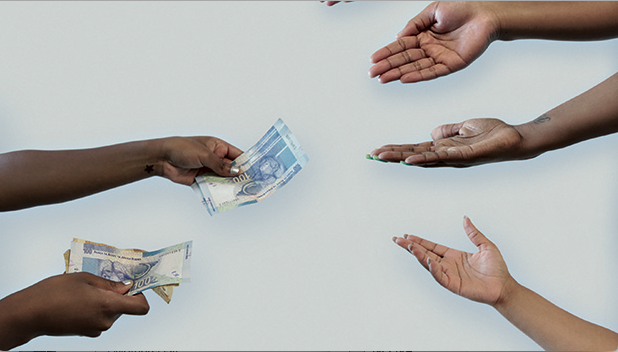
I understand that the value of the Nigerian Naira is a function of her balance of trade. That is for the Naira to be strong and stable, the total value of goods and services Nigeria imports must be the same or less than the value of goods and services Nigeria exports over the period of time.

In the present circumstances, we tend to import almost everything including PMS, and even charcoal for smoking Shisha! While we export gold and dollars in cash etc, to safe havens. To be frank, any Nigerian leadership that wants to succeed must have a strong and stable Naira to begin with, which can be achieved by taking the following measures, among others:

1) Bring back the policy of Export Promotion and Import Substitution of the late 70’s.

This should be done with vigour. Any product that could be manufactured in Nigeria shall not be easily imported into the country, while all products that can be exported should receive a boost from the government.

There are means and ways to manuver around international trade politics, like the WTO, to achieve that.

2) Formalise all international transactions, including our transborder trade with ECOWAS and other African countries. Currently the Nigerian Central Bank serves as the unofficial African Central Bank, providing the foreign exchange requirements for many African countries that route their trade through Nigeria.

The trade formalization entails the systemic deployment of adequate personnel and infrastructure that would make international trade between Nigeria and other countries smooth, yet documented.

3) The CBN, Commercial Banks and Bureau De Change operations should have a joint universal forex transactions software that will ease, unify and speed up forex trading.

4) From 3 above, all foreign currency transfers including PTA above $250 must be in digital form.

5) Also from 3 above, the commercial banks and BDC Forex Operator window should capture a basket of about seven major foreign currencies that Nigeria transacts in, i.e Dollar, Yuan, Euro, Pound, CFA, Saudi Riyal and Dirham.

Therefore the BDC operators should have multiple currency accounts with their banks to receive and transfer funds in digital form.

6) The Nigerian government should be bold enough to block all foreign exchange leakages, in form of waivers and favours to individuals and institutions.

7) Develop key institutions targeted towards the elimination of Forex Guzzlers thus:

a) Establish more private universities to reduce students high foreign exchange remittances.

b) Establish more world class hospitals to save foreign exchange from medical tourism.

c) Establish companies for the local fabrication of low technology agricultural and industrial machinery to reduce foreign exchange outflow.

d) Fuel imports should stop at the shortest possible time, by developing more modular refineries, privatising existing ones and ensuring the early take up of the Dangote refinery.

8) In line with the Export Promotion and Import Substitution Strategy, invest heavily in agriculture to reduce food and dairy products import, as well as encourage the exports of cocoa, cashew nuts, sesame seeds, beef, etc.

This is my political perspective of the basic economic issue, because if the politicians fail to defend the value of the Naira and the poor, they will fail utterly in politics.

Ibrahim Isa Wada, writes from Kano, Nigeria. He can be reached via; ibrahimisawada@gmail.com

NEMA warns against imminent flooding in Nigeria

By Ahmad Deedat Zakari 

The National Emergency Management Agency (NEMA) has warned Nigerians to prepare for flooding in the country. 

The Director-General, NEMA, Mustapha Habib Ahmed, disclosed this at the National Emergency Coordination Forum Meeting in Abuja on Saturday. 

The agency disclosed that 13 states might be affected by the scheduled release of waters from Lagdo Dam in the Republic of Cameroon. 

The agency has also disclosed that over 28 people have been killed, 48,168 individuals displaced, and 159,157 persons affected by flooding in Nigeria this year. 

Ahmed further stated that there has been an upsurge of water along the flood plains of the River Benue, which he said will greatly affect states like Adamawa, Benue, Taraba, Kogi, Delta, Edo, Anambra, Enugu, Edo, Delta, Rivers, Nasarawa, and Bayelsa. 

He added that there has been a sudden increased inundation of riparian communities and farmlands along the banks of River Niger in Adamawa, Taraba and Benue states in the past 48 hours. 

Ahmed further stated that the agency has directed the activation of all emergency response units to be ready for any emergencies as the flooding will be increasing as the days go by. 

“As a result of the unfolding situation, I want to use this opportunity to alert authorities of State and Local Governments along rivers Niger and Benue basin areas to immediately activate their emergency response plans to avert potential damage and losses that will arise due to inundation of communities by flood waters,” he added.

An urgent plea for improved power infrastructure

By Mukhtar Jarmajo 

It is a tragic reality that Nigeria has been plagued by the incessant collapse of its national grid for the past few years. The nation has never been capable of generating, transmitting, and distributing sufficient electricity to its vast population. Daily life in Nigeria is synonymous with power outages, leaving citizens in perpetual darkness. The country’s electricity infrastructure is not only old but woefully inadequate to meet the needs of its growing population. This dire situation calls for immediate action from relevant authorities.

For years, Nigeria has been grappling with its power crisis. The nation’s outdated and insufficient infrastructure has failed to keep up with the times and the growing population, perpetuating the ongoing power outages. This has led to frustrated citizens and even more frustrated businesses. With the current state of the economy, power outages only worsen matters. The sector’s neglect and waning attention have only contributed to landing Nigeria in an unenviable situation.

The impact of Nigeria’s power crisis has been felt in every sector. It has taken a toll on schools, which cannot provide the quality of education necessary for the future generation. The constant blackouts also put lives in danger in hospitals as equipment fails and medical procedures abruptly halt. Businesses and industries are hit worst, struggling to remain productive amidst the darkness. Countless jobs are lost each year because of this lack of reliable infrastructure.

It is high time the authorities take these vital issues seriously and collaborate to develop solutions for the ailing power infrastructure. There needs to be a concerted effort towards investing in modern and efficient technologies, rehabilitating existing power plants, and improving power transmission and distribution systems. The current situation only highlights the pressing need for diversification in the sector, with greater emphasis on alternative and renewable energy sources.

The government must adopt pragmatic policies that attract investment in the power sector and provide incentives for clean energy solutions. It is a long-term solution that should not be underestimated and goes beyond serving the immediate needs of citizens but ensures the country’s future development.

Nigeria has the potential to generate power from a wide range of sources, including solar and wind power. Investing in these sources of energy promises considerable benefits for the nation in the long term. Efforts to tap into these sources must be expedited, and plans must be established to incorporate them into the existing power infrastructure.

Nigeria’s power crisis must be resolved today rather than tomorrow. The authorities must act urgently and focus on implementing long-term solutions that address Nigeria’s power needs. Efficient technologies and infrastructures should be prioritised to usher Nigeria into an electrified future. Only then will the country be able to realise its full potential and offer a brighter future for its people.

Jarmajo writes from Wuse Zone 2, Abuja. 

Get good connection and communication skills for career development

By Abba Ado

Excellent connection and communication skills are significant to success, particularly in this modern world. No matter how hard you work, how smart you are, or how talented you are, you’re less likely to become successful if you don’t have good and efficient skills in communication and connecting with other people.

To stand out against your counterparts in leadership, business, or any organisation, you must effectively cooperate with people.  Undoubtedly, you can’t be smarter than everybody, and even if you are smart enough, you can never be smarter than people who connect themselves, share ideas, and come up with sufficient solutions.

The major barriers to success are the lack of ability to connect with desired people. Many people have a repressed brainiac capability, but they remain stagnant due to the absence of an effective connection. According to the definition coined by John C. Maxwell,” Connection is the ability to identify with people and relate to them in a way that increases your influence with them”.

Connection and communication are crucial to having good leadership; for you to be constructive in your leadership role, you must have excellent communication with your coworkers. The power of connecting with others cannot be emphasised; the starting point of gaining connection skills is to keep aside your biases, such as religious, cultural or ethnic differences. Connecting with people is key to success regardless of your goals.

It is good to know you can’t do everything alone; your smartness and hard work are not enough to lift you to where you want to be. You must engage with society who share the same ideology to influence each other,” if smart A connects with smart B, they arrived at having double ideas instead of one”. Several studies have shown that high achievers listen to others, consider others, and interestingly solicit ideas from those who are inferior.

In his book titled “Everyone Communicates Few Connect”, John C. Maxwell classified different ways of connecting at every level, such as:

Connecting One-on-One is the most important aspect of connection; at this level, you must know other people’s matters, listen to them attentively, and share your values with their ideas; in the end, you will gain common valuable information.

The second way is Connecting In A Group; at this level, recognise every person’s potency, acknowledge it, and be open to new ideas, especially their potential. 

The third is Connecting With An Audience: in this case, you need to convey your appreciation to the audience, do something exceptional for them, and inform them how much you enjoyed engaging with them.

The major key to success is the ability to communicate and establish a good connection with people; without connecting and communicating, Mark Zuckerberg would not have built Facebook, and Steve Jobs would not have found Apple. For us to have better socioeconomic growth, we must connect; our business moguls, especially in northern Nigeria, should come up with an effective way of communication that would lead to immaculate partnerships to build industries and markets that would employ thousands of people rather than being stagnant with one idea that won’t go anywhere.

Connections are not only about leadership or business but across all aspects of life, whether in academics,  institutions, or coworkers; once you have any idea, try to identify people who share the same ideology. You can connect with every person, such as professors, doctors, friends, or colleagues.

One of the best ways to connect with your mentors is via email address, social handle, or face-to-face. Know how to craft an attractive email address because a poorly written one may disqualify you. To become successful, you must cooperate with people no matter how smart you are. Two heads are better than one.

Abba Ado wrote via abbaadomusa0@gmail.com.

From school bench to professorship: The inspirational journey of Dr MI Aminu

By Tijjani Ahmad, FCA

Our lives are often shaped by the people we meet along the way, and for me, one of those people has been a dear friend whose journey I’ve witnessed since our junior secondary school days. Dr MI Aminu’s life is a testament to the power of determination, hard work, and the pursuit of excellence, leading to his remarkable success as an academic and career professional.

Our paths first crossed in junior secondary school, where we shared the challenges and triumphs of those formative years. From there, we ventured into senior secondary school, navigating the complexities of education and personal growth side by side. But our educational journey was far from over. After completing our senior secondary education, we took a significant step in our academic paths by attending the College of Arts, Science and Remedial Studies (CAS), Kano, for IJMB A-level. During these pivotal years, we solidified our friendship and embarked on a shared journey of intellectual growth.

It was after our time at CAS that our paths diverged. Dr Aminu pursued his dreams at Usman Danfodio University, Sokoto (UDUS), where he chose to study Business Administration, driven by his passion for business and entrepreneurship. Meanwhile, I ventured to Ahmadu Bello University (ABU), Zaria, to pursue a degree in accounting, charting my unique course.

While our locations and fields of study differed, our friendship remained steadfast. We supported each other from afar, exchanging stories of our academic pursuits and experiences. It was evident that a shared desire for knowledge and personal growth drove both of us. After completing his studies, Dr. Aminu entered the corporate world, working tirelessly in the banking sector for four years. During this time, his dedication to knowledge and personal growth never wavered.

The academic world beckoned at this stage, and he answered its call. He left his banking career to pursue an academic path, starting with Kano State Polytechnic. This transition reflected his commitment to knowledge and desire to inspire the next generation of leaders and entrepreneurs. His academic journey reached a pinnacle when he set his sights on a PhD in Entrepreneurship. This pursuit took him to Malaysia, where he immersed himself in research and scholarship, guided by the erudite Prof. Rosli Mahmood, one of the foremost professors in the field of management and entrepreneurship in Asia. Under Prof. Mahmood’s mentorship, Dr Aminu honed his expertise in the area he was so passionate about.

Upon earning his PhD, Dr Aminu returned and found his way to one of the prestigious universities in Nigeria, ABU, Zaria, where he was welcomed as a faculty member. His dedication to research and scholarship is evident in his publication of over twenty articles in reputable journals, leaving an indelible mark on entrepreneurship, as reflected in the impressive 160 citations garnered by his works.

Beyond his scholarly achievements, Dr Aminu’s commitment to education shines brightly through his mentorship of over 20 MSc and PhD students. With a generous spirit and fervour for guiding the next generation, he imparts the values of perseverance and academic excellence. Dr Aminu’s unwavering commitment to research and his nurturing of future academics epitomises his lifelong dedication to knowledge and personal growth, serving as an inspiring testament to the transformative influence of education and mentorship.

But the story doesn’t end there. Dr. Aminu recently achieved another milestone in his academic career – he was promoted to the coveted position of Associate Professor of Entrepreneurship at ABU, Zaria. This promotion is a testament to his years of dedication to academia, rigorous research, and his commitment to entrepreneurship. It is not just a title but a recognition of his contributions to the academic community and his impact on countless students over the years.

Dr MI Aminu’s remarkable journey reminds us that the pursuit of excellence and the fulfilment of one’s dreams are endeavours that require unwavering dedication and the courage to navigate diverse paths. His story underscores the profound impact of mentors and the importance of nurturing the next generation of leaders. It teaches us that regardless of the challenges we face or the twists and turns in our journey, with resilience and a steadfast commitment to our aspirations, we, too, can achieve greatness. His life is an enduring testament to the boundless possibilities that await those who embrace lifelong learning, pursue their passions, and inspire others.

Today, Dr. Aminu stands as a beacon of inspiration to all who have known him. His journey from our school days to his current position as an Associate Professor at Ahmadu Bello University, Zaria, is a testament to his unwavering commitment to education, entrepreneurship, and personal growth. May his story continue to inspire us all as we pursue our paths to success.

Tijjani Ahmad wrote from Kano via ahmatee123@gmail.com.

Sex Education: MURIC commends Kano State Gov’t for banning teaching materials

By Abdurrahman Muhammad

The move by the Kano State Government to remove some lewd and pernicious teaching materials from the curriculum of both public and private basic schools in the state has been commended by the Muslim rights advocacy group, the Muslim Rights Concern (MURIC).

The Kano State Government, through the office of the Special Advisor on Private and Voluntary Institutions, issued the prohibition in an announcement made on Thursday, 5th October 2023. 

In the announcement, the Kano State Government listed some six (6) textbooks prohibited for instructional use “due to observed inclusions(sic) of inappropriate and sexually explicit contents that are harmful to the morals of our young students.”

The decision of the Kano State Government, under the leadership of Governor Abba Kabir Yusuf, to prohibit the use of obscene teaching materials in the state has come at the right time. Therefore, all parents, educationists, learners and advocates must embrace and support the initiative so as to tame the alarming rise of immorality amongst the youths in the state. 

The human rights group lent its support by calling on the authorities to ensure strict compliance by both public and private schools in the state. 

The commendation was contained in a statement released by the Chairman of the Kano State Chapter of the group, Malam Hassan Sani Indabawa, on Friday, October 6, 2023. 

Mr Indabawa further said:

“As one of the front-line advocates for the removal of all obscene teaching aids from the nation’s educational system, we at MURIC rejoice and commend the Kano State Government for doing the needful by prohibiting the use of some selected teaching materials found to contain sexually explicit contents which are perverse to the moral upbringing of pupils in the state.

“The surreptitious inclusion of explicit sexual contents in some of the basic education teaching materials was part of the Comprehensive Sexuality Education (CSE) developed by the United Nations Population Fund (UNPF) for worldwide use to promote promiscuity, fornication and homosexuality. This is one of the evils of globalisation. Certainly, this strange knowledge contradicts our faith, culture and values.

“Aside from the CSE, many textbooks used in Nigerian schools have been corrupted with lewd contents. 

“Nigerians may be well aware that in the last twenty years or so, classical English literature books and novels such as Macbeth, Julius Caesar, Merchant of Venice, Weep Not Child, Things Fall Apart, The Man Died, African Child, Akin the Drummer Boy, Mine Boy, The Delinquent and so forth have been removed from our school curricula and replaced with sex-related local English literature and other science books containing lewd and pernicious matters to give the unsuspecting young school pupils the wrong impression that self-control is unnecessary and that casual sex makes them feel good; that they should engage in casual sex before marriage; that ‘safe sex’ is what to aim for in life provided that they don’t get pregnant and if they do get pregnant, they should go for abortion. 

“As we may equally be aware, one of the negative consequences of this is the sexualisation of primary and secondary school pupils.

“Therefore, the prohibition of the use of offensive textbooks by the Kano State Government must be backed by appropriate legislation to provide a legal framework for sanctioning any erring school authority for effective implementation of the government’s directive.

“The Office of the Special Advisor on Private and Voluntary Institutions and Kano Educational Resource Department (KERD) must be well-equipped to ensure strict compliance as it is our belief that some self-seeking, unscrupulous and unconscientious groups and individuals may attempt to frustrate the effort with the support of the global conspiracy designed to destroy the fabric of our family value system, decency and modesty.

“We also call on other state governments to emulate Kano State Government by reviewing and removing all lewd and pernicious teaching materials from their various basic education curriculum.

“Finally, we reiterate our earlier call, made on the 25th May 2023, to the Nigerian Educational Research and Development Council (NERDC), a federal government agency charged with the responsibility of implementing educational policies in Nigeria, to immediately review and expunge any sex-related content from the curriculum being used in Nigerian basic schools.”

Happy Teachers’ Day!

By Abdurrazak Muktar Makarfi

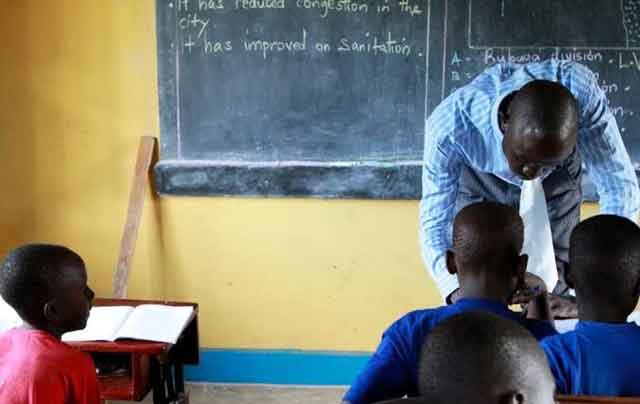
On this particular day, we celebrate the incredible dedication and hard work of teachers who shape the future of our society. Teachers play a vital role in nurturing young minds and inspiring a love for learning.

However, it’s important to acknowledge the challenges many teachers face, especially regarding their financial well-being. In Nigeria, the issue of primary school teachers’ salaries is a pressing concern. It’s disheartening to hear that fresh graduate primary school teachers are earning less than ₦50,000, which is not enough to sustain them for a month, given the rising cost of living.

Moreover, the situation in Kaduna State is even more distressing, where primary education teachers have to endure 45-55 days without receiving their salaries. This not only affects their livelihood but also their motivation to continue their invaluable work in educating the next generation.

On this Teachers’ Day, let’s hope for change and improvement in the conditions of our primary school teachers. May the Nigerian government take prompt action to address the issue of teacher salaries and ensure that our educators receive the fair compensation they deserve for their tireless efforts in building a brighter future for our children.

Thank you for being a part of this noble profession, and let’s continue to advocate for better conditions for our teachers. Happy Teachers’ Day once again!

Nigeria’s Independence Day: The journey so far

By Usman Abdullahi Koli

Nigeria, often called the “Giant of Africa,” celebrates its independence day on October 1st each year. This significant day marks the country’s liberation from British colonial rule in 1960. Over the past six decades, Nigeria has experienced a tumultuous journey characterized by both achievements and challenges. 

Nigeria’s quest for independence was a long and arduous journey spanned several decades. The seed of nationalism was planted in the hearts of Nigerians during World War II, as they contributed significantly to the British war effort but received little in return. This sparked a desire for self-determination and freedom.

Key figures in Nigeria’s independence struggle included Nnamdi Azikiwe, Obafemi Awolowo, Abubakar Tafawa Balewa and Ahmadu Bello, who advocated for self-governance and pushed for constitutional reforms. In 1960, their efforts bore fruit when Nigeria finally gained independence from British colonial rule, with Sir Abubakar Tafawa Balewa as its first Prime Minister.

While independence brought newfound freedom, it also presented significant challenges for Nigeria. One of the most pressing issues was the need to unite a diverse nation of various ethnic groups, languages, and religions. The delicate balance of power among these groups has often led to ethnic tensions and conflicts.

Additionally, Nigeria has grappled with political instability, military coups, and periods of military rule. The Biafran War (1967-1970) and subsequent coups disrupted the nation’s stability and led to a loss of lives and resources.

Economic fluctuations have marked Nigeria’s journey since independence. Despite being blessed with abundant natural resources, including oil, the country has faced challenges in managing its economy effectively. Over-reliance on oil exports has left Nigeria vulnerable to fluctuations in global oil prices, resulting in economic instability.

Corruption has also been a persistent issue, hindering economic growth and development. The mismanagement of public funds and the lack of transparency have impeded progress in various sectors, including education, healthcare, and infrastructure.

Despite the challenges above, Nigeria has achieved noteworthy progress in several domains. The nation exhibits a lively cultural landscape abundant in traditional practices, artistic expression, and literary works.

In recent years, there have been efforts to diversify the economy away from oil dependency. Investments in agriculture, technology, and entrepreneurship have begun to yield positive results, with a growing number of startups and innovations emerging.

Nigeria has also played a prominent role in regional and international diplomacy, contributing to peacekeeping missions and serving as a key player in the African Union and the United Nations.

Both progress and challenges have marked Nigeria’s journey from colonial rule to independence and beyond. As the country celebrates Independence Day each year, it is an opportunity to reflect on the past, acknowledge the struggles, and look forward to a brighter future. Nigeria’s rich cultural heritage, economic potential, and resilient people continue to be sources of hope as the nation strives for unity, stability, and sustainable development in the years to come. 

Usman Abdullahi Koli wrote via mernoukoli@gmail.com. 

Nigeria at 63, what are we celebrating? 

By Usman Zubairu Yakubu

On a day like this in 1960, Nigeria gained independence from Great Britain. But the question today is, is Nigeria an independent nation? I think the first and only Nigerian prime minister, Alhaji Sir Abubakar Tafawa Balewa, during the 1960 independence speech, answered this question. He said, “Political independence is totally inadequate if it’s not accompanied by security and economic stability”.

From the above-quoted speech, I think that Nigeria’s independence is inadequate. For this reason, we must all put hands on deck to ensure we build a prosperous Nation that will fill the missing inadequacies. A safe country for all. This is our responsibility, my responsibility and your responsibility.

The decreasing numbers of celebrants on this day show that things are not working well in the country and that the drivers of the nation are not doing the necessary to bring back hope into the hearts of Nigerians. Many Nigerians have lost hope in the country; this may arise from the ugly condition of almost everything. They feel hopeless not because they don’t love the country but because the leaders made them feel that way. We may tag that as unfortunate, but the truth is always bitter, and that doesn’t make them less Nigerians because they have their reasons to feel so. The optimistic ones who believe that Nigeria will one day get better are only trying to be stronger. Count me among them; I hope the leaders will not kill our little hope for the country and its future.

Many things have happened in less than a year of Tinibus Administration. First, the subsidy removal imposed a lot of hardships on Nigerians. Second, Economic destruction left millions of Nigerians in abject poverty and the bedevilling issues of insecurities affecting the country, especially the Northern region of the country. And by mere looks, things are only getting worse, not better. The current abduction of the Federal University Gusau students is an alarming sign of left dust that needs to be cleaned. This is to talk less of the economic hardship Nigerians are going through.

In a situation like this, independent celebration shouldn’t be the focus of any sensible Nigerian. On every blessed day in the country, Bandits kidnapped people, some killed, and some thrown out of their homes. Many Of the victims were left homeless. Go to the streets of Katsina, Zamfara and Borno to have a glance. Is this what we are celebrating? I believe independence under insecurity, corruption and poverty shouldn’t be celebrated. Until these issues are addressed, we will celebrate Nigeria’s independence with true love and patriotism. But at the moment, we don’t have the energy to celebrate.  

In a country where over 40% are living in abject poverty. And 63% are dimensionally poor as of 2022. This is before subsidy removal; how many per cent will now be in poverty as the economy shakes? Tell me, should we celebrate poverty? Or should we celebrate insecurity at the moment? Unfortunately, the future of Nigeria is gloomy as its youth remains jobless. Should we celebrate unemployment? In a country where justice is abolished, is that one country to celebrate? In a country where tertiary education is on the verge of becoming a privilege and not a right, please tell me, should we celebrate that country? In a country where the leaders don’t care about the educational future of its citizens, is that one country to celebrate? In a country where a man can’t afford healthcare, food, and life necessities, is that a country to celebrate now? Nigeria’s problem is far beyond what one can imagine. At this moment, celebration is not for us but rather a critical way of thinking about building a prosperous nation because it’s possible.

But despite all the challenges, I  believe Nigeria shall prosper, and we will live in a country devoid of insecurity, corruption and abject poverty. We will live in a peaceful nation of economic prosperity educational rights, and a country that will stand on its feet as the Giant of Africa. May God bless Nigeria!

Happy independence.

Usman Zubairu Yakubu writes from Toro, Bauchi state, Nigeria and can be reached via usmanzubairuyakubu@gmail.com.

Nigeria at 63: A country of possibilities that is suffering

By Muhammad Umar Shehu & Usman Muhammad Salihu

Nigeria, located in West Africa, is often considered a land of immense possibilities. It is home to over 200 million people, making it the most populous country in Africa and the seventh-most populous country in the world. The country is blessed with vast natural resources, including oil, gas, coal, iron ore, limestone, and many others, which have the potential to power a thriving economy.

Despite these abundant resources, Nigeria faces many challenges that have hampered its growth and development. One of the most significant challenges is poverty. The country has one of the highest poverty rates in the world, with over 40% of the population living below the poverty line. This is mainly due to a lack of job opportunities, inadequate infrastructure, and an uneven distribution of wealth.

Nigeria is grappling with various socio-economic issues, including poverty, unemployment, inadequate infrastructure, and insecurity. These challenges directly impact the well-being of its citizens, hindering their access to basic necessities and opportunities for growth. Acknowledging the gravity of these challenges and the urgent need for solutions is essential.

Another challenge that Nigeria is facing is corruption. Corruption is a pervasive problem in the country, affecting all sectors of society. It has led to a lack of transparency and accountability, which has hindered the country’s growth and development. Corruption has also contributed to the widening gap between the rich and poor, as the wealthy use their influence to gain unfair advantages over others.

In addition to poverty and corruption, Nigeria is also grappling with insecurity. The country has been plagued by various forms of violence, including terrorism, banditry, and ethnic conflicts. This has resulted in the loss of many lives and the displacement of millions of people. The insecurity has also had a significant impact on the country’s economy, as businesses and investors are hesitant to invest in an environment that is not stable.

The educational sector in Nigeria is also facing several challenges. A lack of funding, inadequate infrastructure, and a shortage of qualified teachers characterise the country’s educational system. This has resulted in poor quality education, which has limited the potential of the country’s human resources.

Education plays a vital role in empowering individuals and communities. By supporting initiatives that promote access to quality education, vocational training, and skill development, we can equip Nigerians with the tools they need to thrive. Empowered individuals can contribute to the growth and development of the nation.

Some potent unions have been fighting for quality education in  Nigeria. However, our successive governments have not accorded priority to the sector, resulting in the country’s education system suffering from many deformities and deliberate neglect.

Despite these challenges, Nigeria has enormous potential to become a prosperous nation. The country has a vibrant and resilient population known for its entrepreneurial spirit. With the right policies and investments, Nigeria can harness its vast resources to create a thriving economy that benefits all its citizens.

The Nigerian government must take bold and decisive actions to address these challenges. It must prioritise the fight against corruption, invest in critical infrastructure, create job opportunities, and promote good governance. The government must also prioritise security and ensure all Nigerians feel safe and secure in their communities.

Nigeria deserves a brighter future, and it is up to us to make it a reality. By standing together, raising awareness, supporting organisations, advocating for change, and promoting education and empowerment, we can inspire positive transformations in Nigeria. Let us remember that every successful person was once in a similar position, and through personal growth and collective action,

What is here to celebrate at 63?

To conclude the assertion, Nigeria is a country of immense possibilities that is currently facing significant challenges. However, with the right policies and investments, Nigeria can overcome these challenges and become a prosperous nation. The government, private sector, and civil society must address these challenges and create a bright future for Nigeria and its people.

The above, if considered, Nigeria’s challenges will not only end but will forever be a thing of the past.

Muhammad Umar Shehu and Usman Muhammad Salihu write from Gombe and can be reached via umarshehu887@gmail.com.