Nigeria

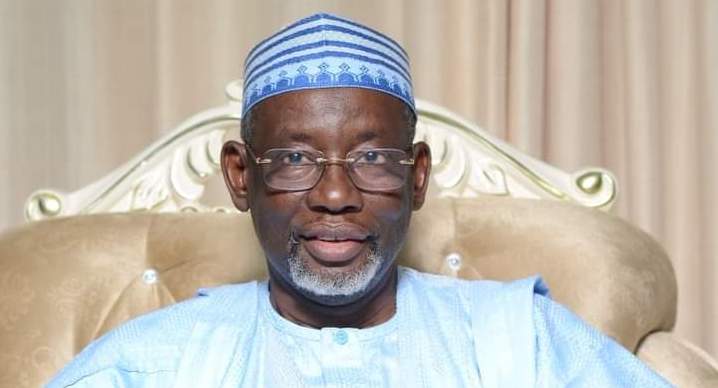
Customs spokesperson CSC Maiwada wins ‘Spokesperson of the Year’ award

By Sabiu Abdullahi

Chief Superintendent of Customs, Abdullahi Aliyu Maiwada, the National Public Relations Officer (NPRO) of the Nigeria Customs Service, has clinched the esteemed ‘Spokesperson of the Year’ Award bestowed by Spokesperson’s Digest, a division of Image Merchant Public Relations. 

The award ceremony, graced by notable personalities, in Abuja served as a commendation of Maiwada’s exceptional contributions to public relations and steadfast dedication to the Nigeria Customs Service. 

In an exclusive post-award interview with NCBN correspondents, Maiwada credited his success to both personal commitment and the collaborative efforts of his team.

He said, “This accolade not only acknowledges my dedication but also inspires me to elevate my contributions further. My motivation comes from a deep passion for my work and the unwavering support of my dedicated team.”

Maiwada, recognised for his dynamic leadership, underscored the collective endeavours of his team as the driving force behind the prestigious acknowledgment.

His words read, “Today’s recognition is a testament to the collective efforts of my team, serving as a motivating force to strive for excellence.”

Expressing gratitude for the guidance and backing from the Comptroller General of Customs Bashir Adewale Adeniyi MFR and his management team, Maiwada emphasised the importance of extracting the utmost value from his work.

In addition to recognising Maiwada’s professional prowess, praise was accorded to the National PRO’s commitment to mentorship.

He urged organisers to consistently acknowledge the dedication and enthusiasm of media practitioners and agencies, stressing the need to uphold a culture of recognising significant contributions in their respective domains. 

Concluding his remarks, Maiwada extended heartfelt appreciation to Assistant Comptroller-General of Customs Headquarters Adeogun Alajogun, the representative of the CGC at the event.

He acknowledged Alajogun’s pivotal role as his direct supervisor in the Nigeria Customs Service Public Relations Unit.

Empowering inclusion: Collaborative strategies towards SDGs with persons with disabilities

By Ibrahim Tukur

Every December 3rd marks the International Day of Persons with Disabilities—an annual global celebration aimed at advocating for the rights, fostering understanding, and promoting inclusive actions for people with disabilities. It’s a day to acknowledge their accomplishments and emphasize the imperative need for equitable opportunities and the recognition of their fundamental rights.

The theme for this year’s edition is “United Action to Rescue and Achieve the Sustainable Development Goals (SDGs) for, with, and by Persons with Disabilities.” It underscores the urgency of collective efforts in realizing the 17 comprehensive global objectives established by the United Nations in 2015. These goals encompass a wide spectrum of critical issues, including poverty eradication, healthcare, education, gender equality, access to clean water, creating sustainable cities, and addressing climate change, all aimed at fostering a better and more sustainable future for all by 2030.

However, to attain these ambitious SDGs, a collaborative approach is essential. It involves harnessing the diverse abilities and strengths of individuals, including the remarkable capabilities of Persons with Disabilities (PWDs). Despite facing substantial obstacles, particularly in many developing nations, where barriers to education, healthcare, employment, and societal integration persist due to prevalent negative stereotypes and discrimination, PWDs possess incredible potential and capacities.

Inclusivity emerges as a pivotal catalyst in this pursuit. It not only enhances the lives of PWDs but also nurtures a sense of belonging, shattering societal taboos and providing PWDs the platform to contribute significantly to society. By fostering an inclusive environment, we can effectively reduce social stigma, enabling PWDs to become independent.

Across various continents, initiatives and programs championing disability inclusion, notably in both developed nations and within African countries, have exhibited remarkable progress. However, these advancements are only the beginning. Collaborative strategies involving Persons with Disabilities, disabled people’s organizations, governments, and local communities are imperative to facilitate active participation and remove barriers impeding the realization of the SDGs.

Empowering Persons with Disabilities through comprehensive skill development and robust advocacy efforts is paramount. Engaging in advocacy not only raises awareness but also nurtures a deeper understanding of the rights of PWDs, propelling their inclusion across all spheres of life.

On this significant day, let us commend the invaluable contributions of meaningful PWDs, disability rights advocates, organizations, and NGOs dedicated to championing the rights and inclusion of PWDs. Let’s stand united in our support for initiatives that actively promote inclusivity, equity, and the materialization of the SDGs for persons with disabilities.

Ibrahim Tukur is a hearing-impaired individual who hails from Ingawa town in Katsina State. He earned his first degree in Special Education/Sociology. He is a disability rights advocate and can be reached via inventorngw@gmail.com.

Why the North needs to stand for Abba Gida-Gida

By Sani Umar Adamu

It’s said “An injustice to one is an injustice to all”. The cursory in justice would be an insincere simulacrum that spells the rogue society, but only to who knows must say the least. Going by the saying ‘what the heart thinkenth the tongue speaketh’ with all viable indications the awaiting judgement would not serve and do away with stud whom were racing to twist the world known mandatory, just on the floor of pristine judgement which by the way would be the Nigeria’s biggest justice robbery.

Abba was returned elected and officially declared winner by the INEC, the election which was supervised by both the internal and external observers was believed to be freed from any howl, in fact; it was an afflatus to stimulate by other states. Only greedy and depredator would cease the rectitude of the election and thinkenth to reverse the will of millions. We have known that the only substitute to the lies and unfairness is shaping the mendacity to bring in seizing, itch and threatening of the democracy. 

We became tootles in reticent the voices of our concern are in taciturnity where we no longer feel the pain in others; the pain of my neighbor is no longer threatening, as if telling the truth is synonymous to being a workshy. The naked truth has become something invisible – that which can not be seen simply because the ambitions and hopes are tied to president’s apron string. To cleanse the Augean stable – we definitely need to voice up our concern learn from the history of Hercules who was to clean the stables of Augeas King of Elis in which were 3000 oxen and which stables had not been cleaned for thirty years. Hercules performed the task in a single day by leading the rivers Alpheus and Peneus through the farmyard… this is to show how quality of trusting and voicing the concern is. So on no account we should lay out our hands, our voices and our fortitude to this least moiety-imballlance  we have received from the judgement of the Kano state governor. With menacle or co-adjutor, with wantonness or pride we all have to coalesce to break the unspeakable inept trench drawn between justice and injustice. 

To secret or not to do the Injustice is lethal and apparently we shouldn’t live in negation to it’s very existence, the wrath horror would summon the every existence of our survival. And when the fury unleash it wouldn’t spare the opulents or the one in abject poverty we all be the receiving edge and in the midst the pollutants disseminate the unity in our lands and finally mock the affirmation of our peaceful coexistence. 

A close shave to this prospicience is to replete the almost will of justice towards its impartial equilibrium. That’s the Justice must be served in no conjunction or appeliation to party membership, it should be served on the ground of impartiality. The crooked or inanimate cupidity to topple the incumbent and democratically elected Governor will be checked  and stopped on the spot. It’s truly beyond comprehension to figure out why all this hatred in the name of polity? Comparisons are odious, and an empty bag will not stand upright. Decisively this justice miscarriage sensed the intended failure to oust the duly elected Governor. At length the plutocracy is in sight and this will bring the collapse of our youngish democracy and it’s an injure to the prescribed rule of law and when this happens just wait for the time to commiserate the down fall of the entire system at large.

Sani Umar Adamu (Kawun Baba) can be reached via umarhashidu1994@gmail.com.

ReplyForward

Mass comm graduates, wake up

By Hauwa Isa Dogo

With sadness, I respectfully write to advise the potential and graduate students of Mass Communication about the positive potency of being practicable in their respective fields of specialisation before or after graduating. Instead of remaining stagnant without practice—despite acquiring the certificate and the knowledge consumed in school, one could sadly find a Mass Communication graduate who cannot compose a paragraph of composition. This is quite sad, I must say.

However, many governmental and non-governmental agencies attend the newspaper pages where people’s opinions are published to see the possibility of hiring professional and consistent writers with expertise in their respective fields—Mass Communications in question.

Sadly, most of the time, the space purposely reserved for publishing people’s views is flooded with writers not specialised in mass communication. And that prevents field professionals from having the chance of being hired or employed by the organisations above.

Why shouldn’t they—the mass communication professionals—always live according to their area’s customs by actively practising their field of expertise to promote their area of creativity? This sounds like a mechanism for playing with their already-acquired certificates while their country needs them!

Therefore, I encourage—though challenging—you to wake up and work with reality by heeding my word of caution.

Hauwa Isa Dogo wrote from the Department of Mass Communication, University of Maiduguri.

A new era for higher education in Nigeria

By Nusaiba Ibrahim Na’abba

In his inaugural professorial lecture, Professor Muhammad Muftahu addressed the need for the institutionalisation of higher education as a field of study and professional practice in Nigeria. This came amidst increasing debates about skills over degrees or vice versa and other higher education problems that continue to stunt the growth of education in Nigeria.

In the lecture, which took place on November 14, 2023, at Kaduna State University, Prof. Muftahu disclosed the massive strategic importance of higher education in the development of Nigeria. He had served in various capacities as a professional higher education consultant and researcher. In his journey, he has navigated the multitude of intricacies of the discipline while teaching revered values in various institutions and organisations around the world.

In the years of my professional engagements with Prof. Muftahu, particularly in higher education research, article writing and research reviews, we have both documented facts and valuable insights that have given higher education the needed spotlight. Today, the sum of the knowledge I have gained has eased my current engagement as a content writer at a higher education institution. Prof. always insisted that we had learned from each other until my contracted work arrangement elapsed.

The higher education field is an essential asset to Nigeria’s all-round development, as he highlighted while delivering his lecture titled ‘Institutionalizing Higher Education as a Field of Study and Professional Practice in Nigeria’. It solidifies and amplifies every element purposely chosen to support general development by promoting economic growth and social progress, among other pillars that ensure the thriving of societal development.

Higher education is a multilayered field of endeavour. Existing therein are all tertiary institutions of learning, comprising mono-technics, polytechnics, colleges of education, centres of excellence in research, and universities, among other tertiary structures, not forgetting higher education programs. They are solely established to enable the production of new knowledge through skills, innovation and value-based education. This is necessary to keep steering the affairs of the country towards betterment and advancement.

Growing recognition of the importance of the field, growth and diversification of Higher Education Institutions, the influence of technology, the impact of policy and politics, and the globalisation of higher education are among the major components that transform research and studies in the higher education discipline. These components must be creatively streamlined into the higher education system to institutionalise its practice in full capacity.

Prof. Muftahu’s inaugural lecture comes at a time when the Academic Staff Union of Universities (ASUU) and the Nigerian government have sharp disagreements over the autonomy of universities, the Integrated Payroll and Personnel Information System (IPPIS), the allowances of lecturers and notably the ‘Japa syndrome’ that has infested the universities. By the day, resourceful researchers in Nigerian universities seek lucrative, greener pastures abroad. Hence, they are trooping en mass to other countries, leaving behind the slowly decaying and pathetic system at home.

According to Muftahu, “Certainly, governance issues in higher education play a significant role in developing higher education practice in Nigeria. The lack of promotion of evidence-based policies and programs in higher education, as well as throughout the system, contributes to the difficulties in developing a strong pool of higher education researchers in Nigeria.” With the ‘Japa syndrome’ overwhelming the system, organising the strong pool of professionals dedicated to higher education research can be herculean.

The new era of higher education can be achieved through institutionalising it as a professional practice and a field of study in Nigeria. And doing that surely needs a redefined and robust approach. Critical areas that should be highly prioritised to elevate the status quo of higher education include higher education research and policy development, leadership, professional practice, a national strategic action plan and the establishment of a national institute for Higher Education research.

Higher education is a holistic collection of programs and institutions that serve as a think tank for every nation’s development. In advanced countries and developing ones like the US, Malaysia, Singapore, etc., higher education proudly supports decision-making at all levels of governance and public engagement with research and innovation. With the institutionalising of higher education using the key aspects, they have achieved a phenomenal transformation and development.

For Muftahu, “Without a doubt, a country’s overall development depends on the strength of its higher education system, which is heavily reliant on the presence and contributions of higher education professionals”. But, adapting to the contemporary practices of advancing higher education in Nigeria will be tricky.

In fact, with the current hike in university tuition, the tertiary education system is deterring youth from pursuing careers. This will also stagnate the development of a pool of resourceful higher education professionals that can ably streamline global best practices in the country’s education sector.

Nigerians are always on the search by global companies, research institutes, and other prominent organisations, courtesy of their well-regarded knowledge and abilities. A strategic national higher education roadmap is desperately needed to save the experts from trooping out of our country.

It is high time to stop the dramatic display of theatrics by the Nigerian government concerning higher education matters with evidence-based policies at institutional and national levels. These policies and programs can only be achieved by acknowledging the importance of skilled professionals in pursuing higher education excellence and values.

Nusaiba Ibrahim Na’abba is a content writer at Skyline University Nigeria (SUN). She obtained a degree in Mass Communication and a Master of Communication Studies. She is also a communication researcher and freelance writer.

The Nigerian university professors and their sad reality

By Prof. Abdelghaffar Amoka

A part of the activities of the university professors is serving as external examiners to universities other than theirs. The appointment of external examiners is a worldwide practice for quality control. Professors can be external examiners for undergraduate or postgraduate programs. While the external examiner for a postgraduate program can be for a day if it involves just a student, appointment as an external examiner for an undergraduate program lasts for a whole academic year.

The external examiner is required to moderate the question papers and marking schemes of all the final-year examinations for the first and second semesters of the program. The Examinations Officer will travel to the university of the External Examiner with the question papers and marking schemes for the Examiner to moderate for each semester. I travelled to Kano for that exercise as an Examination Officer between 2006 and 2008. At the end of the academic year, the External Examiner is required to travel to the university to examine the students’ final-year project and also to moderate the answer booklets and results.

I was recently appointed as an External Examiner for the physics department of a Federal University about 210 km from my university. I moderated the question papers and marking schemes for both semesters. At the end of the session in October 2023, I was invited to the external examination of the students’ projects. While planning to go there, I inquired about the number of students to be examined, and I was told they were a bit above eighty (80). I was like, wow! The funny thing is that you do this job, especially as a first-timer, without knowing how much you will be paid for it.

I was wondering how I will examine 80 students in two days. The university is about 210 km from Zaria, and I need to analyse the economics of the trip. If I am to drive my car, I will spend about N40,000 on fuel for the round trip. But my instinct was telling me that using my car would cost more than I would be paid. So, I joined a public transport, and it cost me about N4,500 to get to the University.

Four passengers, including myself, were squeezed like sardines in a pack in the vehicle’s passenger seat.

I got there, examined the 80 students, and moderated the answer booklets of their final-year students for two full days. I examined 40 students each day. I was exhausted and needed enough space to relax, returning to Zaria. So, I paid for two seats, which cost me about N9,000. This made us three on the passenger seat to Zaria.

Just a few days ago, I received an alert of the payment for the one-year job. I got an alert of N138,920 six weeks after the job. My breakdown shows that I was paid N80,000 honorarium for the one-year job as an External Examiner for the university, N50,000 for accommodation for two nights to examine 80 students (25,000 per night), and N8,920 for transportation from Zaria to the university and back to Zaria (223km x 2 x 20 naira per kilometre). Payment for two nights implies that it was assumed that the job was done in one day. Yes, the university management assumed that I examined 80 students in one day.

At the end of the day, and even without using my car, I spent more on transportation than I was paid. For the moderation and examination of the students for an academic session, I was paid N1,000 per student for the exam moderation, reading of the project work, and oral examination of the students.

However, there was a circular in 2022 that reviewed duty tour allowance (DTA) and transport allowance per kilometre for public service. According to the circular, a Professor is meant to get N37,500 per night as DTA and N75 per kilometre for mileage. While it is in operation at every other MDA, under the current fuel subsidy removal regime, university professors are expected to travel at N20 per kilometre and can’t lodge in a hotel that costs more than N25,000 per night.

While the political class has subjected academics to abject poverty, the managements of our universities are still expecting us to travel with N20 per kilometre, lodge in a hotel that is not more than N25,000 per night, and then do oral examinations for 80 students in one day. They possibly felt that we could manage it. After all, we are already used to poverty. It’s sad that the political class does not regard us. We have lost respect in society and don’t seem to have regard for ourselves within the university system.

At least this university paid even though what was paid was ridiculous. I also got a nice reception from the department. For over a year, the other university has yet to pay the N50,000 for the professorial assessment of their staff and refund the N2,500 postage charges to send the assessment report. That is Nigerian academia.

Dear public university managers, why do we find it challenging to spend money on academic activities, the main activities of the universities? Does it still cost you 20 naira per kilometre to travel to Abuja for an official engagement on behalf of the university? The excuse is always that the university has no money. Then, why do we pretend that all is well when it is not? Why do we window-dress our programs for accreditation when we can’t adequately fund the programs? Why should we be expected to drain our blood to keep public universities open?

External moderation and examination are requirements for the award of degrees, and they should be properly funded. Otherwise, It should be suspended till there are enough funds to execute that component. If we want to make progress, we must stop the window-dressing approach and tell ourselves the truth.

Dear senior colleagues, I greatly respect your sacrifices and the risk of travelling between states these years on our bad roads for external examinations at this ridiculous honorarium and allowances. I don’t want to blame you for the sustenance of this slavery. But this treatment continued because you accepted it and MILT for these years. Even as teachers, we need a proper reward here on earth as we all strive for heavenly rewards.

Our old senior colleagues are already used to it. But to the new professors who will be taking up external assessment responsibilities, before going out for any external assignment, the supposed community service, to other universities, you need to be sure that the transport allowance will take you to the place to do the job and that the night allowance can afford decent accommodation.

Don’t be enslaved by the words “community service”. There is no free meal anywhere in the world. Somebody must pay for anything called a free meal.

Abdelghaffar Amoka Abdelmalik, PhD, wrote from Ahmadu Bello University, Zaria. He can be reached via aaabdelmalik@gmail.com.

Challenges bedevilling women advocates in Nigeria 

By Laraba Jauro

Women advocates in Nigeria, like other women in the world, encounter numerous challenges in undertaking advocacy, especially in the country’s northern region. The women’s voices are not heard, and want to be heard. And their vulnerability is a high risk in society.

The United Nations declared 1975 through 1985 a “Decade for Women”. Four world conferences on women were held: Mexico City 1975, Copenhagen 1980, Nairobi 1985 and 1995 Beijing. These conferences directed the searchlight on various issues affecting women’s status in society. 

These issues, among others, include Violence against Women, Women’s Rights as Human Rights and Women’s Reproductive Health. It was not until then that the woman’s question entered the political agenda in Nigeria. 

Various national development plans were gender-blind and gave no specific place to gender issues in Nigeria. These Conferences encouraged Nigerian women to come and form their Non-Governmental Organisations (NGOs) to empower themselves.

Being a woman in Nigeria comes with deliberate discrimination, social, religious and economic inequality, misogyny and gender-based violence. Being a woman in Northern Nigeria sometimes comes with the aforementioned challenges.

Northern Nigeria is a diverse region with people from different groups, religions and cultural orientations towards women’s rights.

In an interview with executive Director Zenith of the Girl Child and Women Initiative Support, Aishatu Kabu Damboa, a gender equality activist in Maiduguri, said, according to the United Nations sexual and reproductive health agency, of the 7 million people affected by the insurgency in north-east Nigeria, about 1,750,000 are women and girls of childbearing age who need sexual and reproductive health services.

“Through my foundation, I worked on sensitisation programs on the prevention of SGBV and provision of re-washable menstrual sanitary pads at camps for internally displaced persons in Maiduguri. She is also actively working to support adolescent girls in IDP camps by providing access to vocational skills.”

She added that women and girls in Borno state, like any other place in Africa, deal with poverty, rape, domestic violence and gender discrimination, and there is a need to raise their voices for government to take necessary action.

She said being a woman advocate in Borno state and anywhere in the north is full of threats, insults and rejection. When men, and even some women, hear you mentioning equality for women and girls, they think you are starting a war with men. 

Threats of physical violence, name-calling, trolling and online abuse come with the territory. The abuse used to hurt me, but then I understood that here in the community where I came from, it is not the norm for women to be outspoken.

Women in politics or who hold public office are called prostitutes. But she isn’t letting it get to her or stopping her from her mission of educating women and ensuring a gender-balanced society. I strongly believe in education. Our people must be educated; it is the long-term plan to change things.

However, she believes education is the key to lifting women and girls out of poverty. She said women are breaking the culture of silence, unlike their forebears who kept it to themselves and died in silence. 

Being vocal about women’s rights on a public platform as a young Northern Muslim woman has a challenge in northern Nigeria. She also advised the government to ensure women representatives on every issue in Borno state. People should understand their aim and stop harassing women advocates in northern Nigeria at large. 

Laraba Jauro wrote from the Department of Mass Communication, University of Maiduguri.

Nigeria’s Public Procurement Act (2007) Review: The imperative of professional expertise

By Dr Salisu Uba, FCIPS

The Federal Government’s recent initiative to review and refine the 2007 Public Procurement Act is a significant step towards optimizing public spending and fortifying economic efficiency. This endeavour, spearheaded by a committee led by the Attorney General of the Federation and Minister of Justice, Lateef Fagbemi, SAN, marks a pivotal moment in Nigeria’s quest for enhanced transparency, accountability, and responsiveness in procurement practices.

Amidst the constellation of stakeholders enlisted in this laudable undertaking, the conspicuous absence of representation from the Chartered Institute of Procurement and Supply (CIPS) Nigeria and other domestic procurement-related bodies raises pertinent questions about the breadth of expertise and comprehensive insight into contemporary procurement standards within the country.

The involvement of CIPS Nigeria and analogous local bodies bears paramount significance. It is imperative to recognize that these entities serve as bastions of professional knowledge, embodying a wealth of experience in global best practices in procurement and supply chain management. Their inclusion in the committee would infuse the discourse with nuanced perspectives, aligning the proposed amendments not only with global benchmarks but also with the unique fabric of Nigeria’s socio-economic landscape.

Professionalism in procurement transcends mere technical expertise; it encapsulates a commitment to upholding ethical standards, ensuring transparency, and driving value for money across procurement processes. The infusion of such professionalism into the review of the Public Procurement Act is fundamental. It is the bedrock upon which the trust of citizens and investors in the procurement ecosystem is built.

Highlighting the importance of professionalism in this review process signifies a resolute dedication to promoting best practices. Leveraging the expertise of bodies like CIPS Nigeria and local procurement organizations will not only consolidate the legal framework but also imbue it with a pragmatic touch rooted in real-world applications.

Furthermore, the committee’s scope should extend beyond the confines of governmental offices. It is crucial to cast a wider net, seeking insights from outstanding Nigerian professionals who have excelled in the procurement and supply chain domain globally. Drawing from their experiences and achievements would inject the committee’s deliberations with a potent dose of practicality and innovation.

The call to look outward and tap into the reservoirs of Nigerian expertise scattered across the globe is not just a strategic imperative but a visionary approach. Nigeria boasts a diaspora of procurement and supply chain professionals who have garnered commendations and achievements in various sectors globally. Harnessing their knowledge and insights would foster a holistic and comprehensive review process.

Amidst these aspirations for a comprehensive review, one cannot disregard the urgency for swift action. The one-month timeline stipulated for the committee demands focused and efficient collaboration. However, the pursuit of expediency should not overshadow the importance of thoroughness and inclusivity in gathering diverse perspectives to fortify the amendments.

As the committee embarks on this crucial task, the overarching objective should be to nurture a procurement landscape that not only meets contemporary economic realities but also paves the way for sustainable growth, resilience, and equitable access to opportunities for all Nigerians.

In conclusion, the successful review and subsequent amendments to the Public Procurement Act stand as a beacon of progress for Nigeria’s economic transformation. The incorporation of professional expertise from esteemed bodies like CIPS Nigeria and the inclusion of outstanding Nigerian professionals from around the world will serve as catalysts in shaping a procurement ecosystem that is robust, transparent, and aligned with global best practices.

The future of Nigeria’s procurement landscape hinges on the committee’s commitment to professionalism, inclusivity, and forward-thinking strategies that encapsulate the diversity and dynamism of the nation’s procurement sphere.

Salisu is a fellow of the Chartered Institute of Procurement and Supply (CIPS) and a member of the CIPS Education Committee in the UK. He is the founder and CEO of NarQuest Limited – a supply chain technology company based in Glasgow, UK. 

Electoral victory: Whose Addu’a does Allah accept?

By Mohammad Qaddam Sidq Isa (Daddy)

There is a general but simplistic assumption that electoral victory necessarily implies Allah’s endorsement of the winner and His disapproval of the loser. 

Politicians, potential beneficiaries of the electoral victory of politicians, and overzealous followers engage in supposedly wholehearted Addu’a for their and their benefactors’ electoral victory.

The practice of Addu’a for electoral victory has grown into a phenomenon and has indeed become an integral part of politicking in Nigeria. It has, in fact, turned into an industry of a sort where huge amounts of resources are invested in engaging amateur, part-time and professional Addu’a service-providing malamai who provide their services to the highest bidders or whom they expect higher gain from them of whatever kind.

Besides, with the growing phenomenon of holding the so-called special prayer sessions in public places for the success of one politician or another, the ‘political Addu’a industry’ has been growing further, attracting more investments from politicians. This is even though such so-called special prayer sessions bear the hallmarks of Bid’a.

On their part, winners in elections and their followers brag that their electoral victory necessarily implies Allah’s acceptance of their Addu’a hence His endorsement of them. They equally mock their opponents and attribute their loss to Allah’s disapproval of them. Whereas, in reality, nobody knows for sure whether or not a particular electoral victory implies Allah’s endorsement, or whether or not a particular loss implies His disapproval.

Because the fact that politicking under democracy is inherently characterized by gross dishonesty, hypocrisy, cunning, deceitfulness, bribery and other serious vices, which arguably all politicians perpetrate in their struggle to outmanoeuvre one another, makes the whole system too filthy for Allah to have anything to do with it, in the first place,  let alone endorse any politician against another.

The winner, therefore, only wins thanks to his ability to somehow outdo his opponents in that regard, and the losers only lose due to their failure to outplay the winner, while none enjoys Allah’s endorsement, for all are equally guilty of the same grave sins, regardless of the extents of their involvements, respectively. After all, they actually never take Addu’a seriously in the first place; they only feign commitment to it in the context of their manipulation of religion for political interests.

Electoral victory under democracy is just like winning in gambling, which obviously never implies Allah’s endorsement.

Though craving for power and the temptations of what comes with it are irresistibly tempting, they aren’t worth the price of politicking under democracy, with all that it entails, which those involved pay in the hereafter. 

Mohammed Qaddam wrote via mohammadsidq@gmail.com.

Nigerians are difficult to govern, says Buhari

By Ahmad Deedat Zakari

Former Nigerian President, Muhammadu Buhari, has described Nigerians as hard to govern.

Buhari made the disclosure in an interview with the Nigeria Television Authority (NTA)The former president however maintained that he did his best in the eight years that he served Nigerians as President despite the difficulties he encountered.

He said Nigerians are a difficult people to manage because “they think they should be” in charge “not you”.

“God gave me the opportunity to serve my country, but I did my best. But whether my best was good enough, I leave for people to judge.

“Nigerians are extremely difficult. People know their rights. They think they should be there, not you.

“So, they monitor virtually every step. And you have to struggle day and night to ensure that you are competent enough,” he said.

Buhari also stated that his government was able to defeat insecurity in the Northeast, adding that he’s pleased with the successes he recorded.

He said, “We are lucky to have control in the Northeast. I achieved security because, without it, nothing else can develop.

“Go and ask the governor of Borno how hard it is. Most local governments were in the hands of Boko Haram. They were doing what they liked.

⁣“The first thing is to secure the state or the country and earn the citizens’ trust.” ⁣⁣