Nigeria

The hidden reality of life in Europe

By Aminu Mohammed

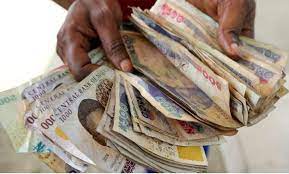
This article was inspired by a recent post by Dr Muhsin Ibrahim on Facebook regarding money belonging to someone named “Hassan Idris” sent through his PayPal account. Muhsin made the post asking the person to identify himself by sending him a message. However, soon after, he was inundated with messages from people seeking help in various forms. Some even asked him for money, assuming he had won a lottery or had ample cash stocked somewhere.

This issue not only worried me but also made me sad about the attitude of our youths. So that you know, I also live in Germany. I am yet to fathom the reason for the sudden influx of requests based on a Facebook post. Is it desperation, greed, ignorance, or the belief that money grows on trees in Europe?

I have thought about this issue and wondered why this behaviour occurred. Is it that the economic situation in the country has impoverished a large segment of society, making people desperate and in dire need of free money? What could be the reason behind this attitude?

I want to make it clear that I am aware of the difficult economic situation in Nigeria due to inflation and other factors. I also understand that there are genuine people who are in dire need of help and who reach out to Muhsin for support. However, I want people to know that just because Muhsin lives and works in Germany, it does not mean he is rich.

The Untold Story About Europe

Europe is often seen as a paradise with streets paved with gold and abundant wealth. However, the reality is different. Life in Europe is not as easy as it seems. Homelessness and begging are common in countries such as France, Italy, the Netherlands and the United Kingdom. In London alone, at least 167,000 people are homeless due to the high cost of living. Comparably, a great number of immigrants, among them Africans, are stuck in Europe and unable to return home because they are afraid of what is ahead.

 Although the standard of living is high in Germany and the government provides stipends for jobless citizens, there are still poor people, beggars and homeless people in the country. In my former city, Kiel, I have seen people sleeping in public buildings and bank corridors, even during the harsh winter months. I recently saw a naked woman amongst the homeless folks at the Hamburg Central Station, probably suffering from mental illness. It was heartbreaking.

Despite these challenges, there are still opportunities for people with relevant skills to excel and succeed in Europe. Even without a university education, one can live a good life in Germany by being disciplined and hardworking.

Rising Living Expenses

The ongoing war between Russia and Ukraine has brought about significant economic changes in Europe, particularly in Germany. As a result of Germany’s reliance on Russia for affordable energy, particularly gas, to power its numerous industries, the country has been severely impacted. Germany had to look for alternative gas sources, mainly from Norway and the Middle East. This has led to an increment in energy costs and subsequently affected the cost of living and production.

The high cost of living has affected many families, with numerous individuals struggling to pay their bills monthly. The rat race has worsened, and many people live paycheck to paycheck. Groceries and the prices of other goods have doubled or, in some cases, even more. This is in addition to an increase in rent, energy, water bills, etc.

2024 Goals

It is an incredible experience to step out of your comfort zone and explore new places in life. However, before travelling to any country, please conduct thorough research and set reasonable expectations. Life is not always easy, but you can succeed with diligence, perseverance, and hard work.

Set your goals for this year, and take concrete steps to achieve them. Additionally, aim to acquire new digital skills to increase your earning potential. I wish you the best as you enter the New Year with renewed energy and determination.

Aminu Mohammed wrote this article from Ingolstadt, Germany. He can be reached at gravity23n@gmail.com.

‘Over 10,000 medical laboratory scientists left Nigeria in 2023’—MLSCN calls for urgent policy intervention

By Uzair Adam Imam 

Dr. Tosan Erhabor, the Registrar of the Medical Laboratory Science Council of Nigeria (MLSCN), disclosed that a staggering 10,697 medical laboratory scientists have left the country, with 4,504 departing in 2023 alone. 

The brain drain, attributed to various factors, has prompted the Federal Ministry of Health to devise a policy aimed at regulating the migration of Nigerian health workers. 

Dr. Tosan Erhabor expressed his concern about the exodus of medical laboratory scientists during an interview with the News Agency of Nigeria (NAN).  

He highlighted the urgent need for a comprehensive policy to address the root causes of migration and establish regulatory measures. 

“The total number of medical laboratory scientists that have migrated is 10,697,” Dr. Erhabor stated.  

He further revealed that the Federal Ministry of Health is actively working on a policy framework that would govern the migration of health professionals and potentially curb the alarming trend. 

To alleviate some of the challenges faced by health professionals, Dr. Erhabor shared that the government has initiated a review of the hazard allowance for health workers.  

Additionally, considerations are being made to review the minimum wage and other allowances specific to health professionals. Dr. Erhabor underscored the importance of creating a safe and conducive work environment as a crucial factor in stemming the tide of brain drain within the medical laboratory science field. 

The reasons behind the migration, as outlined by Dr. Erhabor, are multifaceted. He cited poor remuneration, uncertainties in career progression within teaching hospitals, the pursuit of education abroad, the desire to acquire new skills, and enhanced professional status as contributing factors. 

Moreover, the security situation in the country, inadequate infrastructure, and a lack of modern equipment have prompted many professionals to seek opportunities abroad. 

The rising cost of living emerged as a critical factor, with Dr. Erhabor noting that it has become practically impossible for the average medical laboratory scientist to provide basic care and quality education for their children. 

The preferred destinations for these migrating scientists are reportedly the United Kingdom, the United States, and Canada, reflecting the global appeal of these nations for professionals seeking opportunities and a conducive working environment. 

As the healthcare sector grapples with this significant challenge, the MLSCN and relevant authorities are urgently working towards implementing effective policies to retain and incentivize medical laboratory scientists within Nigeria. 

The alarming departure of over 10,000 medical laboratory scientists from Nigeria in 2023 has prompted the MLSCN to call for swift policy interventions.  

With a multitude of factors contributing to the brain drain, the urgency to address remuneration, career uncertainties, and infrastructural challenges is crucial to retaining and attracting skilled health professionals within the country.

NYSC: A case of poor data management

Ishaka Mohammed

In a recent report by DAILY NIGERIAN, a reporter called Umar Audu worked under cover and obtained a degree certificate from Cotonou in Benin Republic within six weeks instead of four years, and the National Youth Service Corps (NYSC) mobilised him for the mandatory national service. 

Although the report contains a lot of disturbing revelations, only one thing surprises me. The said Umar Audu is a genuine graduate in mass communication who participated in the NYSC scheme from 2018 to 2019. Yet, the agency mobilised him again in 2023 and captured his fingerprints without catching him for multiple registrations. It’s scary to realise such poor data management in a scheme which, since its creation, has been headed mostly by high-ranking military officers.

Concerned Nigerians have discussed the benefits of data harmonisation and the effects of its neglect. One of the numerous consequences of scattered data in Nigeria is the presence of people receiving multiple salaries from government ministries, agencies or departments. This is widespread in the same country where millions of citizens, regardless of their qualifications, battle with unemployment, hence suffering from poverty and hunger. With a standard database management system, the suffering of Nigerians can be reduced significantly. 

I sometimes wish that Nigeria would be a country with mandatory registration of children at birth. I dream of a country where every birth certificate would contain the bearer’s national identification number (NIN), which would be the chief of the eligibility criteria for free or affordable basic and secondary education, SIM registration, admission to tertiary institutions, employment, visa or passport application, etc.

I imagine a nation with a central database management system which makes everybody’s identification number and fingerprints verifiable. My ideal country is where every government ministry, agency or department can verify anyone’s date of birth, level of education, employment history, etc., using the person’s fingerprints. With all these in place, it would be impossible for one to simply outsmart a federal government agency just like Umar Audu did.

By the way, I commend everyone involved in that investigation. Stories of illegal Cotonou degrees can no longer be called baseless rumours. I’ve heard of similar racketeering in Kogi State but have yet to obtain any tangible proof.

A personal tribute to Ghali Umar Na’Abba

By Amir Abdulazeez

Sometime in 2006, I walked into the famous Gidan Akida building, the then-Kano State headquarters of the Advanced Congress of Democrats (ACD), a new party formed by the breakaway PDP faction. I was there to inquire about how lowly-placed people like us can actively participate in the development of the party. The State Public Relations Officer told me that I have the option of choosing to belong to any of the four main houses within the party: Muhammad Abubakar Rimi, Malam Musa Gwadabe, Alhaji Gwadabe Satatima and Ghali Umar Na’Abba.

When the PRO heard that I cherished them all but wanted to work in the Na’Abba camp, he congratulated me for working under a disciplined, courageous and principled politician. Unknown to him, I had already known Ghali Na’Abba some ten years before, maybe earlier. Apart from being too young to know much about the other three political leaders practically, I have taken time to follow the stewardship of Ghali Na’Abba as the Speaker of Nigeria’s House of Representatives for the better part of 1999-2003. 

In that same year, 2006, Na’Abba was declared for the Kano State Governorship. I was genuinely convinced that if elected, he would make Kano one of Nigeria’s most disciplined and organised states. His discipline, confidence and organisation have often been misunderstood as arrogance. On this, he has cleared the air on many occasions. From what I know of him, he was a man of few words expressed only when necessary; he has a gentle and reserved personality, which makes him never delve into affairs that don’t concern him. 

I remember working with like-minds to engage in one of the best intellectual mobilisations any young undergraduates could do to garner support for Na’Abba to become Governor then. Unfortunately, he withdrew from the governorship race some weeks before the Action Congress (AC) primary elections. This new party was the product of a merger between ACD, Bola Tinubu’s Alliance for Democracy (AD) and other groups. Ghali’s withdrawal speech wasn’t detailed, but his arguments were that the process was too manipulated for any honest and disciplined aspirant to withstand. I think that was the last time Ghali contested for any position in his political career.

Ghali Umar Na’Abba was more than a political figure—a beacon of integrity, courage, and unwavering dedication to Nigeria. As a former Speaker of the House of Representatives, his legacy resonates far beyond his political tenure. Na’Abba’s commitment to democratic values and principles shaped the course of Nigeria’s political landscape. His leadership during a critical juncture in Nigeria’s history marked him as a staunch advocate for transparency and accountability.

Beyond politics, Ghali Na’Abba was a symbol of resilience and fearlessness, unafraid to challenge the status quo for the betterment of his nation. His vision for a prosperous, united Nigeria was evident in every action and word he spoke.

Na’Abba’s tenure as the Speaker of the House of Representatives marked a significant chapter in Nigeria’s political history. He was known for his principled stance and his assertive approach to upholding the legislature’s independence and separation of powers, particularly in the face of President Olusegun Obasanjo’s bullish administration.

The Fourth Republic in Nigeria was still in its infancy when Na’Abba assumed the role of Speaker. With the country transitioning from years of military rule to a democratic system, the political landscape was rife with challenges. However, Na’Abba brought to the forefront a blend of experience, political acumen, and a commitment to legislative oversight. He staunchly believed in the autonomy of the legislative arm of government and its pivotal role in checking the excesses of the executive. This belief set the stage for numerous clashes between the National Assembly, under Na’Abba’s leadership, and Obasanjo’s administration.

Obasanjo could not have the audacity to unleash his anti-democratic tendencies until Na’Abba left the Speakership in 2003. Every Nigerian who witnessed the two tenures of Obasanjo (1999-2007) will testify to this. During his tenure, Na’Abba led the House of Representatives with a firm hand, asserting the legislature’s independence and challenging executive actions deemed against the national interest. One of the notable confrontations arose from the legislature’s insistence on its oversight function. Na’Abba’s House of Representatives was resolute in investigating various issues, including allegations of corruption within the government, regardless of pressure from the executive arm.

Sadly, today’s many young political followers did not have the opportunity to witness and be inspired by the era of great and principled leaders like Ghali Na’Abba. They are unlucky and unfortunate to find themselves supporting reckless crooks and shameless greedy people who have turned them into sycophants, social media warriors and other roles that have kept them perpetually stupid. These are some of the reasons that have kept Na’Abba on the sidelines since 2007. 

Since 2007, whenever Ghali has attempted to reactivate his participation in Nigeria’s political landscape, he has immediately realised there is no space for disciplined people like him. Rather than adjust and follow the trend, he simply retreats and faces his private issues. He had always chosen integrity over selfishness. In 2011, his house was burned down in Kano by hooligans because he supported President Jonathan. I have never heard him complain publicly about this treatment meted out to him by his people. As always, he was calm, reserved and simply forged ahead. That was how he permanently minded his business away from the murky, dirty and irresponsible waters of Nigerian partisan politics.

Today, 27th December 2023, we have lost Ghali Na’Abba, a few months after turning 65 and almost exactly one year apart from the death of his mother, another woman of trust, integrity and kindness. May Allah have mercy on them both. His legacy lives on as an inspiration to current and future leaders. Ghali’s contributions to Nigeria’s democratic journey will forever be remembered and cherished, a testament to the enduring power of principle-driven leadership.

At a point when Kano’s reputation soared by the Salisu Buhari Toronto certificate scandal, Ghali Na’Abba, his successor as Speaker, worked diligently to give the state a good name nationally and even globally. His active career was short-lived, but he managed to enter the comity of the political all-time greats in the history of Kano State. It now remains to see how the current custodians of the state will work to have his name honoured and legacies preserved. 

After surviving numerous blackmails, countless threats, and several impeachment attempts as Speaker, President Obasanjo later ganged up with his foot soldiers and garrison commanders in Kano to deny him a return to the National Assembly in 2003. First, they failed to stop him from getting the Kano Municipal PDP ticket, and then they later ganged up to work against him and their own party in the General Elections, and they succeeded. The fall of Ghali Na’Abba marked an abrupt end to the era of Legislative Independence and Political courage in Nigeria.

Twitter: @AmirAbdulazeez 

Teaching: the most underrated profession in Nigeria

By Ibrahim Tukur

Teaching, a practice dating back to the inception of human civilization, remains the cornerstone of knowledge dissemination and societal development. Across diverse forms, teaching has wielded a profound influence in shaping our lives and the world at large. It is the vessel through which knowledge, information, and invaluable experiences are preserved and transmitted across generations. In the structured confines of schools, students engage with various disciplines, not solely to absorb knowledge but also to challenge, reframe and contribute to a brighter future.

Yet, despite being the progenitor of all professions, Nigeria seems to overlook the significance of the teaching profession. Unlike professions like law or medicine, where extensive training and years of study are prerequisites, teaching frequently appears as an accessible career path, sometimes attracting individuals without the essential pedagogical skills or comprehensive subject mastery.

This oversight manifests glaringly in the under-appreciation of teachers by the Nigerian government, notably in the form of insufficient compensation. The meagre salaries offered to educators fail to recognize the intricacies and demands inherent in their roles, severely limiting their ability to perform optimally and affecting their morale.

Additionally, the teaching landscape in Nigeria grapples with a multitude of challenges which impede effective delivery. Inadequate infrastructure, including scarcity of classrooms, laboratories, libraries and teaching materials, acts as a significant barrier to effective teaching and learning processes. This scarcity, coupled with a shortage of qualified educators and deficiencies in teaching methodologies, hampers students’ ability to reach their academic potential. The lack of comprehensive and quality teacher training programs stands as a significant challenge faced by educators in Nigeria.

Many teachers enter the profession without adequate preparation, lacking essential pedagogical skills and updated teaching methodologies. This deficiency in training directly impacts their ability to effectively engage students, cater to diverse learning needs, and employ innovative teaching techniques. Insufficient training also hampers educators’ efforts in adapting to evolving educational trends, impacting the quality of education imparted to students across various levels of schooling.

Consequently, Nigeria’s education system suffers, and the negative ramifications are dire. If not rectified, this neglect of teaching – the bedrock of all professions – will perpetuate the birth of under-qualified professionals. It’s a situation that could escalate brain drain, where competent educators seek opportunities abroad where their expertise is appreciated and duly rewarded.

Recognizing the pivotal role which teachers play in shaping society, there’s an urgent need for substantial reforms. It starts with acknowledging and properly compensating teachers for their arduous task of moulding minds and futures. Additionally, investing in comprehensive teacher training programs, extending the duration of educational courses to allow for a more thorough mastery of teaching methodologies, and implementing stringent selection processes for educators are imperative steps.

The government’s commitment to furnishing all schools with adequate resources and facilities is equally crucial. This holistic approach is essential to ensuring seamless teaching and learning experiences, vital for the nation’s educational advancement.

In conclusion, it’s paramount to accord teachers the reverence and support they deserve. Their pivotal role in shaping both individuals and the world demands not only acknowledgement but also concrete actions aimed at rectifying the systemic deficiencies currently hampering the teaching profession in Nigeria.

Ibrahim Tukur is a hearing-impaired individual who hails from Ingawa town in Katsina. He earned his first degree in Special Education/Sociology. He is a Disability Rights Advocate and can be reached via inventorngw@gmail.com.

Colloquium where Nigerian economic history was reviewed

By Ibrahim I. Waziri

When I saw the flyers announcing the theme of this year’s colloquium (16th December 2023) – “Political/Economic Formulas for National Development” – I couldn’t help but get excited. Though I work at a university where expert colleagues analyse the state of the nation during daily breaks, I felt ready for fresh perspectives on the current political and economic implications of the recent ECOWAS sanctions on Niger and how they impact us, particularly Nigerian businesses in the North.

My excitement stemmed from two key factors. First, the colloquium was to be held in Sokoto, one of the Nigerian states bordering Niger, which bears the brunt of the sanctions most. Second, the convener, Mallam Zayyanu Yabo, is the current Chairman of the Sokoto Professionals Network, a body dedicated to showcasing the abundant economic opportunities within Sokoto and putting the state on the national map.

However, Dr. Chima Amadi, the keynote speaker and a scholar-businessman, not only impressed the audience with his expertise but also left us with thought-provoking questions at the end of his presentation. After refocusing the theme solely on economics and development (much to my surprise not giving room for the ECOWAS-Niger political angle), he delved into defining “positive development” as possibly anything that leads to poverty reduction.

He then provided an insightful review of Nigerian economic history, highlighting the struggles associated with various economic frameworks adopted over the past 63 years since independence.

These included ten different economic plans, Washington Consensus-inspired structural adjustment programs under Babangida, Obasanjo’s NEEDS (also Bretton Woods institutions influenced), and later approaches that haven’t strayed far from past strategies. Dr. Amadi pointed out that these national planning and economic strategies were often prescribed by agenda-driven foreign institutions, potentially lacking a comprehensive appreciation of Nigeria’s history, local realities, and perhaps even neglecting its best interests.

The result, as statistics sadly demonstrate, he concluded, is a Nigeria far from achieving poverty reduction and ranking low on every reputable international survey on human development indices.

The solutions, he suggested, might include, among other things, looking into the journey of some contemporary nations with relative success in economy and development. The Asian Tigers abandoned Bretton Woods institutions’ prescriptions and are far better off than us. Perhaps we should focus more on local content, since development by its nature is organic and self-conscious, not externally prescribed and sourced!

This point resonated most with the audience and the panellists during the discussion session thereafter, as statistics reveal that about 65% of the country’s current GDP is not contributed from the formal structured economy that currently cannot be thoroughly analysed.

Among the lead panellists, one immediately pointed out how in some Asian Tiger countries, their indigenous cultural institutions before colonialism are still relevant constitutionally, providing needed social focus and keeping national planning consistent. 

An issue about the relationship between local businesses and research output from our institutions of higher learning was observed to be almost non-existent, with intellectual property laws seeming ineffective and indigenous ideas prone to theft within and across national borders.

Another erudite barrister, Kingston Chikwendu, building on an earlier submission about gender and youth inclusion, observed that the question of local content and inclusion stands front and centre even at the venue of the colloquium. He questioned why we gather in Sokoto, speaking in “exotic English” about economy and development in a language that the majority of the state’s economic demographic cannot understand. He suggested that in the future, provision should be made for at least a real-time translation of proceedings into Hausa, fulfilling the keynote address’s first prescription for local content and inclusion.

This last point reminded me of the often-repeated sentiment that if our local languages had been our medium of instruction at secondary school level, where substances like sulphur and potassium were taught in Chemistry classes as “Farin Kasa” and “Kanwa” respectively, we would have appreciated their value better and explored their economic relevance more. Between us and our grandmothers, we might have been able to come up with mixtures with the potential for inventions with significant personal and societal economic benefits.

The session for me was a high dose of concentrated intellectual elixir. Though the keynote address dropped the political angle of the theme, denying me the opportunity to see issues related to the ECOWAS sanctions on Niger and their attendant implications on Nigeria’s economy and security problems discussed, I can still say I got more than enough.

The Sokoto colloquium is putting the state in the news for all the right reasons. The session was attended by representatives of the Sultan of Sokoto and the state governor; and it received wide coverage by national news outlets. The deliberations are being heard by policymakers. Our prayers go to God to strengthen the will and wings of the convener as well as supporters across the nation. Nigeria is in dire need of robust policy review forums like what Sokoto colloquium offers.

Ibrahim A. Waziri wrote from Zaria, Kaduna State. He can be reached via iawaziri@gmail.com.

Customs board announces key appointments, promotions

By Sabiu Abdullahi

In a convention chaired by the Honourable Minister of Finance, Mr. Wale Edun, the board of the Nigeria Customs Service confirmed the appointment of two Assistant Comptrollers General (ACGs) and approved the promotion of 2209 senior officers. 

This is contained in a statement signed by the spokesperson for the service, Abdullahi Maiwadah. 

The Nigeria Customs Service Board (NCSB) convened its 58th regular meeting on Tuesday, December 19, 2023, at the Nigeria Customs Service Headquarters. 

ACG Florence Nano Ogar-Modey and ACG Queen Ogubudu were confirmed as substantive members of the NCS Management Team during the meeting.

The comprehensive promotion list includes both General Duty (GD) and Support Staff (SS) personnel who demonstrated outstanding performance in the 2023 promotion exercise.

The breakdown of promoted officers covers various ranks, from Inspector of Customs to Customs Comptroller.

Notably, special promotions were approved for fourteen officers in recognition of their exceptional performance in various assigned responsibilities. 

Among the newly promoted comptrollers are TM Daniyan, F Fajana, N Isyaku, MV Umana, AC Nwobi, F Abdulqadir, HK Ejibunu, FM Ojiofor, IN Aliyu, MD Malah, EO Oshoba, JK Oladeji, E Luka, AP Daruaku, FM Ojeifor, IN Nwokorie, EJ Harrison, and others. 

The Comptroller-General of Customs, Bashir Adewale Adeniyi, MFR, extended heartfelt congratulations to the newly appointed and promoted officers.

According to Maiwadah, the comptroller urged them to redouble their efforts in fulfilling crucial roles such as revenue generation, trade facilitation, and the suppression of smuggling.

These efforts, he emphasised, are essential for enhancing the NCS’s pivotal role in bolstering Nigeria’s socio-economic well-being.

Early marriage in Nigeria: A deep-rooted social issue in need of urgent attention

By Ladi Ibrahim

Early marriage, also known as child marriage, remains a persistent issue in Nigeria, where cultural traditions, poverty, and limited access to education contribute to this harmful practice. Despite significant progress made in addressing child marriage globally, Nigeria still grapples with high rates of early marriage, adversely affecting the lives of countless young girls. This article aims to illuminate the causes, consequences, and potential solutions to this deeply rooted societal problem.

Several factors contribute to the prevalence of early marriage in Nigeria. Cultural norms and traditions play a pivotal role, with many communities believing that marrying off their daughters at a young age protects their honour and ensures their future safety. Poverty is another critical factor, as families with limited resources may see marrying their daughters off early as an economic relief or an attempt to secure a better life for them.

Furthermore, lack of access to quality education, especially for girls, perpetuates the cycle of early marriage. Limited educational opportunities deprive young girls of the chance to develop essential skills, pursue independent livelihoods, and gain awareness about their rights. Additionally, prevailing gender inequalities and discrimination further exacerbate the problem, limiting gender equality and social progress.

Early marriage has detrimental effects on the physical, mental, and emotional well-being of young girls. Firstly, it exposes them to serious health risks, as their bodies are often not fully developed to bear children, resulting in complications during pregnancy and childbirth. Early marriage also robs girls of their right to education, denying them the chance to reach their full potential and contribute meaningfully to society.

Moreover, young brides often face economic hardships, lacking the necessary skills or education to secure stable employment. This perpetuates the cycle of poverty, subsequently affecting future generations. Early marriage is also linked to a higher incidence of domestic violence, mental health issues, and limited decision-making power for girls and women within their households.

Addressing the issue of early marriage in Nigeria requires a holistic approach that involves multiple stakeholders, including the government, civil society organisations, religious leaders, and communities. 

 Enhancing access to quality education, particularly for girls, is pivotal to breaking the cycle of early marriage. This can be achieved by providing scholarships, building schools closer to rural communities, and promoting educational campaigns focused on child rights and gender equality.

Strengthening existing laws that criminalise child marriage is essential, accompanied by strict enforcement mechanisms to hold perpetrators accountable. Providing young girls with vocational training and economic opportunities can dismantle the economic rationale behind early marriage. Such initiatives can help them gain financial independence and empower them to make informed choices.

 Collaborating with religious and community leaders to change social norms and customs that perpetuate early marriage is crucial. Obtaining their support and involvement is vital for building awareness and changing mindsets.

Expanding healthcare facilities and services in rural areas, specifically aimed at addressing the unique needs of young brides, can contribute to reducing the health risks associated with early pregnancy and childbirth.

Early marriage continues to be a significant challenge in Nigeria, depriving countless young girls of their rights and potential. By addressing the root causes of this practice through education, legal reforms, economic empowerment, community engagement, and access to healthcare, Nigeria can pave the way for a brighter future for its girls. Efforts to end early marriage require synergy, collaboration, and a relentless commitment to ensuring that every child in Nigeria has the opportunity to grow, thrive, and determine their destiny.

Ladi Ibrahim wrote from the Department of Mass Communication, University of Maiduguri.

Honorary doctorate and Isa Yuguda’s enduring legacies in education

By Mukhtar Jarmajo

Great leaders not only have vision, they also share it with others and inspire many others to create their own. Leadership is simply about understanding present problems as they affect the future and taking concrete steps to solve the problems in such a way that the future will be better and brighter. And in the annals of Nigeria, many visionary leaders, who Nigerians are still enjoying from the fruits of their visionary leadership, have come and gone. Talk about Sir Abubakar Tafawa Balewa, Nnamdi Azikwe, Ahmadu Bello, Obafemi Awolowo, Samuel Ladoke Akintola, Michael Okpara, J. S. Tarka, Sir Kashim Ibrahim and a host of their contemporaries, they are remembered for their struggle for Nigeria’s independence as well as laying the country’s foundation in its journey to nationhood.

After them, many others have followed their foot steps. In the cause of time, Nigeria has had leaders whose footprints on the sands of time are indelible. The late Gen. Murtala Ramat Mohammed and the late Umaru Musa Yaradua are, respectively, remembered for both their anti-corruption posture and drive for national unity. In the same vein, Mallam Isa Yuguda, an economic czar, Nigeria’s former minister of transport and aviation respectively, and erstwhile Bauchi state governor, is celebrated for making immense contributions in the development of Nigeria’s banking sector, transforming the nation’s transport and aviation sectors as well as raising Bauchi state to a higher threshold of development.

Last Saturday, 16th December, 2023, in its maiden combined convocation ceremony, the Sa’adu Zungur University, Gadau, Bauchi state, awarded Mallam Isa Yuguda an Honorary Doctorate Degree in Management. At the ceremony, 7,543 graduates from six academic sessions were presented for the award of graduate and postgraduate degrees. At this juncture, it’s instructive to note that the point of interest is not that Isa Yuguda received an award or that the university has thus far graduated more than seven thousand students. Rather, what is most fascinating is the fact that Mallam Isa Yuguda established the University back in 2010 when he held sway as Bauchi state governor. Thus, through his visionary leadership, the erstwhile governor established what has become a prestigious center of excellence in learning.

At the time the University was established, there was the problem of many Bauchi state indigenous students not being able to gain admission into federal universities largely because of quota system and distance, especially for female students. But education is so important that at whatever cost, it must be gained. And given that one of the primary responsibilities of government is to ensure the security, safety and well-being of the citizenry through upholding law and order as well as providing healthcare services, education etcetera, the Isa Yuguda administration thought of building the Abubakar Tafawa Balewa University Teaching Hospital, a new Specialist Hospital and the Sa’adu Zungur University.

Speaking on behalf of the awardees at the convocation ceremony, Mallam Isa Yuguda noted that the University is a beacon of hope that will not only prepare the youth for future challenges but will also cause rapid socioeconomic development in Bauchi state. This is how visionary leaders shape the future of a nation. Mallam Isa Yuguda’s visionary approach in leadership is an example to present and future leaders and his Honourary Doctorate award by the Sa’adu Zungur University is a testament to his remarkable impact on education in not only Bauchi state in particular but also the entire nation in general.

Jarmajo wrote from Wuse 2, Abuja.

Importance of health insurance to Nigerians

By Muhsin Ibrahim

I wrote about using out-of-pocket money to pay for healthcare in Nigeria a few days ago, which pushes people into poverty. Coincidentally, BBC Hausa had a report on it this morning. The Daily Reality also published an opinion article about it (I shared it earlier).

Most countries of the world have health insurance. It’s, in fact, a necessary requirement to stay in those countries. Why are we doing things differently and wrongly in Nigeria? Less than 10 per cent of Nigerians have health insurance today.

It is undeniable that sickness can strike us at any moment, irrespective of our financial standing. In such a situation, insurance comes to your rescue. Many insurances don’t cover all expenses, but often, they reduce them. So, if some good companies offer such a service, join them.

In all this, governments at all levels have to come in. They should make health insurance mandatory for everyone. Often, the monthly contributions are affordable. Even if you don’t get sick often, it’s important to remember that you are not immune to illness.

I also believe it’s halal to subscribe to the health insurance scheme. Yes, I am not a religious scholar. However, based on some rulings that I am familiar with, it’s not haram to do so.

May Allah guide and provide us with more, amin.

Muhsin Ibrahim is a Nigerian who teaches Hausa at the University of Cologne, Germany.