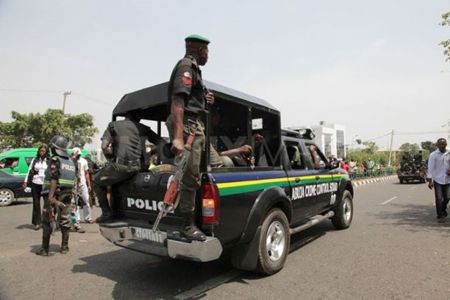
Nigeria Police Force

Police kill two suspected kidnappers in rescue operation

By Uzair Adam Imam 

In a decisive operation on the Sagamu-Ijebu Ode-Benin expressway, the Ogun State Police Command has neutralized two suspected kidnappers in a shootout, as announced by Omolola Odutola, the command’s spokesperson.

According to Ms Odutola, the suspects met their fate during a daring rescue mission executed by police personnel to liberate abducted Indian nationals. 

The successful operation, aided by local vigilantes, led to the safe recovery of the hostages.

Identified as Tejaram Chauhan, Kaduwal Pradhan, and Medani Kathiwada, the Indian nationals had fallen victim to abduction on Friday. 

Alongside their rescue, authorities seized a substantial sum of N7.9 million, along with 1,500 Indian Rupees, believed to be part of the ransom extorted by the kidnappers.

The ordeal began when the Manager of Breeze Company Nigeria Limited, situated on the Ibadan-Lagos expressway, reported an attack to the Divisional Police Officer, Mowe Divisional Headquarters. 

The incident involved gunfire directed at vehicles transporting the manager’s principals at Kajola junction along the Sagamu-Siun-Abeokuta expressway.

While the police escort accompanying the first vehicle managed to repel the assailants and safeguard all occupants, three Indian nationals in the second vehicle were abducted. 

Prompt response from the anti-kidnapping section, in collaboration with local security units, initiated a thorough search of the area.

A fierce confrontation ensued in the forest along the Benin-Sagamu Papalanto route, resulting in the rescue of the hostages unharmed. 

Two of the six kidnappers were incapacitated during the exchange of fire, with authorities recovering two AK-47 rifles, a single-barrel locally made gun, a sword, cell phones, criminal paraphernalia, and 65 rounds of ammunition.

The deceased suspects have been transferred to the public mortuary while intensive efforts are underway to apprehend the remaining members of the gang.

Arrest made in brutal murder of elderly couple in Abuja

By Uzair Adam Imam

Authorities in the Federal Capital Territory (FCT) have announced the apprehension of a suspect in connection with the tragic killing of an elderly couple, Adebola Ezekiel, 80, and his wife, Abiodun Ezekiel, 79.

The Commissioner of Police for the FCT, Mr. Benneth Igweh, disclosed this development during a press briefing held in Abuja on Friday.

The disturbing incident occurred at the residence of the couple in Apo Legislative Quarters on April 1.

Commissioner Igweh revealed that swift investigative efforts led to the arrest of the suspect, who was identified as a former driver for the deceased couple.

Acting on leads, police detectives successfully tracked down the suspect to his hideout in Obajana, Kogi.

According to Igweh, the apprehended suspect confessed to gaining entry into the victims’ home on the fateful day, where he allegedly murdered them, slit their throats, and made off with their phones and ATM cards.

Additionally, the Commissioner disclosed another arrest made on April 11, where two suspects were detained in connection with a separate case of culpable homicide in the Mabushi area of Abuja.

Operatives from Mabushi Division acted on a tip-off regarding the discreet transportation of the corpse of one Bilkisu Mohammed.

It was alleged that Mohammed had visited her supposed boyfriend’s residence, where she fell ill and was administered non-prescribed medication by one of the suspects, leading to her demise.

Further highlighting the law enforcement’s proactive stance, Igweh mentioned the arrest of nine suspected armed robbers by operatives from Utako Division on April 6.

The suspects, upon interrogation, confessed to being part of an armed robbery syndicate responsible for various criminal activities in the FCT.

Law enforcement recovered a cache of weapons, including locally fabricated AK 47 rifles, cartridge rifles, a pistol, and a dane gun, from the apprehended individuals.

In another incident, police patrol units intercepted three suspected armed robbers at the Durumi IDP Camp on April 9, seizing an English-made pistol and a Mazda vehicle in their possession.

Commissioner Igweh assured the public that all suspects would face legal proceedings once investigations were concluded.

Fresh violence claims lives in Plateau communities

By Uzair Adam Imam

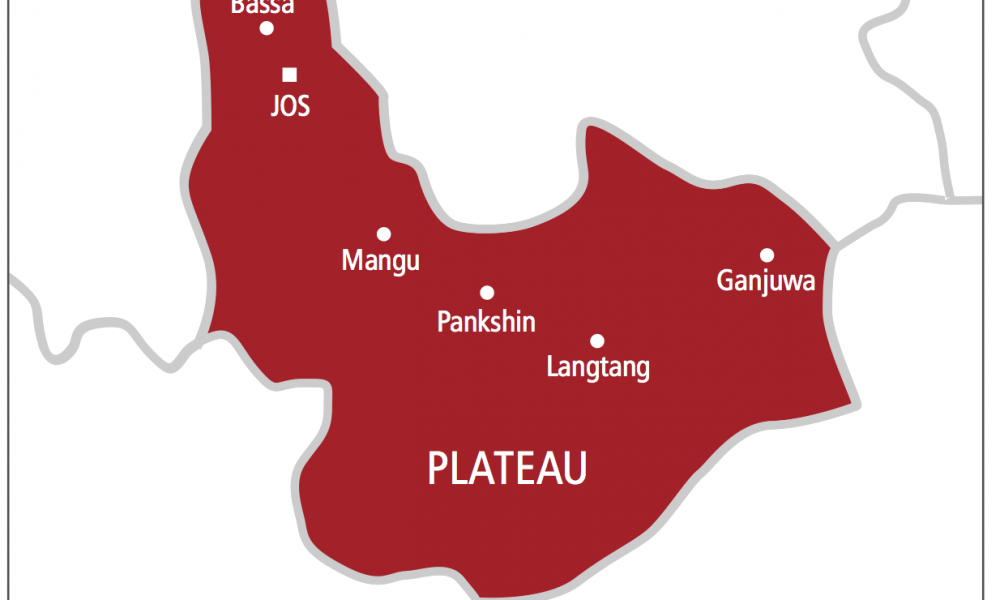
Tragedy struck yet again in Plateau State as communities in the Mangu and Bokkos local government areas fell victim to renewed attacks, resulting in an undisclosed number of casualties.

Although the State Police Command and Operation Safe Haven (OpSH) have yet to officially respond because their spokespersons are unavailable, credible sources have confirmed the separate incidents.

According to Monday Kassah, the Transition Committee Chairman of Bokkos, there were multiple attacks on Thursday night, claiming six lives.

The attackers, reportedly riding motorcycles in groups of two or three, unleashed violence in Mandung, Butura, Chikam, and other communities around the state university, all within the Bokkos District of Butura. Security reinforcements have been deployed to the area, but the assailants remain active.

Tragically, a university student was shot dead outside the campus, with another falling victim to the violence the following morning. Yakubu Ayuba, the registrar of the university, lamented the loss of a 200-level computer science student named Dading James Jordan in the attack on Chikam.

Despite concerted efforts by the state government, security agencies, and university management to enhance security, the assailants struck, claiming the life of a promising student.

In response, the university has declared a two-day mourning period, suspending all exams scheduled for the affected days. Management urged students to remain calm while calling for increased security measures around the campus.

In Mangu, reports indicate that attackers descended on the Tilengpat community in the Pushit District, resulting in the deaths of 12 individuals.

Expressing his condemnation of the violence, State Governor Caleb Mutfwang appealed for calm, assuring citizens, especially students, of the government’s commitment to their safety.

He pledged to collaborate with relevant stakeholders to apprehend and prosecute the perpetrators while emphasizing the importance of collective efforts to enhance security in the region.

Governor Mutfwang extended heartfelt condolences to the bereaved families and victims, urging swift recovery for the injured.

Family feud turns fatal as brother stabbed to death in Bauchi

By Uzair Adam Imam

The Bauchi State Police Command apprehended Isyaku Babale, 30, following the tragic demise of his brother during a heated dispute.

In a statement released by SP Ahmed Wakil, the police disclosed that the arrest came after the victim succumbed to his injuries at Abubakar Tafawa Balewa University Teaching Hospital (ATBUTH) Bauchi.

“Isyaku Babale, a resident of Anguwan Dawaki, was detained by operatives from the township Police Divisional headquarters for an alleged culpable homicide,” stated SP Ahmed Wakil.

He continued, “Initial investigations unveiled that the suspect employed a knife, fatally stabbing his older sibling during an altercation that erupted between them on March 31st, 2024, around 04:00hrs.”

Reportedly, the dispute ignited when Babale urged his brother to cease consuming Cold Patch liquid, locally known as ‘Sholi,’ due to its foul odor.

The disagreement escalated into a physical confrontation, leading to the fatal stabbing. Further inquiries revealed a history of violent altercations involving dangerous weapons between the siblings.

Commissioner of Police, CP Auwal Musa Mohammed, has directed a comprehensive investigation to ascertain any underlying motives behind the incident, emphasizing the importance of bringing the perpetrator to justice through legal proceedings.

Niger Police Commissioner honours fallen heroes

By Uzair Adam Imam

Niger State Commissioner of Police, Shawulu Ebenezer Danmamman, presented cheques worth N44 million to families of officers who died serving the state.

The funds, distributed under the force’s Group Life Assurance Scheme, aim to support 38 families who lost loved ones in the line of duty between 2022 and 2023.

In addition, the Commissioner commended 17 police personnel who served in the NYSC orientation camp security team.

They received NYSC commendation letters for their dedication, discipline, and ability to manage sensitive challenges during the 2024 Batch A, Stream One orientation exercise. 

Bauchi police foil kidnapping attempt, arrest 3 suspects

By Uzair Adam Imam 

The Bauchi State Police thwarted a potential kidnapping after arresting three suspects for alleged conspiracy, threats, and attempted abduction.

The Daily Reality gathered that the investigation commenced on March 7 when Yahaya Adamu reported a threat to the Anti-Kidnapping Unit.

An anonymous caller demanded 5 million Naira, threatening violence against him or his family if he refused. 

According to the Bauchi State Police Command, the suspects upped the ante by sending their POS details and mentioning names of Adamu’s family members, further pressuring him to comply.

Acting swiftly, Bauchi Police Commissioner Auwal Musa directed the CID to discreetly investigate.

Using modern technology, they apprehended Haro Adamu (35), Aliyu Saidu (40), and Musa Umaru (35) in Jigawa and Plateau States. 

Police say the suspects confessed during questioning and will face prosecution in court. 

Nigeria’s Insecurity: Do state police have the magic wand?

By Kabir Ali Fagge

In Nigeria, security has long been a topic of paramount concern. The efficacy of law enforcement agencies, particularly the Nigeria Police Force (NPF), has often been scrutinized in the face of escalating crime rates and challenges to public safety.

One proposed solution that has garnered significant attention is the establishment of state police forces. The history of policing in Nigeria is marked by a series of reforms and challenges. Since Nigeria’s transition to democratic rule in 1999, the Nigerian police have undergone various reforms in an attempt to address issues within the force.

These reforms have been a response to the need for more effective law enforcement mechanisms to combat rising crime rates and insecurity in the country.

We all know that the Nigerian police force has a long history of facing criticism for unprofessional conduct, corruption, and the use of excessive force.

Nigeria inherited a centralized police structure modelled after the British system. The Nigeria Police Force (NPF) operated under federal jurisdiction and was tasked with maintaining law and order throughout the nation.

State Police, on the other hand, entails the decentralization of law enforcement authority, granting individual states within a federal system the power to establish and manage their own police forces.

Under this model, states would have the autonomy to address security issues specific to their regions, tailoring law enforcement strategies to local needs and priorities.

Proponents argue that state police can foster greater community engagement, enhance responsiveness to local concerns, and improve overall security outcomes.

The existing centralized police system has faced criticism for its inability to effectively address the security concerns of the diverse Nigerian population.

The call for state police stems from the need for a more localized approach to law enforcement that can better cater to the specific security needs of different regions within Nigeria.

Establishing state police in Nigeria is a significant step that requires a thorough understanding of global policing practices. While the centralized police system is predominant in many countries, there are instances of decentralized policing models.

For example, Municipal Police in France, Municipal Law Enforcement Officers in the Netherlands, and Police Community Support Officers in England and Wales represent non-police uniformed state officers in a decentralized system.

Comparative analyses of policing in countries that have undergone political or social transitions, such as Russia, Brazil, and China, highlight the importance of understanding the contextual factors that shape policing practices. Confidence in the police varies across different countries, with Taiwan ranking among the top one-third globally, indicating variations in public perceptions of law enforcement; therefore, those who argue that the establishment of state police is not out of place.

Community policing, actively conducted in countries like South Africa, Northern Ireland, and Sierra Leone, emphasizes the importance of engaging communities in maintaining public safety. However, the effectiveness of community policing initiatives can vary based on each country’s socio-political context.

While some countries prioritize individualism and minimal government intrusion in policing, others focus on collective well-being through law and order.

I think what Nigerians want to know is how is state policing going to be any better than the current system of policing in Nigeria.

According to pundits, the establishment of state police in Nigeria promises to bolster security at the grassroots level. State police forces, attuned to the unique security dynamics of their regions, can enact targeted measures for more efficient crime prevention and control.

This localized approach fosters stronger community engagement and enables proactive responses to emerging threats, ultimately ensuring safer environments for all. Such reforms hold the potential to significantly enhance law enforcement’s effectiveness and responsiveness across the nation.

State police deployment within local communities will supposedly ensure swift emergency responses, curtailing intervention time in critical situations. By having officers stationed close to the areas they serve, the state police can swiftly address emergencies, thereby enhancing public safety.

This proximity allows for immediate action, minimizing the potential impact of crises on communities. Such rapid responses underscore the effectiveness of localized law enforcement in ensuring timely assistance during emergencies.

State-level oversight of law enforcement ensures accountability and transparency, as state governments are directly answerable to their constituents. This close supervision fosters trust between law enforcement agencies and the communities they serve, enhancing transparency in operations.

By holding state authorities accountable, citizens can have greater confidence in the integrity of policing practices, ultimately strengthening democratic principles. Such measures reflect a commitment to upholding transparency and accountability within Nigeria’s law enforcement framework.

State police possess the flexibility to tailor strategies and allocate resources according to local needs, enhancing their ability to address emerging threats and crime trends. This adaptability ensures a dynamic response to evolving security challenges, bolstering effectiveness in crime prevention and control.

We must also look at some disadvantages posed by the governors to establish the State Police. Firstly, Critics warn of the potential for abuse of power with decentralized policing, citing concerns about corruption, political interference, and violations of human rights at the state level. This apprehension underscores the importance of establishing robust oversight mechanisms to safeguard against misuse of authority and uphold the rule of law.

Addressing these challenges is crucial to ensure that decentralization efforts in policing prioritize accountability and respect for human rights, thereby fostering trust and confidence in law enforcement institutions. Such vigilance is essential to maintain the integrity and effectiveness of state police forces in Nigeria.

Fragmentation of law enforcement across states presents coordination challenges in tackling transnational crimes and upholding national security. This underscores the need for seamless collaboration and information-sharing mechanisms among state police forces.

Effective coordination ensures a unified approach to combating cross-border criminal activities, safeguarding Nigeria’s territorial integrity and public safety. Addressing these challenges is paramount to fostering synergy and maximizing the effectiveness of law enforcement efforts nationwide.

Unequal resource allocation among states may hinder smaller or economically disadvantaged regions from adequately funding and equipping their police forces, leading to discrepancies in law enforcement capabilities.

The establishment of state police carries constitutional and legal implications, necessitating amendments and legislative frameworks to define the powers, jurisdiction, and duties of state and federal law enforcement entities.

This underscores the importance of comprehensive legal reforms to ensure clarity and coherence in the division of responsibilities between different levels of law enforcement.

The debate surrounding the establishment of state police in Nigeria is multifaceted, reflecting the complex interplay of security, governance, and constitutional considerations.

While proponents argue that decentralization can lead to more responsive and accountable law enforcement, sceptics raise concerns about the potential for abuse of power and operational challenges.

Ultimately, any decision to implement state police must be carefully weighed against its potential benefits and drawbacks, with a keen focus on enhancing security while upholding the principles of justice and democracy.

Kabir Fagge Ali is a youth corps member with PRNigeria Centre and wrote via faggekabir29@gmail.com.

Hardship: Woman drops own children at police station, commits suicide

By Uzair Adam Imam

A mother of three has committed suicide due to incessant economic hardship after abandoning her children at a police station in Enugu State.

It was gathered that the woman went to Ogui Road police station with the children, handed them to officers, stripped herself naked and run under the moving vehicle which crushed her to death.

The ages of the three children are reportedly six, four, and two. Her husband allegedly ran away from home months ago due to increased hardship, abandoning his wife and children.

When asked about their father, the eldest of the children simply said he was lost. She could not provide any other information about their family, town, or residential address.

The wife of Enugu State Governor, Nkechinyere Mbah, who rushed to the police station upon learning about the incident, was told that the woman might have been suffering from depression.

Mbah was touched by the development. She said she would take care of the children and educate them from nursery school to university.

She announced that sponsorship for the children would be undertaken by her Custos Care Foundation.

Mbah also directed the immediate relocation of the children from the station to a home where the state government could take care of them.

She urged people who suffer from depression to seek counseling and avoid rash decisions.

She also urged the Commissioner, Ministry of Children, Gender and Social Development, Ngozi Enih, to intensify sensitisation and counselling, especially for the depressed.

A case for diligent prosecutions in Nigeria’s anti-crime war

By Haroon Aremu Abiodun

The issue of Police arresting gun runners is not new, but the nabbing of some gun runners by men of the Plateau State Police Command last week stands out. However, Nigerians are clamouring for more. They are equally making a case for swift prosecutions or thorough investigations of suspected criminals after their arrest.

In recent times, and under the leadership of the Inspector General of Police, IGP, Kayode Egbetokun, the Nigeria Police Force’s tireless efforts have been notably effective in apprehending criminals engaged in various nefarious activities across the length and breadth of the country. 

The Police Intelligence Department and Tactical Response Team last week arrested about 67 suspects, including those involved in kidnapping, gun-running, one-chance robbery, and banditry. They recovered 5,454 rounds of live ammunition, 300 live cartridges, 50 empty shells of ammunition, 68 rifles, and 33 different ATM cards. 

The feat undoubtedly is a testament to law enforcement’s dedication and strategic approach, showcasing the police force’s unwavering commitment to curbing crimes and maintaining community safety. While applauding these crime-busting accomplishments, it is crucial to consider the next steps to ensure justice serves as a deterrent to potential offenders and criminal-minded persons. 

Beyond arrests, there is a need for thorough Police investigations into the root causes and motivations for criminal activities, by Nigerian youths mostly. This will go a long way to curb the perpetration of crimes.

The delay in the immediate prosecution of arrested suspects is a matter of concern, which is not to undermine the complexities of the legal process but to emphasise the urgency in delivering justice, as prompt adjudication of cases related to criminal activities is crucial for maintaining public trust in the legal system. 

Investigating officers should adopt a meticulous approach to prevent innocent victims from being wrongfully accused. It is imperative to utilize advanced forensic techniques, gather credible intelligence, and collaborate with relevant agencies. 

A careful examination of identified evidence, coupled with the application of modern technology, will contribute to a more accurate and unbiased investigation process. Regardless of the influence and power a criminal may wield, justice should be made to prevail. 

It should be glaringly emphasised that no individual, no matter how influential, should be above the law. Law enforcement agencies should remain committed to upholding justice, irrespective of external pressures.

The fight against crime is not, and will never be a stroll in the park. But it is winnable, especially by the time crime offenders are diligently prosecuted, to send a strong message to their ilks.

Haroon Aremu, a NYSC member with PRNigeria center Abuja.

Zamfara Ambush: Last straw that should break the camel’s back

By Kabir Fagge Ali

It is a known fact that security personnel are always ready to pay the supreme price whenever they are in line of action. Their patriotism and unrelenting effort in tackling insecurity partly make us sleep comfortably at night.

Worrisome, however, are reports that our gallant troops, who protect our territorial integrity and lives, are allowed to be slaughtered like guinea pigs during terrorists’ ambushed attacks.

Last Saturday was a black day as troops of the Nigerian Army, alongside two Police officers, were killed around the Danjibga axis in the Tsafe Local government area of Zamfara State in an ambush.

The attack on the troops by bandits is in retaliation to several attacks launched by troops on different bandit camps in the state, leading to the death of numerous terrorists and the destruction of their camps and ‘operational’ motorcycles, among others.

Zamfara has been battling insecurity for nearly a decade. The Nigerian military, however, must be commended for leading the war to end banditry in the troubled North Central state and general insecurity in the country.

But winning the war demands our collective support. Both the federal government, the military, other security agencies and citizens must join forces and come up with a portent strategy for tackling terrorists and other criminal elements, holding our dear nation to ransom.

That is why a multifaceted approach to fighting insecurity is imperative. Firstly, the military’s intelligence-gathering system must be enhanced. This will help quickly identify the movements and plans of terrorists and other armed groups.

Strengthening collaboration between various security agencies and investing in technology, such as surveillance and communication equipment, are also vital.

Again, we need to equip our troops with modern and sophisticated ammunition, and the government must allocate adequate resources to ensure that the military has the tools and knowledge needed to adapt to evolving security threats. This will also help its troops navigate the challenging terrains often exploited by insurgent groups during gunfire battles.

Community engagement remains a linchpin in the fight against insecurity. Local populations can be pivotal in providing credible intelligence, as they possess invaluable knowledge about their communities.

Establishing trust between the military and communities is paramount for building a united front against insurgency. Addressing the root causes of violent conflicts in the country is another thing that cannot be overemphasised.

Beneficial socio-economic policies and sound development initiatives focused on providing education, healthcare, and employment opportunities can help to dissuade our youths from being recruited into armed and terror groups.

By addressing the underlying issues, the government can reduce the appeal of insurgency, banditry, robbery and oil theft, among other crimes. And marginalised populations will not find cause to take to criminalities and heinous vices for survival.

Furthermore, international collaboration is crucial in tackling cross-border security threats. Zamfara’s proximity to neighbouring countries should necessitate coordinated efforts to prevent armed groups from exploiting regional vulnerabilities.

Similarly, collaborative intelligence sharing, joint patrols, and diplomatic initiatives can contribute to a more robust defence against insurgencies.

In summary, curbing the spate of ambush attacks on troops in Zamfara and other states afflicted by terrorism and banditry requires a holistic strategy, combining intelligence, technology, community engagement, and socioeconomic development.

Let’s hope that those saddled with piloting the affairs of our dear nation summon the political will to do what is needed this time. They have been docile for a long while now.

Kabir Fagge is an NYSC member with PRNigeria Centre Abuja.