Muslims

Hula: A symbol of cultural, religious, and social status in Hausaland

By Umar Aboki

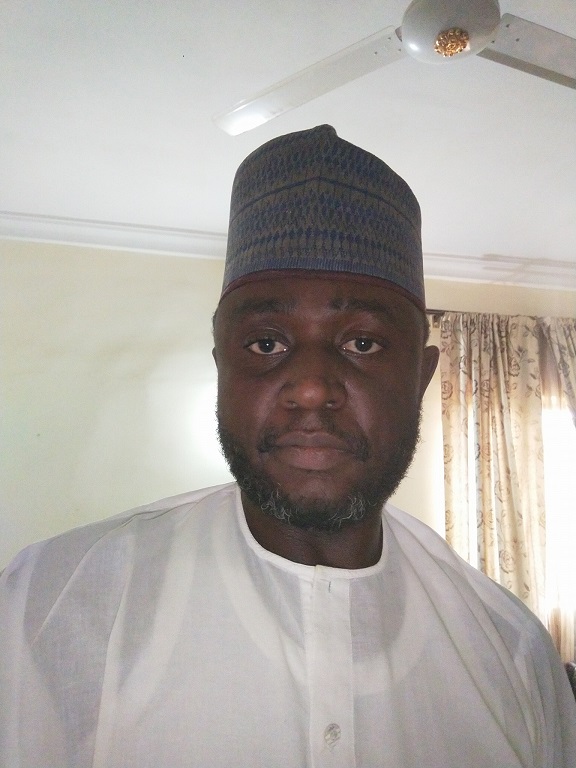
The traditional Hausa cap, also known as “Hula,” is recognised for its intricate embroidery and is often worn with traditional Hausa attire. It has a long history in Hausa land, originating as a common and traditional male garment and later evolving into a symbol of cultural, religious, social, and even political status.

Many people associate any man they see wearing a Hula with being a Muslim or Hausa or both. Yusuf Ahmad, a traditional Hausa cap seller, believes that wearing a Hausa cap is a sign that indicates someone is a Hausa man and a Muslim, and that wearing a Hausa cap is what completes a man’s decency. 

Yusuf added that the older generation of Hausa men like to wear tall Hausa caps, while the new generation prefersshorter ones. And when people come to buy caps, they mostly ask for the cheaper and lighter ones; it is the rich men who usually ask for the Zanna-Bukar and other heavier ones.

There are various types of traditional Hausa caps, including “Zanna-Bukar”, “Damanga”, “Zita”, “Maropiyya”, “Zulum” and “mu-haɗu-a-banki”. They are distinguished by factors such as the materials used to make them, their place of origin, the wearers, and their purposes, among other considerations. However, the most popular and widely worn is the “Zanna-Bukar”. Overall, the hula has evolved from being merely a piece of headwear to a symbol of cultural identity and belonging within the Hausa community and beyond. 

Malam Khamilu, a resident of Yahaya Gusau Road, Kano, claims that he wears Hausa caps frequently, especially the Zanna-Bukar. He says it is very special to him and he got his own tailor-made, specially for himself. He also considers his cap a part of his identity as a Hausa-Fulani man and a Muslim.

The Hula is not limited to being worn only within Hausa communities. It is worn by men in many populations in North Africa, East Africa, West Africa, South Asia, and the Middle East.

Zulyadaini Abdullahi Adamu, a Hausa cap knitter and seller, says he wears his Zanna-Bukar or Damanga daily, and he knits the Zanna-Bukar, Damanga and PTF, then sells them at prices ranging from eight thousand to thirty thousand Naira, and that people come to buy them from Jigawa, Maiduguri and other states and places.

Men throughout the African diaspora also wear it. Within the United States and other foreign countries, it has become primarily identified with persons of West African heritage, who wear it to show pride in their culture, history, and religion. Dauda Ibrahim Dachia, a Northern Nigerian staying in Tirana, Albania, claims to wear his traditional Hausa cap overseas, but not all the time. He usually wears it on Fridays, during Eid celebrations, or during cultural events.

It was written in an article by the Centre de l’ldentité et de la culture Africanes titled ‘The Khada Habar: A traditional hat in a Hausa environment’ that “wearing a hat is a mark of respect for oneself, above all, according to Mr. Adéyèmi “when you don’t wear a hat, traditional dress is not complete”, he insists, “it reflects a disconnect between man and his own culture”.

Muhammadu Sa’idu, another resident of Kano, claims to wear the Zanna-Bukar frequently, usually to events. He says that anytime he wears it, people respect him a lot. He also has a ‘Damanga’ but prefers wearing the Zanna-Bukar. In his case, he doesn’t usually associate Hula with the Hausa tradition or Islam.

 Sa’id Salisu Muhammad, a Hausa cap washer at Gaɗon ƙaya, says he wears traditional Hausa caps a lot, especially the Zanna-Bukar. He says that a typical Hausa man always wears the Hula to work, events and other places, so they have to always bring them in for washing. He also notes that people bring in Zanna-Bukar the most, followed by the lighter ones such as the “Maropiyya” and “Zita”.

The Hula also serves as a means for people to fit into Hausa communities, as they are seen as a symbol of identity, and provide a sense of belonging. Musa Abdulrazaq, a young man from Kaduna who studies in Kano, says anytime he is in Kano, a place where the Hausa culture is evident and vibrant, wearing the traditional Hausa cap is very important to him. Although he doesn’t wear it much back at home, he understands that it is a vital part of the culture in Kano, so he regularly wears his Hula to fit in with the people of Kano and feel at home.

However, not everyone from outside the Hausa community feels the need to identify with the Hausa people. Umar Ahmad, a Fulani man who visits Kano but has been staying here for about two years, says he doesn’t wear the traditional Hausa caps. Instead, he maintains his Fulani cap. And when asked, he said he does indeed associate the Hula with Islam and Hausa tradition.

Umar Aboki wrote via umaraboki97@gmail.com.

Journey of three friends: Overcoming with resilience

By Abdullahi Kabiru Muhammed

Life as a student is rarely easy, and for three close friends at Bayero University, Kano, the journey has been both tough and inspiring.

Their journey, which began in Level 100 and is now in Level 400, serves as a powerful testament to faith, friendship, sacrifice, and perseverance.

From the very start, the three friends knew the odds were stacked against them. Two of them were students of Mass Communications, while the third was studying Law, a five-year program. They began their academic journey with no sponsor, relying solely on faith in God and a strong will to succeed. 

Despite the uncertainties, their bond grew stronger. There was no conflict, no hatred, only unity. They shared everything and supported one another with love and understanding.

Their first year was marked by some struggles, but they managed to survive. The hardships were there, but not as overwhelming as what was to come. 

In their second year, things became even tougher. The school fees were increased from ₦37,000 to ₦100,000, causing panic and fear. They started Level 200 without paying their fees, holding on to hope as Bayero University, Kano,continued to extend the registration deadlines. They rarely ate more than once a day, dinner only. Many nights, they went to bed on empty stomachs, and in the morning, they would head to class without breakfast. But through it all, they never gave up. They could only afford ₦40,000 for a single bed space, yet all three of them managed to squeeze into the room.

Just when it seemed impossible, help came. Governor Abba Kabir Yusuf’s administration intervened and covered the school fees for Kano State indigenes. It was a moment of relief and joy. May Allah (S.W.T) guide and protect him, and may He grant him his heart’s desires, amin.

Level 300 came with fewer school fee issues, as NELFUND covered their tuition. However, the cost of living increased, and they struggled to afford food. Two of the friends took on labour jobs, and the third, a tailor, tried to support himself with his handwork.

Among the labourers, one could travel out every weekend for work, while the other could only leave during holidays. The tailor worked under someone and had a few customers. Income was unstable. 

Even though they received a monthly ₦20,000 upkeep allowance from NELFUND, it was often delayed. They sometimes had to borrow money and were usually refused, as people doubted their ability to repay.

Their families supported them too, but the assistance barely covers 10% of their needs. They didn’t desire luxury, just enough to eat and survive.

Now in Level 400, nothing much has changed materially. The hunger, the hustle, the struggles—they remain. But the friends remain grateful, and more than ever, they are hopeful.

They continue to share, encourage, and support one another, believing that tough times don’t last forever. Their academic performance is commendable, and they are determined not to let poverty or hardship define their future.

Their story is a reminder that Allah is always in control. Through all the pain, hunger, and financial stress, they have continued to pray, to trust, and to push forward. Without divine intervention, they believe they would have dropped out, despite their passion to learn.

So, they say “Life is full of ups and downs, but we believe good things will surely come our way. Just be prayerful. Allah knows, and He will surely answer your prayers. All you have to do is believe in Him”

Abdullahi Kabiru Muhammed wrote via khaybhee006@gmail.com.

Egypt arrests teenage TikTokkers over indecency and money laundering

By Hadiza Abdulkadir

Egyptian police have arrested dozens of teenage TikTok creators on charges ranging from indecency to money laundering, in what critics say is a crackdown on free expression.

Authorities have confiscated the influencers’ devices, frozen their assets, and imposed travel bans. Among those detained is 19-year-old Mariam Ayman, known online as “Suzy El Ordonia,” who has more than nine million followers. She is accused of posting indecent content and laundering millions of pounds.

Rights groups warn that vague morality provisions in Egypt’s cybercrime law are being used to silence young voices online, while traditional media remains tightly controlled by the state.

So far, none of the detained creators have been released, and the government has not indicated any change in its approach.

Authorities ordered TikTok to delete content it described as inappropriate or face a ban.

According to reports, TikTok had removed more than 2.9 million videos, some of them even before being reported or flagged by users.

IIIT Central Nigeria Office promotes Islamic values at Kaduna State University 

By Musa Kalim Gambo

In a rapidly evolving and increasingly secular world grappling with unprecedented challenges posed by science and technology, a groundbreaking symposium was convened at Kaduna State University (KASU) on August 28, 2025, to advocate for the integration of Islamic values into the academic content of tertiary institutions. Organised by the International Institute of Islamic Thought (IIIT), Central Nigeria Office, Abuja, in collaboration with KASU’s Department of Islamic Studies, the one-day event brought together leading scholars to explore the philosophical and theological foundations, pedagogical strategies, and practical pathways for embedding ethical and spiritual principles within conventional academic disciplines. The symposium was followed by the signing of a Memorandum of Understanding between Kaduna State University and the International Institute of Islamic Thought, Central Nigeria Office, on research, publication, and other areas aimed at integrating Islamic knowledge.

The symposium underscored the urgent need for education to transcend mere knowledge transmission and embrace the holistic development of character, ethics, and purpose. Speaking at the event, Dr. Sa’idu Ahmad Dukawa, the national coordinator of IIIT Kano Office, thanked KASU for the opportunity to “interface” and highlighted the IIIT project’s aim to revive the early Muslims’ approach to acquiring knowledge, integrating acquired knowledge with revealed knowledge, and reclaiming a holistic knowledge heritage. On his part, Dr. Aliyu Tanko, Coordinator of the IIIT Central Nigeria Office in Abuja, highlighted the ongoing contributions of the IIIT towards reform in Islamic studies within the framework of contemporary global realities across the Muslim world.

The Philosophical Bedrock: Tawhid as the Unifying Principle

A central theme woven throughout the presentations was the concept of Tawhid, the Islamic principle of the oneness of God, as the fundamental basis for integrating revealed (theological) and rational (philosophical) knowledge. IIIT’s Secretary General, Professor Omar Hasan Kasule, whose virtual presentation from Riyadh in the Kingdom of Saudi Arabia focused on the philosophical and theological foundations, explained that Islam itself is an integration of theology and philosophy. “All knowledge originates from one Creator,” Professor Kasule asserted, emphasising that revealed knowledge (Qur’an and Sunnah) and rational knowledge (human observation and experimentation) are inherently related and integratable.

Historically, Islamic intellectual discourse witnessed significant controversies between proponents of revealed and rational knowledge. Early Muslim thinkers, such as Al-Farabi and Ibn Sina, were heavily influenced by Greek philosophy, particularly Aristotelian thought. Al-Farabi was even known as “al mu’allim al thaani” (the second teacher) after Aristotle. However, this intellectual engagement also led to significant debates. Al-Ghazali, a towering figure in Islamic thought, famously authored “The Incoherence of the Philosophers” (Tahafut al-Falasifa), rejecting certain aspects of Plato and Aristotle’s philosophy and challenging the views of Muslim philosophers. Ibn Rushd later countered his critique in “Tahatuf al Tahatuf” (Incoherence of the Incoherent), arguing that reason and revelation cannot contradict each other because both seek truth.

Later, Ibn Taymiyah rejected Aristotelian philosophy and, in his seminal work “Removing Conflict between Reason and Revelation” (Darʾ taʿāruḍ al-ʿaql wa al-naql), proved that clear rational thought (sariih al ma’aquul) aligns with correctly transmitted revelation (sahih al manquul). This resolution to the perceived contradiction, rooted in the Tawhidi paradigm, underpins the modern movement for the integration of knowledge (IOK).

Professor Kasule further highlighted empirical observations supporting the unity of knowledge, citing discoveries such as:

  • The synthesis of urea from inorganic materials breaks the barrier between organic and inorganic worlds.
  • The atom is the common building block for all physical bodies.
  • DNA serves as a common basis for the biological sciences, demonstrating a higher order.
  • The interchangeability of mass and energy.
  • Brain chemistry explaining mental phenomena.
  • Universal phenomena of anticlockwise revolution, from celestial bodies to electrons and the tawaf around the Kaaba.

These scientific and natural phenomena serve as powerful evidence that the universe is integrated, implying that the disciplines studying it must also find integration.

Value-based Teaching and Research: A Holistic Approach

Professor Ahmad Bello Dogarawa, a seasoned scholar from Ahmadu Bello University, elaborated in his presentation on contextual approaches and pedagogical strategies, highlighting the value-based (VB) teaching and research methodology. From an Islamic perspective, this approach integrates ethical, spiritual, and moral values derived from Islamic teachings into the education and creation of knowledge. It seeks a “middle path,” preserving Islamic values without impeding scholarly progress.

Professor Dogarawa emphasised that VB teaching aims to nurture graduates with a strong foundation of faith, deep knowledge, competence, skills, and value-based creativity and innovation. The approach is founded on six essential elements:

  • Tawhidic worldview
  • Ethical considerations
  • Islamic epistemology
  • Contextualisation
  • Integrative approach
  • Maqasid al-Shari’ah (objectives of Islamic law)

He outlined practical pedagogical strategies, including infusing the Qur’anic worldview into content delivery (e.g., biology for the concept of life as a trust from Allah, economics for the prohibition of interest, and accounting for Islamic contributions to double-entry accounting). He also introduced case studies with ethical reflections.

Critiquing the scientific approach often prevalent in modern research, Professor Dogarawa pointed out its weaknesses, such as:

  • Disconnection from ethics and values
  • Knowledge dichotomisation
  • Secularist worldview
  • Neglect of context and over-reliance on statistical significance
  • Vague claim of objectivity

He presented the Islamic approach as an alternative, combining spiritual, philosophical, and empirical perspectives to foster a more holistic understanding, encouraging purposeful investigation, contemplation, reflection, and verification of truth.

Challenges and Opportunities in Conventional Academia

Professor Khalid Aliyu Abubakar, the Secretary-General of Jama’atu Nasril Islam (JNI), addressed the challenges, opportunities, and strategic pathways for promoting the Islamic worldview in conventional academic environments. He acknowledged the “epistemological tensions” present in modern academia, which are often rooted in secular, materialist, and positivist frameworks that may dismiss metaphysical or revelation-based perspectives as “non-scientific”.

“Universities in the West and increasingly in Muslim majority contexts tend to separate faith from scholarship,” Professor Abubakar lamented, highlighting the resulting erosion of character and learning. He also pointed to internal fragmentation among Muslim scholars themselves, who may “lack consensus on how to integrate Islamic principles with modern disciplines”. Dr. Dukawa also used the analogy of Imam Al-Ghazali, likening acquired knowledge to “eyes” and revealed knowledge to “light” – both are essential, and neglecting either leads to blindness or inability to see. He further elaborated on Ibn Taymiyah’s work, which deconstructed Aristotelian philosophy regarding the relationships between “essence and existence” and “body and soul,” demonstrating how an Islamic perspective provides a more comprehensive understanding of reality and the afterlife.

Despite these challenges, Professor Abubakar identified significant opportunities:

  • Enhancing ethical discourse: Islamic values can enrich debates on bioethics and other fields.
  • Offering holistic paradigms: Integrating material and spiritual aspects of human existence (body, mind, and soul) can broaden understanding in psychology, education, and health sciences.
  • Interfaith and cross-cultural dialogue.
  • Revival of intellectual tradition: Promoting classical Islamic thought (e.g., Ibn Khaldun in sociology, Al-Ghazali in philosophy) and demonstrating its relevance to modern challenges.

Practical strategies include curriculum development that incorporates Islamic perspectives into the social sciences, economics, and psychology, as well as framing research questions informed by the Qur’an, Sunnah, and Islamic intellectual history.

A Call to Action and KASU’s Commitment

Professor Kasule also highlighted several societal problems arising from the lack of integrated values in the modern technological era, including:

  • Lack of purposiveness (غائية): Technology advancements occur without a clear vision or purpose, leading to mere “play” or “pastime” (عبث).
  • Blind following (تقليد): People blindly adopt new gadgets and trends without questioning their necessity, echoing historical instances of following forefathers without intellect.
  • Over-reliance on concrete thinking over conceptual thinking: Modern life, with its abundance of imagery, discourages abstract thought, thereby impacting reflection on divine signs.
  • Loss of balance (توازن) and equilibrium (اعتدال): An immersion in virtual reality and a culture of extremes can lead to a loss of natural balance in various aspects of life, contrasting with Islam’s emphasis on moderation.

To counter these issues and advance the integration of knowledge, Professor Kasule strongly advocated for professors and lecturers to write their own textbooks, integrating Islamic values rather than merely consuming knowledge from others. He outlined a detailed process for textbook writing, from general epistemology seminars to specific discipline working groups, curriculum outlines, and structured chapter development, including Islamic input, case studies, and texts from Islamic sources. IIIT offers grants to support authors in this endeavour.

The main achievement of the IOK movement, Professor Kasule noted, has been the establishment of integrated schools and universities globally, alongside integrated curricula and teaching materials, particularly in finance and food technology. However, the remaining challenge is to move beyond merely “adding Islamic values to existing knowledge or subtracting non-Islamic ones” towards creating new integrated or Islamised knowledge, making Muslims “creators and innovators and not consumers of knowledge by others”.

Concluding the symposium, Professor Abdullahi Musa Ashafa, the Vice-Chancellor of Kaduna State University, lauded the organisers and expressed KASU’s deep commitment to the integration agenda. Emphasising that “Islam is knowledge, knowledge is Islam,” he stated that KASU would analyse the presentations, implement the ideas, and organise a follow-up workshop on value-based teaching and research. Significantly, the Vice-Chancellor announced that KASU’s governing council had recently approved a brand-new Centre for Quranic Science, which will serve as a hub for discussions on knowledge, Islamic perspectives, and the relationship with Quranic insights. He also indicated a strong desire to formalise the partnership with IIIT through a Memorandum of Understanding (MOU).

The symposium at KASU marks a crucial step in re-establishing the holistic and value-driven pursuit of knowledge that characterised early Islamic scholarship, paving the way for a future where academic excellence is inextricably linked with ethical grounding and spiritual purpose.

Musa Kalim Gambo writes from Kaduna, Nigeria

Against Shaykh Masussuka: A Qur’anic case for the reliability of Hadith

By Ibraheem A. Waziri

About three decades ago, at the beginning of my youthful years, around Bakinruwa, Sabongari, Kaduna, I first encountered the idea of “Qur’an-only” Islam. Shaykh Uthman Dangungu, who had passed through the Izala movement, began to promote it in our neighbourhood mosque near Kasuwan Gwari. He was not the first—Muhammadu Marwa Maitatsine had pushed something similar in Kano State in the 1980s, though in a harsher, less workable form. Since then, my philosophical self has wrestled with such currents—Wahhabism, Shi‘ism, Sufism, Boko Haramism, and more. Each encounter has been a struggle for clarity and stability, for faith, and for cultural continuity in our fragile postcolonial Nigerian modernity.

Now, with Shaykh Yahya Ibrahim Masussuka—my generational peer—reviving the Qur’an-only argument, it seems fitting to reflect again. This time, however, I do not begin from theology alone. I lean on the wear and tear of intellectual toil, and on the reflective gifts of experience—what philosophy, logic, and science have taught me about human beings and the trustworthiness of transmission.

Philosophy has long asked: Can knowledge survive without tradition? Plato, in The Republic, warned that truth severed from the teacher–student chain becomes mere opinion. Aristotle, more grounded, argued that reason itself grows from custom, habit, and inherited practice. If Plato guarded against instability, Aristotle reminded us that even rationality needs a body —a living community —to give it shape.

Modern science adds its own perspective. Research in psychology shows that while humans are prone to bias or fatigue, under structures of accountability and community, they are remarkably capable of fairness and truth-telling. Integrity, in fact, often comes naturally. In other words, people can be trusted, though they must be guided.

The Qur’an itself affirms this. It does not portray humanity as unfit to bear the truth. Instead, it honours our moral agency while calling for systems of verification. “And thus We have made you a just community that you may be witnesses over mankind, and the Messenger a witness over you” (2:143). To be a witness requires the ability to observe, remember, and transmit faithfully. Surah Al-Tawbah (9:122) goes further, encouraging some believers to remain behind, study religion deeply, and teach others. That is nothing less than a Qur’anic endorsement of scholarship—the very task Hadith scholars later undertook.

The Qur’an also acknowledges our dual moral compass— “By the soul and He who proportioned it, and inspired it with its wickedness and righteousness” (91:7–10). Hence, the command in Surah Al-Hujurat (49:6) to verify reports before acting. That balance between trust and scrutiny is the same principle that shaped the science of Hadith.

Even in worldly matters, the Qur’an demonstrates confidence in structured testimony. The long verse of debts in Surah Al-Baqarah (2:282) lays out detailed rules for recording contracts with witnesses. If humans can be entrusted with preserving financial records, surely they can also be tasked with documenting the Prophet’s words—so long as there is a system of accuracy and verification.

This brings us to the heart of the matter. The Qur’an-only stance insists that Hadith is unnecessary. Yet the Qur’an itself says otherwise: “We revealed to you the Reminder so that you may explain to people what was sent down to them” (16:44). The Prophet’s explanatory role is not contained in the Qur’an’s text—it lives in his sayings, actions, and approvals. Surah Al-Ahzab (33:21) refers to him as “an excellent example” for believers. But how would later generations know his example without the Hadith?

Other verses go further: “Whoever obeys the Messenger has obeyed Allah” (4:80); “Whatever the Messenger gives you, take it; and whatever he forbids you, abstain from it” (59:7). These are not time-bound commands. They apply to all Muslims across generations. And they assume access to the Prophet’s guidance—something only Hadith provides.

Seen this way, Hadith is not an intrusion upon the Qur’an but its necessary partner. The Prophet was sent not only to recite but to teach and model. His companions and the generations after them, through discipline and painstaking verification, preserved that model. The Hadith tradition is not perfect—no human endeavour is—but it was forged as a check from within Islamic culture, not imposed from outside. It is part of the Qur’an’s own vision of a community of witnesses.

At its core, then, the debate is not only about scripture but also about how we see human beings. If we assume people are too weak or biased to preserve truth, the Hadith collapses. But if we recognise—as both the Qur’an and science do—that humans, when guided and structured, can be reliable witnesses, Hadith stands on solid ground. The Qur’an-only position misses this deeper point. It mistrusts human agency in a way the Qur’an itself never does.

In Nigeria, where cultural streams converge and clash—Sahelian traditions meeting global influences—the Qur’an-only approach risks severing us from the rich heritage that has sustained Muslim communities through colonialism, civil strife, and modern pressures. My own journey—from that mosque in Kaduna to today—has taught me that certainty lies not in subtraction but in integration: the Qur’an as foundation, illuminated by the Prophet’s Hadith, upheld by our God-given moral agency.

As this debate resurfaces in our time, we would do well to remember: the Qur’an trusts us, commands us, and makes our testimony central to its unfolding. To follow the Qur’an, then, is to follow the Prophet. And to follow the Prophet is impossible without Hadith.

Ultimately, as Surah Al-Baqarah reminds us, we are called to be witnesses. Let us honour that calling by trusting the mechanisms Allah has provided—including Hadith, which brings the Prophet’s example to life for every generation 

The need for female-only gymnastics and sports centres for Muslim women

By Ibrahim Suleiman Ibrahim 


It is part of my dreams to one day establish a female-only sports & gymnastics centre that would be managed and run by females, where taking pictures and videos during training sessions would be strictly prohibited.

This is to disprove the ill-conceived notion promoted by mischief makers that northern Nigerian women, particularly the Muslim ones, are deprived of the freedom to engage in sports and fitness activities. 

I’m honestly sick and tired of all the backlash Islam and Muslims are receiving, portraying us as people who do not give women freedom, as though the so-called freedom some other women are enjoying has earned them the needed value and respect from society. 

Unfortunately, these critics don’t consider the position of Islam about free-mixing between opposite sexes, and also the kind of outfit that is morally due for a woman to be seen in by men who are not her ‘Mahrams'(Muslims will understand this).  

It is worthy of note that what makes us religious people is the fact that we are neither freethinkers nor atheists. We have codes of conduct and laws enshrined in our religious scriptures, which we are obligated to abide by.

I don’t like how even some Muslims consider it absurd and barbaric that Muslim ladies are discouraged from participating in some of these secular-oriented sporting activities where women are mandated to appear in skimpy dresses, and intermingle with men indiscriminately. 

At the slightest provocation, they make references to Arabian countries where secularism has almost eaten up the religious aura there.

I understand that situations might sometimes warrant us to compromise and adopt some secular practices (Darooraat), but giving full acceptance to those practices, despite their contradiction with our religious laws, while considering our religious laws as barbaric and extreme, is quite unbecoming of a Muslim. 

Meanwhile, I implore religious organisations to begin investing in some of these necessary but non-Shariah-compliant things, such that we can have a halal version, and save ourselves this noise about us not depriving women of their rights. 

It’s about time we began to think outside the box and come up with solutions to some of these problems. 

Sports and gymnastics are necessary, and establishing a shari’ah-compliant atmosphere isn’t a bad thing. 

Ibrahim Suleiman Ibrahim wrote via suleimibrahim00@gmail.com.

The Caliphate did not die in Burmi: My travelogue to Maiurno

By Abdulrahman Sani

I went to Sudan to study Arabic. That was the beginning, simple and deliberate. But in truth, Arabic was only the surface. Sudan offered more than language. It stirred old questions I had carried with me since adolescence. Questions about memory, exile, and what remains after collapse.

My first encounter with the Sokoto Caliphate’s legacy wasn’t through archives or oral traditions. It was through theatre. I was in secondary school when I read Attahiru by Ahmad Yerima. The image of the Caliph fleeing colonial forces, defiant to the end, burned itself into my mind. I didn’t fully understand the politics then, but I felt the tragedy. That single text became a spark.

Later, I found the writings of Dr. Usman Bugaje, measured and searching. And then came Muhammad Shareef, the African American founder of Jamaa’at Danfodio in the United States, whom I had the pleasure of interviewing [here: https://youtu.be/_5Uj1S0lXQM?si=1BpJ9vusnW2HqWf4]. His writings were rich, wide-ranging, and full of overlooked geographies. It was through him that I first read about Maiurno, a small village in Sudan that held the echoes of Sokoto’s fall.

The very idea of it intrigued me. Remnants of the Caliphate had not only survived but also resettled, rebuilt, and renamed. I wanted to know what happened after Burmi. I wanted to know what exile looked like, generations later.

I mentioned this to my friend Malam Hassan, and soon after, we were on our way — me, him, and our guide. Before Maiurno, I spent some time in a Hausa village in Sudan. The familiarity was immediate. I saw areas named after Illela, heard idioms that sounded like home. It was as though Sokoto had sent a whisper into the desert, and it had echoed back in Sudanese tones.

Maiurno came into view quietly, without ceremony—a flat, sun-beaten village, carrying itself without fanfare. But history rarely announces itself. You feel it in the silences.

We made our way to the Sultan’s palace early in the morning. As we approached, an elderly man greeted me in Fulfulde. I hesitated, then responded in Arabic, admitting I didn’t understand. It was one of those quiet humiliations. A Fulani, abroad, unable to answer in the language of his own people. He smiled politely and said nothing.

We waited. There were others before us, people from another town in Sudan who had come to report a case. In the meantime, I noticed the crocodiles. Yes, crocodiles. They lay in their enclosure like royal guards, unmoving. It felt surreal but somehow fitting. The Sultan was no mere figurehead. He was the acknowledged leader of Hausa and Fulani communities in Sudan, a man of both presence and authority.

When he finally emerged, he received the guests before us. He listened without interruption or impatience. Then he settled their matter with a wisdom that didn’t need to explain itself. That kind of clarity is rare.

Then he turned to me.

I told him why I had come. I said I was interested in the Fodiyawa manuscripts said to be preserved in Sudan. He nodded with understanding, but explained that the key lay with the Sardauna of Maiurno, a scholar of great standing who, ironically, had travelled to Nigeria, my own country.

The Sultan was fluent in Hausa, Arabic, and Fulfulde. He spoke with the calm rhythm of someone used to being listened to. He smiled and said, “I know in Sokoto your Fulfulde doesn’t go beyond Balinjam.” It was said lightly, but it landed with accuracy.

He spoke of his relative, Professor Mukoshay, the author of the Fulani-Hausa dictionary. Then, briefly about Hayat ibn Sa‘id, a name that deserves more telling than time allowed. Before long, I realised I should be recording this. I asked his permission. He agreed with grace.

He began narrating how their ancestors had come to Maiurno after the fall of the Caliphate, how they had built their homes, mosques, and memory on Sudanese soil, and how they still kept contact with their families in Nigeria. He spoke too of the Jamaa’at Danfodio in America with quiet admiration, amused by how history had found new shapes and tongues.

After the conversation, he did something unexpected. He asked, gently, for my contact. I gave it. We shook hands, and I took my leave.

What struck me wasn’t just the story. It was the clarity with which he carried it. My visit to Maiurno took place in 2019. At the time, the country was in a fragile transitional moment, unsure of what lay ahead. But even then, the Sultan stood out–quiet, composed, and principled. In later years, during the war with the RSF militia, I would hear that he remained steadfast and stood with the state when others hesitated. The president himself visited to thank him.

Maiurno wasn’t just a trip. It was a quiet, necessary crossing, from curiosity to memory, from story to place. The Sokoto Caliphate may have fallen in Burmi, but it lives on. In names. In speech. In places like Maiurno, where its sons still remember.

Abdulrahman Sani can be reached via X: @philosopeace.

Chasing wealth the proper way: A message to the youth

By Muhammad Umar Shehu


There is this thing that has been baffling me for so long. How on earth can someone knowingly take what does not belong to them and claim to be the rightful owner? Be it a car, a motorcycle, money, or anything valuable, how can a person live with that and still have peace of mind? Just wondering. The rising number of fraudsters, armed robbers, and criminals is sending a red alarm through our society. We need to think about this. 

Where is our sense? How can you feel human after intentionally making someone else suffer by stealing or using power to take what is not yours? Even if you escape in this fleeting world, do you ever think about the hereafter? Honestly, I do not think anyone with a conscience can still feel truly human after that.

In today’s fast-paced society, the pursuit of wealth has become more intense than ever. Young people are under growing pressure to succeed quickly and visibly. Social media has made it worse, constantly showing luxury lifestyles, expensive cars, designer clothes, and dream vacations. Everywhere you look, someone is showing off something new, and this has created a culture where being rich is seen as the only proof of success. With this kind of pressure, it is not surprising that many are tempted to look for shortcuts to riches.

Some youth turn to legal avenues such as starting businesses, learning digital skills, or investing in trades. These are commendable paths that require time, discipline, and consistency. However, others begin to lean toward illegal or dishonest means. Internet fraud, online scams, money rituals, and other shady activities have unfortunately become attractive options for those who want to make it overnight. These choices are dangerous and often come with serious consequences that people do not thoroughly think through until it is too late.

The reality is that there is always a price to pay for fast money, especially when it comes through illegal means. Aside from the risk of arrest, prosecution, and jail time, there is also the emotional burden and shame that follow. Getting caught in criminal activity can destroy your future. It closes doors to real opportunities, stains your reputation, and breaks the trust your family and community have in you. Even if the law does not catch you, people talk. Your name becomes a warning, not an example.

Beyond legal consequences, there is also a personal cost. Living in constant fear of getting caught or exposed takes a toll on your mental health. Many people who appear to be living large are battling anxiety and guilt behind closed doors. They cannot sleep peacefully, they do not feel safe, and deep down, they know that what they are enjoying is temporary. What is the point of having money if you have to keep looking over your shoulder?

It is also important to understand that real wealth takes time to build. There is nothing wrong with starting small. Many successful people started with little, but they stayed consistent. Whether you are learning a skill, starting a side hustle, or working your way through school or a job, what matters is growth. Progress may be slow, but it is real, and over time, it adds up. That kind of wealth gives you confidence and freedom because it was earned the right way.

Young people need to hear this often. There is no shame in taking your time. Not everyone will blow in their twenties, and that is okay. Social media has created false timelines that make people feel like failures if they have not made it early. But life is not a race. Focus on building yourself. Learn, grow, stay curious, and surround yourself with people who push you to do better the right way. Your future should not be built on lies or shortcuts. Let it be built on purpose and with effort.

In the end, it is not just about making money. It is about who you become in the process. Money comes and goes, but your values, your peace of mind, and your name should remain intact. Do not trade your future for temporary pleasure. Stay focused, stay clean, and remember that true success is not just about how much you have but how you earned it.

Muhammad Umar Shehu wrote from Gombe and can be reached via umarmuhammadshehu2@gmail.com

Dr Yasir Qadhi pays tribute to Alhaji Aminu Dantata

By Hadiza Abdulkadir

Renowned U.S.-based Islamic scholar Dr. Yasir Qadhi has paid a heartfelt tribute to Nigerian business mogul and philanthropist Alhaji Aminu Alhassan Dantata, who passed away at the age of 94.

In a message shared via his social media platforms, Dr. Qadhi described Dantata as “a shining star and a legendary icon” in Nigeria, praising his humility, honesty, and lifelong commitment to philanthropy.

“He was one of the most successful entrepreneurs and business tycoons in Africa,” Dr. Qadhi wrote. “Yet everyone knew him to be a humble and honest man… ever-ready to help others less fortunate, never greedy for more.”

Recalling a recent meeting with Dantata in Nigeria, Qadhi shared the late businessman’s parting words of wisdom: “Honesty! Always, be truthful and sincere, and leave the rest to Allah.”

Alhaji Dantata, who declined a political appointment, was never involved in a scandal and was laid to rest in the revered Baqi al-Gharqad cemetery in Madinah, Saudi Arabia.

“Such men are very rare indeed,” Qadhi noted, praying for Allah’s mercy upon him and for his legacy to continue through his progeny.

Wunti Al-Khair Foundation: A quiet revolution of kindness

By Usman Abdullahi Koli, ANIPR

It often begins in silence, the kind of silence that follows suffering, that surrounds forgotten people and places. Then, one day, someone listens. Someone hears the unheard cries and decides to act. Not for praise. Not for politics. Just for people. That is how the Wunti Al-Khair Foundation was born out of quiet empathy and bold conviction.

Founded by the respected and remarkably selfless Dr. Bala Maijama’a Wunti, this foundation has grown into a strong pillar of light for those trapped in the shadows of neglect. It doesn’t announce itself with noise, but rather with impact. It doesn’t parade power, but wields compassion with quiet strength. In every village it touches, in every child it lifts, the foundation tells a story of care that is both personal and profound.

At the heart of Wunti Al-Khair is a simple but powerful philosophy: people matter. Whether it’s a sick mother, a child without a school, a youth without skills, or a traditional gasping for breath—everyone counts. The foundation has built its work on four timeless pillars: health, education, skills, culture, and community services. These aren’t just categories; they are the lifeblood of any thriving society. And Wunti Al-Khair doesn’t just serve these areas; instead, it brings them to life.

In healthcare, the foundation reaches places others overlook. It breathes life into under-equipped rural clinics, supports emergency services, organises medical outreaches, and ensures that the poorest families are not left behind. Where once fear and despair prevailed, now there is relief—and a renewed will to live. For many, a hospital bill is the difference between hope and helplessness. But through Wunti Al-Khair, that burden is lifted with dignity.

In education, the foundation does more than hand out books, renovate classrooms, or award scholarships. It opens the doors of destiny. Imagine a young girl from a forgotten hamlet stepping into school for the first time, her eyes wide with dreams, her hands clutching a schoolbag gifted by strangers who saw her worth. That’s the kind of miracle Wunti Al-Khair delivers—not one-time donations, but long-term transformation.

Skills development follows naturally. Because education alone can inspire, but skills empower. The foundation trains women, nurtures local entrepreneurs, supports artisans, and helps young people turn their talents into trades. It doesn’t just teach people to fish; it gives them a pond, a rod, and the confidence to cast their lines.

Then there is the culture: the soul of a people. Now, as globalisation tries to wash away local identity, Wunti Al-Khair holds firm. It celebrates heritage, promotes traditional art, supports festivals, and reminds communities that their past is not a relic but a treasure. By honouring culture, it strengthens pride, and through pride, it nurtures progress.

Governments often fall short in fulfilling their responsibility to provide basic amenities for the populace. The Wunti Al-Khair Foundation has stepped in to fill the gap with endless commitment. The foundation restores hope in underserved communities by implementing impactful, grassroots initiatives. Among its most notable contributions are the drilling of solar-powered boreholes in rural areas, ensuring access to clean and sustainable water sources. It also extends compassion to the less privileged and vulnerable by providing permanent and temporary shelter solutions.

But a foundation, no matter how noble, is only as strong as the man behind it. And in Dr. Bala Wunti, we see not a benefactor from above, but a father beside us. His generosity is quiet, his heart open, and his actions resolute. Those who know him describe a man who listens before speaking, gives without being asked, and navigates life with humility and purpose. His leadership is not defined by status, but by service.

Dr. Bala’s life is a lesson. From humble beginnings to impactful influence, he has never lost sight of the human face of hardship. He gives not because he has to, but because he cannot not give. For him, lifting one person is worth more than a thousand compliments. He believes that the true measure of wealth is not in what you own, but in the number of lives you’ve made better.

Wunti Al-Khair Foundation is not just an organisation; it’s a movement of mercy. It is a reminder that in a world often clouded by selfishness, there are still hearts that beat solely for others. You won’t always see its name in headlines, but you’ll find it in the eyes of a healthy mother, in the smile of a child clutching a scholarship letter, in the hands of a youth finding his worth and becoming independent, and in the praises of others whose lives have been touched.

This is a revolution led by kindness. One community at a time. One human being at a time.

Usman Abdullahi Koli wrote via mernoukoli@gmail.com.