Muslims

Sheikh Lawan Makama: A legacy Qur’an and community service

By Kamal Alkasim

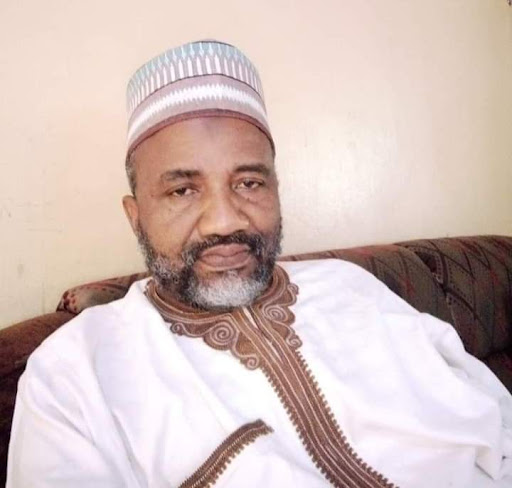
As I embark on writing about the history of our community, I am compelled to share the remarkable story of Sheikh Lawan Makama. His life’s work has had a profound impact on thousands of students, including myself, through his tireless dedication to teaching the Qur’an and founding a prestigious Islamic college.

We affectionately called him ‘Baban Makaranta’ (Father of the School) because of his unwavering presence and guidance. He would often be seen at the school, writing on the Allo (wooden slate) for students, mentoring teachers, and caring for us like a father.

When I spoke to one of my teachers and his son, Shehu Lawan Makama, about his father’s legacy, he shared a profound insight: ‘In our family tradition, every child is expected to teach in school before pursuing any business venture.’ This legacy lives on through the Ma’ahad Sheikh Lawan Makama, a renowned college for Qur’anic studies in our community, Kofar-Ruwa.

The college offers a comprehensive curriculum, with morning and afternoon sessions focused on Qur’anic studies, followed by evening classes on Hadith and Islamic theology. The quality of education in our community is a testament to the excellence of his school. Sheikh Lawan Makama’s impact extends beyond the classroom, as his commitment to community service has left an indelible mark on our society.

Sheikh Lawan Makama’s contributions to community services were multifaceted. His children would often lead Islamic events, including Ramadan prayers in various mosques. As students, we would attend school during the day and participate in community services in the evenings.

Growing up in a family that values the Qur’an, I had the privilege of attending many of these events. Sheikh Lawan Makama instilled in us strong moral values and good habits, emphasizing the importance of integrity and character. His reputation was such that if someone from his school misbehaved, the community would say, “This isn’t the habit of Sheikh Lawan Makama’s students.” His legacy is built on the principles of good character, and those who know him can attest to this.

Sheikh Lawan Makama’s family reflects his commitment to the Qur’an. All 16 of his children are Qur’an reciters, and thousands of students have memorized the Qur’an through his school. The students who lived in his house were treated like family members, receiving food, clothing, and care. One of my classmates shared that they felt no difference between themselves and Sheikh Lawan Makama’s biological children.

As someone who values documenting history, I aim to preserve Sheikh Lawan Makama’s legacy accurately, ensuring that future generations can learn from his remarkable life and contributions. May God bless him with knowledge, wisdom, and eternal peace.

Kamal Alkasim wrote from Kano, via kamalalkasim17@gmail.com.

Letter from 2075: Islam’s old paradigms in a new world

By Ibraheem A. Waziri

(My other essay, Against The Hadith Problem, discussed how Muslim empires in the past lived on a quartet of paradigms produced through the synthesis between the Qur’an, the body of Hadith, and reason. That provoked questions regarding the future of Muslim societies and states, hence these reflections and projections into 2075.)

It is 2075, and the world I walk through feels at once strange and familiar. The glass towers still gleam, drones still hum, algorithms still rule, yet beneath the circuitry there is a slower pulse: the rhythm of old fiqh and older faith.

For all our talk half a century ago of a secular age, the present belongs to hybridity. Constitutions speak the language of the Qur’an without calling it revelation. Western democracies borrow the moral grammar of Medina without feeling conquered. The four old schools of law (Mālikī, Shāfiʿī, Ḥanafī and Ḥanbalī) and the three great theologies (Ashʿarī, Māturīdī and Atharī) are no longer museum exhibits. They are living systems quietly moderating the noise of modernity.

West Africa: The Mālikī Republics

I began this journey in Abuja. The city has doubled in size, but its heart beats in rhythm with the Mālikī canon. In the courthouse, digital panels display sections from Mukhtaṣar Khalīl beside constitutional clauses. When a judge calculates inheritance shares, the algorithm he uses is Mālikī too: transparent, fair and incorruptible.

Even non-Muslim states around the Sahel now use these formulas. Ghana’s civil code borrows Mālikī inheritance rules, while Benin’s marriage registry follows the Islamic ʿaqd nikāḥ (marital contract) model because it ensures equity and consent better than the older colonial templates.

Banking has gone moral. Nigeria’s hybrid finance sector runs on maṣlaḥa-based smart contracts, while interest systems survive only in history syllabi. The ulama sit on the Council of Moral Economies, auditing state budgets for ethical imbalance. “Sharia,” an elderly economist told me, “is not our government; it is our conscience.”

Arabia: The Neo-Atharī Technocracy

From the Sahel, I flew east to Riyadh. The skyline looks like circuitry: solar glass towers, sky bridges humming with data. The Atharī–Hanbalī paradigm still shapes law, but it is encoded now in a literal sense. Hanbalī jurists work with AI engineers who have trained “Hadith logic engines” to map rulings from canonical texts.

The constitution speaks of dual sovereignty: divine law for the moral order, human law for function. A court clerk showed me how every regulatory draft is first run through an algorithm trained on Ibn Ḥanbal and Ibn Taymiyyah, then reviewed by human jurists.

Even cinema has turned pious. Historical dramas about early scholars play in multiplexes. Young Saudis quote Ibn Ḥanbal as easily as they quote quantum code. The result is not rigidity but confidence. They see tradition not as a wall but as a coordinate system for the future.

Southeast Asia: The Shāfiʿī–Ashʿarī Democracy

Jakarta feels like the world’s conscience. The call to prayer threads through a metropolis of electric trams and vertical gardens. The parliament convenes only after the Majlis al-Maqāṣid, the Council of Objectives, certifies that each bill meets four of Sharia’s six ethical aims: life, intellect, property, faith, lineage and justice.

This “maqāṣid democracy” has become the envy of the developing world. Corruption is rare because legislation itself is filtered through moral metrics. University students still memorise al-Nawawī and al-Ghazālī, but they also code in Python and quote maqāṣid theory in debates on climate law.

Shāfiʿī jurisprudence has not stifled freedom; it has disciplined it. A new civic pride glows here. Islam and democracy are no longer hyphenated; they are married.

Ankara: The Ḥanafī–Māturīdī Continuum

And then there is Turkey, the quiet custodian of the Ottoman inheritance. Its universities still teach Māturīdī theology as the bridge between revelation and rationalism. The state calls itself secular, yet its courts and social policy breathe Ḥanafī air.

In 2075, the High Directorate of Moral Logic, a successor to the old Diyanet, reviews every national reform for philosophical balance: does it protect reason (aql) and faith (īmān) equally? The framework is pure Māturīdī.

Turkey’s digital constitution, ratified in 2060, encodes “Ḥanafī modularity,” a principle allowing law to flex with circumstance. The same logic shapes its AI governance, its family law, and even its diplomacy.

From Istanbul outward, this Ḥanafī–Māturīdī ethos has spilt into Central Asia and the Indian subcontinent. Uzbekistan’s civic schools teach both Avicenna and al-Māturīdī. Pakistani fintech startups run on ḥiyal-based smart contracts. The Ottoman blend of faith and rational statecraft has found its second life in circuitry and policy code.

Europe: The Mālikī Renaissance

In Paris, I walked past a law office advertising “Islamic Equity Contracts.” Mālikī inheritance rules, once exotic, are now embedded in the French civil code for their mathematical clarity. Every December, the city hosts La Nuit des Saints, honouring figures from both faiths such as ʿAbd al-Qādir al-Jazāʾirī, Rābiʿa al-ʿAdawiyya and Francis of Assisi. The night ends with poetry readings under the Louvre’s glass dome.

Across the Channel, the United Kingdom has normalised Sharia arbitration. The Hanafi–Maturidi tradition, brought long ago by South Asian immigrants, is now part of national legal pluralism. Judges quote Abū Ḥanīfa in footnotes. Friday sermons mingle Qur’an with Shakespeare, and the term Anglo-Muslim has lost its hyphen; it has become a cultural fact.

The Global Drift Towards Muslim Norms

What surprises me most in 2075 is not conversion, though that too has surged, but imitation. The world has adopted Muslim social standards almost unconsciously.

The ʿaqd nikāḥ, once seen as a religious marriage, is now the global model for civil unions, prized for its symmetry and consent clauses. UN inheritance reforms draw on Mālikī logic for equitable estate division. Even secular citizens in Europe and East Asia now choose contracts modelled after fiqh because they feel fairer, cleaner and more human.

Reverence for saintly figures, long dismissed as superstition, has made a comeback. Shrines to al-Ghazālī, Rūmī, Ibn ʿArabī and even non-Muslim sages now form a new “pilgrim’s circuit of wisdom.” Modern psychology calls it “ancestral grounding.” We simply call it barakah.

As for conversions, some call them reversions; they grow yearly. Not by the sword of argument, but by exhaustion. People wanted meaning, proportion and discipline. They found it in Islam’s cadence: prayer as pause, zakat as fairness, fasting as freedom from appetite. In Europe, nearly one in five now identifies as Muslim or Muslim-shaped; in North America, one in ten. Many of them began not with belief but with admiration for the order that belief produced.

The Entangled Civilisation

By 2075, no state is purely Islamic or Western. The categories have dissolved.

The UN’s Council on Civilisational Ethics opens its sessions with verses from the Qur’an alongside Kantian aphorisms. Global digital charters cite ʿadl, justice, as their guiding principle. Algorithms that allocate water or distribute vaccines carry lines of fiqh-based code to ensure fairness.

The old paradigms have not conquered the world; they have simply proven indispensable. Mālikī–Ashʿarī, Shāfiʿī–Ashʿarī, Ḥanafī–Māturīdī and Ḥanbalī–Atharī each remain alive, shaping ethics, finance, law and art. Their jurists now sit on international boards beside secular philosophers, arguing about AI morality and interplanetary law. The conversation is no longer between faith and reason, but between kinds of reason.

A Closing Reflection

As I write this letter from a café in Fez, the call to prayer blends with the hum of an electric tram. A group of students nearby, Muslim, Christian and atheist, argue over a verse from the Qur’an, not as a theological claim but as a piece of political philosophy. The verse speaks of balance: “We made you a middle community.”

Perhaps that is what we have become by 2075: a middle community for a weary planet. The Western world brought machinery; Islam preserved measure. Together they built a civilisation that still argues, still hopes and still prays. The paradigms the world once thought ancient turned out to be the most modern of all.

Experts call for broader recognition of ulama in Nigerian politics

By Uzair Adam 

Bayero University, Kano (BUK), on Tuesday hosted a landmark conference organised by the Faculty of History and Development Studies, exploring the historical and contemporary roles of ulama in Nigerian politics. 

The event, themed “Ulama and Politics in Nigeria: Historical Perspectives,” attracted scholars, politicians, and religious leaders from across the country.

Professor Muhammad Wada, Dean of the Faculty of History and Development Studies at the university, explained that the central mission of the conference is to highlight the pivotal role of ulama—Islamic scholars—in societal development. 

He stated that, “Over the years, through our research, we realised that ulama have played and continue to play an important role in various spheres of life, including politics and economics. 

“This conference seeks to address widespread misconceptions about whether it is legitimate for ulama to be involved in politics,” Professor Wada added.

He further stated that the conference has received hundreds of abstracts from scholars of various fields, demonstrating the broad relevance of the topic. 

“Historically, ulama have contributed to societal development, and they remain capable of doing so today. 

“Their role goes beyond leading prayers or teaching religion; it extends to guiding the public in political and civic matters,” Professor Wada emphasised.

Professor Sani Umar, one of the keynote speakers, described the conference as “highly enriching and a model that should be held regularly to sensitise ulama and the public alike.” 

He stressed that the discussions are not only relevant to Muslims but also to followers of other faiths, promoting mutual understanding and peaceful coexistence. 

Umar further explained that the widespread perception that ulama should avoid politics is misguided, noting that true politics involves leadership, compassion, and care for the vulnerable—qualities inherent in the work of scholars.

Speaking on the occasion, Sheikh Ibrahim Khalil, Chairman of the Council of Ulama, urged the public to recognise that politics is for everyone and that ulama, given their knowledge and moral grounding, are particularly well-suited to political engagement. 

He called for more frequent conferences of this kind, at least twice or three times a year, and appealed to media professionals to disseminate these messages widely, including via social media.

The conference drew participation from ulama representing various Islamic sects, academics, and politicians, including Sule Lamido, the former Governor of Jigawa State. 

Governor Abba Kabir Yusuf, represented by Professor Tijjani Muhammad, also attended, highlighting the significance of the event for both scholarship and governance.

The two-day conference will continue tomorrow with plenary sessions, providing a platform for rigorous discussion on the contributions of ulama to Nigerian society and politics.

CAN rejects claims of Christian genocide in Nigeria

By Muhammad Abubakar

The Christian Association of Nigeria (CAN) has denied claims of a Christian genocide in Nigeria, calling such reports misleading and lacking a consistent pattern, as reported by The Guardian (Nigeria).

The claims gained attention after U.S. comedian Bill Maher and Senator Ted Cruz accused Islamist groups and Nigerian officials of persecuting Christians. Cruz even proposed sanctions through the Nigeria Religious Freedom Accountability Act. 

At the same time, U.S. lawmaker Riley Moore urged the U.S. government to halt arms sales and label Nigeria a “Country of Particular Concern.”

In response, Nigeria’s Presidency denied any religious war, stressing that the violence affects all citizens regardless of faith.

CAN’s Director of National Issues and Social Welfare, Abimbola Ayuba, acknowledged widespread killings but said they were not targeted solely at Christians. He noted that both Christians and Muslims have fallen victim to terrorist attacks, adding that bullets “don’t look for a Christian or spare a Muslim.”

Ayuba cautioned against foreign interference and urged Nigerians to work collectively to end the insurgency through local institutions rather than seeking sympathy abroad.

The significance of marriage in Islam

By Muhammad Isah Zng

Marriage in Islam is not just to bind together; it is an institution that preserves faith, protects men and women from immoralities, and creates harmony between men and women. It’s also a way of raising and nurturing children on the right path.  

Allah (S.W.T) describes marriage as one of His most significant signs, saying: “And among His signs is that He created for you spouses from among yourselves, so that you may find tranquillity in them; and He placed between you affection and mercy. Surely in that are signs for a people who reflect.”
(Qur’an 30:21)

In the above verse, Allah (S.W.T.) highlights the true purpose of marriage, emphasises peace, love, and mercy between husband and wife. 

Similarly, Imam Al-Ghazali, a prominent Islamic scholar, said: “Marriage is companionship, not domination. It is a place of comfort, where both husband and wife share love, trust, and cooperation.”

We can also notice that marriage is also built on trust from both husband and wife, because trust brings comfort and increases love between the spouses. Without it, marriage won’t be last in any relationship. 

Therefore, apart from being a way of sharing love, peace, and trust between husband and wife, it is also a means of having children who would be beneficial to society.

That’s why Allah called the attention of both husband and wife in this verse: “O you who believe, protect yourselves and your families from a fire whose fuel is people and stones…”
(Qur’an 66:6)

This verse emphasises the responsibility of couples towards the good upbringing of their children by ensuring that they provide them with proper guidance and support throughout their lives. 

Marriage in Islam is an avenue where both husband and wife share love, mercy, peace, and trust; it’s also a way of raising children that benefits themselves and their society. 

Muhammad Isah Zng is a student of Mass Communication, Bayero University, Kano (BUK). 

Ulama Forum refutes claims of 500,000 Christian deaths in Nigeria

By Hadiza Abdulkadir

The Ulama Forum in Nigeria has condemned what it describes as false and inflammatory allegations by some international media outlets, including Fox News, Radio Genoa and American talk show host Bill Maher, claiming that 500,000 Christians were killed in Nigeria last year.

In a statement signed by Convener Aminu Inuwa Muhammad and Secretary Engr. Basheer Adamu Aliyu, the Forum described the claims as “entirely unfounded, reckless, and designed to misinform the international community.” 

It added that Nigeria’s security challenges—terrorism, banditry, and farmer-herder clashes—affect both Muslims and Christians, not any single religious group.

The Forum noted that Muslim communities, particularly in the Northwest, have “suffered disproportionately,” with thousands killed in repeated attacks ignored by international coverage. It warned that spreading false genocide narratives could inflame tensions and undermine peace efforts.

Quoting the Qur’an, the Forum reaffirmed Islam’s prohibition of killing innocents and called for unity among Nigerians “to resist attempts by foreign actors to manipulate false narratives.” 

It also urged the government to intensify security measures and advised international media to report responsibly and respect Nigeria’s diversity.

Christians are not persecuted in Nigeria

By Bashir Jelani, PhD

It has been trending over the past two days that Boko Haram killed more than 500,000 Christians and burned 18,0000 churches in Nigeria since 2009. Local and international news media are spreading false information that Muslims are carrying out ethnic cleansing against Christians. 

Till now, no news media from Arewa has debunked this news. No Arewa intellectual, writer, or public figure responded to this. It is a big shame on us. Thanks to Femi Fani-Kayode for sincerely putting the record straight.

This phoney propaganda did not start today. Some insincere Nigerian Christians have been working hard to blackmail Muslims on the international stage. I don’t know what they want to get by fabricating that fake news. The dead silence from Arewa is what makes this misleading information gain momentum. 

I have debated this issue with Christian friends for many years. I have maintained that the majority of the victims of Boko Haram and bandits are the Muslims themselves. The Boko Haram terrorists do not spare Muslims. They don’t care about your religion. 

Boko Haram wouldn’t be operating in Northern Nigeria if its target were to cleanse Christians. I sympathise with some Christians who were affected, but the truth is that the Muslims are Boko Haram’s target. That is why they do their evil atrocities in the Muslim dominated regions, mainly killing Muslims.

Arewa needs to wake up. Debunking this dangerous propaganda is very important.

New book explores faith, language and identity in Kannywood

By Hadiza Abdulkadir

A new book examining the cultural and religious forces shaping the Hausa-language film industry, Kannywood, will be released on 5 December 2025 by Springer Nature.

Titled Kannywood: Film, Faith and Identity in Northern Nigeria, the work critically explores how filmmakers navigate religious expectations, cultural norms and language ideologies while appealing to a diverse audience.

The author, Dr Muhammad Muhsin Ibrahim, teaches Hausa Studies at the University of Cologne and is an expert in Hausa media and cultural production.

The study employs audience reception theory and a close analysis of selected films to reveal tensions within the industry, including the dominance of the Kano dialect, the marginalisation of others, such as Sokoto’s, and the commercialisation of “broken” Hausa.

The book also highlights the pressures of global influences and conservative religious forces, presenting Kannywood as a contested space of identity and representation in northern Nigeria.

The Almajiri System: A broken legacy we must bury

By Umar Sani Adamu

The Almajiri system, once a noble pursuit of Islamic knowledge, has degenerated into a humanitarian disaster spread across Northern Nigeria. From the streets of Kano to the slums of Sokoto, thousands of children wander barefoot, hungry, and hopeless victims of a tradition that has outlived its purpose.

The idea behind Almajiranci was simple: young boys, mostly from rural or poor families, would be sent to Islamic scholars for religious education. But over time, what began as a pathway to learning became a pipeline to poverty, abuse, and neglect. Today, these children beg for survival, live in unhygienic conditions, and face constant exposure to criminality and exploitation.

Every year, thousands more are pushed into this cycle. With no formal curriculum, no sanitation, no feeding structure, and no monitoring, the system violates every principle of child welfare and human dignity. Many of these almajiris live in overcrowded, unventilated rooms, sometimes as many as 18 children in a single space, with no access to health care, no protection, and no future.

While governments talk reform, very little action meets the urgency. Integration programs are underfunded, religious institutions are left unchecked, and families often forced by poverty continue to submit their children to this outdated system. Meanwhile, the streets of Northern Nigeria grow more unsafe as vulnerable children are manipulated by extremist groups and criminal syndicates.

Let’s be clear: the Almajiri system, in its current form, is not education. It is abandonment. It is state-sanctioned child endangerment masquerading as religion. Any society that claims moral or spiritual uprightness cannot continue to tolerate this level of systemic neglect.

What Northern Nigeria needs is not a patchwork of reforms, but a complete overhaul. Islamic education should be formalised, monitored, and integrated into the broader national curriculum. Children should learn in safe environments where Qur’anic knowledge is integrated with literacy, numeracy, hygiene, and vocational training. Religious scholars must be trained, certified, and held accountable.

Above all, we must shift the responsibility from children back to adults. Governments, communities, parents, and religious leaders must admit the system has failed and work together to end it. The Almajiri child deserves more than survival. He deserves dignity, opportunity, and a future.

This is not just a social concern. It is a national emergency.

Umar Sani Adamu can be reached via umarhashidu1994@gmail.com

Don’t postpone kindness, you may never get another chance (1)

By Aisha Musa Auyo

When you can be kind and helpful, do it immediately. Don’t procrastinate or wait for the “right time.” You may not live to see that time, or the person you want to help may not. The point of power is always now.

I’m inspired to share this because two recent incidents made me reflect deeply. One was the death of a close relative, the other, the passing of an acquaintance I only met once but stayed connected with through social media.

In the first incident, an aunt of mine came from another town for her monthly hospital appointment. She usually arrived a day before to avoid being late. That evening, after visiting some relatives, she spotted a shawarma shop and sighed: “Zan so na ci shawarma ko da sau ɗaya ne a rayuwata” (“I would love to taste shawarma at least once in my life”).

My cousin, who was driving, ignored her words and sped past. I pleaded with him to go back, but he insisted the shop was closed and wouldn’t open until 7 p.m., which is true. My aunt looked disappointed.

Later at home, I begged him again to get me shawarma bread so I could prepare it for her. He brushed it off, saying he was tired, and reminded me she’d be leaving early the next morning. “You can always make it for her next month,” he said. But my heart wouldn’t allow me to postpone it.

Eventually, he bought the bread, and I stayed up late preparing the fillings, finishing by midnight. I set my alarm for 4 a.m., woke up, rolled, and grilled the shawarma. By 5 a.m., it was ready. When I handed it to her, she was overjoyed. She couldn’t believe I went to such lengths to fulfil her simple wish. She prayed for me with a smile, and we said our goodbyes.

Later that day, she called to say she had arrived home safely and that my shawarma exceeded her expectations. She even saved some to take home. Though I joked, it must have been cold by then. She prayed again for me before hanging up the phone.

A few days later, she passed away.

I was in shock. Just last week, she was with us, longing for shawarma. I wept, but deep down, I thanked Allah that I didn’t delay. That shawarma became her first and last.

The lesson is clear: never delay an act of kindness. Tomorrow is not promised for you or for them.

Aisha Musa Auyo is a doctoral researcher in Educational Psychology. A wife, a mother, a homemaker, a caterer, a parenting and relationship coach. She can be reached via aishamuauyo@live.co.uk.