Muslims

Islam and the conservation of natural resources

By Abubakar Idris Misau

“…Muslims need to look no further than the Quran for guidance, where there are approximately 200 verses concerning the environment.”  — Ibrahim Ozdemir

Asked about what Islam has to say about the conservation of natural resources, here is my take: Like the secondary school students who would want to start arguing their points by defining the key terms of their topics, this writer defines Islam, conservation, and natural resources before connecting the dots. However, the terms are concisely defined, requiring only the essential information for even those unfamiliar with the terms to understand their existence. By defining the terms, the writer intended to allow as many classes of readers to take a message home from the article as possible. 

Meanwhile, unlike in the case of secondary school students, the intent of this article is not to score points but to reiterate, for it has often been neglected that Islam is the most compatible religion to science and remains the mother of many scientific disciplines. The religion explains and advocates for the conservation of natural resources – to say mildly. 

Islam, not because it was founded some 145 decades ago, but because it is often defined as such, is the Abrahamic monotheistic religion centred on the Qur’an and the teachings of the Prophet Muhammad Sallallahu Alaihi Wasallam. It has five pillars and six articles of faith. With the followers of this faith, called Muslims, numbering close to 2 billion worldwide, Islam is not only universally seen as the second-largest but also the fastest-growing religion in the world.

Collectively referred to as Ummah, Muslims believe that their religion, a Deen or comprehensive way of life, is the complete and universal version of a primordial faith revealed many times through earlier prophets such as Adam, Nuhu (Noah), Ibrahim (Abraham), Musa (Moses), and Isa (Jesus) may peace and blessings be upon them all. Perhaps in the most concise edition, this can be said to be the meaning of Islam.

Conservation, however, carries different meanings depending on the time and situation in which it is used. For example, the meaning it conveys in the sciences as physics is not the same as that which it takes in arts. Meanwhile, in this essay, the meaning relating to natural resources is strictly considered. It is thus the triangle of protection, management and wise use of the resources in question for the benefit of current and coming generations. The natural resources meant to be conserved are the tangible and intangible materials drawn from nature – which are utilised with little to no alteration. Examples of such resources include vegetation, wildlife, land, water, sunlight and so on.

Given the above definitions, this article suggests that Islam as a religion and a way of life speaks about natural resources and even strongly preaches that they must be protected, managed and wisely used.

While there is no one place in the Qur’an where it is said, “Oh you who believe do well to conserve your forests…” and or that failure to protect wildlife could amount to crumbling in the fire of Jahannam; evidence from the same book and other sources such as the tradition of the Prophet (Sunnah) are very clear and enough to debunk [to say mildly] any opinion that is against conservation of natural resources – at least from Islamic viewpoint.

To start with, Allah The Exalted [SWA] says in Surah Yunus, Qur’an chapter 10 verse 14, “Then we made you trustees (Khalifa) on the earth after them, to see how you would act.” Other verses, such as in Surah Al-Ahzab (Q 33:72) and Surah Al-An’am (Q 6:165), directly emphasise the same message. In line with this, the Prophet [PBUH] said, “The world is a beautiful and verdant, verily God, The Exalted, has made you His stewards in it, and He sees how you acquit yourselves” (Saheeh Muslim).

According to Muhammad A. Chakaki, an independent environmental consultant and a founding member of the American Green Muslims in the Direct, that man is made the khalifa, trustee, steward, successor, custodian, …name it, “does not mean absolute power of humans over nature. … It is a trust, an immense responsibility.” Indeed, Chakaki’s explanation of this stewardship could hardly be far from the truth. 

For in Surah Al-Ahzab, chapter 33, verse 72, Allah [SWA] says, “Verily, We offered the entrusted property (Amana) to the heavens, and the Earth/land, and the mountains; but they refused to undertake it, being afraid thereof: but man undertook it;- He was indeed unjust and foolish.” As man is allowed to use the natural resources upon which he is made a custodian, being warned against using it extravagantly presents stewardship as a double-edged sword: remaining as an honour whilst also a test.

At the heart of the famous George Washington University stands the Islamic Studies Professor Seyyed Hossein Nasr. Of the highest order, Nasr is a faculty, an environmentalist, a philosopher, and an author of more than 50 books and over 500 articles. The erudite scholar expresses his environmental philosophy in terms of Islamic Environmentalism and Resacralization of Nature. According to the more-than-90-year-old distinguished academic, environmental crisis cannot be understood, much less solved, without a wider spiritual approach. In his view, man must humble himself as the steward he is and stop the dictatorial approach in his relationship with nature. [See, for instance, his book ‘Religion and the Order of Nature’].

While many of Nasr’s propositions are frowned at and thrown to the dust bin, labelled as too unscientific and religiously induced – because ours is an over-obsessed-with-technology sort of a world – the very idea that environmental crisis is a self-inflicted wound caused by human activity, remains a universal convention. Surah As-Shura has it all said: “And whatever misfortune befalls you, it is because of what your hands have earned…”

However, influenced by Nasr, in an opinion published by Aljazeera, a renowned environmentalist and a professor of philosophy at Uskudar University Turkey, Ibrahim Ozdemir said, “Islam teaches its followers to take care of the earth.” And that in his opinion, the one simple yet neglected solution to the environmental crisis is ‘interpreting the issue from an Islamic perspective’.

In this line of thinking, when this writer [of this article] writes, he shall discuss Hima (Protected Area), Waqf (Endowment), and Israf (Prohibition of Wastefulness), among other natural resource conservation concepts – from an Islamic viewpoint. Meanwhile, suffice it to say that climate change and its resulting environmental crisis are real, and Almighty Allah says in Surah Al-Ra’ad, “… Verily, Allah does not change the condition of a people unless they change what is in themselves…” [Q 13:11].

Abubakar Idris Misau, a graduate of Forestry and Wildlife from the University of Maiduguri, writes from Yola, Nigeria. He can be reached via email at abubakaridrismisau@gmail.com.

MURIC condoles Zulum on death of Isa Gusau

By Muhammad Abdurrahman

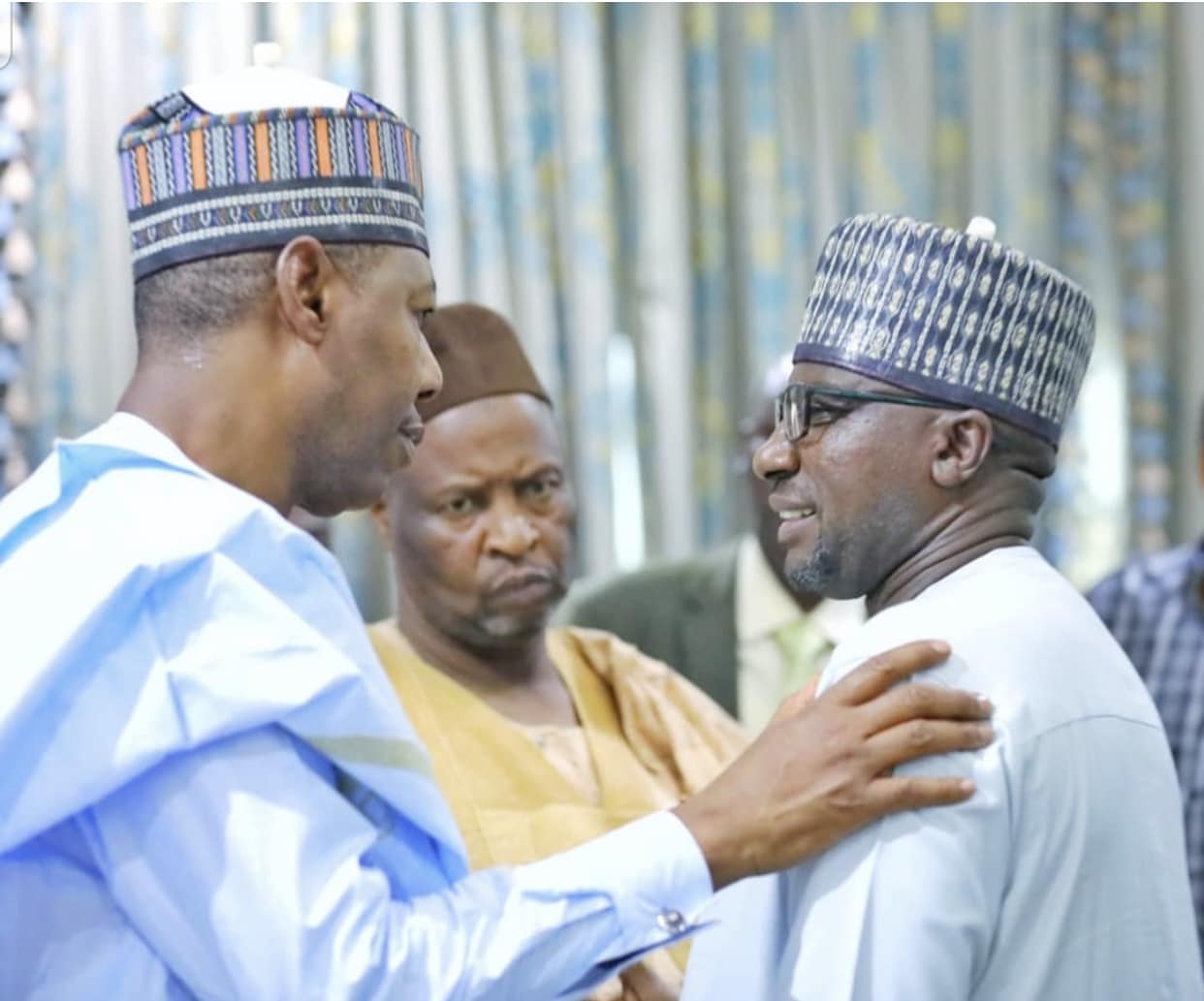
Mallam Isa Gusau, the spokesperson of the governor of Borno State, died two days ago in faraway New Delhi, India, after a protracted illness. Meanwhile, the Muslim Rights Concern (MURIC) has commiserated with Governor Babagana Umara Zulum. 

In a statement issued on Saturday, 13th January 2024, by the group’s Executive Director, Professor Ishaq Akintola, MURIC urged the governor to take Gusau’s death in the spirit of the philosophy of death in Islam: ubiquitous, unavoidable and necessary end.

The human rights organisation also condoled the Shehu of Borno, Alhaji Abubakar Ibn Umar El-Kanemi, and the entire Borno Muslim Community. 

Akintola described Gusau’s death as painful and a heavy loss. He also described the deceased as a devoted Muslim, a professional to the core, a humanist, an idealist and a principled family man. 

He prayed for Allah’s forgiveness and al-Jannah Firdaus for Mallam Isa Gusau. He also prayed that members of the deceased’s family, friends and acquaintances would have the fortitude to bear the irreparable loss. 

Rethinking my legacy: How our local tradition wowed Western intellectuals at an Ivy League University

By Umar Sheikh Tahir (Bauchi)

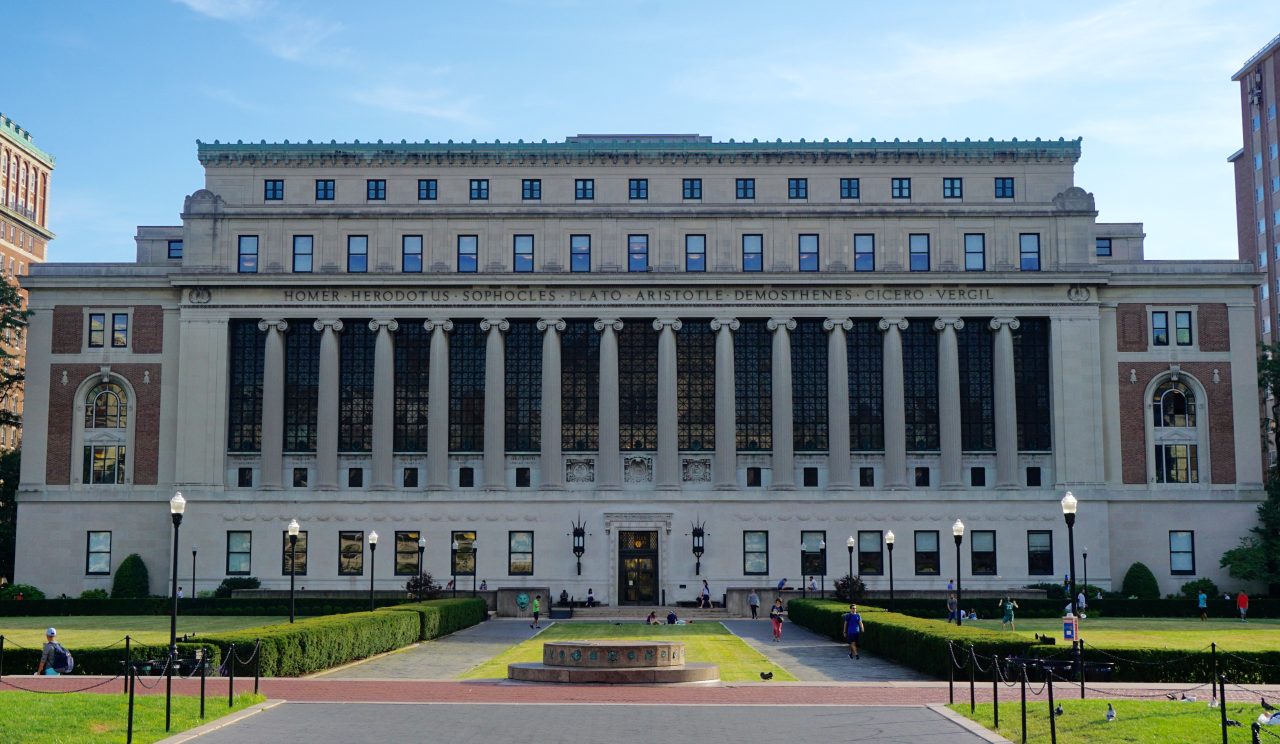
Columbia is an Ivy League University, one of the eight most prestigious institutions in the United States of America. Ph.D. students at this university undergo two years of coursework. One of the classes I took was Islam, Knowledge and Forms, which a visiting professor from Germany taught. Part of the course is a library visit to the exhibitions section under the project of Islamic Sciences, Science, Nature, and Beauty: Harmony and Cosmological Perspectives in Islamic Science (2022) at Butler Library, the largest library of Columbia University with millions of resources. 

The exhibition contained objects, images, rare manuscripts, and other learning materials. Two materials, among others, became the most astonishing factors in the exhibition: one of them is a rare copy of the Holy Quran, and the second is a locally handmade wooden tablet (Allo).   

The instructor asked everyone to talk about any material in the exhibition. Students gave their feedback on the experiences passionately; different things wowed everyone. When it came to my turn as someone who had known these items since childhood in my father’s private library, where we sneaked as children, which housed similar treasures. To us, these are the most useful items in his library as we do not read books; we only view images and magazines, such things that are not viewed as essential to the readers. Then, I shared my familiarity with these items, telling them I was exposed to most of the exhibited materials from my upbringing in Northern Nigeria, including “rare manuscripts” of the Quran. 

The Quran displayed was a giant copy of the original Uthmanic Quran, denoted to the third Caliphate of the Muslim nations who reigned (644/23H–656/35H). It was so amazing to all of us. As for me, the Quran is the most frequently read book in my entire life, and to their surprise, I can read this copy fluently without diacritical marks. I highlighted that memorising the holy Quran, even without understanding Arabic, is common in Northern Nigeria.  Most of my fellows never knew that sometimes people memorise it at an early age. I did not shock them with that, as I am one of them. 

In the second incident, Professor Brinkley Messick invited me to speak in his class on Islamic Shariah Law as someone with experience with an Islamic Madrasa background and went to Azhar University in Egypt. The theme of the class is the Islamic madrasa. He is interested in the Islamic tradition, as evident from the cover of his book, “Calligraphic State.” 

Allo

The Professor brought Allo a wooden tablet to the class and circulated it to students. Everyone was looking at it with surprise. I named it to them as a personal tablet for inscription and memorisation of the holy Quran, and the students asked for more details. I said we write verses from the holy Quran for memorisation after repeating it several times; not everyone understands how that works, except those with Islamic background. However, when I told them when we wash the script, we drink it, everyone was left with open mouths, surprising our embodiment of the holy book, including the professor. They could not process as modernised individuals with high sensitivity to germs and bacteria. Again, as I told our class last semester, this is very common in Northern Nigeria. 

Coincidently, one of the attendees from a Saudi background added that people used some scripts for Talismite and protection from Djinn (Ruqyā in Arabic or Ruqiyya in Hausa) by reciting some verses in water. I told her this is true; we have that part in our culture too, but the biggest part is that we drink washed script for the embodiment and show respect for not letting a drop of that water on the ground as a sacred word. As kids, we were told that whatever verses we memorise from the holy Quran and drink will stay in our hearts for a long time.

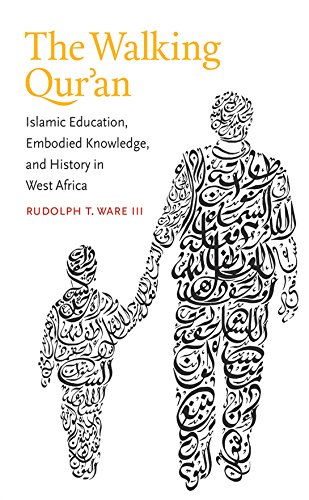
In reference to that, American Professor of Islam in Africa Rudolph Ware published his book Walking Quran on the Madrasa system in West Africa. He referred to those Quranic students’ embodiment as the Walking Quran in relation to the narration of the Hadith reported in the books of Hadith such as Ṣaḥīḥ Muslim; Aisha was asked about Prophet Muhammad’s PBUH character, and she said he was a Walking Quran.  

Our cultural legacy, often undervalued by some of us in our region, gained recognition at Ivy League institutions. Those people appreciate a centuries-old Quranic educational tradition or Almajiri system and show their respect to our subregion. Even our way of drinking the washed script of the Quran mesmerised them. 

A professor dedicated his projects to studying a school system called Daara schools in Senegambia or the Tsangaya schools in Northern Nigeria, making it evident that our legacy is an astonishing point to those communities. Then, as indigenous Africans who were introduced to the colonial system of Education less than a century ago in Northern Nigeria, we should be more proud of our system by appreciating those communities who choose to preserve it, as they make our subregion a central point of high intellectual conversation around the world. 

We should not deny our legacy by stigmatising the Almajiri system of education. Instead, we should support it and create a way of modernising it to empower and preserve our centuries-old legacy.  Whoever shows kindness to the Quran and its reciters will receive people’s applauses in this life, including Western intellectuals, and God’s reward in the hereafter. Thanks to those state governments in Northern Nigeria who support and recognise this system of education.

Umar Sheikh Tahir is a PhD student at Columbia University, New York, USA. He can be reached via ust2102@columbia.edu.

Allow married women to bear their fathers’ names – MURIC 

By Abdurrahman Muhammad

A call has gone to the Federal Government for a reform of Nigerian marriage laws that will allow married women to bear their fathers’ names. Making the call was an Islamic human rights advocacy group, the Muslim Rights Concern (MURIC). 

A statement signed by the group’s director, Professor Ishaq Akintola, on Monday, 18th December 2023, described the current practice whereby married women are forced to bear their husbands’ surnames as gender discriminatory, archaic and oppressive. 

MURIC condemned the current practice for depriving women of their Allah-given fundamental human right to personal and parental identity in marriage. The group advocated the adoption of the women-friendly Islamic practice, which allows married women to bear their fathers’ surnames after marriage. 

The full statement reads:

“Our attention has been drawn to the plight of married Muslim women who are being disallowed by employers from bearing their fathers’ names. This amounts to forceful enslavement, denial of Allah-given fundamental human right to parental identity and wrongful dismissal of loco parentis.

“We condemn the current practice for three major reasons, namely, for generating confusion in the society, for creating a monumental identity crisis among married women and for depriving women of their Allah-given fundamental human right to personal as well as parental identity in marriage.

“Instead of this, we advocate the adoption of the women-friendly Islamic practice which allows married women to bear their fathers’ surnames after marriage. 

“No woman dropped suddenly from the sky, and even if some appear out of nowhere, they must have been born, bred, nurtured, buttered and marmaladed by certain parents before they grew up and matured into womanhood. Their education was also sponsored by their parents at a time when the future husband probably knew nothing about them and spent no kobo on their upbringing and their education.

“It therefore beats logic, fairness and natural justice that a husband appears out of nowhere to commandeer a woman’s parental identity simply by marrying her. Such identity robbery also has its advantages. 

“For instance, women who are educated are forced to advertise change of names to their husbands’ surnames after marriage in order to retain the validity of their documents and properties. It often becomes very difficult and sometimes impossible for married women to be located or to retain old friends due to such a change of name. 

“Those who want to be sincere among married women today will confirm the stress they have gone through from this experience. Islam sets women free from such stress by permitting married women to retain their original family names.

“Contrary to the general claim that Islam discriminates against women, Islamic liberation theology actually teaches respect for the dignity of women in all circumstances. One of such circumstances is the period when women are in wedlock. Whereas Western civilisation robs married women of their original family identity by insisting that they should bear their husbands’ surnames, the Shari’ah allows women to bear their own fathers’ names even after marriage. 

“We therefore invite the Federal Government and other relevant authorities to set the machinery in motion towards allowing married women to bear their fathers’ names. In particular, we charge both houses in the National Assembly, the Senate and the House of Representatives, to introduce the necessary bills that will set Nigerian women free from undue masculine domination.

“This advocacy is not for Muslim women alone. We are certain that Muslim women are not the only ones who feel the pinch. MURIC would love to see every married woman who desires to be identified by her father’s name enabled to do so. Our lawmakers should frame the clauses in such a way that all women can enjoy the freedom to choose between bearing their fathers’ names or their husbands’. It is time to set Nigerian women free. They are the mothers of our society.

“We contend that the whole gamut of women’s liberation struggle boils down to a sham and a mirage until this goal is achieved. A married woman is not a slave. She is not just a dot in social statistics. She has a soul, and that soul yearns for love. She covets to love and be loved, not only by her husband but also by her family and vice versa. Nigeria must not fail her. Parental identity is sacrosanct. Husbands can never replace fathers in matters of parental identity, and that is what the current system compels women to go through. Enough is enough.”

Electoral victory: Whose Addu’a does Allah accept?

By Mohammad Qaddam Sidq Isa (Daddy)

There is a general but simplistic assumption that electoral victory necessarily implies Allah’s endorsement of the winner and His disapproval of the loser. 

Politicians, potential beneficiaries of the electoral victory of politicians, and overzealous followers engage in supposedly wholehearted Addu’a for their and their benefactors’ electoral victory.

The practice of Addu’a for electoral victory has grown into a phenomenon and has indeed become an integral part of politicking in Nigeria. It has, in fact, turned into an industry of a sort where huge amounts of resources are invested in engaging amateur, part-time and professional Addu’a service-providing malamai who provide their services to the highest bidders or whom they expect higher gain from them of whatever kind.

Besides, with the growing phenomenon of holding the so-called special prayer sessions in public places for the success of one politician or another, the ‘political Addu’a industry’ has been growing further, attracting more investments from politicians. This is even though such so-called special prayer sessions bear the hallmarks of Bid’a.

On their part, winners in elections and their followers brag that their electoral victory necessarily implies Allah’s acceptance of their Addu’a hence His endorsement of them. They equally mock their opponents and attribute their loss to Allah’s disapproval of them. Whereas, in reality, nobody knows for sure whether or not a particular electoral victory implies Allah’s endorsement, or whether or not a particular loss implies His disapproval.

Because the fact that politicking under democracy is inherently characterized by gross dishonesty, hypocrisy, cunning, deceitfulness, bribery and other serious vices, which arguably all politicians perpetrate in their struggle to outmanoeuvre one another, makes the whole system too filthy for Allah to have anything to do with it, in the first place,  let alone endorse any politician against another.

The winner, therefore, only wins thanks to his ability to somehow outdo his opponents in that regard, and the losers only lose due to their failure to outplay the winner, while none enjoys Allah’s endorsement, for all are equally guilty of the same grave sins, regardless of the extents of their involvements, respectively. After all, they actually never take Addu’a seriously in the first place; they only feign commitment to it in the context of their manipulation of religion for political interests.

Electoral victory under democracy is just like winning in gambling, which obviously never implies Allah’s endorsement.

Though craving for power and the temptations of what comes with it are irresistibly tempting, they aren’t worth the price of politicking under democracy, with all that it entails, which those involved pay in the hereafter. 

Mohammed Qaddam wrote via mohammadsidq@gmail.com.

Arewa24 and the globalisation train

By Zailani Bappa

The satellite television, Arewa24, with headquarters in Kano, will continue to be a pain for northerners who cherish their heritage. It is a necessary evil and a bad influence on the teeming youth in a predominantly conservative society. But, it is established to achieve a purpose and do that efficiently and quickly.

I learned the medium was established by the US government through one of its established NGOs some nine years ago. Amidst the devastating experience of Boko Haram in this part of the country, several studies have indicated to the West that the passion for Islamic values in the North and the teeming followership of a springing set of radical Salafists in the region is the major cause of such developing activism….or should I say…terrorism.

Hence, the decision to spend the hard-earned tax-payers money of the American people to build an entertainment television station in the heart of conservative Kano (after rejecting Kaduna and Abuja as a base for the new medium). I am sure you know that when these guys give you a dime worth of something with the right hand, they are sure enough to take back something worth a dollar from you with the left hand.

So, the Arewa 24 came into light with a bang…..good hands employed mostly popular actors from the entertainment industry as pioneer staff, with good pay for them to work optimally and to stay, very enticing and entertaining programmes with fresh breath of air and of course, all programmes beamed to us with the best of technology one can find around here. Significantly, most programmes target women and the young.

Free of charge, we were entertained until the station became a menu that came to every table in the house. Then came the next stage of the plan (as I see it). It was sold out to a very rich and powerful Nigerian who has the capacity and the passion to run it according to both the quality of content and the pursuit of the target.

Gradually, the programmes started becoming more daring in their approach to change. There is mild and uncoordinated resistance here and there, but the medium has a strong advisory consultant. They evade or outrightly neutralise every challenge from angry quarters at times. And they will continue to do so.

I firmly believe that the Arewa 24 debut, acceptability, prowess, and popularity (often challenged with visionless resistance) are only the tip of the iceberg. This is an era of globalisation. It is a moving train we cannot stop. It will reach its destination, ultimately. Our resistance to it will continue to be a massage to its global ego.

So, for those who understand this phenomenon, just pray, stay calm and do your own thing according to your conscience. Teach your young ones to value your values the way you can, very hard and consistently; then, leave the rest to God. This fight is just too big for us……..for every one of us.

Zailani Bappa wrote from Bauchi State via zailanbappa@gmail.com.

Stop harassing Kaduna KASTLEA marshals over Hijab – MURIC

By Abdurrahman Muhammad

A call has gone to the Kaduna State House of Assembly to investigate the Kaduna State Traffic Law Enforcement Authority (KASTLEA). The appeal came from an Islamic human rights organisation, the Muslim Rights Concern (MURIC). The group accused the leadership of KASTLEA of harassing Muslim female marshals who wear hijab and their male counterparts who have beards.

This was contained in a press statement circulated on Friday, November 17, 2023, by the Executive Director of MURIC, Professor Ishaq Akintola. He said:

“We have credible information that the leadership of the Kaduna State Traffic Law Enforcement Authority (KASTLEA) has recently been casting aspersion on the use of hijab by female marshals and the growth of beards by their male counterparts. 

“The current head of KASTLEA, Carla Abdulmalik, a Christian lady, uses almost every opportunity to directly or indirectly caution marshals against the use of hijab. She reportedly issued a directive for the shaving of beards by the male Marshals. According to her, having beards makes the job unprofessional and disgusting.

“MURIC resents the anti-Muslim antics of Carla. She must be called to order before she plunges Kaduna into a huge crisis whose consequences no one can predict.

“Carla is exhibiting a common trait of Muslim-haters. She is most indiscreetly imposing Christian culture on Muslim marshals and manifesting hatred for all forms of Islamic appearance.

“We therefore call on the honourable members of the Kaduna State House of Assembly to investigate these allegations and make recommendations to Governor Uba Sani. 

“Carla must be called to order. Kaduna is the last place where one would expect to find the persecution of Muslim workers or students. This is an anomaly that should not be allowed to rear its ugly head anywhere in Northern Nigeria. We call on Islamic scholars to speak up on this matter and to put pressure on politicians in Kaduna on the need to protect Muslim marshals in KASTLEA.

“The Constitution is clearly on the side of religious freedom. Section 38 (i) & (ii) of the 1999 Constitution of the Federal Republic of Nigeria provides ‘every person shall be entitled to freedom of thought, conscience and religion, including freedom to change his religion or belief, and freedom (either alone or in community with others, and in public or in private) to manifest and propagate his religion or belief in worship, teaching, practice and observance’

“There have been no restrictions on religious freedom in KASTLEA since its establishment in 2014, and nothing in the 2017 act establishing the agency forbids hijab or beards. Muslim marshals in the agency have also never been intimidated by any of those who headed KASTLEA before Carla. Her persecution and stereotyping of Muslims under her must stop.”

Dr Zakir Naik: MURIC warns overzealous interlopers

By Muhammad Abdurrahman

An Islamic human rights organisation, the Muslim Rights Concern (MURIC), has warned those calling for the arrest of Dr Zakir Naik to mind their business. The organisation insists that the Islamic preacher is exercising his Allah-given fundamental human right of freedom of movement under international law. MURIC further warned that anybody found embarrassing to the Sultan’s guest would face the wrath of Nigerian Muslims. 

The warning was handed down on Sunday, 5th November 2023, by the Executive Director of MURIC, Professor Ishaq Akintola. 

The full statement reads:

“A campaign of calumny and religious hatred has been unleashed on an international Islamic figure, Dr Zakir Naik, who is currently in Nigeria. Dr Zakir Naik is in the country on the invitation of the Sultan of Sokoto and President General of the Nigerian Supreme Council for Islamic Affairs (NSCIA), Alhaji Muhammad Sa’ad Abubakar.

“The campaign is being sponsored by Christians who are jittery. They are aware of the visitor’s oratory, intellectual prowess and amazing ability to convince his audience with indubitable facts. We remind these overzealous interlopers that Dr Zakir Naik is exercising his Allah-given fundamental human right of freedom of movement. 

“Article 13 of the Universal Declaration of Human Rights of the United Nations guarantees the right to freedom of movement around the globe without interference. It says, ‘Everyone has the right to freedom of movement and residence within the borders of each state. Everyone has the right to leave any country, including his own, and to return to his country.

“Those behind this shameful exercise are meddlesome interlopers and Muslim haters disguising themselves as public commentators. They are motivated by hate, ignorance and gymnastic religiosity. 

“For the avoidance of doubt, we warn that anybody found embarrassing an official guest of His Eminence the Sultan and head of more than 150 million Nigerian Muslims will face the wrath of Muslims in this country.

“Why are our Christian neighbours so intolerant? How many times have Muslims raised objections when Christians invite foreign preachers? Several Christian preachers have toured this country without any Muslim protesting. 

“We recall the way Louis Farrakhan, the black American Muslim leader, was disallowed from giving a lecture in Nigeria in 1986. That ugly and disgraceful incident was engineered by the same set of people. It must not happen again.

“To those who are pursuing this ignoble goal, we say, ‘Take notice that Dr Zakir Naik is not Louis Farrakhan and Nigeria of 1986 is different from Nigeria in 2023. Nigerian Muslims of today, under a dynamic and visionary leadership, can give measure for measure.’ 

“The whole world knows the Indian government for what it is when it comes to religious tolerance. The crimes of the Indian state against its Muslim population of 204 million Muslims are legendary. Muslim haters in Nigeria should allow the Indian government to convince Interpol to do its dirty work for it. 

“India has failed to involve Interpol because its allegations against Dr Zakir Naik are religiously motivated. How did the Islamic scholar travel across several countries without Interpol arresting him if, indeed, he is a wanted person? Let the Indian government convince Interpol first.

“As far as we are concerned, Dr Zakir Naik has not broken any known law of Nigeria. He is, therefore, innocent and free to move around and deliver lectures. We remind the law enforcement agencies of their duty to ensure the safety and security of this Islamic scholar. Nothing must happen to him. It is needless to assert that any guest of the Sultan is a guest of all Nigerian Muslims.”

#LeaveDrZaikNaikAlone

What Hisbah truly does

By Usama Abdullahi 

The Hisbah corps members have come under criticism for their recent activities, which include raiding or disrupting a hotel or social gatherings where immoral actions are being condoned. I’m surprised about its criticism. Just like any other institution or agency, Hisbah has its flaws. But to write it off merely because of what it’s doing lately isn’t morally right. 

I wanted to stay clear of this issue. Still, I felt the need to chip in after listening to a minute-long interview the Commander-General Kano Hisbah, Sheikh Aminu Daurawa, granted to BBC Hausa regarding the backlash that greets their actions. In that interview, the Sheikh logically stated why they raided such “illegal” gatherings. 

Through his revelations, I realised that they don’t just raid a hotel or any social gathering for their selfish concerns, but they first receive calls for an investigation. You see, Hisbah doesn’t carry out things as badly as some people would have us believe. They simply do the bidding of their people. The calls are often made by the people living near the places where such social vices occur. 

Once they suspect something unusual in the said places, they do not fail to raise the alarm by calling Hisbah to carry out some investigations. And when the Hisbah Corps arrive at the scene of the “crime”, they don’t harass the suspects. Nor do they raid the entire place as they so wish. However, they go straight to the hotelier or owner of the place and inform them of their plan.

When they have the offenders in their custody, they usually preach to them and caution them against the consequences of their actions. But if they encounter serial miscreants, they take them to the court of law. So, if I may ask, what’s wrong with that? This is right on all fronts- both religiously and morally because they mainly target brothels where sex trafficking takes place. 

Those arrested during their first raid were those from different states or countries. This tells you that the situation is far beyond what you hear. However, Hisbah, as a morality police, is doing what most security personnel fail to do. It’s simply doing the job of a police officer and that of parents.

Only when we look past our sentiments can we acknowledge the benefits of what Hisbah is bringing to society. No matter how you twist, you cannot deny that Hisbah has achieved what the police force hasn’t for years. If you argue that Hisbah is trampling on the rights of their victims, then I’ll put this question to you: how many rules have the so-called victims broken so far? I understand that two wrongs don’t make a right, but there’s no way a law can work without having the law-breakers face their full wrath. 

Usama Abdullahi Writes from Abuja and can be reached at usamagayyi@gmail.com.

The Night Prayer (Qiyamul Lail): A test of true desires

By Abdurrazak Muktar Makarfi

In the depths of the night, when most of the world sleeps, there are those who choose to rise. They are the ones who understand the value of Qiyamul Lail, the act of waking up to pray during the night. This predawn vigil is not just a spiritual obligation for Muslims but also a powerful manifestation of one’s deepest desires and intentions.

Qiyamul Lail is an act of devotion and a reflection of one’s commitment to one’s faith. It is a time when the world is still, and the heart is most receptive to spiritual connection. The act of willingly sacrificing sleep to stand in prayer is a testament to the strength of one’s faith and the sincerity of one’s desires.

Desire, in its purest form, is the driving force behind our actions and aspirations. It is what motivates us to work hard, to overcome obstacles, and to strive for better lives. But how can we measure the depth of our desires? Qiyamul Lail offers a unique litmus test.

If you find yourself desperately wanting something in life, be it success, happiness, or peace, and yet you are not waking up for Qiyamul Lail, then you may need to question the authenticity of your desires. True desire demands sacrifice. It requires us to prioritise what matters most to us. When we value something deeply, we are willing to make sacrifices to attain it.

Waking up for Qiyamul Lail is not just about fulfilling a religious duty; it’s about demonstrating the intensity of your yearning. It’s a declaration that your connection with the Divine is so profound that you are willing to forgo sleep, one of the most basic human needs, to nurture that connection.

Moreover, Qiyamul Lail is a time for reflection, self-examination, and supplication. It is a chance to pour your heart out to the Creator to seek guidance, forgiveness, and blessings. It is a moment when you can lay your deepest desires and concerns before the Almighty with a heart filled with humility and hope.

In the stillness of the night, when the world is hushed in slumber, you have the opportunity to reflect on your aspirations and the path you are on. If your desires are sincere, if you truly long for your goals to be realised, then Qiyamul Lail is your arena to prove it. It’s a chance to show that your ambitions are not mere words but a profound yearning that drives you to action.

So, let the night prayer be a reminder—a reminder to measure your desires against your actions. If you’re desperately wanting something and you’re not waking up for Qiyamul Lail, then you don’t want it enough. But if you’re willing to rise from your slumber, stand in devotion, and whisper your desires to the heavens, then your desires are genuine, and you’re on the right path to fulfilling them.