Muslims

Aminu Daurawa, Murja Kunya and the defeat of Hisbah in Kano

Isma’il Hashim Abubakar, PhD

If there is one government institution that citizens of Shari’a states in Northern Nigeria ought to regard as their personal property which cannot be politicised and subjected to jeopardy and machination due to its direct relevance and importance in preserving Muslim norms and values, that institution will undoubtedly be the Hisbah Board. 

In other words, by virtue of being Muslims, all Muslims in these states and, of course, in the rest of northern Nigeria are expected to regard themselves as natural and bona fide members of Hisbah, even if they do not wear the Board’s uniform, are not participating in its anti-immorality patrol and of course not in the payroll of government. This, therefore, underscores the collective and societal support and endorsement that Hisbah is supposed to enjoy since its creation and transformation during the tenures of Engineer Rabiu Musa Kwankwaso (1999-2003 and 2011-2015) and Malam Ibrahim Shekarau (2003-2011).

During the administration of Shekarau, the time when Hisbah was entirely transformed and formally mainstreamed into government bureaucracy, representing one of the major arms of Shari’a implementation agencies established by the state government, Hisbah Board confronted daunting challenges and opposition from all angles that only a sincere political will, uncommon determination and superior commitment would have saved it from being scrapped.  

Olusegun Obasanjo, Nigeria’s President (1999-2007) who opposed the transformation of Hisbah, sought to use all the presidential powers at his disposal to not only thwart the Hisbah from undertaking its task of sanitising the moral climate of Kano but also to proscribe it and mischievously label it as a terrorist organisation. Obasanjo’s wrath on Hisbah was merely a manifestation of his unsuccessful struggle to sabotage the implementation of Shari’a, whose winds had blown with an unprecedented force in 12 northern states. Even Obasanjo’s resort to legal machinery could not abort the Shari’a project. He, willy nilly, oversaw a federal government that had to allocate grants to states whose main priority was to promote moral values and eradicate vices that bedevilled the society, the hallmarks of the Shari’ah program as advocated by its proponents at the turn of the 21st century.

Obasanjo ultimately banned Hisbah through an announcement by his Inspector General of Police, who also shamelessly alleged that Hisbah guards were trained in Libya, and ordered the arrest of the Hisbah commandant, the late Shaykh Yahaya Farouk Chadi and his deputy Malam Rabo Abdulkarim. The Kano State Government headed by Shekarau gathered all its strength and entered into a decisive battle with the federal government, irrespective of whether this could culminate into a funny, fruitless and audacious fight between a rat and an elephant, leaving no one with a doubt as to where the victory and defeat ordinarily lied. 

After all, Shekarau was pushing for his second term as general elections were approaching, which explains how the attention of Shekarau and his government would be divided. This scenario could be juxtaposed with the climate of anxiety that befell the current governor, Abba Kabir Yusuf, who almost lost hope after the first and second rulings of the tribunal and appeal courts in favour of his opponent, Nasiru Yusuf Gawuna. The development necessitated a momentary pause in regular government activities. It brought about a wild and arbitrary push of things that could be interpreted as valedictory stages of a short-lived tenure. Stability was restored in the psyche of the government and its supporters only after the Supreme Court issued a final verdict that annulled the rulings of both the tribunal and appeal courts and affirmed victory for Abba Kabir Yusuf.

The Shekarau-led government, which, before institutionalising Hisbah, had followed the legislative procedures to get the Board appropriately legalised and signed into law, summoned enough courage to sue the federal government in court. The legal battle ended in favour of the Kano State Government after the court, in March 2007, a few weeks before the elections, described the arrest of the two top heads of Hisbah as illegal and forced the federal government to pay them damages. Nonetheless, allegations had gained currency in Kano by that time that Farouk Chedi, who died in 2010 after a protracted illness that made him look too frail and emaciated, was a consequence of an intravenous poisoning applied to him while in detention. This gradually ravaged him and eventually took his life.

Like Chedi, Chedi’s successor, Shaykh Ibrahim Maibushra, was also a professor at Bayero University, Kano. He built on the intrepid pedestal chartered by his predecessor and the government that recruited him. Maibushra displayed extreme gallantry by, as I was told by a Hisbah guard, going to the extreme of jeopardising his job when he detained an elite belonging to a royal family who was caught committing a crime. 

Maibushra’s zealousness to discharge his duty was, as evidenced by the report above, not limited to the poor whom his guards frequently chased but rather knew no discrimination between the poor and the elite or between the weak and the strong. The suspect remained in Hisbah’s custody, and even after the interference of bigwigs within and outside the royal family, Maibushra stood on his ground and refused to release the man. With the endorsement of the then patriarch and the most respectful royal figure within Nigeria and beyond, Maibushra continued to retain his detainee and treated him the way every Tom, Dick or Harry was ideally treated once he fell into the hands of Hisbah. 

Maibushra, I was told, was so fearlessly courageous to chase and catch not only low-ranking soldiers but also high-ranking officers like army colonels. Of course, needless to say, without the support of the government of the day, the Hisbah commandant would have been in greater trouble. However, it was likely that Maibushra would not have performed contrarily, regardless of whoever held the reins of power at the time.

When Shaykh Aminu Daurawa emerged as the new commandant of Hisbah after the election of Rabiu Musa Kwankwaso in 2011, only ‘pessimistic’ people would doubt his competence and preparedness to at least show equal sacrifice, even if not outshine his predecessors. After all, Daurawa was one of the most outspoken voices who denounced their membership in Shekarau’s Sharia-related committees, criticised the mode of Shari’a implementation of the Shekarau administration and rallied around Kwankwaso, culminating in the latter’s victory against Salihu Sagir Takai, the candidate of the then ruling ANPP. 

There were high hopes that Daurawa would build on Hisbah’s achievements and improve in the areas he criticised in the past administration. Interestingly, although Kwankwaso did not primarily campaign on the Shari’a mantra, the Islamic clerics within his circles, including Daurawa himself, had assured electorates that Kwankwaso would be more forthrightly supportive toward Shari’a implementation since he was believed to be more no-nonsense, fearless and invincible than his predecessor. 

Although there was a relative shortage in the money allocated to Hisbah for running costs and operations, Kwankwaso deserved commendation for reportedly giving Hisbah’s leadership adequate autonomy to carry out operations with little interference. A source from Hisbah confided in me that Kwankwaso admitted being callow about Shariah and Islamic knowledge in general and, as such, gave Islamic clerics within his circle enormous power to decide on any matter relating to religion, including issues affecting public religious institutions to whose leaderships Kwankwaso assigned the various clerics who campaigned for, supported or backed his election bid. With an intrepid head of government like Kwankwaso and with zero challenge from either the federal government or any other visible quarters, Daurawa was expected to leverage the available power and resources of government to improve in areas he unleashed censures on the past administration. 

Of course, mass wedding (auren zawarawa) was one of the main notable projects and inputs which Daurawa’s Hisbah championed. At the same time, all other ground operations and patrols were conducted not better than what was obtained in the Hisbah under the leadership he inherited. Meanwhile, Daurawa was behind the decline in sacrifice in the model of Chedi’s leadership or Maibushra’s flat and indiscriminate approach toward criminals and their cronies among influential partners. 

It was Daurawa who appeared in one video, which still circulates on social media and confessed that as Hisbah commandant, he deliberately avoided arresting the elite and concentrated on the poor because, according to him, the poor are powerless and easy to deal with, unlike the elite who could use their influence to manipulate his sack from the job. In my opinion, this public confession of weakness and a thirst to remain politically relevant, which Daurawa made, partly set the foundations of what Hisbah is going through at this trying moment. 

Daurawa has been the longest-serving Hisbah commandant since its institutionalisation. He served between 2011 and 2015 during Kwankwaso and was reappointed by Governor Abdullahi Umar Ganduje, serving for more than four years. Even as relations between Kwankwaso and Ganduje worsened, Daurawa, who belongs to Kwankwaso’s camp, was retained at the time. Politicians with political loyalty to Kwankwaso were not carried along. 

Similarly, after resting for only four years throughout the second tenure of Governor Ganduje, which distanced him from the corridors of power, Daurawa successfully reunited with his seat immediately after the emergence of Abba Kabir Yusuf as Ganduje’s successor in May 2023. Although it is an uncomfortable truth that cannot be denied, Daurawa has got so engrossed with his rank in Hisbah more than being too courageous enough to live by the dictates of his old credentials or even at least to maintain the tempo of his predecessors, one of whom had even lost his life in the cause of his Hisbah. In contrast, the second would have lost the job entirely had he not got a superior intervention.

It is precisely this stand and posture that Daurawa is expected to display when tired of the massive campaigns to turn the Muslim north immoral by impolite TikTokers, the Hisbah resorted to preaching and interacting with TikTokers a few months ago with the hope that they shun promoting lewdness and vices which contribute to moral degeneration of northern Muslim society. That was a good move since it would serve as a warning that would justify applying force in bringing TikTokers to order and sanitising the too much spoiled social media space. 

The recent arrest by Hisbah of Murja Ibrahim Kunya, a prominent TikToker, had restored some hope that Hisbah leadership did not only want to, at the time its activities are most needed, remain a timid institution principally different from how it used to be 20 or so years ago. Murja Kunya was taken and presented before the court. It was a relatively good move. Still, it would have been safer and better if she was presented to the court within Hisbah, and of course, this would have saved Hisbah from further disgrace and wanton defeat that resulted from what unfolded later. People woke up on a certain morning in February 2024 with the news that Murja, who was detained in prison and awaiting trial, was arbitrarily released in mysterious circumstances.

Whatever the case and whoever was responsible for her release, someone with even the slightest inkling of the sensitivity of the Hisbah Board and the foundations upon which the institution was set up would never expect a mere arrest of an immoral TikToker would attract the interest of some influential figures within the circle of Kano State Government. Most people rejoiced after Murja’s arrest that the development would mark the end of the ascendance of an empire of vulgarity and obscenity that has taken the grip of northern Muslim social media. 15 or 10-year jail term for Murja, which religiously inclined and Islamic-compliant people prayed Murja would be served with, would have deterred hundreds of TikTokers receiving inspiration from her from treading along her path. 

The release of Murja represents one of the most shameful artificial calamities that Hisbah would witness in its two decades of operation; unless all stakeholders, including the remaining figures in the past administrations and all concerned Muslims, have risen to this big challenge, the decline of Hisbah would be one of the last phases of the fall of Shari’a which started at the turn of the century and reached peak, only to fall to this too low level. Who is Murja Kunya, and how can one ever imagine that she would be an obstacle to Hisbah?  It is disheartening and regrettable that a responsible government in the past would challenge, fight and successfully defeat the Obasanjo-led federal government in a legal battle on Hisbah, but a different, less committed Hisbah leadership cannot fight a mere gullible TikToker.

Daurawa has, during one of his interviews with the press in the aftermath of Murja’s illegal escape from prison, commented that Hisbah has done all within its power, implying that it has no business whatsoever with what transpired afterwards. Although this is partly true, it is altogether unacceptable; Daurawa would have used every means possible to register his protest against the sabotage of Hisbah by a fifth columnist within the government that appointed him. 

There are two reasons for Daurawa’s protest, even though a voluntary resignation would have been a decent solution. Daurawa criticised the Shari’ah implementation process in the past because he was dissatisfied with the government attitude of the day. Now that he was put at the helm of affairs, it would only be reasonable if Hisbah’s principles and values were protected or if he took his leave. Secondly, continuing to remain in a government that has less commitment to eradicating immorality and vices, as illustrated by Murja’s release, would be equal to prioritising one’s position over preserving ideals that one has been preaching for decades.

Finally, although the ugly picture of the fate of Hisbah painted in this essay seems to be discouraging, Hisbah is yet the most visible of all government machinery that has been symbolically and, of course, practically reminding Muslims that Kano and other sister states are still legislatively covered by Sharia. A political will, which we hope will be revived by Kano power brokers, can anytime restore the tempo and spirit of Sharia and decisively tackle and fight the social media agents who have been hell-bent on depriving Muslims of their norms and values. Although very painful to admit, one can say that for now, immorality is gradually winning the war against morality in a society that used to prefer death rather than surrender to a violation and corruption of norms and values. 

One of the most cogent ways of tackling social media immorality, which I hope relevant government agencies like Hisbah will adopt, is having a unified network of a joint task force within Hisbah and similar institutions in some northern states and, if possible, to sign this into law after passing necessary legislative process. This would make it easy for Hisbah to detain criminals everywhere in these states without struggling with issues of arrest warrants and areas of jurisdiction.

Dr Ismail wrote this piece from Rabat, the Kingdom of Morocco and can be reached via ismailiiit18@gmail.com

What is the true purpose of the Quran?

By Yuhya Gambo, PhD

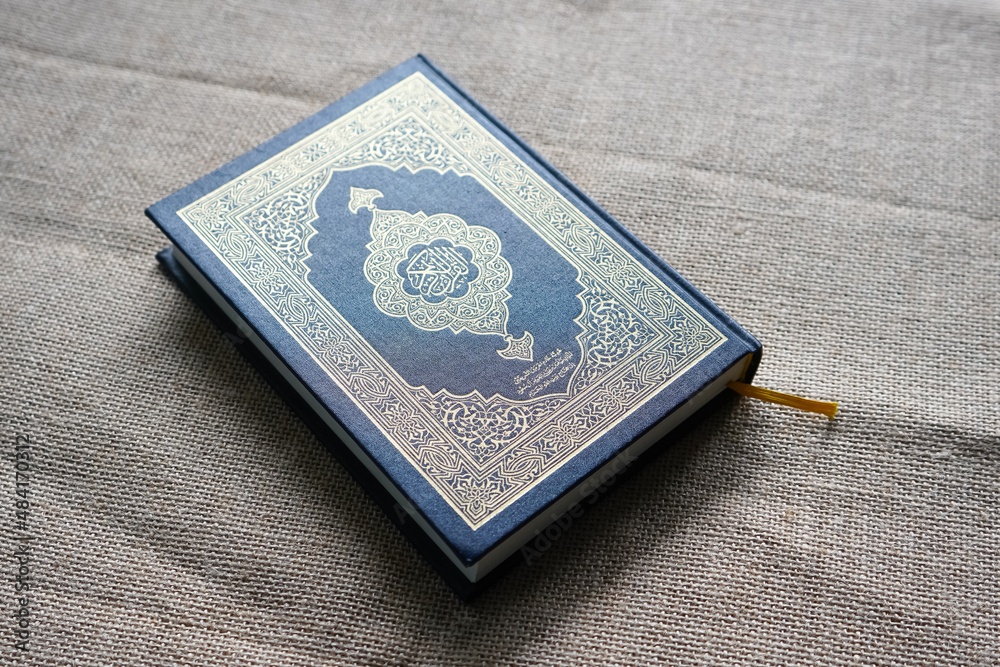
Obviously, we truly need to be reminded of the true purpose of the Quran. The Quran is not just a book to be recited and memorized but rather a source of guidance and wisdom that we should strive to understand and implement in our lives.

Decades ago, the late Sheikh Abubakar Mahmud Gumi (may Allah have mercy on him) authored his famous book of Tafsir titled “Returning the Minds to the Meaning of the Quran” (رد الاذهان الى معاني القرآن). The book was written at a time when many Muslims in our community had drifted far away from the core teachings of the Quran. Back then, the Quran was mostly read to seek blessings in ceremonies and other gatherings, and nothing more.

Just like many others, I benefited immensely from the radio broadcast of tafsir sessions of the late Sheikh. Ever since I listened to his Tafsir of Suratul Nur, I learned how Allah wants me to relate with different categories of women in my life, the etiquette of entering people’s houses, and the requirement to lower my gaze and not stare at women lustfully. Alhamdulillah.

Also, I learned about the high status of Aishah (an epitome of chastity), the Mother of the Believers (may Allah be pleased with her). The enormous lessons inspired me to memorize the Surah entirely. May Allah reward Sheikh Gumi with Jannah, ameen.

As Muslims, we badly need the Quran in our lives. Not only does it nourish our inner selves, but it also contains every guide for us to prosper in this Dunya and the hereafter. We must make deliberate efforts to benefit from the pure knowledge and guidance contained in the Quran.

The Quran is practical; it is meant to guide our complete life, be it our spiritual, social, or economic dealings. It is equally meant to guide our creed (belief), speech, and actions to that which Allah is pleased with.

In Majmu’ al-Fatawa 23/55, Sheikhul Islam Ibn Taymiyyah (may Allah have mercy on him) said:

‏”المطلوب من القرآن هو: فهم معانيه والعمل به، فإن لم تكن هذه همةُ حافظه لم يكن من أهل العلم والدين”.

“What is required with regards to the Quran is: To understand its meanings and act upon it, for if this is not the goal of its memorizer, the person cannot be considered among the people of knowledge and [complete] religion”.

Let us make the Quran our companion and guide in this life and the hereafter. In fact, we need the Quran today more than ever!

KSCB: Stop the release of Naburaska’s Igiyar Zato

By Ibrahim Uba Yusuf, PhD

Trends in the Hausa Film Industry often divide the industry sharply across socio-political lines. Interactions and production have also not been exclusive to the political dynamics of Northern Nigeria or Kano in particular. However, the recent development requires caution to avoid a relapse into conflict and violence.

On January 28th, 2024, I saw a short video clip of a popular actor-cum-politician, Mustapha Badamasi Naburaska. In the video of about two minutes, the actor announced his intention to release a film that would depict the aftermath of the 2023 Kano State Governorship Petition from the Tribunal to the Supreme Court. In the video, the actor further announced his intention to portray an ‘old man and a musician’ in a negative light.

To complement his pledge, the actor released a poster of the intended film called Igiyar Zato on his Facebook page and other social media platforms. The poster contains the name of the producer and the photograph of the lead fictional character adorned with artificial grey beards just to reinforce the political figure he intends to mock. Mocking a politician is not my problem. It is purely a political affair.

I am not a card-carrying member of any political party but rather a researcher and public affairs analyst interested in teaching and conducting research relating to the Hausa Home Video Industry. In fact, my PhD thesis focused on ‘Hausa Home Videos and Peacebuilding in Northern Parts of Nigeria’. These, I believe, provided me with an opportunity to understand some nitty-gritty and make informed remarks about trends in the industry. It is useful to point out that this write-up is not intended to support or discredit any political group. The essence is to draw the attention of regulatory bodies to a danger that needs their urgent attention.

Firstly, my concern is the use of grey beards in the name of mocking an individual. While the announcement and content of the film may sound pleasing to some of his comrades and supporters, it will hoist a red flag if such content could pass the rigorous screening at the Kano State Censorship Board.

The Beard Issue

The beard issue has been a subject of ridicule during the build-up to the 2023 Guber Election in Kano State. A section of the campaigners used the beard impression to ridicule a particular contestant during their public campaigns. After the pronouncement by the apex court affirming the victory of Engineer Abba Kabir Yusuf as the duly elected governor, members of his political party have been engaged in making skit performances in communities using the beard as a subject of emphasis. The skits were done in the name of celebration, to mimic the governorship candidate of the APC.

Igiyar Zato

Although the trailer of the film has not been released, if – at all – it is going to be produced and distributed, viewers and followers of Kano politics can easily predict scenes and the likely narrative it contains. From the different posters, viewers can deduce the direction, rationale and target group of the producer, Mustapha Nabraska. Of concern is the picture of Nabraska with a fictional grey beard. This depiction is a caricature of a recommended tradition of Prophet Muhammad (SAW). Muslims may find this satire offensive, an act of irresponsibility and tantamount to rupturing the peace beingenjoyed in Kano State. Making jest at the Prophetic tradition, consciously or unconsciously, is forbidden. Sufficient is verse 65 of Suratul Tauba. While other scenes of the film might be valuable sources of analysis in the field of political communication, indeed, this depiction can likely provoke and create preventable chaos.

What does the Kano State Censorship Board Law say?

The law establishing the Kano State Censorship Board (KSCB) as a statutory regulatory body is not silent on what should be portrayed in films and home videos. The intended production contravenes the religious beliefs of the people of Kano. The film glaringly incorporates a form of amusement and deliberately alters the creation of Almighty Allah to mock an individual, which is not approved in Islam. In fact, these are yardsticks that some religious scholars used to engender their position on the illegality of popular culture.

The law, as it is, frowns at depictions in films that are not in tandem with the culture and tradition of the Kano people. Even though the law mandates all producers to submit their films to the Board for censoring after the completion of production, there is a need to amend that clause and mandate producers to share their ideas at the level of conceptualisation with the Board to be appropriately guided. It is left for the Board to decide what to do with the film if the producer decides to submit a copy before release.

Abba Al-Mustapha should Act!!!

In the interest of peace, the KSCB, under the leadership of Abba Al-Mustapha, should discontinue the promotion and production of the film at all costs. This is given the potential damages it could cause to the volatile situation in Kano. The Muslim community in Kano and beyond are saddened by this irrational depiction and public display, which directly affects a cherished symbol of the Prophet of Islam Muhammad (SAW). In the same way, you thwarted the distribution and sales of Queen Primer in Kano. Please act fast now.

The KSCB remains the beacon of hope in preserving the culture and religion of the people of Kano, and we hope that it will continue to do so without fear or favour. The Board should avoid politicisation and preferential treatment of members loyal to the government and deliberately make Kano a difficult terrain for actors and musicians who align with the opposition.

I urge the Board to assess the film on the scale of cultural and religious values and their attendant consequences to Kano State’s peace. Already, people are aggrieved and have been registering their displeasure, specifically on the fictional beard, as a subject of ridicule in the post’s comment section on Facebook and other social media platforms. Some comments are inflammatory and may likely throw the State into chaos.

This is the time of political healing and concentration on fulfilling the myriad of campaign promises. Any distraction is uncalled for. As such, there is a need for the Board to provide policy direction to actors and musicians who have become stakeholders in political campaigns on how to produce content devoid of promoting hatred, public ridicule and rupture.

Ibrahim Uba Yusuf, PhD, lectures at the Department of Mass Communication, University of Maiduguri, and is the Director of Communications, Advocacy, and Outreach at the Centre for Media, Policy, and Accountability (CMPA). He can be reached at ibrahim.mcm@unimaid.edu.ng.

The rise of women’s indecency on social media

By Abbas Datti

Both Islamic and Hausa traditions instruct women to cover up their bodies and guard against indecency when it comes to dressing. But sadly, in the modern age of social media, the issue of indecent exposure of bodies by women on TikTok, Instagram, Facebook and other social media platforms has become a problematic issue.

It is sad to note that the ease with which social media allows people to post whatever content they wish to share has created and exposed potential Nicki Minajs and Rahama Sadaus living in the comfort zones of our different homes.

While many women use social media platforms to express themselves and market their commodities for trade, some choose to show their bodies for public viewing. One wonders how this Indecent exposure emerged, raising questions about the potential consequences and societal well-being

We must blame Hausa Kannywood actresses and Nollywood celebrities for promoting this indecency to boost their social media handles and gather many more followers. It has now become a usual trend, particularly on TikTok, to see girls of different age brackets dancing and shaking their asse, exposing their naked cleavages, thereby promoting provocative sexual desires in our youths. 

The portrayal of the woman’s body has recently found its way into public spaces through various social media platforms, prompting discussions on one’s reputation and its impacts on younger audiences.

This phenomenon has also sparked discussions on the responsibility of social media platforms to regulate content, with calls for stricter guidelines to maintain a balance between freedom of expression and preventing the normalisation of explicit content.

As conversations evolve, finding common ground that respects individual expression while considering the broader societal impact remains challenging. The digital age demands ongoing regulations about the changing norms and ethics of online behaviour, urging individuals, influencers, and platforms to reflect on their roles in shaping the online landscape.

Abbas Datti writes from Kano via abbasdatti448@gmail.com.

Ondo Deputy Governor: None like Tinubu in the South West – MURIC

By Muhammad Abdurrahman

The Muslim Rights Concern (MURIC), has concluded that there is none like President Bola Ahmed Tinubu among the governors and political leaders of the South West. This was a sequel to the appointment yesterday of Chief Olayide Adelami as the new deputy governor of Ondo State by Governor Lucky Ayedatiwa. 

The Islamic human rights organisation based its conclusion on the governor’s failure to pick a Muslim as his deputy despite demands to that effect from various Islamic bodies, including MURIC.

This position was made known in a press statement issued by the group’s Executive Director, Professor Ishaq Akintola, on Friday, January 26th, 2024.

The full statement reads:

“Governor Lucky Ayedatiwa yesterday appointed Chief Olayide Adelami, a Christian, as the new deputy governor of Ondo State. 

“This appointment, in our opinion, is a direct rejection of the appeals made by several Islamic organisations, including the Muslim community of Ondo State, which controls about 40% of the total population. It also mirrors the insensitivity of Governor Lucky Ayedatiwa to the yearnings and aspirations of Muslims in Ondo State. 

“The appointment further demonstrates the total lack of hypocrisy in the mantra of ‘religious tolerance’ as publicly brandished by Christian leaders and their politicians in the South West. If there is any scintilla of religious tolerance and inclusiveness, it has been coming from the Muslim politicians and the Muslim population in the region. 

“Whereas President Bola Ahmed Tinubu sought to embrace inclusiveness and religious tolerance by giving top appointments to Christians, none of the Christian governors in the South West reciprocated by giving Muslims a similar treatment. 

“Sanwo-Olu of Lagos gave the Christians 43 commissioners, but he gave Muslims a meagre 14. Dapo Abiodun of Ogun State gave Christians 16, but he gave Muslims only 4. In Oyo State, Seyi Makinde gave Christians 10 commissioners but gave Muslims 6. 

“The worst is Osun State, where the Christian governor, Ademola Adeleke, keeps deceiving the people that he is a Muslim. He also has a Christian deputy. That is the extent of executive fraud. Despite this Christian-Christian ticket in Osun State, the number of Christian commissioners is 17, while that of Muslims is just 7. 

“Ondo has 15 Christian commissioners against only 2 Muslims while Christian commissioners in Ekiti are 24 while the Muslims have 1 (one) only. 

“Who is like Tinubu among the six Christian governors in Yorubaland? There is none. Who can treat Yoruba Muslims with the same magnanimity which Tinubu extended to Christians at the federal level? None that we know of. 

“History will attest to Tinubu as the Muslim president who extended inclusiveness to hitherto hostile Christians. The annals will register Ayetilewa as the Christian governor of Ondo, who could not stomach the thought of having a Muslim deputy. Chroniclers will not spare the intolerant Christian governors of Lagos, Ogun, Oyo, Osun and Ekiti, who used their proverbial teeth to share the common patrimony of the South West but whom only Allah knows what they kept for their Christian brethren.

“Muslims are under heavy siege in the South West. They have become endangered species, oppressed, depressed, repressed, underemployed, overworked, underpaid, mere fish for evangelical fishermen, falcons caged for the falconer.”

Islam and the conservation of natural resources

By Abubakar Idris Misau

“…Muslims need to look no further than the Quran for guidance, where there are approximately 200 verses concerning the environment.”  — Ibrahim Ozdemir

Asked about what Islam has to say about the conservation of natural resources, here is my take: Like the secondary school students who would want to start arguing their points by defining the key terms of their topics, this writer defines Islam, conservation, and natural resources before connecting the dots. However, the terms are concisely defined, requiring only the essential information for even those unfamiliar with the terms to understand their existence. By defining the terms, the writer intended to allow as many classes of readers to take a message home from the article as possible. 

Meanwhile, unlike in the case of secondary school students, the intent of this article is not to score points but to reiterate, for it has often been neglected that Islam is the most compatible religion to science and remains the mother of many scientific disciplines. The religion explains and advocates for the conservation of natural resources – to say mildly. 

Islam, not because it was founded some 145 decades ago, but because it is often defined as such, is the Abrahamic monotheistic religion centred on the Qur’an and the teachings of the Prophet Muhammad Sallallahu Alaihi Wasallam. It has five pillars and six articles of faith. With the followers of this faith, called Muslims, numbering close to 2 billion worldwide, Islam is not only universally seen as the second-largest but also the fastest-growing religion in the world.

Collectively referred to as Ummah, Muslims believe that their religion, a Deen or comprehensive way of life, is the complete and universal version of a primordial faith revealed many times through earlier prophets such as Adam, Nuhu (Noah), Ibrahim (Abraham), Musa (Moses), and Isa (Jesus) may peace and blessings be upon them all. Perhaps in the most concise edition, this can be said to be the meaning of Islam.

Conservation, however, carries different meanings depending on the time and situation in which it is used. For example, the meaning it conveys in the sciences as physics is not the same as that which it takes in arts. Meanwhile, in this essay, the meaning relating to natural resources is strictly considered. It is thus the triangle of protection, management and wise use of the resources in question for the benefit of current and coming generations. The natural resources meant to be conserved are the tangible and intangible materials drawn from nature – which are utilised with little to no alteration. Examples of such resources include vegetation, wildlife, land, water, sunlight and so on.

Given the above definitions, this article suggests that Islam as a religion and a way of life speaks about natural resources and even strongly preaches that they must be protected, managed and wisely used.

While there is no one place in the Qur’an where it is said, “Oh you who believe do well to conserve your forests…” and or that failure to protect wildlife could amount to crumbling in the fire of Jahannam; evidence from the same book and other sources such as the tradition of the Prophet (Sunnah) are very clear and enough to debunk [to say mildly] any opinion that is against conservation of natural resources – at least from Islamic viewpoint.

To start with, Allah The Exalted [SWA] says in Surah Yunus, Qur’an chapter 10 verse 14, “Then we made you trustees (Khalifa) on the earth after them, to see how you would act.” Other verses, such as in Surah Al-Ahzab (Q 33:72) and Surah Al-An’am (Q 6:165), directly emphasise the same message. In line with this, the Prophet [PBUH] said, “The world is a beautiful and verdant, verily God, The Exalted, has made you His stewards in it, and He sees how you acquit yourselves” (Saheeh Muslim).

According to Muhammad A. Chakaki, an independent environmental consultant and a founding member of the American Green Muslims in the Direct, that man is made the khalifa, trustee, steward, successor, custodian, …name it, “does not mean absolute power of humans over nature. … It is a trust, an immense responsibility.” Indeed, Chakaki’s explanation of this stewardship could hardly be far from the truth. 

For in Surah Al-Ahzab, chapter 33, verse 72, Allah [SWA] says, “Verily, We offered the entrusted property (Amana) to the heavens, and the Earth/land, and the mountains; but they refused to undertake it, being afraid thereof: but man undertook it;- He was indeed unjust and foolish.” As man is allowed to use the natural resources upon which he is made a custodian, being warned against using it extravagantly presents stewardship as a double-edged sword: remaining as an honour whilst also a test.

At the heart of the famous George Washington University stands the Islamic Studies Professor Seyyed Hossein Nasr. Of the highest order, Nasr is a faculty, an environmentalist, a philosopher, and an author of more than 50 books and over 500 articles. The erudite scholar expresses his environmental philosophy in terms of Islamic Environmentalism and Resacralization of Nature. According to the more-than-90-year-old distinguished academic, environmental crisis cannot be understood, much less solved, without a wider spiritual approach. In his view, man must humble himself as the steward he is and stop the dictatorial approach in his relationship with nature. [See, for instance, his book ‘Religion and the Order of Nature’].

While many of Nasr’s propositions are frowned at and thrown to the dust bin, labelled as too unscientific and religiously induced – because ours is an over-obsessed-with-technology sort of a world – the very idea that environmental crisis is a self-inflicted wound caused by human activity, remains a universal convention. Surah As-Shura has it all said: “And whatever misfortune befalls you, it is because of what your hands have earned…”

However, influenced by Nasr, in an opinion published by Aljazeera, a renowned environmentalist and a professor of philosophy at Uskudar University Turkey, Ibrahim Ozdemir said, “Islam teaches its followers to take care of the earth.” And that in his opinion, the one simple yet neglected solution to the environmental crisis is ‘interpreting the issue from an Islamic perspective’.

In this line of thinking, when this writer [of this article] writes, he shall discuss Hima (Protected Area), Waqf (Endowment), and Israf (Prohibition of Wastefulness), among other natural resource conservation concepts – from an Islamic viewpoint. Meanwhile, suffice it to say that climate change and its resulting environmental crisis are real, and Almighty Allah says in Surah Al-Ra’ad, “… Verily, Allah does not change the condition of a people unless they change what is in themselves…” [Q 13:11].

Abubakar Idris Misau, a graduate of Forestry and Wildlife from the University of Maiduguri, writes from Yola, Nigeria. He can be reached via email at abubakaridrismisau@gmail.com.

MURIC condoles Zulum on death of Isa Gusau

By Muhammad Abdurrahman

Mallam Isa Gusau, the spokesperson of the governor of Borno State, died two days ago in faraway New Delhi, India, after a protracted illness. Meanwhile, the Muslim Rights Concern (MURIC) has commiserated with Governor Babagana Umara Zulum. 

In a statement issued on Saturday, 13th January 2024, by the group’s Executive Director, Professor Ishaq Akintola, MURIC urged the governor to take Gusau’s death in the spirit of the philosophy of death in Islam: ubiquitous, unavoidable and necessary end.

The human rights organisation also condoled the Shehu of Borno, Alhaji Abubakar Ibn Umar El-Kanemi, and the entire Borno Muslim Community. 

Akintola described Gusau’s death as painful and a heavy loss. He also described the deceased as a devoted Muslim, a professional to the core, a humanist, an idealist and a principled family man. 

He prayed for Allah’s forgiveness and al-Jannah Firdaus for Mallam Isa Gusau. He also prayed that members of the deceased’s family, friends and acquaintances would have the fortitude to bear the irreparable loss. 

Rethinking my legacy: How our local tradition wowed Western intellectuals at an Ivy League University

By Umar Sheikh Tahir (Bauchi)

Columbia is an Ivy League University, one of the eight most prestigious institutions in the United States of America. Ph.D. students at this university undergo two years of coursework. One of the classes I took was Islam, Knowledge and Forms, which a visiting professor from Germany taught. Part of the course is a library visit to the exhibitions section under the project of Islamic Sciences, Science, Nature, and Beauty: Harmony and Cosmological Perspectives in Islamic Science (2022) at Butler Library, the largest library of Columbia University with millions of resources. 

The exhibition contained objects, images, rare manuscripts, and other learning materials. Two materials, among others, became the most astonishing factors in the exhibition: one of them is a rare copy of the Holy Quran, and the second is a locally handmade wooden tablet (Allo).   

The instructor asked everyone to talk about any material in the exhibition. Students gave their feedback on the experiences passionately; different things wowed everyone. When it came to my turn as someone who had known these items since childhood in my father’s private library, where we sneaked as children, which housed similar treasures. To us, these are the most useful items in his library as we do not read books; we only view images and magazines, such things that are not viewed as essential to the readers. Then, I shared my familiarity with these items, telling them I was exposed to most of the exhibited materials from my upbringing in Northern Nigeria, including “rare manuscripts” of the Quran. 

The Quran displayed was a giant copy of the original Uthmanic Quran, denoted to the third Caliphate of the Muslim nations who reigned (644/23H–656/35H). It was so amazing to all of us. As for me, the Quran is the most frequently read book in my entire life, and to their surprise, I can read this copy fluently without diacritical marks. I highlighted that memorising the holy Quran, even without understanding Arabic, is common in Northern Nigeria.  Most of my fellows never knew that sometimes people memorise it at an early age. I did not shock them with that, as I am one of them. 

In the second incident, Professor Brinkley Messick invited me to speak in his class on Islamic Shariah Law as someone with experience with an Islamic Madrasa background and went to Azhar University in Egypt. The theme of the class is the Islamic madrasa. He is interested in the Islamic tradition, as evident from the cover of his book, “Calligraphic State.” 

Allo

The Professor brought Allo a wooden tablet to the class and circulated it to students. Everyone was looking at it with surprise. I named it to them as a personal tablet for inscription and memorisation of the holy Quran, and the students asked for more details. I said we write verses from the holy Quran for memorisation after repeating it several times; not everyone understands how that works, except those with Islamic background. However, when I told them when we wash the script, we drink it, everyone was left with open mouths, surprising our embodiment of the holy book, including the professor. They could not process as modernised individuals with high sensitivity to germs and bacteria. Again, as I told our class last semester, this is very common in Northern Nigeria. 

Coincidently, one of the attendees from a Saudi background added that people used some scripts for Talismite and protection from Djinn (Ruqyā in Arabic or Ruqiyya in Hausa) by reciting some verses in water. I told her this is true; we have that part in our culture too, but the biggest part is that we drink washed script for the embodiment and show respect for not letting a drop of that water on the ground as a sacred word. As kids, we were told that whatever verses we memorise from the holy Quran and drink will stay in our hearts for a long time.

In reference to that, American Professor of Islam in Africa Rudolph Ware published his book Walking Quran on the Madrasa system in West Africa. He referred to those Quranic students’ embodiment as the Walking Quran in relation to the narration of the Hadith reported in the books of Hadith such as Ṣaḥīḥ Muslim; Aisha was asked about Prophet Muhammad’s PBUH character, and she said he was a Walking Quran.  

Our cultural legacy, often undervalued by some of us in our region, gained recognition at Ivy League institutions. Those people appreciate a centuries-old Quranic educational tradition or Almajiri system and show their respect to our subregion. Even our way of drinking the washed script of the Quran mesmerised them. 

A professor dedicated his projects to studying a school system called Daara schools in Senegambia or the Tsangaya schools in Northern Nigeria, making it evident that our legacy is an astonishing point to those communities. Then, as indigenous Africans who were introduced to the colonial system of Education less than a century ago in Northern Nigeria, we should be more proud of our system by appreciating those communities who choose to preserve it, as they make our subregion a central point of high intellectual conversation around the world. 

We should not deny our legacy by stigmatising the Almajiri system of education. Instead, we should support it and create a way of modernising it to empower and preserve our centuries-old legacy.  Whoever shows kindness to the Quran and its reciters will receive people’s applauses in this life, including Western intellectuals, and God’s reward in the hereafter. Thanks to those state governments in Northern Nigeria who support and recognise this system of education.

Umar Sheikh Tahir is a PhD student at Columbia University, New York, USA. He can be reached via ust2102@columbia.edu.

Allow married women to bear their fathers’ names – MURIC 

By Abdurrahman Muhammad

A call has gone to the Federal Government for a reform of Nigerian marriage laws that will allow married women to bear their fathers’ names. Making the call was an Islamic human rights advocacy group, the Muslim Rights Concern (MURIC). 

A statement signed by the group’s director, Professor Ishaq Akintola, on Monday, 18th December 2023, described the current practice whereby married women are forced to bear their husbands’ surnames as gender discriminatory, archaic and oppressive. 

MURIC condemned the current practice for depriving women of their Allah-given fundamental human right to personal and parental identity in marriage. The group advocated the adoption of the women-friendly Islamic practice, which allows married women to bear their fathers’ surnames after marriage. 

The full statement reads:

“Our attention has been drawn to the plight of married Muslim women who are being disallowed by employers from bearing their fathers’ names. This amounts to forceful enslavement, denial of Allah-given fundamental human right to parental identity and wrongful dismissal of loco parentis.

“We condemn the current practice for three major reasons, namely, for generating confusion in the society, for creating a monumental identity crisis among married women and for depriving women of their Allah-given fundamental human right to personal as well as parental identity in marriage.

“Instead of this, we advocate the adoption of the women-friendly Islamic practice which allows married women to bear their fathers’ surnames after marriage. 

“No woman dropped suddenly from the sky, and even if some appear out of nowhere, they must have been born, bred, nurtured, buttered and marmaladed by certain parents before they grew up and matured into womanhood. Their education was also sponsored by their parents at a time when the future husband probably knew nothing about them and spent no kobo on their upbringing and their education.

“It therefore beats logic, fairness and natural justice that a husband appears out of nowhere to commandeer a woman’s parental identity simply by marrying her. Such identity robbery also has its advantages. 

“For instance, women who are educated are forced to advertise change of names to their husbands’ surnames after marriage in order to retain the validity of their documents and properties. It often becomes very difficult and sometimes impossible for married women to be located or to retain old friends due to such a change of name. 

“Those who want to be sincere among married women today will confirm the stress they have gone through from this experience. Islam sets women free from such stress by permitting married women to retain their original family names.

“Contrary to the general claim that Islam discriminates against women, Islamic liberation theology actually teaches respect for the dignity of women in all circumstances. One of such circumstances is the period when women are in wedlock. Whereas Western civilisation robs married women of their original family identity by insisting that they should bear their husbands’ surnames, the Shari’ah allows women to bear their own fathers’ names even after marriage. 

“We therefore invite the Federal Government and other relevant authorities to set the machinery in motion towards allowing married women to bear their fathers’ names. In particular, we charge both houses in the National Assembly, the Senate and the House of Representatives, to introduce the necessary bills that will set Nigerian women free from undue masculine domination.

“This advocacy is not for Muslim women alone. We are certain that Muslim women are not the only ones who feel the pinch. MURIC would love to see every married woman who desires to be identified by her father’s name enabled to do so. Our lawmakers should frame the clauses in such a way that all women can enjoy the freedom to choose between bearing their fathers’ names or their husbands’. It is time to set Nigerian women free. They are the mothers of our society.

“We contend that the whole gamut of women’s liberation struggle boils down to a sham and a mirage until this goal is achieved. A married woman is not a slave. She is not just a dot in social statistics. She has a soul, and that soul yearns for love. She covets to love and be loved, not only by her husband but also by her family and vice versa. Nigeria must not fail her. Parental identity is sacrosanct. Husbands can never replace fathers in matters of parental identity, and that is what the current system compels women to go through. Enough is enough.”

Electoral victory: Whose Addu’a does Allah accept?

By Mohammad Qaddam Sidq Isa (Daddy)

There is a general but simplistic assumption that electoral victory necessarily implies Allah’s endorsement of the winner and His disapproval of the loser. 

Politicians, potential beneficiaries of the electoral victory of politicians, and overzealous followers engage in supposedly wholehearted Addu’a for their and their benefactors’ electoral victory.

The practice of Addu’a for electoral victory has grown into a phenomenon and has indeed become an integral part of politicking in Nigeria. It has, in fact, turned into an industry of a sort where huge amounts of resources are invested in engaging amateur, part-time and professional Addu’a service-providing malamai who provide their services to the highest bidders or whom they expect higher gain from them of whatever kind.

Besides, with the growing phenomenon of holding the so-called special prayer sessions in public places for the success of one politician or another, the ‘political Addu’a industry’ has been growing further, attracting more investments from politicians. This is even though such so-called special prayer sessions bear the hallmarks of Bid’a.

On their part, winners in elections and their followers brag that their electoral victory necessarily implies Allah’s acceptance of their Addu’a hence His endorsement of them. They equally mock their opponents and attribute their loss to Allah’s disapproval of them. Whereas, in reality, nobody knows for sure whether or not a particular electoral victory implies Allah’s endorsement, or whether or not a particular loss implies His disapproval.

Because the fact that politicking under democracy is inherently characterized by gross dishonesty, hypocrisy, cunning, deceitfulness, bribery and other serious vices, which arguably all politicians perpetrate in their struggle to outmanoeuvre one another, makes the whole system too filthy for Allah to have anything to do with it, in the first place,  let alone endorse any politician against another.

The winner, therefore, only wins thanks to his ability to somehow outdo his opponents in that regard, and the losers only lose due to their failure to outplay the winner, while none enjoys Allah’s endorsement, for all are equally guilty of the same grave sins, regardless of the extents of their involvements, respectively. After all, they actually never take Addu’a seriously in the first place; they only feign commitment to it in the context of their manipulation of religion for political interests.

Electoral victory under democracy is just like winning in gambling, which obviously never implies Allah’s endorsement.

Though craving for power and the temptations of what comes with it are irresistibly tempting, they aren’t worth the price of politicking under democracy, with all that it entails, which those involved pay in the hereafter. 

Mohammed Qaddam wrote via mohammadsidq@gmail.com.