Muslims

An assessment of Gov. Kefas’s administration’s one year in office

By Abdulrazak Iliyasu Sansani

I had not written anything for publication in a while. I had been occupied with things that reduced my little intervention on critical issues, which I have done over the years. However, I believe it won’t be right if I do not express myself and forward my position at this material time for posterity. This may be misconstrued or rightly received as my little contribution to the progress of our beloved state.

Governor Agbu Kefas’s administration has started on a good footing based on the yardstick of development in nature’s gift to the nation. The last few years have been extremely tough for Nigeria as a nation. This was compounded in the state by how the previous administration had handled the affairs of the state.

Hence, it is a complete deviation from the recent past and a potentially breakthrough moment for the state that has everything to be one of the most developed states, with years of constant progress judging by how endowed the state is.

However, despite modest attempts by successive administrations, the state has not sailed through.  Thus, it is yet to prevail over the tempestuous murky waters of politics, let alone be set for developmental strides worthy of the state’s potentialities.

Governor Agbu Kefas came into power at the most polarised moment in our history. The state was sharply divided along religious, toxic partisan, and ethnic lines. All those in the state during the electioneering period witnessed it as akin to a war. The worst of Tarabans came to bear most glaringly. The quest for power destroyed relationships that had taken decades to build.

Therefore, the next governor of Taraba would meet strenuous tasks and a problematic start that could threaten to crumble what was left of the state. It would take extraordinary leadership acumen to overcome those things that have characteristically held up the state.

On 29 May 2023, Gov. Agbu Kefas assumed office as the governor of Taraba State, having been declared the winner of the 18 March 2023 Gubernatorial election. Legal battles ensued, and questions were raised about the credibility of the electoral victory. This is a major blame game point for leaders who do not want to work.

One that could be used as an excuse to cover for incompetence and outright leadership failure.  However, the governor chose otherwise to lessen the heated polity and unite the people by inclusion. This resolve to give Tarabans a sense of belonging by appointing more diverse Tarabans into various offices across the state has given Tarabans a new lease of life to participate more in acts that move the state forward.  Of course, the hitherto neglected have every reason to believe things can improve.

This ushered in an era when abandoned projects like the modern abattoir in Wuro Sembe, the most sought-after minimum wage that some states had implemented, and Taraba joined that masses-centred list with the governor’s pronouncement on the implementation of minimum wage.


The removal of the Petroleum Subsidy by Mr President, a single decision that has had far-reaching consequences on our economy, the people of Taraba state received the news of the implementation of the minimum wage with utter joy, as it would help in cushioning the effects of the hardship, pending on the completion of discussion on a new minimum wage to meet the realities of the moment by the Federal government and the labour union.

Governor Dantala Kefas has done relatively well in so many sectors that I am brimming with hope of a new, better, more inclusive Taraba where every  Taraban can aspire to become anything and live in an atmosphere conducive to their personal growth and collective development. This is most apparent in the education sector, where I am most concerned.

The Kefas administration has made education the cornerstone of its agenda. This has proved not mere rhetoric, as primary and secondary education have been free. This has drastically reduced the number of out-of-school children, reducing the likelihood of having children who could constitute a nuisance to society and fundamentally helping the state’s security. The administration has slashed a whopping 50℅ of the tuition fees in the state-owned tertiary institutions, reducing the financial burden on the parents in this cash-strapped country.

The administration has gone ahead to effect some major infrastructure changes, renovating and building infrastructures in the state’s owned institutions: Taraba State University,  College of Nursing and Midwifery, and College of Agriculture, which had yarned for development for decades, with little executed. Education is the bedrock of all development, as it is widely known and accepted. The Kefas administration has gotten it right by making it a core part of its administration agenda and going ahead and walking the talk.

Recently, the governor decided that all government principals would be given official cars. I have seen some objecting to it. I think it is the right step in the right direction. Teachers are nation builders and deserve to be treated as such. If elected and appointed government officials are given official vehicles, and we see nothing wrong with that, we should see nothing wrong with the same treatment to provide principals, who toil to pass knowledge and incalculate morals that build students who shape the destiny of our nation.

For Gov. Agbu Kefas, he has started well, given our history as a state, the state’s debt profile and the nation’s economic challenges. I can only employ him to do more, especially in areas of rural roads. This will open up the state more, allowing local farmers to sell their farm produce without much hassle. This singular effort will create room for more investors to come in. Agriculture alone can change the economic narrative of our state, let alone combined with other sectors, such as tourism and mining, to mention a few.

I come from a farming community, Sansani, Wuro Jam Ward, Gassol Local government, which has an unmotorable road. A deathtrap has hindered the village’s substantial Agricultural potential and denied so many farmers an opportunity to enjoy their hard-earned money. Massive amounts are always kept to pay exorbitant fares to transport their produce to the nearest big market.

Taraba is an Agrarian state. Farming communities like Sansani, Gassol, Wuro Jam, Sendirde, Takalafiya, Sheka, Dakka, Karim Lamido, and Kurmi, to mention a few, deserve to have good and qualitative roads that open up the state for more economic activities and accelerated economic growth, which translate to actual economic development.  Governor Kefas has started well. He should not deviate. I admonish him to keep increasing the tempo; he will leave a good legacy. Power is transient.

Abdulrazak Iliyasu Sansani is a former TV Presenter and producer at Haske TV, Jalingo, Taraba State.

My earliest memory of Eid

By Aisha Mohammed Danpullo

 We were sent to get cooking oil from a house nearby. My cousin and I wore a popular Malaysian Hijab with trimmed lace at the edges and a rope around the back. We were so excited to have a ram that year (I come from a humble background). 

We were eager to watch the ram we had crowded around for days, feeding, watering and cleaning its poo. Finally, we were going to watch as it got slaughtered. I, for one, was most excited for the blood that would come gushing out as it took its last breath.

We went to the oil merchant’s house and met the husband, the head of the house with his kids around him, about to make his sacrifice. He was about to slaughter three fat fish. He had it held down by his eldest son as it squirmed just the way one would slaughter a ram.

The kids were all excited; the wife was humbled and a little bit ashamed, probably because of our presence, spilling the oil she measured with beer bottles serving as a measurement for a litre. It’s quite ironic because beers are banned in our part of the country, but somehow, the bottles are always found in every oil merchant’s shop, and their origin is never questioned.

The family generously offered us some, but we wouldn’t take it because there wasn’t enough for them to share.

Every year during Eid, I think of that family, wondering how they are doing and hoping life has become better for them and that they get to eat ram some year.

Aisha Danpullo wrote from Kano via aishamohammaddanpullo@gmail.com.

VP Shettima, Kadafur, Shehu lead Muslim faithful in eid prayer

By Abdullahi Khairallah

Vice President of Nigeria, Sen. Kashim Shettima; Borno State Acting Governor, Hon. Umar Usman Kadafur; and the Shehu of Borno, HRH Dr. Abubakar Ibn Umar Garbai Elkanemi, led thousands of Muslim faithful to observe Eid prayers in Maiduguri.

The two raka’at prayers were led by the Chief Imam of Borno, Imam Shettima Saleh, at Ramat Square, Borno’s central Eid ground.

Other dignitaries include Senator representing Borno North, Sen. MT Monguno; Speaker of the Borno State House of Assembly, Rt. Hon. Abdulkareem Lawan; Minister of Agriculture and Food Security, Sen. Abubakar Kyari; former Deputy Governor, Hon. Usman Mamman Durkwa; Members of the State House of Assembly; Hon. Commissioners and Members of the State Executive Council; Special Advisers; Senior Special Assistants; and Special Assistants.

Delivering his Eid sermon, Imam Shettima reiterated the importance of peaceful coexistence and prayed for a bountiful harvest as the cropping season begins.

Shortly after the prayer, the Acting Governor thanked Almighty Allah for making it possible to witness yet another Eidul Adha while congratulating the Muslim Ummah for the successful Eid prayer.

“Secondly, we want to wish all those who traveled to Saudi Arabia a successful and rewarding Hajj exercise. May Allah accept all their prayers,” Kadafur said.

He further urged Muslims to be law-abiding, peace-loving, and enjoined them to use this occasion for sober reflection and prayer for lasting peace in the state.

Prayers were offered for the restoration of total peace in Borno, the northeast, and the entire country.

Northern Nollywood, Southern distorted mirrors: Nollywood and the rest of us

By Prof. Abdalla Uba Adamu

Recently, an extremely prestigious academic journal requested that I review a film made by a Nigerian. I was surprised, as that is Muhsin Ibrahim’s forte. Further, I really don’t watch Nigerian films, aka Nollywood, personally preferring African Francophone directors. Nevertheless, I agreed to do the review. 

However, the link they sent for the film was password-protected. I informed them, and they requested the filmmaker to send the password. Being a request from a highly prestigious journal, he sent the code, and I was able to get on the site and watch the film online. I was surprised at what I saw and decided to delve further into these issues. Before doing that, I wrote my review and sent it off. The film, however, set me thinking. 

Like a creeping malaise, Nollywood directors are rearing their cameras into the northern Nigerian cultural spaces. Again. The film I reviewed for the journal was “A Delivery Boy” (dir. Adekunle Adejuyigbe, 2018). It was in the Hausa language. None of the actors, however, was Hausa, although the lead actor seems to be a northerner (at least from his name since an online search failed to reveal any personal details about him). 

Nothing wrong with that. Some of the best films about a particular culture were made by those outside the culture. Being ‘outliers’, it often gave them an opportunity to provide a more or less balanced and objective ‘outsider’s perspective’ of the culture. Alfonso Cuarón, a Mexican, successfully directed “Harry Potter and the Prisoner of Azkaban” (2004), while Taiwanese director Ang Lee did the same with “ Brokeback Mountain” (2005), even earning him an Oscar. 

In 2006 Clint Eastwood, an American, directed “Letters From Iwo Jima.” The cast was almost entirely Japanese, and almost all of the dialogue was in Japanese. It was very well-received in Japan, and in fact, some critics in Japan wondered why a non-Japanese director was able to make one of the best war movies about World War II from the Japanese perspective. Abbas Kiarostami, an Iranian filmmaker, directed his film, “Certified Copy” (2020) in Italy, which contained French, Italian, and English dialogue starring French and British actors. 

British director Richard Attenborough successfully directed Ben Kingsley in the Indian biopic Gandhi (1982). The film was praised for providing a historically accurate portrayal of the life of Gandhi, the Indian independence movement and the deleterious results of British colonization of India. It took away eight Oscars. American director Steven Spielberg’s “Schindler’s List” (1993) on a German, Oskar Schindler, was equally a powerful portrayal of an auteur genius by a “non-native”. The film won seven Oscars. 

In each of these examples, the directors approached their subject matter with a clean, fresh and open mind that acknowledges the cultural sensitivities of the subject matter. My point is that a person, outside of a particular cultural context, can make sensitive films that portray the culture to his own culture as well as other cultures. That is not, however, how Nollywood plays when it focuses its cameras on northern Nigerian social culture. Specifically Muslims. 

I just can’t understand why they are so fixated on Muslims and the North. If the purpose of the ‘crossover’ films (as they are labelled) they make is to create an understanding of the North for their predominantly Southern audiences, they need not bother. Social media alone is awash with all the information one needs about Nigeria—the good, the bad and the ugly. You don’t need a big-budget film for that. Or actors trying and failing to convey ‘Aboki’ accents in stilted dialogues that lack grammatical context. 

Yet, they insist on producing films about Muslim northern Nigeria from a jaundiced, bigoted perspective, often couched with pseudo-intellectual veneer. To sweeten the bad taste of such distasteful films, they pick up one or two northern actors (who genuinely speak the Hausa language, even if not mainstream ethnic Hausa) and add them to the mix, believing that this will buy them salvation. For southern Nigerians, anyone above the River Niger is ‘Hausa’. 

They started in the early 2000s, and people just ignored them. The directors then included Oskar Baker (Ɗan Adamu Butulu, Abdulmalik), Yemi Laniyan (Makiyi, Uwar Gida), Tunji Agesin (Halin Kishiya), Matt Dadzie (Zuwaira), I. Nwankwo (Macijiya) and many others. These came on the heels of the massive success of “Sangaya” (dir. Aminu Muhammad Sabo, 1999) when this particular film opened up the northern Nigerian film market. 

Those Nollywood producers jumped into cash on the popularity of Hausa films and made their own for northern markets. For the most part, these early ‘crossover’ films that I refer to as ‘Northern Nollywood’ were fairly mild and evoked no reaction. They were still rejected, as the Hausa can be the most discriminatory people you can come across. If you are outside their cultural universe, you remain there. Forever. 

The few Kannywood actors eager to be seen on the ‘national stage’ allowed themselves to be used to deconstruct Islam and Muslims on the altar of filmmaking in subsequent Northern Nollywood films. Let’s not even talk about character misrepresentation, which Muhsin Ibrahim has written extensively about. In these scenarios, the usual tropes for northerners in Nollywood films is that of ‘Aboki’ (a term southern Nigerians believe is an insult to northerners, without knowing what it means), ‘maigad’ (security), generally a beggar. If they value an actor, they assign them an instantly forgettable role rather than a lead. Granted, this might be more astute and realistic marketing than ethnicity because it would be risky to give an unknown Hausa actor a significant role in a film aimed at southern Nigerians. 

A few of these types of portrayals in Nollywood included Hausa-speaking actors in films such as The Senator, The Stubborn Grasshopper, The World is Mine, Osama Bin La, Across the Border and The Police Officer. 

When Shari’a was relaunched from 1999 in many northern Nigerian States, it became an instant filmic focus for Nollywood. A film, “Holy Law: Shari’a” (dir. Ejike Asiegbu, 2001) drew such a barrage of criticism among Hausa Muslims due to its portrayal of Shari’a laws then being implemented in northern Nigeria that it caused credibility problems for the few Hausa actors that appeared in it. With neither understanding of Islam nor its context, the director ploughed on in his own distorted interpretation of the Shari’a as only a punitive justice system of chopping hands, floggings, and killings through foul-mouthed dialogue. As Nasiru Wada Khalil noted in his brilliant essay on the film (“Perception and Reaction: The Representation of the Shari’a in Nollywood and Kanywood Films”, SSRN, 2016) “the whole story of Holy Law is in itself flogged, amputated and killed right from the storyline.”

“Osama bin La” (dir. MacCollins Chidebe, 2001) was supposed to be a comedy. No one found it funny in Kano. Despite not featuring any northern actor, it was banned in Kano due to its portrayal of Osama bn Ladan, then considered a folk hero. The film was banned to avoid a reaction against Igbo merchants marketing the film. I was actually present in the congregation at a Friday sermon at Kundila Friday mosque in Kano when a ‘fatwa’ was issued on the film. Even a similar comedy, “Ibro Usama” (dir. Auwalu Dare, 2002), a chamama genre Hausa film, was banned in Kano, showing sensitivity to the subject matter. 

The reactions against crossover films seemed to have discouraged Nollywood producers from forging ahead. They returned in the 2010s. By then, northern Nigeria had entered a new phase of social disruption, and Nollywood took every opportunity to film its understanding of the issues—sometimes couched in simpering distorted narrative masquerading as social commentary—on society and culture it has absolutely no understanding of. 

In “Dry” (dir. Stephanie Linus, 2014), the director developed a sudden concern about ‘child marriage’ and its consequences. Naturally, the culprits of such marriage, as depicted in the film, are sixty-year-old men who marry girls young enough to be their granddaughters. The director’s qualification to talk about the issue (which was already being framed by child marriage controversy in the north) was that she has ‘visited the north’ a couple of times. With the film, if she could get at least “one girl free and open the minds of the people, and also instruct different bodies and individuals to take action, then the movie would have served its purpose.” The ‘north’ was living in darkness, and it required Stephanie Linus to shed light on ‘civilization’. 

 “A Delivery Boy” (dir. Adekunle Adejuyigbe, 2018) that I reviewed was about an ‘almajiri’ in an Islamic school who was kidnapped from the school, to begin with and repeatedly raped by his ‘Alamaramma’ (teacher). The almajiri somehow acquired sticks of dynamite to create a suicide vest and vowed to blow himself up—together with the teacher. The Alaramma in the film lives in an opulent mansion, far away from the ‘almajirai’. In this narrative universe, the ‘almajiri’ do not learn anything and are unwilling rape victims of their teaches who actually kidnapped them and forced them into the schools. 

“The Milkmaid” (dir. Desmond Ovbiagele, 2020) evokes the idealistic picture of a Fulani milkmaid and became a basis for a Nollywood film. Instead of focusing on the political economy of the Fulani milk trade, the film focused on the trope of terrorism. “The Black Book” (dir. Editi Effiong, 2023), touted as ‘Nigeria’s John Wick’ shoots a significant portion in ‘the north’ – with ‘Islamist’ hijab-wearing females touting assault rifles hidden underneath their hijab. “Jalil” (dir. Leslie Dapwatda, 2020) visits the recurrent theme of kidnapping for ransom. In the north, of course. 

Then came the latest, “Almajiri” (dir. Toka McBaror, 2022). Claimed to be a true-life story (although it is not clear whether it happened to specific people or based on what the director believed to be a common event), it featured muscle-bound badass types of thugs with guns and dreadlocks as Almajirai. The film reinforces the southern Nigerian trope of any beggar in the north being an Almajiri. Such ‘almajiris’ are kidnapped and sold into virtual slavery and horribly abused. The idea is to blame the parental irresponsibility of northerners. 

For southern Nigerians, especially the Nollywood crowd, an ‘Almajiri’ is a beggar, a product of a failed education system, a terrorist, a bandit, and an ‘aboki’. They use concocted figures bandied about by alphabet soup agencies to proclaim ‘over 10 million almajiri are out of school’ and, therefore, twigs of the terrorism inferno. How can someone who has been part of a system of education for over half a century be considered out of school? But for Nollywood, if it is not ABCD, then it is not education. 

“Northern Nollywood” films are the precise reasons why there will ALWAYS be different film cultures in Nigeria. Kannywood talks to its publics, happily churning out now TV shows that address issues it deems relevant—in its own way. Both the northern and southern parts of the country (covering the three major languages) were actively engaged. However, they were mutually non-legible to each other. This was essential because they operate on virtually opposing cultural mindsets – making the emergence of a truly “Nigerian cultural film” impossible. 

Quite a few writers seem to suggest that Kannywood is a ‘subset of Nollywood’, and indeed, many would prefer for the term Kannywood (created in 1999 by a Hausa writer) to be dispensed with and replaced with Nollywood (created in 2002 by a Japanese Canadian writer). It is to protect our cultural representation in films that I stand as a lone voice in advocating for a ‘Hausa Cinema’ to reflect the cultural universe of the Hausa.

Professor Abdalla Uba Adamu can be reached via auadamu@yahoo.com.

The return of Emir Sanusi II and Shaykh Ja’far’s polemics:  What many critics of Emir Sanusi don’t know

Isma’il Hashim Abubakar, PhD

Being one of the followers and now among proponents (perhaps pioneers) of Jafarology, an ongoing hypothetical intellectual formulation of a school of thought that seeks to document, survey and study the scholarly legacies of Shaykh Ja’far Mahmud Adam from multiple angles and diverse approaches, I ought to blindly oppose, like many fellows, anything favourable connected to Sanusi Lamido Sanusi. The reason for this is apparent: Shaykh Ja’far, my favourite scholar, had a bitter polemical engagement with Sanusi, and the duo exchanged hot tirades that escalated to the use of deregulatory labels and scathing monikers to attack each other. 

As someone who always aspires to operate objectively and dispassionately, in addition to having conducted a broad investigation on the pros and cons of the dispute between the two prominent figures, I feel it a duty-bound and personal responsibility to reveal what many people are oblivious of, mainly as thousands of people rely on the recorded and widely circulated sermons of the late Shaykh Ja’far against Sanusi to not only point to the latter’s lack of competence to rule the Islamic society of Kano but to go to the extent of excommunicating him.  

My decision to join issues with Sanusi’s critics on this saga, most of whom I believe are sincere, was informed by the desire to clear many misconceptions and set the record straight. Perhaps it will sound shocking if I boldly suggest that were Shaykh Ja’far alive today, having witnessed the many transformations in Sanusi’s career and the onerous memorable developments witnessed as a result of his adventurous capacity in the various roles he served, including as the 14th Emir of Kano, the late prominent cleric would have hailed and applauded Emir Sanusi in the same degree, if not higher than, he praised a few traditional figures. 

During his reign before the government of the day’s interruption, Emir Sanusi presided over a lively empire that revived, to a greater degree, the culture of intellectual debate and involvement of scholars and luminaries in various fields in the decision-making exercise. Sanusi’s leadership in prayer, his daily free-feeding scheme for the poor and regular comments on the goings-on, which were sometimes controversial, were all rendered dormant by his dethronement. Therefore, in as much an admirer of Shaykh Ja’far criticises Sanusi relying on the positions of Shaykh Ja’far on the former in some respects, one cannot help but align with Sanusi for epitomising what Shaykh Ja’far had been preaching, perhaps more than many of his peers who served similar roles as his. 

Having conducted my PhD research and written the thesis on the career, thoughts and ideas of Shaykh Ja’far and awarded a doctoral degree in July 2023 by Mohammed V University, Rabat, I present below a section in which I examine the engagement between the cleric and Sanusi, a social analyst by then. Enjoy.

Ja‘far had a bitter engagement with Sanusi Lamido Sanusi for the latter‘s critical view of the Shari‘ah project and other issues associated with Islam and Muslims in Nigeria. In one Friday sermon, the content of which was partly reflected in a newspaper interview by the Weekly Trust with the late Shaykh, Ja‘far depicted Sanusi as (a nominal) Muslim who imbibed some features of hypocrisy, which then informed his criticism of Islamic values and Shari‘ah, while attacking Muslim governors who were committed to the return and implementation of Shari‘ah. Ja‘far argued that Sanusi, who was then residing in Lagos, did not, conversely, pen a single essay to condemn the massacres of Muslims by the OPC in the Southwest. Ja‘far further expressed disappointment over what he regarded as a brazen act of Sanusi, who paraded himself as a social critic and intellectual, only to rubbish northern Muslim leaders who, in their effort to resist the marginalisation of Muslims by President Obasanjo, held meetings in Kaduna on the issue.

Ja‘far‘s dismay over Sanusi‘s rubbishing of Muslim leaders who complained of marginalisation of Muslims by the Obasanjo administration was a reference to Sanusi‘s article in which he argued that having fewer Muslims in the executive arm of the federal government was nothing scary, as scholars like Ja‘far and the northern leaders were ―needlessly – crying out. In the words of Sanusi, to reduce Obasanjo‘s crime to the number of members of the Muslim elite he has appointed-or rather not appointed – to key positions and to pretend that if we had more Muslim appointees,then Muslims would be better off automatically, to say this, is to speak from an ethically blind perspective (https://www.gamji.com/sanusi/sanusi48.htm).

Sanusi‘s concern that there was virtually no difference between Muslims and non-Muslims in terms of performance and citizen-concerned leadership was, to a large extent, correct. Ja‘far himself mostly criticised Muslim politicians who, in some regimes, dominated the echelons of power but failed to solve the myriad problems of their people, while in some occasions, he indirectly upheld the records of some non-Muslims who did better than their Muslim counterparts in some capacities. Nevertheless, equitable representation and centralisation of power are important ingredients of democratic dispensation, the absence of which has the potential of throwing political entities into chaos. Sanusi‘s criticism came at a time when sentiments among Muslims over marginalisation were heightening. Not only that, but it came at a time.

Obasanjo was convening a national constitutional review conference, which was seen as a robust chance to further shut out Muslims in the scheme of things. After all, despite being in the minority, Christians were given slots for delegation,which outnumbered Muslim delegates, hence the too much anxiety from the Muslim quarters.

When he took a swipe at Sanusi about Shari‘ah, Ja‘far was obviously referring to Sanusi‘s arguments in some of his writings where he portrayed the Shari‘ah as a tool for politicians to promote their popularity, while in essence, not applying the Shari‘ah to themselves but limiting it to the poor. Similarly, Sanusi had intensely criticised some rulings of Shari‘ah courts, which passed hudud verdicts over convicted criminal cases like flogging in the case of fornication, stoning for adultery and amputation for thievery. This had, at the time, led many Muslims in the country to conclude that Sanusi was a secularist Muslim or even a Marxist pursuing an anti-Shari‘ah agenda. But at the same time, he earned accolades and commendations from the Southern press and intellectuals who hailed him as an enlightened, progressive, reformist, modernist Muslim, etc. 

Ja‘far‘s Friday sermon and newspaper interview were greeted with Sanusi‘s ripostes in which he challenged Ja‘far‘s view of him and descended on the Kano-based scholar‘s personality. Sanusi dismissed Ja‘far as “an unknown quantity that rides on the back of religious fundamentalism to gain social relevancy” but also described him as “a Nigerian who was educated on the charity of Saudi Arabia and whose mosque and school – his source of livelihood – are funded by Arabs (http://www.gamji.com/sanusi/sanusi49.htm). 

This attack opened floodgates of defensive rejoinders from supporters of both Ja‘far and Sanusi, with some accusing the latter of pontificating about his “privileged background” and someone who “can tangle with the Karl Marx‘s of this world but not Qur‘an and Sunnah”, hence he “could not contribute to his society and religion as Sheikh Ja‘far does”. Although he admitted that Sanusi‘s response was too offensive for a respected scholar like Shaykh Ja‘far, one defender of the then-Kano prince observed that Sanusi‘s arguments were “not entirely bereft of its merit and sound judgment”, particularly his call for the adoption of “national identity”, rather than clinging onto ethnic and geographic proclivities.

Whatever the case, Sanusi seems to have developed an ambivalent position toward the Shari‘ah project in Nigeria, either because of the persons involved in the project or due to some personal interpretations of his on the Shari‘ah codes which might differ from the mainstream conception of Shari‘ah. As an independent thinker and intellectual, a quasi-Islam scholar, Sanusi is sometimes a complex person who is too difficult to predict. As opposed to Ja‘far‘s allegation that there was not a single instance in which Sanusi mounted a public discourse in defence of Islam, some other developments showcased Sanusi siding with Shari‘ah and championing the cause of some 

fundamental aspects related to it. In one conference held in London in 2005, Sanusi not only defended the Shari‘ah but also juxtaposed it against Western legal values, pointing out the defects and hypocrisy in the normalisation of free sexual relationships with multiple women while ridiculing polygamy, the myopic legal protection of a murderer by not subjecting him to the same death process, etc (http://www.gamji.com/sanusi/sanusi51.htm).

Similarly, in one other article, Sanusi countered the growing sentiments from Christian quarters about the potential of Shari‘ah controversy to plunge Nigeria into crisis, arguing that it was the portrayal of Shari‘ah in a bad light, that was an “attribute of injustice, this tendency to give a dog a bad name in order to hang it that will destabilise Nigeria, and not introduction of sharia”. Exonerating the Zamfara State government from some unfounded stories related to Shari‘ah implementation, Sanusi accused Christian leaders of threatening peace in the country by convening conferences to propagate anti-Shari‘ah rumours, calling on Christians to “judge Shari‘ah by what the Shari‘ah is” while arguing that “the historical church is no yardstick for measuring Islam”. Sanusi boldly declared that if “Christians fear intolerance from Shari‘ah, or accuse Islamic law of being barbaric, therefore, it is because their knowledge of Shari‘ah is limited to the bible and their experience under catholic popes which led to rebellion and secularism” (http://www.gamji.com/sanusi/sanusi8.htm).

 Therefore, Sanusi advised one Christian-owned newspaper, the Guardian, to listen to the Zamfara state government. It is time to know that the Qur’an and Sunnah enjoin creating a just and honest society and protecting freedom of religion and conscience. It is time to ask those who feel there are legal problems to go to a court of competent jurisdiction. Alhaji Ahmed Sani has repeatedly said his priorities are good government, education, poverty alleviation, and moral rebirth. He has assured non-Muslims of the full protection of their rights. He has never declared Zamfara an Islamic state (see http://www.gamji.com/sanusi/sanusi8.htm).

Above all this, as detailed in chapter two, it was when Sanusi served as the governor of the Central Bank of Nigeria that Muslims finally got the approval for non-interest banking and financial transactions, otherwise known as the Islamic banking system, to operate despite the vehement rejection by Nigerian Christians. Sanusi, who was once hailed by Christians and upheld as “progressive” in the Southern press, had quickly transformed into an agent of Islamization of Nigeria and was labelled with different dismissive names. Sanusi was subsequently promoted in the Muslim milieus as a hero and champion for Muslims and Islam, particularly as Christians united against him, calling for his removal from his post as CBN governor.

Interestingly, although this development was realised in 2012, five years after Ja‘far‘s assassination, Ja‘far‘s public discourses were full of advocacy and agitation as early as the late 1990s for the introduction of interest-free, Islamic-compliant banking and financial transactions.

Furthermore, when Sanusi became the emir of Kano in 2014, he transformed into a religious scholar who not only closely related with scholars, some of whom were members of Ja‘far‘s circle, but he uniquely led religious functions like serving as an imam and giving a weekly sermon, addressing the topic of public concern, much tallying with the way Ja‘far had been advocating for Muslims rulers. Sanusi built a reputation as one of the few traditional chiefs who used to boldly challenge the policies of governments, a move that largely contributed to his deposition in 2020 by the Kano State Government. As shown elsewhere in this chapter, Ja‘far gave special emphasis on the role he envisaged Muslim rulers to play in defending the interests of their subjects and uplifting them in multidimensional spheres of life, and this seemed to be one of Sanusi‘s priorities as the emir of Kano. It is safe, therefore, to trace some fundamental areas of convergences between the two fearless figures, born nearly the same year and at some point both went to Sudan and studied at the OIC-funded International University of Africa, Khartoum. 

If Ja‘far were alive when Sanusi navigated the later developments that catapulted his prestige among religious leaders and ordinary Nigerian Muslims, Ja‘far would have been most outspoken in celebrating the achievements recorded by Muslims through Sanusi. Interestingly, as two informants have revealed to me and later confirmed to me by Sanusi himself, before Ja‘far died, a meeting was arranged by Sanusi‘s mother where the duo had reconciled, understood each other and sheathed their swords.

Isma’il writes from Rabat and is reachable via ismailiiit18@gmail.com.

BOOK REVIEW: India in the Persianate Age 1000-1765

Author: Richard Eaton

Number of Pages: 489

Date of Publication: 2019

Publisher: University of California Press

In case you’re too lazy to read the book: it is all about the time when Islam was the dominant ruling religion in the Indian subcontinent from the sociopolitical, economic and military perspectives.

This is a very interesting book that, according to the author, challenges some preconceived narratives and stereotypes on the complex interactions between India and the Persian-speaking world during the medieval period.

The book takes a long course into the political dynamics of the Persianate age, discussing the emergence of the Mughal empire, its spread and culmination as well as interplay with other contemporary gunpowder empires: Ottoman and the Safavid.

Naturally, any discussion on the emergence of the Mughal Empire must include a historical look at Timur, a controversial figure whom I believe many Western authors, unfairly criticize. Of course, there was an entire chapter dedicated to Abu al-Muzaffar Muhi-ad-Din Muhammad Bahadur Alamgir Aurangzeb Badshah al-Ghazi, under whose 49-year reign the Mughal empire reached its peak in terms of glory and geographical extent.

The author builds the bulk of his arguments upon a very deep historical background, and he closely examines the role of Persianate age in shaping religious and intellectual developments in India.

He also discusses the impact of Sufism on Indian society and explores how Persian texts played a crucial role in the spread of Islamic mysticism across the subcontinent. This way, the book provides insights into the assimilation of Persianate cultural practices into Indian religious traditions, such as the development of Persian-influenced styles of devotional poetry in languages like Urdu.

The author, Richard Eaton is an American historian at the University of Arizona.

Shamsuddeen Sani wrote from Kano, Nigeria.

The bandits, the vigilantes, and the government

By Rabiu Isah Hassan

Citing the killing of an army officer by bandits in Katsina recently, Sheikh Musa Yusuf Assadussunnah shows the futility of military measures in resolving the pastoralist-peasant conflict in northern Nigeria. By this daring act, the insurgents have demonstrated that the military, much less the vigilante, cannot end the insurgency. According to him, the only solution is a truce. From other sermons by clerics and numerous online items from the conflict area, it appears Assadussunnah is misreading the situation. Not only are the insurgents receiving severe setbacks, but the signs are also ominous. 

The army officer might have been killed not because the troops were weak or ill-equipped but because he exposed himself to unnecessary danger. The way the vigilante and locals praise his determination and commitment suggests he might have been motivated to sacrifice himself for Nigeria and significantly for a Hausa cause. In a way, the prolongation and viciousness of the conflict have started affecting the soldiers on the ground; as in any internal crisis, the armed forces, which are supposed to be neutral, are gradually and inexorably drawn into its vortex.

No group has drawn the wrath of most Nigerian groups, perhaps except for the Igbo during the Nigerian crisis of 1966-1970, like the ethnic Fulani presently. Anti-Fulani sentiments, always simmering below the surface mainly due to perceived historical wrongs, are now erupting due to the current widespread atrocities of mostly pastoral Fulani. An inchoate coalition of mostly Hausa youths and northern minorities is emerging based on shared grievances against the Fulani. Their violent rhetoric, both online and offline, reflects the extent to which the Fulani have slipped down from decent beings and citizens to savages and aliens. No amount of infractions against the ethnic Fulani is seen as grotesque or repugnant.

The troops on the ground and the Hausa vigilante have fused into a hardened armed fist against their perceived enemy. From diverse reports, a discernible pattern is emerging. As the soldiers attack the bandits, the vigilante form their rear, mopping up any stragglers and often dispersing or exterminating ethnic Fulani along their path. The vigilante are also at liberty to arrest, detain, and kill any ethnic Fulani or Hausa informers in an attempt to root out collaborators or destroy the bandits’ supply channels. When the bandits feel the heat, they attack, maim, and kill Hausa peasants randomly. They threaten to stop farming this season, forcing the government and the sedentary population into another truce. This only inflames the soldiers and the vigilante, resulting in more indiscriminate attacks against ethnic Fulani.

Some Islamic clerics still maintain that military operations will not end the insurgency and that the government should negotiate with the bandits to end the bloodletting. These statements make the bandits believe in their invincibility anddangerously encourage them to see their actions as serving an ethnic cause. In a bizarre twist, the bandits have come to link their survival with that of the ethnic Fulani. Since they no longer see themselves as the cause of the Fulani predicament, their removal from the scene is out of the question. This intransigence is further fueling the binary that currently pits the Fulani against the Hausa. Thus, instead of viewing the conflict as occupational and the bandits as criminals, some sections of the ulema have come to regard it as communal, with the insurgents seen as activists.

What some clerics and others fail to appreciate is that both the Hausa-speaking sedentary population of the Northwest and the pastoral Fulani have become one community through centuries of exchange. The pastoral Fulani are essentially an occupational and remnant group continuously absorbed into the general Hausa population. In other words, they do not exist as separate and closed groups. Like similar groups throughout history, the bandits are deviants that have emerged due to internal crises. They need to be tamed or destroyed, not hailed as vanguards of any ethnic group.

With the bandits vowing to fight to the bitter end, they risk dragging the rest of the ethnic Fulani into the abyss with them. The intensity and randomness of their attacks testify to this deranged stance. The indiscriminate reprisals from the other side are making life unbearable for the ethnic Fulani. As the noose tightens around them, there is little chance for their offspring to continue the fight as they hope. A war of attrition would only lead to their decimation; they cannot withstand the combined strength of the Nigerian state and the Nigerian masses. 

Unlike the Igbo, who returned to their homeland following the pogroms in Northern Nigeria, the ethnic Fulani are losing their remaining sanctuaries. If the war becomes protracted or its viciousness intensifies, the country risks sliding into the fate of Mali and Burkina Faso. With the bandits terrorising almost half of the country and the army engaged in fighting them in about a quarter of it, hatred against the Fulani is increasing among the soldiers. 

Like the inchoate movement developing among the ethnic Hausa and northern minorities online, a conspiratorial group with similar configuration and motivation could develop within the army. Given the toxicity across the land and the increasing hardship, they might attempt a putsch. As in Mali and Burkina Faso, where the raison d’être of the juntas is the containment of the Fulani in the case of the former and their destruction in the latter’s case, an idealistic junta in Nigeria would unleash its reign of terror not only against the ethnic Fulani but also against their symbols.

There is only one possible way to avert this Armageddon. Many groups before them have avoided this ruinous outcome. Recently, the Kanuri, who formed the bulk of the supporters of Boko Haram, quietly abandoned their weapons and dispersed among the general population as the magnitude of the catastrophe loomed. The followers of Maitatsine had followed the same course after realising the folly of confronting the state. After valiant resistance against Rabeh at the end of the nineteenth century, many Kanuri surrendered, and others fled. The leaders of the Sokoto Caliphate retreated in the face of superior arms. After their defeat at Burmi, a few withdrew from the territory and eventually submitted to the British authorities in Sudan. At the same time, the majority reconciled themselves to the new order in Northern Nigeria. When the Biafran secessionists realised that their intransigence would only lead to more destruction of the Igbo, they removed themselves from the scene to pave the way for surrender. These were the practical and noble paths taken in Germany and Japan at the end of the Second World War and countless previous conflicts. 

The preservation of the ethnic Fulani must supersede the bandits’ ego, and only surrender would spare their kinsmen from possible destruction. They should give themselves up and be tried in a military tribunal. Like the Nuremberg trials at the end of the Second World War, they must be sentenced based on the gravity of their offences. The minors could be assembled and enrolled in a rehabilitation program. A bold resettlement and integration plan must be rolled out for the pastoral Fulani. Parallel communities should not be allowed to resurface; the pastoralists should be settled among the sedentary population to end mistrust and bigotry. The homogeneous, stable, and prosperous nation that would emerge would be the compensation for these painful sacrifices. 

Rabiu Isah Hassan wrote from the Arewa House/Department of History, ABU Zaria. He can be contacted at rabiurafani@gmail.com.

Debating the legality of institutional marketing in private schools

By Isma’il Hashim Abubakar

Schools established, owned and run by non-state actors and private institutions have, no one doubts, been providing a veritable substitute to the dilapidated public schools which have been suffering from wanton neglect by governments at various levels in Nigeria. Private schools have successfully, though not completely, reduced the burdens on governments to supply basic education for children in their public schools, which have been perpetually operating under the shadows of existential threat.

Although people of all social strata now have more faith in private schools and parents with even the meanest incomes and most fledgling source of earning, who always struggle to make ends meet, prefer to take their children to commercial schools at the behest of other life comforts, public schools, which serve as the last option for the extremely downtrodden, still seem to get congested due to the high number of enrollments of children from low-income families. If this indicates anything at all, it shows that people have now fully embraced modern education, and they can sacrifice the expensive things they have just to secure a quality formal education for their wards and children. 

While, as everyone knows, public schools tend not to have too many demands apart from the meagre or more affordable tuition fees, their private counterparts, in most cases, operate in such a way that many parents inwardly feel that the system is tilting more toward a business direction in an obvious capitalist fashion, despite that the dominant pretension of both parents and school managers is that of purely imparting knowledge and building sound character to the young and upcoming generation.

Many schools are extraordinarily excellent in both transmitting sound knowledge and instilling good morals in pupils, and as such, no material gratification can remunerate their work or compensate the teachers for their hard work, dedication and commitment toward discharging their duties and keeping good custody of what has been entrusted to them. In fact, some well-to-do parents often give gifts to teachers as an expression of gratitude for feeding their children with sound knowledge, which is primarily the responsibility of the parents but perfectly undertaken by the teachers on their behalf. As such, many parents may not bother with and will gently turn blind eyes to some straitjacketed and arbitrary financial demands that most commercial schools are now introducing day in and day out.

Some schools go beyond decorum and do not, in the least, pretend to be shy to depict their operation as a purely extortionate venture, deemphasizing the moral and instructional dimensions which their institutions are set upon. Parents now no longer feel at ease after having settled school fees which are the most basic financial burden that comes to everyone’s minds once private schools are mentioned. Not only do textbooks and instruction materials represent the source of anxiety that parents grapple with, but virtually everything which a school stipulates, largely with a marketing mindset. While most schools impose decrees that make it binding upon parents to buy textbooks, stationeries and all other instructional materials from the schools, some schools turn it into a rule that pupils and students must never be allowed into schools wearing uniforms supplied to them by their parents through all other channels apart from the tailoring unit of the schools.

Schools do complain that external tailors often violate dress codes and principles earmarked by the schools, including non-compliance with size, width and length but above all, the lack of authority to manufacture and issue official badges that are glued to uniforms. Hiding behind this pretext, schools have seized the free will of parents to transact with tailors of their choice, and because they aspire for their children to acquire quality education, they relinquish their right and bow down to the pressure of the schools. 

There is, however, no guarantee that the tailoring units of schools themselves are perfect for designing the most fitting and immaculate school attire for pupils. Having taught at both primary and secondary schools (as well as university), I have personally seen pupils wearing school-supplied uniforms that never matched or fully fitted the bodily structures of the pupils. If this is the case, this particular rule might have been informed more by a business instinct and less by a concern to preserve institutional dress codes. Parents of final year students who could only afford to pay for either WAEC or NECO exams for their children, which by the way, is better than missing both of them at once, are coerced by some schools to move heavens and earth to pay for the two exams or risk having their children removed from the list of graduating students. When they could not settle for the fees of the two exams and require the refunds of their money, they hardly recuperate more than half of what they have paid. 

Perhaps the most brazen example of such pecuniary impositions manifests in the demands of some schools on parents to pay internet charges, which would have been understandable and justified if pupils or students were engaged in regular computer lessons that are punctuated at close intervals by visits to websites. Alas! There are schools which extort this surcharge even from parents of nursery pupils, and the only justification for it is the data consumed by Whatsapp groups of parents initiated by the schools on which an administrator often sends announcements.

Many parents relate with schools while they are inwardly burnt due to how things have become in private schools, but because they envisage a better future for their children, they prefer to remain mute and only murmur their complaints on the rarest occasions or when they meet with fellow parents by the roadsides. The best opportunity for them to communicate or even express their squawks loudly to the schools is during periodic parents-teachers meetings, but the schools have been, paradoxically, hijacking and making platforms to further advocate their fiendish and self-aggrandizing policies. Their covert strategy is to appoint a loyal, docile and exceedingly compliant head of Parent-Teachers’ Association (PTA), and to gag his mouth for fear of being influenced by nonconformist parents, the schools bribe him with some free scholarship slots for his children. As a result, he weakens and sabotages any attempts by the parents to rise and challenge arbitrary extortions they suffer from these schools. 

Other schools have different, perhaps more treacherous strategies of navigating intricacies and tackling eventualities that may come up owing to this venture, such as giving undertaking papers for parents to sign before the children are accepted at the stage of enrollment, and many parents are carried away by the desire for the admission of their children and often don’t pay commensurate attention to these documents or mull over their future implications. The question that, however, is seldom asked, what is the legality of these modes of institutional marketing practices that have become norms in not only purely western-style schools but also model Islamic schools? To what extent do these operations comply with Islamic teachings and principles, and what are the business dimensions of these dealings which should then ideally be done and looked at from the viewpoint of Islamic commercial and financial regulations?

First of all, everyone knows what schools are primarily meant for, which is imparting knowledge and this should be the apex among all the operations that are expected to exist in the schools. Hence, from this prism, school fees are the most obligatory financial demands that parents are, by default, owed to schools and upon which any compromise will be a favour that the schools could grant or deny at will. Any other charge or tax is secondary and gains its legitimacy according to how it complements the primary function of schools, but, above all, it should be done in a transparent atmosphere defined by mutual agreement and understanding. In other words, selling textbooks, stationery and instructional materials at schools should be governed by Islamic commercial laws, without discrimination or thinking that schools could do as they will without referring to Islamic stipulations. If this is the case, then these materials sold to parents must be on the basis of freewill and agreement and not impositions that may result in penalties. 

Of course, many schools publish exercises and textbooks with their names and logos finely inscribed, which then makes it compulsory for parents to obtain the materials in no other places but the schools. Many other schools, meanwhile, retail the materials from markets and sell them to parents at exorbitant prices that at times double or triple the normal market prices. All these are normal and should be considered lawful businesses if only it is done with a mutual agreement such that parents have the liberty to buy either from the schools or at markets, or in the former case, if the materials are not sold arbitrarily at unimaginable prices just because of the inscriptions of logos and names. 

The general Islamic principle that confers legitimacy or otherwise to any business venture is free will and mutual agreement, and interestingly, this is explicitly postulated by the Qur’anic verse and Hadith, the two most fundamental sources of Islamic law. Allah says:

“Yā ayyuha alladhīna āmanū lā ta’kulū amwālakum bainakum bi al-bāṭil illā an takūna tijāratan ‘an tarāḍin minkum. Wa lā taqtulū anfusakum. Inna Allaha kāna bikum Raḥīma”.

“O you who believe! Eat not up your wealth among yourselves unjustly except it be a trade by mutual good-will: Nor kill (or destroy) yourselves: for verily Allah has been to you Most Merciful!” [Sūrat al-Nisā’: 29].

In his groundbreaking exegetical work al-Taḥrīr wa al-Tanwīr, the prolific commentator of the Qur’an, Muḥammad Ṭāhir Ibn ‘Āshūr posits that the prohibition to eat up people’s wealth without mutual agreement is paired with the crime of murder in the verse to draw Muslims’ attention on the gravity and heinousness of such a practice. He argues that it is emphasized because people do not largely consider it something significant and the victim is usually powerless and could hardly resist (as it occurs in private schools).

Moreover, in an authentic Ḥadith narrated by Anas bin Mālik, the Prophet (SAW) says, “lā yaḥillu mālu imri’in Muslimin illā ‘an ṭībi nafsin”. (It is unlawful to take a Muslim’s wealth except with his goodwill). [Dāru Qutnī, 3/26].

As asserted earlier, a lot of transactions in private schools are imposed upon parents, and school authorities often warn parents and even threaten to apply penalties when these marketing ventures are observed in the breach, leaving no room for a bargain and mutual consent that would ordinarily prevail in open transactions. Since this is the case, only a few people will contest the illegality of this practice. Needless to say, some officials and authorities, including ironically, of schools paraded as Islamic models, are, to some extent, oblivious of the legal status of their policies, although this is not a valid, genuine and acceptable reason. A Muslim is, after all, and before anything else, principally required to be fully conversant with the pros and cons of any action he undertakes.

One of the easiest ways to make amends and rectify this wrong tradition, irrespective of how well consolidated it is, how difficult it may be to refrain from or how odd our argument may sound to some, is to be so transparent and open to parents and gear the deal to be dictated by consent and mutual agreement. Freewill and mutual agreement are pivotal in any financial dealing and they determine whether it is done lawfully or unlawfully. 

And since schools, especially the religious ones, enjoy respect from parents, it will hardly be burdensome to mutually arrive at some understanding, and this, as beautifully ratiocinated by Ibn ‘Āshūr, could lead to the implementation of the divine principle that “if they give up willingly to you anything of it, then take it in satisfaction and ease” (fa in ṭibna lakum an shai’in minhu nafsan fakulūhu hanī’an marī’a) [Sūrat al-Nisā’, 4].

Indeed there is a need for governments to intervene and reintroduce guidelines that will neither oppress the schools nor allow them to do as they like, pertaining to their financial dealings with parents. Parents in Kano, for instance, will certainly look back with nostalgia at the era of Governor Rabiu Musa Kwankwaso, who laid down modalities that checkmated arbitrary extortions of parents by commercial schools. He formed a formidable committee that regularly went around schools and observed their operations to ensure they complied with state regulations, most of which were meant to shield masses from further extortions.

Unfortunately, Kwankwaso’s successors did not maintain the tempo, and now things are, to say the least, almost getting out of control. School authorities would increase school fees at will and would rush to mention inflation as a cause and the need to better the condition of their staff, while in essence, it is the proprietor and a few notable among his cliques that would end up enjoying while flowing pittance to and leaving the majority of staff to keep on wallowing in despondency.

Ismail writes from Rabat, the Kingdom of Morocco and can be reached via ismailiiit18@gmail.com.
Do intellectuals watch Kannywood films?

By Dr Musa Ibrahim

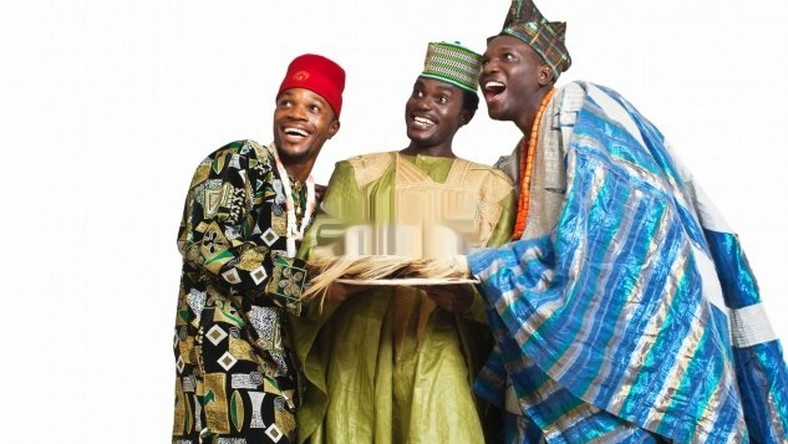
The popular Facebook user claiming intellectuals hardly watch Kannywood films and his supporters should understand 1) the need to ensure they conduct proper research on any subject matter or study the existing literature before speaking about it; 2) they could benefit from some guidance on critical engagement with terms, even if they are in our mother tongues, such as ‘wayewa.’ This would help them understand the concept from multifaceted perspectives and know how to use it when referring to ‘self’ and ‘other’ people’s ‘lifeworlds.’ 

When engaging with the Hausa terms ‘wayewa’ and ‘wayayyu’ (intellectualism and intellectuals, although the translations are subject to discussions), the critical questions we should ask about these terms in relation to Kannywood are: what is ‘wayewa’ (intellectualism)? Who exactly are ‘wayayyu’ (intellectuals)? Can we really know all ‘wayayyun mutane’ (intellectuals) and what they do in private and make sweeping statements about all of them without conducting thought research?

For me, it’s difficult to say who ‘wayayyu’ are because it’s subjective and varies from person to person. I mean, who someone regards as wayyaye might not be considered one by others and vice versa. Therefore, it appears to me that the person who made such a claim and their supporters may be ‘unintelligent/unintellectual’ (lacking in intelligence and intellectual approaches) or ignorant about the subjects they are referring to, especially since they ‘speculate’ about the so-called ‘wayyayun mutane’ without considering the diversity of the group. 

As a researcher of popular cultures in Africa, I can report as a fact that all categories of people in northern Nigeria and beyond watch Kannywood films. In the qualitative research we conducted, we interviewed academics, high-profile ‘ulama (Muslim clerics), lawyers, politicians, public workers (some of whom are highly placed decision-makers at various government levels), traders, and various categories of Western and/or Islamic-educated individuals who have been watching Kannywood films.

Ordinarily (if not because of our research), many of our interlocutors may not just openly admit to watching Kannywood films because of the unnecessary stereotypes associated with them. However, some of them go to the extent of referencing specific scenes from the movies they had watched to either illustrate their points or make comparisons with other films. Some influential people and their family members personally communicate with Kannywood stars they know from movies and spend millions to have them perform at their ceremonies. 

So, if we were to believe the claim that ‘intellectuals’ don’t watch Kannywood films, then we would have to say that all those who control the affairs of the region (in which the person making the claim probably lives) are not ‘wayyayu.’ However, regardless of the complexity of the terms wayewa and wayayyau, many would agree that people in the categories mentioned above, including our revered Muslim scholars who participated in the research, could fit into the ‘wayewa’ category or one of its categories (if there are many). Ba za mu ce dukkan su ba wayayyau bane.

So, the person making the claim and the bunch of uncritical minds who agreed with it have just succeeded in portraying themselves as lacking intelligence and critical thinking skills (which is synonymous to wayewa) to engage with the same concept, ‘wayewa,’ at least in this case. This is because they seem not to know ‘how’ and ‘when’ to speak for themselves and ‘how’ and ‘when’ to speak for others from an informed perspective (based on outcomes of scientific research). This also includes avoiding generalisations.

Despite politically motivated censorship from the 2000s to today, Kannywood has survived and thrived. This resilience is a testament to the support it receives from the silent majority, including highly influential individuals who appreciate its cultural significance and work behind the scenes to maintain its popularity and diffuse unnecessary tensions. This inspiring resilience assures us that Kannywood will continue to thrive in the face of differing opinions. 

To close my remarks, regardless of differing opinions about Kannywood, the cultural industry will continue to thrive in different forms. This sustained success should inspire confidence and optimism in the future of Kannywood and those who aspire to participate in the phenomenon, either indirectly as cultural studies scholars or directly as actors, directors, producers, scriptwriters, and associated roles.

Musa Ibrahim, PhD, can be reached via abbadanauta@gmail.com.

Dear Muslim wife, you are not a liability

By Salihi Adamu Takai 

Women in the Hausa community shouldn’t remain as they were in the 90’s. They don’t have to be so conservative — refusing to delve into the reflection of the life of smartness. Islam has a lot for women, and in fact, they are mostly recognised more than men in different perspectives. So, women are expected to use the opportunity Islam gives them. 

Before Prophet Muhammad (SAW) married his first wife, Khadijah, she was a wealthy businesswoman who employed men to run some of her businesses. She was inspired by the Prophet’s trustworthiness when she hired him to lead the business, which made her propose to him for marriage. The Prophet married her. 

The Khadija’s adventure in her life of being a businesswoman and the first wife of the Prophet was a challenge to the Muslim women who think that marriage is only the means to become a liability. If the Prophet’s wife could be such a businesswoman in those days, the reason for dumping our women is very outrageous. 

This could also apply to paying the dowry for marriage. Islam makes brideprice the sine qua non of marriage and says it is the right of the wife, not her parents or guardians. It is the wife’s privilege to have capital in her matrimonial house. The dowry can help her run a business while living as the wife.

Almighty Allah decreed paying for a dowry in the Qur’an, Chapter 4, verse 4, in which He says: “Give women ˹you wed˺ their due dowries graciously. But if they waive some of it willingly, then you may enjoy it freely with a clear conscience.”

Thus, dowry could serve as a form of security for the wife to use in the marital home or even upon marriage breakdown. Therefore, if that’s the case, it would be better for women to use the money for business.

Women should stop feeling dependent on their marital homes. They must be innovative and collaborate with their husbands to improve their lives.

During the Prophet’s lifetime, it was reported that the wife of the Prophet’s companion used to help her husband with some work on his farm when he was sick to get what they could. Islam is concerned about the chastity of women, so women should dress decently.

Salihi Adamu Takai wrote via salihiadamu5555@gmail.com.