Muslims

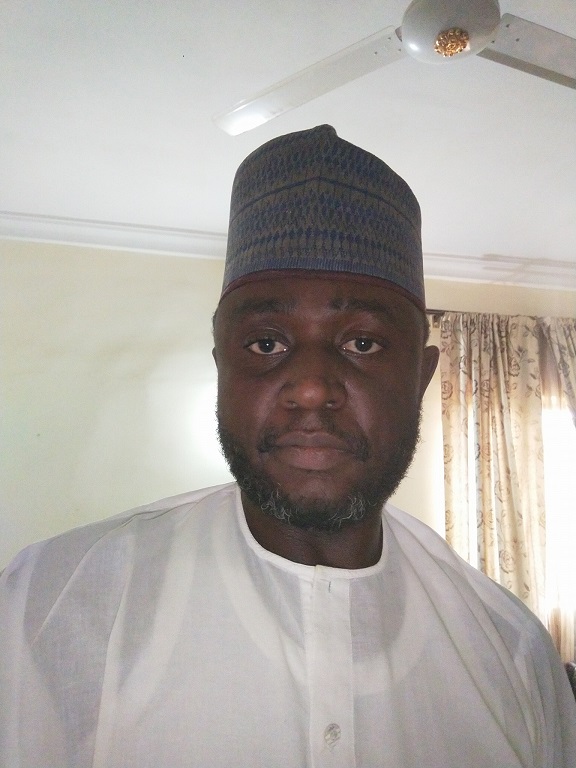
Double blessings: A tribute to Prof. Salisu Shehu

By Isma’il Hashim Abubakar, PhD

In one month, our mentor, leader, teacher, and father, Professor Salisu Shehu, the Vice Chancellor of Al-Istiqamah University Sumaila, Kano, and Deputy Secretary-General of the Nigerian Supreme Council of Islamic Affairs, received two distinguished honorary awards in recognition of his years of exemplary leadership, meritorious services, and contributions to the development of Islamic education.

The National Association of Teachers of Arabic and Islamic Studies (NATAIS) conferred one of these awards on Professor Salisu Shehu in a grand ceremony on November 16, 2024, at the Federal College of Education, Yola. The event was part of the Association’s 41st Annual International Conference. 

The note of the Association’s highest Merit Award, inscribed on the crest presented to our beloved mentor, reads, “For your Exemplary Leadership and Contributions Towards the Islamic Propagation and Development in Kano State and Nigeria at Large.” 

Coincidentally, the Bauchi State Qur’anic Recitation Competition in Jama’are presented the second award to the professor on the same day. Like its peer, this award recognises and celebrates the role played by our mentor in the dissemination of Islamic knowledge, societal enlightenment, and mentoring of the upcoming generation. 

Interestingly, however, this second award is both a reward of excellence and a turbaning ceremony of Professor Salisu Shehu as Khadimul Qur’an (Custodian of the Qur’an), the highest title that connotes the peak one attains in promoting the knowledge of Islamic Scripture. The note of the award reads, “Islamic Knowledge Award presented to Prof. Salisu Shehu, V.C, Al-Istiqamah University, Sumaila, Kano State, for his tireless efforts in spreading Islamic knowledge, guiding our community, and inspiring a new generation of Muslims to embrace their faith.Congratulations Khadimul Qur’an”.

For hundreds of mentees and millions of Muslim followers of Professor Salisu Shehu, these esteemed awards clearly testify to the commitment and devotion for which the Professor has been known over the decades. This reputation is justified by his successes in various positions, including his position and duties at Bayero University Kano, where he taught before becoming the founding Vice Chancellor of Al-Istiqamah University Sumaila.

Professor Salisu Shehu displayed an inimitable commitment to modifying the establishment of the Centre of Continuing Education establishment at Bayero University. The centre grew from strength to strength, eventually transforming into the Institute of Continuing Education (ICE) and finally to the School of Continuing Education (SCE). 

Professor Salisu Shehu was appointed as the first head of this centre, which started from scratch. He led a tenacious staff team, some of whom were younger colleagues he mentored or guided, to develop and upgrade this academic centre into a formidable educational unit of Bayero University. The place has already transformed from a diploma-awarding body to a degree-awarding school within one of Nigeria’s leading and most prestigious learning institutions.

Professor Salisu Shehu is a man in whom one can have confidence and a guarantee of success in any project or mission he undertakes or participates in. His years as the National Coordinator of the International Institute of Islamic Thought (IIIT) can, without much ado, testify to and validate this claim. Space will not allow us to marshal the achievements this Institute recorded when Professor Salisu Shehu headed it. 

The same can be said of various other capacities and ranks in which he served and holds, such as being the first  North-west Coordinator of JAMB organised for the visually impaired as the chairman of the Bauchi State Qur’anic Recitation Competition Committee (2007-2011); his role as the Executive Secretary of the Islamic Forum of Nigeria; Deputy Secretary-General, Nigerian Supreme Council of Islamic Affairs (NSCIA) and a host of other duties including imamship and delivery of sermons and Islamic lessons.

Besides all these, our distinguished scholar is also an effective mediator; all Nigerians can proudly vouch for his accomplishments. Northern Nigerian Muslims still remember the Professor’s role in facilitating the remarkable debate between some scholars and Abduljabbar Kabara, who shook the religious polity in Kano with his utterances that were considered highly aberrational. 

Nigerian citizens and their counterparts of the Niger Republic, as well as their posterities, will remain forever indebted to Professor Shehu and his colleagues among religious leaders who intervened and brought about an understanding that averted war between two neighbours.

As our mentor was conferred these honours by both NATAIS and the Bauchi State Qur’anic Recitation Competition Committee, we pray that he will continue to receive more recognition and blessings in his life. More importantly, however, we pray that these recognitions are precursors to Divine recognition and honour by Allah on the Day of Judgement in the Hereafter.

Isma’il writes from the Advancing Education and Research Centre (AERC) in Rabat and can be reached at ismailiiit18@gmail.com.

The challenges of integrating Almajiri traditional schools into mainstream education

By AbdulMajid Haruna

Several policies on education span across four decades, and yet Nigeria is still grappling with the menace of out-of-school children. Recent statistics from UNESCO projected a figure hovering around twenty million, with a significant portion of the children being the Almajiri Quranic students. 

Issues such as inconsistent government policies, poor implementation, inadequate funding, and limitations in terms of the scalability and scope of interventions provided by non-state partners and international donors have hindered efforts to address the problem. However, cultural and religious resistance remains a significant barrier.  

The classical system of Quranic Almajiri education imbibes Islamic teaching that every Muslim must acquire religious knowledge. However, culturally, the system aims to instill self-reliance and a sense of responsibility in the social and moral training of the child through hardship, toil, and hunger.

Sufism, the doctrine on which the system was founded, frowns at self-indulgence and believes asceticism and humility to be the hallmarks of a seeker of knowledge. This sentiment was echoed in the Weekend Triumph Newspaper of August 26, 1989, by Abdulkareem A. Bello, who describes the system as “the old wine in an old bottle”. 

In this article, Samaila Ado, an Almajiri in the Kano municipality, was reported to have said, “Our deplorable and wretched condition is a symbol of selflessness and humility.” According to Samaila, a true Almajiri is not concerned with worldly gains but rather is busy preparing for eternal life, which is more paramount.

Historically, the system had flourished owing to the support from the state’s public finances, the local community, and the philanthropic efforts from elites that catered to the modest needs of the children. During this time, the Almajiri scholars were artisans who, during their lecture-free hours, engaged in farming, fishing, well construction, production, masonry, trade, and tailoring. Most were farmers of the iconic Northern Nigerian cotton and groundnut pyramids. Some engaged in leather tanning and shoe and bag making in the old Sokoto empire. 

Sadly, however, the system has failed to adapt to the realities of the twenty-first century, with the modern Quranic Islamiyyas overshadowing the traditional Tsangayas and the Western secular education providing the safest route to climb up the socio-economic ladder. But more worrisome is the report that said six out of ten Almajiri pupils never find their way back home, and many lose their lives through street violence, ritual killing, kidnapping, disease and hunger.

Over the years, Integration has proven difficult due to the inadequacy of our policies. A careful analysis of the failure of Jonathan’s Almajiri integrated Model Schools by the Former Director of the Universal Basic Education Commission, Professor Ahmed Modibbo Mohammed, at Arewa House In Kaduna revealed that the lack of sensitisation and mobilisation of the nation affected the level of buy-in leading to a decrease in support and acceptance of the new system.  

Qualitative assessment research corroborated this analysis, carried out among Almajiri communities in Adamawa State. It demonstrated that including secular subjects was one of the major reasons parents did not welcome the program. 

Time and again, our policymakers have underplayed the subtle but widespread sentiment among the Islamic traditionalists who fear the new order poses the danger of erasing the cultural identity of the people. In a 2021 report published by The Resource Centre for Human Rights and Civic Education (CHRICED), Sheikh Bakura Assusaawi was remarked to have said: “Every Islamic scholar had gone through the system which shows us that there is indeed a great benefit in that system which we cannot afford to lose. There is no other help apart from helping the religion, and when we all neglect to do that, there is never a way forward.”

This allegiance to the old system and aversion towards Western education is rooted in the early events of the 20th century. On October 9, 1902, Fredrick John Lugard replaced Arabic & Hausa-Ajami (Hausa written with Arabic alphabets) with English & Romanized Hausa as the official language of Northern Nigeria. 

This single act in history changed the region’s educational scholarship trajectory. Not only did it render the rich knowledge produced in Ajami in the fields of humanity, science, and social science by the preeminent Sokoto caliphate obsolete and dying, but it relegated those proficient in this script to the background because to be “literate” and “employable” means to speak English and to write in the Roman script.

Tragically, the British also failed to recognise the Almajiri schools and abolished their state funding, tagging them as mere religious schools. This linguistic displacement brewed an identity threat in the people’s social psyche, igniting disdain and antagonism for the new system introduced by the colonial state and the Christian missionaries. 

Unfortunately, a century gap is still not enough to change the thought patterns of the Almajiri community. A recent story shared by a Twitter user about his late colleague’s son aptly drives home my point: 

The colleague had died, and the possibility of sponsoring the child’s education was hanging in the balance because the grandmother was standing in the way. She wanted the son to be enrolled in an Almajiri Quranic school instead of a secular Western school. 

The Twitter user was baffled because the grandma wouldn’t budge even when it was suggested that the child attend a formal school on weekdays and the Almajiri school on the weekends.

Many juxtaposing factors remain underpinning enrolment in traditional Almajiri education, barring socio-religious commitments and an aversion to Western education. These include rural-urban migration in search of greener pastures, disbanded families due to divorce or the death of the breadwinner, poverty, irresponsible parenting, and bad governance. 

Integration begins by fixing the stated problems, but reorienting society to the limitations of this age-long conservative approach to Islamic scholarship takes precedence.  Ever since the pilot scheme of 1964 to modernise Islamic schooling in the Northern Nigerian government headed by Sir Ahmadu Bello that ran successfully for few years before coming to a halt after his assassination, subsequent education policies namely Universal Primary Education (1976), National Primary Education Commission (mid-1980s), Universal Basic Education Act(2004) and Ministerial Committee on Madrasa Education (2009) which led to the establishment of President Jonathan’s Almajiri Model Schools have suffered detrimental setbacks.

Policies are cathedrals in the grand scheme of things; reality is the quicksand sinking them to the bottom. The government and relevant stakeholders must develop the political will to implement policies to their very ends. Most importantly, they must engage in intensive enlightenment, mobilisation, and re-orientation of the populace through the mass media, town hall meetings, and active involvement of the traditional Ulamas and leaders. 

AbdulMajid Haruna is an education thought leader and an inclusive education advocate primarily focused on vulnerable Almajiri children. He can be reached via abdoulmajeed570@gmail.com.

The challenging job of being a popular ‘Ustaz’

By Ibrahim Suleiman Ibrahim

One thing about being a public figure is that it deprives you of your nature to be human (one bound to make mistakes). Moreover, it makes you lose your private life, as everything you do is often turned into a public affair.

It’s even more troubling when you’re a religious public figure who is commonly referred to as an Ustaz because you’d have to go the extra mile to pretend to be who you’re not sometimes to remain in people’s good book.

Now, imagine having to tender an apology and an explanation to an entitled public for your personal affair, which they consider inappropriate, or risk being bullied. Some of these issues that raise concerns are debatable or even irrelevant.

People with visible flaws would even be the ones at the forefront of bullying you when you derail from their definition of saint or Ustaz just because they expect you to be completely flawless.

Nobody would understand the irresistible youthful exuberance, satanic temptation, peer group influence, and other factors that might have led to your deviation from the path of saintliness. 

Anyway, such prestigious recognition and status come with a price. So, I can say that’s the price you’d have to pay for being what so many people are not.  

It is more important to please God while being true to your conscience than trying to please humans, as pleasing humans can never be completely achievable.

Ibrahim Suleiman Ibrahim wrote via suleimibrahim00@gmail.com.

Ulama Forum rejects proposed tax reform bills 

By Uzair Adam 

The Ulama Forum in Nigeria has expressed strong opposition to the proposed Nigeria Tax Bill (NTB) 2024 and Nigeria Tax Administration Bill (NTAB) 2024, currently before the National Assembly. 

In a joint statement signed by its Convener, Aminu Inuwa Muhammad, and Secretary, Engr. Basheer Adamu Aliyu, on Monday, the forum raised concerns about the bill’s implications on equity, federalism, and economic fairness.  

The statement criticized the bills for transferring the largest share of Value Added Tax (VAT) revenue from consumption or generation areas to states hosting production entities’ headquarters. 

“VAT is a consumption tax. Transferring its revenue from the areas where it is generated to the locations of head offices undermines fiscal equalization, widens income disparity, and risks social disharmony,” the forum said.  

The forum also noted that the bills threaten the survival of critical agencies such as TETFUND, NITDA, and NASENI by proposing a gradual reduction in their funding through the Development Levy. 

“Phasing out these agencies will jeopardize infrastructure, research, and capacity-building efforts in our tertiary institutions, leaving students to bear exorbitant tuition fees under an ill-conceived student loan scheme,” the statement warned.  

The forum accused the government of rushing the bills without sufficient public scrutiny, alleging that they align with a long-term reform agenda by international financial institutions such as the World Bank and IMF. 

“There is room to suspect that these bills are part of the World Bank’s 10 to 15-year reform agenda, threatening our sovereign independence,” the forum alleged.  

To address these issues, the Ulama Forum urged the National Economic Council and State Governors to intervene and demand a thorough review. 

“The concerns of state governors and other stakeholders must be addressed to give these bills credibility and avoid perceptions of external imposition,” it added.  

The forum recommended that the bills be subjected to extensive public debate and expert analysis to ensure they align with Nigeria’s federal structure and national interest. 

It called on members of the National Assembly to act in the best interests of their constituencies and resist any pressure to pass the bills in their current form.  

“We urge public-spirited individuals and organizations to rise against this threat to fair and even development. The VAT-sharing formula and the proposed bills strike at the heart of federal constitutionalism,” the forum concluded.  

The Ulama Forum emphasized the need for justice and fairness, calling for the bill’s withdrawal to allow for broader discourse and a national consensus.

Beyond the call: How NYSC transformed my skills and perspective

By Mujahid Nasir Hussain

Before I received my call-up letter to serve in Kaduna, I had only visited two states in Nigeria: Bauchi and Katsina. As rooted as I was in Kano, I was confident that one day, a journey would take me on an expansive adventure. On a Monday morning, my letter arrived, and I was assigned to Kaduna. Without hesitation, I accepted the call, feeling both the weight of the commitment and a sense of excitement for the journey ahead.

My arrival at the Government College Temporary Orientation Camp, Kurmin Mashi, was immediately followed by an unexpected nomination. A day after settling in, the NYSC certificate officer responsible for Muslim affairs addressed us after the Fajr prayer. He announced they would select a camp Ameer, Imams, and mosque officials to guide and regulate Muslim activities for the three-week orientation. While the officer invited all interested corps members to a screening at 9:00 a.m., I initially had no interest in volunteering. 

I had been an Imam throughout my four years at Bayero University Kano and knew the demands of such a role well. However, a friend’s persistent encouragement eventually swayed me. He reminded me that contributing in this way could be significant, so I agreed to attend the screening. By the end of the process, I was nominated as the camp Ameer among a large pool of competent Muslim corps members. This role demanded dedication, organisation, and the ability to balance multiple responsibilities, each of which became an invaluable part of my camp experience.

I sought additional ways to engage and support my fellow corps members throughout the orientation. Given my background in a medical-related field, I joined the Red Cross team, a requirement for those in health-related disciplines. This opened up an opportunity to teach cardiopulmonary resuscitation (CPR) and choking management, skills I had learned and been certified in through the Basic Life Support training at Aminu Kano Teaching Hospital just four weeks before arriving in camp. Sharing this knowledge with my peers was a gratifying experience and reinforced my commitment to the responsibilities I had taken on.

As the orientation phase ended, the NYSC program’s next chapter brought me another unexpected role—the position of Medical & Health Community Development Service (CDS) president. This time, I was both surprised and a little amused at the nomination, especially when someone in the group remarked, “He only studied physiology,” implying that there were candidates with medical and pharmacy degrees who might be more fitting for the role. However, my fellow corps members saw beyond that comment, recognising my active participation and consistent presence in discussions on various health issues. Their confidence in me reaffirmed my belief in engaging fully in every opportunity, regardless of qualifications or prior experience.

One of the most transformative aspects of my NYSC journey was my placement at a diagnostic centre. This placement became a learning ground where I progressed from never handling a sonography probe to becoming a trusted cardiac sonographer. Each day at the centre involved performing different scanning procedures, including cardiac sonography—a skill I never expected to acquire. 

Before long, I began visiting primary healthcare centres to conduct these scans and report results, trusted to work independently by the centre. This experience not only built my technical skills but also gave me confidence and professional growth that went far beyond the confines of my physiology degree.

Reflecting on this journey, I am grateful for the complete immersion I experienced by staying in Kaduna. Many corps members, especially those posted close to their home states, travel back frequently, often missing out on opportunities to develop their skills more deeply. Though I only made two trips back to Kano throughout my service year, the experiences and skills I gained in Kaduna were irreplaceable. 

NYSC offered a space where I could grow beyond the confines of my academic background, gaining hands-on expertise that would ultimately make me more valuable in the job market. The scheme is a golden opportunity to stand out for those wondering about the job prospects after NYSC. If I had only my physiology degree to present to future employers, I’d be no different from countless other graduates with the same qualification. But by stepping out of my comfort zone, learning sonography, and building leadership experience, I now have more to offer.

Prospective corps members should view the NYSC year as more than a routine or obligatory service period. It’s an opportunity to develop skills that add value to your degree and increase your chances in the job market. 

With the right mindset, your NYSC journey can transform and empower you unexpectedly. My time in Kaduna will remain one of the most defining chapters of my life, a journey marked by growth, resilience, and the pursuit of a purpose greater than myself.

Mujahid Nasir Hussain wrote via mujahidhnasir@gmail.com.

Award-winning essayist Maimuna Abubakar graduated with a first-class from ABU Zaria

By Idris Hassan

A student of Ahmadu Bello University (ABU) Zaria, Maimuna Abubakar, who beat other contestants across the world last time to emerge 3rd in an International Essay Competition organised in the United States of America, has graduated with a first-class degree in Sociology (the third person in the department’s history to graduate with a first-class), after Muminah Musa Agaka, who first broke the 38-year record. 

Maimuna Abubakar is someone I have been mentoring since my time at ABU, Zaria. She’s from Niger State and has always been eager to listen and learn. She lost her mother a few years ago, which was a difficult period for her. 

I recall the last time she asked me if there was anything she could work on, as she often does. I mentioned an essay competition in the US that I wanted her to apply for. She responded, “Sir, that’s for people like you. I don’t think I am a good fit since I know so little.” I laughed and encouraged her to submit her entry. We discussed her ideas critically, and she wrote something she sent me for proofreading. After reviewing it, she submitted her essay and won third place.

Maimuna is a writer, poet, and much more. She graduated as the best student at her level in the Department. Maimuna is also a trained teacher with over five years of experience. During school breaks, she makes dresses, loves writing, and especially enjoys reading. 

She was Amira of the Muslim Students Society of Nigeria (MSSN) ABU, Chairperson of the NSASA Academic Committee, and Secretary of the NSASA Editorial Committee in Zaria. Maimuna aspires to be a Public Health Professional or a Social Psychologist. Given her dedication and achievements, I believe the Niger State government needs to acknowledge and reward her efforts.

Applied Worldwide is a project founded by Stephanie Wilson and Luke Hanna in the United States. It believes in a dynamic sociology in which sociological knowledge is produced and applied to enact positive changes in communities worldwide. 

Applied Worldwide organises an international essay writing competition to inspire students in the field and help foster change through a sociological lens that Applied Worldwide aims to bring. You can also try your luck.

Fueling social media firestorm: How a national tragedy turns into national hate

By Kabir Fagge Ali

As the country mourns the unfortunate and catastrophic tanker explosion that claimed over a hundred lives in Majia town, Taura local government, Jigawa State. The circumstances leading to this devastating event, and its unfolding discourse on digital space leave a bitter taste.

If past events of such nature didn’t serve as a pointer, one would have been forced to argue that the deleterious economic hardship Nigerians are currently undergoing played a significant factor in the circumstance warranting people to desperately attempt to scoop up fuel from a fallen tanker that is highly flammable. However, one cannot, in all honesty, overlook the impact of economic hardship instigated by the “so-called reform” of this administration.

While the explosion was a profound tragedy, what followed on social media turned a devastating accident into a platform for spreading hate. Netizens took to various platforms to condole, analyze, obfuscate, sympathize, and attack the dead in a typical Nigerian fashion of ethnicizing, religionizing, politicizing and regionalizing events. What should have been a space for empathy, turned into a hub for anger, with users blaming specific ethnic groups for what they called “ignorance” and “greed.” 

The horrific event became weaponized by those seeking to stoke division and deepen the fractures within Nigerian society. One @AdemolaSola38048 on X wrote, “E no go better for their dead body”, another, @Peterojueromi posted “Well, I no pity them sha, na their stupidity kill dem”.  How does a tragedy of this magnitude turn into an avenue for deriding others?

Instead of offering sympathy or proposing solutions, many used the incident as an opportunity to fuel long-standing ethnic, regional, and religious tensions. Blame was cast on entire communities for the reckless actions of a few, with harsh, derogatory terms being used to describe those who were simply trying to survive in an environment where economic opportunities are scarce.

Speaking on this incident, the former Head of the Department of Mass Communication at Skyline University, Nigeria, and an expert on hate speech and digital media, Mr. Abdulhameed Olaitan Ridwanullah noted that “social media is like a two-edged sword. It can draw the attention of relevant rescue teams and government agencies to the event and at the same time serves as an accelerant for the societal divide”.    

He warns:

“From the Nigerian experience, one shouldn’t be surprised that even in tragedy, some Nigerians cannot conceal the hate in their hearts. With social media in the hands of some of the worst among us, and the anonymity and herd mentality that comes with it, it is not surprising to read comments on social media space that shouldn’t have made it out of the thought process of whoever posted them.”

Mr. Ridwanullah added that “in the wake of national disasters like this, it is not surprising that some elements of division will weaponize such a tragedy”. He emphasized that it is important for Nigeria to look into legislation on digital media that will not only guarantee freedoms provided by digital platforms but ensure the sanity of the digital space.

“At this critical time in our digital journey, scholars should start looking beyond the usability of these platforms but understanding how their affordance reflects on our society. This kind of event and the rhetoric we saw on X underscores the importance of my research on nexus between online hate speech and offline hate crime” he surmised.

It is time for social media platforms to step up and recognize their role in monitoring and curbing the spread of hate speech. At the same time, it is also up to users to approach these platforms with responsibility and empathy. While frustrations with governance, inequality, and resource scarcity are real, targeting those who suffer the most with hateful rhetoric is not the solution.

The Jigawa tanker explosion should serve as a reminder of the fragility of life and the dangers of living in a world where safety nets are often nonexistent. But more importantly, it should remind us that in moments of tragedy, we should seek to uplift each other rather than tear each other down.

As Nigeria continues to navigate complex social, ethnic, and economic challenges, we must remember that unity, empathy, and constructive dialogue are far more powerful than any message of hate.

Kabir Fagge Ali, is a Writer with PRNigeria center and write via faggekabir29@gmail.com.

Almajiri system of education needs reform

By Dahiru Kasimu Adamu

The word “almajiri” emanated from the Arabic word used earlier to refer to the companion of the prophet Muhammad (peace be upon him), who migrated on his instruction for the sake of Islam from Mecca to Madina.

Later, “almuhajirun” refers to knowledge seekers who move from one place to another in search of religious knowledge, predominantly the holy Qur’an.

Therefore, the word “Almajiranci” refers to the traditional method of acquiring and memorising the glorious Qur’an, where boys at a tender age are sent by their parents or guardians to other villages, towns, or cities to acquire Qur’anic education under a knowledgeable Islam scholar called “Malam.”

The Almajiri system of education involves somebody who migrated for learning or for the sake of advocating Islamic knowledge.

This migration is tied to a system in which people in a particular community gather male children of school age and hand them to a teacher yearly. The purpose is for Malam to teach those young children the basics of Islam through Qur’anic schools, popularly known as “Tsanagaya or Makarantun allo”.

The pupils are taught how to read the Qur’an and write the Arabic alphabet. They also learn strict discipline and aspects of living.

Due to environmental distractions, the malam may relocate his pupil to a distant area, such as a town or city and camp them there. Almajirai (plural of Almajiri) learn self-reliance and discipline in the camp.

History shows that the population provides free accommodation and leftover food for the pupil and their teacher; even though the food may not be enough, Malam sends his students into the neighbourhood to solicit food. One reason compelling Almajiri to beg is to let them experience and appreciate the hardship and necessity they will face in life.

According to the record, after the efforts of various communities and later Native authorities around the twentieth century, a modernised version of Makarantun allo-cum-Islamiyya schools emerged. This gave birth to at least four types of Islamic schools: Quranic Schools (Makarantun allo, Tsanagaya), Islamiyya Schools, Public and private model Quranic schools, and government Arabic and Islamic institutions.

The information indicates that begging was not involved during pre-colonial times, and Almajirai were doing menial jobs. They have not been abused before they could get a job. Their noticeable hygiene and good manners can simply identify them.

Islamically, it is responsible or necessary for a parent to provide moral education to their children. But the kind of Almajiri system being practised today is an entirely bastardised system compared to the one practised in the past, as mentioned above.

Now, children are seen wandering, begging for food; Almajirai are seen and identified by their unwanted hygiene, unkempt, tattered clothes, and disease-afflicted and ulcerated skins.

Many Almajirai spend most of their time on the street, which can lead some of them to intermingle with different people, including criminals. Several reports indicate how some of them engage in theft, drug abuse and other crimes. Also, lack of food has made them vulnerable to some diseases.

In summary, as the Qur’an mentions, Islam has identified several rights granted to children. These include the right to a stable family, proper development, showing love towards children, being mindful of education and spiritual growth, and having the right to the good life (chapter 19:98).

But nowadays, due to some factors, including economic hardship and extreme poverty,  most parents are running away from their economic responsibilities enshrined in Islam, sending their children at a very tender age to mallams in towns and cities. This led to behavioural changes among all age groups.

The research found that other factors include some parents who obtained only the knowledge of the glorious Qur’an without understanding its inner meaning, always supporting the Almajiri system, and some seeing Malams benefit from the size of the Almajiri studying under him because school size increased the Malam’s life.

Due to the street begging among Almajirai and other activities, hunger and lack of moral upbringing, many Almajirai are not observing proper Islamic values in their daily life. Some take it just as traditional because if it’s education, everyone can study in his locality.

To address these issues, all hands must be on deck. Leaders must be committed to fighting against extreme poverty, illiteracy and unemployment.

Come out with a new master plan towards a new method of the Almajiri system. This includes verification of all teachers to participate in teaching Almajirai because some are not even qualified to teach, allocating the number of children every mallam should teach, and he should not allowed to exceed the number assigned to him.

Parents and mallams should at least create a new way of accommodating and feeding the pupils. There should be the right place where pupils or Almajirai could get food instead of begging on the street. This includes the total elimination of street begging.

The authorities, Malams, and stakeholders should be sensitised about the importance of this educational sector, and they should provide shelters, health care services, clothes, and other essential things that will end street begging.

This can also be achieved by empowering pupils with vocational skills to sustain themselves and improve socioeconomic standards. There should be a good record of the numbers of Almajiri in each locality, state and country at large. In addition, the fundamental human rights of Almajirai and Malam should be promoted.

Good teaching and learning materials and a conducive atmosphere for learning should be provided for both Malams and Almajirai. Seminars, workshops, lectures, campaigns, and other mobilisation activities should be carried out to counsel Almajirai, other stakeholders, and the general public on career development. Almajirai should be included in acquiring Western education and skills.

By working on all the items mentioned above and more activities, the Almajiri system would be reformed and improved. All Almajiri,malam, and society’s socioeconomic standards will improve out of illegal nature and other sundry.

Dahiru Kasimu Adamu, Argungu, Kebbi State, is a young journalist and Mass Communication student at UDUS. He can be reached at dahirukasimuadamuargungu@gmail.com.

Hajj fare rises to ₦10 million as NAHCON withdraws subsidy

By Uzair Adam

The National Hajj Commission of Nigeria (NAHCON) has announced that the federal government will no longer provide subsidies for Hajj pilgrims starting in 2025.

In previous years, pilgrims benefited from a concessionary exchange rate offered by the Central Bank of Nigeria (CBN), allowing them to purchase dollars at a lower rate.

With the naira currently at N1,650 to the dollar, pilgrims are expected to pay nearly N10 million for the Hajj fare, given that the minimum cost is around $6,000.

Although the official fare for the 2025 pilgrimage is yet to be confirmed, some State Pilgrims Welfare Boards have already started asking for an initial deposit of N8.5 million from intending pilgrims.

NAHCON also announced a refund of 64,682 Nigerian pilgrims (equivalent to 150 Saudi Riyals) who participated in the 2023 Hajj.

This was disclosed during a virtual meeting between NAHCON officials and Private Tour Operators (PTOs) on October 7, 2024.

The meeting also highlighted a reduction in the number of approved PTOs for the 2025 Hajj, with Saudi Arabia cutting the figure from 20 to 10, and each operator required to register at least 2,000 pilgrims for visa approval.

NAHCON also addressed a refund of over SR62,000 (N26.9 million) owed to PTOs for substandard feeding arrangements during the 2022 pilgrimage, while clarifying that it received N2.75 billion from 110 PTOs for the 2024 Hajj and still holds a balance of N750 million from undecided operators.

Operators who initially paid a cash deposit of N40 million as a cautionary measure for the 2025 Hajj now have the option to submit a bank guarantee instead.

Dear Nigerians: Do not let this great nation die!

Dear Nigerians,  

1. May God have mercy on you! Your country’s name evokes the abundance of the River Niger, symbolising the endless resources and talents you possess. This nation is blessed with natural wealth and human potential that garners admiration and envy worldwide. 

2. Yet, tears fall when we consider the mismanagement, waste, and looting of this vibrant nation. It’s disheartening to see Nigerian youths unaware of the treasures surrounding them. Who will inherit this great wealth? Where are the competent young leaders to take over when the current generation finally acknowledges its fatigue?

3.  An effective national curriculum should focus on the aspirations and values of the youth. Nigerian youths should be more than seekers of white-collar jobs; they should harness the nation’s real wealth. Ignorance of one’s resources is a grave form of slavery. The curriculum must evolve to cultivate dignity and progress, preparing future nation-builders.

4. Imagine if Nigerians refrained from destructive desires, top to bottom. These desires only ruin their possessors and the entire nation, destabilising not just Nigeria but the region. What would be lost if corruption ceased? Crimes harm the country and ultimately lead to personal ruin.

5. Despite challenges, Nigeria still holds immense potential if its people unite in nation-building. Respect and kindness across ethnic lines won’t harm anyone. Being good neighbours to one another will ensure that no one suffers amid abundance.

6. It’s not easy to forget historical hurts, but healing is necessary to dream big. I dream of a Nigeria that sheds its negative image and becomes a beacon of resilience, talent, and beauty. We can achieve this dream with patience, optimism, and the will to be good.

7. Let the brave ones from every region come forward. Whether in rags or adorned in gold, it’s the mind that matters. Your willingness to embrace reform reflects the people’s hope. Learn about your nation, not just from social media but from its history and potential.

8. There is hope for Nigeria. Nations with more severe problems have risen. Remember, you hold the most powerful office: the Office of the Citizen. Decorate it with action, not despair. If Nigeria isn’t working, it’s because we aren’t working.

9. Weak minds say, “There is no hope.” Strong minds respond, “We have work to do.” Nigeria is the office of every Nigerian. If progress is absent, it’s because we aren’t active. Be inspired and make progress in Nigeria, which is your first concern.

10. Nigeria has served as a beacon of hope for other nations and has the potential to do so again. I have witnessed the kindness, wisdom, and vision of many Nigerians. Goodness is locked within the nation—are you the one to awaken it?

11. If you are, be patient. Don’t let anger or frustration lead to violence. Dedicate yourself to the dream of reform, and one day, you will wipe away the tears of your people.

12. Praise God for making you a Nigerian. Reform begins with you. Even if you only change one person, the impact will be immeasurable. Don’t give up if you find people obsessed with crime and corruption.

13. Your good deeds, endurance, and sacrifices inspire those around you. Continue to educate, alleviate pain, and instil hope. The people are not as bad as they seem; many are ignorant or traumatised.

14. Mass education, not violence or migration, is the answer. Enlightenment will help people learn from the tragedies of war-torn regions.

15.No matter how far you run, home will always call you back. The time to act is now!

Amara Sesay wrote via amarasesay.amir@gmail.com.