Middle East

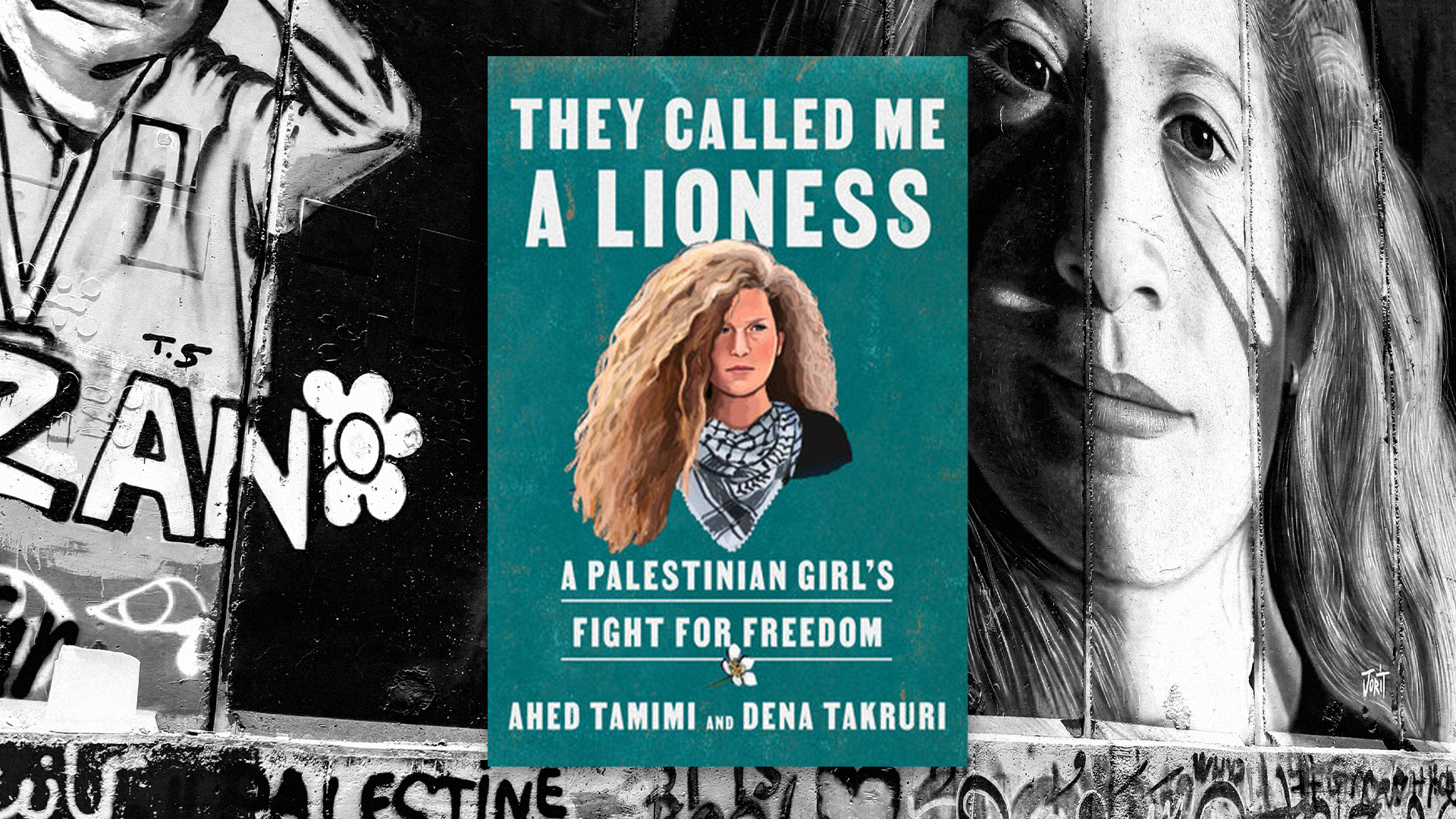
They Called Me A Lioness: Tamimi’s rise and fame

By Bilyaminu Abdulmumini

One of the four books I read in 2023 was They Called Me A Lioness, which I read courtesy of Dr Muhsin Ibrahim, who shared the soft copy. The book’s true-life storytelling and the author’s command of the English language captivated me, keeping me glued to its pages.

Ahed Tamimi, the book’s narrator (written by Dena Takruri), was born and raised in the village of Nabi Saleh, northwest of Ramallah, a city known for its flashes in the Israel-Palestine conflict in the West Bank. Nabi Saleh gained notoriety for its resistance system, characterised by coordinated processions that garnered local and international attention every Friday. Journalists, sympathisers, and NGOs witness these Friday processions. Nabi Saleh vehemently opposed the Israeli occupation (I reserved the history and Israeli occupation saga to another article).

While the protests in Nabi Saleh were generally considered peaceful, occasional outbreaks of violence were not unheard of, though they were one-sided. While Palestinians employed stones, the Israeli soldiers were armed with superior weapons such as water cannons, tear gas, rubber-coated steel bullets, and sometimes even live ammunition.

Amid these sporadic instances of violence, Ahed would witness her mother being shot in the leg by a soldier, her younger brother pinned to the ground by another soldier, her favourite uncle bleeding to death, night raids, and the repeated arrest and imprisonment of her father.

To say that this series of events paved the way for Ahed’s transformation into a brave individual, as her nickname implies, would be an understatement. Ahed’s courageous resistance and fearless confrontations with Israeli soldiers earned her both local and international acclaim.

Tamimi first gained international recognition when she was just a child, under the age of 10, for confronting Israeli soldiers who had abducted her brother. This confrontation, captured on film, went viral, captivating people worldwide. She was seen as a symbol of the bravery of Palestinian children and the spirit of their resistance against the Israeli occupation. Early during the Ukraine-Russia war, the video resurfaced, and the usual social media misinformation circulated it to be a Ukraine child protesting against Russian inversion.

Tamimi’s next international spotlight was intriguing. She engaged in a confrontation with soldiers to prevent them from arresting an Israeli, Miko Peled. Few expected this turn of events. Miko is the son of the famous Israeli general Mattityahu Peled, a celebrated hero who fought in the 1967 war on the side of Israel. However, he later retired from the army and became a tireless peace activist, advocating for Israel’s withdrawal from the occupied territories. 

The last straw that broke the camel’s back was when Tamimi lost her temper and slapped a uniformed, armed Israeli soldier. As expected, this action went viral, leading the Israeli authorities to imprison her for eight months. A prison, even run by one’s country of citizens, might be full of provocations, rights abuses, and infringement, let alone a prison run by an arch-rival. Tamimi and many Palestinians who got under the net of Israel had to endure a series of incarcerations. 

Ironically, imprisonment is one of the most successful ways to achieve fame and knowledge. While someone may be imprisoned as a deterrent, it can inadvertently lead to greater recognition and public sympathy, drawing attention to their cause. The same happened to Tamimi; her imprisonment further elevated her fame and the cause she advocated for. In Nigeria, imprisonment got sympathy from both former presidents Muhammadu Buhari and Olusegun Obasanjo; the former Ghanaian president, Jerry Rawlings, would change the course of history from a death sentence to being a president; and in this regard, no one remained fresh in the memory like Nelson Mandela.

Beyond fame, Tamimi, alongside her mother, who was also incarcerated, completed her high school education. This accomplishment was particularly telling in the mother’s case because she had been unable to complete her education since her marriage. This fact resonates well with Nigerian correctional service centres where many inmates complete online degrees, which, of course, like Tamimi’s Mother, might not achieve the feat without imprisonment. 

Last month, a Turkey legislator slumped in a chamber (and died later in hospital), challenging the president’s seeming “accomplices”. Excerpt from the opposition legislator to Tayyip Erdogan: “You allow ships to go to Israel, and you shamelessly call it trade. … You are Israel’s accomplice”. This reminded me of the Tamimi encounter with Erdogan. 

While Tamimi was visiting Turkey to receive the Handala Courage Award, Erdogan sought an audience with her. In their meeting, he would express how much he loved Palestine, indicating that Turkey would always support the Palestinian people. In response, the iron lady, who never minced words, threw a hammer directly in the face, “How can you say you love us when we have to enter your country with a visa, but Israelis can travel here with no visa?” Erdogan became speechless.

Bilyamin Abdulmumin is a doctoral researcher in chemical engineering at ABU Zaria.

Middle East, Israel targeted assassinations and the increasing risk of all-out war 

By Ismail Obansa Nimah

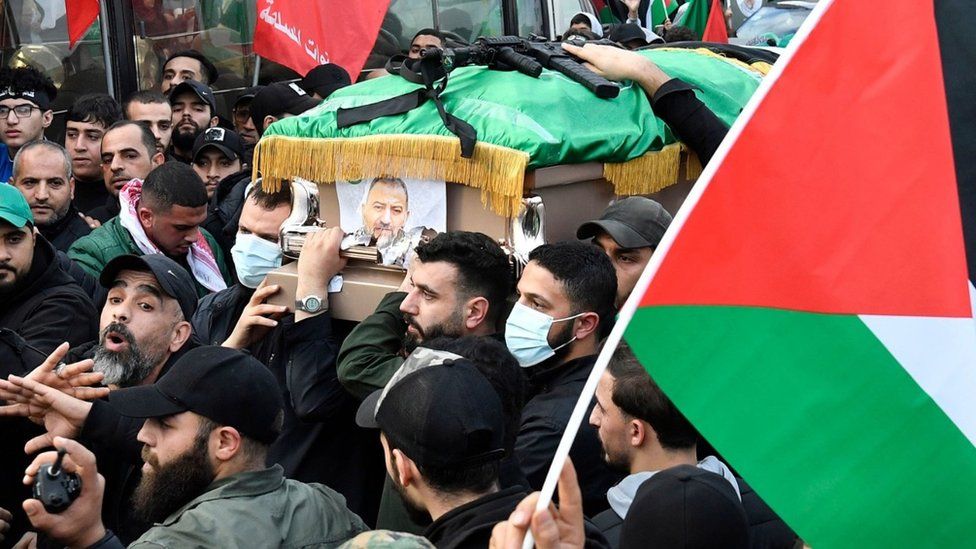
Yesterday again saw another targeted Israeli assassination of a high-profile leader of the Palestinian resistance axis, Hamas deputy leader Saleh Al Arouri. The assassination by Israel took place in the heart of Beirut, the capital of Lebanon, at about 5:45 pm Local time. It comes roughly 24 hours before the 4th anniversary of the assassination of Qassem Soleimani, former Commander of Iran’s elite Quds brigades of the Iranian Revolutionary Guard corps.

On the 3rd of January, 2020, turmoil was yet again unleashed in the Middle East when the United States of America (USA), in collaboration with her Israeli ally, assassinated Major-General Qassem Soleimani, a man who doubled as the commander of the Iranian Elite Revolutionary Quds Force and the second most potent/influential man in Iran after Ayatollah Al-Khamenei (Iran’s supreme leader).

Citing the preservation of the interest and national security of America, the United States launched a drone strike at a convoy conveying Soleimani and Iraqi militia leader Abu Mahdi Al-Muhandis, killing them both and eight others near Baghdad airport in Iraq.

The conflict between the US and Iran dates as far back as the 1970s, and as almost always, the killing of Soleimani immediately rattled up tensions, bringing the US and Iran to the brink of war. According to some Iranian sources, General Soleimani was on an important mission to deliver a message to the Iraqi prime minister about its gulf neighbours and reconciliatory steps taken between Iran and its neighbours, especially its regional rival Saudi Arabia, suggesting that Riyadh may have leaked intelligence to Washington.

The killing of Soleimani was met with shock, worldwide condemnation and fierce declarations of avenge from Iranian officials and Iranians, generally with the supreme leader, President and military commanders/leaders pledging a harsh retaliation. Following the killing, massive protests and mourning broke out in the cities of Iran and Iraq, with hundreds of thousands of Iranians pouring out into the streets, mourning and chanting their desires for revenge.

On January 5th, 2020, the remains of General Soleimani and the other Iranians killed alongside him were flown into Iran amidst a sea of millions of mourners. The funeral and national procession of the Iranian legend was planned for the 7th of January, at his home town in ‘Kerman’, but an ensuing stampede due to massive crowds led to the death of at least 56 people and injuring 213 people, resulting in the immediate postponement of the burial.

In the early hours of the 5th day after Soleimani’s assassination, on the 8th of January 2020, Iran retaliated and launched over a dozen ballistic missiles on two US bases in Iraq. The attack by Iran injured over 100 US soldiers, with most of them reportedly suffering traumatic brain injuries, and also resulted in the destruction of important US assets in the bases. Tensions immediately skyrocketed following the Iranian counterattack, with oil prices rising to levels not seen in 3 months and countries including the US ordering their citizens to evacuate and leave Iraq and its environments, as well as airliners being told to avoid the airspace over Iran and Iraq.

As the world woke up to the news of an Iranian response, so did the news of the downing of Ukrainian International Airlines flight 752, killing all 176 on board. The Iranian Revolutionary Guard Corps placed its defences on high alert following the counterattack, allowing its surface-to-air missile defence system to mistakenly shoot down the Kyiv-bound airliner shortly after take-off from Tehran. Following damages to the US bases and injuries to personnel, President Trump and the Pentagon ordered the immediate deployment of more US military assets to the Gulf region. Consequently, an airstrike on Iran that would be called off at the last minute by President Trump was ordered.

 Iraq, caught in a conflict between the world’s superpower and a Middle Eastern regional power, became destabilised. With the outright violations of its national sovereignty by a supposed ally, protest broke out with both ordinary Iraqis and the Iraqi parliament calling for the expulsion of American troops and other foreign forces from its soil. For a lot of them (Iraqis), the horrors and consequences of decades of war can still very much be remembered and felt, and they, by all means, want to be left out of another regional conflict.

Four years on, tensions remain at a ceiling level between Iran and the US/its Middle Eastern allies, particularly Israel. Israel’s brutal genocidal war on Gaza has killed more than 22,000 Palestinians, as well as more Israeli-targeted killings of Iranian officials. It’s regional allies with American support, including Mohsen Fakhrizadeh; it is yet to be fully known how close an all-out war is between Iran and American-backed forces within the region, particularly Israel.  Although so many structures have been re-named after Soleimani, the void created in the hearts of Iranians, the Palestinian resistance axis and the Islamic Republic of Iran by his death will take a long time to heal and will require more than an anniversary celebration for the already sanction crippled nation.

Ismail Obansa Nimah wrote via nimah013@gmail.com.