Kano

Kano governorship saga continues as Abba takes battle to Supreme Court

By Sabiu Abdullahi

Kano governorship saga continues as Abba takes battle to Supreme Court Kano State Governor Abba Yusuf, ousted by the electoral tribunal and subsequently denied reprieve by the Court of Appeal, has pledged to contest the ruling at the Supreme Court.

The appeal court, situated in Abuja, upheld the tribunal’s decision, unseating Yusuf and confirming Nasiru Gawuna of the All Progressives Congress (APC) as the legitimate winner of the March 18 election. 

Governor Yusuf, undeterred by the setback, conveyed his determination in a televised address on Friday night.

“Our lawyers will challenge the Appeal Court judgment at the Supreme Court. We trust that the Supreme Court will restore the mandate entrusted to us by the people of Kano,” he asserted, urging citizens to remain law-abiding amid the legal wrangling, with security measures in place to ensure public order. 

Conversely, the National Chairman of the APC, Abdullahi Ganduje, hailed the court’s decision as a triumph for democracy.

Expressing gratitude to the judiciary for maintaining a fair administration of justice, Ganduje acknowledged the challenges faced during the case.

“This victory is for all of us. We know what happened during the election, and by the grace of God, we got a fair judgement in favour of our great party, APC,” he remarked. 

Ganduje, anticipating further legal manoeuvres, remarked, “There is nothing wrong for them to go to the Supreme Court. We too, we are ready to meet them in the Supreme Court. Insha Allah, we will win at the Supreme Court as well.”

Business quagmire forces Kano man to commit suicide

By Sabiu Abdullahi 

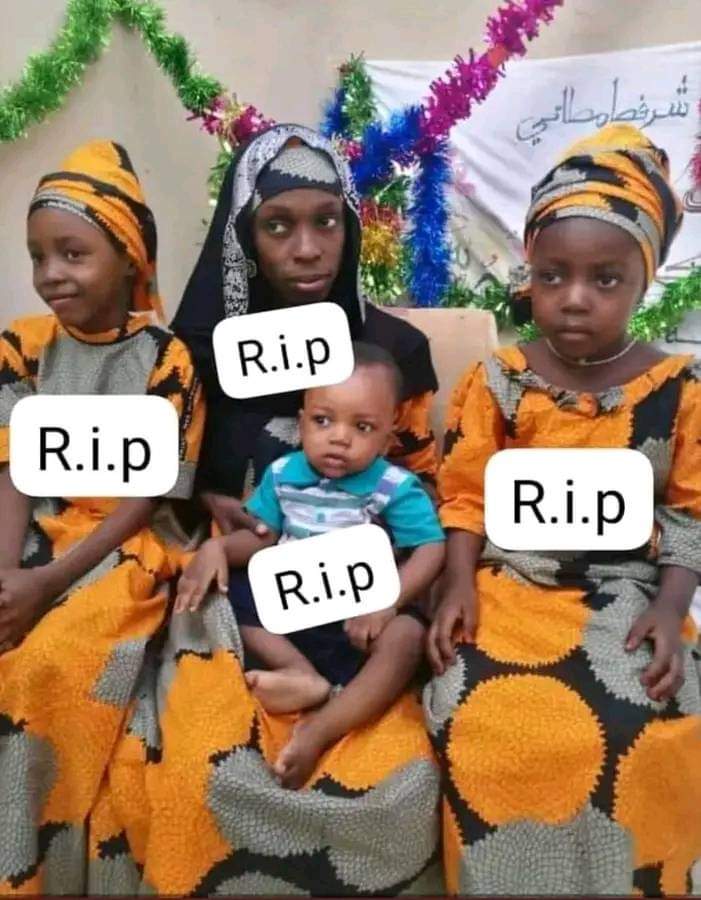
There was a tragedy in Sharada, Kano, as 35-year-old Saleh Abdullahi was discovered lifeless in a room, having taken his own life by hanging yesterday.

The distressing scene unfolded when Saleh’s brother, Idris Hamisu, returned home from morning prayers. 

Hamisu recounted the tragic discovery to the Daily Trust: “I came back from morning prayers, my wife wanted to prepare food for our children and she was looking for matches to set fire but there was none. She remembered that Salisu was usually using it for local perfume. When she sent our child to collect the matches, the boy saw him hanging and he ran back shouting that Yaya Saleh was hung by someone. I then rushed to the room and saw it was true.” 

The victim left behind a note, the initial words of which read, “I am sorry,” yet the remaining contents remained indecipherable, leaving a veil of mystery over the motive behind this heartbreaking act. 

Idris Hamisu, grappling with the tragedy, shared insights into Saleh’s recent struggles: “We didn’t have any problem. All I know is that these recent days he had been worried, and as businessmen, we usually feel like that when the market is bad. 

‘’We are business people and we trade in furniture, but Saleh sometimes engaged in buying and selling old materials.  

“He showed signs of worry these days because he collected money from someone and bought materials worth N400,000 in Rijiyar Zaki from some people and they took him to the house where they kept the materials and told him to come back another day to take them. When he asked for their phone number, they said since he saw the house he could just come back anytime, and when he went back later he could not find the house. That was what caused the worry for him because the money was not his and the owner put pressure on him to pay back.” 

The frustration of being unable to locate the sellers intensified Saleh’s mounting stress, with lenders demanding repayment.

The Daily Reality has not been able to come across any statement from authorities in respect of the incident.

Lost Heritage Series: Furakenstein Monster and the Rufaidahization of Tradition

By Prof. Abdalla Uba Adamu

Birnin Kudu. The 1960s. An incredibly wonderful town. Still a wonderful town! Even more, wonderful, friendly people. So far away from Kano that a whole limerick was composed to warn of its distance ‘Birnin Kudu da nisa take / ɗa ya ɓata bare jika /.

For me, the town evokes memories of wonderful summer months spent there in my auntie’s house in ‘Gangare’ quarters, literally, a sloppy part of the town located in a depression. Years later, they filled the depression on the main road, making it easier for motorists to travel through the town easily. The mountain range has a wonderful greenback during the rainy season. The range stretches as far as the eyes can see, providing a wonderful wallpaper for the students in the secondary school (BKSS) at the foot of the mountain.

Memories of her earthen water storage pot (randa) with jema-scented grass floating in to give the water a cool, pleasant scented taste. The mere presence of the jema grass also scented the room. Then there is the river, about two kilometres away from her house. More like a brook than a river, the clear water flowing over the underlying rock bed was a wonderful sight for a city boy. I used to spend hours just watching the water bubbling gently under the bridge towards an unknown destination and trying to read my African Film (Lance Spearman) pictorial novels

And the rocks that littered the town – dark, broody, holding centuries of secrets. Massive rocks – you can see them from the atrium of her house. It became a pleasure to sleep in the open atrium, the night sky framed with those slabs. The rock paintings enhanced the appeal of the town discovered a decade earlier, in the 1950s. Conferring on the town an ancient status – and they had evidence of a 2,000-year human artistic activity.

However, the best memory was the kindirmo (yoghourt) market, right by the roadside near the entrance to the market. Sold by the stereotypical Fulani milkmaids. Kindirmo is so thick that it breaks up like ice floes on a frozen river when you hit the skin film on top of the large calabash holding it. Kindirmo is so sweet that it harks back at an ancestral memory of existence. Pure. Natural.

My old aunt was an artist and adept at churning up the thick kindirmo with equally massive balls of fura. Using a ludayi (ladle) carved from a gourd plant, she was adept at blending the fura right into the kindirmo floes in a calabash. The end product was a supremely nourishing, rich, tasty meal of classic fura – containing all the ingredients needed to nourish the body. Absolutely no sugar is needed or even desired. As you slurp it, you are often lucky to come across an unblended fura – gaya. Taken in a calabash container with ludayi. The ecstasy can only be imagined.

Sold with the kindirmo was fresh butter. Aunt used to fry the butter into a ghee. Pour a spoonful into any meal – ecstasy reloaded! Evoked Hassan Wayam’s verse:

Ga fura ta mai nono /

Tuwo na mai nama /

Years passed by, and my childhood memories of Birnin Kudu were kept in storage in my mind. Whenever I passed by the town – my aunt had left the place in mid-1980s when her husband passed on – and crossed the bridge, the memories came flashing by. Of the only friend I made, a Yusha’u, whom I cannot trace.

The daily grind made it difficult to re-create the culinary pleasures of my aunt’s fura. Further, I was too occupied with other things. One day, the urge came back after my return from studies. The question was, where would one get a fura meal? I was told it has now become a franchised business, and right opposite the block of flats I was staying in, Zoo Road, was what I called ‘Fura Café’ run in a kiosk. I dashed up there for a treat.

I was shocked. First, the fura balls were tiny. Like a baby’s fist. And white – not enough millet, obviously. Then, horror of horrors, he dropped three of them into a BLENDER! Would you believe it? A BLENDER! That’s the machine I saw my wife using to grind those ingredients used in making a soup! The worst was yet to come.

Next, he poured WATER into the blender. I could not stand it any longer, and I stopped him, asking for the kindirmo. ‘That was it. I just poured it into the blender,’ he saucily replied. Nothing like kindirmo – more like ‘tsala’ – watered down milk. He pressed buttons. Everything churned and chugged in the blender cup. He stopped, removed the cup, and then poured the lot into a PLASTIC cup – more like moɗa! I was speechless throughout this charade. I decided to see it through.

I asked for the ludayi. He gave me a look that clearly indicated he had never heard the word and passed on a PLASTIC spoon – y’know, the kind that comes with a cheap rice takeaway. I paid, took the cup, and had a sip. It was horrible. Sour. No pleasant flavour (garɗi) of a true kindirmo. Seeing the expression on my face, he offered cubes of sugar. I passed. I handed the entire sludge to him and left. That was the end of my first attempt at rekindling a memory.

Years later, after a five-year absence from Kano, I came back to see modernised Fura Cafes all over – Habib, Yusrah and the new kid on the block – Rufaidah. I was told some, e.g., Habib, had been around for a long time. Knowing I might regret it, decided to relive Birnin Kudu again. So, I popped into Rufaidah for a treat. Better than the horrid kiosk I had been to before. I was attracted by the post-modernist décor. Like the airport in Dubai.

Ahaf! The same Furakenstein monster was there. A blender, watery milk, lots of sugar, tiny chunks of unblended greyish fura, and a ‘dambu’ – moistly powdered fura as a spare. All are neatly packaged in a pretty container. It’s not as bad as what I had before, but it’s still a Furakenstein monster. Seems the Rufaidah Fura Café is the ultimate in the fura business. I am happy for them and impressed by their franchise. But for old codgers like me, even at our Fresh Young Dattijo (FYD) phase? Thanks, but no thanks. I can’t stand the monster – Furakenstein – that is the modern blender-churned fura, no matter how ‘ultra-modern’ their café is. Young people who throng the place, happily taking selfies, have no idea what they have missed in the generational journey.

Fura, as a meal, should be churned in massive chunks of kindirmo floes, the likes of which I am pretty sure can only be found in Birnin Kudu, Bulkachuwa and Danbatta. With huge dark grey fura balls providing high millet content. Spicy fura. Thick floes of yoghurt. No sugar. Not because you are on a health kick, but because it is almost a sacrilege to put sugar in such yoghourt.

So, to celebrate this culinary purity, I am sharing the third painting in my office of classic Fura da Nono and fresh butter lost heritage scene painted on a medium canvas by the brilliant Bashir Abbas of Kano Polytechnic. It reminds me of the idyllic, peaceful and wonderful Birnin Kudu, with its rolling hills, tema grass (still available?), and the now drying river.

Kano students protest against tuition hike amidst risk of missing exams at FUD

By Sabiu Abdullahi 

Over 4,000 students from Kano State studying at the Federal University Dutse (FUD) in Jigawa State are facing a crisis as they are unable to afford the new tuition fees imposed by the university management. 

The National Association of Kano State Students (NAKSS) revealed that the tuition fee increment, which raised the fees from N30,000 to N40,000 to a minimum of N100,000, has left thousands of students in a precarious situation. 

During a peaceful protest at the university on Tuesday, affected students pleaded with the Kano State Government and their political representatives to help them pay their outstanding fees, allowing them to sit for the upcoming second-semester examination scheduled for next week. 

The students’ union government spokesperson, Ibrahim Yunusa, stated that since the announcement of the 200 per cent school fee increment in January, many students and their parents have been struggling to meet the financial demands. 

Yunusa commended the FUD management for permitting indigenous students to pay their fees in instalments, with N60,000 due in the first semester and the remaining N40,000 in the second semester. 

However, he highlighted that, despite this concession, more than 40 per cent of the students have not been able to pay the remaining balance, putting them at risk of being dismissed from the university. 

“We’ve been calling the attention of the Kano State government to come to our help and pay the school fees for us,” said Yunusa. 

He also noted that letters were sent to the Kano State government. Although they received a reply directing them to the office of the Commissioner for Higher Education, no further action has been taken. 

The deadline for registration is just six days away, and if the remaining fees are not paid, the affected students will automatically dismiss themselves from the school. 

The students’ plight has drawn attention to the larger issue of affordable education and the challenges faced by students from low-income families. 

Kano State Commissioner for Higher Education, Yusuf Kofar Mata, has not responded to calls and text messages seeking comments on the matter, leaving the students uncertain regarding their educational future.

Court of Appeal reinstates NNPP’s Yusuf Datti as Kano Federal Constituency representative

By Sabiu Abdullahi

The Court of Appeal in Abuja has ruled to sack Musa Ilyasu Kwankwaso of the All Progressives Congress (APC) and reinstate Yusuf Umar Datti of the New Nigeria Peoples Party (NNPP) as the rightful representative of the Kura/Madobi/Garun Malam Federal Constituency election in Kano State. 

The ruling was made by a three-man panel led by Justice Tunde Oyebamiji Awotoye, who stated that Datti’s appeal had merit and allowed it to proceed.

The panel criticized the tribunal’s decision to count the date of the appellant’s resignation on the day of his party primary, emphasizing that Section 77 of the Electoral Act was misapplied.

They clarified that the matter of membership within a political party is an internal affair, beyond the jurisdiction of the court. 

This ruling marks a significant victory for Yusuf Umar Datti and the New Nigeria Peoples Party, reaffirming the importance of fair electoral processes and adherence to legal procedures.

Contrasting priorities and policy impact between Abba and Ganduje

By Mansur Hassan, PhD

Engr. Abba Kabir Yusuf, the Executive Governor of Kano State, has recently shed light on the alleged misappropriation of funds by Nigerian governors, exposing lack of impactful policies.

Over the past eight years, Kano State witnessed a dearth of policies that benefit the less privileged directly. In contrast, the Kwankwasiyya administration, led by Abba Gida Gida, has swiftly demonstrated its prowess in governance within five months, particularly through transformative healthcare and educational ‘revolution’ spanning from primary to tertiary levels.

Under Kwankwasiyya’s leadership, there has been a significant focus on education, including sponsoring first-class graduates to foreign universities—an initiative emulated by other nations. The educational revolution initiated during the 1999-2003 and 2011-2015 periods has left an enduring mark, with numerous scholars benefiting from foreign scholarships.

However, the governors who presided over the state from 2015 to 2023 failed to implement any substantial policies for the state’s improvement. Criticism was leveled against the transformative programs introduced by H.E. Abba Kabir Yusuf, particularly after the mass wedding event known as “auren ‘yangata.” The sponsorship of 1001 first-class graduates further intensified opposition, with the former Governor of Kano State, Abdullahi Umar Ganduje, dismissing the program as useless.

This criticism seemingly stemmed from the program’s focus on underprivileged children, contrasting with Ganduje’s past sponsorship of his own children’s education abroad. The clash underscores a debate on priorities and equitable policies in Kano State.

Dr. Mansur Hassan is a Senior Lecturer, Department of Mathematics, Yusuf Maitama Sule University Kano

Anonymous benefactor donates tools to support learners at ENGAUSA

By Sabiu Abdullahi 

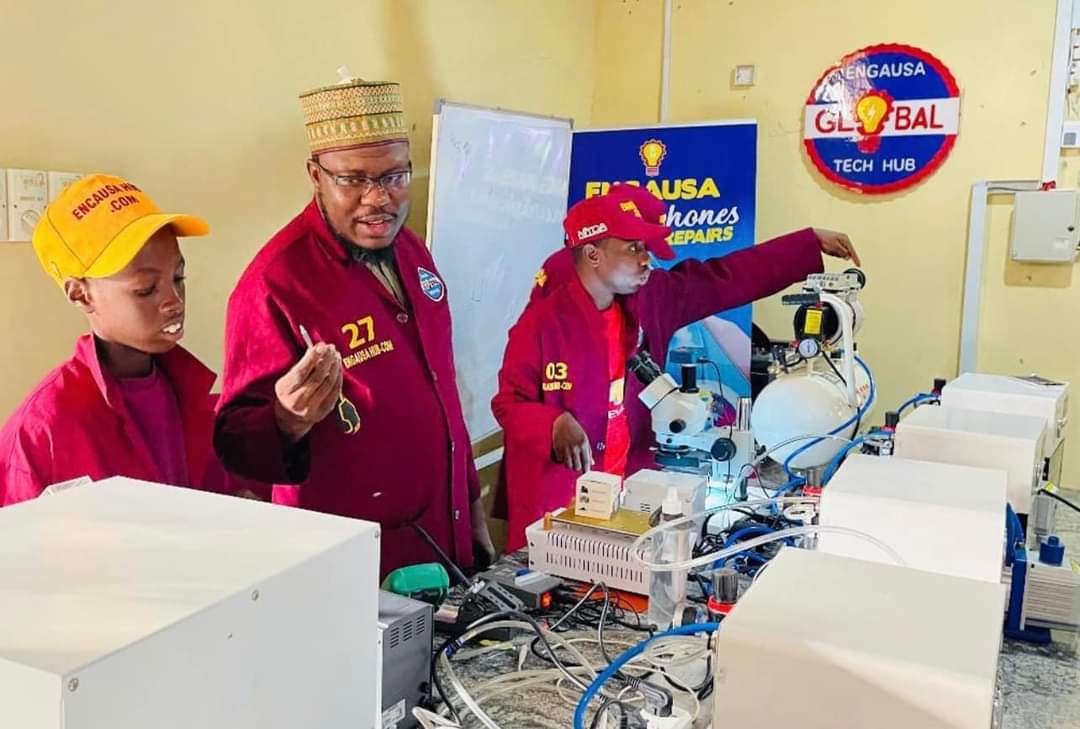
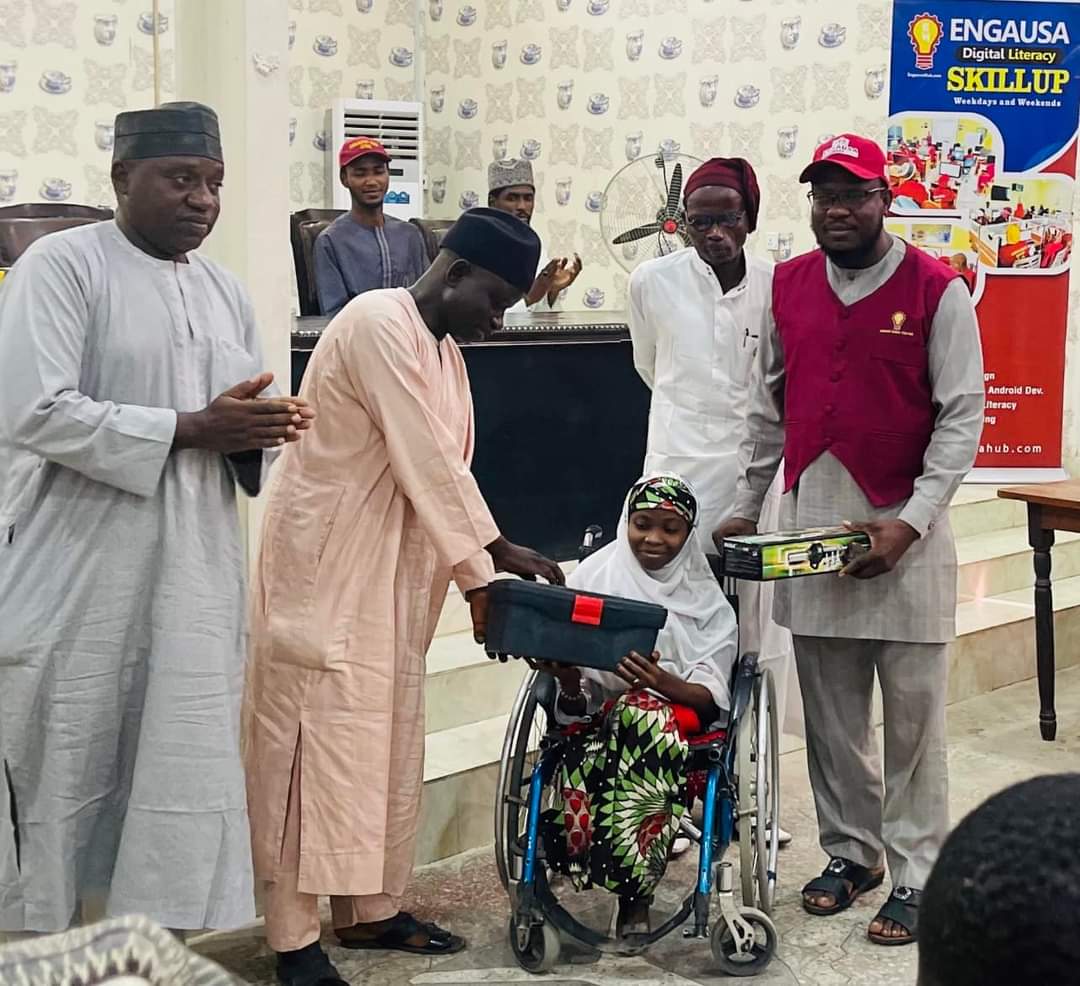
Ten students from ENGAUSA HUB, a pioneering educational centre focusing on imparting modern digital skills in the Hausa language, were recently gifted essential tools by an anonymous benefactor. 

The generous donation was extended to students, including recent graduates, who have displayed remarkable dedication to their studies. 

The unidentified donor, who preferred to remain anonymous, handed over the valuable tools to the students, emphasising his support for their educational pursuits.

This unexpected gift not only serves as a testament to the community’s collective commitment to nurturing young talents but also underscores the significance of empowering the youth with practical skills. 

ENGAUSA HUB, which stands out for its innovative approach to education by conducting classes in the Hausa language, is gearing up for its upcoming semester.

Prospective students are invited to seize this opportunity and enrol in the new semester, which commences on Monday,  October 23 2023. 

Aspiring learners interested in joining the ENGAUSA HUB classes can obtain further details by contacting the centre through the provided phone numbers: 07038224643, 0701 513 0683, or 0708 886 1618.

Additionally, comprehensive information about the courses and enrollment procedures is available on the official website: www.EngausaHub.com.

Graduates of Kano midwifery school still without licence 11 years after graduation

By Uzair Adam Imam

The future of some graduates of the Basic School of Midwifery in Dambatta hangs in the balance, as they were left without licences to practice their profession years after graduation.

The graduates recount their ordeal at the hands of the school management, saying that they have been left stranded for years.

The graduates accused the school management of “intentionally dragging them into a dilemma and academic standstill.”

A former student of the institution said that the licence “is the only thin veil that serves as a blockade to his future.”

Many of the former students of the institution decried alleged widespread corruption by the school officials, whom they accused of giving licences to only the well-connected.

The Daily Reality gathered that the licence that is issued to students upon successful completion of their studies is the only barrier between students and multiple job opportunities or university admissions waiting at their doorstep.

Our prayers for intervention were in vain.

The students said that all their efforts to seek intervention from the state government and relevant authorities were in vain, a development that exacerbates their condition.

Mukhtar Ali (not real name) said that some of the students had paid the amount prescribed by the institution to secure the licence, but they have neither received the licence nor a refund of their money.

However, it was gathered that among the students struggling to secure their licences were the first set of students at the institution who had completed their studies eleven years ago.

Members of the batch of graduates said that they had sought intervention from the immediate past administration in the state and the school management, but also agencies like the Human Rights Agency and Anticorruption, but the outcome was not fruitful.

A female student who preferred anonymity said that it was unfortunate that her future was being unjustly destroyed despite the huge investment her parents made in her studies.

She said, “Despite paying for the licence over the years, I have yet to secure it. However, some of my friends who have connections have already secured theirs.

“My fear is that some selfish individuals have gone with our money because the school management denied knowledge of our payment for the licence, even though we have paid. We went back to the place we made the payment, but the whole thing is confusing,” she added.

Another student told our reporter that the school management put pressure on them to pay for the licence as soon as they graduated.

“A very high pressure was mounted on us to pay this money by the school management. We paid N38,000 each. However, three years later, we are yet to secure the license.

“We are confused as to where the problem is. We are urging the Kano State Government to please come to our aid so that we can get our licence and move on.”

Sadiya Ibrahim, not her real name, said that she is totally disappointed by the development, saying her future is being robbed.

Sadiya Ibrahim said, “My fear is that the school management may require us to pay another N38,000, despite the receipt we showed them to prove that we had made our payment.

“The whole thing is so disturbing that the government should please intervene and talk to the relevant authorities about the development,” she stated.

Students with connections not involved

The students disclosed that other students who have connections with some politicians have already secured their licences, as many of them have started practicing or got admissions into the university.

They also stated that daughters of influential businessmen or traditional rulers grab their licences immediately after they graduate from school.

We are working to address the issue— Management

When contacted, Hajiya Asiya Sani, the principal of the School of Midwifery Dambatta, said that the school management has been working tirelessly to address the issue, saying their efforts have started to see the light of day.

She said some of these licences are now ready and will soon be distributed to the owners.She explained that the problem is a vital one that the school management has devoted its time to addressing.

She said, “I am aware of the problem. However, as I am speaking with you now, the Ministry of Health is involved in addressing the problem.

As it is known to everyone, including the students, we don’t give this license. Instead, we also applied for it.”                                               

Kano governor rescues students, releases funds for outstanding university fee

By Sabiu Abdullahi 

Kano State Governor Abba Kabir Yusuf has approved the release of funds to settle overdue registration fees for students sponsored by the state at Bells, Igbinedion, and Al-Qalam Universities. 

The decision aims to alleviate the burden on students who have faced eight years of neglect by the previous administration, enabling them to finally receive their graduation certificates. 

Governor Yusuf, emphasising his commitment to education, announced the move via his official Facebook page. 

The timely intervention has been met with relief and gratitude from students and their families, ensuring a brighter future for these deserving scholars.   

INEC refutes withdrawing from Kano governorship election petition case

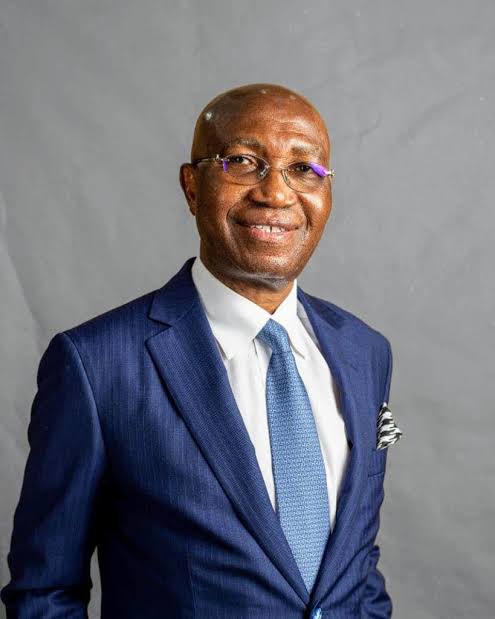
The Independent National Electoral Commission (INEC) has issued a statement to clarify recent confusion regarding its involvement in the Kano State Governorship election petition case.

Reports suggesting INEC’s withdrawal from the appeal process were based on an unauthorised letter, which has since been retracted. 

In an official announcement, Sam Olumekun, National Commissioner and Chairman of the Information and Voter Education Committee, noted that the letter in question was not authorised and does not reflect INEC’s stance.

He reassured the public and stakeholders that the INEC has not withdrawn from the case or abandoned the appeal.

When INEC is involved in a legal matter, the Commission is bound to respond appropriately, and this commitment remains steadfast. 

Olumekun reaffirmed INEC’s dedication to upholding the law and ensuring justice prevails.

He stated that the Commission has instructed its legal representatives to proceed with the case in accordance with established policies, which remain unchanged.