Kano

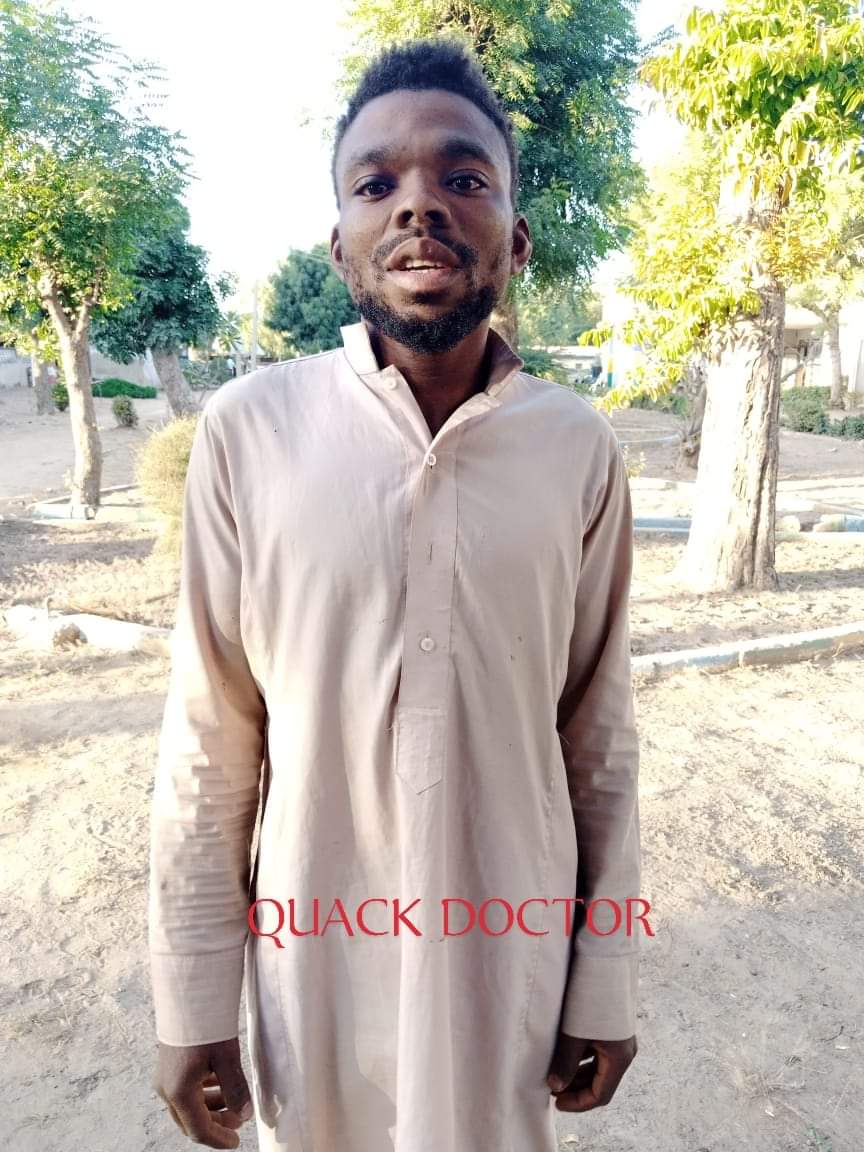
Kano road agency seizes fake drugs worth N50 million

By Muhammadu Sabiu

The Kano Road and Traffic Agency (KAROTA) has reportedly seized fake drugs worth N50 million in Kano.

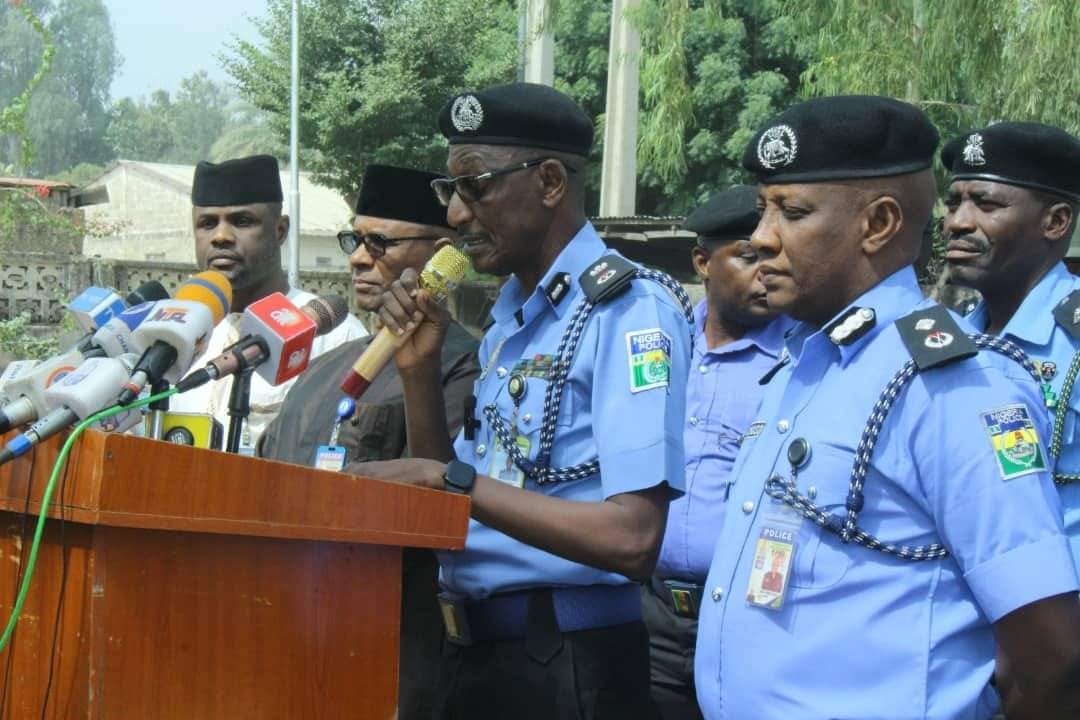
A spokeswoman for the agency, Nabilusi Abubakar, revealed this in a statement on Saturday in Kano.

He said, “The vehicle with plate number MMR 153 XA conveying fake drugs was apprehended on Friday night around 9:00 p.m. at Murtala Muhammed Way.

“Some of [our] personnel said they suspected the driver was carrying fake drugs.

“Immediately the driver saw the personnel, he ran away which prompted them to search the vehicle.

“The drugs alleged to be fake were analgesic (pain killers), cough syrup and malaria drugs.”

He recalled that the managing director, KAROTA, Faisal Kabir as said the agency would not allow illegal drugs to be brought into the state.

“Anyone found wanting will be seriously dealt with,” he said.

Mr. Kabir appealed to the general public to desist from buying drugs from hawkers and unregistered agents to avoid negative effects.

Kano governor announces 50% tuition fee reduction in state-owned tertiary institutions

By Muhammadu Sabiu 

In the wake of ongoing economic challenges and the recent policy shift to remove petrol subsidies, Kano State Governor Abba Kabir Yusuf has taken a significant step to ease the financial burden on students and their families. 

Announcing the reduction in a Facebook post yesterday, Governor Yusuf wrote: “Earlier today, I had an important meeting with the heads of all state-owned tertiary institutions in Kano State, where I directed that tuition fee at the institutions be slashed by 50% with immediate effect. – AKY”.

Governor Abba Kabir Yusuf emphasised the importance of affordable education and the need to support the populace during these testing times. 

In a meeting held earlier today, he met with the heads of various state-owned tertiary institutions within Kano State. 

During the meeting, the governor directed that tuition fees be slashed by half, offering much-needed relief to students pursuing higher education. 

The decision comes as the economic challenges faced by citizens have been exacerbated by the removal of petrol subsidies, a move aimed at addressing fiscal concerns. 

Governor Abba Kabir Yusuf’s decision to cut tuition fees reflects a commitment to alleviating financial pressures on families and promoting education accessibility. 

The tuition fee reduction is expected to positively impact thousands of students across Kano State, fostering an environment where higher education remains attainable despite economic constraints.

Kano government to spend N854m on mass wedding 

By Muhammadu Sabiu 

The Auren Zaurawa Mass Wedding Initiative will get N854 million from the Kano State Government. 

According to the government, this was approved on Wednesday at the state executive council meeting, looking at the nation’s economic situation. 

Abba Kabir Yusuf, the governor of the state, announced this on his verified X handle, formerly known as Twitter, on Thursday. 

He wrote, “Also from yesterday’s meeting. The Kano State Executive Council has approved the release of the sum of N854 million for the first phase of the Auren Zaurawa Mass Wedding Initiative. 

“And the sum of N700 Million for tuition fees of 7000 students of Bayero University Kano (BUK).” 

Recall that the governor also made an allocation for 7,000 native students at Bayero University Kano (BUK), who will receive N700 million to cover their tuition. 

Kano State governor allocates N700m for tuition fees of Kano natives at BUK

By Muhammadu Sabiu  

In a bid to alleviate the financial burden on students and families in the face of ongoing economic challenges, Governor Abba Kabir Yusuf of Kano State announced a significant financial commitment on his verified Facebook page yesterday. 

The governor’s post highlighted the decision made by the Kano State Executive Council, under his leadership, to allocate approximately 700 million naira for the payment of school fees for about 7,000 students hailing from Kano State and enrolled at Bayero University Kano (BUK). 

The move is expected to provide crucial financial relief to families struggling to meet educational expenses during these trying times. 

Details regarding the distribution and disbursement of the funds will be communicated to the students and the public in the near future. 

This initiative is part of the state government’s continued efforts to support education and ensure that the youth have access to quality learning opportunities despite the current economic constraints. 

Education has been a cornerstone of Governor Abba Kabir Yusuf’s administration, and this latest move underscores his commitment to prioritising the welfare of students and their families. 

As the payment process unfolds, many are anticipating the positive impact this allocation will have on the lives of the students and their educational journeys. 

Recall that tuition fees at Bayero University have recently increased to an unprecedented high, which forced many students to drop out due to their inability to meet the payment.

BUK initiates N15,000-per-month job scheme for students

By Muhammadu Sabiu 

Professor Sagir Adamu Abbas, the vice chancellor of Bayero University, Kano (BUK), has revealed that the university has implemented a job programme for students in which the university hired students to do some jobs for it in exchange for N15,000 per month. 

Delivering a speech over the weekend in Kano when he met a group from the university’s main campus and the Education Correspondents Association of Nigeria (ECAN), Adamu-Sagir said: “The university equally introduced a kind of job scheme for students, whereby they were engaged to render some services to the university, and they were paid N15,000 monthly.  

“This does not affect their normal learning because it does not take much of their time as some were to clean some surroundings or render certain minor service within the university and got paid at the end of the month.”

The Vice-Chancellor bemoaned the large expense of maintaining the institution in his remarks over the rise in registration fees, particularly the exorbitant cost of providing fuel. 

He disclosed that the monthly cost of power is approximately N35 million, and the cost of diesel for generator purchases is approximately N40 million. 

He also noted that with a student body of almost 45,000, including postgraduates, and a staff of over 5,000, both teaching and non-teaching, it was practically impossible to provide social services. As a result, the management was compelled to hike registration fees.

Dantata loses wife in Saudi Arabia

By Ahmad Deedat Zakari

Elder statesman and billionaire Alhaji Aminu Dantata has lost his wife to the chilly hands of death.

Hajiya Rabi Tajudeen Galadanci, the second wife of the billionaire, passed on after a protracted illness in the Kingdom of Saudi Arabia.

The deceased septuagenarian is survived by her husband and six children. Her children include Tajjuddeen Dantata, Batulu Dantata, Hafsa Dantata, Jamila Dantata, Aliya Dantata and many grandchildren.

A grandson of the deceased, Sunusi Dantata, confirmed her demise on his verified Twitter account. “Please pray for our mother, grandmother, great-grandmother, Haj. Rabi, wife of Alh. Aminu Dantata, who died yesterday after a protracted illness!

“May Allah forgive her, accept her good deeds, and grant her the highest rank in Paradise, Ameen!“Innalillahi Wa Inna Ilaihirrajiuun” He tweeted

Hausa names as ethnographic identifiers

By Prof. Abdalla Uba Adamu

It happened 40 years ago. A friend’s wife in Kano had delivered a bouncing baby boy. My friend chose Maikuɗi as the name for the baby. The families on both sides were having none of this. Maikuɗi was not a name, they argued. But he saw nothing wrong with it – a nice traditional Hausa name. He was adamant. They were adamant. Cue in A Mexican Standoff.

Three days before the naming ceremony, he blinked first and apparently gave up. With a glint in his eyes, he decided to name the child Ibrahim. A beautiful Hebrew name but cognately shared by both Muslims and Christians (from Abraham, the father of all). Everyone was happy – until it dawned on everyone that Ibrahim was the name of my friend’s father-in-law. Tricky. In Hausa societies, the names of parents are never uttered. In the end, everyone ended up calling the boy Maikuɗi! Right now, the boy is a successful international businessman living in the Middle East. Earning serious cash and living up to his name – which means one born on a lucky day. Or Tuesday.

A few years later, the same friend’s wife gave birth to a beautiful baby girl. He decided to name her Tabawa. Objections reloaded. Cue in Dog Day Afternoon. As previously, my friend blinked first. He decided to name her Hajara, another cognate of Hagar, the wife of Abraham. It also happened to be the name of his eldest sister. His mother could not utter it – both the Hausa and Fulani system of cultural relations prohibit mothers from calling the names of their first series of children. In the end, everyone ended up calling the child Tabawa. She is currently a university lecturer and a doctoral student in Nigeria. Living up to her name – which means Mother luck, or the name given to one born on Wednesday (in Kano; in Katsina, it is Tuesday) is considered a lucky day. Two children, both lucky in their lives. Their traditional Hausa names became their mascots as they glided successfully through life.

So, why the aversion to Hausa ‘traditional’ names? You can’t name your child Maikuɗi, but everyone will applaud Yasar (wealthy – mai kuɗi?). Or Kamal (perfection). Or Fahad (panther). Or Anwar (bright). Or Fawaz (winner). You can’t name your daughter Tabawa, but it is more acceptable to call her Mahjuba (covered). Or Samira (night conversationist –TikToker?). Name your daughter ‘Dare’, and you are in trouble. Change it to Leila, and you out of it, even though this is an Arabic for ‘dare’ (night).

A lot of the names the Muslim Hausa currently use have nothing to do with Islam. Bearers of such names rarely know their actual meaning or context. They were Arabic and forced on us by the Cancel Culture that attaches a derogatory ‘Haɓe’ coefficient to anything traditional to the Hausa.

Therefore, my friend, whose family story I just related, another friend and I decided to get together and be Wokish about traditional Hausa names. Paradoxically, none of us is genetically Hausa (whatever that might mean) – one had roots in north Africa, another had Kanuri heritage, and one had Agadesian and Torodbe roots – but all of us self-identified, with absolute honour and tenacity, as Hausa. None of this ‘Hausa-Fulani’ aberrational nonsense.

‘Hausa-Fulani’ appellation, in my view, is a Nigerian Cancel Culture device to suppress the Fulani culture. The Fulani may have conquered the ruling of the Hausa (except in one or two places) and imposed their rule. The Hausa, on the other hand, have linguistically conquered the Fulani. In Kano, claiming Fulani heritage is considered anthropological purity – without knowing a single word of Fulfulde (the Fulani language). Substituting rulers does not get rid of the general populace who remain what they are.

The third friend then took the task with gusto. He spent over ten years compiling authentic traditional Hausa names that have absolutely nothing to do with ‘Maguzanci’ (the label gleefully and contemptuously attached to any Hausa who is not a Muslim by the Hausa themselves) before Islam in about 1349, at least in Kano). He also collected names that had only a tinge connection to Islam. The end product was a hitherto unpublished list of 1001 authentic, genuine, traditional Hausa names that reflect the cosmology of the Hausa.

Hausa’s anthropological cosmology reflects the worldview and belief system of the Hausa community based upon their understanding of order in the universe. It is reflected in their naming system – just like any other culture. The Yoruba Muslims, for the most part, have retained this attachment to their traditional cosmology. Farooq Kperogi has done wonderful work on Yoruba naming, although with a focus on their adaptation of Muslim names. The failure of the Hausa to do so was, of course, due to the suffocating blanket of Cancel Culture that the Hausa had been suffering for almost 229 years.

Now, let’s look at the names and their categories. The first category I created from the 1001 Names, which I edited, revolved around Being, Sickness and Death. As noted earlier, the traditional Hausa centre their naming conventions on ecological and cosmological observations—using time, space and seasons to mark their births. Based on this, the first naming convention uses circumstances of birth. This category of names refers to the arrival of a child after another child’s death, the death of a parent, the sickness of the child immediately after being born or a simple structure of the child that seems out of the ordinary. Examples include:

Abarshi. This is derived from the expression, ‘Allah Ya bar shi’[May Allah make him survive]. A male child was born after a series of miscarriages. A female child is named Abarta. A protectionist naming strategy is where the child is not given full loving attention after birth until even evil spirits note this and ignore it and thus let him be. Variants include Mantau, Ajefas, Barmani, Ajuji, and Barau. Now you know the meaning of Hajiya Sa’adatu ‘Barmani’ Choge’s name – the late famous Hausa griotte from Katsina (1948-2013).

Then there is Shekarau, derived from ‘shekara’, a year. A male child is born after an unusually long period of gestation in the mother’s womb. A variant of this name is Ɓoyi [hide/hidden]. A female child is named Shekara. Now you know the meaning of the surname of Distinguished Senator Malam Ibrahim Shekarau from Kano.

A third example is Tanko. This is a child born after three female children. Variants include Gudaji, Tankari, Yuguda/Iguda/Guda. I am sure you know the famous Muhammed Gudaji Kazaure, a Member of the House of Representatives of Nigeria and his media presence in late 2022.

Each of these sampled names reflects a philosophical worldview, reflecting spiritual resignation or slight humour. They, therefore, encode the traditional Hausa perspective of living and dying as inscribed in the way they name their children.

Names that even the contemporary Hausa avoid because of bad collective memory are those linked to wealth and being owned or slavery.

Slaves have prominently featured in the political and social structure of the traditional Hausa societies, especially in the old commercial emirates of Kano, Zaria, Daura and Katsina. Their roles are clearly defined along socially accepted norms, and they are expected to perform given assignments demanded by their masters.

Slaves in Kano are divided into two: domestic and farm-collective. Trusted and, therefore, domesticated slaves are mainly found in ruling houses and are prized because of their loyalty to the title holder. Farmyard slaves were often captured during raids or wars and were not trusted because of the possibility of escape. They were usually owned by wealthy merchants or farmers and were put to work mainly on farms

Although the institution of slavery as then practised has been eliminated in traditional Hausa societies, the main emirate ruling houses still retain vestiges of inherited slave ownership, reflected even in the categorisation of the slaves. For instance, in Kano, royal slaves were distinguished between first-generation slaves (bayi) and those born into slavery (cucanawa).

At the height of slave raids and ownership, particularly when owning a slave was an indication of wealth, the names of the slaves often reflected the status of the owner. Examples of these names include Nasamu (given to the first slave owned by a young man determined to become a wealthy man), Arziki (first female slave owned by a man), Nagode (female slave given away to a person as a gift), Baba da Rai (first gift of a male slave to a son by his father), Dangana (male slave of a latter-day successful farmer or trader, although later given also to a child whose elder siblings all died in infancy. The female slave variant is Nadogara), and Baubawa (slaves with a different faith from the owner), amongst others.

The changing political economy of Hausa societies since the coming of colonialism has created new social dynamics, which included the outward banning of slavery. Thus, many of the names associated with slaves and ‘being-owned’ in traditional Hausa societies became disused, unfashionable, or, which is more probable, to be used without any idea of their original meaning. It is thought that some records of them may be of value. An example is ‘Anini’, usually a slave name but later used to refer to a child born with tiny limbs. The ‘smallness’ is also reflected in the fact that ‘anini’ was a coin in the Nigerian economy, usually 1/10th of a penny—a bit like the small Indian copper coin, ‘dam’ (from which the English language got ‘damn’, as in ‘I don’t give a damn’).

Further, with the coming of Islam, slave names were eased out and replaced by conventional Muslim names as dictated by Islam, Retained, however, are slave names that also served as descriptors of the functions of the slave, even in contemporary ruling houses. Examples of these slave titles, which are rarely used outside of the places, include:

Shamaki (looks after the king’s horses and serves as an overseer of the slaves), Ɗan Rimi (King’s top slave official and looks after all weapons), Sallama (King’s bosom friend [usually a eunuch], same role as Abin Faɗa), Kasheka shares the household supplies to king’s wives [usually a eunuch], Babban Zagi (a runner in front of the king), Jarmai (the head of an army), Kilishi (prepares sitting place for the king), amongst others. These names are almost exclusively restricted to the palace and rarely used outside its confines. Cases of nicknames of individuals bearing these names remain just that but had no official connotation outside of the palace.

The coming of Islam to Hausaland in about the 13th century altered the way traditional Hausa named their children and created the second category of Hausa beside the first ‘traditional’ ones. This second category became the Muslim Hausa, which abandoned all cultural activities associated with the traditional Hausa beliefs. This was not an overnight process. However, taking it as it does, centuries. Even then, a significant portion of Muslim Hausa material culture remains the same as for traditional Hausa. The point of departure is in religious or community practices, which for the Muslim Hausa, are guided by tenets of Islam.

Affected at this point of departure is naming conventions. This is more so because Islam encourages adherents to give their children good meaningful names. These names must, therefore, not reflect anything that counters the fundamental faith of the bearer or reflect a revert to a pre-Islamic period in the lives of the individuals.

However, while predominantly accepting Muslim names, traditional Hausa parents have domesticated some of the names to the contours of their language. For instance, Guruza (Ahmad), Da’u (Dawud), Gagare (Abubakar), Auwa (Hauwa), Daso (Maryam), Babuga (Umar), Ilu (Isma’il), amongst others.

So, here you are. If you are looking for an authentic, ‘clean’ traditional Hausa name or trying to understand your friend’s traditional Hausa name (or even yours), you are welcome to 1001 Traditional Hausa names.

The list is divided into two. The first contains 869 authentic traditional Hausa names. The second contains 132 Arabic/Islamic that the Hausa have somehow domesticated to their linguistic anthropology.

The file is available at https://bit.ly/42HJl97.

Ummita murder: that Chinese killer must be punished

By Tajuddeen Ahmad Tijjani

It was a very horrible incident how a Chinese man unjustly killed Ummakulsum in Kano State on Friday, September 16, 2022. No one could understand the real motives about how the young lady died so young in the hands of the evil man who was alleged to be her lover.

In Nigeria, the lives of ordinary citizens are becoming so easily taken and only become viral on social media without pursuing the incident to a logical conclusion. Indeed, it’s a duty upon the authorities to unravel the circumstances in which criminal activities are occasionally occurring in our country. Perhaps, we take it for granted that a foreigner could be allowed to perpetrate this criminal act in our midst. Even though every immoral act stands condemned no matter who’s involved.

Ummi or Ummita, as she’s popularly known, wasn’t the only case that happened in the community. Most young girls find fun in associating with people of different colours and unknown backgrounds. We must be concerned and warn our sisters to be cautious of who they associate with, and the community should, of course, be wary of people of questionable character approaching our sisters.

Sadly, the search for  exuberant life exposes women and girls to rapists and urchins who hide behind the cover of white skin to harm and spoil, thereby causing untold psychological, mental, health and physical trauma to young ladies in the country. Even though this happened in a most horrible way, but it shouldn’t be left to fade and wane, we must take precautions. In most cities, for example, we see young girls hiding behind as secretaries or even direct lovers to these white men, resulting in disasters and the destruction of their lives.

In general, what you can’t take away from us is that our inbuilt traits are not dead in us. It is true we love foreigners, mostly white men, for the simple fact that we feel they are more distant from us and we crave to make them feel at home, make them feel more comfortable in Nigeria, but that should not be taken for granted to take advantage of our kindness and inflict untold hardship on us. The gruesome murder of Ummita is highly unfortunate and indeed unacceptable.

However, security agencies must ensure the Chinese man is punished according to the law of the land to serve as a deterrent to others with similar bad intentions.

Tajuddeen Ahmad Tijjani writes from Galadima Mahmoud Street, Kasuwar Kaji Azare, Bauchi State, Nigeria.

World Bank funded project to renovate 614 schools, give token to 38,000 girls in Kano

By Muhammad Aminu

At least 614 public secondary schools in Kano State will be renovated through the World Bank funded project called ‘Adolescent Girls Initiative for Learning and Empowerment (AGILE).

The project which will be implemented by the Schools-Based Management Committees (SBMCs) of the benefiting schools has budgetted N1.8 billion naira so far.

The Deputy Project Coordinator of the programme, Nasiru Abdullahi, stated this during a courtesy visit to the Emir of Bichi, Nasiru Bayero, alongside other staff of the project on Thursday, 11th August, 2022 in Bichi.

“The SBMC committee has community and religious leaders, representation from self-help organization, and students, among others.

“The Principal is the secretary of the committee who knows the problems of the school better,” he said.

He said that the funds had already been credited into the bank accounts of the Schools-Based Management Committees, SBMCs, of the participating schools in the State.

According to him, the SBMCs members had been trained on the key priorities of their schools for the attainment of the desired objective.

He noted that each school received an amount of money based on the nature of project it will undertake.

“Close to N1.8 billion has been granted to the schools, which is half of what the schools will get, in order to ensure effective utilisation of the funds.

“Any school that finished its project will get the balance for the remaining project.

“The money is in the account of each of the benefiting schools. A school will come to AGILE to get clearance, which it will take to bank and withdraw the money,” he said

The deputy coordinator further revealed that the project is targeting close to 38,000 girls from vulnerable households for Conditional Cash Transfer which will be followed by training on digital skills.

He said that the girls would be trained on skills that would assist them to become self reliant in their maritall homes.

He, therefore, solicited for the support of the traditional ruler for the success of the project.

On his part, the Emir vowed to support the project wholeheartedly and urged all other relevant stakeholders to intensify efforts in improving the capacity of teachers.

“We are not saying construction is not good, but the teachers who will impart the knowledge to the students need to be improved.

“More teachers should also be recruited, and trained regularly to acquaint them with modern teaching techniques,” he advised.

He called on parents to desist from withdrawing girls from schools for marriage, counselling that girls should proceed to higher education after secondary schools.

Advocacy, ethics and the trial of Abduljabbar Nasiru Kabara (I)

By Ibrahim Ahmad Kala, LL.M

The one-time Attorney General of the Federation and Minister for Justice in the Second Republic, Late Chief Richard Akinjede, SAN once asserted that oral Advocacy is a special science and art skill of good courtroom lawyers which is likened to the scene in Julius Caeser that took the form of funeral orations by Brutus and Antony over Ceaser’s corpse. Having just killed Ceaser, the conspirators wanted Brutus to assure the Romans that all was well and that Ceaser’s death was necessary to prevent tyranny. Antony, Ceaser’s close friend, feigned solidarity with the conspirators and persuaded them that he too should say a few words over Ceaser’s body.

In comparing Brutus and Antony as orators, we should remember two other classical orators: Cicero and Demosthenes. When Cicero finished an oration, the people would say: “How well he spoke”.  But when Demosthenes finished speaking, the people would say: “Let us March”. Brutus was like Cicero and Antony like Demosthenes. Brutus won respect, but Antony started a riot.

The funeral orations which exemplify an extraordinary example of how Shakespeare can bear on the law, underscore the effectiveness of oral Advocacy which a lawyer should read before addressing the court in a major trial.

Regrettably, like Antony, Bar Shehu Usman Dalhatu on 7/7/2022 in his appearance while defending Sheikh Abduljabbar Nasiru Kabara before a Sharia Court of Kano State, caused stirred on social media and openly accused the trial judge of being unlike Ceaser’s wife of not sitting above board in the case. As seen in a viral video, the counsel was heard castigating the court for allowing the prosecution to ask “all sorts of questions such as asking the defendant when his father died? Which he argued, is not contained in the charge,” during cross-examination,  and “denying his client right to make a no-case submission”, saying no prima facie case was established against him. According to the Daily Trust report, the mild drama led the defence counsel, Dalhatu Shehu-Usman to walk out on the judge.

The Kano State Government had charged Kabara with four counts, bordering on blasphemous comments against Prophet Muhammad (PBUH) on Aug.10, Oct. 25 and Dec 20, 2019.

With due respect to all, the entire scenario that played out in the court is, to say the least, highly nauseating and totally against the professional ethics required of players in the administration of justice in this country. In one of my previous articles on the relationship between the Bar and the Bench, I penned down as follows:

In R. vs. O’Connell (1844) p261 at 312-313 lifted from Oputa JSC’s book “OUR TEMPLE OF JUSTICE” p.14, Crampton J. said thus:

“This court in which we sit is a Temple of Justice, and the Advocate at the Bar as well as the Judge on the Bench are equally ministers in that Temple. The object of all, equally, would be the attainment of justice…”

Oputa JSC further distilled some guiding principles on the relationship between the Bench and the Bar as follows:

 “Lawyers and Judges being instruments of justice are honoured and honourable.

Such honourable men should not allow ‘the infirmity of human nature and the strength of human passion’ to lead them astray, let alone lead them to perpetuate an outright injustice.

The Legal profession is not just another avenue for quick money-making by hook or crook. To so conceive the profession, is to degrade it.”

Similarly, Richard Du Cann in his book: “The Art of the Advocate” speaking on the duty of the Advocate while quoting Lord MacMillan, a Lord Advocate-General in Scotland and a member of the Judicial Committee of the House of Lord’s declared the duty in fivefold as follows:

“In the discharge of his office, the Advocate has a duty to his client, a duty to his opponent, a duty to the court, a duty to himself, and a duty to the state. The duties, in fact, begin long before he rises to his feet resplendent in horsehair wig and stuff gown”.

Hence, it is not part of the duties of a Lawyer to win at all costs or at any cost. There is rather a heavy cost to winning at all costs and that cost is disdain and dishonour and the desecration of the sacred temple of justice. Judges and Lawyers have a prior and perpetual retainer on behalf of the truth.

All these, therefore, reflect very much the tradition of the legal profession on the relationship between the Bar and the Bench, and which is one of reciprocity. The smooth administration of justice envisages the existence of courageous, efficient, honest and fearless Bar and Bench.

The Bench is entitled to unqualified respect from the Bar and so expects it. The least Magistrate Court, Area, Sharia or Customary Court and the highest court of the land are equally entitled to this respect. Members of the Bar stand up when they address or are addressed by the Bench.

The counsel who easily picks up quarrels with the Bench acts in contravention of this important duty. The duty of respect which is as old as the profession itself is highlighted under Rule 1(a) of Rules of Professional Conduct as follows:

It is the duty of the Lawyer to maintain toward the Court, a respectful attitude, not for the sake of the temporary incumbent of the judicial office, but for the maintenance of its supreme importance. Judges not being wholly free to defend themselves against criticism and clamour. Whenever there is a proper ground for a serious complaint of a judicial officer, it is the duty of the Lawyer to submit his grievances to the proper authority. In such cases, but not otherwise, such charges should be encouraged and the person making them should be protected.

This aged-long tradition of respect has crystallized into a solid cornerstone in the edifice of the Bar-and-Bench relationship. You alone cannot change the position overnight. The tradition is so well established at the Bar that, even when counsel has nothing but rude remarks to make, by tradition he is expected to start by saying: “With respect”.

These ethics demanded the best of Man: obedience and decency, as it was demanded that Adam (A.S) should keep his own part of the bargain, and he did not; that was unethical and there came his fall.

The court is where counsel will spend the rest of his years at the Bar trying to persuade to his view. One cannot carry it along with him if, by lack of manners, one alienates its feelings beyond recall or consistently.

To be continued

Ibrahim Muhammad Kala Esq is the Head of Litigation Department, Court of Appeal Gombe division and can be reached via ibrokalaesq@gmail.com