Kano

Political dynamics in Kano State: A reflection on the emirate controversy

By Dr. Mansur Hassan

In recent years, Kano State has been a focal point of political intrigue and traditional authority upheaval. This period of tension can be traced back to the administration of Governor Abdullahi Umar Ganduje, who, in 2019, made the contentious decision to create five new emirates: Kano, Gaya, Karaye, Bichi, and Rano. This move significantly altered the traditional power structure within the state.

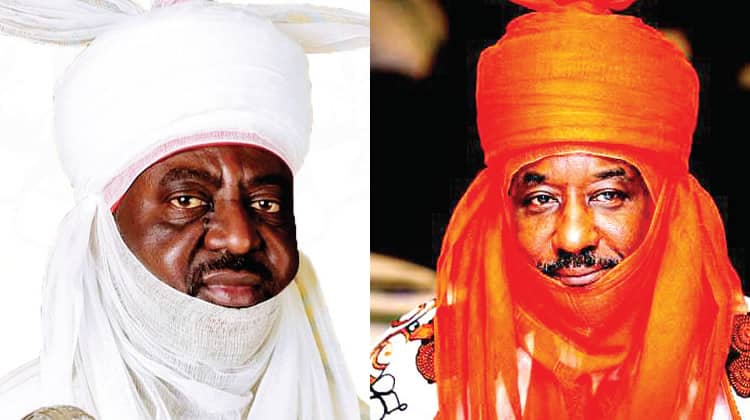
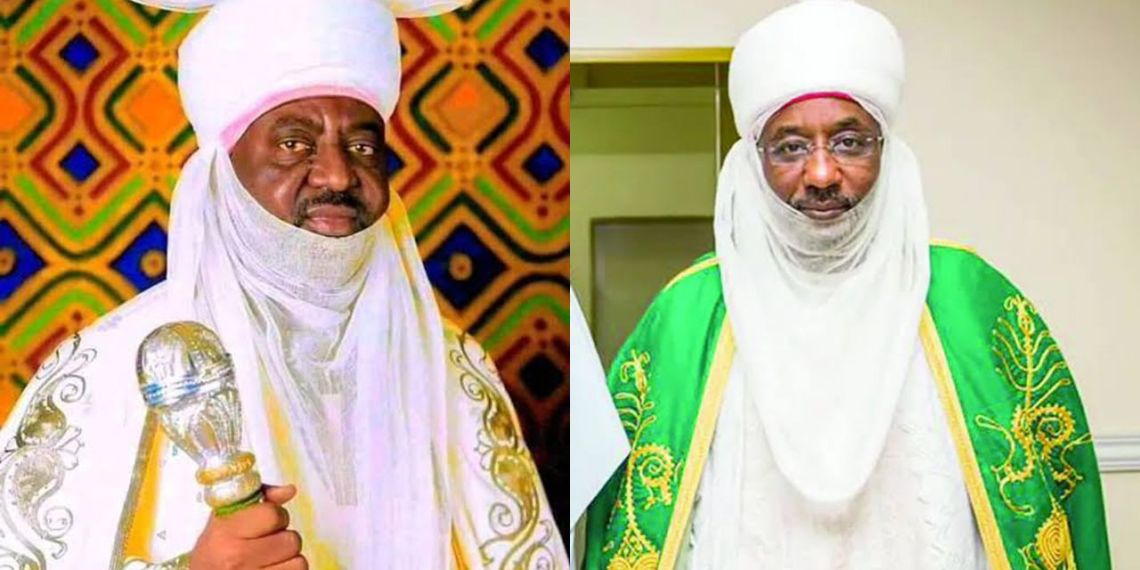
The catalyst for this decision was an alleged accusation that the then Emir of Kano, His Royal Highness Muhammad Sanusi II, was supporting the opposition party and not endorsing Ganduje’s re-election bid in 2019. In an effort to diminish the influence of Emir Sanusi, Ganduje went as far as removing him from his position. Subsequently, HRH Alhaji Aminu Ado Bayero was appointed as the new Emir of Kano.

This drastic change sparked debates and criticisms, particularly because it was executed despite a court order against it. However, the opposition, notably the Kwankwasiyya movement, chose not to incite unrest, highlighting their commitment to peace despite the significant political provocation.

The creation of the new emirates was perceived by many as a strategy to dilute the power and influence of the traditional emirate system. This move arguably undermined the dignity and historical significance of the Kano Emirate, not just within Nigeria but across the continent.

In a turn of events, the Kano State House of Assembly in 2024 decided to review and reverse the law that led to the creation of the five emirates. The Kano State Emirate Council (Repeal) Bill 2024 (1445 A.H) was enacted, aiming to restore the traditional structure to its former status:

Title and Commencement: This bill, officially cited as the Kano State Emirates Councils (Repeal) Bill, 2024 (1445 A.H), outlines the legislative intent and its commencement.

Repeal of Previous Laws: It repeals the Kano State Emirates Council Law, 2019 (1441 A.H), and all amendments made thereafter.

Abrogation of New Emirates: All offices created under the repealed law are abolished, and appointments made under the law are set aside.

Restoration of Traditional Titles: Traditional office holders and title holders elevated under the repealed law will revert to their previous positions based on recognized customs and traditions.

Governor’s Authority: The Governor is empowered to take necessary measures to restore the status of the Kano Emirate System as it was before the enactment of the repealed law.

Commissioner’s Role: The Commissioner responsible for Local Government will oversee transitional arrangements concerning assets and liabilities of the abolished emirates.

Key Questions and Concerns:

Legislative Reversal: Can the state House of Assembly reverse a law passed and assented to by the executive governor? Legally, a state assembly has the authority to repeal or amend existing laws, provided due legislative process is followed and the bill receives the governor’s assent.

Federal Intervention: Concerns arise about external influences, particularly from Abuja, creating unnecessary tension by attempting to reinstate the deposed emir through federal power and security agencies.

A Call for Unity:

To the people of Kano State, it is imperative not to allow external forces or individuals, who have lost the people’s trust, to manipulate the situation for political gains. The matter of the emirate is deeply rooted in tradition and should remain an internal affair. Both the reappointed Emir Muhammad Sunusi II and the deposed Emir Aminu Ado Bayero are brothers, and resolving this issue amicably is crucial for maintaining peace and dignity within Kano.

In conclusion, the political and traditional landscape of Kano State is at a crossroads. It is a time for reflection and careful consideration of actions that uphold the integrity and historical heritage of the Kano Emirate. The recent legislative changes signify a potential return to stability and respect for traditional structures, but it requires collective effort and respect for due process.

Mansur Hassan, PhD wrote the article and can be reached via mhassan@yumsuk.edu.ng

Police in Kano vow to enforce court order that stops Sanusi’s reinstatement

By Sabiu Abdullahi 

The Kano State Police Command has announced its commitment to upholding a federal court order that prohibits the reinstatement of Emir Muhammadu Sanusi II as Emir of Kano. 

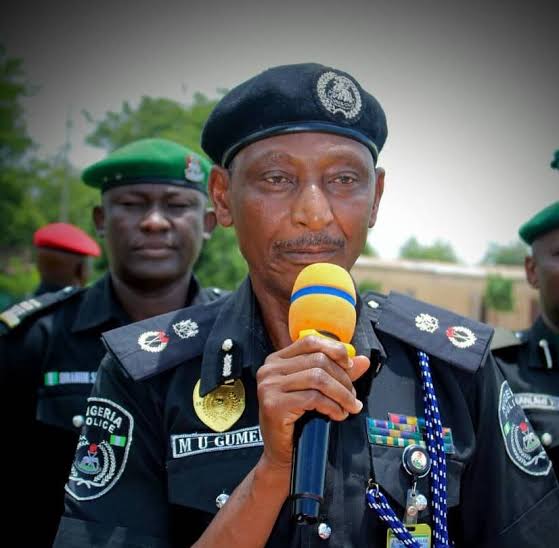
In a press briefing held at the Bompai command headquarters on Saturday, Commissioner of Police Usaini Gumel assured that the command and its sister agencies would ensure peace and stability in the state, warning that anyone attempting to incite violence or disrupt public order would be dealt with decisively. 

The court order, granted by Justice A.M. Liman of the Federal High Court on Thursday night, restrains the Kano State Government from reinstating Emir Sanusi II, who was deposed in March 2020.

The order was issued despite Justice Liman’s reported absence from the country, currently being in the United States. 

The case was filed by Aminu Babba-Dan’Agundi, a traditional title holder, and Sarkin Dawaki Babba, who sought the court’s intervention to prevent the reinstatement of Emir Sanusi II. 

The police command’s vow to enforce the court order comes amidst heightened tensions in the state, with many fearing a potential outbreak of violence over the emirate dispute.

Commissioner Gumel’s warning serves as a clear message to those who may attempt to disrupt the peace, stating the command’s commitment to maintaining law and order in Kano State. 

As the situation continues to unfold, residents and observers alike are closely watching the developments, hoping for a peaceful resolution to the emirate tussle.

Controversy erupts in Kano as emirate councils law repealed, Sunusi reinstated

By Uzair Adam Imam

The Kano State House of Assembly has repealed the Kano State Emirate Councils Law, which had established five new emirates in Kano, Gaya, Karaye, Rano, and Bichi during the administration of former Governor Abdullahi Umar Ganduje.

The law’s repeal, following its third reading on Thursday, has elicited mixed reactions among Kano residents.

The abrogated law will require district heads who were elevated or appointed under it to revert to their previous positions.

When the law was initially established in 2019, there were fears that it might politicize the traditional emirate system.

Kano residents expressed their opinions on social media, with some viewing the repeal as a politically motivated move, while others saw it as a step towards restoring the integrity of the emirate council.

Critics of Ganduje’s administration argue that the creation of new emirates undermined the traditional system.

Every new government to bring with it new emir

Dr. Ibrahim Siraj, a political analyst and lecturer at Bayero University, Kano, criticized the development, warning that it could lead to every new government appointing a new emir, thereby politicizing the emirate system.

“An interesting precedent has been set here in Kano: every change of government will bring with it a new emir and an entirely different emirate system,” he said.

He lamented that this could lead to numerous living but non-serving emirs, breaking the tradition of lifelong service.

Abdulyassar Abdulhamid expressed a broader concern, stating, “My concern is not about the emir’s removal or the installation of a new one. But a theory I have been nourishing for some time is giving way to reality.

“The struggle, the loudmouth(ness), the so talked-about intellectualism is about an excessive desire to be on a throne. Nothing more,” he added.

Ado Garba noted that those who supported the previous government’s decision to create new emirates were now seeing the repercussions.

“But because the majority of us are not sincere, they refused to see reasons. Now, here we are. Ganduje will never be forgiven by the good people of Kano,” he said.

Atiku Mu’amun Bello highlighted the anomaly of having one person potentially serving as both the 14th and 16th Emir of Kano.

“So we will just call him ‘former emir’ when he eventually leaves or is dethroned,” he added.

History repeats itselfUman Garba, reflecting on the historical context, stated, “There is nothing new on earth. Just history repeats itself. Let us simply accept the fate and move on.”

Abdulmalik Shu’aibu emphasized the importance of the emirate councils and questioned the motives behind the repeal by Governor Yusuf and Rabi’u Musa Kwankwaso.

“If truly Governor Abba and Kwankwaso love Kano, they shouldn’t have underestimated the tremendous contribution by the emirate councils in the state,” he asserted.

Yusuf Umar Yaro described the repeal as political retaliation, arguing that it was not aimed at the development of the state or its people.

The repeal of the Kano State Emirate Councils Law has sparked significant debate, reflecting deep divisions over the role and politicization of traditional institutions in Kano.

Court halts reinstatement of Sanusi as emir of Kano

By Uzair Adam Imam

A Federal High Court in Kano has issued an order halting the reinstatement of Muhammadu Sanusi II as the Emir of Kano.

The court’s decision came in response to a lawsuit filed by Alhaji Aminu Bappa Dan Agundi, also known as Sarkin Dawaki Babba, on Thursday.

Justice A.M Liman, the presiding judge, granted an interim injunction suspending the implementation of the repealed Kano Emirate law, which aimed to reinstate Sanusi II as the Emir.

The court ordered that the operation of the Kano State Emirate Council (Repeal) Law, 2024, be suspended, affecting all offices and institutions created under the provision of the Kano State Emirate Council Law, 2019.

The court also restrained the 5th to 8th respondents (not specified in the report) from enforcing, executing, or implementing the repealed law.

Additionally, the court ordered the maintenance and preservation of the status quo by all parties involved, pending the hearing and determination of the plaintiff’s originating motion.

The court also granted an order for an accelerated hearing on the matter.

This development means that Sanusi II’s reinstatement as Emir of Kano has been put on hold pending the court’s further decision.

Sanusi Lamido reinstated as Emir of Kano, dothroned emirs ordered to vacate palaces

By Uzair Adam Imam

Governor Abba Kabir Yusuf of Kano State has reappointed Malam Muhammadu Sanusi II as the Emir of Kano, a position he was removed from in 2020.

The governor announced the appointment on Thursday at the Government House, shortly after signing the Kano Emirate Law as amended.

The signing ceremony was attended by the Deputy Governor, Speaker of the State Assembly, and other principal officers of the government.

With this development, Sanusi II has been officially reinstated as the Emir of Kano.

In a related development, Governor Yusuf has directed the five former emirs of Kano, Bichi, Rano, Gaya, and Karaye to vacate their palaces within 48 hours, starting from 5:00 pm on the day of the announcement.

They have also been ordered to hand over all properties in their possession to the Commissioner for Local Government/Deputy Governor.

This move is seen as a reversal of the decision made by former Governor Abdullahi Ganduje, who had dethroned Sanusi II in 2020 following a personal rift.

More details to follow…

JUST IN: Kano assembly repeals emirates council law

By Uzair Adam Imam  

The Kano state house of assembly has passed the Kano Emirates Council Law (Repeal Bill) 2024 after scaling its third reading.  

The law has abrogated the establishment of five new Emirates in the state. All offices established under the repealed law have been set aside by the new bill. 

Also, all district heads elevated or appointed under the repealed law are to revert to their previous positions. 

The Kano State Emirates Council (Amendment number 2) Law, 2024, was sponsored by the Majority Leader and member representing the Dala Constituency, Lawan Hussaini Chediyar Yan Gurasa.  

The law, which created five new emirates, was first assented to by ex-Governor Abdullahi Umar Ganduje on December 5, 2019. 

A principal officer of the assembly, who did not want his name mentioned, said, “No Jupiter can stop the assembly from amending the law.”

Amendment of Kano emirates council law scales first reading

By Uzair Adam Imam

Heavy security was present at the Kano House of Assembly on Wednesday as lawmakers commenced the amendment of the State Emirates Council law that created five Emirates.

The amendment, sponsored by the majority leader and member representing Dala constituency, Lawan Hussaini Chediyar Yan Gurasa, scaled its first reading.

Armed security operatives from the police and Nigeria Security and Civil Defence Corps (NSCDC) took over strategic places at the assembly complex, while journalists who came to cover the day’s proceedings were asked to identify themselves before they were allowed entry.

All roads leading to the assembly complex were barricaded.The Kano state emirates council law, 2019, which created five new Emirates, was first assented to by the ex-Governor Abdullahi Umar Ganduje on December 5, 2019.

The governor assented to an amendment to the law on October 14, 2020, and signed another amendment on April 11, 2023.

Section 3(1) of the law established five distinct Emirates of Kano, Bichi, Rano, Gaya, and Karaye, with Kano and Karaye having eight local government areas of jurisdiction each, while Bichi and Gaya Emirates share nine local government areas of jurisdiction each, and Rano emirate enjoys jurisdiction over 10 local government areas out of the 44 local councils in the state.

Section 4 of the law established the state council of chiefs membership, which includes the five emirs, secretary to the state government, commissioner for local governments, and five chairmen, with one each from the Emirates, as well as 10 kingmakers and representatives from the business community and the security agencies, and not more than two appointees by the governor.

Section 5 provides for the chairmanship of the council of chiefs, which shall rotate among the emirs. When Emir Muhammad Sanusi, who chaired the council, was deposed on March 9, 2020, the law was amended to read, “there shall be the chairman of the council, who shall be the emir, Kano emirate.”

A principal officer of the Assembly, who does not want his name mentioned, said, “We were ready for this a long time ago, and only God can stop this amendment.

“We wanted all these emirs to go 20 days after this administration was inaugurated, but here we are. So, tomorrow (Thursday) there would be a special session of the assembly to consider and pass the amendment.”

However, the minority leader of the assembly, Abdul Labaran Madari, told BBC Hausa, “12 APC members in the assembly were not opposed to the amendment, provided none of the five Emirates would be dissolved, and the Emir of Kano, Aminu Ado Bayero, would not be deposed and replaced with Muhammad Sanusi.”

Madari said, “Though the NNPP lawmakers in the assembly have the numbers to effect the amendment, the opposition members would ventilate their opposition.” He added that the ruling party had perfected its plan to dissolve Bichi Emirate, as well as reinstate the deposed Emir Sanusi.

“The other emirates would be left with three local government areas of jurisdiction each.”

Ganduje awaits court verdict as APC meeting ultimatum expires

By Uzair Adam Imam

Former National Vice Chairman (North West) of the All Progressives Congress (APC), Salihu Mohammed Lukman, has issued a 16-day ultimatum to the party’s National Chairman, Dr. Abdullahi Umar Ganduje, to convene meetings of various party organs or face legal action.

In a letter dated May 21, 2024, and addressed to President Bola Ahmed Tinubu, Lukman requested that the President compel Ganduje to convene meetings of the National Executive Committee (NEC), National Caucus, and the National Advisory Council (also known as the Board of Trustees) within 16 days.

These organs have not met since Ganduje assumed office on August 3, 2023, with only the National Working Committee (NWC) meeting regularly to oversee the party’s day-to-day operations.

The letter was copied to Vice President Kashim Shettima, Senate President Godswill Akpabio, Speaker of the House of Representatives Hon. Abbas Tajudeen, and Chairman of the Progressive Governors’ Forum Hope Uzodinma, among others.

Lukman’s ultimatum emphasizes the need for the party’s organs to meet and make crucial decisions, warning of legal action if the meetings are not convened within the specified timeframe.

The letter reads in part, “l am compelled to kindly draw Your Excellency’s attention that as it is, our party is operating almost blindly without recourse to provisions of the APC Constitution. Meetings of organs as specified by relevant provisions of the APC Constitution are not taking place.

“Decisions, which established organs of the party are expected to take, are being taken by individual leaders outside those organs. One of the critical organs, the Board of Trustees, which is renamed National Advisory Council has not been inaugurated since the formation of the APC in July 2013.

“With such reality, the National Working Committee (NWC) of the party has appropriated the powers of all organs and in its name the National Chairman is taking discretionary decisions.

“With such reality, many of the decisions taken not only violate sections of the APC Constitution but also undermine Sections 221 — 229 of Part Il of the 1999 Nigerian Constitution as amended as well as the Electoral Act 2022.

“I want to kindly demand that every necessary initiative should be started between now May 21, 2024 and June 7, 2024 to activate all organs of the APC in line with the extant provisions of the party’s constitution.

“Failure to do that will compel me as a patriotic Nigerian and loyal party member who has paid his dues to seek legal redress. Democracy is meaningless without functional political parties.”

Tinubu condemns Kano mosque arson, condoles with victims

By Uzair Adam Imam

President Bola Tinubu has expressed his deepest condolences to the government and people of Kano State following a devastating fire incident at a mosque in Larabar Abasawa, Gezawa Local Government Area, which claimed the lives of several worshippers.

In a statement issued in Abuja on Tuesday, Special Adviser to the President on Media and Publicity, Ajuri Ngelale, condemned the “heinous act” and prayed for a speedy recovery for those injured.

According to reports, a family dispute over inheritance led to the tragic incident, which occurred during the early morning prayer session at around 5:30 am.

The suspect, Shafiu Abubakar, allegedly set the mosque ablaze by spraying petroleum and locking the door, trapping approximately 40 worshippers inside.

President Tinubu strongly denounced the act of arson, directing law enforcement agencies to conduct a thorough investigation and ensure the prosecution of those responsible.

He extended his sympathies to the bereaved families, all those affected, and prayed for the quick recovery of the wounded.

Man arraigned for assaulting friend, causing tooth loss

By Uzair Adam Imam

A 26-year-old man, Yusuf Abdullahi, was arraigned before a Kano State Sharia Court, Fagge, for allegedly assaulting his friend, Aminu Umar, resulting in the loss of a tooth.

According to the prosecutor, Inspector Abdul Wada, the defendant and the complainant had a disagreement on May 9, which escalated into a physical altercation.

The defendant allegedly gave the complainant several blows to the head and body, causing injuries and resulting in the loss of a tooth.

The Khadi, Malam Umar Lawal-Abubakar, ordered the defendant to be remanded in a correctional center and adjourned the case until May 30 for further hearing.