Kano

Gov. Yusuf inaugurates sharia, zakkat commissions

By Uzair Adam

Kano State Governor, Abba Yusuf, has sworn in the chairpersons, commissioners, and members of the Sharia and Zakkat and Hubusi Commissions.

In a statement on Tuesday, the governor’s spokesperson, Sanusi DawakinTofa, said the inauguration took place on Monday, with Yusuf emphasizing Kano’s significance in the Islamic world due to its many scholars, Islamiyya schools, and Islamic study centers.

The governor said the appointees were chosen based on merit, competence, and trustworthiness, expressing confidence in their ability to serve with dedication and integrity.

He tasked the Sharia Commission with fostering unity among Muslim sects to promote peace, stability, and economic growth in the state.

Similarly, he directed the Zakkat and Hubusi Commissions to develop effective strategies for collecting alms from the wealthy to support the less privileged and combat poverty.

Sheikh Abbas Abubakar Daneji was appointed chairman of the Sharia Commission, with Malam Yahaya Gwani Hadi and Sheikh Ali Dan Abba serving as permanent commissioners.

Other members include Malam Abubakar Mai Ashafa, Malam Naziru Saminu Dorayi, and several Islamic scholars. Sheikh Dr. Sani Ashir was named secretary.

For the Zakkat and Hubusi Commission, Barrister Habibu Dan Almajiri was appointed chairman, with Sheikh Nafi’u Umar Harazami and Dr. Ali Quraish serving as permanent commissioners.

Other members include religious leaders, academics, and a representative from the Kano State Civil Service Commission.

Governor Yusuf expressed confidence that the newly inaugurated officials would enhance Islamic governance and social welfare in Kano.

Tragedy: 4 shot dead as Kano residents, security operatives clash over demolition

By Anwar Usman

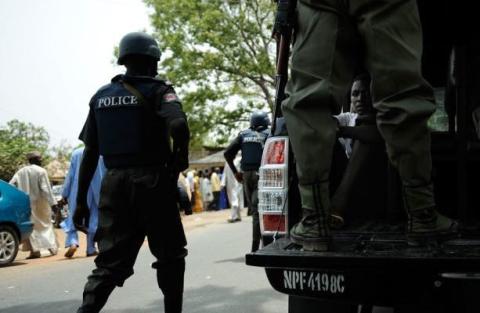
Four people have reportedly been killed in Rimin Auzinawa, Ungogo Local Government Area of Kano State, following a violent clash with security operatives over the demolition of properties.

Security operatives reportedly killed the victims after residents protested against the destruction of their buildings.

Reports have it that the demolished buildings—primarily residential buildings under construction estimated at 40—had been previously marked by the Kano Urban Planning and Development Authority (KNUPDA) as illegal.

The land in question reportedly belongs to Bayero University, Kano (BUK).

A resident affected by the demolition, who spoke to journalists and asked to remain anonymous, said that KNUPDA had cleared the properties earlier.

“We resolved all issues with KNUPDA. They affirmed to us that our properties were not within BUK land. But on Sunday night, officials of KNUPDA and security operatives arrived and started demolishing the buildings.

“When people insisted, security operatives opened fire, killing four individuals who have now been buried. It’s a tragic situation,” the source said.

Daily Trust reports that efforts to get an official response from KNUPDA were unsuccessful, as the agency’s managing director was unreachable.

A senior director at KNUPDA, the only high-ranking official available, reiterated that KNUPDA did not carry out the demolition but rather by a task force from the Ministry of Land and Physical Planning.

An official from the ministry, also speaking anonymously, confirmed that the land belongs to BUK and assured that the government would soon issue an official statement.

Group urges Kano govt to reconsider N2.5 billion mass wedding allocation

By Uzair Adam

A civil society organization, War Against Injustice (WAI), has urged the Kano State government to prioritize essential sectors such as education, healthcare, and job creation instead of allocating N2.5 billion for quarterly mass weddings in 2025.

In a statement on Monday, WAI’s Executive Director, Comr. Umar Ibrahim Umar, expressed concern over the government’s decision, describing it as a misplacement of priorities at a time when the state is struggling with unemployment, poor infrastructure, and rising social challenges.

The group emphasized the need for strategic investments in job creation to curb youth unemployment, which has contributed to the rise in street crimes such as phone snatching and violent clashes.

It suggested that supporting small-scale industries in areas like Bompai, Challawa, and Sharada would stimulate economic growth and provide sustainable job opportunities.

WAI also highlighted the state of education in Kano, citing a report by UNICEF that only 9.6% of primary school pupils have reading proficiency, while 11.2% possess basic numeracy skills.

Despite the government’s renovation efforts, many schools remain in poor condition, requiring urgent intervention.

Similarly, the organization pointed to the challenges facing the healthcare sector, where many primary health care centers lack adequate facilities, equipment, and personnel.

It called for immediate action to improve medical services across the state. The statement stressed that channeling funds into productive sectors such as agriculture could help lift citizens out of poverty, addressing the root causes of social instability and marital challenges.

“We urge the Kano State government to reconsider the allocation of N2.5 billion for mass weddings and instead focus on investments that will directly improve the lives of its people,” the statement read.

WAI further called on the government to promote good governance by making decisions that align with the pressing needs of the people, emphasizing that economic stability would enable citizens to build strong families and communities.

Kano gov’t vows tougher measures against sanitation violators

By Uzair Adam 

The Kano State Government has expressed strong dissatisfaction with the movement of vehicles and the operation of motor parks during environmental sanitation hours, warning that violators will face strict penalties.  

The Commissioner for Environment and Climate Change, Dr Dahiru Muhammad Hashim, issued the warning on Saturday while overseeing the end-of-month sanitation exercise across motor parks, markets, and major roads in the state.  

He announced plans to block key roads to prevent travellers from entering Kano during designated sanitation hours. 

The commissioner also highlighted gaps in waste management, emphasising the need for immediate intervention.  

“The issue of vehicle movement during sanitation hours will not be taken lightly, especially for those coming from outside Kano who continue to violate our regulations. 

In the next exercise, we will deploy adequate security and block some roads leading into the state,” he said.  

Dr Hashim also criticised motor parks that remained operational during the sanitation period, stressing that such actions would not be tolerated. 

“Some motor parks continue their business activities in defiance of the law, which is unacceptable. We will take decisive steps to ensure compliance,” he added.  

He urged residents and travellers to respect the restrictions and adjust their travel plans to avoid disruptions. 

He reiterated that any individual or transport operator caught violating the directive would face strict penalties.  

“I want to express my displeasure over the continuous movement of vehicles during sanitation hours. This is a clear violation of existing regulations, and anyone who fails to comply will face appropriate sanctions,” he warned.  

Meanwhile, Dr. Hashim commended the residents of the Kauyen Alu community in the Tarauni Local Government Area for actively cleaning their environment, including cemeteries, drainage channels, and surrounding areas.  

The Chairman of Tarauni Local Government, Alhaji Ahmad Muhammad, lauded the commissioner’s commitment to environmental cleanliness, assuring him of the local government’s ongoing efforts to eliminate open defecation and enhance sanitation standards.  

During the exercise, the task force arrested 28 offenders and imposed fines totalling N78,000 on those who violated sanitation laws.

Solar-powered progress: Governor Yusuf’s vision for a safer, thriving Kano

By Hussaini Ibrahim Sulaiman 

Kano State has experienced a remarkable transformation under the leadership of the state governor, Alhaji Abba Kabir Yusuf.

Thus, the scenario has continued to earn the governor more commendations. The achievement followed his administration’s outstanding progress in key areas, such as infrastructure, safety and economic growth. 

In fact, among his administration’s most notable achievements is the widespread installation of solar street lights on major roads and key areas in the state.

This initiative, which has enhanced the aesthetic appeal of the state’s urban environment, has had far-reaching positive effects on the safety, economy and overall well-being of its residents.

Since taking office, Governor Yusuf has prioritized the provision of solar-powered street lights. This bold initiative is part of a larger vision to enhance the state’s infrastructure, improve public safety, and promote sustainable development. 

Solar energy, being both cost-effective and eco-friendly, has proven to be an excellent alternative to traditional street lighting, which previously depended heavily on expensive diesel generators. 

Not only has this shift saved the state substantial amounts of money, but it has also ensured that major roads and urban streets remain illuminated throughout the night, significantly boosting security for residents and businesses alike.

Governor Yusuf’s pioneering solar street lighting project aligns seamlessly with the global push to increase the adoption of renewable energy sources to mitigate climate change.

Beyond merely brightening streets and residential areas, the solar lighting initiative has extended the hours businesses can operate. 

This has stimulated economic activity in the evenings, benefiting both large corporations and small enterprises.

The improved street lighting has fostered a sense of security and normalcy, particularly in areas notorious for crime due to poor visibility. The state’s once-limited night economy is now flourishing, with businesses staying open later, providing more opportunities for local traders, artisans, and entrepreneurs.

A notable outcome of the solar street lighting project has been significantly reduced criminal activity, especially crimes such as phone snatching, drug trafficking and other petty offences. According to a report from the state police command, the installation of solar streetlights has led to a noticeable decline in crime rates, particularly in urban zones and densely populated areas. 

Before the solar lights were installed, the state’s city faced mounting challenges with night-time criminal activities. Criminals frequently took advantage of the poorly lit streets to commit offences, including phone snatching, robberies, and the smuggling of illegal drugs.

However, the increased visibility brought about by the solar lights in previously notorious areas, such as Kofar Dan Agundi, Zoo Road, Sabon Gari, Sharada and Tudun Maliki, has resulted in a sharp drop in criminal activities, with phone snatching being notably reduced. Local authorities have noted that these areas, once plagued by insecurity, are now safer and more secure.

Kano, one of the nation’s most populous and economically significant city-states, has long struggled with unreliable power supply and limited infrastructure. 

Under Governor Yusuf’s leadership, however, the state’s economy—particularly in urban areas—has revitalized, largely thanks to the solar street light initiative.

The improved lighting has created a more conducive environment for businesses, especially those that depend on evening hours to generate revenue.

For instance, street hawkers, small-scale traders and night market vendors have greatly benefited from the extended hours of operation. 

With more reliable lighting, these businesses now have the opportunity to thrive after dark, contributing to increased sales and revenue. 

This transformation in the state’s economic landscape is evident in the resurgence of night markets and retail businesses catering to residents long after sunset. 

Moreover, the move away from expensive diesel generators, once used to power streetlights and business premises during power outages, has significantly reduced operational costs for many businesses.

The financial savings generated by the solar street light project have been substantial. These savings have freed up valuable resources that the state government can reallocate to other critical sectors, such as healthcare, education and further infrastructure development.

Governor Yusuf’s decision to invest in solar energy reflects a broader global trend of transitioning to more sustainable and cost-efficient energy solutions. This underlines his commitment to modernising the state’s infrastructure while being mindful of its environmental impact.

In addition to improving infrastructure, Governor Yusuf’s administration has taken decisive steps to address state unemployment. 

A key initiative to support local entrepreneurs has been the distribution of N50,000 to 465 street hawkers across the state’s 44 local government areas. 

Vendors have widely celebrated this gesture, which they see as a direct effort to empower small businesses and reduce unemployment.

The N23.2 million provided to the street hawkers has enabled many to expand their businesses, purchase goods in bulk and even invest in new ventures. 

This financial assistance has proved to be a lifeline for numerous hawkers, helping them become more self-sufficient and less reliant on informal employment.  The initiative has been met with widespread praise from the public, particularly from the hawkers themselves, who now have the capital to reinvest in their businesses, boosting the local economy.

Governor Yusuf’s administration has set a new benchmark for regional governance. His focus on solar street lighting, crime reduction, economic revitalisation and youth empowerment has created a model of leadership for other states to emulate. 

The positive outcomes of these initiatives, particularly in terms of enhanced security, economic vibrancy, and infrastructural development, have reinvigorated the state and instilled a renewed sense of optimism and purpose among its residents.

Looking ahead, the continued expansion of solar street lighting and ongoing support for small businesses and local entrepreneurs demonstrate that Governor Yusuf’s vision for the state is one of sustained growth, security and prosperity.

His leadership has shown that even in the face of significant challenges, innovative solutions can uplift communities and lay the foundation for a brighter, more prosperous future.

In summary, the changes in the state under Governor Yusuf’s guidance exemplify the impact of considerate and inclusive leadership. 

Governor Yusuf has set the state on a path toward long-term success by investing in infrastructure, empowering the people, and prioritising security.

Residents, from street vendors to entrepreneurs, are experiencing the benefits of these initiatives, positioning the state to become one of the most vibrant and prosperous areas in the country.

Suleiman covers activities of the state Deputy Governor’s office for The Triumph.

Kano State returns to national housing fund 25 years later

By Uzair Adam

The Kano State government has rejoined the National Housing Fund (NHF) Contribution scheme after a 25-year absence, following the signing of a Memorandum of Agreement (MOA) with the Federal Mortgage Bank of Nigeria (FMBN).

The agreement, signed by the state’s Head of Service, Abdullahi Musa, on behalf of the government and FMBN’s Managing Director, Shehu Usman Osidi, marks a renewed commitment to improving housing access for civil servants.

During the signing ceremony, Osidi assured the Kano government of FMBN’s dedication to ensuring that state workers benefit from the scheme.

He disclosed that the bank has financed ten housing projects in Kano, investing over N6.8 billion, with most of the projects completed and delivered.

“This development is a milestone in our collective efforts to provide sustainable and affordable homeownership opportunities for Nigerian workers, particularly in Kano State,” Osidi stated.

He described the state’s return to the scheme as historic, noting that thousands of civil servants had been unable to access housing loans since the state’s withdrawal in 2000.

Under the renewed agreement, Kano’s civil servants will now have access to various housing finance options, including mortgage loans at single-digit interest rates, individual construction loans, home renovation loans, cooperative housing development loans, and rent-to-own schemes.

There are also non-interest mortgage products designed to meet ethical financing standards. The Head of Service, Abdullahi Musa, expressed regret over the previous withdrawal from the scheme, stating that it had deprived workers of crucial financial opportunities.

“This initiative aligns with our unwavering commitment to enhancing the welfare and well-being of our dedicated civil servants,” he said.

FMBN assured that ongoing reforms within the bank have improved efficiency, transparency, and digitalized processes, which will ensure that contributors can access funds more easily and that refunds to retirees are processed promptly.

Kano police arrest suspected terrorist, foil attack

By Uzair Adam

The Kano State Police Command has arrested a wanted terrorist and his wife in a major operation aimed at dismantling a terrorist network attempting to establish a base in the state.

The suspect, Ahmad Adam Abba, a Chadian national, was wanted for masterminding the brutal killing of 17 people in Chad.

While he managed to escape from Nigeria, his wife and two associates—another Chadian named Jibrin Mohammed (42) and a Nigerian accomplice—were captured in a decisive police operation.

The command also recovered Improvised Explosive Devices (IEDs), preventing what could have been a deadly attack.

Commissioner of Police Salman Dogo Garba, speaking at a press briefing on Friday at the Bompai Police Headquarters, reaffirmed the commitment of security forces to ensuring that Kano does not become a safe haven for terrorists.

Recall that last week Friday, January 24, the police issued a security alert, warning the public to remain vigilant and report suspicious activities after intelligence reports suggested the presence of terrorists planning an attack in the state.

However, the timing of the warning—on the eve of the annual Maulud celebration of the Tijjaniyya sect—sparked controversy, with some accusing the police of attempting to disrupt the religious gathering.

Despite the criticisms, the command intensified its surveillance, working closely with intelligence agencies to track down suspected terrorists. Their efforts led to the arrest of Abba’s associates and the recovery of explosives.

“These criminals thought they could establish a foothold in our state, but they underestimated our resolve. There is no hiding place for them,” Garba declared.

He urged the public to continue cooperating with security agencies, stressing that intelligence-sharing is crucial in preventing security threats.

With the latest breakthrough, Kano residents remain on high alert as security forces intensify efforts to dismantle any remaining terrorist networks.

Governor Yusuf makes key appointments, revitalises Kano Line to enhance public service

By Muhammad Sulaiman

In a significant move to strengthen governance and improve public service delivery, Governor Abba Kabir Yusuf of Kano State has unveiled a series of strategic appointments and initiatives. This announcement was made through a press statement issued by his spokesperson, Sanusi Bature Dawakin Tofa, on Monday.

The governor’s actions are directed toward ensuring that skilled professionals occupy key positions within the state’s administration. He emphasizes the need for improved financial management and the overall efficiency of services provided to Kano’s citizens.

The statement noted several key appointments, including Jamila Magaji Abdullahi, the new Accountant General of Kano State. With over 16 years of experience in financial compliance and risk management, Abdullahi, a Bayero University graduate, is expected to bring integrity and transparency to the state’s financial operations. Previously, she held prominent roles in the Federal Inland Revenue Service and the Kano State Ministry of Finance.

Additionally, Muhammad Yahaya Liman has been appointed as the Director of the Treasury. Liman is a seasoned banker with extensive experience in financial reporting and regulatory compliance. He holds multiple degrees from Bayero University, including an MBA in Finance and Investment. His leadership is anticipated to significantly strengthen the state’s treasury operations.

In administration, Akibu Isa Murtala has been promoted to Special Adviser on Administration, a role that highlights his effectiveness in ensuring smooth governance processes. 

Furthermore, Governor Yusuf has reassigned Engr. Abubakar Sadiq has been appointed Deputy Managing Director of the Rural Water Supply and Sanitation Agency (RUWASA). This strategic move aims to enhance the quality of life in rural communities by addressing critical infrastructure needs.

A major highlight of the announcement was the revival of the Kano State Transport Authority, colloquially known as Kano Line. Governor Yusuf has established a strategic committee, chaired by Sa’idu Abdullahi Shu’aibu, to oversee the operation of Kano Line over the next six months. This initiative seeks to improve public transportation efficiency and align it with the state’s broader developmental goals.

The committee includes representatives from various ministries and sectors, reflecting a collaborative approach to enhancing transportation services in the state.

In his message to the newly appointed officials, Governor Yusuf highlighted the importance of innovation, dedication, and accountability in their roles. He urged them to work diligently and stressed that their contributions are vital to achieving the administration’s vision of improved governance and service delivery.

These appointments and initiatives are seen as a clear commitment from Governor Yusuf’s administration to foster development and position Kano State as a model of effective governance. 

Ganduje’s seized property: We only invited Muhuyi Magaji—Police

By Abdullahi Mukhtar Algasgaini

The Nigeria Police Force (NPF) has addressed recent rumors claiming the arrest of Mr. Muhuyi Magaji Rimin Gado, the Executive Chairman of the Public Complaints Commission (PCC) and the Anti-Corruption Commission.

The police clarified that no such arrest has occurred.

The police confirmed that Mr. Magaji was only invited to cooperate in an ongoing investigation related to a complaint filed against him.

On Friday, January 17, 2025, the Special Investigation Unit of the Inspector General of Police (IGP) received a formal complaint involving Mr. Magaji.

As part of the standard investigative process, he was invited to meet with police officers and assist in the inquiry.

The police emphasized that, as a respected government official, it was expected that Mr. Magaji would cooperate fully with the investigation, ensuring the matter is handled appropriately without drawing unnecessary media attention.

The police strongly rejected claims that Mr. Magaji had been arrested, labeling the reports as false and misleading.

They called on the media and the public to refrain from spreading unverified information that could cause confusion or unnecessary alarm.

The NPF reiterated its commitment to upholding the rule of law and conducting thorough investigations in accordance with legal procedures.

Gunmen invade Kano community, abduct young lady despite receiving N8 million

By Uzair Adam

Gunmen suspected to be kidnappers invaded Garo town in Kabo Local Government Area of Kano State in the early hours of Sunday, abducting a young lady after collecting N8 million from her family.

A source who spoke to journalists in the state disclosed that the attackers, numbering 10, stormed the residence of a prominent businessman, Alhaji Auwal, at Garo Sabuwar Unguwa around 1:20 a.m.

Three of them were said to be armed with guns, while the others carried different weapons. The source narrated how the assailants forced their way into the house by breaking a small door, gathering the entire family in one place and instilling fear and panic.

“The head of the family begged for the safety of his loved ones and offered to meet their demands. The gunmen were handed N8 million,” the source explained.

Despite receiving the ransom, the attackers abducted the eldest daughter of the family, a secondary school graduate, and fled the scene.

The family has not received any communication from the kidnappers regarding her whereabouts, leaving the community in a state of fear and uncertainty.

Residents are appealing to authorities to address the worsening insecurity in the area.

When contacted, Kano Police Command spokesman SP Abdullahi Haruna Kiyawa confirmed the incident and said an investigation is underway to apprehend the culprits.