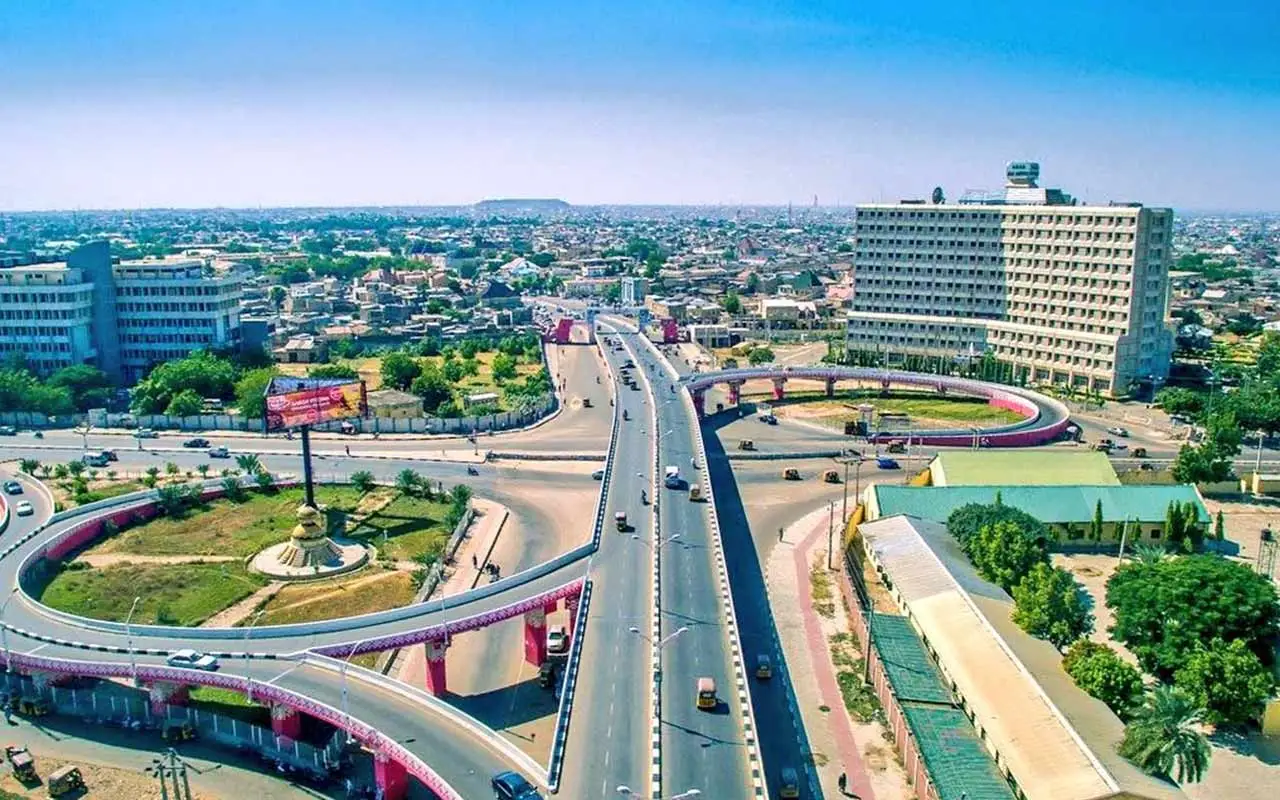
Kano

Kano university shuts female hostels over safety, morality concerns

By Sabiu Abdullahi

The management of Maryam Abacha American University of Nigeria (MAAUN) has announced the closure of two female hostels in Kano State due to security and disciplinary issues.

In a statement released on Monday, Dr. Hamza Garba, the institution’s Vice President of Campus Life, disclosed that the university had withdrawn its approval for Al-Ansar Indabo female hostels situated along UDB Road and Hotoro in the Kano metropolis.

“I am directed by the management to write, inform, and bring to the attention of our esteemed parents and students that the university has withdrawn its approval for Al-Ansar Indabo female students hostels located at UDB Road and Hotoro,” the statement read.

According to Dr. Garba, the hostels had failed to meet the university’s standards regarding the operation of private accommodations for students.

He stated that several infractions had been observed, including immoral conduct, insufficient access to water and electricity, incidents of student violence, movement of students during late hours, and cohabitation with unidentified individuals.

“These issues pose a serious threat to the well-being of our students,” he added.

The university reiterateed that the decision was part of its broader efforts to ensure students live in a safe and morally sound environment.

All students residing in the affected hostels have been directed to move out immediately after the ongoing semester examinations.

The university cautioned them against returning to or having any connection with the hostels for their own protection.

“Management is working closely with relevant security agencies to ensure total compliance with the directive,” the statement added.

Parents and students seeking information on authorized and safe hostel alternatives have been advised to contact the Office of the Vice President, Campus Life, via the official email address — vp-campuslife@maaun.edu.ng.

MAAUN also made it clear that it would not be liable for any consequences that may arise from ignoring this directive.

Undeclared $86,500: EFCC gets two convictions in Kano

By Abdullahi Mukhtar Algasgaini

The Kano Zonal Directorate of the Economic and Financial Crimes Commission (EFCC) has secured the conviction of Sale Bala and Abdullahi Tahir Hamisu for failing to declare $86,500, 305,150 Saudi Riyal, 560,000 CFA, and 200 Euros at the Malam Aminu Kano International Airport.

The duo were arraigned before Justice S.M. Shuaibu of the Federal High Court, Kano, on three counts of money laundering under Section 3(3) of the Money Laundering (Prevention and Prohibition) Act, 2022.

They pleaded guilty to the charges. Prosecution counsel Musa Isah urged the court to convict them accordingly. Justice Shuaibu found them guilty and ordered the forfeiture of the undeclared funds to the Federal Government.

The first defendant, Bala, was arrested by the Nigeria Customs Service (NCS) on April 27, 2025, while attempting to clear an unaccompanied baggage labeled as “bedsheets,” which concealed the currencies.

Investigations revealed he was to deliver the consignment to Hamisu, who was also arrested upon arrival.

Both were handed over to the EFCC for prosecution.

The third suspect, Ibrahim Abubakar Saeed, remains at large.

Kano State Government approves ₦3 billion for NECO fees

By Hadiza Abdulkadir

The Kano State Government has approved the sum of ₦3 billion for the payment of National Examinations Council (NECO) examination fees for students in public secondary schools across the state.

This initiative, under the leadership of His Excellency Governor Abba Kabir Yusuf, aims to support thousands of students by removing financial barriers to completing their secondary education. 

Stakeholders and social media commentators have praised the decision, describing it as a significant step towards promoting educational equity and youth development in the state.

More details later…

Kano govt blames water crisis on abandoned, vandalised facilities from Ganduje era

By Uzair Adam

The Kano State Government says it inherited multimillion-naira water facilities in a state of disrepair and vandalism from the previous administration led by former Governor Abdullahi Ganduje—an issue it blames for the persistent water shortages across the state.

The State Commissioner for Water Resources, Hon. Haruna Doguwa, made this known while leading journalists on a tour of major water works.

He cited the Kano water works built in 1930 and the Challawa water works established in 2016 by former Governor Rabiu Musa Kwankwaso among the affected facilities, alleging they were abandoned and vandalized during Ganduje’s tenure.

Doguwa revealed that over 12 kilometers of water pipelines connecting the Kano River to these facilities were uprooted, while critical equipment such as control room devices and raw pumps were stolen.

He estimated the total cost of restoring the facilities at around \$10 million.

“The first water works had a 20-million-litre daily capacity before it was vandalized in 2016, resulting in severe water scarcity in the state. The damage there alone is worth about \$3.5 million,” he said.

He also noted that the Intel 6 water facility, with a 350-million-litre daily capacity and responsible for half of Kano’s water supply, was similarly vandalized, with pumps worth about N500 million each allegedly sold off.

Currently, the state only manages to produce 300 million cubic meters of water daily, far short of the 700 million required.

To address the shortfall, the government is working to rehabilitate the affected facilities and expand the Wudil and Joda water works.

Once completed, Doguwa said water production would increase to 500 million cubic meters per day.

The Managing Director of the Kano State Water Board, Garba Ahmed, also highlighted that key areas such as Dorayi, Kofar Pompo, Kabuga Rijiyar Zaki, Janguza, BUK, and Goron Dutse are among the worst hit by the ongoing crisis.

In a related move to control exploitation, Doguwa met with leaders of tanker drivers and water vendors to propose fixed rates for water sales.

He gave a seven-day deadline to reach an agreement on fair pricing for tank and jerrycan water supplies.

18-Year-old wife arrested for stabbing husband to death in Kano

By Abdullahi Mukhtar Algasgaini

The Kano State Police Command has arrested an 18-year-old woman, Saudat Jibril, for allegedly killing her 30-year-old husband, Salisu Idris, by slitting his throat with a sharp knife.

The incident occurred in the early hours of Tuesday, May 6, at their residence in Farawa Quarters.

Upon receiving a distress call, the Commissioner of Police, CP Ibrahim Adamu Bakori, immediately dispatched detectives to the scene.

The victim was rushed to Aminu Kano Teaching Hospital but was pronounced dead on arrival.

Saudat Jibril is currently detained at the State Criminal Investigation Department (CID) and will be charged with culpable homicide.

CP Bakori warned that the police will not tolerate violent crimes in the state, assuring the public of a thorough investigation and swift justice.

Censoring the uncensored: The irony behind Hisbah’s ban on Hamisu Breaker’s song

By Ummi Muhammad Hassan

Following the ban by Hisbah on a new song titled “Amana Ta” by Hamisu Breaker, social media went into an uproar, capturing the attention of the public.

In the early hours of April 24, 2025, social media was filled with reactions following a press statement issued by the Deputy Commander of the Hisbah Board, Kano State chapter, Dr. Khadija Sagir, announcing the ban of Breaker’s new song. The reason cited was that the song allegedly contains obscene language.

This announcement, however, triggered a counterreaction from the public. Many became curious to know more about the song and the so-called obscene content, with some taking to their social media handles to express their opinions.

The irony of the situation is that Hisbah unintentionally gave the song more prominence, causing it to go viral. Many people who were previously unaware of the song searched for and listened to it, just to understand the controversy.

In my opinion, after listening to the song, it contains no obscene language. Rather, the issue seems to lie with some young women who mimed the song in a suggestive manner after hearing that Hisbah had labelled it as indecent—as though to dramatize or reinforce the claim. Some even appeared as if they were intoxicated.

To me, this is both devastating and concerning, as it reflects the erosion of the strong moral standards once upheld by Hausa women. Many young people are now making videos lip-synching the song in indecent ways. It made me pause and ask myself: where has our shyness gone? I believe this question deserves a deeper conversation on another day.

In Breaker’s case, thanks to the Hisbah ban, he became the most trending Kannywood artist in April, and his song went viral—and continues to trend.

A similar incident occurred earlier this year when the federal government banned Idris Abdulkareem’s song “Tell Your Papa.” That action unexpectedly brought the artist back into the spotlight, causing the song to trend widely.

Social media has made censorship increasingly difficult. Once a movie, text, or song reaches the internet, it becomes almost impossible to control—even by the creators themselves.

While social media censorship remains a challenge, this recent incident highlights the need for the government to intensify efforts against the spread of indecent content—through Hisbah and agencies like the Kano State Film Censorship Board.

Clear guidelines should be put in place, requiring artists and filmmakers to submit their content for review and approval before public release. This, among other strategies, could help reduce the spread of inappropriate material.

Additionally, Hisbah should be more mindful of how such announcements are made, as they may inadvertently promote the very content they seek to suppress.

Ummi Muhammad Hassan, Ph.D., is a lecturer in the Department of Mass Communication at Bayero University, Kano. She can be reached via email at: ummeemuhammadhassan@gmail.com.

Kano govt approves over N51bn for infrastructural development projects

By Anwar Usman

The Kano State Executive Council has approved an over N51 billion for critical infrastructure and public service delivery projects across the state, as part of the administration’s efforts to enhance socio-economic development.

This was contained in a statement issued by the governor’s spokesman, Sunusi Bature Dawakin-Tofa following the 27th Executive Council meeting held on Tuesday, 28th April 2025.

According to the statement, the Council gave the green light for multiple key projects, including major road rehabilitations, installation of traffic systems, expansion of public buildings, and electrification upgrades.

Part of the approvals is the release of N5.4 billion for the rehabilitation and asphalt overlay of roads stretching from Mumbayya House to Tal’udu Junction, Gadon Kaya, Yahaya Gusau Road, and Sharada Road.

Another N3.4 billion was set aside for the provision of wireless solar traffic lights across Kano metropolitan under the Urban Renewal Program.

Additional funds were approved for the construction of Miller Road to Mission Road and the renovation of key public facilities, including the Kano Educational Resources Department and the Governor’s Lodge in Kaduna.

The Council also approved N1.46 billion for the upgrading and modernization of the Ministry of Power and Renewable Energy located in Sharada Phase I Industrial Layout.

“These approvals highlighted the administration’s commitment to sustainable urban development and improved public service delivery,” the statement revealed.

Nigerian professor unveils groundbreaking study on Hausa cinema

By Hadiza Abdulkadir

Nigerian scholar Professor Abdalla Uba Adamu has officially announced the publication of his new book, Hausa Cinema of Northern Nigeria: Cultural Imperialism and Censorship, a landmark work that explores the development, politics, and aesthetics of Hausa-language film across West Africa.

Published by Bloomsbury, the book is the product of over twenty years of research spanning multiple countries and academic disciplines. Rather than focusing solely on the popular commercial industry known as “Kannywood,” Adamu takes a broader approach, examining Hausa cinema in its many forms—including diaspora productions, documentaries, art films, and digital series.

“This is not just about Kannywood,” Adamu explained. “It’s about Hausa cultural expression wherever it exists, rooted in Islamicate values and media flows across the Global South.”

Completed in 2010, the manuscript faced delays and was almost shelved. However, a 2023 conference presentation and a meal hosted by Dr. Muhsin Ibrahim, where Adamu jokingly called the large waina “one terabyte,” in Cologne, Germany, reignited interest, leading to its acceptance and revision. 

The final version, praised by scholars such as Graham Furniss and Brian Larkin, will be released in July 2025.

Though priced at $130, Adamu plans to publish a locally accessible companion book titled Kannywood: A Brief Introduction later this year in Kano. It will be tailored for readers interested in a concise, less theoretical overview.

With this announcement, Hausa cinema gains its most comprehensive and scholarly treatment, firmly placing it in the global conversation about media and culture.

Kano government to verify workers before April salary payments

By Abdullahi Mukhtar Algasgaini

The Kano State Government has announced that it will not pay April salaries to its workers until each employee is physically verified in an effort to curb fraudulent salary payments.

The Secretary to the State Government (SSG), Alhaji Umar Faruq Ibrahim, disclosed this during a press briefing on the government’s measures to address irregularities in salary payments, including payments to ghost workers and deceased or retired staff.

The report revealed that at least 247 individuals have been receiving salaries illegally every month, amounting to over ₦28 million in wasted funds.

According to Alhaji Umar, these fraudulent payments stem from local government areas and some state agencies.

“Starting from the end of April, every worker must present themselves physically and complete the necessary documentation before receiving their April salary,” he stated.

He noted the difficulties workers may face but urged patience and cooperation to ensure the process is successful.

The SSG added that salary payments for April will begin this week, but each employee must undergo verification using their National Identification Number (NIN) and Bank Verification Number (BVN).

He appealed to workers to understand the government’s position, adding that the new measures are not meant to punish employees but to correct systemic flaws and ensure transparency.

JAMB kicks off 2025 UTME for special needs candidates, gives update on Kano centre’s progress

By Uzair AdamThe Joint Admissions and Matriculation Board (JAMB) has officially launched the 2025 Unified Tertiary Matriculation Examination (UTME) for special needs candidates across the country.

The initiative is part of JAMB’s commitment to ensuring that no Nigerian student is excluded from pursuing higher education.

At a press briefing held at the BUK’s School of Continuing Education in Kano, Prof. Muhammad Yahuza Bello, Coordinator of the Kano Centre for the JAMB Equal Opportunity Group (JEOG), explained that over 500 special needs candidates are participating in the exams at 11 centers nationwide.

The Daily Reality gathered that the Kano Centre alone is set to host 92 candidates from across Kano, Jigawa, Katsina, Zamfara, and parts of Kaduna states.

Prof. Bello clarified that the examinations, while tailored to meet the needs of candidates with disabilities such as visual impairments, autism, Down syndrome, and albinism, are of the same standard as those for regular candidates.

“The goal is to ensure that these candidates are not disadvantaged when competing for university placements,” he said.For the first time this year, special needs candidates are writing Computer Studies as part of their UTME subjects, marking a significant step toward inclusivity.

“This is a major breakthrough, with candidates from Kano and Lagos leading the way,” Prof. Bello added.

JAMB’s commitment to inclusivity is further reflected in the special accommodations provided, including free accommodation, feeding, and transportation for the candidates.

Additionally, candidates who meet specific requirements, like uploading their O’ Level results with at least five credits, are eligible for a refund of their registration fees.

The initiative, which started in 2017, has steadily grown under the leadership of JAMB Registrar Prof. Is-haq Oloyede, who emphasized that the examinations must maintain the same rigorous standards as those for regular candidates to ensure fairness and equal opportunity.

Prof. Bello also highlighted the support the Kano Centre receives from local institutions such as Bayero University and the Department of Special Education, which help to facilitate the smooth conduct of the examination process.

He added that the 2025 UTME for special needs candidates is yet another milestone in JAMB’s ongoing effort to promote an inclusive education system, ensuring that every Nigerian child, regardless of their condition, has a fair chance to succeed academically.