Kaduna

Phone snatching exacerbates in Kano

By Hussaina Sufyan Ahmed

Kano is one of the states that records fewer security challenges in the northwestern part of Nigeria. The relative security in the state is an indication that not all northern states experience insecurity like the current happenings of kidnapping, banditry and armed robbery, as seen in Kaduna, Zamfara and Katsina. However, this calm is coming to an end considering the most recent menace of stabbings in the state.

Recently, people have been victims of phone snatching in Kano. This has become general mayhem in the state in that people do not take out their gadgets when going out on night strolls, and for some students, no more night out strolls anymore.

This problem is gradually becoming a national one. Families continue to bereave as their loved ones are brought to their end in their pool of blood due shed by snatchers of phones, laptops, wallets and other portable valuables.

According to the Daily Post, on July 4, 2021, an event occurred at the bridge undergoing construction close to Kantin Kwari market. The phone snatching brought about the death of a man called Umar Muhammad, staff at the National Commission for Museums and Monuments.

The most recent victim was Muhammad Sulaiman, a newly-wed schoolteacher stabbed to death in front of his wife around the Sharada industrial area on September 20, 2021.

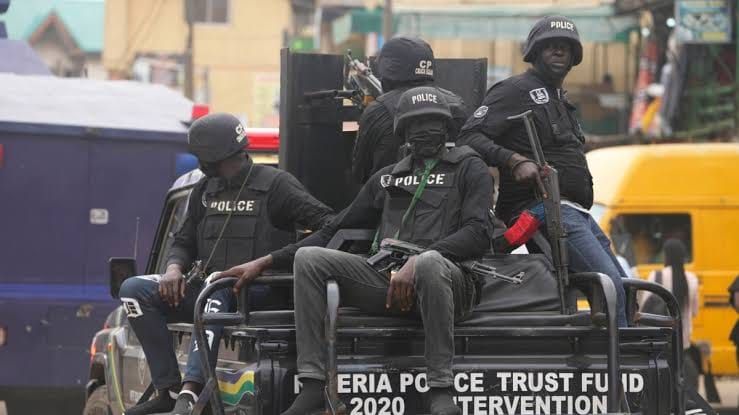
These happenings continue to occur despite the various safety measure of the government, such as Karota agents, vigilante groups, others. Thus, people wonder what these security personnel do daily.

Phone snatching is usually carried out at night and around isolated pathways. In rare cases, it happens in broad daylight. The crimes occur in places like under the bridges, lone paths that lead out of POS points, ATM stations, children parks, corners of streets and even on roads without lamp-lights.

For the above reasons, security experts suggest some preventive measures that include:

When walking, stay very conscious of who is trailing you and of the environment around you. During this period, one needs to be very aware of who is behind, beside or ahead of them. Often, when at a crowded place, crime culprits hardly succeed or they get apprehended for it.

Another precautionary measure is to have an alternative phone which is very cheap and look simple.

Kaduna enumerators, farmers decry deceit and propaganda in FMARD project

By Bature A.

Initially, it appeared that the Federal Ministry of Agriculture and Rural Development and the Project for Agricultural Coordination and Planning (Fmardpace) had come to help farmers and enumerators. However, the ministry has nothing to offer; it has lost focus and all the promises made have turned out to be deceptive.

When India championed and succeeded in the Green Revolution of the 1960s, it was not grounded on propaganda, delay in payment and late distribution of inputs, withholding extension workers allowances, deceit and misleading publications.

According to the Premium Times online report (June 29, 2020), the ministry targeted 2.6 million farmers, while N600 billion was earmarked for the farmers’ fertiliser subsidy, grant and non-interest loan. However, despite its early approval, the program’s impact is yet to be felt by the farmers and enumerators.

The ministry promised to help reduce the negative impact of the COVID-19 pandemic on agricultural production in Nigeria. Recall that AFJP was launched in Funtua Local Government of Katsina state on July 23, 2020, as reported by Daily Trust and Vanguard. The formal commencement of the program took place at the home town of the chairman House Committee on Agriculture.

Agricultural inputs such as fertiliser, pesticide, herbicides, seeds and motorcycles for extension work are displayed to the attendants and reporters. However, after the occasion, the displayed items are nowhere to be seen or heard of again.

A well planned Agricultural support program should be ready to reach beneficiaries by April or mid-May. Although some ABP companies draw their funds from or liaise with the CBN/Nirsal Plc, they distribute inputs early than the government’s ministry itself. It took Fmardpace almost two years to finalise data capturing, reconcile data and initiate distribution of inputs. Many enumerators miraculously escaped snakes’ bites, kidnapping, robbery or being lynched by angry farmers. Enumerators have crossed through the thick and thin weather[s] to carry out their duties. Manual mapping and data capturing, for that matter.

Enumerators suffered rough handling from the Fmardpace. Initially, the ministry promised to pay for the work done weekly after verification of the Surveys done. Subsequently, it takes months to process despite working as an influencer, Orientation and Mobilization agent.

The first and worst of all, maltreatment is the delay or withholding of payment. The second is, invalidating enumerators surveys without sufficient explanation.  Some surveys were rejected without transparency on what makes them invalid. Thirdly, the complete failure to initiate the distribution of inputs to qualified farmers on time.

In addition, enumerators have carried out soil sampling exercises/collections between May 10 to 26, 2020. However, some enumerators managed to collect the samples without being provided with the due equipment. In the plan, the soil sample collecter would get a hoe, shovel, bucket, and a small bag. However, only the bag was provided.

This is a program that had been moving forth and back without progress. On May 26, 2021, the ministry stated that the second level validation for surveys carried out in June and July was completed. On June 30, 2021, the ministry confirmed that the federal government had approved the Fertilizer Subsidy Grant to farmers whose BVN was validated by the NIBSS. On July 2, 2021, the ministry confirmed that payment processing of the first batch of the fertiliser subsidy grant to qualified farmers had begun. 

Enumerators have raised concerns over certain decisions by the ministry. For instance, when Fmardpace said their agents from Abuja would be calling farmers for verification, they were urged to consider some factors, which I’ll list below.

First, the majority of the farmers are rural dwellers. So they may not be able to speak English (which FMARD agents use). Secondly, there was network scarcity in rural areas. If the ministry uses phone calls, then over a half will be disqualified. Thirdly, when the contractors of inputs distribution came, they came with strangers that are afraid to get to the villages or remote towns to verify farmers, which may automatically disqualify farmers.

It’s fascinating to note that enumerators were doing their work patriotically until when mistreatment of the workers worsened. Then, the faces of enumerators and farmers became wallowed in the mud: no payment, no reply, mainly robotics/programmed responses from the situation room computers.  

Enumerators have since submitted to the formalities of the ministry. Seventeen (17) months of the program, the remaining balance of 50% per cent payment, after the second level validation of the surveys, is not being processed. There’s no specified date for it or helpful insight to it.

Enumerators need a clear statement from the new Minister of Agriculture on why their payment was withheld. Fmardpace should take note that there are damages incurred on enumerators for violating the initial arrangements of the payment. The collective wishes of the enumerators, master trainers and farmers is that the new minister should be different from his predecessor.

I recommend that when the next Fmardpace is to undertake farmers surveys, they should build an app that the enumerators can see right away on the screen of their mobile phone when surveys are valid or otherwise. Meanwhile, transparency is enhanced.

When there’s an exercise to be carried out, the ministry should not send people to the field without having their payment voucher on the ground. Adhoc, part-time or extension work should not be like capital projects that would have to be included in the annual budget before payment could be made. Besides, where is the yearly budget of the ministry?

They should also make sure the application they’re building contains all the necessary steps for the required information that NIBSS and CBN need from every beneficiary to be qualified. There’ll be ease of (extension workers) stress of recollection and reconciling of data. 

Furthermore, farmers need agricultural loans the most between April, May and June to prepare in advance. Therefore, if the ministry is genuinely concern and working towards revolutionising Agriculture in Nigeria, they should act on these issues as soon as possible.


Bature A. writes from Kaduna. He can be contacted via glitzinkreviews@gmail.com.

Insecurity and the guilt of the masses

By Ishaka Mohammed

From temporarily closing schools and markets to imposing curfews and postponing elections, from paying ransom to shutting down telecommunications, name it — Nigerian authorities have been governing based on the dictates of terrorists.

Observing their supposed protectors dance to the tune of their tormentors, many innocent Nigerians live in fear and hunger. It’s unfortunate that despite submitting their powers to the state, poor Nigerians can’t boast of adequate security. Undeniably, our leaders have failed us.

Nonetheless, can we continue to blame only the authorities? No. In fact, sometimes, I feel it’s more suitable to refer to our plights as self-harm. There are times I can’t help but agree with those who call us potential criminals. Lack of opportunities is the reason why some of us can claim to be innocent of some vices. We clamour for the rule of law, but we allow petty sentiments to set our society ablaze daily. 

Most of those who are terrorising our country have family members and friends who are law-abiding. A good citizen is expected to stand by the truth, regardless of who benefits or gets hurt. This is scarcely the case with our “law-abiding fellows”, who help their criminal children or relatives escape justice. When two men protect their respective criminal children today, each of the fathers might become a victim of the other’s child tomorrow. What goes around comes around.

Imagine what the residents of Zamfara State are going through today! In 2013, habitants of Borno, Yobe, and Adamawa had the same bitter taste. We’re social beings; we must communicate to survive. However, we choose whom to communicate with. Since some (or most) of our target audience are physically far from us, we have developed various means to communicate with them, and one of these is telecommunications.

Our ways of life are influenced by the technologies of the moment or those at our disposal. Mobile phones have changed the way we communicate. Even if our livelihoods are entirely outside the telecoms industry, it is almost impossible for a chain of distribution to be successful without telecoms services. From the manufacturer to the middlemen to the consumer, one way or another, a phone call or text message or the Internet will be utilised. Our lives are intertwined with the telecoms sector, especially the mobile network. Despite the necessity of telecoms, residents of Zamfara will be deprived of their services for two weeks.

The above picture is just one of the countless ramifications of insecurity, yet we’re keen on maintaining these ugly consequences because of our selfishness and narrow-minded emotions. We stand with criminals based on religious affinities, regional linkages, ethnic identities or family ties. This is why Governor Simon Lalong recently ordered the arrest of those who rush to police stations to bail murder suspects. Let’s allow family members and friends to answer police questions before we discuss bail. Aside from bail, let’s refrain from blindly defending or accusing people. For instance, in the case of DCP Abba Kyari, a staggering number of northern Muslims keep praying that he be vindicated (without adding “if he’s innocent”). As for many people from the South, the suspended officer is already guilty. Aw, bigotry is undoubtedly our arch enemy.

Our craving for peace should be backed up with sincere actions, no matter how painful such could be. Our sense of optimism should never make us dwell in unrealistic expectations. Nor can we solve our problems without our involvement. Faith doesn’t mean leaving one’s door open and expecting God to close it; one has to initiate the process by using the body parts granted by God.

Sooner or later, the fire we refuse to quench in a neighbour’s compound will gut our houses, and others will look the other way. This isn’t pessimism; it’s reality. Our tribulations can only begin to ease the day we (at least the majority of us) become ready to treat everyone based on the contents of their character. Let’s report close criminals to the authorities if indeed we’re lovers of peace.

By the way, concerning the shutdown of telecoms sites in Zamfara, I think it’s better to narrow the geographic scope. Although the terrorists (euphemistically called bandits) might be everywhere, limiting the shutdown to selected areas like forests might produce the desired effects while minimising the suffering of the innocent residents at the same time.

Ishaka Mohammed writes from Kaduna. He can be contacted via ishakamohammed39@gmail.com.

Waiting for repentant bandits

By Ibrahim Mustapha

The war against Boko Haram is nearing an end. The news emerging daily that many members of the deadly group are surrendering is cheering. However, mixed reactions have continued to trail their repentance. Since the group appeared to wage war against Nigeria, Boko Haram is reported to have killed over 100,000 Nigerians in addition to displacing millions of others. However, our committed and gallant soldiers deserve a pat on their back for ensuring they sustained the onslaught against the insurgents.

At least, the northeastern states, especially Borno, which is ravaged by the group’s activities, are heaving a sigh of relief after many years of horrible experiences. For the group members believed to have a strong link with ISIS to backtrack, repented and embraced amnesty, this is an indication of victory over them. Also, in a country overwhelmed by many security problems, the news of their repentance is a welcome development.

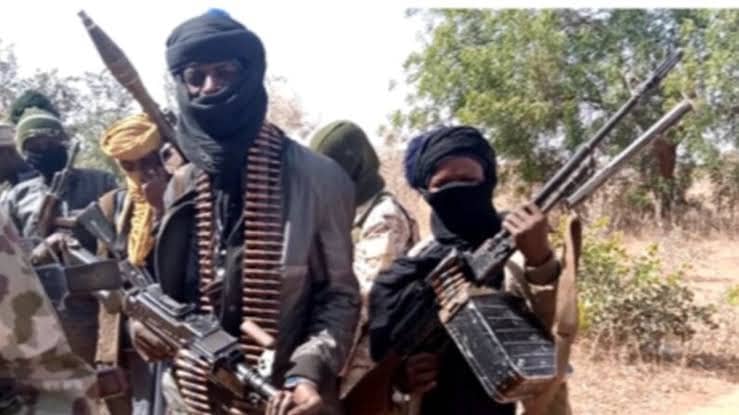
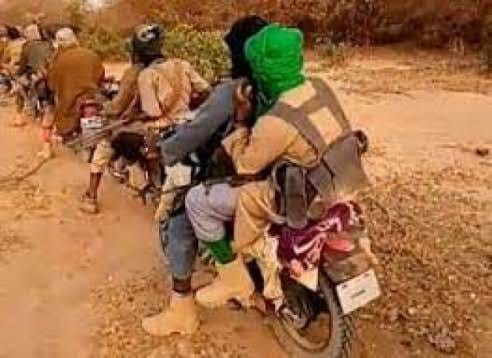
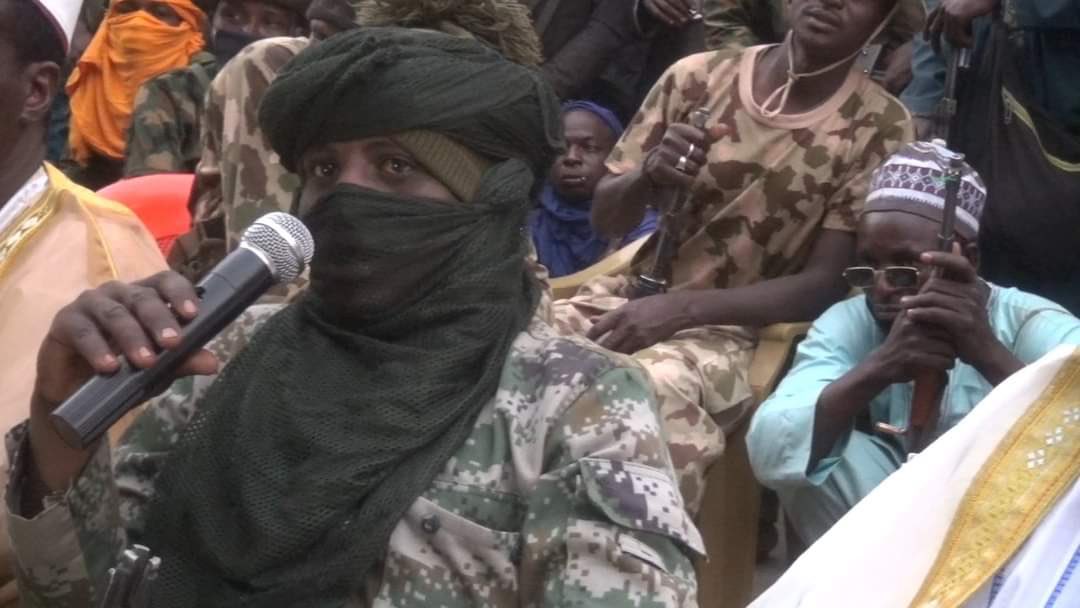
Ironically, while many Boko Haram members are surrendering and the government is rolling out programs to rehabilitate them, bandits in the northwestern states inflict more harm on the helpless, poor communities. In Kaduna, Katsina, Zamfara and Niger states, bandits have become kings. They impose taxes and only allow local farmers to harvest their crops if certain levies are paid.

In the last three months, there have been increasing cases of students’ abduction for ransom. The continued abduction of students has forced governments to close schools with dire consequences to the education development of the region. Sadly, these daredevil bandits have continued to rake billions of naira from the victims’ low-income families. Disturbed by the continued killings of his people, Governor Aminu Bello Masari of Katsina State recently directed his people to arm and protect themselves against the rapacious bandits. However, Governor Masari’s self-defence statement indicates the government’s failure or inability to protect the lives and property of Nigerians as guaranteed by the constitution.

The last straw that broke the camel’s back was the recent shameful invasion of the Nigerian Defence Academy (NDA) by bandits. Whether it was a security breach as alleged by the military or not, the audacity of those bandits proved the poor security network in our military formations. The unfortunate attack should serve as a wake-up call to the government that, like Boko Haram, the bandits are not only attacking soft targets but also highly secured places.

Ibrahim Mustapha writes from Pambegua, Kaduna State. He can be reached via imustapha650@gmail.com.

Who is behind the NDA invasion?

By Abdulhaleem Ishaq Ringim

The invasion of the Nigerian Defence Academy (NDA) is indeed embarrassing and extremely unsettling. But what is more unsettling is the fact that this high-level security breach is said to be orchestrated by “bandits”. While I had never underestimated these bandits’ lethality and offensive capacity, I still find it hard to believe they planned this attack. 

And here is why: 

Although most of us are unaware of the very nuanced categorisation of bandit groups operating in Northwest and Northcentral Nigeria, still, whenever we hear the word “bandit”, our minds go to the Fulani militias that have been meting out mayhem on innocent civilians. 

Channels TV reported that “The bandits who came in a vehicle were said to have passed through the security gate into the academy, disguised in military uniforms, after which they proceeded to the officers’ quarters.”

And this is where the question mark is. 

A Fulani person is the most recognisable of all the ethnic groups in Nigeria by his physique, phenotype and accent. And with the high level of stereotypes and profiling of members of this ethnic group as even innocent Fulanis on the streets get harassed, it makes it hard to believe that a vehicle full of bandits (of Fulani extraction) passed through the gates of NDA without being recognised and raising the suspicion of the guards. The press statement released by the academy also described the invaders as “Unknown Gunmen” instead of “Bandits”. 

However, this is not only the reason that informs my suspicion. 

The Nigerian terrorism network has been very volatile lately owing to the recent escalation of the rift between the two major terrorist organizations in Nigeria —the late Shekau-led Jama’tu Ahlis Sunna Lidda’awati wal-Jihad (JAS) and Al-Barnawi-led Islamic State in West Africa Province (ISWAP) — who were initially a single entity until they split in 2016 due to certain ideological differences and have been fighting each other since then. This rift, escalation of which has been attributed to the Nigerian Armed Forces Operation Hadin Kai spearheaded by the late Chief of Military Defense Brig. Gen Abdulrahman Kuliya was what consumed Abubakar Shekau in May 2021 and rendered his faction rather defenceless. 

Following this incidence, it was reported that more than a thousand JAS fighters have surrendered to the Nigerian Army – a gesture most people believe to be a positive sign and a product of enhanced military offensives against the terror groups. 

However, that is hardly the case, for, after Shekau’s death, ISWAP received some JAS commanders and fighters that pledged allegiance to their leader Al-Barnawi and then issued an ultimatum to those who refused while assuring them of continuous attacks. This is actually what motivates them to surrender to the Nigerian Army to leverage on the Nigerian Government’s amnesty program, the Operation Safe Corridor, and escape ISWAP’s wrath. But even before this incidence, defection from JAS to ISWAP was common among commanders and fighters, as in the case of Adamu Bitri in 2019. 

In December 2020, I explained in an article titled “Insecurity in North-West: Armed Banditry or Boko Haram Expansionism” the operational dynamics of all the three terrorist groups — JAS, ISWAP and Ansaru — in the Northwest and the possibility of them executing expansionist agenda in North-West Nigeria through infiltration, training, assimilation and arms supply. Before the fall of Shekau, reports suggested that the JAS and Ansaru groups had closer ties with bandit gangs in North-West. Adamu Bitri, for example, while he was with JAS, was instrumental in forging an alliance between JAS and bandit groups. He later moved to ISWAP before he died. It is believed that he might have shifted the allegiance of some of the bandit gangs he was in contact with to ISWAP. 

With Shekau’s death and the subsequent carpet-crossing of his commanders (some of whom are the keepers of the link between JAS and the bandit gangs in the North West just as Adamu Bitri) to the ISWAP side, there is a high possibility that bandits who were initially aligned to JAS are now under ISWAP’s control. Also, some JAS fighters who refused to surrender to both ISWAP and the Nigerian Army might consider joining bandit gangs in the northwest, just as it was the case for some fighters who fled ISWAP to join bandit groups before this recent incident. 

With the possible control ISWAP might have gotten over a greater number of bandit groups in the North-West due to recent events, the NDA invasion makes me wonder if it is just ISWAP’s way of signalling their newest expansionist achievement and presence in the North-West by staging such an operation in usual “bandit” territory perhaps with the help of the bandits, for the attack was done in usual ISWAP style of attacking military bases. And whether it is indeed purely a “bandit” affair or ISWAP’s or both, it signals a failure of our government, a serious increase in security vulnerability in the country and calls for renewed strategic action against bandits, the broader terrorism network in Nigeria and their expansionist tendencies. 

Abdulhaleem Ishaq Ringim is a political and public affairs analyst. He writes from Zaria and can be reached through haleemabdul1999@gmail.com.

Kaduna: Government to conduct competency test for primary school teachers

By Sumayyah Auwal Usman

The Kaduna State Government says it will conduct another competency test for all public primary school teachers across the 23 Local Government Areas in the state.

The State Universal Basic Education Board (SUBEB) Permanent Member, Human Resource Management, Christy Alademerin, announced this through a memo to the Local Government Education Authorities (LGEAs) in the state.

It will be recalled that the state government had in September 2017 conducted a similar test for the over 30,000 primary school teachers in the state, following which 21,780 who failed to obtain 70% pass mark were sacked and replaced with newly recruited 25,000 teachers.

The date for the competency test has not been slated, but LGEA’s were urged to sensitise teachers in their local governments about the forthcoming exercise.

Railway Projects: Buhari praises minister of transport Amaechi

By Muhammad Sabiu

President Muhammadu Buhari has on Monday patted his Minister of Transportation, Rotimi Amaechi, on the back over what he described as a “task of transforming and modernising every aspect of Nigeria’s national transport infrastructure.”

This is coming four days after the president visited Kano and performed the ground-breaking ceremony of the segment of the Kano-Kaduna railway modernisation project.

Commending the minister via his verified Facebook handle, the president said, “I commend the Minister of Transportation, Rotimi Chibuike Amaechi, the Ministry, and all the project implementation partners contributing to this national effort of railway infrastructure development.”

Recall that on June 10, the president was also in Lagos to commission the Lagos-Ibadan Standard Guage Rail Line. He also inaugurated its “full commercial operations.”