Kaduna State

Stop harassing Kaduna KASTLEA marshals over Hijab – MURIC

By Abdurrahman Muhammad

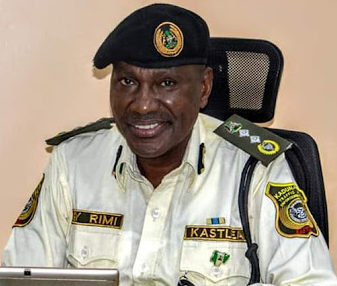
A call has gone to the Kaduna State House of Assembly to investigate the Kaduna State Traffic Law Enforcement Authority (KASTLEA). The appeal came from an Islamic human rights organisation, the Muslim Rights Concern (MURIC). The group accused the leadership of KASTLEA of harassing Muslim female marshals who wear hijab and their male counterparts who have beards.

This was contained in a press statement circulated on Friday, November 17, 2023, by the Executive Director of MURIC, Professor Ishaq Akintola. He said:

“We have credible information that the leadership of the Kaduna State Traffic Law Enforcement Authority (KASTLEA) has recently been casting aspersion on the use of hijab by female marshals and the growth of beards by their male counterparts. 

“The current head of KASTLEA, Carla Abdulmalik, a Christian lady, uses almost every opportunity to directly or indirectly caution marshals against the use of hijab. She reportedly issued a directive for the shaving of beards by the male Marshals. According to her, having beards makes the job unprofessional and disgusting.

“MURIC resents the anti-Muslim antics of Carla. She must be called to order before she plunges Kaduna into a huge crisis whose consequences no one can predict.

“Carla is exhibiting a common trait of Muslim-haters. She is most indiscreetly imposing Christian culture on Muslim marshals and manifesting hatred for all forms of Islamic appearance.

“We therefore call on the honourable members of the Kaduna State House of Assembly to investigate these allegations and make recommendations to Governor Uba Sani. 

“Carla must be called to order. Kaduna is the last place where one would expect to find the persecution of Muslim workers or students. This is an anomaly that should not be allowed to rear its ugly head anywhere in Northern Nigeria. We call on Islamic scholars to speak up on this matter and to put pressure on politicians in Kaduna on the need to protect Muslim marshals in KASTLEA.

“The Constitution is clearly on the side of religious freedom. Section 38 (i) & (ii) of the 1999 Constitution of the Federal Republic of Nigeria provides ‘every person shall be entitled to freedom of thought, conscience and religion, including freedom to change his religion or belief, and freedom (either alone or in community with others, and in public or in private) to manifest and propagate his religion or belief in worship, teaching, practice and observance’

“There have been no restrictions on religious freedom in KASTLEA since its establishment in 2014, and nothing in the 2017 act establishing the agency forbids hijab or beards. Muslim marshals in the agency have also never been intimidated by any of those who headed KASTLEA before Carla. Her persecution and stereotyping of Muslims under her must stop.”

On Abba Kabir Yusuf and human capital devt

By Anas Abbas

In recent years, there has been a growing emphasis on infrastructure development as a key indicator of progress and development in many countries. Governments often prioritize the construction of bridges, roads, and other physical structures as a means of showcasing their commitment to progress.

However, it is important to recognize that true development goes beyond just the physical infrastructure and involves the development of human capital.

While infrastructure development is undoubtedly important, it is equally crucial to invest in the development of human resources. This includes providing access to quality education, training, and opportunities for personal and professional growth. Human capital development is essential for creating a skilled and knowledgeable workforce that can contribute to the overall development of a nation.

A recent example of the emphasis on human capital development can be seen in the actions of the current Kano state government. Instead of solely focusing on infrastructure development, it also recognized the importance of investing in human capital develop. The administration sponsored numerous students who had graduated with first-class honors to pursue their Master’s degrees in India. This intervention is set to enable the beneficiaries to advance their education and acquire valuable knowledge that can be applied in the development of the state and the nation.

This programme us not new in the state. During Rabiu Kwankwaso second tenure as governor of the state, he sponsored over one thousand students abroad to pursue their Master’s degrees in different countries of the world.Infrastructure is doubtlessly important for the development of a nation, but it is crucial to recognize that human capital development should be the top priority If you critically observe the society today, you will find out that infrastructure can deteriorate over time and require continuous maintenance and investment, human capital development is enduring and can be needed for such maintainance need.

The knowledge and skills acquired by individuals remain with them and can be passed on to future generations, creating a lasting impact on the nation’s development. This initiative highlights the significance of human capital development in driving sustainable development.

By investing in the education and training of individuals, governments can empower their citizens to become active participants in the development process. These individuals can then use their expertise to address local challenges, drive innovation, and contribute to economic growth.

Furthermore, human capital development has a ripple effect on society. When individuals are equipped with knowledge and skills, they are better positioned to create positive change within their communities. They can become leaders, entrepreneurs, and advocates for social and economic progress. This, in turn, can lead to a more inclusive and sustainable development that benefits all members of society.

I found it laughable when in the trending Kaduna vs Kano online banter sparked by one Hafsat Paki video in which she talked Kano people down, many commenters paid undue attention to buildings as a way to show that Kaduna is more developed than Kano (Kano has fair share of beautiful buildings if you ask me). For me the ongoing effort in place by the government to better the human capital of the state deserves more attention than anything thing else.

In conclusion, while infrastructure development is important, it is equally crucial to prioritize human capital development as a key component of overall development. The recent initiative by Governor Abba Kabiru Yusuf to send students abroad for further education serves as a powerful example of the value of investing in human capital.

By focusing on human capital development, governments can create a foundation for long-term sustainable development that empowers their citizens and drives progress from within.

Anas Abbas is communication student at Bayero University, Kano . And can be reached via anasabbas2099@gmail.com

Happy Teachers’ Day!

By Abdurrazak Muktar Makarfi

On this particular day, we celebrate the incredible dedication and hard work of teachers who shape the future of our society. Teachers play a vital role in nurturing young minds and inspiring a love for learning.

However, it’s important to acknowledge the challenges many teachers face, especially regarding their financial well-being. In Nigeria, the issue of primary school teachers’ salaries is a pressing concern. It’s disheartening to hear that fresh graduate primary school teachers are earning less than ₦50,000, which is not enough to sustain them for a month, given the rising cost of living.

Moreover, the situation in Kaduna State is even more distressing, where primary education teachers have to endure 45-55 days without receiving their salaries. This not only affects their livelihood but also their motivation to continue their invaluable work in educating the next generation.

On this Teachers’ Day, let’s hope for change and improvement in the conditions of our primary school teachers. May the Nigerian government take prompt action to address the issue of teacher salaries and ensure that our educators receive the fair compensation they deserve for their tireless efforts in building a brighter future for our children.

Thank you for being a part of this noble profession, and let’s continue to advocate for better conditions for our teachers. Happy Teachers’ Day once again!

Tinubu names El-Rufa’i replacement

By Ahmad Deedat Zakari

President Bola Ahmad Tinubu yesterday, named Balarabe Abbas Lawal from Kaduna State as minister-nominee to replace former governor Nasir el-Rufai, who was rejected by the Senate in August.

This replacement was communicated through a letter read by the Senate President, GodsWill Akpabio, during the plenary session on Tuesday.

Balarabe’s nomination was announced alongside Dr. Jamila Ibrahaim and Ayodele Olawande, who were nominated by the President for the roles of Minister of Youths and Minister of State for Youths, respectively.

In August, El-Rufai’s name was conspicuously absent from the confirmed list of ministerial nominees presented to the Senate.

During the screening process, which took place about a month ago, the Senate approved and confirmed a total of 45 out of the 48 nominees sent by President Bola Tinubu.

Several petitions, including those from Senator Sunday Karimi (APC, Kogi West), were presented against the former governor during the screening.

Senator Sunday Karimi, representing Kogi West, voiced his opposition to the former Kaduna State governor during the ministerial screening.

Gunmen attack church in Kaduna

By Muhammadu Sabiu 

Gunmen believed to be bandits launched a devastating attack on Saint Raphael’s Catholic Church in the Zangon Kataf Local Government Area of Kaduna State. The assailants set fire to the parish house, resulting in the tragic death of a seminarian. 

The police authorities and the Catholic Church in Kaduna State have yet to issue official statements regarding the incident.

However, an eyewitness account provided to Channels Television shed light on the horrifying attack. 

The bandits, numbering in large groups, descended upon the Saint Raphael parish, located in Fadan Kamantan, Kafanchan Diocese, under the cover of darkness on Thursday night.

In a cruel act, they set the parish house ablaze, incinerating the building and a vehicle parked within its premises. Tragically, Seminarian Stephen Danlami lost his life during the attack. Reports suggest that he succumbed to smoke inhalation while attempting to escape from the inferno.

Fortunately, other priests who were inside the parish house at the time managed to escape the onslaught. The incident has sent shockwaves through the community, leaving many in grief and disbelief.

As the authorities and the church grapple with the aftermath, there is an urgent need for comprehensive investigations into this heinous act and the apprehension of the perpetrators to ensure justice prevails. 

The motive behind this attack remains unclear, but it serves as a stark reminder of the security challenges faced by various communities in Kaduna State and the need for concerted efforts to address them.

The Catholic Church, along with government authorities, must work together to protect places of worship and the lives of the faithful. As the nation mourns the loss of Seminarian Stephen Danlami and grapples with the brazen act of violence, the people of Kaduna State, as well as Nigeria as a whole, are calling for swift action to bring those responsible to justice and to prevent such tragic incidents from happening in the future.

Gov Uba Sani’s 100 days in office

By Uzair Adam Imam

Governor Uba Sani of Kaduna State has expressed gratitude to Allah and the Kaduna state people for their enormous supports and confidence reposed on the administration in the crucial first 100 days in office.

Govenor Sani’s first 100 days in office has taken several key interventions across security, health, education, infrastructure and rural development.

The Chief Press Secretary to the Governor, Muhammad Lawal Shehu, disclosed this in a statement he issued on Wednesday.

The statement reads, “To mark this milestone,several activities were lined up and several projects cutting across the 7 pillars of the SUSTAIN manifesto were announced and commissioned.

“With safety and security as the first pillar of the SUSTAIN manifesto, the Kaduna State Government in partnership with other security agencies commenced the training of 7,000 recruits of the Kaduna Vigilance Service (KADVS).

“The recruits were drawn from the 23 Local Government Areas of Kaduna State. This move to strengthen the Kaduna Vigilance Service to assist the police and other security agencies in the state in combating crime has been welcomed by all well-meaning citizens.

“In efforts to upgrade infrastructure, the construction of 32 rural roads covering about 406km across our 23 Local Government Areas has commenced as part of efforts to transform our rural areas, a main policy thrust of this administration.

“In health, state-of-the-art-mobile diagnostic trucks purchased by Kaduna State Government were commissioned and essential medical equipment are currently being distributed to our 290 Primary HealthCare Centres. The mobile trucks come fully-fitted with medical diagnostic equipment to render integrated health services in hard-to-reach and underserved communities across Kaduna state.

“Similarly, a fully-equipped Women and Child Shelter at Katuru Road was commissioned ,to serve as a transit home for children and women who are subjected to violence abuse by offering them medical, psychosocial and legal support.

“In continuation of activities marking the first 100 days in office, and as evidence of his commitment to education especially girl-child education, Governor Uba Sani commissioned a constructed/renovated 200-bed capacity hostel block, 16 classrooms, and a sickbay at the Government Girls Secondary School, Kawo, Kaduna North LGA.

“The Governor to the delight of parents state-wide also performed the groundbreaking for the construction of 62 Junior and Secondary Schools across the state, where he used the opportunity to reiterate that in Kaduna state,primary and secondary education in state-owned schools is free,” the statement added.

An Open Letter to the Governor of Kaduna State 

By Salim Yunusa

Your Excellency,

First and foremost, I extend my heartfelt congratulations on your resounding victory in the recent gubernatorial elections and commend your dedication to advancing the interests of Kaduna State and its esteemed residents. As we stand on the precipice of a new era, I am confident that under your leadership, Kaduna’s fortunes will ascend to unprecedented heights, driven by your wisdom and the guidance of Allah (SWT).

In the wake of a challenging period during which our nation has encountered multifaceted trials, the tenacity and unity displayed by the Nigerian populace stand as a testament to our collective spirit. With an unwavering faith in the leadership of our nation and its states, Nigerians continue to anticipate a future marked by prosperity, peace, and sustainable development.

At this critical juncture, I humbly draw your attention to an alternative avenue that possesses remarkable potential to address the pressing issues of unemployment, revenue generation, and economic diversification. It is my belief that a robust focus on tourism and the creative sector could be the catalyst for the transformation that Kaduna desperately needs. While acknowledging the challenges confronting our nation, it is essential to recognize the untapped reservoir of natural and cultural treasures that can propel Nigeria’s progress, with Kaduna serving as a shining example.

Global success stories such as Qatar, Dubai, Egypt, and Seychelles have demonstrated the exceptional economic rewards reaped from strategic investment in tourism. As seen in Dubai, the travel and tourism sector significantly contributed to the UAE’s economy, comprising nearly 10 per cent of total revenue. Similarly, Qatar witnessed a 70.3% growth in tourism sector revenue, with aspirations to amplify its GDP contribution to 12% by 2030.

I come from Kajuru, a small town in Kaduna state, where I am used to seeing people from all over the country and beyond visit the famous Kajuru Castle. I have also lived in Zaria, where I see thousands of people throng the colourful, eye-catching Zazzau Durbar yearly. These are just two out of many. I firmly believe that our state is endowed with a wealth of potential attractions. From the historical magnificence of the Emir’s palace in Zaria to the ancient Nok Art and civilization, the mesmerizing MatsirgaWaterfalls, and the iconic hills of Queen Amina in Turunku, Kaduna boasts a tapestry of wonders waiting to be unveiled.

Moreover, the state’s potential extends beyond its breathtaking natural, cultural, and traditional sites. Kaduna’s vibrant literary, music, and film scenes are carving their place on the global stage. The annual Kaduna Book and Arts Festival (KABAFEST), Hausa International Book and Arts Festival (HIBAF), Kaduna Music Festival, Afan National Festival, and other cultural events foster unity, diversity, and shared experiences among our youth, transcending ethnic divides.

Beyond the cultural and traditional scene is the vibrant film and fashion industry, with the Critics and Kadahood making and producing movies in Kaduna state, employing hundreds in the process. The Kaduna Fashion and Arts Exhibition also showcases the rich history of fashion in Kaduna state and beyond.

Just like football, music is one of the major unifiers in Kaduna and Nigeria at large. I witnessed, with so much pride, how Kaduna youths united during the 2022 Countdown event at Murtala Square. There was no way one could discern who was what tribe or religion; just young people filled with hope and optimism living in the moment. These are avenues where we can build the Kaduna of our dreams, a Kaduna that is healed from the pains of the past, devoid of all tribal and religious agitations.

One amazing thing about these festivals, funfairs, and events is that they always come with the advantage of a booming local economy of small and medium businesses. Vendors make brisk sales of food, wares, and goods. If properly managed by the Kaduna State Enterprise Development Agency (KADEDA), has a huge potential to bring more entrepreneurs to the fore, just like during the Kaduna Market Trade Fair.

Culture, creativity, and traditions aside, Kaduna, with no doubt, is the heartbeat of Northern Nigeria. It is strategically placed and has served as the administrative headquarters of the region. Therefore, Arewa House, the National Museum in Kaduna, and other historic buildings and monuments serve as archives and a lens to our past. We owe it to future generations to preserve these spaces in order to enlighten and educate the young ones.

Yet, for this vision to materialize, peace and security are imperative. The nurturing of these invaluable tourist destinations requires an unwavering commitment to safety and stability, addressing the root causes of insecurity. Furthermore, investing in robust tourism infrastructure, in collaboration with the private sector through Public Private Partnerships, will pave the way for enhanced accessibility and growth. We have seen how the previous administration was able to make Kaduna the number one state in Nigeria when it comes to the ease of doing business. With a proper tourism development plan that comprises all the events, festivals, tourist destinations, and activities, as well as the connecting transportation routes and servicing facilities together, I assure you that investors will come running to Kaduna. This plan will also include community education as a driving force for tourism.

Your Excellency, the potential of the tourism sector cannot be overstated. It carries within it the promise of economic prosperity, cultural preservation, unity, and local job creation. Other advantages include promoting the image of Kaduna state to the world, healthy migration of Nigerians and international visitors, the establishment of exchange programs, a boost in the local economy, the rapid development of rural areas, and the influx of businesses to the state. By supporting the burgeoning creative talents and providing the necessary infrastructure, Kaduna has the opportunity to become a beacon of progress and international acclaim.

Finally, I implore Your Excellency to consider this call for action, not only for the betterment of Kaduna but also as a stepping stone towards the broader advancement of our beloved Nigeria. Together, we can transform the challenges that beset us into stepping stones for growth, development, and a brighter future.

Salim Yunusa writes from Zaria, Nigeria and can be reached at syunusa@gmail.com.

Industrialisation of the North: The future

By Muhammad Sani Usman

Somebody was shocked that the revenue of Zenith Bank as of 2022, which is N945 billion, is greater than the internally generated revenue of northern states combined. Literally, Zenith Bank alone is more financially buoyant than northern Nigeria. And he was lamenting about the poor inclusion of northerners in such investments in their states.

Kaduna is taking the lead in investments in the North, but her (Kaduna) IGR is not up to one hundred billion Naira; it is half of that. Even the profit after tax of Zenith is bigger than the economic cities of Kano and Kaduna. These two states are not up to N100 billion altogether.

I told him, “Investing in banking is highly industrious. But our northern billionaires have no business with anything “Knowledge-based economy”. What they know is to hoard dollars, buy shares, and run over a baby company/factory, as in acquisition.

Prof Murtala Sagagi of the Economics Department of Bayero University, Kano, told us, “While conducting a survey about the percentage of non-inclusion of Kano people to most of the fine-investments in food and beverages, logistics, and Banking Industries, one manager of one famous company told him, “When they try to recruit graduates for trainee positions; they expect them to be meticulous in training before they think of absorbing them fully as staff.

But you’ll employ someone as an assistant quality control officer or sales personnel, but his/her performance index will shock you unless you change your mindset seriously. Industries require expertise to run; you can’t employ someone you can’t fire or are lazy.”

There was another testimony last week. I was discussing with an auditor of one of the best companies in Northern Nigeria. The guy told me they had recruited a new customer care representative, and he was deployed to that branch, but all the time, the guy was not working; even the invoice that he was supposed to do, he couldn’t.

Unknown to the guy, a letter was sent from the headquarter for monitoring and evaluation of his performance by the senior staff of that organisation. My guy is among the people to vouch for him, i.e., whether he would be retained as permanent staff.

However, this is not limited to banking or the mentioned industries; this is about the lackadaisical attitude of our politicians about not creating factors that will favour industrialisation in the North. The A-K-K gas project is among the hope we have for the future of the North. Let’s wait and see!

Muhammad Sani Usman an industrial chemist who advocates good governance and Sustainable development goals. He writes from Zaria via Muhdusman1999@gmail.com.

Gov. Ubah Sani makes new appointments 

By Ahmad Deedat Zakari

The Governor of Kaduna State, Senator Uba Sani, has approved the appointment of Senior Government Officials to fill key positions in the administration of the State. 

The Chief Press Secretary to the Governor of Kaduna State, Muhammad Lawal Shehu, disclosed the names and biographies of the new appointees in a statement on Tuesday. 

The new appointees, as disclosed by the CPS, include the following :

1. Mohammad Sada Jalal – Director General, Kaduna Geographic Information Service (KADGIS)

2. Jerry Adams – Acting Executive Chairman, Kaduna Internal Revenue Service (KADIRS). Adams will act as the Executive Chairman pending the appointment of a substantive Executive Chairman.

3. Adamu Magaji – Director General, Kaduna State Facility Management Agency 

(KADFAMA)

4. Adamu Samaila – Special Adviser, Labour Matters

5. Amina Sani Bello – Senior    

 Special Assistant, Student Matters 

6. Salisu Ibrahim Garba – Senior Special Assistant, Political Matters 

7. Larai Sylvia Ishaku – Senior Special Assistant, Social Investment Programme 

8. Clement Shekogaza Wasah – Senior Special Assistant, Community Engagement 

9. Waziri Garba – Senior Special Assistant, Administration.

According to the statement, the appointments are based on the proven track records of the appointees and the persons appointed are to resume work with immediate effect.

“The appointments are based on the proven track records of the appointees, their commitment to the service of Kaduna State and the SUSTAIN Agenda of the current administration. They are also people of proven integrity.” Part of the statement reads

Muslim domination of Nigerian politics, El-Rufai’s remarks and the quest for a just social order!

By Ibraheem A. Waziri

1. As against the postulations of some, who think Nigeria to be a fantastic, British-contrived social experiment. Many believe it to be purely a product of inevitable historical processes that ordinary mortals should only play along with. So, it is said that statesmen and cultural priests cum social philosophers must – by the spirit of the time, fair universal human values and exigencies of frequent unassailable moments – always create and promote a narrative of a reasonable sociocultural balance for the country to continue to thrive.

2. In this, since religion is adjudged, by scholars of identity in history, to be the strongest factor in social mobilisation. It is safe to assume that the crème de la crème of the Nigerian military, who ruled the nation between 1983-1998, although mostly Northerners and Muslims, had good intentions; to have worked hard to ensure the provision of religious balance, between mainly Muslims and Christians, in the general administration of the national and sub-national units of the country.

The Justification

3. A casual review of both the 1st and 2nd Republic is enough to show tendencies to Muslims’ domination of the Nigerian political space. Also, since Islam is consistently found to be deeply expressive in the discourses and practices of its adherents daily, especially in Northern Nigeria, non-Muslims may not help but feel threatened – even if only imagined, not real – with marginalisation when individual Muslims are in power. This, regardless of whether their predilections do not suggest inclinations to any assumed extremist tendencies. Because often politics and politicians ride on only prevailing narratives and popular sentiments as major currencies during elections and subsequently in forming finer details of general governance policy direction!

4. This may have been why people like the late Capt. Ben Gbulie would maintain this in his book, Nigeria’s Five Majors, and much later when he responded to questions by late Barrister Yahaya Mahmood SAN during a session at the Oputa Panel. That one of their reasons for staging the January 1966 coup d’état that killed mostly Northerners Muslims in power was intel, they got and rigorously verified to confirm, by some standard, that the then Nigerian government, led by mainly Northern People’s Congress (NPC), was clandestinely planning a Jihad with the hope of Islamising the country.

5. The measures of balancing taken by the military may not be favourably viewed by modern reviewers, depending on the angle of vision one takes. But it is unmistakably clear that had the prevailing rhetoric of the Nigerian Muslim communities of the late 80s and 90s – that were even celebrating as heroes on various pulpits, figures and ideals of contemporary Islamist movements in Egypt, Iran, Algeria, Afghanistan and Sudan – met with a popular narrative of Muslim majority populated Nigerian state, the results would have been better imagined now. 

6. Thus, during both the two aborted electioneering processes of 1992 and 1993, to usher in a democratic government, General Ibrahim Babangida (IBB), the Head of the Nigerian state, deliberately tried to ensure political parties presented bi-religious tickets for elections into offices of governors, everywhere there is a significant population of people of differing faith, and ultimately that of the Presidency.

7. Many scholars and pundits alike have concluded that it was the failure of the southern Muslim, Moshood Abioĺa, Social Democratic Party’s candidate, who is said to have won the election, to respect IBB’s wish to select Paschal Bapyau, a northern Christian, as Vice Presidential candidate that led to the annulment of June 12 1993 elections! The Quest for such religious balance was that important to IBB, as we can conveniently presume it to be part of his insight and blessed wisdom clinging to higher moral flanks, advancing the standard of a fair, indivisible Nigerian nation.

8. Fast forward to the events preparatory to ushering in the fourth republic in 1999. It was the same cream of former Northern Nigerian top military generals who insisted on a power shift to the South, particularly to a Christian president, who would, in turn, have a Muslim running mate from the North. Thus, Northerners or Muslims from the South were cajoled to stand down their ambitions in the name of peaceful, regional and religious balance!

To Every Action…

9. Yet, as the timeless law of physics stipulates, there is an equal and opposite reaction to every action taken. So also the decision to premise all the sociocultural discourses on Nigeria on the narrative of religious balancing. Religion as a determinant of who gets what, in the string of the political equation, and ultimately down the line on the food chain of the country’s rentier economy, also became the cheap tool providing the impetus for persistent conflicts and unending violence, particularly in some subnational units in Northern Nigeria.

10. In Kaduna, my state, there has been a wave of religiously motivated crises, coupled with agitation for territorialism and territorial expansion, more resource allocation and political representation, since 1987. After the ushering in of the fourth republic in 1999, it continued assuming an alarming direction, characterising every aspect of the policy discussion in the state. Every single appointment, political or otherwise, must factor in religion. Yet the wave of the crisis did not show any sign of going away. It kept consuming many lives and properties, casting a blight on every possible future of progress and development. Refugee camps became a distinct feature of satellite towns in the state.

11. Government, civil society and faith-based organisations became very busy and active daily on the issues of conflict resolution and rehabilitation and resettling of refugees more than any other thing. From 2013 to 2014, Reverend Joseph Hayeb, the present Kaduna State Christian Association of Nigeria’s Chairman and a Muslim cleric, Shaykh Haliru Maraya, served as Special Advisers to the then Kaduna State governor, Mal. Mukhtar Yero on Christianity and Islam, respectively. They partnered with an international peace promotion non-governmental organisation, Global Peace Foundation, in a state-wide campaign for peace and conflict resolution in the state. Malam Samuel Aruwan, who was to become the first Commissioner of Internal Security and Home Affairs in Kaduna 2019 – 2023, and I joined them on the invitation. We wrote essays and appeared with them at conferences, engaging in the discourses of why Muslims and Christians must find ways to live in peace!

2015!

12. the deployment of superior vigilance technology, by the Independent National Electoral Commission, in the conduct of the 2015 elections exposed the fallacy of the premise ascribed to the religious balancing narrative that has lasted for 30 years in Kaduna. Instead of the entrenched assumption that the religious demographic spread in the state is almost 50-50 between Christians and Muslims, it was realised that it was at most 30 – 70 in favour of Muslims!

13. This, unfailingly, was to give room to so much reflection, on the utility of the religious balancing narrative, in providing the needed peace and stability for the general administration of the state. In that, a fair and dispassionate assessment could be said that over the years, it has proven to be a burden to the state and is threatening the overall peace and stability of the Nigerian Nation! Even if it has once been useful in keeping peace and maintaining justice, providing stability and strengthening the foundation of the Nigerian Nation.

14. More so, the assumed justifiable reasons that made the northern military elite deploy it then can be said to be no longer there now. As Samuel Huntington projected in his 1993 seminal work, The Clash of Civilisations and the Remaking of World Order, the appeal of the universal call to Jihad among Muslims would lose its popularity in about 25-30 years. That Muslims world over would gradually appreciate and align with the values of democracy and its prescriptions in the rule of law and freedom of expression.

15. Global war on terror and the experience of the Muslims here, home to Boko Haram, has helped make Huntington’s prophecy real. It significantly changed the perspectives and disposition of the Muslim elites in the country. Many scholars and clerics have stopped identifying with Jihadi rhetoric and, in many cases, withdrawn or dissociated themselves from the earlier ones they once made. There has been a wide-ranging consensus among a larger section of them to work with the present multi-religious composition of Nigeria and support its established institutions!

16. Also, the era now is not a military era, where the earlier conceived balancing narrative can be sustained by fiat nationally and sub-nationally. Democracy is here, and its promises, based on the premise of popular participation and will, are bound to force the hands of society in a particular direction.

17 In 2019, the Pew Research Centre, an independent American think tank that specialises in social sciences, demographic research and analysis, published that, in 2015, Muslims in Nigeria constituted 50% of the population as against Christians who are less. And by 2050, Muslims will constitute about 60% of the people, while Christians will be less than 40%. 

18. When I wrote about this on the 11th of July 2022, in a message wishing fellow Muslims well during Sallah celebrations, I also called them out to reflect on what Nigeria they would want. Many experienced pundits and senior citizens in my list submitted that the 60% per cent figure is most likely the population of Nigerian Muslims now. We are only hindered from knowing that for a fact because the past Nigerian military leaders had struck out religion as a variable in all official national headcounts. They believe that by 2015, Nigeria’s Muslim population will likely be 70 – 75%. 

19. All these should point to the reality of the futility of struggle, for a just social order, in Nigeria while clinging to the religious balancing narrative. 

The El-Rufai Example of 2019!

20. Malam Nasiru El-Rufai was elected into the leadership of Kaduna State on top of events significant to unravelling the wave of fallacies that made operational in the state, the religious balancing narrative. He was equally confronted with the reality of the non-viability or even risks associated with any attempt to perpetuate it.

21. In 2019, he won the election after confronting the operational, religious balancing narrative and crushing it. Amid cheers by the Muslim community, who are excitedly displaying an air of triumphalism, some of us must have assumed that the winner takes all maxim will be deployed. Yet Malam Nasiru went ahead in his acceptance speech on the 11th March 2019 to state: _“Let us all see and value each other as human beings descended from Adam and Eve. Let us end the misuse, abuse and manipulation of religion for personal gains. Religion should be a private matter. Our identities should not become barriers to common humanity. Our doors are open to a new chapter of concord.”

22. Subsequently, appointments and responsibilities were allocated based on merit, trust, commitment, party loyalty, and clearly outlined cause. Thus, many so-called sensitive positions, like the Accountant General, Commissioner of Internal Security and Home Affairs, and many others, go to non-Muslims!

23. In this, as an independent observer not speaking for Mal. Nasiru, I will say that one can see that if the Muslim-Muslim ticket has any purpose, it is only for burying the religious balancing narrative, which has proven to be cancer, in the body of our journey of development, into a just and prosperous society. It is also to serve as a teachable moment, to Muslim leaders, politicians, and the teaming youthful population, on operationalising the new narrative of the Muslim majority Kaduna and Nigeria, which is soon to be the new order of the day.

The Controversial Speech of 28th May 2023!

24. Nigeria’s 2023 elections, which saw the much-maligned success of a Muslim-Muslim ticket at the national level, had reasons to give Nigerian Muslims a feeling of triumphalism again. It has confirmed their numerical superiority and harbours the tendency of permanently killing the religious balancing narrative in our national politics. It also came with the risk of making some elements among Muslim politicians, clerics, and scholars alike start using it, in future, in a manner that would be inimical to the interest of their fellow Muslims, non-Muslims and the idea of the Nigerian nation.

25. The farewell dinner, Imams, clerics and Islamic scholars organised for Mal. Nasiru Elrufai, the 28th of May, 2019, in my opinion, was the best place for him to kick start the conversation about what the victory of the Muslim‐Muslim ticket should mean to the Muslims and the country in general. Both mark the end of the religious balancing narrative, religious politics and what future clear Muslim dominance or leadership should mean. 

26. From the clips of the recordings circulating in social media and the translation of the entire speech by various news outlets. It is clear that though Elrufai spoke appealing to his audience’s sentiments and good feelings, he was also unequivocal that the Muslim leadership across history and his, in Kaduna, did not and shall not try to discriminate against non-Muslims. This is a call and a subtle cautionary appeal to those who may think otherwise to reflect and reconsider as an exemplary guide in future.

The Ways Forward

27. Nigeria has moved into a new era in its history and evolution. Not that it has only seen the futility and, ultimately, the end of the religious balancing narrative; it has also come to the era where the influence and wisdom of its retired military generals in its democracy is about to cease altogether. All hands must be on deck to help chart a new cause and craft a fresh narrative for its sustenance and maintenance on a just and equitable pedigree.

 28. The country’s new reality of a sociocultural composition needs the attention of scholars, pundits and policymakers to ensure that the nation moves with reasonable speed on the lane of development. And this is what that speech by El-Rufai on that day should be seen to have helped to transit the national conversation quickly!

Ibraheem A. Waziri wrote from Zaria, Kaduna State. He can be reached via iawaziri@gmail.com.