Kaduna State

About the Katsina lavish wedding

By Prof. Abdussamad Umar Jibia

Some years ago, a group of students from Kaduna state came to my office, lamenting how Muslim elders imposed a Christian candidate on them and rigged him into power. They even told how an Emir and some elders called Islamic scholars and warned them against remonstration in their preachings. “How can we bear this disgrace?” my students were frustrated.

I said, “You can solve the problem and make governance difficult for the imposed Governor”. The young people paid attention, expecting an “academic” solution to their problem. “The Governor cannot rule Kaduna state alone. Since the majority are against him, why not look for and beat up anyone who accepts his political appointment?” I offered.

My students looked at one another and said, “Sir, there will be chaos and mass arrest”. Poor them, they want to bring change, are not happy with what is happening, and are afraid of arrest. “The alternative is to support the unpopular Governor and struggle for your share of the haram”, I finalised the discussion.

In the case of my Kaduna state students, the problem was election rigging, even though there was relative peace in their state, at least up to that time. In the case of Katsina people, it has been killing, kidnapping, rape, stealing, etc. How have the people reacted to the politicians they elected to solve the problem of insecurity? 

Several people have asked why they no longer see my comments on insecurity, and I always reply that I am busy with other things. I am busy, but not too busy to write a few paragraphs to express my opinion. However, it reached a point where I began to ask, as far as insecurity is concerned, who is the culprit? Whom should I write to blame? The Government? The military? The masses?

Going by the advice I gave Kaduna youth, one would expect that no elected politician would have the guts to go to any community ravaged by insecurity in Katsina or nearby states. Unfortunately, that is not the case. I saw people who lost some of their closest relatives to banditry staunchly supporting a politician, whose actions mean that their losses do not matter. Bandits displaced a community, but I saw their youth on social media actively supporting politicians who were giving public money to bandits in the name of the peace agreement.

If you are actively fighting for those victims through writing or interviews, and you offend any politician, you should be ready to get a good beating from some of the banditry victims if that is what would please the politician.

So, whom should I blame? Do the people take no blame? What of the military? Should I write to blame the masses as weak as they are? Should I write to condemn the military as strongly as they are? Should I not be afraid of arrest like my Kaduna students? If I offend the military, and you must surely offend them if you will tell the truth about insecurity, who would bail me out when I am arrested and tagged a troublemaker or any name they decide to give me?

The cheapest people to blame are the politicians. Everybody is against them. Public money is in their hands, and they are spending it on weddings and musicians, just like we witnessed in Katsina. But are all the people criticising them sincere? Would they not do the same if they were in their position? Some of these things were the reason Nigerians voted PDP out ten years ago, and the “saints” they elected are doing the same.

If you are expecting me to continue directing my blame to politicians, you will be disappointed. While they have their fair share of the blame for insecurity, we also have our share as victims. 

The masses should take my advice to the Kaduna youth if they can. They can only beat the politicians or join them. For the politicians, I have no words. Only the masses can deal with them if they take the first side of my advice. For me, I shall keep mum about the military because I am a coward.

For other Nigerians, continue to enjoy yourselves before insecurity reaches your side. I pray it will not.

Prof Abdussamad Umar Jibia wrote via aujibia@gmail.com.

Social media influencer arrested for Naira abuse in Kaduna  

By Abdullahi Mukhtar Algasgaini

The Economic and Financial Crimes Commission (EFCC) has apprehended Muhammad Kabir Sa’ad, a social media content creator, for allegedly abusing the Naira.  

The suspect, known as @youngcee0066 on TikTok and Instagram, posted a video showing him throwing Naira notes on the ground, stepping on them, and daring EFCC officials to arrest him in Hausa.  

Acting on intelligence, operatives from the Kaduna Zonal Directorate tracked him down in the Tudun Wada area and took him in for questioning.  

EFCC officials confirmed that Sa’ad will be prosecuted once investigations are concluded. The arrest serves as a warning against the misuse of the national currency.

Kaduna revenue agency refutes El-Rufai’s claim, reports growth in IGR under Uba Sani

By Abdullahi Mukhtar Algasgaini

The Kaduna State Internal Revenue Service (KADIRS) has dismissed claims by former Governor Nasir El-Rufai that the state’s monthly internally generated revenue (IGR) has declined, while also refuting allegations of an illegal N100 million diversion from state funds.  

Speaking at a press conference, KADIRS Executive Chairman Jerry Adams stated that under the current administration of Governor Uba Sani, the state has recorded significant revenue growth, surpassing figures achieved during El-Rufai’s tenure.  

“It is necessary to clarify certain statements made by former Governor Nasir El-Rufai. Whether due to incomplete information or a deliberate attempt to mislead, it is important to set the record straight,” Adams said.  

El-Rufai had claimed that Kaduna’s monthly revenue dropped from N7 billion to N2 billion under Governor Uba Sani. However, Adams refuted this, stating that the highest annual IGR recorded under El-Rufai was N59 billion in 2022, translating to a monthly average of N4.9 billion.  

He further explained that a significant portion of the revenue between 2019 and 2022 came from one-off sources, including debt recoveries and government asset sales, which amounted to N45 billion.  

“If these irregular revenues are excluded, the actual monthly IGR at that time was far lower than what is being claimed,” Adams noted.  

Regarding the alleged illegal transfer of N100 million, Adams dismissed it as “completely false,” explaining that Kaduna’s revenue collection system operates entirely through PAYKADUNA, with all payments going directly into the state’s Treasury Single Account (TSA).  

He emphasized that under Governor Uba Sani, Kaduna’s IGR has seen consistent improvement.  

“In 2023 alone, Kaduna State generated N62.48 billion in IGR, which increased to N71 billion in 2024—averaging N5.2 billion and N6 billion monthly, respectively.”  

“In just January and February 2025, the state has already collected N7.46 billion and N6.68 billion, totaling N14.16 billion in two months—without any debt recoveries or one-off revenues.”  

“This demonstrates the commitment and diligence of this administration in driving economic growth and ensuring sustainable development,” Adams stated.

El-Rufai’s defection and APC’s growing fractures

By Abdulhamid Abdullahi Aliyu

In a move that has sent shockwaves through Nigeria’s political landscape, former Kaduna State Governor Nasir El-Rufai has officially parted ways with the All Progressives Congress (APC) and pitched his tent with the Social Democratic Party (SDP).

While party defections are common in Nigerian politics, El-Rufai’s departure from the ruling party carries significant political implications that could alter the dynamics leading up to the 2027 elections.

For a man instrumental in the formation of the APC and a staunch ally of former President Muhammadu Buhari, El-Rufai’s departure raises critical questions. Is this a strategic move to remain politically relevant? A protest against President Bola Tinubu’s leadership? Or does it signal widening cracks within the APC that could deepen in the coming years?

El-Rufai’s political journey within the APC has been marked by loyalty, controversy, and influence. As a key figure in the party’s 2015 victory over the PDP, he was regarded as one of the strongest voices in Buhari’s inner circle.

His tenure as Kaduna governor further solidified his image as a reformist, albeit one who often courted controversy. From restructuring Kaduna’s civil service to his hardline stance on security issues, El-Rufai commanded attention. Under Buhari, he wielded significant influence, not just within Kaduna but on the national stage.

Many expected him to secure a prominent role in Tinubu’s government. However, cracks began to show when he was dropped from the ministerial list, allegedly over security concerns flagged by the National Security Adviser.

El-Rufai’s departure from the APC is not a hasty decision; it represents the culmination of increasing frustration. His rejection as a minister was perceived by many as a calculated marginalization, signaling the start of his estrangement from the ruling party’s core decision-making processes. 

Reports suggest he became increasingly disillusioned with Tinubu’s governance style, particularly in handling economic and security challenges. The former governor is known for his bluntness, and sources indicate that his inability to influence policies within the APC played a significant role in his decision.

While his supporters argue that his move to the SDP is based on principle, critics suggest it is driven by personal ambition—positioning himself for a possible political comeback in 2027.

El-Rufai’s choice of the SDP, rather than the PDP or a new political movement, is intriguing. The SDP remains a relatively small force compared to the APC and PDP, raising questions about whether he genuinely believes in the party’s ideology or sees it as a convenient platform to negotiate his future.

Some analysts believe El-Rufai is playing the long game—joining a smaller party now to avoid confrontations with APC heavyweights while testing the waters for potential alliances with other opposition figures ahead of 2027. Others argue that he has limited options, given his strained relationship with Tinubu’s camp and his unlikelihood of returning to the PDP, a party he once fiercely opposed.

Expectedly, the APC has brushed off El-Rufai’s departure, with the Presidency dismissing it as driven by “inordinate ambition.” Kaduna’s APC leadership has also claimed they are unbothered, arguing that his influence has waned significantly since leaving office. 

However, political observers note that El-Rufai’s defection could have ripple effects. While he may not command a nationwide political structure, his ability to shape narratives, especially in northern politics, should not be underestimated. Some opposition figures, including former Senator Shehu Sani, have downplayed his move, arguing that El-Rufai’s political relevance has diminished.

El-Rufai’s defection is not just about one man leaving a party—it reflects deeper tensions within the APC. Since taking power in 2023, Tinubu has had to balance competing interests within the ruling party, from former Buhari loyalists to his own political allies. The cracks within the party are becoming more visible, and if not managed properly, they could deepen before 2027.

For El-Rufai, the road ahead is uncertain. Aligning with the SDP may be a strategic step, but it remains to be seen whether it will translate into real political leverage. Is this the beginning of a broader coalition to challenge APC dominance, or will it end up as another failed defection story in Nigeria’s political history?

One thing is clear—El-Rufai’s move has reignited conversations about Nigeria’s shifting political landscape. Whether it leads to a major realignment or fizzles out as an individual protest remains to be seen.

Abdulhamid Abdullahi Aliyu, an NYSC serving corps member, writes from the Center for Crisis Communication (CCC) in Abuja.

Lamido rejects El-Rufai’s call to join SDP, defends loyalty to PDP

By Uzair Adam 

Former Jigawa State Governor, Sule Lamido, has dismissed an invitation from former Kaduna State Governor, Nasir El-Rufai, urging opposition politicians to join the Social Democratic Party (SDP).  

El-Rufai, who recently defected from the ruling All Progressives Congress (APC) to the SDP, made the appeal in an interview with BBC Hausa, inviting prominent figures such as Atiku Abubakar, Peter Obi, Rotimi Amaechi, and Rauf Aregbesola to join him in the party.  

Responding in a separate BBC Hausa interview on Sunday, March 16, 2025, Lamido described El-Rufai’s call as an insult, emphasizing that the People’s Democratic Party (PDP) was instrumental in shaping the former Kaduna governor’s political career.  

“The party we built, the PDP, is what gave birth to El-Rufai. He is not in a position to make us abandon it,” Lamido said.  

He also criticized El-Rufai’s leadership approach, questioning his sudden shift to the SDP after years in the APC.  

“Leadership requires patience, vision, and commitment to the peace and stability of the country. It should not be driven by anger or personal interests,” he added.  

Reaffirming his allegiance to the PDP, Lamido stated that he had no reason to leave the party, saying, “If I wanted to leave, I would have done so in 2014 when the APC was formed.”  

He advised El-Rufai to prioritize national interest over political grievances, stressing that the PDP remains focused on rebuilding its strength after losing the 2015 presidential election.

Nasir El-Rufai dumps APC, joins SDP

By Anas Abbas

Nasir Ahmad El-Rufai, the former governor of Kaduna State, has officially announced his resignation from the All Progressives Congress (APC) and his decision to join the Social Democratic Party (SDP).

In a resignation letter submitted to his local ward in Kaduna State on Monday, El-Rufai cited irreconcilable differences with the ruling party’s leadership and expressed disappointment with the APC’s recent direction.

“I have served the APC diligently and have contributed significantly to its viability as a political platform,” he stated. “However, recent developments have revealed a concerning disregard for democratic principles and progressive values that I hold dear.

”As a founding member of the APC, El-Rufai played a pivotal role in securing electoral victories for the party in 2015, 2019, and 2023.

Reflecting on his tenure as governor, he emphasized his administration’s commitment to human development, education, healthcare, infrastructure, job creation, and investment.

He explained that his departure from the APC was motivated by growing concerns regarding governance and internal party dynamics.

“At this juncture in my political journey, I must seek a different political platform that aligns with the progressive values I cherish,” he remarked.

Upon joining the SDP, El-Rufai expressed his gratitude to mentors, colleagues, and supporters, reaffirming his dedication to advancing democratic principles.

“As a member of the SDP, I am committed to building a unified democratic front to challenge the APC in the upcoming elections,” he concluded.

A letter to Mallam El-Rufai

I would like to start by expressing my profound admiration for your work. I must admit that I have always been a great fan of yours, appreciating your leadership skills and vision more than any politician in Kaduna State.

Your impressive work ethic, policy foresight, demonstrated competence, and ability to resist criticism and implement what you consider the right thing earned you a place in my heart.

(Un)fortunately, I’m not the kind of fan who always praises his favourites and considers any criticism an attempt to discredit his master.

Sir, your recent actions, remarks, and holier-than-thou attitude have led some to speculate that you are suffering from Out-of-Office syndrome. However, I prefer not to believe them.

In your recent interview with Arise TV,  you said things that, had I not watched the interview, I would have dismissed as typical political propaganda.

Firstly, you defined “friendship” as  “someone that has the fidelity to some ethical and moral standards, and will be there for you when you need him, not when it’s time to party or enjoy.”

Of course, I agree with you to some extent. However, in this context, are you suggesting that you prioritise loyalty over accountability, even if it means ignoring the concerns of those who elected you?

I believe that, by your definition of “friendship,” Uba Sani should prioritise being a “friend “ to the people of Kaduna who are struggling to get a meal due to these “economic reforms “ (which you said you supported and are the right orthodox policies…) rather than showing loyalty to his predecessor.

In your interview with Charles, you mentioned that the Late Yar’adua invited you to join his cabinet, an offer you declined. This remark reminded me of another instance in which you used his death as a mocking tool to brag about your resilience.

Your allegations against Nuhu Ribadu and his subsequent response reveal a lot about your dynamics with him. They raise questions about who has maintained the values of true friendship and who has not. I won’t elaborate further.

Sir, as you are probably approaching the last decade of your active political career, I would advise you to focus on nurturing your private life (considering your frequent references to prioritising it) rather than investing time and energy in making new (or perceived) enemies.

Do not dwell too much on criticism and allegations; do what Kwankwaso did: allow your track record to speak for you.

Lastly, may your famous political slogan — “MURUS” — not be used against you.

Best regards,

Ukasha Sani Idris

Facebook: Ukasha a Kofarnassarawa.

ASUU: KASU lecturers suspend strike, hail Kaduna government

By Ishaka Mohammed

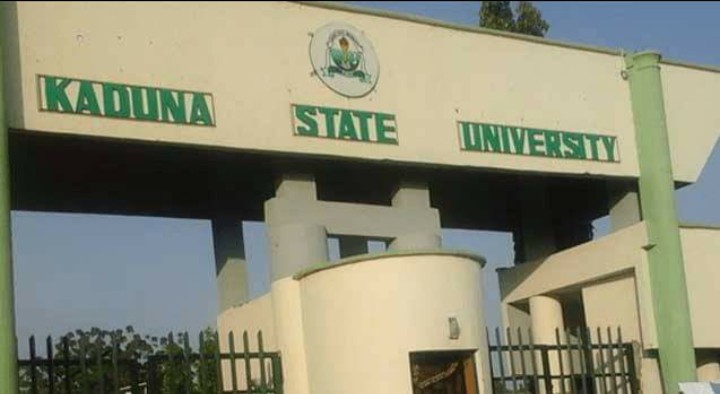
The Academic Staff Union of Universities (ASUU), Kaduna State University (KASU) chapter, has suspended its indefinite strike action following an agreement with the state government.

The decision followed the congress meeting held on February 22, 2025 and the approval of the union’s National Executive Council (NEC). 

In a statement released on Sunday, the branch leadership headed by Dr Peter Adamu appreciated the Kaduna State government for demonstrating goodwill towards resolving the issues that prompted the strike. 

According to the statement, the government is releasing funds immediately to pay the 60% withheld September 2017 salaries and the Student Industrial Work Experience Scheme (SIWES) supervision allowances for five sessions. It has also set a timeline for the payment of five months’ withheld salaries (May – September 2022), promotion arrears, Earned Academic Allowance (EAA), pension remittances from 2009 to 2019, as well as death benefits and Group Life Assurance.

The statement also featured the government’s commitment to implementing a wage award and granting full autonomy to KASU.

The Daily Reality last week reported the above issues as the causes of the strike.

The KASU chapter of ASUU praised Governor Uba Sani for deviating “from the dark days of the past where members [of ASUU] were victimized for participating in lawful strike actions”.

El-Rufai’s feud with Uba Sani and the lessons learned

By Ukasha Sani Idris

Recently, strange “activism “ by former governor of Kaduna State, Malam Nasiru El-Rufai on his social media platformshas reaffirmed the rumor that he’s no longer on good terms with his successor, the current governor of Kaduna State.

On X (formerly Twitter), El-Rufai responded to a follower’s claim that he would be arrested if he returned to Nigeria.

Malam responded by saying, “ …Your post below refers. I have been hearing these same rumors of arrest, detention and torture in some dungeon in the NSA’s office (where Emefiele was allegedly tortured to resign as CBN governor), since July 2024 when the so-called report of the Kaduna Assembly began circulating…”

El-Rufai VS His benefactors

This development has sparked renewed interest in El-Rufai’s history of betraying his benefactors. Farooq Kperogi’s August 2023 column highlighted El-Rufai’s “serial betrayals,” noting that he turned against former Vice President Atiku Abubakar, who brought him into the national spotlight, and later betrayed former President Obasanjo. In it, he mentioned:

“Of course, El-Rufai later betrayed Obasanjo—and everybody else that has propelled his career or extended favors to him.”

“El-Rufai seems congenitally incapable of being loyal to people who feather his aspirations. “

“What’s happening to El-Rufai now actually pales in comparison to the depth of his serial betrayals of his benefactors. It’s a case of live by the sword, die by the sword.”

Who is the biggest casualty?

When Madina Maishanu questioned Bello El-Rufai on BBC Hausa about the current feud between his father and former boss, the worry lines suddenly appeared on his face. Still, he tried to maintain a neutral stance and replied, “It’s not most desirable, but it’s part of life. Couples divorce. Friends fall out…”

When pressed on whether he would mediate a reconciliation between them, he stated that it is not his responsibility to mediate between his father and Governor Uba Sani; his responsibility is Kaduna North.

He also reaffirmed that Uba Sani is still his boss after reemphasising his strong bond with his father.

Where is Dadiyata?

In another response to the same diehard fan, Malam wrote:

“Be careful, Imran @IU_Wakilii……the Kaduna Kidnapping Team (I will reveal this next week, in sha Allah) will either try implementing the Danbilki Commander (abduct, whip and then offer money) or the Bashir Saidu (abduct and imprison) treatment on you. Please keep away from Kaduna and stay safe wherever you are.”

MALAM shouldn’t only reveal the “Kidnapping Team” without telling us when and how it started and the architect behind this torture, perhaps his information would take us back to Dadiyata’s abduction that occurred when he was the sitting governor of the state where Dadiyata was abducted.

Life Lesson:

“Do unto others as you would have them do unto you.”

  1. El-Rufai’s recent social media outbursts seem to be a reflection of his own bitter experiences. Many are suggesting that he’s facing the consequences of his own actions.
  2. If the biological son of MALAM can maintain a neutral stance, at least in our view regarding this matter, why are the sons and daughters of “Nobody” so eagerly rushing to inherit other people’s feud?

I cherish the virtues of honour, respect, and integrity; however, I am in no way justifying betrayal and distrust. I also pray I never find joy in someone’s downfall.

Ukasha Kofarnassarawa wrote via ukasha_sani@yahoo.com.

ASUU-KASU declares indefinite strike over unpaid salaries, allowances

By Maryam Ahmad

The Kaduna State University (KASU) chapter of the Academic Staff Union of Universities (ASUU) has declared a total, comprehensive, and indefinite strike starting today.

In a statement signed by Dr. Peter Adamu, chairman of ASUU-KASU, and Dr. Peter M. Waziri, secretary, the union announced that the decision was approved by the National Executive Council (NEC) following a resolution by the branch congress.

The strike is in response to several unresolved issues, including the non-payment of withheld salaries from 2017 to 2022, earned academic allowances dating back to 2016, promotion arrears, and supervision allowances for the Student Industrial Work Experience Scheme (SIWES). 

Other grievances include the non-remittance of pension funds from 2009 to 2019, lack of group life assurance for deceased members, and the failure to implement a 25% and 35% wage award.

ASUU-KASU also demands the restoration of university autonomy and has rejected promises from the Kaduna State Government, citing a lack of substance, specific details, and clear timelines for settling outstanding entitlements.

The strike action is expected to disrupt academic activities indefinitely until the demands are met.