By Maryam Shehu
I write with a heavy heart and bleeding eyes to the extent that my sights are closed, and I can’t catch a glimpse of the words that percolate through my pen.
Zaria is known as the heartbeat of its state, moving from its social amenities and the acuity of its residents and advocates. It won the best award for breeding leaders and world scientists with excellent records of surveillance and stateliness.
Its leaders have incentives for every eclipse and malady, but I am yet to have a vision of the sad situation of its library. Does that spell another prestige or a paralyzing facet of its artistry and reading culture? Only God knows how much a lack of a library plays in the eruption of the educational sector and traditions.
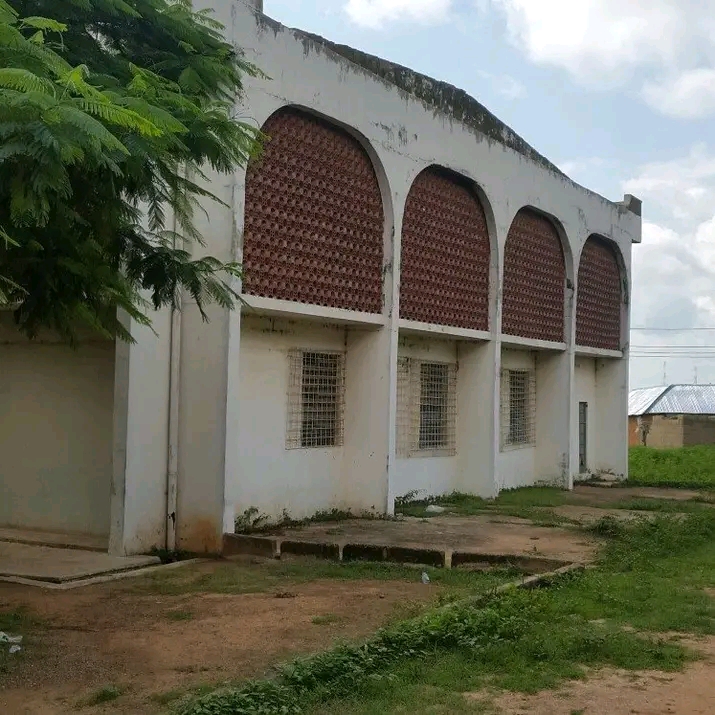
‘Mostly students within Zaria from the 1980s used the Public Library, but now it remains only the building’; this was what I saw as a description of a group named ZARIA PUBLIC LIBRARY FRIENDS on Facebook… A very disheartening description, indeed! Does that mean education ended in Zaria after those days, or is it only for those in the 1980s? Oops, I can’t uphold the irritation!
Everyone that often visits the place is a bystander to how barren and malodorous the place is, the books are outdated, and the shelves are scanty and scattered to the magnitude that one can not confidently point to a visitor or a person who has been reading about or watching notable libraries.
I write for the government or any other personnel responsible for the library to reminisce, if forgotten, about the virtues and diamonds behind refurbishing the library and its roles in developing a state/LG with few ravines of mine. These are:
First, it supports the educational sector: Education is the bedrock of every progressive state. It soothes every rough wall for governance. Whenever/ wherever a state owns a gear of education and capitalize its residents with the necessities, that administration is said to have grappled with every hole of unemployment, insurgency, and other suppressed deed that might lead to the tumult of any governance. It can contribute to nation-building and reconciliation. As said by Nelson Mandela, “Education is the most powerful weapon you can use to change the world”.
Second, it preserves the cultural heritage of the society: A rich cultural heritage defends how the residents maintain its distinctiveness and sets it as a mirror to look at by young ones. We have different skin colours, languages, and marks, and our clans mingle with others (good/bad), but the pictures we sow in their hearts and books are those that could reflect and defend their susceptibilities. The library is the only place where those scrapbooks and photographs could be carefully salvaged.
Third is the provision of useful textual materials: The availability of a standard and substantial library provides advantageous scripts and materials for self-development and implementation of a basic constitution… It helps especially those from underprivileged backgrounds.
Fourth, it also provides an avenue for recreation and relaxation. Libraries are one of the most significant factors that lead to the development of arts and crafts; they create seats for all crawling and professional clubs and carve stages. It composes words for artists and other microphones partners.
Furthermore, it also provides and enhances reading culture. As the slogan says, ‘Readers are leaders’; likewise, writers and other mellow people, we succeed by reading from the served letters of our antecedents. And many people strive to be voracious readers but the lack of money to buy books drag their necks back and turn their faces from the papers by furnishing the library; that surely could be a buzzer to the sleeping readers.
With the above few ravines of mine, I hope the government and other related personnel are persuaded and forecast how much renovation of the public library could make their governance suitable and memorable and how lack of it will keep draining the administration. We hope you listen to our dried throats and reconstruct our shattered floors.
Maryam Shehu wrote from Zaria via maryamshehu6354@gmail.com.