Japa

Kashim Shettima urges Nigerian doctors to resist ‘japa syndrome’

By Uzair Adam Imam Vice President Kashim Shettima has appealed to Nigerian doctors to resist the temptation of leaving the country for greener pastures, urging them to stay back and help salvage the nation’s healthcare system.

He made this appeal during a courtesy visit by the National Executive Committee of the Nigerian Medical Association (NMA) to the Presidential Villa in Abuja.

Shettima commended the sacrifices of Nigerian doctors and their contributions to the country’s healthcare system, assuring them that President Bola Tinubu’s administration is committed to supporting their efforts.

He emphasized that the government values their services and needs their expertise to improve healthcare delivery in Nigeria.

The Vice President encouraged the doctors to remain steadfast and resist the “Japa syndrome,” a term used to describe the brain drain of Nigerian professionals seeking better opportunities abroad.

He expressed optimism that with collective efforts, Nigeria can become a great nation, and its healthcare system can be transformed.

This appeal comes at a time when the country is facing a challenging healthcare landscape, with many doctors seeking better opportunities abroad due to the perceived lack of investment in the healthcare system.

Nigeria: Is Democracy Day worth celebrating amidst the Japa wave?

By Abdul Sale

The perception of an average young man in Nigerian life is to have a good-paying job, own a house and settle down with his wife. After that, nothing more or less, while in foreign lands, the reverse is the case as struggles to have different means of income usually start after marriage. However, on the other hand, gathered a handful of Nigerians who have zeal and set their minds on travelling abroad looking for greener pastures, which, to them, is the only way to make it to the promised land.

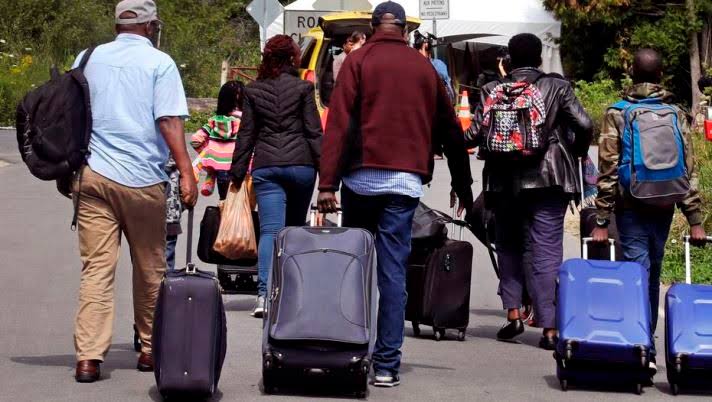
In 2019 alone, during the Buhari administration, over twelve thousand Nigerians, especially professionals like doctors, nurses, medical lab scientists, engineers, and care workers, travelled to Canada as a result of low remuneration and bad conditions of the working environment. They alleged that the Federal Government refuses to address this. At the time, Nigeria fell into recession, which devastated the economy; then, the Japa trend (jakpa Yoruba word meaning “to flee or run”) became an anthem in Nigeria, especially in the southern part.

Thousands of Nigerians have fled to oversee countries like the USA, UK, Canada, Australia, and other European countries to better their lives and families. In the northern part of Nigeria, the trend was not popular then, even though there were hundreds of northerners who had travelled abroad.

Moreover, I have noticed a wave of japa in the northern part of Nigeria lately, especially in the core north; the emergence of travel agencies and travel agents helped. Hundreds of Arewa youths have fled to countries like Saudi Arabia, Qatar, UAE, Oman, Jordan, and Kuwait, spending around 2 to 3 million Naira.

In some cases, Nigerians embark on the journey through land borders en route to Niger, Libya, Algeria and Morocco, which mostly ends in tragedy. For instance, Aljazeera reported that at least 61 refugees and asylum seekers, including women and children, have drowned following a “tragic” shipwreck off Libya, the International Organization for Migration (IOM) says.

On June 14, 2023, the Adriana, a fishing boat loaded with 750 people en route from Libya to Italy, went down in international waters off southwest Greece. There was a series of similar tragic stories as Flavio Di Giacomo, an IOM spokesperson, wrote on X, formerly Twitter, that more than 2,250 people died in 2023 on the central Mediterranean migrant route.

More than 153,000 refugees and asylum seekers arrived in Italy in 2023 from Tunisia and Libya, according to the United Nations refugee agency. One would wonder what triggers this massive wave of migration, especially among youths who are perceived to be the backbone and the future leaders of society.

The country’s economic situation is one of the driving forces that pushed some Nigerians to make that decision. Our leaders should, as a matter of urgency, create policies and bring ways to improve the country’s economic situation, thereby creating an enabling environment for the people to flourish their businesses.

Federal and state governments should invite foreign investors to come and invest in Nigeria to employ the thousands of unemployed graduates in the country. Moreso, the military and other security agencies should always respect the fundamental human rights of the citizens, as Nigeria is labelled as a country with high cases of human rights violations.

As we are reaching the second quarter of 2024, many Nigerians, especially youths, are ecstatic and happy about 2024 democracy day, full of hope and dreams that they wish to accomplish this year. Therefore, the government in power should redouble its efforts in helping these ambitious youths to realise their dreams.

Abdul Sale wrote via abutalatu72@gmail.com.

Japa: Addressing misconceptions on helping young Northerners craving to move abroad

By Dr. Muhsin Ibrahim

Some people accused us (Hausa/Fulani folks living in the West) of not doing enough to bring our own here – as our counterparts from the South do. This is not the first time and will not be the last I heard such accusations. In short, they are baseless.

Years ago, we spent hours giving a webinar on how to get scholarships and jobs in Germany under the Arewa Youth Mentorship Program (AYMP) platform. AYMP has been organising such events for years. I have shared it here and with many people personally. One of them complained that it was too long!

I went to bed last night thinking about the accusation. I almost slept when I felt the need to share a website about working, studying, and living in Germany, which I did. However, see how many people reacted to it (30 as I type this; the one before it has almost 1500). One of the three people who commented on the post asked, “How can I apply”? Click on the darn web link!

Folks, it is not easy to come to Europe or any other part of the world via legitimate means for a gainful job. First, you need to have the required skills or qualifications. Second, you must have either an admission, scholarship, or job contract. Third, you must have a visa.

I swear some of those people we praise for ‘helping’ their own follow dubious means. I know several people working with others’ documents and identities. I have heard of people charging astonishing amounts of money to be others’ guarantors (to come here). I cannot do any of these.

I have shared scholarship and job opportunities countless times and have been mentoring people—directly or indirectly—for years. Some of these folks have made it—Alhamdulillah. However, others haven’t. I cannot satisfy everyone.

Others have disappointed me, thinking I should do everything for them. I cannot recall how often I asked some so-called mentees to collect their academic transcripts or write proposals for applications to do their postgraduate studies abroad. Come on! I have other essential engagements myself.

Upon waking up, seek God’s help and avoid falling for scams out of desperation (the topic I discussed yesterday, though in Hausa).

May Allah help us all, amin.

Dr. Muhsin Ibrahim teaches Hausa Studies at the Institute of African Studies, University of Cologne, Germany. He can be reached via muhsin2008@gmail.com.

The hidden reality of life in Europe

By Aminu Mohammed

This article was inspired by a recent post by Dr Muhsin Ibrahim on Facebook regarding money belonging to someone named “Hassan Idris” sent through his PayPal account. Muhsin made the post asking the person to identify himself by sending him a message. However, soon after, he was inundated with messages from people seeking help in various forms. Some even asked him for money, assuming he had won a lottery or had ample cash stocked somewhere.

This issue not only worried me but also made me sad about the attitude of our youths. So that you know, I also live in Germany. I am yet to fathom the reason for the sudden influx of requests based on a Facebook post. Is it desperation, greed, ignorance, or the belief that money grows on trees in Europe?

I have thought about this issue and wondered why this behaviour occurred. Is it that the economic situation in the country has impoverished a large segment of society, making people desperate and in dire need of free money? What could be the reason behind this attitude?

I want to make it clear that I am aware of the difficult economic situation in Nigeria due to inflation and other factors. I also understand that there are genuine people who are in dire need of help and who reach out to Muhsin for support. However, I want people to know that just because Muhsin lives and works in Germany, it does not mean he is rich.

The Untold Story About Europe

Europe is often seen as a paradise with streets paved with gold and abundant wealth. However, the reality is different. Life in Europe is not as easy as it seems. Homelessness and begging are common in countries such as France, Italy, the Netherlands and the United Kingdom. In London alone, at least 167,000 people are homeless due to the high cost of living. Comparably, a great number of immigrants, among them Africans, are stuck in Europe and unable to return home because they are afraid of what is ahead.

 Although the standard of living is high in Germany and the government provides stipends for jobless citizens, there are still poor people, beggars and homeless people in the country. In my former city, Kiel, I have seen people sleeping in public buildings and bank corridors, even during the harsh winter months. I recently saw a naked woman amongst the homeless folks at the Hamburg Central Station, probably suffering from mental illness. It was heartbreaking.

Despite these challenges, there are still opportunities for people with relevant skills to excel and succeed in Europe. Even without a university education, one can live a good life in Germany by being disciplined and hardworking.

Rising Living Expenses

The ongoing war between Russia and Ukraine has brought about significant economic changes in Europe, particularly in Germany. As a result of Germany’s reliance on Russia for affordable energy, particularly gas, to power its numerous industries, the country has been severely impacted. Germany had to look for alternative gas sources, mainly from Norway and the Middle East. This has led to an increment in energy costs and subsequently affected the cost of living and production.

The high cost of living has affected many families, with numerous individuals struggling to pay their bills monthly. The rat race has worsened, and many people live paycheck to paycheck. Groceries and the prices of other goods have doubled or, in some cases, even more. This is in addition to an increase in rent, energy, water bills, etc.

2024 Goals

It is an incredible experience to step out of your comfort zone and explore new places in life. However, before travelling to any country, please conduct thorough research and set reasonable expectations. Life is not always easy, but you can succeed with diligence, perseverance, and hard work.

Set your goals for this year, and take concrete steps to achieve them. Additionally, aim to acquire new digital skills to increase your earning potential. I wish you the best as you enter the New Year with renewed energy and determination.

Aminu Mohammed wrote this article from Ingolstadt, Germany. He can be reached at gravity23n@gmail.com.

UK issues strict policy stopping Nigerian, other international students from bringing dependents

 By Sabiu Abdullahi 

In its effort to curb the high rate of Japa, the United Kingdom’s Home Office has officially rolled out its rigorous policy restricting Nigerian students and other international counterparts from bringing dependents into the country via the study visa route.

This significant development, designed to tighten immigration controls, was announced on the Home Office’s social media platform, X (formerly Twitter), this Monday. 

According to the updated regulations, only postgraduate research students and those with government-sponsored scholarships will be exempt from the prohibition on bringing family members.

This follows the implementation of a law in May 2023 that specifically targets the entry of dependents for Nigerian and other international students, reflecting the broader government objective of reducing immigration, which currently stands at approximately one million. 

The Home Office reaffirmed its dedication to a substantial reduction in migration, declaring, “We are fully committed to seeing a decisive cut in migration. From today, new overseas students will no longer be able to bring family members to the UK. Postgraduate research or government-funded scholarships students will be exempt.” 

In addition to the ban on bringing dependents, the new regulations include the removal of the permission for international students to switch from the student route to work routes before completing their studies, aiming to curtail any misuse of the visa system. 

The UK government also announced a comprehensive review of the maintenance requirement for students and their dependents, coupled with a crackdown on “unscrupulous” education agents involved in improper applications that exploit immigration pathways rather than genuine educational pursuits. 

A statement on the official site of the UK’s Home Office outlined the government’s objective to significantly reduce net migration by restricting the ability of international students to bring family members, with exceptions only for postgraduate research routes.

The move also seeks to prevent individuals from exploiting student visas as a backdoor route to work in the UK.

UK unveils five-point plan to curb immigration

By Sabiu Abdullahi

The UK government has unveiled a comprehensive five-point plan to curb immigration, drawing mixed reactions from various sectors.

The plan aims to address concerns over rising immigration levels and implement stricter measures for those seeking to enter the country. 

The plan for the policy 

1. Overseas care workers will no longer be able to bring their dependents to the UK. This measure aims to prevent the exploitation of care workers by employers and ensure that they are adequately compensated for their work. 

2. The minimum salary requirement for skilled worker visas will be raised from £26,000 to £38,700. This move aims to attract highly skilled workers and ensure they receive fair wages. 

3. The 20% minimum wage reduction previously offered to those applying for visas in shortage occupations will be eliminated. This decision aligns with the government’s efforts to ensure fair pay for all workers, regardless of their nationality. 

4. The minimum income requirement for family visas will be increased from £18,600 to £38,700. This measure aims to ensure that sponsors can financially support their dependents. 

5. The government has requested that the Migration Advisory Committee review the graduate route to prevent abuse. Changes to the student visa are expected to be announced soon. 

Expected outcome 

The government estimates that the five-point plan will reduce immigration by around 300,000 people annually.

However, critics argue that the plan could hinder the UK’s ability to attract and retain skilled workers, particularly in critical sectors such as healthcare and technology. 

Response from the Home Secretary 

Home Secretary James Cleverly defended the plan, stating that it is necessary to ensure a “fair, legal, and sustainable” immigration system.

He emphasised the need to address concerns over immigration levels and protect the rights of British citizens.

A new era for higher education in Nigeria

By Nusaiba Ibrahim Na’abba

In his inaugural professorial lecture, Professor Muhammad Muftahu addressed the need for the institutionalisation of higher education as a field of study and professional practice in Nigeria. This came amidst increasing debates about skills over degrees or vice versa and other higher education problems that continue to stunt the growth of education in Nigeria.

In the lecture, which took place on November 14, 2023, at Kaduna State University, Prof. Muftahu disclosed the massive strategic importance of higher education in the development of Nigeria. He had served in various capacities as a professional higher education consultant and researcher. In his journey, he has navigated the multitude of intricacies of the discipline while teaching revered values in various institutions and organisations around the world.

In the years of my professional engagements with Prof. Muftahu, particularly in higher education research, article writing and research reviews, we have both documented facts and valuable insights that have given higher education the needed spotlight. Today, the sum of the knowledge I have gained has eased my current engagement as a content writer at a higher education institution. Prof. always insisted that we had learned from each other until my contracted work arrangement elapsed.

The higher education field is an essential asset to Nigeria’s all-round development, as he highlighted while delivering his lecture titled ‘Institutionalizing Higher Education as a Field of Study and Professional Practice in Nigeria’. It solidifies and amplifies every element purposely chosen to support general development by promoting economic growth and social progress, among other pillars that ensure the thriving of societal development.

Higher education is a multilayered field of endeavour. Existing therein are all tertiary institutions of learning, comprising mono-technics, polytechnics, colleges of education, centres of excellence in research, and universities, among other tertiary structures, not forgetting higher education programs. They are solely established to enable the production of new knowledge through skills, innovation and value-based education. This is necessary to keep steering the affairs of the country towards betterment and advancement.

Growing recognition of the importance of the field, growth and diversification of Higher Education Institutions, the influence of technology, the impact of policy and politics, and the globalisation of higher education are among the major components that transform research and studies in the higher education discipline. These components must be creatively streamlined into the higher education system to institutionalise its practice in full capacity.

Prof. Muftahu’s inaugural lecture comes at a time when the Academic Staff Union of Universities (ASUU) and the Nigerian government have sharp disagreements over the autonomy of universities, the Integrated Payroll and Personnel Information System (IPPIS), the allowances of lecturers and notably the ‘Japa syndrome’ that has infested the universities. By the day, resourceful researchers in Nigerian universities seek lucrative, greener pastures abroad. Hence, they are trooping en mass to other countries, leaving behind the slowly decaying and pathetic system at home.

According to Muftahu, “Certainly, governance issues in higher education play a significant role in developing higher education practice in Nigeria. The lack of promotion of evidence-based policies and programs in higher education, as well as throughout the system, contributes to the difficulties in developing a strong pool of higher education researchers in Nigeria.” With the ‘Japa syndrome’ overwhelming the system, organising the strong pool of professionals dedicated to higher education research can be herculean.

The new era of higher education can be achieved through institutionalising it as a professional practice and a field of study in Nigeria. And doing that surely needs a redefined and robust approach. Critical areas that should be highly prioritised to elevate the status quo of higher education include higher education research and policy development, leadership, professional practice, a national strategic action plan and the establishment of a national institute for Higher Education research.

Higher education is a holistic collection of programs and institutions that serve as a think tank for every nation’s development. In advanced countries and developing ones like the US, Malaysia, Singapore, etc., higher education proudly supports decision-making at all levels of governance and public engagement with research and innovation. With the institutionalising of higher education using the key aspects, they have achieved a phenomenal transformation and development.

For Muftahu, “Without a doubt, a country’s overall development depends on the strength of its higher education system, which is heavily reliant on the presence and contributions of higher education professionals”. But, adapting to the contemporary practices of advancing higher education in Nigeria will be tricky.

In fact, with the current hike in university tuition, the tertiary education system is deterring youth from pursuing careers. This will also stagnate the development of a pool of resourceful higher education professionals that can ably streamline global best practices in the country’s education sector.

Nigerians are always on the search by global companies, research institutes, and other prominent organisations, courtesy of their well-regarded knowledge and abilities. A strategic national higher education roadmap is desperately needed to save the experts from trooping out of our country.

It is high time to stop the dramatic display of theatrics by the Nigerian government concerning higher education matters with evidence-based policies at institutional and national levels. These policies and programs can only be achieved by acknowledging the importance of skilled professionals in pursuing higher education excellence and values.

Nusaiba Ibrahim Na’abba is a content writer at Skyline University Nigeria (SUN). She obtained a degree in Mass Communication and a Master of Communication Studies. She is also a communication researcher and freelance writer.

The graduate skills that you ignored

By Prof. Abdelghaffar Amoka

When I was an undergraduate student, one of my lecturers during a physics class told us that physics makes you think better than others. We were wondering how. He said we don’t have to pick up a physics job after graduation but that whatever we decide, the skills acquired while studying physics will lead us through. That I later found to be true when I look at my classmates and their different endeavours.

In another class, the lecturer told us we should learn not to compartmentalise our brains. Let all that we have in our heads work together. During my undergraduate days, we were constantly reminded that as we pass through the university, we must allow the university to pass through us.

I was passing by the Department of Mathematics this morning, and my eyes captured their sign oars. On the signboard was the motto: “Critical thought for a critical mind”. The department claimed to be a place to develop critical minds. I have seen critical minds from there that are bankers, entrepreneurs, etc.

We were discussing this morning, and a friend narrated to us how he got a job as a marketing officer, a position he never applied for. He applied for the position of Admin Officer, and to end the interview after responding to all the questions from the panel members, the DG asked him why he didn’t apply for the position of Marketing Officer. He answered that he did not study marketing and he felt that from his degree, he was only qualified to be Admin Officer. The DG then responded that with his communication skill and confidence, he would do well as a Marketing Officer and was hired as a Marketing Officer.

One of the top skills required from a graduate is communication skills, and your training in the university includes that. Graduates need to be able to effectively get the message across, including in verbal and written formats. It’s also about listening and understanding other views. Good command of languages for projecting a confident, professional image and for good communication with clients and colleagues. If you don’t have it, you should blame yourself, not your university.

Aside from your hard technical skills, the other skills expected from a graduate are Time management, flexibility or adaptability to respond to unexpected changes in circumstances or workload effectively. Ability to work in a team to take on the responsibility to ensure your team achieves its goals. Critical thinking and problem-solving skill to approach problems and resolve issues from different angles is also highly valued.

Interpersonal skills to build positive working relationships, good communication, persuasion, and negotiation. Being flexible in your thinking and being open-minded and curious, and creative thinking that will help in problem-solving and innovation. The ability to understand others towards finding solutions that allow both parties to achieve their goals or come out of a situation. Leadership, the ability to bring something extra to a team, is essential. You are required to have a basic knowledge of the field. And guess what? You should have learned all these skills in school.

These are embedded in some of the activities we ignored in school. Some of them look routing, but there are important lessons in them. Time management is ensuring you hand in your assignment or report at the due date and time. That lecturer who locks you out of the lecture room, because you are 10 minutes late to his class, has nothing to benefit from you missing the class. He is training you to respect the time and be punctual. They say time is money, and punctuality is the soul of business. Flexibility to handle unexpected workloads is managing your time to take extra lectures and extracurricular activities. The ability to work in a team ensures that your practical or presentation group achieves its goal within the specified time.

Giving a class assignment or exam questions that require a little thinking is building your critical thinking to deal with challenging situations. You have classmates with diverse beliefs and ideologies to develop interpersonal relationships with and get to understand them. You are made to have seminar presentations to develop your ability to present an idea to the public and defend it. You are meant to lead a practical or study group for a reason. You are learning to be a team leader. Campus associations and societies are not there just for fun. Some of the union leaders grow to become political leaders.

So, don’t let anyone discourages you from pursuing a degree program, except it’s your choice not to go for a degree. Pursue your degree and pay attention to the requisite skills for the degree.

If you didn’t get these skills as you are graduating, stop arguing over skills vs “just” degree and blaming your university and lecturers for failing to acquire the skills during your study. You just passed through the university and did not allow the university to pass through you. Go and develop it; it is not late. Maybe you are the one that the book is referring to.

However, let me remind you that if you have these skills in Nigeria, it will be easier to use them to get a job outside than in the country. To get a job here, you may need the extra skill of knowing someone that knows somebody that knows another person to get a job. I learn some jobs are on sale. If you have the cash to buy one, I wonder if you need these skills.

An ex-aide to the Chairperson of the Federal Character Commission was reported to have confessed before a House of Representatives ad hoc committee investigating job racketeering at ministries, departments and agencies (MDAs). He said he had sold federal employment slots to job seekers at the directives of his former boss. According to him, some paid N1 million, others N1.5 million.

Finally, our problem is not skills or degrees; we have these in abundance and even export them abroad (the Japa phenomenon). Our problem is creating a system where the son of nobody can become somebody without knowing anybody. Our present system is not sustainable. It’s a disaster waiting to happen.

Abdelghaffar Amoka Abdelmalik, PhD, wrote from Ahmadu Bello University, Zaria. He can be reached via aaabdelmalik@gmail.com.

To even those who Japa: life-challenges are meant to be confronted, not to run away from

By Salim Marafa

It extremely itches my heart, mercilessly punish my soul and sometimes make me even feel like crying, whenever I hear a story of people that are running away from their problems rather than facing and solving them.

On this earth, the category of people I hate to the core, are those people who excel in nagging about their problems without making even a slightest effort to solve them. After them, then come those that are running away from their lives’ challenges and pretending all is well while is not, may be just to have a temporal peace of mind. Why the running? Why the pretention? Such kind of questions always wander in my head whenever I come across the story of such people.

Life on this earth, is naturally full of ups and downs. Therefore, people should know this and be courageous, bold enough and fearless to face those challenges. Running away from a life problem is never an option. We should understand that, like mathematical equations, problems are meant to be faced, confronted, balanced and solved.

Like human beings, problems have legs, hands and can move. Therefore, whenever one runs away from his share of life predicament, those problems will be running after him to wherever he goes. May be, up to his final home: grave. So, it will be much better, if we learn to dealt with our problems instead of running away from them.

And people, should understand that, God does not create problems and throw them into the life of his creatures just to punish them. No, its not like that. Creatures are beloved and dear to their God, and He is Loving, Caring and Merciful as His names signify. Therefore, definitely God creates problems for purposes; to test our faith, creativity, wisdom, sense of judgment and to make us learn from our previous mistakes. And most of the problems we encounter are just the consequences of our actions and inactions.

For instance, running away from problems is among the reasons Nigeria is at its current situation. For, it is in Nigeria one can find uncountable group of people who complain about the problems bedeviling them and the country, but they are not ready to make even a little effort to solve those problems they always talk about. And complain does not solve a problem, action does.

Nigeria, as a giant of Africa, has all it takes to be a great and developed nation. But the habit of “running away from problems”, “pretending all is well while is not” and ” excelling in complain than swinging into action” that beclouded the mind of its citizens are the obstacles that stand on her way and made the country “progressively stagnant”. It is high time Nigerians shun away from these negative habits.

Nigeria, is naturally enriched with human resources that can drive the country to the hill of success and development; ranging from, creative people, outstanding academia, technological gurus that have invented amazing things, successful entrepreneurs whose names echo through every mountain within the international business arena and what have you! Yet, the country is here languishing in the valley of problems such as bad governance, insecurity, high cost of living, not phone snatching which lead to killing of innocent citizens e.t.c., why?

The answer is that simple, Nigerians are good at complaining about problems than swinging into action. And not every Nigerian is ready to give all he has for his country to breathe a fresh air of development and freedom. Hence, the big dream of our people now is, let me gather a lot of money through whichever means and fly away abroad and enjoy my life. But I am not saying that all Nigerians abroad, run away beacause of the problems associated with the country.

There are few patriotic Nigerians that are abroad but their heart is here with us in Nigeria. They have unshakable love for the country and dream that one day everything will be alright. We have seen their patriotism through their social media; Facebook Posts, tweets and articles they write, it is all about Nigeria. May Allah bless them in abundance.

But to some, Nigeria is their main problem. So, once they get visa, that’s all. You will never hear from them again. They have forgotten their origin, pride and identity.

Running away from problems is never a good option. Nigeria is the only home we have, the nest where our biological eggs are hatched. So, If we see a good country in our dream that resembles a paradise, I think it is Nigeria that we should build to be that country of our dream. Not to run away to somewhere that will never become a home to us. Wise people say “if your home is broken, the responsibility of mending and fixing it is on your shoulder not on stranger’s shoulder”.

We should not cause our problems ourselves and expect someone to come and solve it for us. Our problems are created by us and therefore, we must solve them all by ourselves.

Nigeria is our home where we find shelter, an oasis where we find solace and we have nowhere like it. It is our pride, origin and identity, if we run away from it due to the heavy problems on her shoulders, who do we expect to come and solve those problems? Problems are meant to be solved not to be run away from.

May Allah bless Nigeria.

Salim Marafa writes from Bauchi, Nigeria.

Nigerians and mass migration: Addressing the Japa syndrome

By Umar Yahaya Dan’inu

Mass migration is a complex and multifaceted phenomenon that affects individuals, communities, and entire countries. It is driven by factors such as economic opportunity, political instability and natural disasters as people seek to improve their lives.

In Nigerians, many people are driven to migrate for better lives, education and healthcare, and job prospects. Political instability, such as conflict, insurgency and human rights abuses, also contributes to a mass migration of Nigerians.

The term “Japa” refers to the migration of Nigerians to foreign countries, especially Western ones, in search of a better life. A lack of quality leadership in the country at all levels often causes this phenomenon. Several reports and writing has shown that despite their love for their home country, many Nigerians have lost trust in their leaders and feel compelled to leave in search of a better future. Moreover, the decay in leadership has caused division within the polity; every tribe or region is suspicious of one another, and there is fear of domination and marginalisation.

In the 60’s and late ’70s, Nigeria was a country that commanded respect in the global arena. Our passport is a thing of pride at any entries and departure level. The Nigerian currency and economy were in good shape. However, the challenges facing Nigeria, such as insecurity, kidnapping, banditry, corruption and political violence, have led to the decline of the country’s economy and international standing. This decline has driven many young people, skilled and unskilled, to leave in search of a better life.

In Northern Nigeria, where Islam dominates the culture, people prefer to migrate to Middle Eastern countries, such as Saudi Arabia and recently Dubai and Qatar, where they share the same religion and beliefs. In contrast, Southern Nigeria is the centre of migrants, as people seek to escape bad governance and poor leadership. Despite the differences between the North and South in terms of access to education, quality of life, job prospects and economic opportunities, many young people still feel compelled to leave.  

However, the skilled and unskilled knows what they can do to navigate their way to leaving Nigeria. In Benin, the state of Edo, people are trafficked in the name of migration to get a better life, and they mostly end up enslaved and sold to work without regard for the dignity and respect they left in their country.  

Furthermore, some skilled migrants bring positive changes to Nigeria; they are doing wonders in their new countries, such as setting up companies that employ Nigerians, impacting the economy positively. In addition, statistics have shown that Nigerians are highly skilled people in the UK and the US, contributing to the economies of the host countries.

The migrations of these groups affected Nigeria negatively because Nigeria is among the world countries with the highest numbers of out-of-school children and increased maternal mortality rates. Nigerian-trained Doctors, Engineers, Scientists, Musicians and filmmakers are all over the world doing great work. Nigerian government needed their services and contribution to help in reducing the numbers of maternal mortality and to help in actualising effective education take place at all levels.     

To address the Japa syndrome, a multi-faceted approach is needed that addresses the root causes of migration and its challenges. These involved improving economic opportunities, promoting stability and security, and increasing access to education, healthcare, and employment opportunities can help reduce migration. In addition, strengthening the democratic process, improving wages and salaries, and enhancing the country’s security architecture are also important steps that need to be taken.

Nigeria is ours, and our responsibility is to ensure a bright future for our nation and youth. We must take action to address the Japa syndrome and create a future that is worth staying for.

Umar Yahaya Dan’inu wrote from Hausari Ward, Nguru, Yobe State. He can be contacted via umarnguru2015@gmail.com.