Islam

From Proliferating Worship Places to Empowering Worshippers: A Reflection on Philanthropic Reprioritization in Nigeria (II)

By Abdullahi Abubakar Lamido

A person who sponsors and takes good care of a single orphan is assured of a mansion in the choicest quarters of Firdaus at the centre of the Prophet’s Estate, enjoying their eternal life as a neighbour to the Infallible Master (sallalahu alaihi wa sallam). In the Hadith of Bukhari, the Prophet says, “The caretaker of the orphan and I will enter paradise like this, raising (by way of illustration) his forefinger and middle finger jointly, leaving no space in-between.”

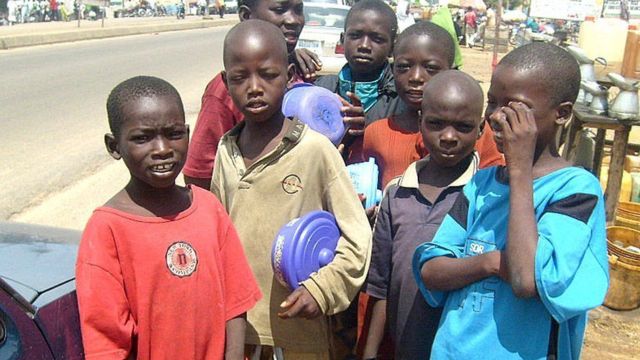
A community flooded with orphans and vulnerable children with no access to food, clothing, shelter, education, and medicare; orphans whose neglect aggravate their vulnerability to all sorts of socio-economic dangers; should prioritise taking care of them. If competing in building mosques even where there is less need is to get paradise, why not also invest in this sure way to Heaven?

And, why not consider endowments for fighting hunger also? When a person asked the Prophet, what is the best act in Islam, the Prophet mentioned two actions: “To feed (others) and to greet those whom you know and those whom you do not know” (Bukhari). And the Prophet also counted “feeding others” among the surest ways to paradise, alongside spreading salam, strengthening kinship ties and night prayers. Why not, then also emphasise in our society, making endowments for feeding the needy and the millions of the malnourished and unnourished children as a guaranteed path to paradise? 

My honest opinion is that rather than rebuilding or redecorating some mosques, we need to invest more in empowering our imams and their followers. We can all see how the “imamdom” is gradually being saturated with incapable scholars leading ignorant followers in prayers within well-decorated mosques. As if we have forgotten that giving quality education and “beneficial knowledge” to people is itself a sustainable afterlife investment, one that may even often have more multiplier effects and trickle-down effects in terms of fetching rewards perpetually and building the Muslim community progressively.

If one sponsors a young man to become an Islamic scholar and imam, anytime this trained scholar preaches and teaches, the sponsor has a reward commission. And when the students of the imam teach or use the knowledge, the sponsor is assured of a commission. It continues in that way till “the end of history”! So, if the search for reward is what makes us race in building worship places, then so should building qualitative worshipers. We should, in fact, see the creation of generations of qualitative Muslims as a “blue ocean”; a virgin and highly underexplored otherworldly investment opportunity.  

Some may remind us that the Prophet’s first thing after hijra was to build a mosque. True. But that was first because there was none. And secondly, this mosque, as a primary symbol of Islam, was built for companions who were well educated in Makkah before migration, plus the Medinan community that was also educated by no other scholar than the great Mus’ab bin ‘Umayr.

In any case, the Prophet built the mosque because it was a priority by all standards; there was a need. And so immediately after that, he also paid attention to other developmental matters, including socio-economic priorities like establishing the Medinan Market (Suq al-Madinah). He also immediately began calling companions to “purchase” homes in Jannah through addressing human needs. That was how Uthman got an edifice in Jannah by purchasing the well of Ruma and dedicating it as waqf. That was how Abu Talha got Paradise by committing a waqf of his garden to benefit the needy and his poor relatives.

In fact, as recorded, most rich companions got their direct entry admission to Jannah through spending on human needs; Uthman bought and did waqf of the Ruma well, Umar dedicated the Thamqh garden for the poor, wayfarers and the rest, and the list goes. Little did we remember that in addition to doing a waqf of his mosque, virtually all the other waqfs of the Prophet were for welfare and socio-economic empowerment. 

We need to discuss whether building the Muslims and making them self-sufficient should continue to receive our philanthropic priorities or building mansions in the name of mosques – even where there is less need – which would mostly be populated by undedicated, hungry, dirty and largely ill worshippers. Building worship places is undoubtedly required, guaranteed key to paradise, ceteris paribus. It is, however, one of many means to getting admission to paradise. Why, then, should we not start to amplify other keys to paradise, especially those in some contexts such as ours that may appear weightier on the scale of Muslim priorities?

It is not in the interest of Islam to have dirty looking Muslims attending multimillion naira mosques. Islam wants educated, neat, tranquil, self-sufficient, qualitative Muslims whose worship is knowledge-based. So, when some philanthropists focus on building worship places, others need to invest in other equally rewarding endeavours. Wherever we have no worship place, it is a collective duty upon the community members to initiate one. However, where we already have one, we must prioritise other joint obligations; taking care of the orphans, the poor and widows being one of them. We can do it through building revenue-generating waqfs that can perpetually help the poor and everlasting generate rewards to the donor.

Abdullahi Abubakar Lamido is the Chairman Zakah and Waqf Foundation Gombe, Nigeria. He can be reached via lamidomabudi@gmail.com.

From Proliferating Worship Places to Empowering Worshippers: A Reflection on Philanthropic Reprioritization in Nigeria (I)

By Abdullahi Abubakar Lamido

Alhaji Halilu is a popular, wealthy businessman. Famous for his continuous investment in constructing mosques, people in his town, surrounding villages and neighbouring states came to know him as Alhaji Mai-Masallatai (roughly, the Mosques Builder). His main motivation is the authentic hadith that promises a house in paradise for anyone who builds a mosque for Allah.

Thus, whenever Mai-Masallatai is approached with a request for mosque construction, he gives an automatic positive response. Alhaji dedicated all his philanthropic budget to building mosques, with virtually zero allocation to any other act of charity. He never says no to a mosque request. Within some time, he had constructed mosques for almost all the communities within his town and neighbouring villages. His ultimate goal is to own wonderful castles in heaven, and, Alhamdulillah, he has got a guarantee for that in constructing mosques from an infallible mouth. 

Now, three things happened. One, as there are not many communities lacking mosques, people started requesting him to repair the mosques he built for them last five, ten or seven years; to rebuild their mosque, repair it, or buy them new sound system, new carpet for the mosque, electricity generator, or “solar” and so on. Mai-Masallatai gradually transformed into Mai gyaran Masallatai, from building mosques to redecorating and making existing mosques “befitting” and ultramodern.

The second trend then followed. Since Mai-Masallatai is not the only aspirant for paradise, other wealthy persons joined the mosque construction endeavour. As a result, the number of mosques increases – two or more mosques in an unnecessarily close distance. A  community that needs one mosque would request a second one for flimsy reasons; we have Sheikh XYZ, who should be an imam and has no mosque; why not get one for him so the society would benefit from his imamship! And any rich man who builds a new house would ensure that a mosque is embedded from the inception of the architectural design. So, each neighbourhood or street, and almost each “big” house, has a mosque attachment built by a person who wants paradise. Soon the third issue began to arise; imams scarcity.

It is noteworthy that Mai-Masallatai and all his emulators live and do business within a Muslim community that has thousands of orphans who live in hunger, disease, illness and squalor. They coexist with hundreds of widows who survive in shabbiness, battling the spiritual ills, psychological traumas and socio-economic vulnerabilities associated with poverty, ignorance and starvation. They reside in neighbourhoods bedevilled with noise, air and dirt population, with zero consciousness of environmental challenges; where people often urinate and defecate in the open, at public passages and places as crucial as mosques and marketplaces and stadia. They live in communities that use firewood as an energy source but with near-zero interest in planting trees.

Mai-Masallatai builds mosques for communities where well above 80% of the people cannot correctly recite the Fatiha and are mostly ignorant of the basics of purification, ablution and prayer. The worship places are beautiful, “befitting”, and “ultra-modern”. But the worshippers are ultra-ignorant, extra-hungry and super-poor. While the mosques are decorated, the mosque attendants are neglected.

The community severely lacks qualified imams and doesn’t have a plan to train religious scholars or imams. Nearly all are accidental scholars and imams. Most imams are less qualified, semi-qualified, or simply unqualified. Those with minimum requirements have no access to any “on the job training” and retraining. They have no grounding in jurisprudence nor appreciation of the complexities of their time and place. They might know a little of actually elementary Islamic texts, but not of their context. They continue to recycle their khutbas, reading for their congregation – often with a lot of mistakes – imported sermons presented for the 20th-century audience in Egypt or Morocco or Saudi Arabia or Algeria (depending upon the inclination of the imams), which are compiled in a collection of sermons or al-khutab al-minbariyya. The sermons are in Arabic, reread for an audience dominated by over 90% of people who do not understand Arabic except, perhaps, “Allahu Akbar”!  

Dear reader, to what extent is your community better than Mai-Masallatai’s? Should building worship places take priority over building the worshippers? Should we continue to construct “befitting”, “ultramodern”, and “world-class” mosques for largely poor, ignorant and confused Muslim communities? Should we, while, of course, building mosques where they are truly needed, not also prioritize producing a Muslim population that is religiously educated, morally upright, intellectually sound, socio-economic dignified and religiously conscious. What better serves the essence of the mosque as an Islamic institution: a beautiful building or an educated congregation? Should building mosques be the only priority in a village where there is not even a single person learned in the Qur’an and the jurisprudence of purification, ablution, prayer, fasting, and other rituals?

More questions are begging for answers. For example, what will be more critical between saving people’s faith through addressing their basic needs of life, thereby shielding them from the onslaughts of evangelism and other anti-Islamic missions on the one hand, and mere building a mosque where there are no qualified imams and scholars to teach them creed and worship on the other? Should we continue to have “comfortable places” for ignorant and hungry worshippers rather than building conscious and educated worshippers? 

Given the current religious and socio-economic realities of Muslims in Nigeria, what should be the focus and priority areas of intervention in terms of philanthropy? Please don’t mistake my position. No Muslims will disagree regarding the centrality of mosques as Islamic symbol numero uno. Where there is no mosque, it is a collective responsibility upon the Muslims to build one to the best of their ability. What, however, may need reflection is the question of when, where and why building a mosque should take primacy vis-à-vis other Muslim priorities and when not. Is it not imperative, for instance, for us to begin to remind ourselves that much as we can get a shortcut to paradise through building mosques, there are other philanthropic acts that not only guarantee paradise but even assure of a choice area and unmatchable edifice in Jannah?

Abdullahi Abubakar Lamido is the Chairman Zakah and Waqf Foundation Gombe, Nigeria. He can be reached lamidomabudi@gmail.com.

Arewa, religious intolerance and the road to Afghanistan

By Aminu Mohammed

“Aminu! I cannot travel to Afghanistan. I am afraid that the Taliban will kill me. I am not going anywhere and will rather die in Germany”.

These are the exact words by my friend and neighbour, Suroosh, who incidentally is from Afghanistan. According to him, going to Afghanistan is akin to signing his death warrant. Suroosh also narrated a gory tale about how a relative was hacked to death a few weeks ago by the Taliban just because he worked as a translator for the United States Embassy in Kabul.

This issue got me perplexed, and I became curious about why the Taliban wanted Surrosh dead. My neighbour revealed that he previously worked for an international non-governmental organisation in Kabul before moving to Germany for further studies. This alone puts him on target for elimination by the Taliban if he decides to visit Afghanistan.

I usually perform my Friday prayer at the Afghan mosque in my city here in Kiel. However, from my interaction with some Afghan nationals, I observed that feeling of hopelessness and agony. These people cannot go back to their country for fear of the unknown. Most of those I engaged in conversation with are afraid to go home for fear of being killed by religious zealots.

This article is not about the Taliban or Afghanistan; I want to draw our attention to the negative trend and how lack of proper understanding of Islamic tenets can lead to chaos and anarchy, resulting in mass suffering among the citizens. It should be noted that this discussion with my neighbour took place shortly after the Taliban took over the mantle of leadership in Afghanistan.

I have always refrained from engaging in any discussion about the myriad of challenges bedevilling Northern Nigeria. However, I realised that one could not continue to maintain silence when it comes to issues about one’s homeland. I am compelled to write this because I am worried about the current security situation in the North, especially kidnapping and banditry. The issue at home has become critical that we need to do whatever it takes in one way or the other to change the narrative.

I have observed with keen interest and dismay the incessant verbal attacks and altercation among our people, particularly our youths, over religious issues in various social media platforms and offline. We attack one another and show hatred and bitterness to our fellow Muslims just because of sectarian differences. This has degenerated to the extent that people within a particular sect will be tagging others who do not believe in their doctrine as infidels.

The Islamic scholars from various sects are not left out in this altercation and dangerous trend. Some make uncomplimentary remarks against other scholars and sects during their preaching and sermon, which always elicit amusement rather than condemnation from their audience. This has become constant and worrisome that we must try as much as possible to propagate against this; otherwise, it will not augur well for our society if we all keep quiet and refuse to act.

Let me, first of all, clarify some issues. First,  I am not an Islamic scholar, and I do not claim to have a vast knowledge of Islam. However, having been taught by Sunni Islamic scholars from Pakistan, India, and Egypt at the College of Arabic and Islamic Studies, Afikpo, Ebonyi State, I can distinguish between right and wrong in Islam. Our teachers (at Markaz) never taught us to discriminate against other sects or abuse people that do not believe in our doctrine. I still don’t understand why our people dissipate energy on religious arguments and trivial issues to the extent of cursing one another.

Today, the North is no longer secure and safe. People are being hacked to death in large numbers. Religious intolerance has become a significant challenge in our society. We derive joy in casting aspersion on people and mocking those who do not believe in our ideology.  This got me wondering whether there is something wrong with us. Why should we be fighting one another over different doctrines and sects? Is Islam in Nigeria different from the one being practised in other saner climes and countries?

Are we not concerned with the number of out-of-school children, illiteracy, industrial stagnation, high unemployment and the raging inflation in the North?  Are the incessant killings of hapless villagers perpetrated by marauders and bandits in our rural communities not enough to wake us up from our slumber? I am afraid that if we continue on this trajectory, we will wake up one day and discover that we have no place to call home because of what we have done to ourselves.

Afghanistan is in chaos and ruins today because of this religious rascality, and I am afraid the North is heading in that direction. Prayer alone without action cannot stop the calamity that may happen if we fail to take action. Therefore, it behoves us as individuals and groups to start a conversation and see how we can live in unity and harmony with our fellow Muslim brothers irrespective of their sect and ideology.

We should learn to accommodate people in our midst irrespective of the sect they belong to or the religion they practice. We should endeavour to voice out against Islamic preachers who abuse other sects or do not share their ideology.  Tolerance should be our watchword and the only key to our progress and prosperity as a people. We need peace and security for us to grow as a nation.  Silence is no longer a virtue. We cannot remain silent and continue to watch as spectators while our region degenerates into anarchy.

Aminu Mohammed is at the School of Sustainability, Christian-Albrechts-Universität zu Kiel, Schleswig Holstein, Germany. He can be reached via gravity23n@gmail.com.

Sultan Sa’ad rewards Keke Napep rider with 500,000 naira

By Abdurrahman Muhammad

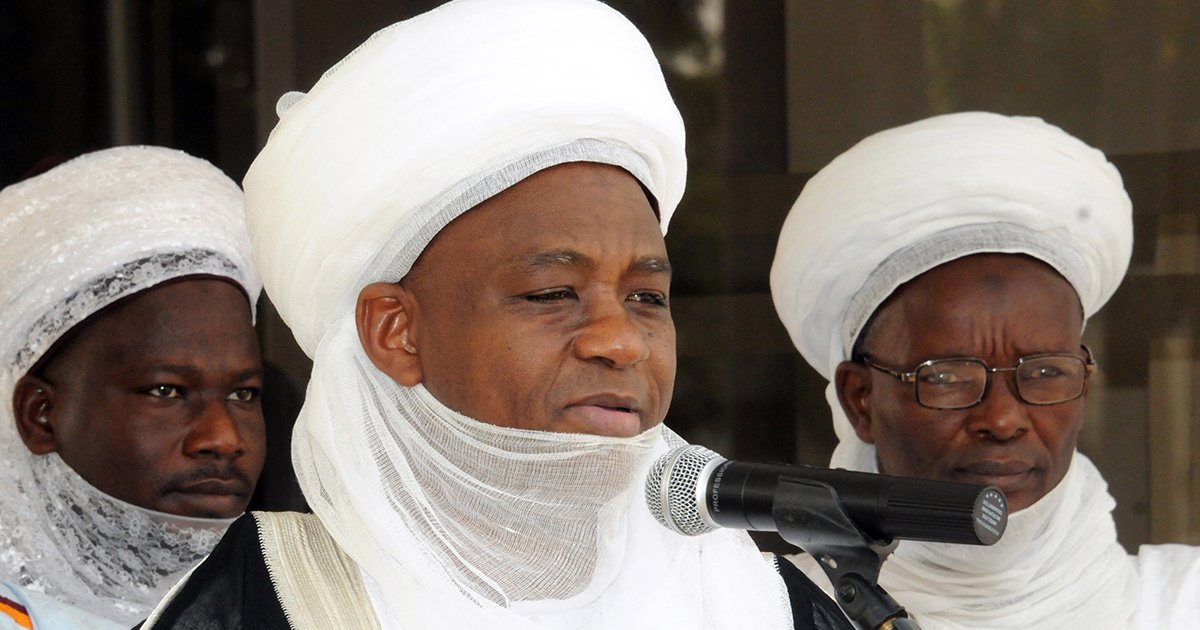
His Eminence, Sultan Muhammad Sa’ad Abubakar MNI, has honoured a Keke Napep rider, Malam Akilu Gangare in Jos, with the sum of NGN500,000, for returning NGN500,000 left in his Keke Napep to its rightful owner.

A passenger boarded Malam Akilu’s Napep to a particular place. After reaching his destination, the passenger hurriedly alighted leaving his back behind. A little while longer, Malam Akilu sighted the bag in his Napep after his passenger has disappeared. He opened the the bag out of curiosity only to see a large sum of money NGN500,000 inside.

Malam Akilu quickly turned back in search of the passenger. After he located him, he handed him back the bag with his money intact.

On receiving the news, His Eminence the Sultan made the necessary investigation and the information turned out to be true.

Yesterday, Saturday, 23-10-2021, His Eminence rewarded Malam Akilu in Jos with the sum of NGN500,000. The exact amount he honestly returned to the owner.

For His Eminence, this is not the first time of doing this kind of great gesture. He has done it several times before. It is his way of rewarding honesty and encouraging people to be good citizens.

Why Not Just Make a Waqf Now?

By Abdullahi Abubakar Lamido

I begin, after praising Allah and sending blessings to the beloved Prophet peace be upon him, with three stories from Nigeria. They are all real. The first is of a rich man who died and was survived by a wife and her two children. His estate included mansions in choice areas, high worth investments, company shares, farmlands, etc. This “beloved” wife was advised to make a waqf (perpetual charity) of just a mosque as a source of everlasting reward for the late husband from the hard-earned wealth he spent his life gathering. She was reminded that less than one per cent of his wealth could do it.  The wife answered in one word: “Impossible”! Rather, she offered to cook rice and beans every Friday and give to the begging Almajiris around as sadaqah. To be fair to her, she did so for some months until she met a new darling husband with whom she now enjoys her inherited, halal fortune! End of story!

The second story is that of a religious and highly influential personality who died and left behind several sons and daughters, all of whom had already grown wealthy and influential. The deceased’s bosom friend, who was the custodian of many of his possessions, approached the heirs. He pinpointed a plot of land in a choice area in one of the largest Nigerian cities and offered that if they would designate it as a perpetual charity, he would build an ultramodern Islamic centre there as a waqf for their late father. This, he said, was to create a ceaseless flow of rewards to their late father. Alas! To his face, they simply said no! And the rest is history.

The third is the story of a woman philanthropist who was the wife of an influential person. She was known for her dedication to building mosques, schools, among other charitable interventions. After her demise, the husband learned of several uncompleted mosques and schools that were part of her charitable initiatives. He called her children to a conference and suggested that from her inheritable wealth, they should dedicate what would be enough to complete such ongoing projects. And what a small portion of her wealth was that! They unanimously rejected his offer, departing in a “just give us our money” mood. It was the father who used his resources to finance the completion of the projects. I gather that he was lucky to have learned some lessons here and begin to emulate his late philanthropist wife. He actually increased his budget for Islamic philanthropy as he was already known for charity also. May Allah accept it for him, and for her.

I am sure by now you, my dear reader, have started to recollect several similar stories you have heard on several occasions or which might have even happened close to you. I also have many to share. But these ones suffice as examples. At least for now. What lesson, then, have you learned from this?

Now, remember the Prophetic hadith in which he explains that the moment a person dies, his reward fetching deeds terminate except three; waqf or perpetual charity being the first of them. The other two reward sources are the prayer of a pious child and beneficial knowledge. Interestingly, in the hadith is an equitable distribution of reward sources of some sort. The wealthy folks no doubt have access to the “lion share” in terms of perpetual charity. Beneficial knowledge is the share of the scholars essentially. For the non-rich, non-scholar believer, giving a good upbringing to his/her children guarantees them prayers from pious children and a continuous flow of reward.

Many owners of surplus resources miss the opportunity of making a waqf due to procrastination and other flimsy considerations. By doing so, they deny themselves the most important investment of their lifetime. How can Allah give you the opportunity of making an investment that may pass a millennium fetching you rewards only for you to refuse to do so? Daniel Crecelius explains to us that several waqfs, created for the provision of various social, religious, educational, economic and welfare services free of charge to the public, have survived for five centuries, and some for over a millennium. Now! Imagine yourself, in your grave, receiving “alerts” of rewards daily while charting with the Angels! Can you imagine the amount of reward you would earn by continuously creating benefits, solving problems, drawing happiness to thousands or millions of needy and poor lives for decades, centuries or even a millennium after your departure from this deceptive world? Consider the following stories.

You already know the third caliph of the Prophet, Uthman bin Affan (may Allah be pleased with him). After the migration to Medina, access to water became a great challenge for the believer. They had to buy from a Jew who owned a well called Ruma. The Jew was so wicked, charging exorbitant prices, and making life difficult for the believers. The solution was for the Muslim community to own it. The Prophet peace be upon him announced a guaranteed direct entry certificate to Jannah for whoever purchased it. Uthman did. He surrendered it as a waqf. People now could get water at zero cost. This charity became blessed and continued to expand. During the Umayyad period, it began to grow date palm trees in its surroundings. Many grew. The Ottoman Empire paid particular attention to developing the trees generating income from them. The returns would then be shared into two; a portion distributed as charity and the other saved. Later, the Saudi Arabian authorities opened a bank account in the name of Uthman Bin Affan. They save half of the returns and distribute half in charity. As the savings grew, a hotel was built in Medina, still in the name of Caliph Uthman. Half of the returns is reinvested while the other half, amounting to about 500 million Riyals annually (equivalent to about USD14 million) is distributed in charity. 1400 years of ceaseless reward, thanks to waqf!

Then the story of the great philanthropist, lady Zubaiyda, daughter of Ja’far al-Mansūr, granddaughter of the second Abbasid Caliph Abū Ja’far al-Mansūr; wife of the 5th Abbasid Caliph Hārūn al-Rashīd and mother to the 6th Abbasid Caliph, al-Amīn. Although she died in 216 AH (832 CE) in Baghdad, her source of reward is still yet to! In 186 AH (802 CE), she visited the Holy land as a pilgrim. She then noticed the serious difficulty people experienced in Mecca vis-à-vis accessing water. There were no reliable wells and springs from where to fetch portable water. The people rather relied on rainfall or poor wells that were irregular in providing water. She then ordered her treasurer to look for “world-class” engineers and professionals from different cities to embark on the work of constructing a befitting well. Having observed how difficult the project would be due to the nature of the soil which was rocky and hard, she declared her readiness to pay a dinar for every single digging, until they reached water level. Soon, highly professional engineers and experts flooded Mecca and started work, surveying between hard rocks until they were able to sink the well. In the end, they parted with the dinars and she parted with the never-ceasing reward! She dedicated the well as a waqf for the residents and visitors of Mecca. Water became abundantly available. Water scarcity became history.

But not only this. Zubayda also did a waqf for the waqf; waqf of rentable houses and landed properties for the maintenance of the water wells.  The ‘Ayn Zubaydah has been described as the largest waqf known in history in terms of the cost of its capital, the magnificence of its design, as well as its contributions to welfare in a sustainable manner. Importantly, the Well of Zubaydah, as it came to be known, has remained functional and productive to date. About 1200 years? It is being utilized by the people of the city as well as visiting pilgrims to the Holy land.

Dear reader! Make a waqf. Look around you. Investigate; what is the greatest problem of the poor around you? Food? Water? Lack of a clinic? Lack of a school for their children? Lack of capital for the poor widows who need money-generating ventures? Make a waqf to provide a sustainable solution for them. Build a plaza, a shopping complex, a rentable house, a garden or buy shares and dedicate as waqf for funding such charitable courses. Do not wait for your wife to make sadaqah of rice and beans for you on Fridays! If you want to enjoy your wealth perpetually, why not just make a waqf NOW?


Abdullahi Abubakar Lamido is the Chairman, Zakah & Waqf Foundation, Gombe, Nigeria. He can be contacted via lamidomabudi@gmail.com.


Boko Haram Origin: The fact, the fiction and the singularity of story in David Hundeyin’s “Cornflakes for Jihad” and more

By Aminu Nuru

 “The most dangerous untruths are truths moderately distorted”. – George Lichtenberg

It is not uncommon that some public commentators and analysts could be mischievously deceptive in their narratives and analyses of history to accomplish an end. They could quote historical facts, mix them with fiction, and frame narratives to promote a single story. In some cases, they deliberately relegate and ignore some significant events or points to suit the writer’s bias. Recent writings on the origin and rise of Boko Haram demonstrate how some writers distort facts to frame narrative and promote bigotry.

For instance, if one can closely study the framing of Boko Haram and how it is brazenly becoming one-sided, then one can say that the whole history is rewritten to massage and satisfy the ego of some group’s bigotry. It is not farfetched to say that some of these bigots will soon claim that the generality of the Muslim North endorsed and supported Boko Haram and Nigerian Christians were the only targets and victims of the group’s deadly attacks. Why would I make such a sweeping projection with every sense of finality? To respond to this question, let’s go back to 2013.

While speaking at the 14th meeting of the Honorary International Investor Council (HIIC) held at the Banquet Hall of the Presidential Villa on June 22, 2013, former Nigeria’s President, Goodluck Jonathan, a Christian, disclosed that the Boko Haram sect had killed more Muslims than Christians in Nigeria. This is not just hearsay but a verifiable fact that is naked in vision to people that are not be-clothed with hatred, ethnic and religious jingoism.

However, the Christian Association of Nigeria (CAN) couldn’t swallow this fact and, therefore, issued a statement to disagree with him vehemently. In a press statement credited to the Northern chapter spokesperson, Elder Sunday Oibe, CAN said that Jonathan’s assertion was “misleading and unacceptable”. They further stated that,

“We want to believe that the president was misquoted; we don’t want to believe that with the security apparatus and report from security intelligence network at his disposal, he made this assertion. If it is true that Mr President actually made this assertion, then, we are highly disappointed and sad at this veiled attempt to distort the fact as it concerns the activities of the Boko Haram sect. The purported statement by the President is highly disappointing considering the facts that Christians, churches and their businesses have been the major targets of Boko Haram” (Sahara Reporters, June 23, 2013. http://saharareporters.com/2013/06/23/northern-can-disagrees-jonathan-says-boko-haram-has-killed-more-christians-muslims)

For CAN, the Boko Haram crisis was/is “religious by nature” – the familiar we-versus-them religious clashes and conflicts in Nigeria, although in different outlooks and techniques; it is a plot by some Muslims to reduce the populations of Christians in Nigeria and crackdown their businesses. Since then, CAN sympathisers subsequently frame their narrative of Boko Haram from this angle. An article titled “Cornflakes for Jihad: The Boko Haram Origin Story” by David Hundeyin, widely shared on social media in the last few days, aimed to promote this kind of narrative. Unfortunately, the author skillfully filled the article with half-truths and a mixture of facts and fiction to push the CAN’s sentiment. Hundeyin is practically siding with his former religion.

Firstly, Hundeyin makes an effort to link Sheikh Abubakar Mahmoud Gumi with the origin of Boko Haram. Many people think that Hundeyin’s “Cornflakes for Jihad” is the first futile effort by an “investigative” journalist, analyst, historian or whatever to make this manipulative effort. However, Andrew Walker’s thesis, “Eat the Heart of the Infidels: The Harrowing of Nigeria and the Rise of Boko Haram” (Oxford University Press, 2016), preceded it in that exercise. Therefore, it is not likely to be a false accusation if it is argued that Hundeyin copied the idea of featuring Gumi in discussing Boko Haram, almost verbatim, from Walker. From the arguments of Sheikh Gumi’s “influence” in the “political” realm of Nigeria to his “friendship with Ahmadu Bello”, to pioneering the “propagation of Wahabism” in post-independent Nigeria, to his contribution in the creation of Izala and his “Saudi connection” are equally and loudly echoed in Walker’s thesis.

For both Walker and Hundeyin, Sheikh Abubakar Mahmoud Gumi championed the Sunni/Salafi/Izala movement in Nigeria. Therefore, any account of the origin and rise of Boko Haram – a so-called Sunni/Salafi-fundamentalist terrorist group – must be traced back to him. Albeit impliedly, their submissions suggest that there would be no Boko Haram if Gumi did not “disrupt” the Sufi order and influence of Qadiriyya and Tijjaniya in Northern Nigeria. They claim that Gumi’s campaign of a corrupt-free practice of Islam inevitably gave birth to the radical movements in Northern Nigeria. This is to say, although without explicitly stating it in their works, every Sunni/Salafi-based movement in Nigeria, whether moderate or violent, must have had their inspirational source from Gumi. On the link between Boko Haram founder, Muhammed Yusuf, and Sheikh Gumi, Walker writes: “The title of Yusuf’s book deliberately echoes the titles of similar treatises by Sunni preachers, like Sheikh Gumi’s “The Right Faith According to the Sharia”, perhaps in order to lend his ideas credence…the two clerics share a revulsion for secularism..” (Walker, 2016:144).

This line of argument is even less faulty in logic and spirit of “balanced story” than what Hundeyin further orchestrated in his article. According to Hundeyin, Sheikh Gumi admonished Muslims, particularly his Sunni/Salafi followers, to reject a non-Muslim as a leader and advocated “for insurrection against a Christian Nigerian President” and, of course, his Christian followers. In the successive paragraphs that supported this claim, Hundeyin apprises his readers on the “consequence” of Gumi’s propagation; he states that after Gumi’s death, a Sunni/Salafi-indoctrinated group, which bears the name “Boko Haram”, toed to the path of his admonishment to carry weapons against Nigerian Christians, killing and bombing them in their churches. He wittingly makes reference to the bomb blast at “St. Theresa Catholic Church”, Madalla that “killed 37 people”, and other subsequent “killings of Christians” in Jos and Damaturu.

The implication of this narrative on an outsider, who does not know the context of Boko Haram terrorism in Nigeria, is that s/he would begin to see Sheikh Gumi as “problematic” and a source of Boko Haram’s inspiration and violent extremism. Secondly, a non-pragmatic reader may also assume that the group only targets Nigerian Christians in their series of attacks in the country. Hundeyin’s article aims to peddle that twisted narrative for no reason other than the writer’s hatred for the Muslim North (Arewa) and their Islamic culture. In one of his previous tweets, he heedlessly says that: “The world will be a significantly better place when Arewa culture completely dies off and is replaced with something fit for human civilisation” (David Hundeyin/Twitter, November 29, 2020).

In the spirit of fair analysis, it is expected that an impartial analyst would compare the socio-religious ideas Gumi propagated in his lifetime and the ideologies of Boko Haram. But this would not sell out Hundeyin’s bigotry, and so he ignored that vital aspect. The core centre of Boko Haram dogmatic tenets is a war against “western-styled” education, democracy and civil service. On the other hand, Sheikh Gumi was both a product and proponent of western-styled education; he worked with the government as a civil servant and received salaries from the state resources. As he proudly opined in his autobiography, “among [his] children were army officers, civil servants, medical doctors, an engineer…lawyers, teachers and workers in finance houses and private businesses. There was hardly any profession in which [he] did not have representation from [his] family” (Gumi with Tsiga, 1991:202).

Gumi was also pro-democrat, as evidence from his recorded preaching suggested so. He is famously quoted to have said, “siyasa tafi sallah”, which could loosely mean “politics is more significant than prayers”. This was the extent Gumi had gone to support democracy in Nigeria, and believe me, Shekau would not hesitate to call him “taghut” – an idolatrous tyrant. He had also worked closely with the Christian Head of States. They had a cordial relationship and respect for each other: Ironsi invited him to lead a delegation to North Africa and the Middle East to carry goodwill messages of his new regime; Gowon appointed him Chairman of the Nigerian Pilgrims Board and gave him “all the necessary support, although he himself was a Christian”; with Obasanjo, he could “freely talk” and express his mind on relevant socio-political issues (Gumi with Tsiga, 1991:203).  However, Hundeyin willfully refuses to draw this analogy to give a sense of what Achebe called “a balanced story”. Instead, he purposely portrays Sheikh Gumi on the wrong page in the book of terrorist origin in Nigeria.

Contrary to the insinuation of Hundeyin moreover, the truth of the story is that Boko Haram did/do not target Christians only. In fact. Nigerian Muslims suffer(ed) more causalities than Christians in the Boko Haram conflict. Hundeyin refuses to mention the main enclaves of Boko Haram activities and the population ratio of Muslims and Christians there. Stating this factual data will indeed not favour his intended, warped story. The reality is that Muslims have the predominant population in Borno, Yobe and Adamawa States. Arguably, the cumulative of all Boko Haram killings of innocent people would show nothing less than 70% of Muslim casualties.

On a specific, direct attack on religions, Hundeyin only mentions the bomb blast at St. Theresa Catholic Church, ignoring similar incidents on August 11, 2013, at a mosque in Konduga where 44 people were killed and on November 28, 2014, at the central mosque in Kano where 120 people were killed (BBC Hausa, 2013, 2014). It is understandable if Hundeyin re-echoes the bomb blast at St. Theresa Catholic Church in his article; it is a show of solidarity to his ex-religion. However, what is faulty and even worrisome is the selective exemplification of the direct attacks on religions by the Boko Haram insurgents. A reader who is unacquainted with the details of Boko Haram attacks on places of public worship would feel that churches and Christians were the only victims.


Scenes from Kano Central Mosque Bomb Blast. Source: The Eagle Online


To further promote this half-truth, Hundeyin moves on to tell us how a Salafi/Sunni preacher was directly linked with the funding of Boko Haram. I will neither attempt to exonerate Sheikh Yakubu Musa nor believe those serious allegations in toto without reading or hearing the Sheikh’s version of the story. However, my problem here is with Hundeyin’s failure, which is intentional, to mention the Salafi/Sunni preachers that fought Boko Haram vehemently and even paid the ultimate price with their lives. It is on record that at the early stage of the Boko Haram crusade, Salafi scholars debated Mohammed Yusuf. In Bauchi, for instance, Ustaz Idris Abdulaziz Dutsen-Tanshi, a Salafist to the core, invited and challenged Muhammed Yusuf at his mosque and in the presence of his followers; so also a young Isa Ali Pantami – the then Imam of ATBU Juma’at mosque.


Imam Idris Abdulaziz debating Muhammed Yusuf

Imam Isa Ali Pantami Debating Muhammed Yusuf

These Salafists continued to be critical of Muhammed Yusuf and his sect. They consistently delivered lectures to denounce his fatwa. Sheikh Ja’afar Mahmoud Adam, an unapologetic Salafist, was particularly vocal in his public censure and condemnation of Boko Haram. Unlike Hundeyin, Walker states this fact in his book:

“In 2007, Yusuf ’s former teacher, Sheikh Ja’afar Mahmud Adam, himself an ardent Salafist, had gone on record to denounce the group and warn that these ideologues were heading for a violent confrontation with the state” (Walker, 2016:148).

For many, Sheikh Ja’afar was the spiritual successor of Sheikh Abubakar Mahmoud Gumi. Some influential people requested and later attempted to transfer his annual Ramadan Tafseer to Gumi’s preaching base, Sultan Bello Mosque, Kaduna. He conducted his annual Ramadan Tafseer in Maiduguri, the early and central territory of Boko Haram terrorism. During his Tafseer sessions, Sheikh Ja’afar was not reluctant to criticise Yusuf and his new sect. On April 13, 2007, a day to general elections in Nigeria, and barely 48 hours after delivering a talk in Bauchi on Islamic views on thuggery, violence and widespread killing of innocent souls, Sheikh Ja’afar was murdered in Kano while observing Subh prayer and “it is thought to be members of Yusuf’s sect” (Walker, 2016:148).

Another prominent voice among Salafists in the fight against Boko Haram was Sheikh Muhammad Auwal Albani, Zaria. But, unfortunately, he was also killed in cold blood. In a video released to the public, Muhammed Yusuf successor, Abubakar Shekau, took responsibility for the assassination (Sahara Reporters, February 20, 2014, http://saharareporters.com/2014/02/20/bo-haram-leader-claims-responsibity-killing-kaduna-cleric-sheikh-albani-threatens).

Hundeyin has ignored all these facts about Salafi preachers in Northern Nigeria but brought a single dubious claim to frame a narrative that would deceive an uncritical, vulnerable audience. His motive is clear: he wants to rebrand the entire population of Salaaf and the Muslim North as pro-terrorist, supporting the killings of Christians in Nigeria. It is rather unfortunate that this is where the discussion is heading, and it is a wake-up call to those of us that witnessed and had a first-hand experience of the Boko Haram crisis to begin to write our counter-narrative. If we don’t write it, others will write for us. And before we retrieve our consciousness, we will be afloat in a sea of half-truths and stereotypes on Boko Haram, Islam and the North.


Aminu Nuru wrote from Bauchi. He can be contacted via aminuahmednuru@gmail.com.

Making Waqf a serious business in Nigeria

By Abdullahi Abubakar Lamido


Waqf, translated as Islamic endowment, simply means a perpetual charity. As a strategic Islamic socio-economic institution, it entails dedicating a benefit-creating or revenue-generating asset for the sustainable provision of free public services to the society – especially for the less privileged. It can be created by an individual, a group of individuals, a corporate body or even a governmental institution. Waqfable asset is that which is legally owned by the endower and is cable of perpetually creating benefit or generating revenues which would be channelled to defined religious or charitable purposes.

From the dawn of Islam passing through the periods of the companions, Umayyads, Abbasids, Ayyubis and the Ottomans, waqf was maximally utilized as a unique instrument for addressing virtually all aspects of societal religious, economic, educational, healthcare and environmental development needs. In fact, what “substantial historical evidence” suggests, as established by Islamic economic historians like Murat Cizakca and before him, Marshall G.S. Hodgson, is that, “waqf, not zakah was the most important institution for redistribution of wealth” in Muslim history.

Historically, waqf has sufficiently financed virtually all aspects of public welfare and developmental needs, especially education and healthcare. To wit, in the area of education, it was used for building schools, libraries, laboratories, student hostels and lodgings for teachers, scholars and researchers. It also funded scholarships, payment of teachers’ salaries and the provision of food, clothing, learning and instruction materials as well as creating conducive teaching-learning atmospheres. Great Muslim Universities were built as waqfs and have continued to be substantially financed from waqf proceeds. It grew so ubiquitous that “A person can be born in a house belonging to a waqf, sleep in a cradle provided by that waqf, be educated in the school of the waqf and read the books provided by it, become a teacher in the waqf school, earn a waqf-financed salary and at his death be placed in a waqf-provided coffin for burial in a waqf cemetery”.

Relating to health, waqf has been used to build hospitals, clinics and medical laboratories which provide a wide range of free medical services, including surgery. It is documented that it was due to the advancement in service provision through waqf that the need was not even felt for governmental ministries or departments for education and health, as these were fully financed by waqfs.

Education and health were not the only areas of waqf interventions. Waqfs sustainably financed all forms of social, economic and community development services including transportation, environmental protection and beautification among others. At some historical epochs, various Muslim nations relied on waqf sources for a substantial portion of their national income.  Waqfs were used to finance the building and maintenance of mosques, traveller’s lodgings, orphanages, bridges, water-wells, public conveniences, soup kitchens, roads, street lights and gardens.  In fact, in many Muslim communities, waqfs were created for the sustainable provision of all conceivable public welfare services. Until the colonization of Muslim societies, waqf remained a significant contributor to socio-economic development in many Muslim countries. It was colonialism that changed the subject of the formula.

Having realized how waqf provided social, cultural and economic independence to especially Muslim scholars and intellectuals, who incidentally were usually the most resilient class against selfish imperial policies; the colonial “monsters”, implemented well-orchestrated policies that saw to the hibernation of the waqf sector. They syphoned many waqf assets, weakened many, deliberately rendered many irrelevant, and calculatingly destroyed the functioning and autonomy of waqfs by subjecting them to government control. They created governmental ministries that coordinate waqfs, with all the negative consequences of that.

Worth stressing is the fact that western imperialists destroyed the waqf system in Muslim lands only after they had already copied the concept from the Muslim Middle East through the crusaders, and then developed it as an instrument for financing developmental services. In her celebrated 1988 study titled “The Influence of the Islamic Law of Waqf on the Development of the Trust in England: The Case of Merton College”, Monica Gaudiosi established that it was actually the waqf institution that gave birth to the concept of Trusts and Foundations in the West.  Modified and enhanced waqf was used to establish great western institutions such as the Merton College which still shares clear similarities with the waqf institution. And except for a few changes in the English law of Trust, most features of waqf have remained unchanged in the western practice of Trusts till date.

Interestingly, for more than two decades now there has been a growing global waqf reawakening. From the Middle East to Africa, and from the West to the East, waqf consciousness has continued to balloon. Despite the big blow that colonialism did to the waqf sector, making it reduced to merely an atomized institution concerned with financing some aspects of the spiritualties, the global Muslim communities have now rejuvenated their commitment to reposition waqf as a dynamic Islamic, third sector socio-economic institution. Waqf is seen and promoted as an engine of poverty reduction, wealth creation and distribution, employment generation and socio-economic development. In 2016, the World Bank noted that if properly harnessed “even if partly”, waqf, alongside zakah, can eradicate poverty in Africa, the Middle East and Southeast Asia. For a long time, combine global assets are estimated to be close to USD 1 trillion and growing.

Conversely, the story of waqf in Nigeria is largely different from other Muslim communities like Turkey, Morocco, Egypt, Saudi Arabia, and even others like Malaysia, Indonesia and Singapore. Yes, waqf knowledge and practice have existed in Nigeria for well over a millennium. But for several reasons, including historical, it was not comprehensively institutionalized in Nigeria’s pre-colonial history as a holistic, comprehensive socio-economic institution that provides a wide range of public welfare and developmental services. Its knowledge and practice have largely been reduced to the religious waqf, mostly mosques, cemeteries and religious schools. Even these waqfs, hardly had other revenue-generating waqfs for their sustainable funding as obtained in other climes.

But why should waqf be of great significance to Nigerian Muslims? It is of course factual that poverty is largely a Muslim phenomenon in Nigeria. All official statistics show that the states with the highest poverty rate are the Muslim dominated states. The majority of the Muslim population live in sorry conditions of socio-economic deprivations; poverty, hunger, squalor, illiteracy and poor healthcare. Muslims account for the highest number of out of formal schools and vulnerable children. These – combined with other factors – have resulted in rising insecurity and underdevelopment. For long, the solution to this has been largely viewed by many as the sole responsibility of the government. Only a few have realized that while governments have a great responsibility, Muslims can only alleviate their sufferings if they explore, among other things, Islamic socio-economic institutions in addition to agitating for good governance.

One important instrument that can significantly reduce the poverty and socio-economic backwardness of the Nigerian Muslims is no doubt the waqf institution. The flexibility and dynamism of the waqf institution provide for the mobilization of diverse resources in the forms of cash, landed properties, real estate, and other resources, which would be developed and invested, such that their revenues and fruits would be channelled to developmental services.

Nigerian Muslims already have the potentials for this. The long history of Islamic belief and practice, the enthusiasm of the population towards anything connected to Islam, the high spirit of giving that exist within the rich, middle class and even the masses, the availability of Islamic intuitions such as mosques, Islamic schools and media channels, the prevalence of governmental and non-governmental zakah and waqf institutions, among others, all provide a handy infrastructure that can be explored and utilized in the campaign for a new holistic waqf regime in Nigeria.

Particularly, the growing atmosphere of waqf consciousness among the elites and Islamic scholars, as exemplified in the increased awareness creation and establishment of Islamic charitable foundations in especially the last five to seven years, all point to existing opportunities for making waqf a veritable instrument for socio-economic empowerment. All this can also be added to the vast arable land an array of professionals and intellectuals that the Muslim community is blessed with.  It is our opinion that with these and several other potentials, if philanthropic waqf were to be well studied, promoted, institutionalized and maximally harnessed and utilized, poverty would be largely reduced and socio-economic empowerment would be greatly triggered in Nigeria.

In this regard, there is the need to utilize several platforms for waqf discourse such that its potentials would be unearthed, its dimensions analyzed, its impediments examined; goals defined, priorities set and methods of actualizing the dream well spelt out. These platforms should bring together the Islamic scholars, business persons, professionals, community leaders and all important stakeholders to common thinking tables. In the light of this, the AZAWON Newsletter presents itself as a primary platform for debating, dialoguing and analyzing waqf matters (alongside other Islamic social finance instruments).

Scholars, intellectuals, professionals and other concerned citizens are therefore invited to continue contributing articles, reports (written, pictorial or otherwise), opinions, comments and all valuable information that can enrich and smoothen the journey to making waqf a serious business in Nigeria.

Malam Abdullahi Lamido is the Chairman, Zakah and Waqf Foundation, Gombe, Nigeria. He can be reached via lamidomabudi@gmail.com.

BUK promotes Dr Sani Rijiyar Lemo, Dr Umar Sani Fagge, others to professorial chairs

By Muhammad Sulaiman

In recognition of their significant contribution to scholarship, research and development at the Faculty of Arts and Islamic Studies (FAIS), the governing council of Bayero University, Kano (BUK) has approved the promotion of Dr Sani Umar R/Lemo, Dr Umar Sani Fagge, others, to the coveted professorial positions.

The following faculty members have been promoted to full professor status: Shehu Ahmad (Arabic), Aminu Lawal Auta (Nigerian Languages), Usman Sani Abbas (Islamic Studies), Sani Ayagi ( Islamic Studies) and Umar Abdulkadir (Islamic Studies).

Furthermore, the following have been promoted to associate professor status: Umar Sani Rijyar Lemo (Islamic Studies), Aliyu Harun (Islamic Studies), Nura Sani (Islamic Studies), Isa Yusuf Chamo (Linguistics), Aishatu Umar (English), Tijjani M. Naniya (History), Muhammad Wada (History), Umma Aminu Inuwa (Nigerian Languages), Maryam Mansur Yola (Nigerian Languages), Halima Abdulkadir Dangambo (Nigerian Languages), Ahmad Salisu (Arabic), Matabuli Shehu Kabara (Arabic) and Umar Sani Fagge (Arabic).

More members from other faculties have been equally promoted based on their value of excellence in teaching and scholarship, and service to BUK. However, as of during filing this report, the lists were still incomplete.

Prof. Maqari formally withdraws lawsuit against Dr Abdalla Gadon-Kaya

By Muhammad Abdurrahman

Today, the Abuja Central Mosque Imam, Prof. Ibrahim Maqari, formally withdrew his lawsuit against Dr Abdallah Usman Gadon-Kaya, seeking N20 million in damages for defamation.

The Daily Reality reported on September 1, 2021, that Dr Gadon Kaya’s lawyers had yet to receive any formal request to withdraw the lawsuit as of then. Instead, according to Barrister Ibrahim Umar Abere, all they saw was Prof. Maqari’s viral video alleging that he was compelled to withdraw it.

However, after appearing at the court today (6/9/2021) to defend their client, they got an official request from Prof. Maqari’s lawyers wherein the plaintiff withdrew the lawsuit in pursuit of peace.

Reacting to the reports that the defendant and his lawyers were preparing to file a counterclaim, Barrister Abdulrazak Kabiru Kofa said they had also shelved that plan. He cited a Quranic verse that says, “Peace is best” (4:128).

Recall that on July 23, 2021, Dr Abdallah Uthman Gadon-Kaya delivered a Friday sermon in a mosque in Kano State. That sermon did not go down well with Prof. Ibrahim Maqari. Thus, he appeared in a video warning Dr Abdallah to withdraw parts of the statement or meet him in court, which he eventually did.

The court order showed the case was due for hearing on September 6, 2021. Maqari demanded that Gadon Kaya retract the said statements, publish an apology in national dailies or pay the N20 million in damages.

The leaders we need in Nigeria

By Muhammad Auwal Ibrahim

This article is an attempt to highlight the leaders we need in our society. This becomes more relevant as election season comes and goes. We ought to know the leaders that are the best for us if we only want to succeed. This article, thus, would go a long way in addressing some of our major problems.

I am a Nigerian, and I am part of her in every situation, no matter how it may be. Be it good or bad; we share the feelings altogether. It is unfortunate that at this age of Nigeria, things are still happening upside down. Things are still falling apart. It is shameful.

Today, in Nigeria, any person can aspire to be a leader and be chosen either legitimately or illegitimately. But, mostly illegitimately, as asserted by Dr Usman Bugaje said in a paper he presented during Dr Sulaiman Kumo Memorial lecture at Gombe High School in 2018. This is one of the reasons that made me pen this.

However, Prof. Salisu Shehu, sometimes back, stated in his book Social Justice Leadership Responsibility in Islam that “It is because of the so-called democracy…”. I agree with him because even as young as I am, I still observed that some of our leaders are not competent or just, but they are still there to lead us. Some don’t even know where to start. Some still need to be trained and disciplined.

Dear Nigerians, do you vote for good leaders or looters with your eyes widely opened? Do you vote for competence or richness? Do you vote for your future wellbeing or for your present wellbeing that can perish in less than a day? Do you vote for the prosperity of your children: for them to enjoy the dividends of democracy, i.e. one who, if voted, would build schools, hospitals, construct roads, develop our infrastructures? Do you give somebody the mandate to rule you without paying particular attention to his qualities? Is it somebody that kills our economy, offers stimulants to our youth, destroys our society that you want to represent us?

Do you vote because you can or because it is an obligation and a right at the same time? Should we sit and fold our arms and watch them continue with their ruination, plundering, looting/embezzlement and squandering of public funds? What can we do, and how can we start? Think carefully about these questions.

The need for good leadership has been stressed earlier on. It is our fault since we failed to learn and implement the Islamic teachings, some of which the Sokoto jihad leaders deliberated on. Like the qualities of a leader. We cannot just stop on those mere democratic qualities.

Another critical point is that our people today seemed not to know their roles and obligations. This is not only in the case of the ruled but also the rulers. Why? The answer is very apparent. We need no further consultations. Sadly, most of them are not educated enough on leadership, not to mention their followers. This is indeed painful.

If I may ask some of our leaders, how many read books written on this topic of discussion ‘leadership’ by Sokoto jihadists like Shehu Usman Danfodio, his brother, Abdullahi Fodio, his son, Sultan Muhammad Bello and the rest of them? I think only a few would boast answering yes if any.

We, the subjects or more preferably the ruled or the led, have our various contributions to good governance at multiple levels of life. Aside from obedience and compliance with rules, so long as they are not evil and terrible. There are other positive contributions, like constructive criticisms, advising the government on good things and warning against evil and prayer, as asserted by Prof. Salisu Shehu in his book (Social Justice Leadership Responsibility in Islam). But today, we are relentless to all of these. Not all, but only a few of us are doing that.

Justice is an essential aspect of any given society. A leader, therefore, must be just. Consequently, we should pay special attention to this quality before selecting any leader.

Knowledge should be considered. Knowledgeable can be found in our learning institutions. Therefore, institutions should be put in place to teach our younger ones leadership traits before it becomes too late to overcome the present challenges. 

Competence is another most appealing quality. A leader’s ability to overcome situations and handle matters mattered a lot. But do we care? We should not just go ahead and select a person to represent us, knowing that that person is not competent.

These are the few characteristics of a leader. Some books address such issues. These include: Social Justice Leadership Responsibility in Islam and Shugabanci a Mahangar Musulunci: Yadda Al’amarin Yake A Nijeriya. I hope they will serve as a guideline to aspiring leaders.

In the end, I hope our young leaders will take heed of all these. Further, I pray that all aspiring leaders learn what leadership is all about before clinching any position of power.

Muhammad Auwal Ibrahim is an award-winning journalist, fellow African Investigative Journalism Conference (AIJC) 2020, Wits University, Johannesburg, South Africa. He can be reached via awwalbinibrahim@gmail.com.