Islam

Is prayer genuinely worthless? 

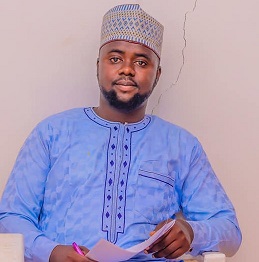
By Usama Abdullahi

I came across a post from a supposedly intelligent person in which he foolishly stated that prayer is worthless and doesn’t count. What surprises me more is that he’s a practising Sufi Muslim. It’s hard to believe that Sufism teaches people to utter things or act contrary to the teachings of Islam. Even though I’m neither a pro-Sufism nor share similar ideologies with any of them, I still don’t think Sufism teaches people to behave and write irrationally as that self-deluded person. 

He believes that being realistic or pragmatic is the only solution to the everyday security challenges troubling this country. While I agree with him that being practical is one of the surest ways that could help bring such age-long challenges into a state of discontinuity, yet, on the other hand, I disagree with him that our prayers are usually obsolete and worthless. Perhaps unknown to him, prayer is but a spiritual tool that fends, heals and grants the guided people some peace of mind.

Prayer is a beautiful and easiest way of expressing our deeply felt gratitude to God for his mercies upon our dear lives. It describes how thankful, devoted and religious we are towards our creator. The problem with that person is that he’s shifted his focus on God and thinks that his so-called realistic mind provides him with the answers to all the lingering security threats we are experiencing in this country. Well, that’s the biggest blunder one could ever make. 

When we stray or rather deviate from the right course, our minds often tell us things differently. Our minds would make us feel liberal and lure us into acting in the wrong way. Sometimes it makes us view things narrowly, which is not how they seem in reality. It simply corrupts and deceives us. The manner we reason speaks volumes about how we often tend to foresee the future.

As humans, we are capable of being wrong at any time. But it is funnily unrealistic to believe that your ideology is always appropriate and should be followed. Over the years, I have come to terms with the belief that one with higher academic qualifications doesn’t mean they are the most knowledgeable among people. I respect people’s opinions, but only when they appear rational. Abusive and persuasive views are sure to be avoided because they can instigate hostile disagreement among people like this.

I don’t see prayer as a worthless thing. Even if I feel it doesn’t count, I will keep on praying. Indeed, I believe in the miracle of prayers. I know God answers prayer. He has told us in the Holy book that we should supplicate and call on him whenever we get into trouble or need something. My or your prayers might be delayed but not rejected. When this happens, the Holy book always reminds us to be patient because patience pays. 

And prayer is also an act of worship. Moreover, it shows the level of one’s faith in God. I know we cannot pray all of our problems away without being pragmatic in confronting and dealing with them. Yet that shouldn’t give us the green light to decidedly underestimate the power of prayer, for it’s a natural remedy on its own. 

Prayer saved Prophet Isa (Jesus) from the brink of crucifixion. Prayer protected  Prophet Muhammad (S.A.W) and his companions against their ruthless foes. Prayer saved Prophet Abraham when thrown into the fire by his people and prayer attracted God’s sympathy and mercy over Prophet Yunusa (Jonah) when he got drown and swallowed by a whale. Despite going through hell, Yunusa still prayed to God and was happily rescued afterwards. So, how would you expect me to buy into your notion that prayer is worthless?

Usama Abdullahi wrote from Abuja, Nigeria. He can be reached via usamagayyi@gmail.com.

Waqf would have saved the situation!  

By Abdullahi Abubakar Lamido

Alhaji Abdullahi (not a real name) is a rich man from Northern Nigeria, famous for his multidimensional philanthropy. He was, at a time, among the three richest men in his town. He came from a polygamous family and was the 14th child of his dad. He was the only rich man. Being polygamous himself, he has close to 20 children from three wives. As the only well-to-do in his extended family, his house is like a local government secretariat, always jam-packed with visitors from among family members. This is in addition to dozens of his “sons and daughters” born by his brothers and sisters, who reside in his house, under his total care. But Alhaji takes care of them all; feeding, clothing, education, healthcare, Sallah clothes, etc. He does that with all pleasure. After all, he has the means, and of course, the heart, as a wealthy businessman.

Here is a religious, wealthy man and an influential politician cum Islamic scholar. He has built several schools and mosques, sponsored the education of many orphans, given capital to many people, sponsored the marriages of many poor girls, and sponsored dozens of people to hajj. He is one of the best philanthropists you can think of. After all, that is what is expected of an affluent Islamic scholar. His school was once among the best two primary and secondary schools in the town. When he singlehandedly built it about two decades ago (he had built others much earlier), he would pay teachers’ salaries, buy uniforms for the students, and give them other learning materials. He loves the Qur’an, being also a hafidh himself. And he would provide copies of the Qur’an to all the hundreds of his pupils. This is in addition to dozens of people who rely on him for their livelihood.  

As time went by, the “law of diminishing returns” began to affect his fortunes. Gradually, he began to withdraw the subsidies from the school due to continually decreasing income and ever-expanding family financial pressure. But he wanted to maintain the good deeds. Now the school needed expansion while his pocket had experienced contraction. He gave his big land close to the school for the purpose. But no funds to build it. So, he sold another land and built it. Note that the school fees could, at best, pay salaries and take care of the running cost. Every student pays. But it is a middle-class school, so the charges cannot be high. So, he went and sold another asset, built the classes. He sold another one again and again until virtually all the sellable assets became exhausted.

One day, while sitting at home, he saw his children returning before the school closing hours. “What is going on”? He asked them. They were sent home because they did not pay school fees. This happened when he was battling with how to feed his family and settle many other bills. Alhaji never envisaged a day when his fortune would dwindle to that level. Therefore, he did not save nor invest for that rainy day. He thought he would continue to secure contracts and earn considerable resources to fund his schools and even establish more. He, in short, did not benefit from the advice of a waqf expert who could have shown him the simple way of establishing an investment waqf, using a portion of his assets, that would perpetually generate a flow of revenues. The revenues could sustainably fund his schools and other charitable interventions. 

Waqf offers a variety of ways for planning the future of your family and supporting other charitable projects sustainably. For instance, the idea of an investment/productive waqf would have perfectly saved Alhaji Abdullahi from selling and reselling his properties to expand his school. As it is, there are two forms of waqf; direct and invest waqfs.

A direct waqf is one created to provide direct welfare and societal development services. Examples are mosques, boreholes, and tuition-free schools that offer direct benefits to designated beneficiaries. An investment waqf is a money generating waqf whose revenues are dedicated to financing defined welfare and socio-economic development projects. An investment waqf can be made to fund and maintain a direct waqf.

For instance, a well-managed orchard can be dedicated as waqf such that the revenues generated from the sale of its fruits will be used to finance a tuition-free school. So, when Alhaji Abdullahi built his school, which he wanted to be a subsidized one, he could have established an investment waqf that would mature and, within some time, continue to finance the school from its proceeds. His other assets would have been saved for other equally important purposes. He could as well have saved himself from the embarrassment of the failure to pay children’s school fees later in his life when the recession hit him.

For instance, nothing stops this rich man from building rentable shops or apartments and dedicating them as waqf, such that what they generate would be divided into two; half reinvented and the other half injected into supplementing what is generated as school fees. He could as well have purchased shares of a halal company and dedicated the investment as a waqf for funding the school waqf. This way, the waqf corpus would continue to expand, and its revenues would grow sustainably. What started as a small waqf can grow into a megaproject that benefits society on a larger scale. Not only subsidies, the investment, if properly managed by trustworthy investment experts, would have funded the construction of more and more schools and the provision of scholarships, among others.

 So, if he provided subsidies at the beginning of the school, part of such funds would have been invested, and gradually he could withdraw the subsidies as the returns from investment take over the funding of the school. This way, his children could have become permanent beneficiaries of the scholarship provided by the waqf of their formerly wealthy father. Better still, he could have simply established a family waqf (a topic for another day) specifically for his children. Waqf, in short, could have saved the situation

Abdullahi Abubakar Lamido is the Chairman, Zakah and Waqf Foundation, Gombe. He can be reached via lamidomabudi@gmail.com.

Special Report: Kano witnesses more divorce than wedding

By Uzair Adam Imam

Marriage break-up is perceived as one of the major challenges bedevilling relationships in Kano State, a development that leaves a severe psychological impact on the windows. A report by the BBC Network African Programme in collaboration with the Kano State disclosed that there were over one million divorcées in the state.

The research disclosed that 32% of marriages in Kano State survives only a period of three to six months; and that many young people between the age of 20-25 years are said to have gone through three marriages at least.

The Executive Director National Association of Divorcees/Widows and Orphans, Hajiya Altine Abdullahi, decried the rate of divorce in the state. She had once threatened to protest the menace. This menacing issue of marriage break-up has continued to witness a steep increment in Kano State more recently, making it a serious problem needing mitigation.

The Daily Reality had reported materialism as one of the contributing factors militating against marriages these days.

Divorce, how abrupt it occurs

As though a competition, many husbands partake in the race for divorce. The issue has now graduated to a national problem in dire need of mitigation.

A photographer, Aminu A. Gambo, recounted the harrowing tale of how a one-week-old marriage crashed.

He said, “I once covered a wedding. The wedding took us almost a week, as they started the events from Tuesday throughout Thursday the following week and had a break on Friday.

“The events continued on Saturday and Sunday was wedding Fatiha, which concluded with conveyance of bride late evening that day.

“In the subsequent week, on a fateful Wednesday, the groom called me as early as 6 am and told me to calculate my balance and send my account number. As I did, he then transferred the amount to my account and told me that their marriage was no more,” he stated.

Also, Abubakar Umar confided in our reporter that he was rather perplexed on hearing that the marriage he attended just a week ago had broken up.

Umar said the marriage had broken up even before some relatives who attended the wedding from far places returned to their various destinations.

He added, “it came to me as a surprise that a week-old marriage had broken up just abruptly like this despite the bond between the couple.”

Understanding the root cause

Many concerned citizens argued that there are no tangible reasons behind the increased marriage dissolution.

Hashim Ibrahim described the menacing issue as a problematic phenomenon that defies every explanation.

He said, “The problem is that what triggers Mr A to divorce his wife might not be the same reason for Mr B to end his marriage.”

Muhammad Tasi’u stated that: “There are only two things that lead to the marriage breaking up; the exaltation of men and the ignorance of women.”

Aisha Mujitaba looked at the issue from a different angle, saying guys pretend to be rich in order to woo girls.

“Nowadays, both loves and marriages are based on materialism; that is how equivocation and deception have chipped in in the process of getting married.

“Guys pretend to be wealthy in order to win girls’ hearts. Consequently, when they are joined in matrimony, the true nature of what the person is will be revealed. This leads to the breakdown of relationships,” Aisha said.

Fatima Sha’aibu also believed that lying was one of the contributing factors leading to the marriage break up.

She said, “Mostly guys lie to win affections. Then after the marriage, when the truth was revealed, the girl might feel she can’t resist living with a life-faking husband.”

How parenting changes a person

By Aisha Musa Auyo

Parenting is one of the most challenging jobs globally, a job that starts with pregnancy but never ends. It’s a lifetime commitment with many challenges, rewards, and experiences that change us, teach us and humble us. In fact, one doesn’t fully know himself till he starts bearing and raising kids. This commitment tests our patience, compassion, selflessness, strength, weakness, etc.

When I was in my teens, I didn’t have that natural love for kids, as I saw them as nuisance and disturbance, but ironically, kids love me and often extend their hands to pick them up. Usually, I didn’t bother to respond to their advances. I would look at them with a pretentious smile and move on. Later, a friend who loves babies explained that kids are attracted to me due to the constant eyeglasses in my face. That was relieving. My coursemates could not believe their eyes when they saw me on a TV program dishing out tips on parenting, child psychology, and upbringing.

A few years later, I became a mom, a fierce one for that matter, and this new responsibility has changed my entire outlook on life. It made me appreciate Allah more; the fact that a whole human being is produced in a womb from a drop of sperm, and the entire foetus transformation within nine months never cease to amaze me. The fact that milk begins to pop out from the breast after childbirth is still super.

Perhaps the most baffling is how tuwo, shawarma, rice, veggies, and whatever breastfeeding mother eats get transformed into breastmilk within minutes is brain blasting. Sometimes, I wish I could see how my body organs function to deliver this seamless production. Allah is indeed the Greatest. Tabarakallah Ahsanul khaaliqeen!

There’s a popular cliché that says if you want to change the world, change it while you are single, without a spouse, or a kid, as that is when you have freedom and might to do whatever you want because these two groups of people take your freedom and will power away. This is true in some ways. But if we look at it in another way, one can change the world when he becomes a parent by being a better version of oneself and upbringing pious, honest and loving generation.

Please permit me to list a few ways in which motherhood changes me. Perhaps others can learn, relate, realign, and prepare themselves for the unending task:

Motherhood made me more grateful to my Creator, more thankful to my parents, appreciate other parents, and made me understand to some certain extent the pain of not having kids, delayed fertility and parenting kids with special needs.

Motherhood humbled me, as all the things I never imagined myself doing are now my daily routine. From changing diapers to feeding kids, toilet training, wiping phlegm and saliva, and many activities I considered gross. I’m now cool with all of these. There was a day my husband took me to greet his friend’s family, as one of his kids had broken his ankle from the compound. I could hear the mom screaming at the kids. I was like, aww, this woman was loud, ta cika masifa.

At the time, she had five boys, and they were seriously misbehaving. Even the one who broke his ankle tried to touch a moving fan with his other hand. The others were all doing bad stuff, some using chairs as a ladder to touch the ceiling. Even so, I thought she unnecessarily shouted. As God will have it, I have only three boys. Trust me, I find myself shouting all day. It took a lot of practice, willpower and patience to REDUCE the shouting. This experience humbled me a lot. I stop judging.

There are times when you will feel relaxed, thinking that you are doing this parenting right. Then, suddenly, one of the kids will do something unpredictable, unimaginable that you will doubt yourself and all the efforts you’ve put in making and building them. That’s a reset and a humbling one, for that matter.

My selflessness and sacrifices increase: Although I intentionally always put others before me, I put my kids first without thinking, without weighing. It comes so naturally without an effort. As a mother, one finds herself the last option, the last one to be taken care of. At a point, I had to drop some of my dreams and aspirations to take good care of my kids.

Constant worry and wild imagination: I don’t know if it’s just me or all mothers do this. I don’t know if it’s the insecurity situation or the unhealthy vices of our time. I know I’m constantly worried about my kids, how they are faring in my absence, how they’ll turn out, their health, well-being, demeanour, interests, aspirations, etc. I cry a lot when they’re sick and in pain. I don’t even blink when they have a fever. I check them at least three times before daybreak. I’m always overwhelmed and have panic attacks here and there.

I start loving kids altogether, whether mine or not. If they are kids, they become my favourite persons. I love them. Nowadays, I prefer staying with kids than with adults. I enjoy their presence. This may be due to a course I studied (i.e. developmental psychology), which explains the entire human nature from pregnancy to old age. It made me understand a lot about kids and why they exhibit certain behaviours. It makes whatever kids do make sense to me. As a result, I became more empathetic and patient.

Kids make us become better versions of ourselves. Parenthood comes with the challenge that kids always look up to their parents on whatever they do. Kids look at us more than they listen to us. So, we parents know that we have to model the behaviour we want them to have. We have to show more than we tell. We have to always be conscious of our words and actions and be intentional about what we do. For example, there was a time I was reciting the Quran, not my usual tilawa time, as I’ve missed my schedule. Then my first son asked, “Mama, dama kina tilawa?” (Mama, do you recite Qur’an?) I was so baffled by the question. I answered yes, every day. He replied that he had never seen me do that, only me helping and commanding him to do his. In my little mind, I’ve chosen a time when the kids are asleep or at school so that I will not be disturbed. It never occurred to me that the kids thought I don’t do tilawa. So, we need to be intentional and specific on what we want them to see and model.

Steadfastness and patience. These creatures test your energy, patience, commitment and endurance. There’s no room for laziness or minor sickness. Your sleeping hours reduce to the minimum. They must be attended to every second of the day. Even in their absence, preparations are made for things they will need when they return. They consume your budget, plans, relationship with your Creator and creations, health, looks, well-being, and even wardrobe. If care is not taken, one loses himself in this parenting and only notice when it’s almost late. One has to be tough to survive this.

And mind you, this is coming from a mother who does not pay the bills. All expenses are taken care of. This is coming from a mother whose kids are all healthy, and none of them needs special care. The mother’s combining their motherly responsibilities with financial support, special nursing abilities, or both, I doff my hat for you. May Allah reciprocate your efforts in reward and fulfilment.

Finally, this parenting stuff is rewarding, both here and hereafter. If one is blessed with pious kids, there’s no greater joy. Even as babies, their innocent smiles instantly lighten up one’s mood. One often finds himself speaking sweet nonsense, singing non-existence lyrics, to see a baby laugh. Their love is raw, undiluted and genuine.

On a lighter note, I would like to advise myself and other mothers to take it easy; it’s okay to take care of oneself. It’s even highly recommended. Go out and have some adult interactions, discuss with other moms, watch movies, spoil yourself, and rejuvenate your mental health. You need it. Forgive yourself when you are wrong; parenting is learning in the process. You are human. Do your best, pray for God’s guidance and protection, leave the rest to the Almighty.

Aisha Musa Auyo is a doctorate researcher in educational psychology. A mother of three, parenting and relationship coach.

Sultana Tafadar, appointed as first muslim hijaab-wearing Queen’s Counsel in Britain

By Ahmad Deedat Zakari.

Sultana Tafadar, a hijaab-wearing Muslim barrister, has been appointed the Queen’s Counsel in the United Kingdom.

Radio News Hub reported this on their verified Facebook page on Monday, March 21, 2022.

“Sultana Tafadar received her letters Patent – the document denoting the award for excellence in advocacy – at the Palace of Westminster on Monday,” the news platform reported.

The rank of the Queen’s Counsel (QC) is the equivalent of the status of Senior Advocate of Nigeria (SAN). The QC and SAN titles are awarded to barristers who distinguish themselves in character and excel in advocacy.

Sultana Tafadar is of Bangladesh origin. Her elevation to the rank is a great inspiration to many hijab-wearing Muslim women across the globe.

When a father dies!

By Kharajnah Muhammed

Imagine a big mango tree with many branches, leaves and sweet fruits feasted upon by her children while also enjoying her cool shade that comes with a soft breeze, covering their heads from the scorching sun.

All of a sudden, someone cuts her off from her root. She fells down weeping, wondering how her children would survive without her, while they drink their tears day and night, searching for food and shelter, with little or no one to help them.

This is what happens when a father dies, leaving behind his family. At first, so many people will come and commiserate with them, with sugar-coated promises. His family will have hope that at least someone will be there for them even when the head of the family is no more. But what happens afterwards?

The widow(s) and her/their children are left to wander in the streets, searching for food, shelter, job to sustain their lives. Only a few are lucky enough to find help from his relatives or friends in one way or the other. It’s scary how fathers keep dying daily, leaving their families behind. Most people nowadays only do things for someone alive, someone they know they can gain something from. As soon as he is no more, they forget everything about him or his family.

As parents, I want to advise us to build a future in our children because we don’t know what tomorrow holds. Help them discover their talents and work on building them. As a husband, invest in your wife or wives, for they will never abandon your children. And she might be the only person to take care of them when you are no more.

And now, Ramadan is just a few days away. Have you ever wondered what most orphans are going through? Most of them have little or nothing to put in their breadbaskets, but they can’t ask anyone for it because they were brought up so that they can keep their family’s secret so that people will not look down on them. So, even if they ask some people, they might not help them out and probably go about telling other people or using the children’s helplessness to their advantage, especially the girl child.

I want to urge us to please help the orphans with food, clothes, and other items we can give out this Ramadan in order to gain manifolds of reward from the Almighty. You don’t have to go far. Look around your neighbourhood and start from there. Some people would rather cook plenty of food and throw it away in the morning than give someone.

Though things are hard these days, there is no harm in giving out the little you can afford. You never know what it will mean to them.

May the Almighty ease things for us, amen.

Harajnah Umar Ragada can be reached via kharajnah@gmail.com.

Yoruba land: The effects of discord among Muslims and the way forward

By Olorunkemi Barokah

The conflict between the southwest Islamic clerics has become something anomaly that needs to be addressed before it goes out of hand. I am on the ball on the clash of interest between those clerics that could be classified under ideological differences. 

The fact that one is practising Sufism or belongs to other Islamic religious denominations does not make them deserve being open to ridicule and other forms of abuse.

I’ve seen people ridiculing themselves on social media through verbal abuse and other forms of defamation. Well! I could assume that it’s not normal because it’s causing more harm to society than expected. 

From the logical point of view, I could assume that there is no saint among the religious folks causing confusion and distractions to the Islamic community in the Yoruba land. Instead, they are birds of a feather that flock together. They are not practising the so-called religious precepts they are preaching to society.

Islamic clerics are the ones who have brought misconceptions, confusion, and division into our midst by regressing the progress of Islam in the entire Yoruba territory. Their disagreement, ideological difference, lack of unity lack of maturity have brought nothing good to the progress of the Muslim community in the Western region. That threatens the future of the Muslim generations in the entire Yoruba race.

Typically, everyone has sects since diverse ideological views dominate the world.  Everyone cannot go in the same direction. Since our beliefs, aspirations, philosophies, and perceptions cannot be equal, we are all enhanced with different uniqueness. That’s why it is likely to have different schools of thought on the same course of studies. And the fact that there are different views does not make the notions of others irrelevant. Everyone will select their preferred theories based on their preference and the evidence that each theory assumes.

However, I guess morality should be the primary element of any sectarian credo since morality is the standard by which individuals are justified. That morality is based on kindness and the state of being responsible. 

It would have been better to promote Islamic consciousness to earn unity. Promoting moral duties would be better than promoting hate, superiority complex, and ideological difference, which will never help grow the progress of the so-called religious values and precepts preached.

Furthermore, in logic, there’s likely to have an argument raised to have a logical conclusion or fact about the subject involved. But, one sure thing is that there must be fact, an affirmative fact to conclude on, and if the truth is not within the premises, the conclusion would be probable. So, in this case, one cannot force the fact. Instead, the evidence on the hypotheses will make people accept the truth.

Nevertheless, I consider many of these religious sects and their self-acclaimed scholars irresponsible. They are only forcing their ideologies on people without setting a legacy, a pace, and values that will make people accept their claimed religious righteousness. Many scholars mentioned above and sects lack logical thinking, justice, beneficence, equity, finality, tolerance veracity, and even respect for persons. In their hands is where humanity is dying.

Nonetheless, in my opinion, it is a navel-gazing and anomaly act to terrorize others to accept one perception or belief. But on the contrary, those sects have seen crucifying and denouncing those who could not concur with their views as a diabolical enemy who should be subjected to verbal abuse and ridicule.

There are many ways of convincing others to believe or accept one’s standpoint without nagging on them. And it can be done without force or verbal abuse or exposing one another to ridicule. Dialogue remains the most veritable weapon in achieving that. Even if dialogue fails, visual/physical values would never fail. Since seeing is said to be believing.

Some of the notable scholars among the most populous ones doing better in promoting Islamic values are Imam Offa, the new Grand Mufti of Yoruba Land, Sheik Muheeden Bello, Mallam Yusuff Adepoju and others. I have never seen them abusing anyone or criticizing others.

The one I will ever respect is Imaam Offa for his contributions to the progress of Islam in the region. He’s the first acclaimed scholar to build a public library that will be available for anyone irrespective of their denominations and ideology. In addition, he’s currently building a top-notch Islamic hospital for Muslim benefit. This is what should always be promoted rather than fighting on General Islamic ethics obligations and particularistic obligations.

Moreover, if all these religious sects could demonstrate unity, I believe the various issues facing Islam today in western Nigeria will be reduced and deciphered! Issues like poverty, inequality in participation, and others.

These sects have all it takes to establish free Islamic schools, hospitals, libraries, a fort that could shelter the homeless Muslims. They could also set up law firms that will help get justice for vulnerable Muslims and even provide empowerment to the Young Muslims. 

Islam in this region needs more than fighting Sufists, Hamadiyyist, Salafiyyist, etc. Islam requires the collective efforts of all those scholars to help in all the areas above. So be united and stop your terroristic approach.  Enough of this quasi-intellectualism in a self-centred manner.

Olorunkemi Barokah wrote this article via olorunkemibarokah20@gmail.com.

Early marriage: Groom, 18, weds bride, 16

By Tijjani Muhammad Musa

On a Friday, Tilden Fulani in Toro Local Government of Bauchi State witnessed something unique and rare in the marriage nikah of 18 years old Muhammad Ahmad Salihu and his bride Sumayyah Adam Ibrahim who is just 16!

According to our sources, the event which took place at the Ahlussunnah Wal Jama’a Izala Central Mosque of Tilden Fulani town was conducted in peaceful, exciting celebrations and fanfare.

With the Muslim Fulani lot of Northern Nigeria, it is a common thing to marry young. Marriage is often the preferred option once love and mutual understanding are arrived at rather than engage in illicit sex outside matrimony.

“And marry the unmarried among you and the righteous among your male slaves and female slaves. If they should be poor, Allah will enrich them from His bounty, and Allah is all-Encompassing and Knowing.” [Qur’an, 24:32]

The Messenger of Allah (SAW) said: ‘O young men, whoever among you can afford it, let him get married, for it is more effective in lowering the gaze and guarding chastity, and whoever cannot then he should fast, for it will be a restraint (wija’) for him.’ [Sunan an-Nasa’i, 3209]

So a sincere and hearty congratulations to the Ango (groom) and his Amarsu (bride). May Allaah SWT bless this early nuptial union. May He grant them peace and bless them with blissful offsprings and means of daily sustenance, amin.

Gombe: Zakah and Waqf Foundation empowers women

By Nabeela Usman El-Nafaty

The 5th set of the beneficiaries of the Women Empowerment Program under the Zakah and Waqf Foundation, Gombe, have undergone a semi-final graduation ceremony on Sunday, March 13, 2022. The main graduation ceremony and inauguration of the new empowered (6th Set) is expected to hold after Ramadan.  

The beneficiaries who were inaugurated on February 14, 2021, numbering 88, were each given N10000 start-up capital. Those who reached the finish line were about 40. The ceremony had the attendance of the Chairman of the Foundation, the Heads of Women Empowerment, Education and Training, and the Chairperson of Wadata Multipurpose Cooperative Society (WAMCOS), among others. 

Malama Maryam Yaya, the Head of Women Empowerment, gave the welcome speech. She thanked the beneficiaries for their doggedness in completing a full year of biweekly meetings, savings and enlightenment, as they saved close to N1,200,000 since February 28, 2021.

The Chairman of the occasion, Vice-Chairperson of the Foundation, QS Ahmad M. Kabir, prayed for the Foundation and thanked its head for her tireless efforts to keep the program alive and functioning.

The VC’s speech was followed by the keynote address by the Chairman of the Foundation, Ameer Abdullahi Abubakar Lamido. He gave a detailed speech about the next level of their empowerment, including joining the WADATA Women Cooperative Society.

The Chairperson of WAMCOS, Malama Hanne Abdullahi, was the next on the podium where she welcomed the successful beneficiaries into WAMCOS. She emphasized the need to come to monthly meetings and make monthly savings regularly. She also introduced to them the idea for ‘special savings’, which is usually for long-term plans like the wedding of a daughter, registration fee of kids, hajj savings etc. 

The event’s highlights were feedback from the beneficiaries about how the Empowerment Program benefitted them in ways beyond measure. One of the beneficiaries, Kulu Muhammad, from Tudun Wada of Gombe, said that the programme was “like a person on a standstill in total darkness, and then someone comes with torchlight and shows him the way out of the darkness.

Another highlight of the event was the presentation of gifts to the most outstanding beneficiaries in performance, determination, frequent attendance to meetings, and savings. 

The beneficiaries were allowed to come and pick from items of their choice, including food flasks, clothes, kids’ wear, Hijabs, and shoes donated by some officials and volunteers of the Foundation. No one among the attendants of the graduation went home empty-handed. There were smiles everywhere and prayers to the Foundation for more success and greater heights.

RCCG’s support for Osinbajo shows his narrow mindedness – Farooq Kperogi; others react to church’s political move

By Ahmad Deedat Zakari.

Professor of Journalism and Emerging Media at Kennesaw State University, Farooq Kperogi, has faulted the Redeemed Christian Church of God’s interest in partisan politics. 

Kperogi expressed his disdain regarding the church decision on his verified Facebook account on February 10, 2022, in an article titled “RCCG’s Dangerous Foray into Politics for Osinbajo.”

He said he was not surprised at the church’s sudden interest in partisan politics. 

“This isn’t really surprising, frankly, because Pentecostal Christians see Osinbajo as their representative in government and think he is the fulfilment of Pastor Enoch Adeboye’s oft-quoted prediction that one of them would become Nigeria’s president during his lifetime.”

Kperogi also threw a subtle jab at President Muhammadu Buhari, faulting Osinbajo’s rise to the presidency as a ploy to burn the notion that the president is a fanatical Muslim.

He also described Osinbajo as a pentecostalist whose inner circle are his fellow pastors and churchgoers. 

“Osinbajo himself defines his role in government in the narrow terms that his co-pentecostalists see it: as the materialization of a Pentecostal Christian theocratic dream. That’s why his inner political circle is almost entirely made of Yoruba RCCG members,” he wrote.

Kperogi further argued that Osinbajo is not fit to be president. 

“There’s no Christian in government in Nigeria’s history who has ever been as narrow-minded, as culturally clueless, and as insular as Osinbajo, which was why, a senior Yoruba Christian professor told me recently that Osinbajo would “create greater instability as president” than Buhari has because “The Sharia folks will confront [Osinbajo’s] Christian fundamentalism with more violence” which would precipitate disabling communal upheavals.”

Several people have also reacted to the development. 

Aisha Yesufu, a human rights activist, in a Tweet said there is nothing wrong with the church supporting Osinbajo

“So let’s assume RCCG is doing this for Osinbajo, what is wrong with that? Why shouldn’t RCCG support a candidate? If the candidate is good, we vote. If the candidate is bad, we do not vote! Simple! RCCG have (sic) as much right to be interested in politics as anyone else.” She tweeted

Also reacting to the news on the Daily Reality Facebook page is Mallam Muktar, who condemned RCCG’s political move, said that “religious leaders participation in politics will lead to divided allegiance”.

“It will be devastating to hand over Nigeria presidency to religionists/extremists whether pastor or Imam because their first allegiance will invariably go to their faith. They are the propelling force behind the clamour for religious configuration of contesting persons and religious blackmail of our electoral process. Who knows, they might also be behind the continuous blackmail of that notable SW Muslim presidential aspirant and political benefactor of their man, who may be perceived as their major obstacle to the presidential ticket.

“Nigeria doesn’t need such leaders. Nigeria needs [a] liberal Muslim and Christian who only fear God but [is] not bound by a non-displaceable religious creed or allegiance. We should resist and shake off religious politics in 2023 by demystifying religion configuration ticket and by voting for liberal candidates with total disregard to their faith,” he concluded.