Islam

Zohran Mamdani sworn in as New York City’s first Muslim mayor

By Maryam Ahmad

Democrat Zohran Mamdani has made history after being sworn in as the first Muslim mayor of New York City, marking a significant milestone in the city’s political and cultural landscape.

The swearing-in ceremony, held at City Hall, drew city officials, community leaders, and supporters from across the five boroughs. In his inaugural address, Mamdani emphasised unity, social justice, and inclusive governance, pledging to serve all New Yorkers regardless of background, faith, or political affiliation.

Mamdani’s victory has been widely celebrated by civil rights advocates and minority communities, who view his election as a reflection of New York City’s diversity and democratic spirit. Supporters say his leadership signals a new chapter focused on equity, accountability, and grassroots engagement.

As he assumes office, Mayor Mamdani faces pressing challenges, including housing affordability, public safety, and economic recovery, while carrying the expectations of a city that has once again made history.

A reminder to all Muslims around the world

By Amara Sesay

All praise is due to Allah, the Most High, the Most Exalted. We seek His peace and blessings upon the last Prophet sent to humanity, Muhammad (may the peace and blessings of Allah be upon him), his noble household, his companions and all those who follow in their footsteps until the Last Day.

“Has not the time come for those who have believed that their hearts should become humbly submissive at the remembrance of Allah and what has come down of the truth? And let them not be like those who were given the Scripture before, and a long period passed over them, so their hearts hardened; and many of them are defiantly disobedient. Know that Allah gives life to the earth after its lifelessness. We have made clear to you the signs; perhaps you will understand.” (Surah Al-Hadid, 57:16–17).

O Beloved Muslims, Has Not the Time Come? Beloved brothers and sisters, reflect for a moment—are we content with the state we find ourselves in today? How can we exchange a seat of honor for one of humiliation? Are we not the same people who pray at least five times daily, asking Allah: “Guide us to the straight path”, yet so easily stray toward the ways of those who have earned His anger? How can we abandon the mosque, the remembrance of Allah, and the noble mission entrusted to us, only to imitate those who oppose divine guidance? Are these the actions of Ahl al-Albab (the people of understanding)? Do they reflect the character of Ibadur-Rahman (the servants of the Most Merciful)?

Will such deeds bring us the comfort of angels at the time of death, or the comforting words Angels in the darkness of the grave? O Muslims, Do You Not Know Your Worth? You are the most honored of all peoples. Allah has chosen you to lift humanity from servitude to men into the worship of the ONE TRUE CREATOR of men. You were sent to liberate humankind—from the narrow confines of this world to the vastness of this life and the Hereafter.

For this noble mission, Allah has blessed you abundantly: He gave you the Qur’an, a book so mighty that if it were sent down upon a mountain, it would crumble from humility. He sent you Muhammad (may the peace and blessings of Allah be upon him)—a mercy to all creation. And the best of all created beings. Can there be a better role model for you? He granted lands rich in resources and strategically placed across the world.

He gave you population, wealth, heritage, and faith—blessings that many envy. But know, O servants of Allah, that these are trusts (Amanah) for which you will be questioned on the Day of Judgment. So fear Allah and let each soul reflect on what it has prepared for tomorrow. Truly, the convulsion of the Final Hour is a terrible thing!

O My Sister in Faith! You are the cornerstone of this Ummah’s future. You owe the world your purity, your steadfastness, and your sacrifice in raising a generation that will save mankind from despair and darkness. Do not be deceived by the false glitter of this fleeting world. The world praises you only when you abandon your modesty—but remember the deception of Shaytan toward your mother Hawwa (Eve). She lived in pure freedom until Shaytan promised “more,” only to strip her of dignity. Do not trade the honour of Maryam (Mary) for the cheap attention of those who see women as objects. Allah did not create you to be consumed and discarded—you were created to nurture faith, justice, and light. So fear Allah and pay attention to the kind of deeds you are sending forth for the Hereafter. Indeed, the convulsion of the Hour is a terrible thing.

O Believers, Remember your accountability know that every one of us will be questioned by Allah—about our life and how we spent it, our youth and how we used it, our wealth and how we earned and spent it, and the blessings we so often take for granted. “Then you will surely be asked that Day about pleasure.” (Surah At-Takathur, 102:8).

Will we then be grateful servants—or are we among the heedless who allowed this world to blind them from the Home of Eternal Bliss? “It [Paradise] is not [obtained] by your wishful thinking or by that of the People of the Scripture. Whoever does a wrong will be recompensed for it, and he will not find besides Allah a protector or a helper. And whoever does righteous deeds, whether male or female, while being a believer—those will enter Paradise and will not be wronged [even as much as] the speck on a date seed.” (Surah An-Nisa, 4:123–124).

The Promise of Allah Is True “If only the people of the cities had believed and feared Allah, We would have opened upon them blessings from the heaven and the earth; but they denied [the messengers], so We
seized them for what they were earning.” (Surah Al-A‘raf, 7:96).

Even amidst the trials facing the Muslim world—humiliation, oppression, poverty, and spiritual confusion—the promise of Allah remains true. The pious will inherit the earth, and the believers will rise again to a state of dignity, security, and leadership. The problem is not with the promise, but with the promised—all of us. If only we could temper our love for this fleeting world, conquer our fear of death, and return to Allah in sincere repentance—we would find Him Most Forgiving, Most Merciful. “O you who have believed, bow and prostrate and worship your Lord and do good that you may succeed. And strive for Allah with the striving due to Him. He has chosen you and has not placed upon you in the religion any difficulty. [It is] the religion of your father Abraham. He named you ‘Muslims’ before and in this [revelation], that the Messenger may be a witness over you and you may be witnesses over mankind.” (Surah Al-Hajj, 22:77–78).

“O you who have believed, persevere and endure and remain stationed and fear Allah that you may be successful.” (Surah Aal-Imran, 3:200). The Final Word, “And Our word has already preceded for Our servants, the messengers, that indeed they would be those given victory, and indeed Our soldiers will be those who overcome. So leave them for a while and see, for they are going to see. Exalted is your Lord, the Lord of might, above what they describe. And peace be upon the messengers. And praise to Allah, Lord of the worlds.” (Surah As-Saffat, 37:171–182).

O Muslims—return to Allah before death returns you to Him. Awaken your hearts, renew your faith, and rise to the honour Allah has destined for you. Hold fast to the rope of Allah together, for He is your Protector—and excellent is the Protector, and excellent is the Helper. May Allah revive our hearts, unite our Ummah, and make us among those who hear the reminder and follow the best of it. And the final word is: All Praise is due to Allah, Lord, and Nourishers of everything that exists in the Universe. And may the peace and blessings of Allah be upon the Messenger, his household, his companions, and all those who followed them on the right path.

Row erupts after Indian minister pulls down doctor’s niqab at public event

By Hadiza Abdulkadir

A political controversy erupted on Tuesday after Bihar Chief Minister Nitish Kumar was seen pulling down a woman doctor’s hijab during a public event, triggering sharp reactions from opposition parties and civil society groups.

The incident, captured on video and widely circulated on social media, occurred at an official function where the chief minister was interacting with health workers. In the footage, Kumar appears to reach out and adjust the doctor’s headscarf, an action many have described as inappropriate and disrespectful.

Opposition leaders condemned the act, questioning the chief minister’s judgment and mental state, and demanding a public apology. “This is not only an insult to a professional woman but also an affront to personal dignity and religious freedom,” a senior opposition spokesperson said.

The ruling Janata Dal (United) has sought to downplay the incident, with party members suggesting there was no malicious intent. However, the controversy has continued to spark debate nationwide about consent, gender sensitivity, and respect for religious symbols in public life.

As of press time, the chief minister had not issued a formal statement addressing the incident.

MPAC accuses US delegation of sectarian bias during Nigeria visit

By Muhammad Abubakar

The Muslim Public Affairs Centre (MPAC) has condemned what it describes as the “sectarian and deeply troubling” conduct of a recent United States congressional delegation to Nigeria.

In a statement issued by its Executive Chairman, Disu Kamor, MPAC faulted the visit of Congressman Riley Moore, who publicly emphasised meetings with Christian and traditional leaders during the trip, including bishops in Benue State and a Tiv traditional ruler. Moore, a vocal proponent of the claim of a “Christian genocide” in Nigeria, said on his X account that he came “in the name of the Lord” and held discussions on alleged Fulani-led attacks.

MPAC argued that the delegation’s failure to engage the leadership of the Nigerian Muslim community—particularly the Nigerian Supreme Council for Islamic Affairs (NSCIA)—was a deliberate snub rather than a scheduling issue. It accused the U.S. team of avoiding Muslim victims and communities affected by violence and warned that such selective engagement risked reinforcing “extreme voices and anti-Muslim narratives” within U.S. policy circles.

The organisation said the pattern of “selective listening, selective engagement, and selective outrage” threatens Nigeria’s delicate interfaith balance. It called on international partners, especially the United States, to demonstrate neutrality and ensure that foreign policy on Nigeria is not shaped by religious lobbies or sectarian biases.

MPAC reaffirmed its commitment to justice and peaceful coexistence, urging Nigerians to question why key Muslim institutions and victims were excluded from the delegation’s itinerary.

The thin line between zeal and extremism

By Mallam Shamsuddeen Suleiman Kibiya

In the long and complex story of Islam in Nigeria, the tension between Salafi reformists and Sufi traditionalists has never been merely a clash of doctrines. It is, more often than we care to admit, a clash of tempers—of the tone one uses, the suspicion one bears, and the verdict one passes on those who practice religion a bit differently. What should have remained a quiet intellectual disagreement has, over time, metamorphosed into an extremism that thrives not on knowledge but on rhetoric.

When Dr Idris Abdulaziz Dutsen Tanshi passed on, the reaction from certain Salafi circles betrayed this peculiar tendency. His admirers saw his death as the painful exit of a righteous man who had lived his life fighting against innovation in religion and straightening the Umma along the path of Tawhid. On the other side, some Sufi-leaning critics responded not with mercy but with long-stored resentment—reminding the public of his “harshness,” his “excessive criticisms,” and his uncompromising, even combative sermons. The atmosphere felt less like the departure of a scholar and more like the settling of old, bitter scores.

And when Shaikh Dahiru Bauchi passed a few days ago, the pattern repeated itself, but this time in reverse. Sufi adherents elevated him beyond scholarship—into sainthood, into miracle, into myth. The outpouring was understandable, but in some corners it crossed into something else: a triumphalism that painted all those who disagreed with his spiritual path as misguided, cold, or spiritually weak. Some Salafi commentators, instead of exercising solemnity, used the moment to revisit old doctrinal disputes—reminding audiences of “bid’ah,” “ghuluw,” and “un-Islamic practices.” Even in death, the walls between both camps seemed eager to echo old hostilities.

What is common to both episodes is that the extremists on either side were saying the same thing without even realising it: that Allah’s mercy is exclusive to their camp; that the Ummah is too big to be shared, but too small to contain disagreement. And this, in its essence, is the extremism of our time—not the extremism of bombs and guns, but the extremism of the tongue.

The Salafi hardliner tends to imagine himself as the last defender of pristine Islam, wielding a vocabulary of denunciation: shirk, bid’ah, dalala, and ghaflah ad infinitum. Every disagreement becomes a deviation, every deviation a threat, and every Sufi becomes a suspect. Meanwhile, the Sufi extremist believes himself to be the custodian of spiritual truth, seeing the Salafi as spiritually blind, stone-hearted literalist, deprived of the inner sweetness of faith and to stretch it even further, an enemy of the beloved prophet SAW himself. Each side constructs a convenient caricature of the other —and then fights that caricature as if it were real.

The danger, however, is that rhetorical extremism does not remain rhetorical over the long run. It shapes communities. It hardens hearts. It turns mosques into enclaves, scholars into partisans and differences into hostilities. What begins as doctrinal rigidity becomes social fragmentation. And what should have been an Ummah becomes a map of feuding camps.

Yet, there is something instructive about how both Dr Idris Abdulaziz and Shaikh Dahiru Bauchi were remembered by their true students—not those who fight for them online, but those who actually sat with them. I mean, their real students, across divides, spoke about their scholarship, humility, discipline, and service. They remembered their knowledge—not their polemics. They recalled their character—not their controversies. This is a reminder that the extremists on both sides, loud as they are, do not represent the whole story.

Nigeria’s Muslim community must now decide what it wishes to inherit from its scholars: the softness of their manners or the sharpness of their debates; their mercy or their anger; their wisdom or their polemics.

To insist that disagreement must lead to division is itself an extremist position. To insist that every scholar must resemble one’s preferred tradition is another. And to pretend that Islam is too fragile to survive multiple approaches is perhaps the greatest of all.

In the end, the Ummah does not collapse because its members disagree. It collapses when disagreement becomes hatred, and hatred finds a pulpit.

May Nigeria’s Muslims learn to argue with knowledge, to differ with dignity, and to remember that Allah, in His infinite mercy, did not create only one path to Him—and certainly not only one temperament.

President Tinubu mourns renowned Islamic scholar, Sheikh Bauchi

By Abdullahi Mukhtar Algasgaini

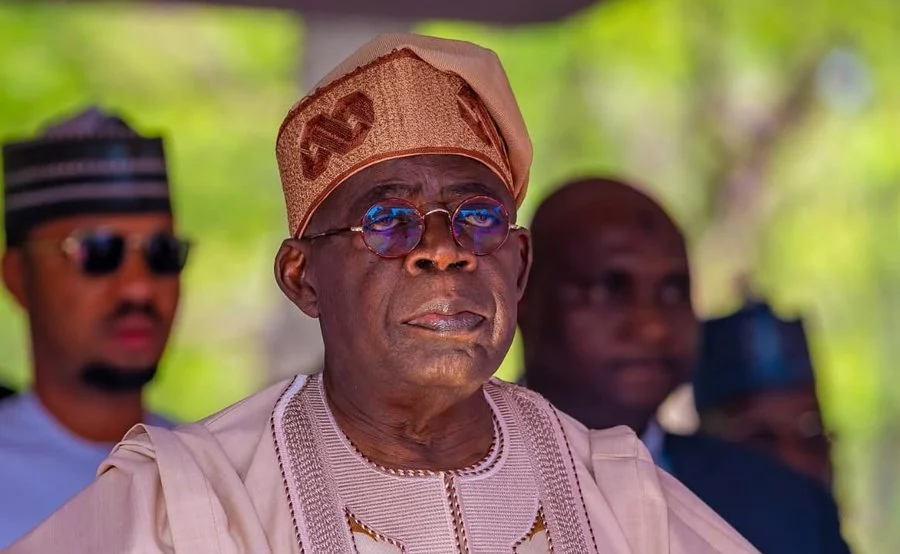
President Bola Tinubu has expressed profound sadness over the death of the revered Islamic leader, Sheikh Dahiru Usman Bauchi, who passed away on Thursday at the age of 101.

In a statement released on Thursday, the President described the late leader of the Tijjaniyya Muslim Brotherhood as a “moral compass” who dedicated his life to teaching and preaching.

President Tinubu stated that Sheikh Bauchi’s loss is monumental not only to his family and followers but also to the entire nation. He recalled the blessings and moral support he received from the cleric during the 2023 presidential election campaign.

“Sheikh Dahiru Bauchi was a teacher, a father and a voice of moderation and reason. As both a preacher and a notable exegete of the Holy Quran, he was an advocate of peace and piety. His death has created a huge void,” the President was quoted as saying.

The President extended his condolences to the Sheikh’s multitude of followers across Nigeria and beyond, urging them to immortalise the late cleric by holding on to his teachings of peaceful coexistence, strengthening their relationship with God, and being kind to humanity.

Selective Silence: Amnesty International, Arewa Intellectuals, and the tale of two clerics

By Engr. Abubakar Sulaiman

The Amnesty International Nigeria and some Northern Intellectuals were asleep or in a state of limbo when the Kano state government invited Mallam Lawan Shuaibu Triumph to appear before the Shura Committee and defend what some segments of Muslims considered blasphemous or disrespectful. He appeared, defended his statements, and heaven did not fall. He also made it clear that he was open to further discussion or debate.

Waking up from slumber, Amnesty International found its voice only when the ‘anointed’ Yahaya Masussuka (whom some people laughably expect to bring about a ‘revolution’ in mainstream Islam and its preachings) was invited by the Katsina state government to appear before a committee regarding his preachments. That was when they realised someone was about to be stripped of their freedom. The olive branch that wasn’t extended to Mallam Lawal Shuaibu Triumph.

Is it double standards or hypocrisy from the organisation and the so-called intellectuals? It is both. And it is a clever-by-half and calculated attempt to arm-twist a government procedure. But this is a discussion for another day.

That said, I believe state governments should find a way to disengage from organising religious debates. They should enact laws that regulate religious preaching and require JNI or CAN (or any other faith-based body) to license preachers. Whoever has a disagreement or believes a cleric’s preachment is an affront to overriding public interest should approach the court. Based on the enacted laws, the court should determine what constitutes extremism or actions inimical to social stability and thereby de-license a cleric or even sentence them to time in correctional facilities where appropriate.

I think debates on religious ideologies should be organised by faith-based organisations, or anyone who has an axe to grind with another person on religious issues should extend an invitation to a debate. Two Salafi scholars, Shaykh Isa Ali Pantami and the late Shaykh Idris Abdulaziz, extended such an invitation to the Boko Haram leader, the late Muhammad Yusuf, without any state government spearheading or supervising the engagement. Many people later renounced the Boko Haram ideology after listening to that debate. Additionally, Mallam Al-Qasim Hotoro also approached Mallam AbdulJabbar Nasiru Kabara for a debate, though AbdulJabbar used a ‘tactical manoeuvre’ to decline the engagement. The populace will then be the judge of who can present convincing evidence for their beliefs or ideology from such debates.

State governments risk falling into a quagmire if they continue to entertain complaints and organise religious debates without referring them to government-recognised faith-based organisations or a court of competent jurisdiction. It is difficult to digest, given the fear of censorship from our kind of governments, but regulation is key to taming religious hiccups and extreme tendencies while enhancing social integration.

Abubakar writes from Kaduna and can be reached via abusuleiman06@gmail.com.

Dr. Audu Bulama Bukarti: A man steadfast in his principles

By Abubakar AbdusSalam Muhammad (Baban Gwale).

Dr Audu Bulama Bukarti is one of the individuals I admire most in today’s Nigeria.

Recently, during the deeply thought-provoking Zoom discussion organised by Professor Toyin Falola on President Donald Trump’s comments about Nigeria, Bulama once again demonstrated remarkable clarity, courage, and sincerity. His contributions stood out with intellectual depth and honesty, and he represented our nation with dignity and unwavering principle.

Beyond his powerful voice in national discourse, Dr Bukarti is an expert legal practitioner, a meticulous researcher, an exceptional analyst, and a genuine freedom fighter whose work continues to inspire countless Nigerians.

What truly sets him apart is his unshakable commitment to Islam and truth. I recall during an episode of Fashin Baki on President Tinubu’s recent pardons, when he was asked about the case of DCP Abba Kyari and other inmates. His response was firm, principled, and full of integrity:

“I don’t talk on anything that contradicts Islam whatsoever.” These words reflect the heart of a man guided by faith before anything else, a man whose compass does not bend under pressure or public opinion.

A true Nigerian, a proud Muslim, a committed Northerner, a brilliant mind, and indeed a one-man army “KAI KAƊAI GAYYA”

I am deeply proud of him, not only for his intellectual contributions, but for who he is as a true Muslim brother whose sincerity, courage, and patriotism strengthen my love and respect for him.

May Allah preserve him upon goodness, protect him, and continue to make his voice a source of benefit, justice, and guidance for our beloved nation.

Katsina State Government summons controversial cleric, Yahaya Masussuka, amid divisive preaching

By Ibrahim Mukhtar

The Katsina State Government has formally invited the Quranist preacher, Yahaya Ibrahim Masussuka, who has recently become well-known, especially on Social Media, to appear before an Ulamas’ committee following complaints that his teachings allegedly breach “the general principles of Islamic law.”

The preacher debunks all prophetic sayings (Hadith) and calls the famous Hadith reporters liars. He later adjusted his stance, saying he agrees with three forms of Hadith and refutes all others. According to Masussuka’s new stand, he agrees with any Hadith on three conditions: 1) If the Hadith didn’t violate anything from the Qur’an; 2) If the Hadith didn’t say anything bad against the Holy Prophet, and or 3) If the Hadith preaches peace. However, some scholars have already labelled his current stance as clever bait to catch gullible, ignorant followers.

Masussuka has preached and discussed controversial issues and dismissed some fundamental issues of the Islamic religion as heresy and disowned all the revered Hadith books of Islam as mere concocted lies.

According to the Katsina State’s Secretary to the State Government, Alhaji Abdullahi Faskari, the government has received petitions from some scholars and concerned citizens regarding the nature and manner in which Masussuka’s preachings and sermons do not align with orthodox interpretations of Islamic jurisprudence.

At the same time, Masussuka himself has filed a complaint, claiming that some members of Jama’atu Izalatul Bid’ah (also known as Izala) have insulted and threatened him.

Although Masussuka has great backing and massive support from some Darika disciples, his heretic preaching still continues to stir controversy as many scholars, even among the Darika, see his teachings, which are based on debunking all prophetic sayings, as being completely un-Islamic.

In a bid to resolve the tension, the matter was referred to the Katsina Emirate Council, where both parties were invited to engage in dialogue. After the discussions, Emir Abdulmuminu Kabir Usman reportedly admonished that no one must preach in a way that offends fellow Muslims.

Following the Emir’s intervention, Governor Dikko Umaru Radda directed that Masussuka defend himself “before a Committee of Ulamas.” The SSG’s office also announced that standards and guidelines for preaching would be developed; anyone found to contravene them may face “appropriate action.”

Authorities have called on the public to remain calm, noting that the process will be handled “judiciously.”

The summoning has drawn mixed reactions from several groups, while many others, especially from the Dariqah and other rights and religious-freedom groups, vow to support the preacher. ICADAR (Impactive Centre for Accountability, Democracy, and Rights) warned that targeting Masussuka, whom they describe as “a preacher known for his peaceful teachings,” could undermine Nigerians’ religious expression.

Similarly, Amnesty International has raised concern over what it describes as a coordinated attempt to silence Masussuka. The group cautioned that shutting down his religious activities might violate his constitutional right to freedom of religion.

Another rights organisation, Ettrah: Voice for Freedom and Human Rights, called on both state and federal governments to protect Masussuka, arguing that calls to question his preaching risk “deepening misunderstanding” and threatening national unity.

On the other hand, some social analysts see the current development as worth pursuing, as many scholars were invited to defend their stands, which were deemed contrary to the general teachings of Islam. Some others view it as sectarian tensions, which, if not managed carefully, could inflame existing tensions between different Islamic groups in Katsina and beyond, particularly between Masussuka’s following and the Izala movement.

Sheikh Masussuka’s invitation by the Katsina State Government to defend his teachings marks a critical moment in northern Nigeria’s debate over religious freedom, state intervention, and sectarian balance. With vocal responses from rights groups and religious leaders alike, the outcome of this committee could resonate far beyond Katsina, touching on broader issues of governance, faith, and coexistence in Nigeria.

HRH Muhammadu Sunusi II’s PhD thesis: A brief review

By Muḥammad San

I have read the PhD thesis of the Emir of Kano, and just like in his Gamji days, Sanusi Lamido Sanusi (now Muhammadu Sanusi II) remains forthright in expression and uncompromising in his quest to balance Shari’a.

Some may dismiss contributions like mine as disturbing or argue that we are too little academically to weigh in on the Shari’a debate. But this is a debate that dominated Nigeria at the turn of the millennium, and Sanusi himself was at its centre. Having read his papers, watched his TED talk, and reviewed the recent compendium of his essays, I can say I have at least a fair understanding of his intellectual outlook.

Sanusi has always been controversial. His now-famous remark that a wife should slap back or retaliate against an abusive husband is a good example. That boldness, perhaps, was the same energy that pushed him to the University of London to produce a doctoral thesis on Islamic family law, using Morocco and Kano as his comparative space.

The Emir is an ardent advocate of girl-child education, but this passion seems to have narrowed his focus, leaving him blind to the ordeals of men under the same system. While women’s marginalisation has been widely documented, men, too, are now facing a new wave of vulnerabilities. The cases are there for anyone who cares to look.

The infamous Maryam Sanda case, in which a woman brutally murdered her husband, remains etched in public memory, yet the debate around it was clouded by sympathy. In 2021, a young wife in Kano was convicted of poisoning her husband after repeated disputes. In 2022, another woman fatally stabbed her husband during a quarrel over financial neglect. These are not isolated events. They highlight the rise of what can be called “feminine defence,” but they also expose the growing fragility of men trapped in broken family systems.

Sanusi himself points to Morocco as a model. “What did they do in Morocco? They built schools and invested in transportation so that girls could be moved from villages to the nearest schools. They also invested in school feeding and provided financial support to the poorest families ready to send their sons and daughters to schools,” he said in an interview with Time Africa Magazine. Yet the contrast is sharp. In Kano, the state government spends millions on lavish emirate ceremonies, while journalists like Dan Bello continue to expose the dire state of public schools in the very heart of the metropolis.

To be fair, Sanusi’s thesis tackled the historical marginalisation of women in Islamic family law with rigour and depth. But in amplifying women’s rights, it failed to defend men or acknowledge their growing vulnerabilities in a rapidly changing society. By leaning heavily on the Moroccan Moudawana, itself a product of feminist activism, the work framed men only as a dominant class to be restrained. Missing were the struggles many men face: unemployment, the crushing demands of polygamy, and the relentless pressure to perform as patriarchs without resources.

This omission is striking. In Kano today, the rise of wives killing their husbands is not just a crime. It is a signal of imbalance in the family system, a warning that reform is incomplete. Without addressing male fragility alongside female empowerment, Shari’a reform risks becoming a zero-sum game. Sanusi’s thesis suggests that empowering women alone can resolve family crises. But true reform, as Shari’a itself demands, must be a balanced restructuring that preserves the dignity and well-being of both men and women.

Muḥammad Sani is a freelance and public policy writer from Zaria. Can be reached via muhdusman1999@gmail.com.